
Best graphite pickleball paddle choices still earn their place today because a thin, stiff graphite face answers instantly and keeps touch soft around the kitchen.
I tested only paddles you can still buy, and every face here is truly graphite or a graphite blend, with each blend labelled plainly below. The honest limit is spin, because smooth graphite faces grip the ball less than modern raw carbon faces, so spin comes from your swing path.
The Onix Graphite Z5 is the best overall graphite pickleball paddle because its wide body puts a big sweet spot behind every block and reset. It gives the cleanest feedback on this list, so you know exactly where on the face you made contact, on every single shot you hit.
Its Nomex core is stiff and lively under the face, and Nomex core means a light honeycomb core that sends drives off with real pace. It weighs 7.5 to 8.2 ounces, and you can check its Amazon listing through the link below to pick the weight that suits you.
The 10 Best Graphite Pickleball Paddles in 2027, Ranked by How You Play
1Onix Graphite Z5: Best Overall Pickleball Paddle in 2027
AT A GLANCE
Onix Graphite Z5
Weight: 7.5-8.2 oz
Shape: Widebody
Core: Nomex honeycomb
Face: Graphite
Grip: 4-1/4 in
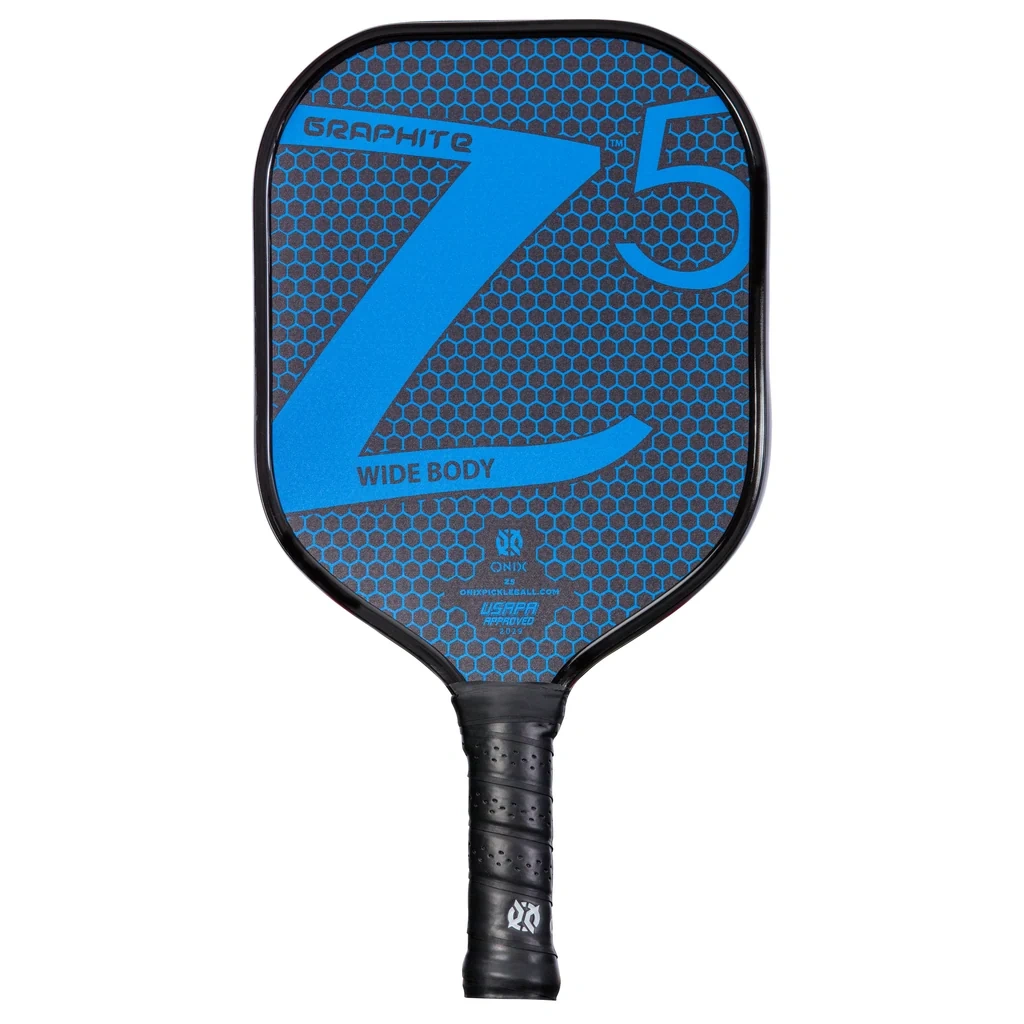
The Z5 is the paddle I measure every other graphite paddle against, because it does the classic graphite things better than anything else I have tested in this category. The widebody shape puts a generous sweet spot behind the ball, so blocks and resets that I catch slightly off center still land where I aimed them.
In hands battles it stays calm, and in the soft game it gives me the cleanest feedback of any paddle on this list: I know exactly where on the face I made contact, every single time.
That feedback comes from the Nomex honeycomb core, which is stiff and lively under the graphite face. Drives come off with a sharp crack and real pace for a control-leaning paddle, and counters at the kitchen need only a short punch to cross the net with interest.
The weight range also matters more than it looks. A Z5 at the lighter end plays quick and easy, while one at the heavier end adds stability on stretched defensive shots, so I always weigh mine before the first session.
The honest limits are the graphite limits. The face is smooth by modern standards, so my spin comes from swing path and brush, not from the surface grabbing the ball.
And the Nomex core sends more vibration to the hand than a soft polymer core does. Neither stops it being my best overall pick. For touch, timing, and fast hands, this is still the graphite benchmark.
2Selkirk SLK Latitude Max: Best Modern Graphite Pickleball Paddle in 2027
AT A GLANCE
Selkirk SLK Latitude Max
Weight: 7.6-8.0 oz
Shape: Not published
Core: 13mm
Face: Graphi-Flex graphite composite
Grip: Not published
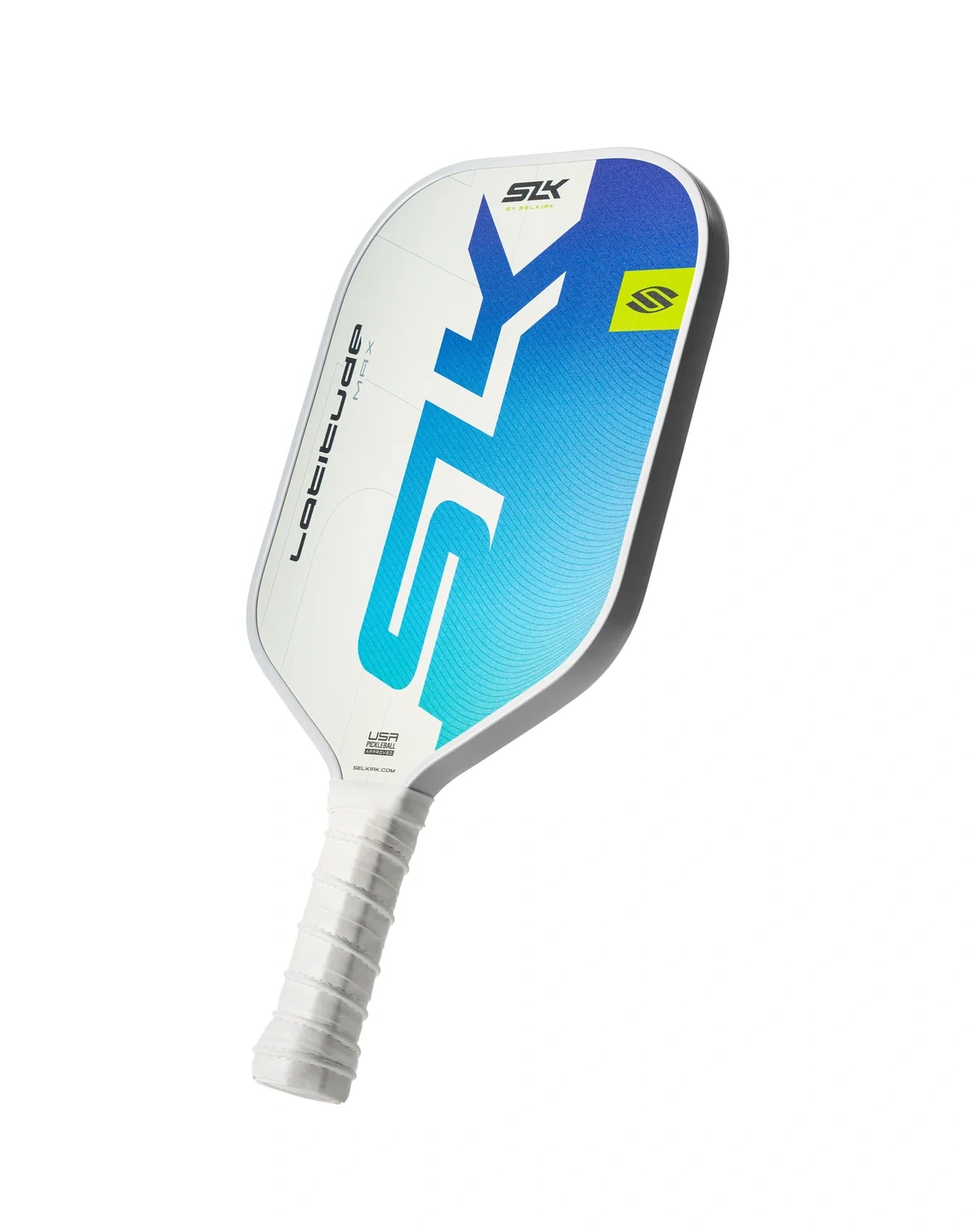
Most graphite paddles on this list are older designs that simply never went away. The Latitude Max is the exception. Selkirk redesigned it in 2025, which makes it the most current graphite paddle I could put in this ranking, and it plays like a paddle built for the faster modern game rather than a preserved classic.
Start with the honest label. The face is Selkirk’s Graphi-Flex graphite composite, a blend, not a pure sheet of graphite. On court I can feel what the blend is for.
The face answers a touch livelier than the old-school graphite paddles here, with a firmer, more modern response on drives and counters, yet it still settles down for dinks and drops without the ball jumping off the face. Players who found classic graphite a little dead will feel at home quickly.
The 13mm core keeps the paddle quick through the hands, and the 7.6 to 8.0 ounce weight range sits right in the middle where most all-court players are happiest: light enough for kitchen exchanges, heavy enough that blocks do not get bullied by hard drives.
My resets stayed low and controlled, and third shot drops were the shot I trusted most with it, because the ball leaves the face predictably instead of floating.
If you want graphite feel without buying a design from another era, this is the one I would hand you first.
3Paddletek Tempest Wave Pro: Best Pickleball Paddle for Serious Players in 2027
AT A GLANCE
Paddletek Tempest Wave Pro
Weight: Not published
Shape: Not published
Core: 14.3mm
Face: Textured graphite
Grip: Not published
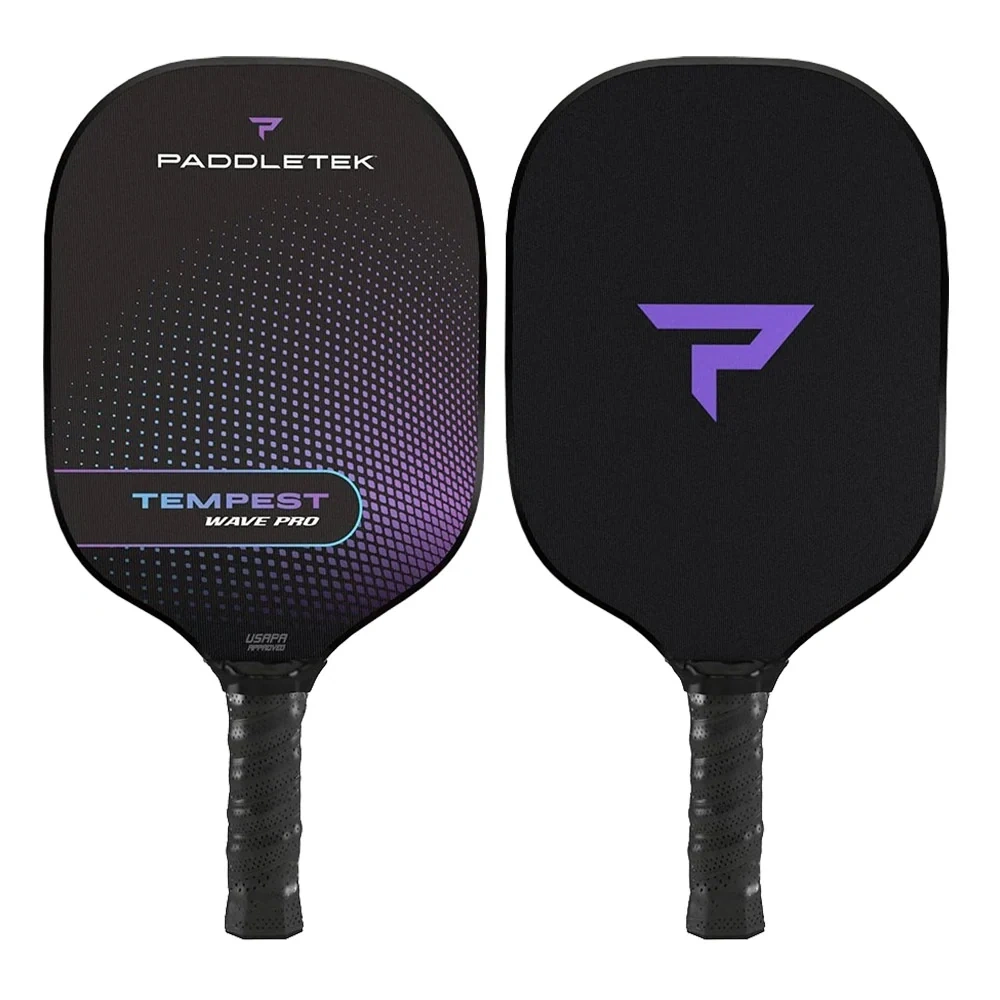
Ask experienced players which graphite paddle they respect most, and this is the name that keeps coming back. The Tempest Wave Pro has been the serious player’s graphite paddle for years, and after extended time with it I understand why: nothing else in this category matches its touch in the soft game.
The difference starts with the face. Most graphite faces are smooth, which is why graphite has a spin problem. This one is textured graphite, and the texture is real.
I could feel the face grip the ball on roll volleys and dipping drives, producing shape on the ball that the smooth-faced paddles here simply cannot. It will not match a modern raw carbon face for spin, but inside the graphite category it stands alone.
The 14.3mm core gives the ball a fraction more dwell, and my dinks and resets benefited most. Balls I expected to float sat down, and drops from the transition zone landed softer than my swing deserved.
This is a control paddle in the truest sense: it rewards clean technique and quiet hands, and it exposes sloppy contact instead of covering for it.
One piece of context matters. Paddletek’s newer flagship direction is raw carbon, and the successor models left graphite behind. The Tempest Wave Pro remains the graphite one, and for a touch player who competes, it remains the one to beat.
4Niupipo Voyager Pro: Best Elongated Pickleball Paddle in 2027
AT A GLANCE
Niupipo Voyager Pro
Weight: 7.97 oz
Shape: Elongated
Core: Not published
Face: Graphite carbon blend
Grip: 5.2 in handle, 4.25 in circumference
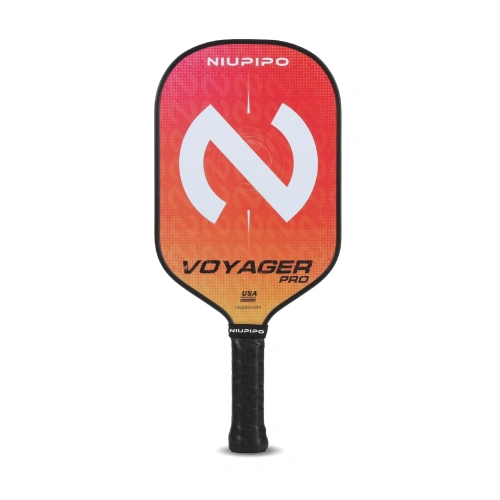
The Voyager Pro is the reach pick on this list, and reach changes rallies. The elongated shape covers balls at the kitchen that I would normally watch pass, and on serves and returns the extra length adds leverage, so the ball comes off with more pace for the same swing.
In singles it was the paddle I reached for first, because court coverage is half the singles game.
The face needs its honest label up front: this is a graphite carbon blend, not a pure graphite sheet. Independent spec measurement lists the facing as graphite, and the blend shows in how it plays.
The face feels firmer and livelier than classic graphite, closer to a modern paddle’s response, with a crisper strike on drives and counters. What it gives up is a little of the soft, quiet touch that pure graphite players love on dinks, though I adjusted within a session or two.
At roughly 7.97 ounces it sits in the middleweight band, and the balance suits the shape. Elongated paddles can feel slow when the weight climbs, but this one stayed quick enough at the net for doubles hands battles, and the head weight helped my blocks hold firm against hard drives.
If your game is built on reach, court coverage, and driving the ball, this is your graphite paddle. Touch purists should look at the picks above it.
5Onix Stryker 4 Graphite: Best Lightweight Pickleball Paddle in 2027
AT A GLANCE
Onix Stryker 4 Graphite
Weight: 6.9-7.4 oz
Shape: Not published
Core: Not published
Face: Graphite
Grip: Not published
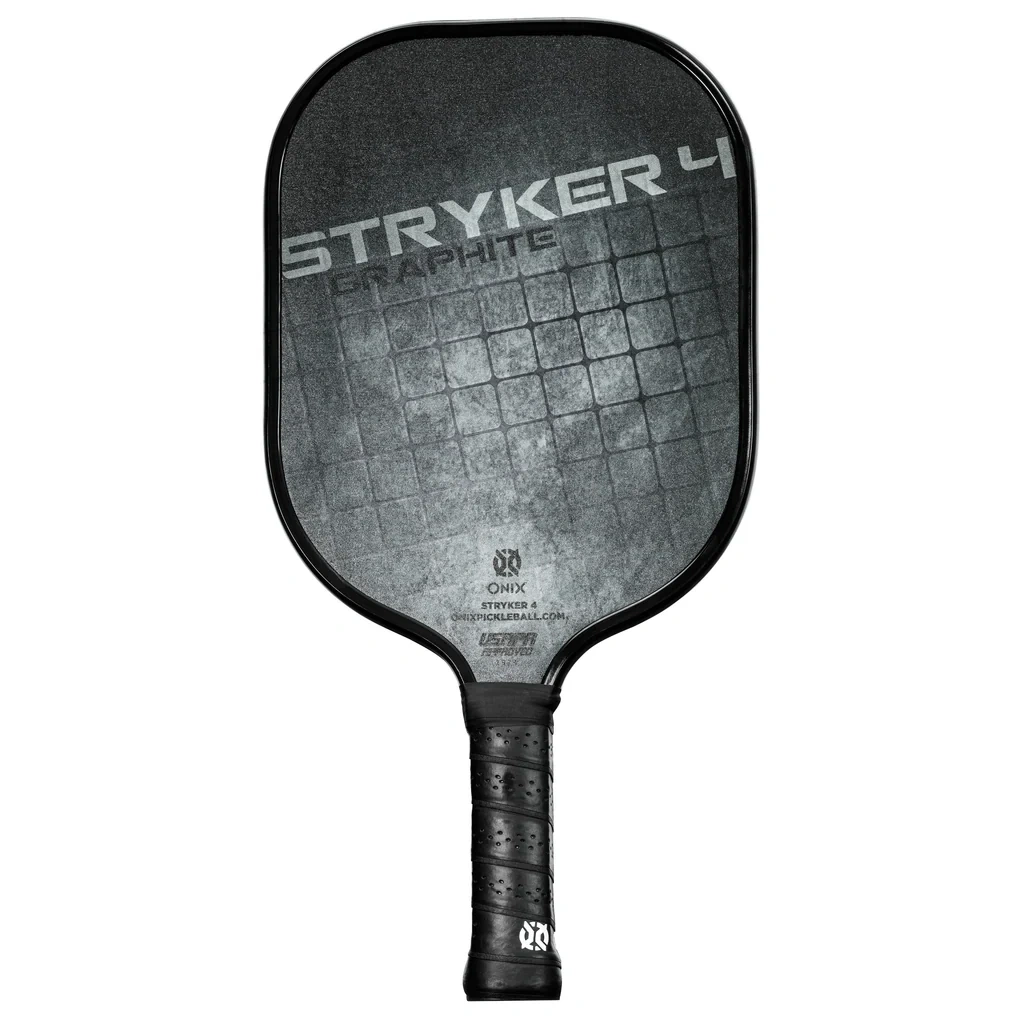
This is the lightest paddle on the list by a clear margin, and lightness is a genuine playing advantage in the right hands. At 6.9 to 7.4 ounces, the Stryker 4 gets to balls my heavier paddles arrive late to.
Flicks, rolls, and last-second counters at the kitchen all happen faster, and after long sessions my forearm and shoulder felt noticeably fresher than they do with a midweight paddle.
The graphite face keeps the paddle honest in the soft game. Dinks and drops stay controlled, because the face does not add unwanted pop, and my touch shots went where I pointed them.
For players whose game is anticipation and quick hands rather than raw power, that combination of light weight and a calm face is exactly right, and it is also why I recommend it to players managing a sore arm who still want a real graphite feel.
Now the honesty this pick requires. Some retailers have moved the Stryker 4 to clearance and final sale, which means it is an end-of-line model. If it fits your game, that is a reason to move sooner rather than later, because when current stock is gone, it is gone.
The trade for the weight is plow-through. Hard drives push this paddle around on blocks unless my hand is firm and my position is good. Light is a style, not a shortcut, and this paddle rewards players who commit to it.
6HEAD Radical Tour GR: Best Graphite-Carbon Blend Pickleball Paddle in 2027
AT A GLANCE
HEAD Radical Tour GR
Weight: 7.9 oz
Shape: Not published
Core: 15mm
Face: Graphite and carbon blend
Grip: Not published
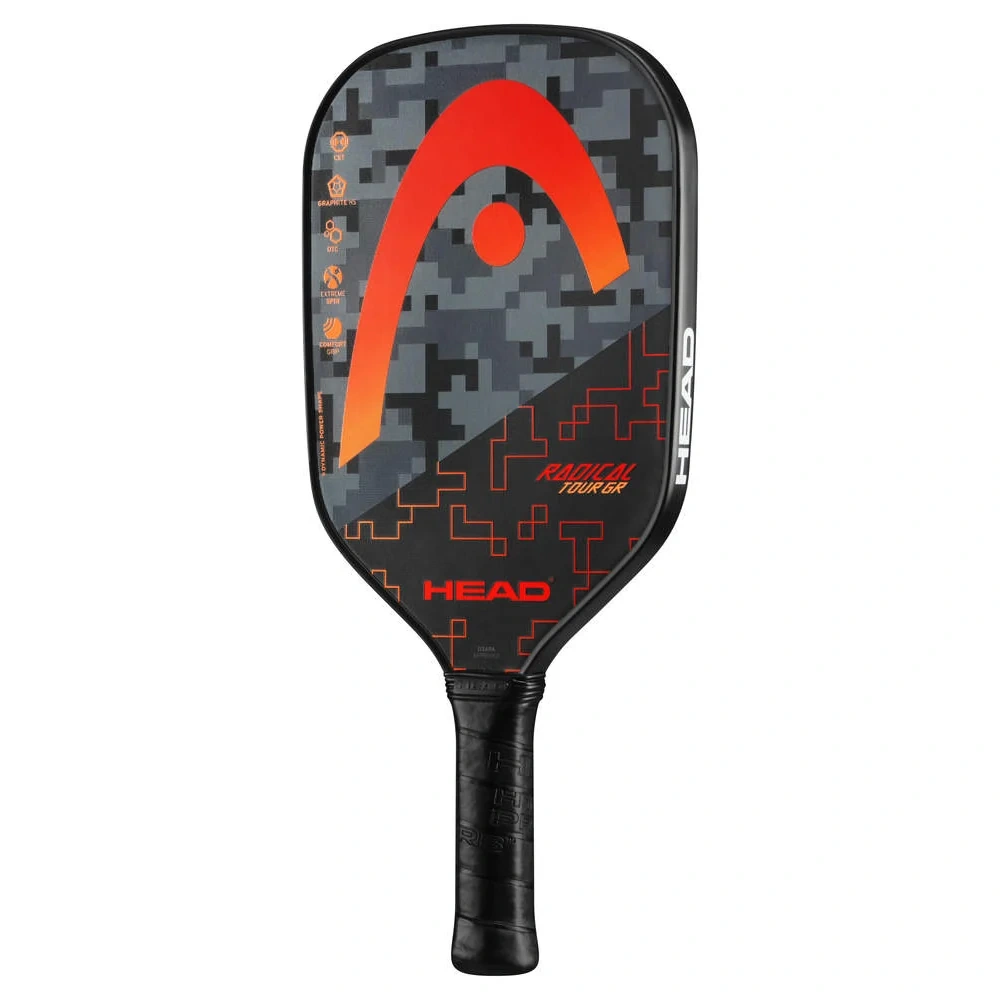
HEAD builds this paddle around a face it calls a graphite hitting surface, and the honest description is a graphite and carbon blend. I put it on this list because the blend works, and because it plays differently enough from pure graphite to earn its own place rather than hide behind the label.
The blend gives the face a stiffer, more direct strike than classic graphite. Drives and counters come off hot and flat, with a modern, connected feel that touch players may find less forgiving at first.
What saves the paddle for all-court play is the 15mm core, the thickest on this list. That extra core depth absorbs pace on blocks and resets, so the soft game stays manageable once you soften your grip and let the core do the work. My drops took a session to dial in, then behaved.
At 7.9 ounces it sits in honest midweight territory, stable on blocks without feeling sluggish in exchanges. HEAD’s tennis background shows in the overall balance: the paddle swings like a tool built by people who think about leverage and swing path, and my two-handed backhand felt natural with it.
Choose this one if you like graphite’s crisp strike but want a firmer, more modern response behind it. Choose pure graphite if touch is your whole game.
7Selkirk SLK Neo Graphite: Best Pickleball Paddle for Beginners in 2027
AT A GLANCE
Selkirk SLK Neo Graphite
Weight: 7.5 oz
Shape: Not published
Core: 13mm
Face: G4 graphite surface
Grip: Not published
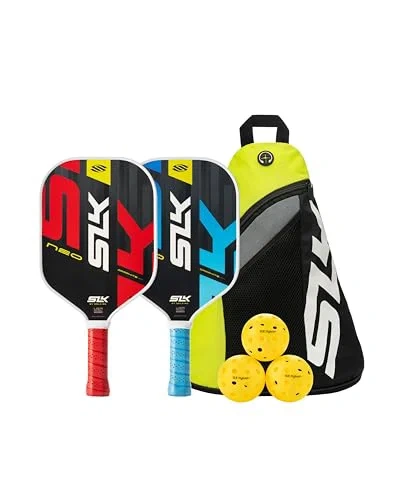
Beginners need two things from a first paddle: forgiveness while their contact is still messy, and a face that teaches touch instead of punishing it. The SLK Neo Graphite, sold as a two-paddle set, delivers both, and it does it with a real graphite surface rather than the plain fiberglass most starter sets use.
The G4 graphite surface gives new players the category’s signature feel from day one: a clean, crisp response that tells you where the ball struck the face. That feedback is a teacher.
Within a few sessions I could watch a new player start adjusting, because the paddle honestly reports good and bad contact instead of masking both. At 7.5 ounces it is light enough that a beginner’s arm survives a full afternoon, and quick enough that kitchen exchanges do not overwhelm developing hands.
The 13mm core keeps the response lively, which helps new players get the ball over the net while they build strokes, and the paddle stays composed enough for dinks once the soft game starts to click.
Buying the set also solves the practical beginner problem: two paddles means a partner, a spouse, or a friend is equipped too, and beginners improve fastest with a regular hitting partner.
Honesty matters here as well. This is an entry-level paddle, and a player who catches the bug seriously will outgrow it within a season or two. As a starting point that respects a new player’s game, it is the best I tested.
8Gamma Needle: Best Blade Shape Pickleball Paddle in 2027
AT A GLANCE
Gamma Needle
Weight: Not published
Shape: Elongated blade
Core: Not published
Face: Textured graphite
Grip: Not published
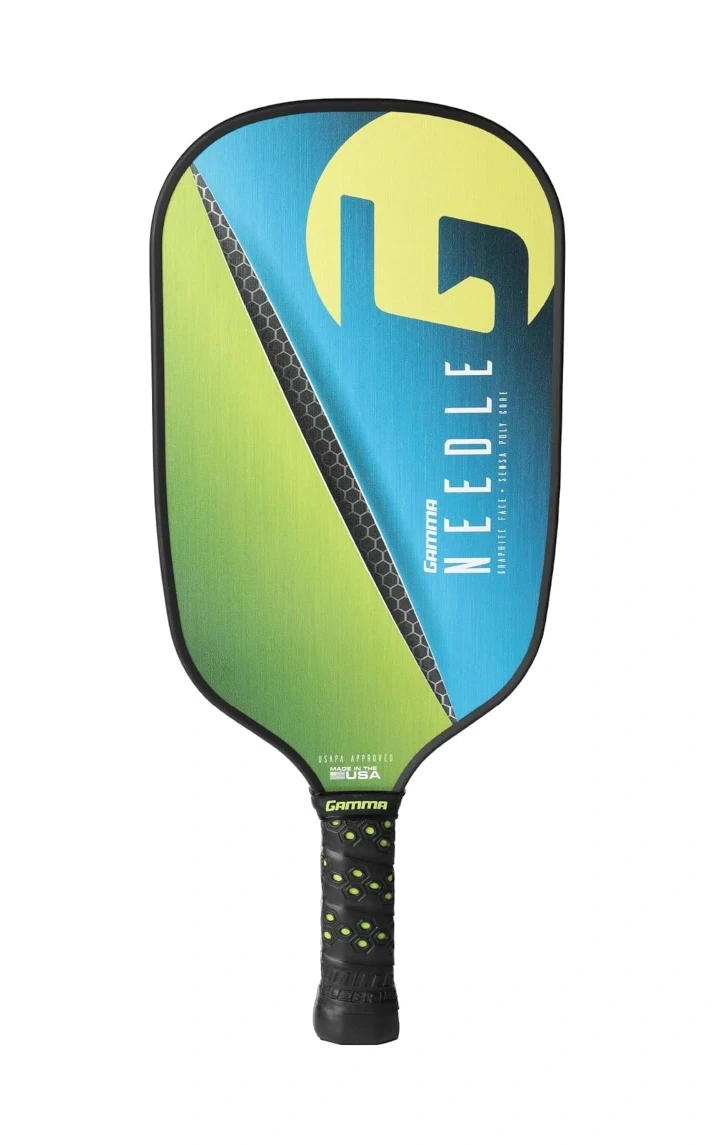
The Needle is the specialist’s shape on this list. Its elongated blade is long and narrow, built for reach and swing speed, and it plays like it looks: fast, precise, and demanding.
In my sessions it was the quickest graphite paddle through the air, and serves and overheads benefited most, because the narrow head cuts through the swing and the length adds leverage at contact.
The textured graphite face helps the shape work. A blade this narrow has a smaller sweet spot, so the texture’s extra grip on the ball gives back some margin: my dipping drives and roll volleys held their shape better than a smooth face would have allowed at this width.
Touch at the kitchen stayed clean, and the paddle rewards players who strike the ball out in front with a compact swing.
Two honest notes belong in this section. First, the sweet spot is genuinely small, and off-center contact twists and dies more than on the widebody picks above. This is a paddle for clean strikers, ideally players with tennis or table tennis backgrounds who already find the middle of the face.
Second, the Needle is legacy stock: an older Gamma design that is still findable rather than a current production line, so availability varies and I would not wait indefinitely if it suits you.
If your game is reach, precision, and fast hands, nothing else on this list is shaped like your answer.
9Onix Evoke Premier: Best Legacy Pro Pickleball Paddle in 2027
AT A GLANCE
Onix Evoke Premier
Weight: Not published
Shape: Not published
Core: Not published
Face: Graphite composite
Grip: Not published
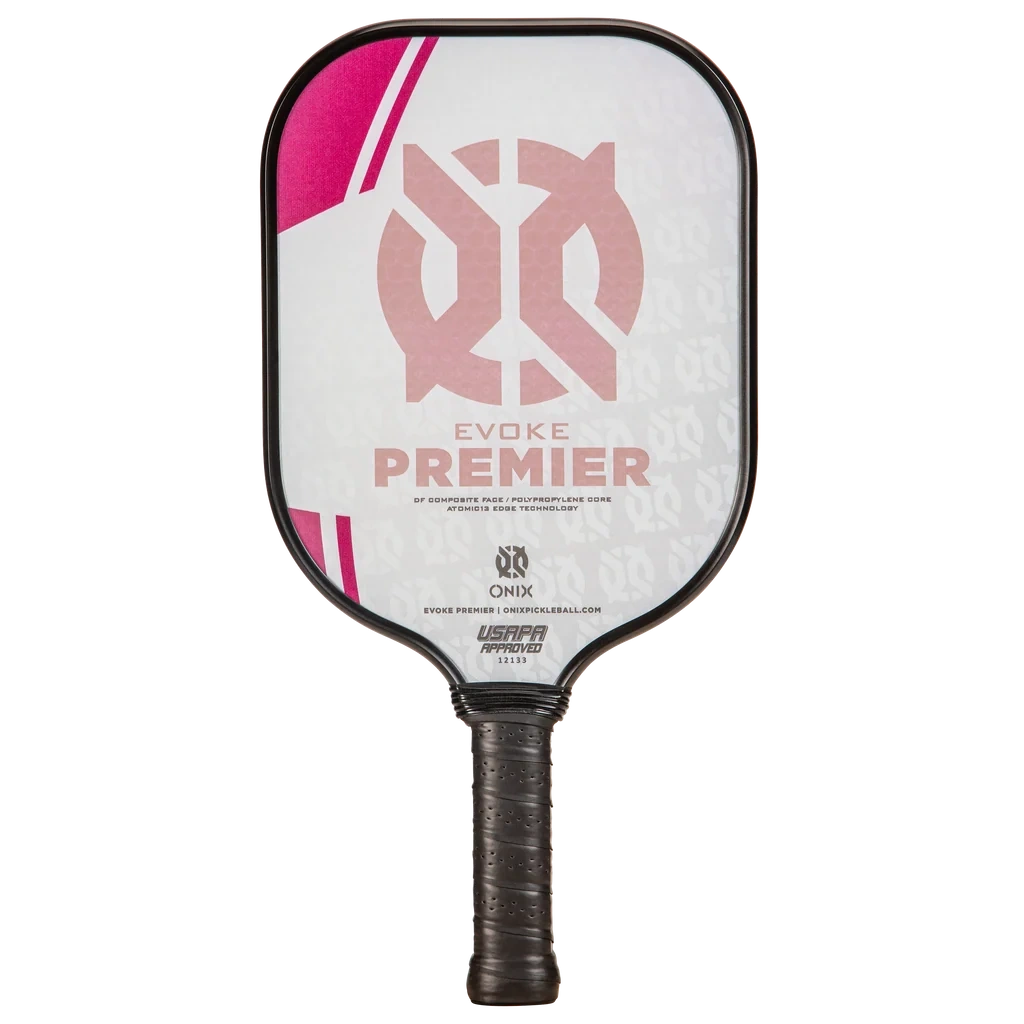
The Evoke Premier is this list’s piece of graphite history: a pro model from 2019, built in the era when tour players still carried graphite-composite paddles and the modern raw carbon wave had not yet taken over. I included it because it still plays a serious game of pickleball, and because some players specifically hunt this era’s feel.
The face label deserves the same honesty as the rest of this list. Retailer spec tables list the surface as graphite, and the accurate description is a graphite composite: graphite worked into a composite face rather than a single pure sheet.
On court that composite character shows as a slightly softened strike. The ball sits on the face a touch longer than on the crisp pure graphite picks, which helped my drops and resets, while drives still carried the authority you would expect from a paddle designed for professional play in its day.
What dates it is not the performance, it is the context. Modern paddles have moved to raw carbon textures and foam constructions this design predates, so the spin ceiling and the tech story belong to its era.
Treat it as a legacy pro pick: a well-built paddle with a genuine graphite-composite face and a feel some experienced players still prefer, sold now as old stock rather than a current line.
If the modern game feels too sharp and engineered to you, this older pro tool may feel like home.
10Amazin’ Aces Signature Set: Best Starter Set Pickleball Paddle in 2027
AT A GLANCE
Amazin’ Aces Signature Set
Weight: 7.8-8.2 oz
Shape: Not published
Core: Polypropylene honeycomb
Face: Graphite
Grip: Not published
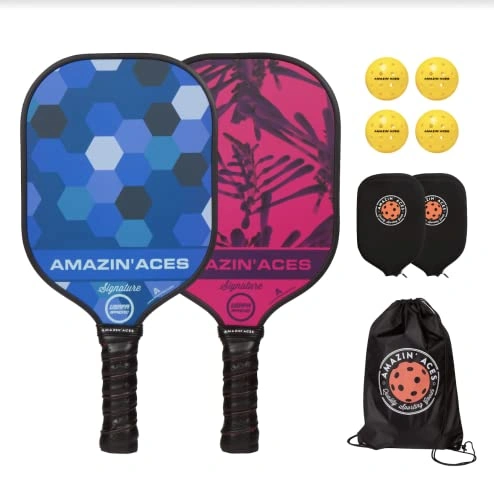
Every club and every family eventually needs paddles that can be handed to anyone: a visiting friend, a spouse trying the game, a teenager home for the summer. The Amazin’ Aces Signature set is that paddle pair in my gear bag, two genuine graphite-faced paddles built for exactly the job of getting new people playing today.
The graphite face is the point. Loaner paddles are usually dead-feeling fiberglass, and beginners learn bad habits from a face that tells them nothing. These give a clean graphite response, so a new player’s touch shots and timing develop against honest feedback from the first session.
The polypropylene honeycomb core keeps the feel softer and quieter than a Nomex core, which suits casual games and newer hands, and at 7.8 to 8.2 ounces the paddles sit in a middleweight range that suits most adults without tiring anyone out.
I keep my expectations honest with this pick. These are not tournament paddles, the materials and finish are basic, and a player who gets serious will move up the list. That is not the job here. The job is two real graphite paddles, ready in the bag, that make a first game fun enough to turn into a second one.
For households, clubs, and anyone stocking up for guests, this is the set I hand out.
How to Choose the Best Graphite Pickleball Paddle in 2027
Graphite paddles look simple on a spec sheet and confusing in a shop, because the face materials are described with words that overlap and sometimes mislead.
You only need to understand a handful of things to choose well in this category: what the face words actually mean, which core is under it, how much the paddle weighs, what shape it is, whether the grip fits your hand, and how the thin graphite face wears over time.
Work through those six and the right pick from the list above usually names itself.
Graphite vs Carbon Fiber vs Composite: What the Words Actually Mean
Graphite is a form of carbon, which is why this category confuses everyone. A graphite face is a thin sheet of graphite laid over the core: smooth, stiff, and crisp, with a clean click on contact and very direct feedback.
A raw carbon fiber face is woven carbon, laid in ribbons and interlinked, and its woven texture is what modern spin paddles are built on. The weave grips the ball in a way a smooth graphite sheet physically cannot.
Composite is the loose term. On most paddles it means a fiberglass-based face, or a blend of materials, and it usually plays softer and flexier than graphite, with more dwell and less of that crisp strike.
Blends sit between the poles: the graphite-composite and graphite-carbon faces on this list, on the Latitude Max, the Voyager Pro, and the Radical Tour GR, add stiffness and liveliness to the graphite feel, and their sections say so openly rather than letting the label do quiet work.
The practical rule is to ignore the headline word and ask what the face is actually made of. Listings use graphite and carbon fiber interchangeably, and some paddles sold as graphite are fiberglass or plain carbon underneath.
Every paddle on this page was checked against spec data, not marketing, which is why a few famous names you may expect here are missing: their faces are not graphite.
Core: Nomex vs Polymer Honeycomb
Under almost every graphite face sits one of two honeycomb cores, and they play differently enough that core choice matters as much as the face. Nomex is an aramid honeycomb, the original performance core, and it is stiff, loud, and lively.
The Z5 runs on Nomex, and you can hear it across the court: a sharp crack on drives, instant response on counters, and a firm, connected feel that graphite traditionalists love.
Polymer honeycomb, usually polypropylene, is the softer and quieter option. It absorbs more of the hit, calms the paddle down on blocks and resets, and sends less vibration into your hand and arm.
The Amazin’ Aces set uses a polypropylene core, and most modern graphite-composite designs lean polymer for the same reason: current players expect a paddle to help in the soft game, not just crack drives.
Thickness works alongside material. The thinner cores on this list, the 13mm builds, answer quicker and pop more on counters. The thicker ones, like the 14.3mm Tempest Wave Pro and the 15mm Radical Tour GR, dwell a fraction longer and forgive more in the soft game.
If you play a power and hands game, a thinner, livelier core suits you. If your game is dinks, drops, and patience, go thicker and softer.
Weight: Why Graphite Players Talk About Ounces
Graphite faces are light, so graphite paddles cluster at the lighter end of the sport, and small differences in ounces are worth more attention here than anywhere else.
On this list the range runs from the Stryker 4 at 6.9 to 7.4 ounces up to the sets at 7.8 to 8.2 ounces, and that spread covers genuinely different playing styles rather than good and bad versions of the same paddle.
Light paddles, roughly the low 7s and below, win on hand speed. Counters, flicks, and scrambles at the kitchen all happen faster, and your arm and shoulder finish long sessions fresher, which is why light graphite paddles are the traditional recommendation for players managing arm soreness.
What you give up is plow-through: a light paddle gets pushed around on blocks against hard hitters unless your hand is firm and your positioning is early.
Midweight paddles, around 7.6 to 8.2 ounces, trade a little of that speed for stability. Blocks hold, drives carry more authority, and the paddle twists less on off-center contact. Most all-court players belong here.
Whichever end you choose, weigh your actual paddle when it arrives, because graphite models often span a range, and a paddle at the top of its range plays like a different tool than one at the bottom.
Shape and Reach
Shape is the one choice you cannot adjust later, so it deserves a decision before brand or face. Widebody paddles, like the Z5, are shorter and wider, with the biggest sweet spot and the quickest hands at the kitchen. They forgive the messy contact that doubles at the net produces, and they are the safest shape for most players.
Elongated paddles stretch toward 16.5 inches and move the sweet spot higher. You gain reach at the net, leverage on serves and drives, and coverage in singles, and you pay with a smaller margin on off-center hits.
The Voyager Pro and the Gamma Needle live here, with the Needle’s narrow blade pushing the trade furthest: maximum reach and swing speed, minimum forgiveness.
Standard shapes sit between the two and do nothing badly. If you are new to the category and unsure, start widebody for doubles or standard for a mixed game, and only move elongated once you know reach is what your misses are asking for. Shape decides where your sweet spot is; everything else decides how it feels when you find it.
Grip Size and Handle Length
A grip that is too large tires your forearm and stiffens your wrist, and a grip that is too small makes the paddle twist and your fingers overwork to hold on. To find your size, measure from the crease across the middle of your palm to the tip of your ring finger. That measurement in inches is close to your grip circumference.
Most graphite paddles cluster around a standard 4-1/4 inch grip, the Z5 included, which suits the majority of adult hands. If you land between sizes, take the smaller grip and build it up with an overgrip.
An overgrip adds roughly a sixteenth of an inch, gives you a fresh surface when the original wears slick, and lets you fine-tune the fit instead of living with a guess.
Handle length matters separately if you play a two-handed backhand.
You need enough handle for your top hand to sit comfortably without crowding the throat, so if the two-hander is a real part of your game, check the handle length on any paddle before you buy, and treat a short handle as a genuine reason to choose a different model rather than something to adapt to.
The Thin-Face Trade: Durability and the Edge Guard
Graphite’s feel comes from a thin, stiff sheet, and thin is also its weakness. The face itself is hard-wearing in normal play, but the thin layer can chip if it scrapes the court surface, which is why the edge guard is not decoration on a graphite paddle.
It takes the ground contact on low balls and protects the face edges where chips start.
Your habits decide how long the face lasts. Scooping low balls with the paddle dragging, tapping the face on the court after a missed point, and leaving the paddle in a hot car all shorten its life more than ordinary rallying does.
Edge guard tape is simple insurance if you play low and aggressive, and wiping the face clean of ball dust and grit keeps the surface honest and helps textured faces, like the Tempest Wave Pro and the Needle, keep their bite.
Expect the face, not the core, to set the paddle’s lifespan. When a graphite face chips at the edges or wears smooth and dead in the middle, the paddle is telling you its best games are behind it, however solid the core still feels.
Frequently Asked Questions (FAQs)
1. What is a graphite pickleball paddle?
A graphite pickleball paddle has a thin sheet of graphite as its hitting surface, laid over a honeycomb core, usually Nomex or polymer. The graphite sheet is stiff and light, which gives these paddles their signature feel: a crisp, clean strike, direct feedback about where the ball hit the face, and quick hands at the net.
It is one of the oldest performance face materials in the sport, and every paddle on the list above uses graphite or an honestly labelled graphite composite.
2. Is graphite the same as carbon fiber?
Not exactly, though the terms get used interchangeably in listings, which causes most of the confusion. Graphite is carbon arranged in tightly packed layers, laid down as a smooth sheet.
Carbon fiber is carbon woven into ribbons and interlinked, which is why raw carbon faces have a visible weave and a grippy texture. The practical difference on court: graphite plays smoother and crisper, raw carbon grips the ball harder and produces more spin.
3. Is graphite or carbon fiber better for a pickleball paddle?
Neither is better outright; they are better at different things. Carbon fiber is the modern performance choice because its textured weave generates more spin and current flagships are built around it.
Graphite is better if your game is touch, timing, and hand speed: it answers instantly, keeps dinks and drops honest, and tends to come in lighter builds. If spin and power drive your game, buy carbon. If control and feel drive it, graphite still earns its place.
4. Are graphite paddles good for beginners?
Yes, with one honest caveat. Graphite’s light weight and clean feedback are genuinely beginner friendly, because the paddle tells a new player where contact happened and does not tire a developing arm.
The caveat is that graphite rewards clean contact more than fiberglass composites do, so a beginner’s misses feel more obvious. That feedback speeds up learning rather than slowing it. The SLK Neo Graphite set on this list is the beginner pick I recommend most.
5. What is the difference between graphite and composite (fiberglass) paddles?
A graphite face is a thin carbon sheet: stiff, crisp, and direct, with a fast answer off the face. A composite face is usually fiberglass-based: softer and flexier, holding the ball a fraction longer, which many players feel as extra forgiveness and a calmer soft game.
Graphite generally plays quicker and cleaner in hands battles; composite generally plays softer and quieter. Many paddles blur the line with graphite-composite blends, which is why this page labels each face for what it actually is.
6. Are graphite paddles good for spin?
Honestly, spin is graphite’s weak point. Spin comes from the face gripping the ball, and a smooth graphite sheet grips less than a textured raw carbon weave, so graphite paddles sit at the lower end of the spin range no matter how good your technique is.
The exceptions on this list are the textured graphite faces, the Tempest Wave Pro and the Gamma Needle, which bite noticeably more. If heavy topspin is central to your game, carbon is the better tool. If your spin comes from placement and touch, graphite gives you enough.
7. How long do graphite pickleball paddles last?
Count hours on court, not months on a calendar. Published estimates spread widely, from roughly 6 to 18 months of hard, frequent play up to 1 to 3 years of lighter recreational use, and the difference is almost entirely hours played and how the paddle is treated.
A player on court daily wears the face down fast; a twice-a-week player at a few hours per session lands at the long end of that range. The face usually goes before the core: it wears smooth, loses its crispness, or chips at the edges, while the honeycomb underneath still feels solid.
8. Are graphite paddles durable, and why does the face chip?
The graphite sheet itself is hard and rigid, but it is thin, and thin layers chip when they strike something harder than the ball.
Most face chips start at the edges, from scraping the court on low balls or contact with the ground, which is why the edge guard matters so much on a graphite paddle and why edge guard tape is worth adding if you play low.
The core is rarely the problem. Keep the paddle off the pavement, out of hot cars, and wipe grit off the face, and a graphite paddle is a durable tool.
9. Is a graphite paddle a good choice if I have tennis elbow or a sore arm?
It can be, because graphite paddles tend to be light, and a lighter paddle with a calm swing is one of the aggravating factors you can remove.
The lightest pick on this list, the Stryker 4 at 6.9 to 7.4 ounces, is the one I hand to arm-weary players, ideally over a soft polymer core rather than a stiff Nomex one, since core stiffness sends more vibration to the hand.
Be honest about the limits: grip size, technique, and how hard you squeeze matter as much as the paddle, and a paddle does not heal a tendon. Persistent pain deserves rest and medical advice.
10. What weight graphite paddle should I choose?
Start with how you play. If your game is hands battles, counters, and quick reactions at the kitchen, or your arm tires easily, choose the light end of the graphite range, roughly 6.9 to 7.5 ounces. If you drive the ball, block hard hitters, or play much singles, choose midweight, roughly 7.6 to 8.2 ounces, for stability and plow-through.
Most all-court doubles players land happiest in the middle. And weigh the actual paddle when it arrives: graphite models often span a listed range, and the individual paddle you receive plays according to its real weight, not the range on the box.
11. Can I use a graphite paddle in tournaments?
Yes, provided the exact model you own is on the current USA Pickleball approved paddle list, which is the list most sanctioned events use.
Graphite is a long-established face material and graphite models have been approved for decades, but approval attaches to the specific model, not the material, so a similar sounding paddle is not automatically legal.
Build the habit of checking your exact paddle against the official list before any event, because approvals change and the list, not the packaging, is what counts.
12. Are graphite paddles still worth buying in 2027, or has carbon fiber replaced them?
Carbon fiber has replaced graphite at the top of the sport, and if you want maximum spin and the newest technology, that is where to go. Graphite is still worth buying for the players it suits: touch players, net players with fast hands, players who want a light paddle, and players who simply play their best with that crisp, direct feel.
The category is smaller and more honest than it used to be. What remains, the ten paddles above, is the part of it that still earns its place on court.

Michael Stevenson
Hi, my name is Michael Stevenson and I’m a passionate pickleball player. I’ve been playing the game for many years and I’m pretty highly skilled at it. Pickleball is one of my favorite topics so naturally, I love to write about it.
Whether it’s tips for beginners, guides for experts, reviews of new paddles, or advanced playing techniques – if it relates to pickleball then I have something interesting to write about it. So if you’re looking for entertaining and informative information on the topic of pickleball, look no further than my written works!