
Best carbon fiber pickleball paddle labels mislead many buyers, because some paddles print carbon on the box and hide fiberglass underneath.
I tested every paddle here on court and checked each maker’s own face material, so only true carbon faces made this list. Each pick has one clear job, like spin, control or power, because the right carbon paddle depends on how you play.
My number one pick is the JOOLA Perseus Pro V 16mm, which scored 9.3 out of 10 in my on-court testing. Its textured raw carbon face gives the same response on every ball, which is the quality every other paddle here chases.
It measured 2,060 RPM of spin, revolutions per minute, and it carries approval from both USA Pickleball and UPA-A today. Check the JOOLA Perseus Pro V on Amazon if you want the carbon flagship I compare every other paddle against.
The 10 Best Carbon Fiber Pickleball Paddles in 2027
1JOOLA Perseus Pro V 16mm: Best Overall Pickleball Paddle in 2027
AT A GLANCE
Perseus Pro V 16mm
WEIGHT
8.1 oz
SWING WEIGHT
117
TWIST WEIGHT
6.26
SPIN
2,060 RPM
Shape: Elongated, 16.5 x 7.5 in
Grip: 5.5 in handle, 4.25 in circumference
Core: Propulsion Core, polypropylene with EVA foam
Face: Raw carbon fiber
Approval: USAP and UPA-A
Feel: Firm consistency
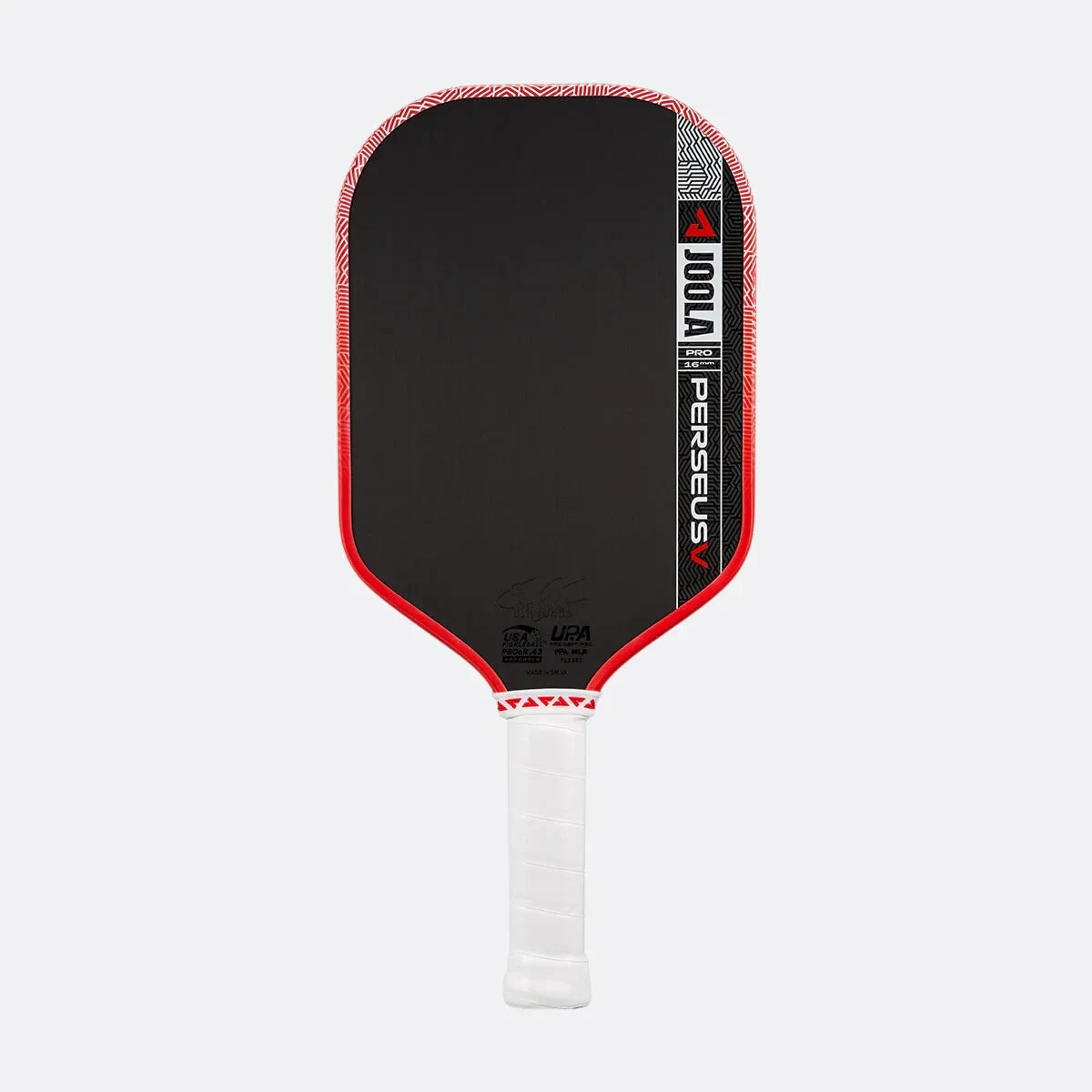
If you test carbon paddles long enough, this becomes the paddle your other measurements get compared against.
The Perseus Pro V lays a textured raw carbon face, fibres running one way under a peel-ply finish, over JOOLA’s Propulsion Core, a polypropylene build with EVA foam inside it, and the combination is the current definition of a flagship: firm and consistent at contact, drives that leave with shape, and a measured spin line of 2,060 RPM.
It is also the paddle Ben Johns plays, though it earns this slot on its measured line rather than its fame.
What separated it across my sessions was repeatability. The ball leaves this face the same way on the fiftieth rally as on the first, which is a rarer quality than any single spectacular shot.
Its elongated frame and 117 swing weight give serves and overheads real leverage, its counters stay honest against pace, and it carries both USA Pickleball and UPA-A approval, so no event on either list asks a question about it.
The honest limits are three. A twist weight of 6.26 is mid-pack on this page, and the widebody at pick 4 holds a stretched mishit steadier.
The raw peel-ply texture is a wear surface, and its bite softens across months of heavy play, which the guide below covers properly. And the feel is firm: players who want the ball to sit and dwell will find pick 2 kinder.
Buy it if you want the reference raw-carbon flagship with a dual-approved all-round game. Skip it if you want maximum mishit stability or a soft, pocketing feel.
2CRBN TruFoam Genesis 14mm: Best for Spin Pickleball Paddle in 2027
AT A GLANCE
TruFoam Genesis 14mm
WEIGHT
7.9-8.3 oz
SWING WEIGHT
119
TWIST WEIGHT
6.21
SPIN
2,401 RPM
Shape: Elongated class
Grip: -
Core: Full TruFoam foam, 14mm
Face: T700 raw carbon fiber
Approval: USAP and UPA-A
Feel: Soft dwell
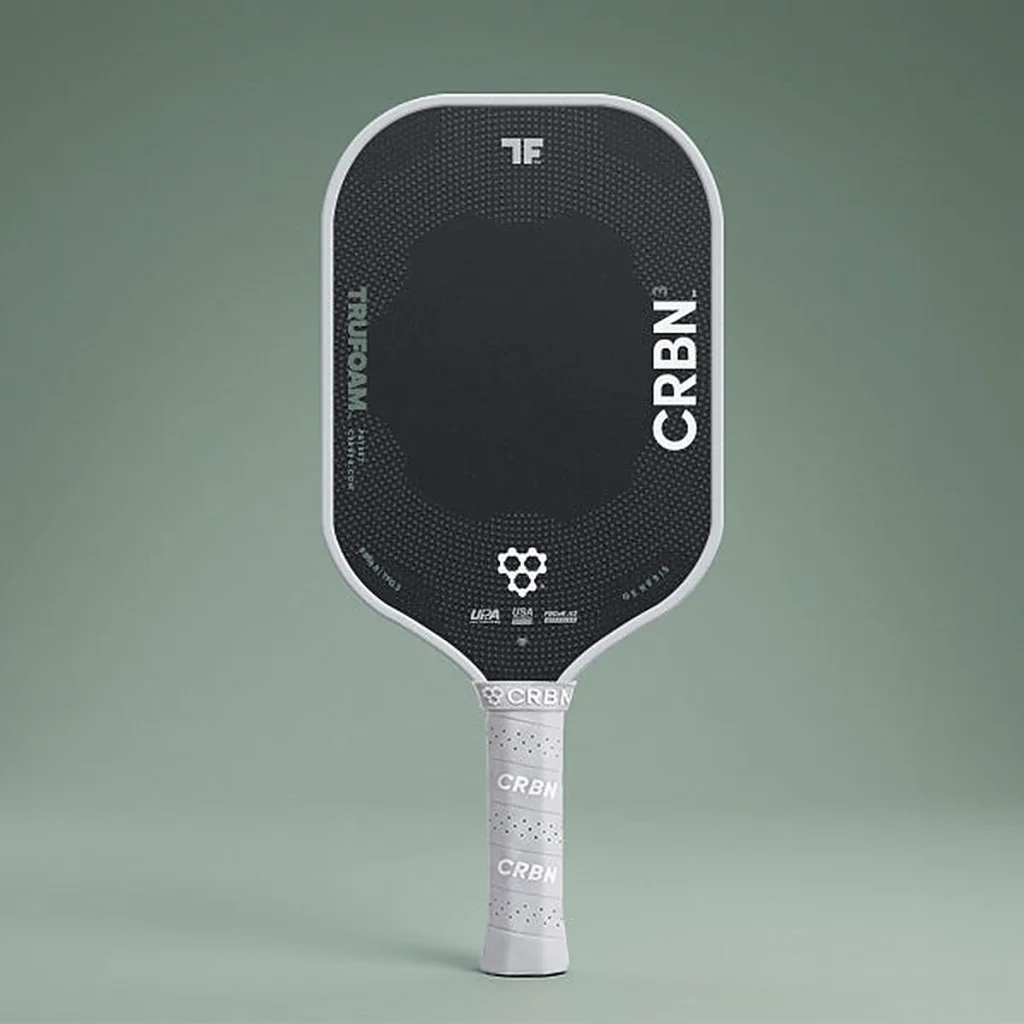
This is the spin ceiling of the page, and it is produced by a mechanism, not a coating. Under the face sits a full TruFoam foam core, and the ball sinks into it a fraction longer than it does on honeycomb.
While it sits there, the T700 raw carbon layup on the surface holds it and brushes it, and the measured result on the elongated build of this family is 2,401 RPM, the highest spin figure I publish for any paddle. Drives dip late and hard, and serves arrive carrying a shape the returner has to respect.
One piece of construction honesty belongs here, because this page exists to police exactly this kind of wording: CRBN builds that face as a T700 carbon layup over a fiberglass backing layer.
The carbon is the layer that meets the ball, and the layer that meets the ball is the one that counts; the backing sits underneath as reinforcement. In play the feel follows the foam: soft dwell, quiet contact, the ball pocketing before it leaves, with power coming out of the core’s rebound rather than off a crisp strike.
The trades are real. A swing weight of 119 asks for a committed swing, and a twist weight of 6.21 is solid rather than exceptional. CRBN does not publish a grip circumference for the model, so the box leaves it unpublished. And the raw carbon surface wears like every raw carbon surface: its bite fades across months of hard use.
Buy it if spin is the shot your game is built around and you like a pocketing foam feel. Skip it if you want a crisp honeycomb strike or a published grip figure.
3Six Zero Black Opal 14mm: Best All-Court Pickleball Paddle in 2027
AT A GLANCE
Black Opal 14mm
WEIGHT
8.2 oz
SWING WEIGHT
114
TWIST WEIGHT
6.4
SPIN
2,307 RPM
Shape: Hybrid
Grip: -
Core: G4 solid foam with Power Gel
Face: Diamond Tough raw carbon fiber
Approval: USAP and UPA-A
Feel: Dense spring
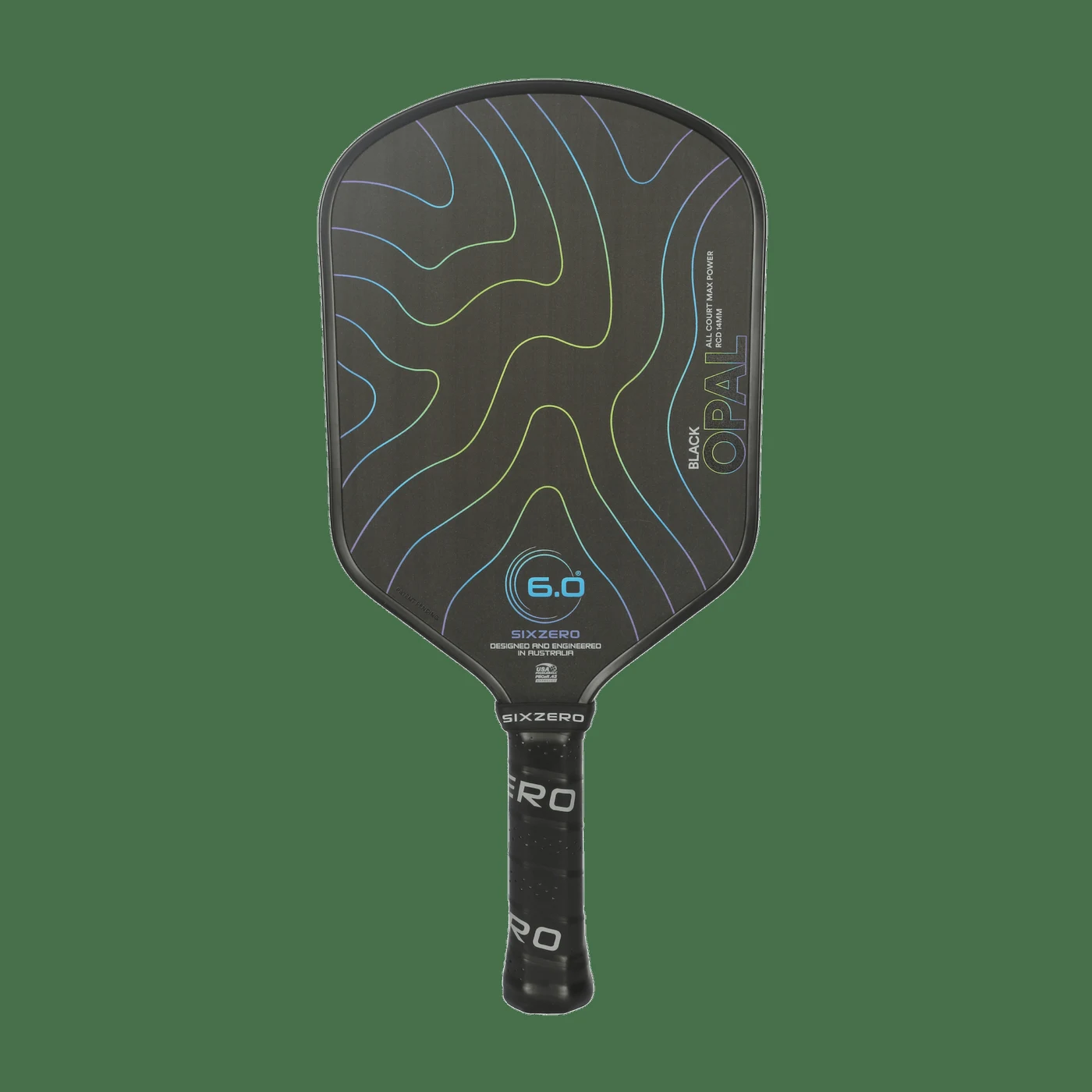
The all-court brief, answered with foam. Inside the Black Opal is a solid foam build with a gel layer in it, and across my sessions it produced the densest, springiest contact on this page: the ball compresses, waits a beat, and leaves with intent.
The measured line backs the feel up: a 114 swing weight, a 6.4 twist weight and 2,307 RPM of measured spin, a top-three spin figure here attached to a paddle that also blocks, resets and counters like an all-courter should.
Its face is this page’s durability argument. Six Zero calls the surface Diamond Tough raw carbon: the raw carbon layup is infused so the texture itself lasts longer, and the brand claims at least four times the texture life of a plain raw carbon face.
That is the brand’s claim, and I carry it as a claim, but the design logic is sound, and in play this face stayed grabby long after plain peel-ply faces around it had started to feel smooth under a fingernail.
The limits are weight and paperwork. At 8.2 ounces with that dense response, this is a substantial paddle in the hand, and fast hands battles reward lighter tools. Six Zero does not publish a grip circumference for it, so the box says so rather than guessing. And if maximum spin is the whole brief, pick 2 still sits above it.
Buy it if you want foam all-court play with the most fade-resistant raw carbon face here. Skip it if you want a featherweight hands-battle paddle.
4JOOLA Scorpeus Pro IV 16mm: Best Widebody Pickleball Paddle in 2027
AT A GLANCE
Scorpeus Pro IV 16mm
WEIGHT
8.24 oz
SWING WEIGHT
114.95
TWIST WEIGHT
7.4
SPIN
2,221 RPM
Shape: Widebody
Grip: 5.25 in handle, 4.25 in circumference
Core: Gen 3 Propulsion Core
Face: Peel-ply carbon fiber
Approval: USAP and UPA-A
Feel: Stable plush
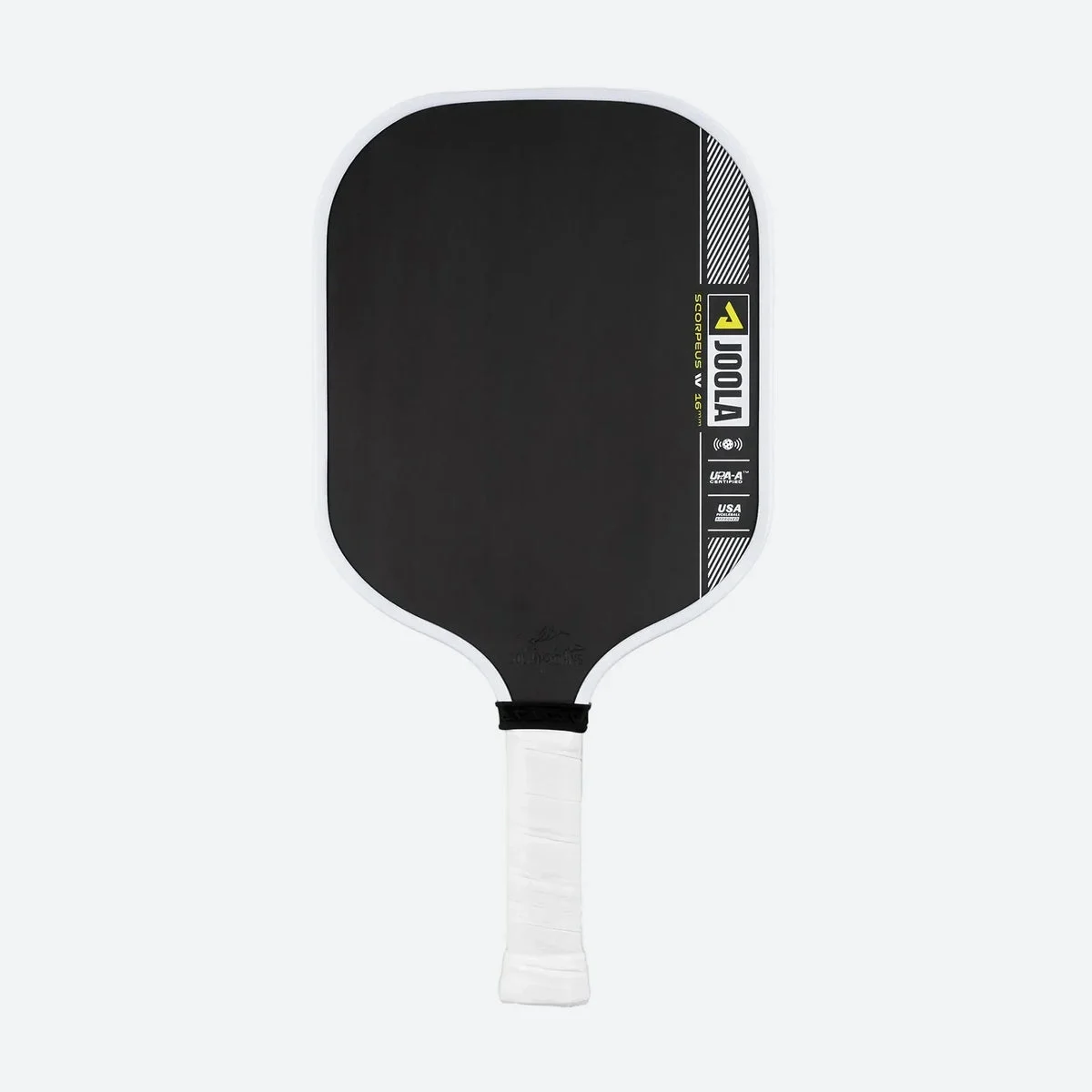
The widebody argument in one number: 7.4. That is this paddle’s twist weight, the highest on the page, and it describes exactly what happens when contact drifts off centre on a widebody: the face holds its line instead of rotating open.
Under that stable face sits a measured spin line of 2,221 RPM from its peel-ply carbon surface, the finish JOOLA markets as its Carbon Friction Surface, so the spin survives the same off-centre contact that the stability protects. That pairing, stability and spin together, is something no other pick here offers in one build.
In play it feels stable and plush at once. The Gen 3 Propulsion Core absorbs pace on blocks instead of returning it with interest, drives leave with dip and intent, and at 8.24 ounces with a 114.95 swing weight there is real mass behind the ball.
Doubles players who live on counters and blocks will feel this paddle working for them on the shots they actually hit most, and its dual approval covers both sanctioning lists.
The shape is the trade. A widebody gives back the reach the elongated picks on this page take for granted, and lunge balls at the kitchen stay lunge balls. The 5.25 inch handle is the shorter end of comfortable for a two-handed backhand. And its raw carbon texture is a wear surface too, fading on the same schedule as pick 1’s.
Buy it if your contact wanders and you want spin that survives it. Skip it if reach and a long two-handed handle lead your brief.
5Selkirk LUXX Control Air Invikta with InfiniGrit: Best Control Pickleball Paddle in 2027
AT A GLANCE
LUXX Control Air Invikta with InfiniGrit
WEIGHT
8.05 oz (measured)
SWING WEIGHT
117
TWIST WEIGHT
5.83
SPIN
1,993 RPM
Shape: Invikta elongated, 16.4 x 7.5 in
Grip: 5.35 in handle, 4.25 in circumference
Core: X7 Thikset honeycomb, 19mm
Face: Florek carbon fiber with InfiniGrit
Approval: USAP
Feel: Muted control
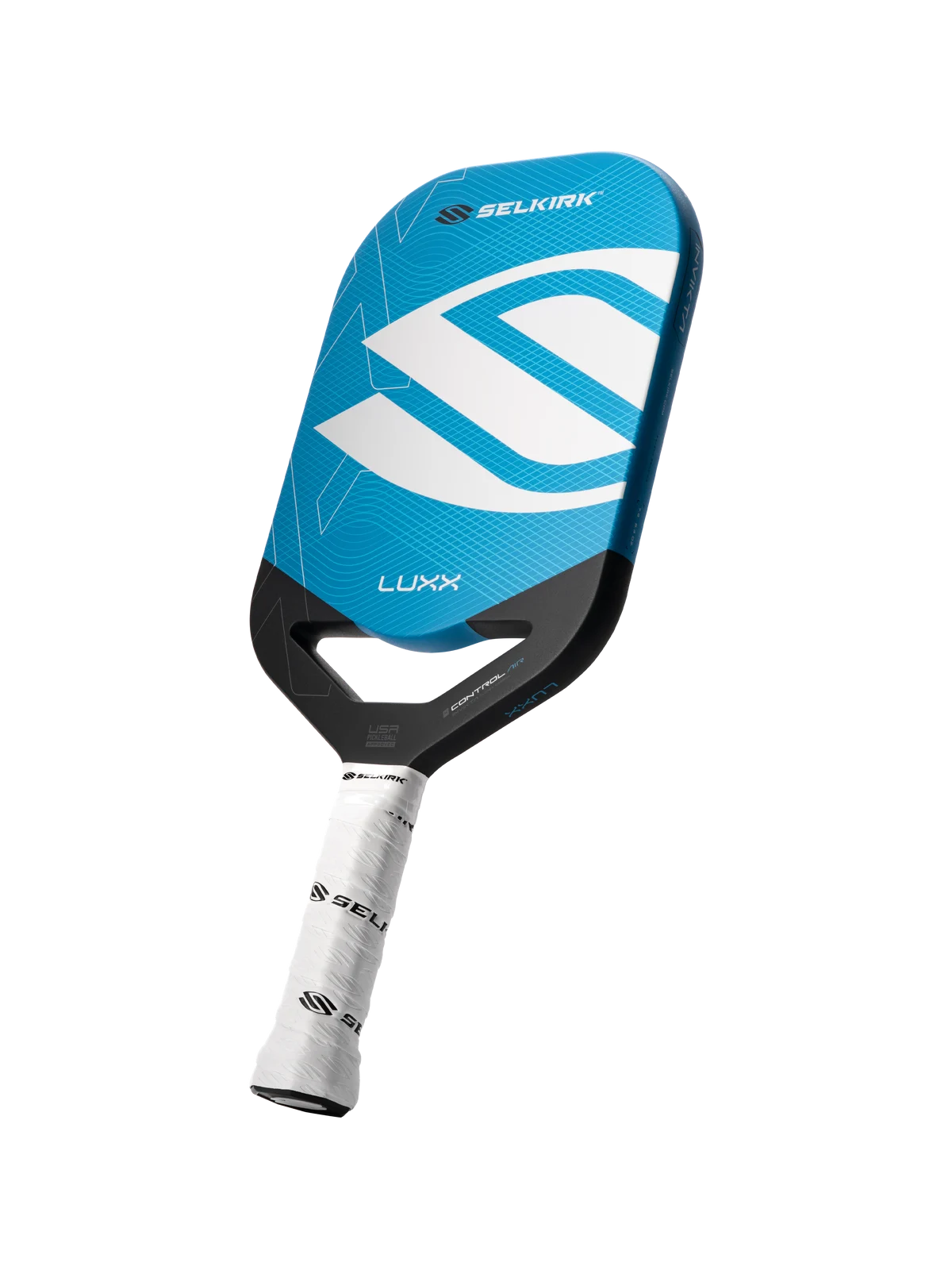
Control on this page wears a 19mm core. The LUXX’s X7 Thikset honeycomb is the thickest core in the list, and the ball sits on it: resets drop instead of climbing, blocks settle instead of sailing, and long dink rallies feel like a negotiation I am winning.
The face is Selkirk’s Florek carbon fiber, and the wording matters on this page, so here it is plainly: Florek is Selkirk’s proprietary blend of carbon fibers, sold by Selkirk as a carbon fiber face, which is why it qualifies here on the brand’s own description rather than on a headline.
Over that face sits InfiniGrit, an applied durable texture rather than raw peel-ply grit.
Selkirk rates it at three times the spin life of a raw carbon surface; that is the brand’s rating, carried as a claim, and the design logic differs from pick 3’s: instead of hardening the carbon’s own texture, Selkirk adds a texture built to outlast it.
Measured spin is 1,993 RPM, a control-tier figure on a control paddle, and in play the bite showed up as shape on drops and rolls rather than violence on drives.
The limits are shape and paperwork. It is an elongated frame, and its 5.83 twist weight means contact wide of centre rotates it more than pick 4’s widebody. And Selkirk lists the line with USA Pickleball approval only, so the box shows no second approval, and UPA-A players should note that before anything else.
Buy it if touch, dwell and a texture built for longevity lead your game. Skip it if you need UPA-A approval or widebody stability.
6Engage Pursuit Pro1 6.0 Elongated: Best for Touch Play Pickleball Paddle in 2027
AT A GLANCE
Pursuit Pro1 6.0 Elongated
WEIGHT
8.0 oz
SWING WEIGHT
118.6
TWIST WEIGHT
5.95
SPIN
2,267 RPM
Shape: Elongated, 16.5 x 7.5 in
Grip: 5.875 in handle, 4.25 in circumference
Core: MachPro polymer with Variable Release 2.0
Face: Raw Toray T700 carbon fiber
Approval: USAP
Feel: Connected touch
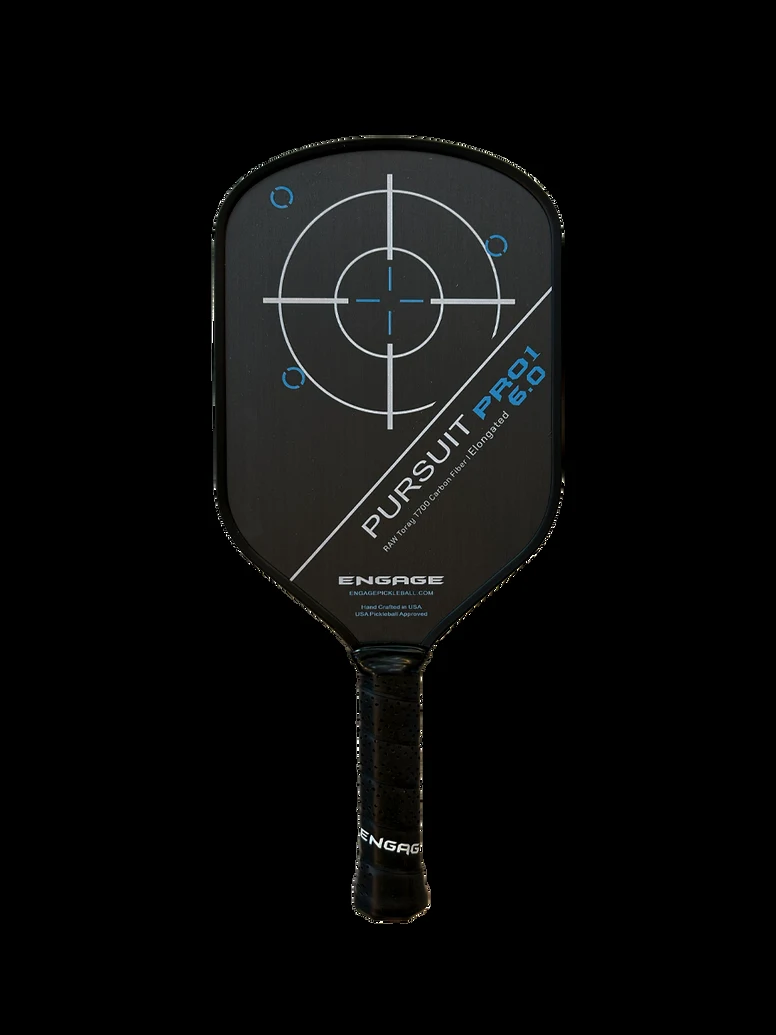
The touch player’s carbon paddle. Engage lays a raw Toray T700 carbon face over its MachPro polymer core and governs how the ball leaves with its Variable Release 2.0 system, and the result is the most cooperative soft game on this page.
The ball sits on the face and talks back. Resets land where I aimed them rather than where the paddle decided, drops take the shape I gave them, and roll volleys, the shot this Pursuit line built its reputation on, bite and dip instead of skidding flat.
The measured line proves spin is a control statistic too: 2,267 RPM from a paddle whose home ground is the kitchen line. That bite is what lets a drop shot be attacked with shape instead of floated with hope.
The 5.875 inch handle is the longest on this page, which gives a two-handed backhand genuine room to work, and the 4.25 inch grip circumference is the standard fit most hands expect when they pick a paddle up.
The honest trade is stability. A 5.95 twist weight asks for centred contact, and wide mishits rotate the face more than the widebody picks forgive.
A swing weight of 118.6 also asks for a committed swing rather than a wristy one, and the paddle carries USA Pickleball approval only. This one wins points with placement; players chasing overwhelming pace should look at the foam picks above it.
Buy it if resets, drops and two-handed room lead your game. Skip it if you want maximum mishit stability or dual approval.
7Gearbox GX2 Power Hybrid: Best Carbon Core and Face Pickleball Paddle in 2027
AT A GLANCE
GX2 Power Hybrid
WEIGHT
8.0 oz
SWING WEIGHT
113
TWIST WEIGHT
6.66
SPIN
~2,050 RPM
Shape: Hybrid
Grip: 5.5 in handle, 4.0 in circumference
Core: SST 2.0 CarbonRibCore
Face: 3K woven raw carbon fiber
Approval: USAP
Feel: Heavy dwell
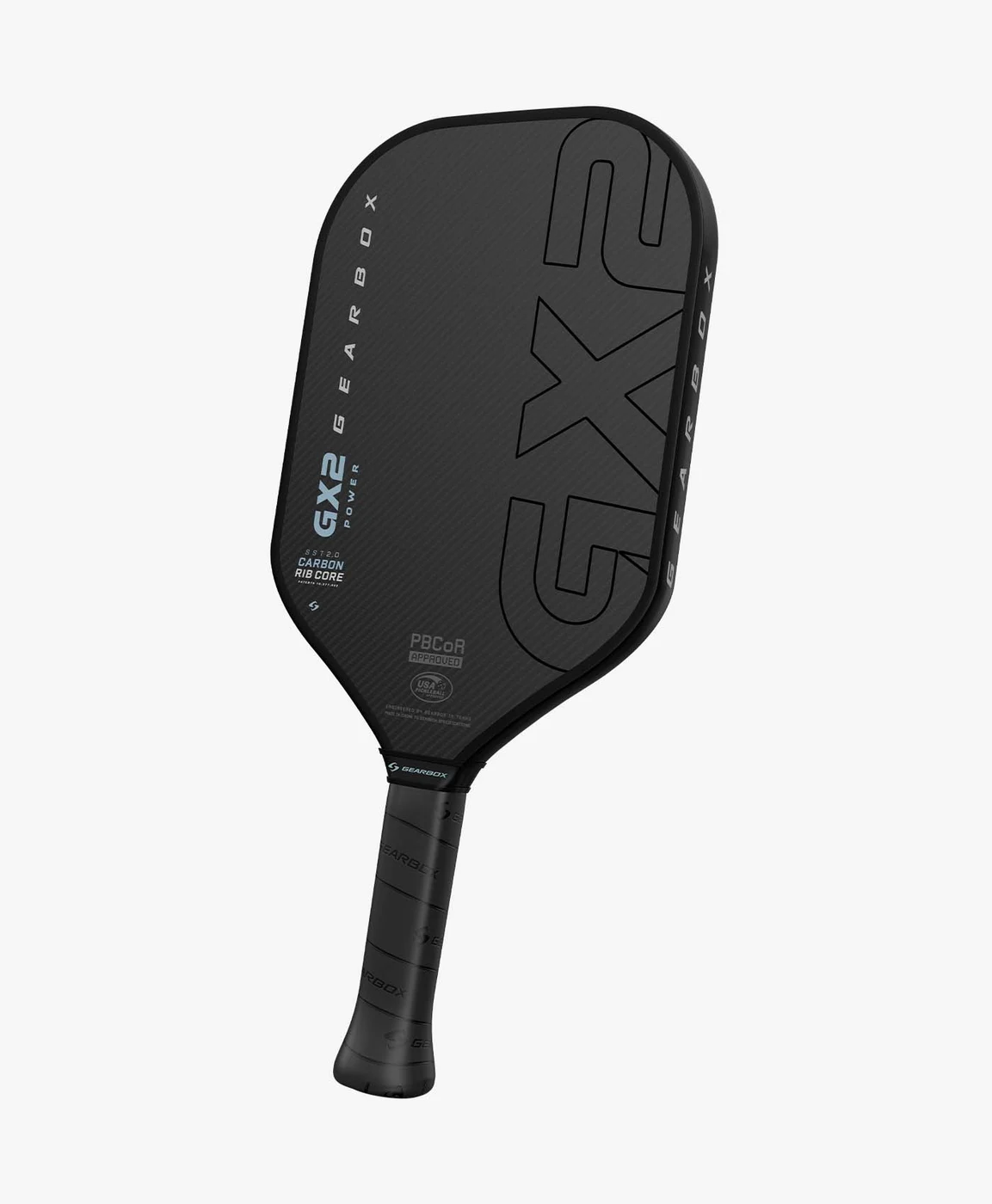
This page judges Gearbox face-first, because Gearbox is the brand that puts carbon in more than one place at once. So start with the face: Gearbox’s own spec block for the GX2 reads 3K woven raw carbon, and the pick qualifies on that line alone.
What makes it the signature pick is what sits underneath: no honeycomb at all, but an SST carbon rib core, a Toray T-700 carbon structure built inside the paddle instead of a cell grid. It is the one paddle here that is carbon in its face and its core at once.
In play, that construction produces the heaviest dwell on the page. The ball sinks into the woven texture, sits on the suspended ribs a moment longer than honeycomb allows, and leaves late and shaped; measured spin sits at about 2,050 RPM, and a 6.66 twist weight keeps the hybrid face honest on stretched contact.
Counters feel like placing the ball rather than punching it, and long rallies have a sameness to them that I came to trust.
The trade is feedback and fit. Dwell this heavy reads muted to players raised on a crisp honeycomb strike, and there is less easy pop here than the foam picks give.
The 4.0 inch grip circumference is the smallest on the page: a genuine fit for smaller hands, and a build-up job with overgrips for bigger ones. Approval is USA Pickleball only.
Buy it if you want carbon through the whole paddle and a dwell-heavy strike. Skip it if you want crisp pop or a standard-size grip out of the box.
8Diadem Edge 18K 16mm: Best Woven Carbon Pickleball Paddle in 2027
AT A GLANCE
Edge 18K 16mm
WEIGHT
7.83 oz (measured)
SWING WEIGHT
116
TWIST WEIGHT
6.5
SPIN
2,286 RPM
Shape: Elongated, 16.5 x 7.5 in
Grip: 5.375 in handle, 4.125 in circumference
Core: 16mm polypropylene honeycomb
Face: 18K tri-axial woven carbon fiber
Approval: USAP
Feel: Soft control
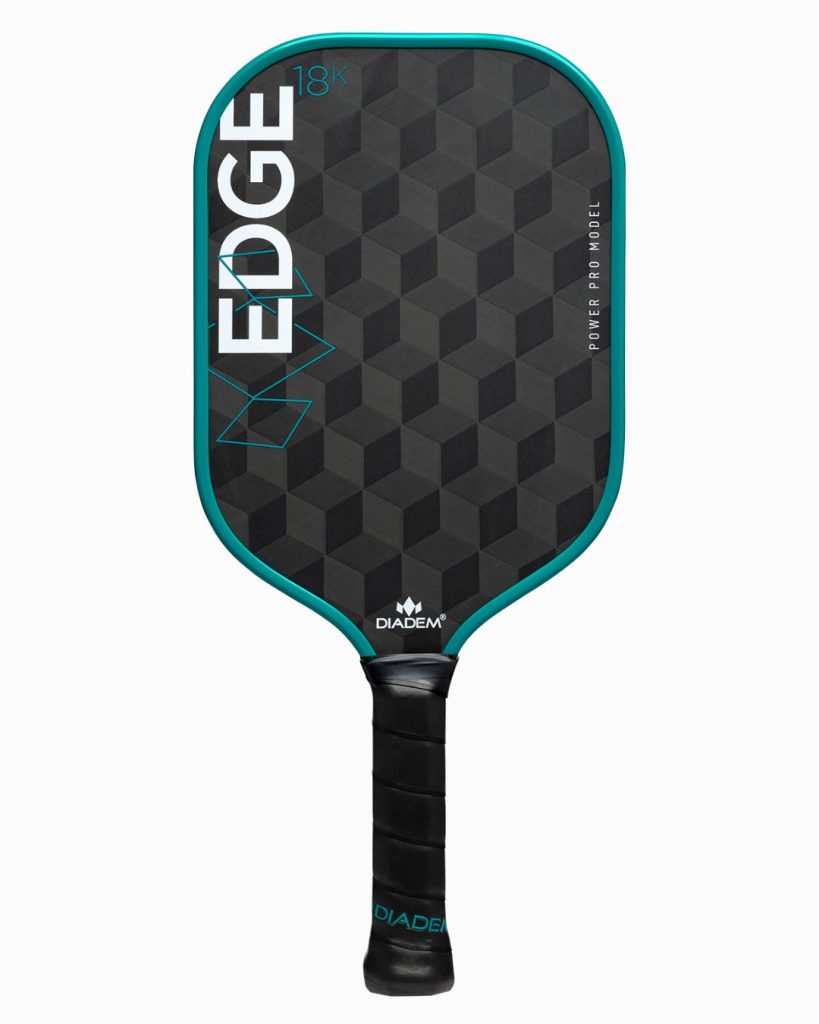
The woven counterpoint. Every other face on this page is raw unidirectional carbon except pick 7’s 3K weave; the Edge 18K wears the widest weave here, an 18K tri-axial carbon layup whose strands run in three directions, and the 3D pattern is one you can see on the face and feel at contact.
It sits on an elongated frame, 16.5 by 7.5 inches, over a 16mm polypropylene honeycomb core in a thermoformed build, and the combination produces the softest, quietest control contact on this page.
The measured line is published and complete, which already separates it from the pick it replaces: an independent bench measured 7.83 ounces static, a swing weight of 116, a twist weight of 6.5 and 2,286 RPM of spin.
That same bench scores its control at the top of its scale and its power near the bottom, and both halves of that verdict showed in play.
Contact answers quietly here. Resets drop instead of climbing, blocks hold their line, and the tri-axial texture keeps shaping drops and rolls long after the first month, because a woven surface wears differently from a peel-ply one.
The limits are power and fit. Serves and drives leave without the jump the foam picks give, so finishing power has to come from placement. A swing weight of 116 is real mass for a control paddle, and the 4.125 inch grip circumference suits smaller hands best, with a build-up job waiting for bigger ones. Approval is USA Pickleball only.
Buy it if you want woven carbon’s soft control with a full published measured line. Skip it if you finish points with pace or need a long, thick grip.
9Franklin C45 Aurelius 16mm: Best for Fast Hands Pickleball Paddle in 2027
AT A GLANCE
C45 Aurelius 16mm
WEIGHT
7.8 oz
SWING WEIGHT
~99
TWIST WEIGHT
6.2
SPIN
-
Shape: Widebody/traditional, 15.7 x 7.9 in
Grip: 5.1 in handle, 3.9 in circumference
Core: PowerFlex polymer, double thermoformed
Face: T700 carbon fiber, 45-degree peel-ply
Approval: USAP and UPA-A
Feel: Feather fast
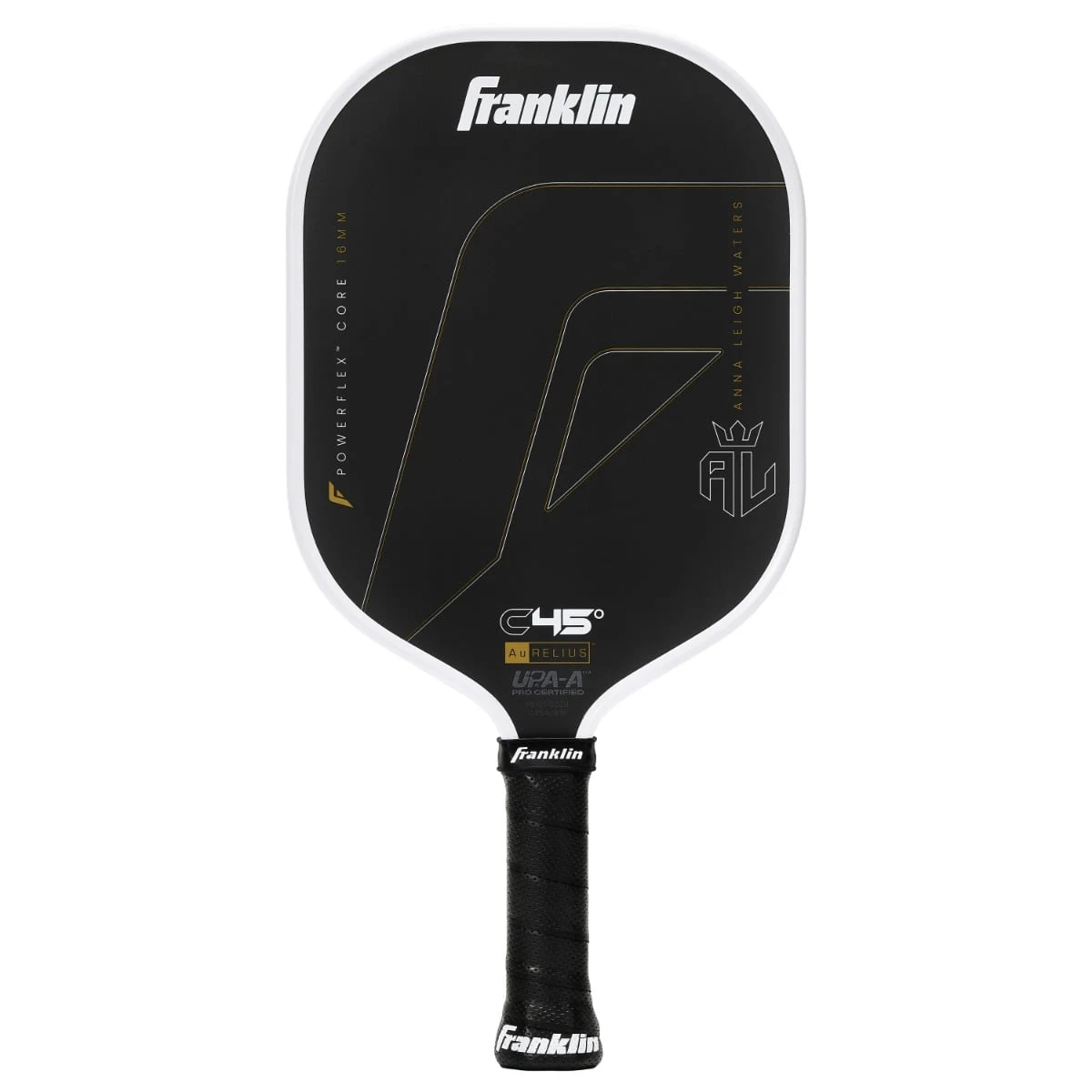
The fastest hands on the page, and it is not close.
The Aurelius 16mm swings at about 99, the lowest swing weight here by a wide margin, and in a hands battle that number is the whole story: counters come up on time, the paddle changes direction between shots instead of arriving late, and I found myself aiming volleys I would normally just block.
Under that speed sits a T700 carbon face with a design detail that deserves its own sentence: its peel-ply fibres are laid at 45 degrees rather than straight, and that diagonal lay is where this paddle’s spin feel comes from.
The rest of the build supports the brief. Franklin’s PowerFlex core is double thermoformed, so contact stays honest and connected despite the low mass, with none of the hollow vagueness that light paddles can have.
The 3.9 inch grip circumference is the thinnest in the list, suiting smaller hands and keeping the wrist loose for rolls and flicks. It also holds both USA Pickleball and UPA-A approval, which is rare company at this speed.
The known trade is stability. Off-centre hits twist: low swing weight buys speed with steadiness, and wide contact rotates this face more than any other pick here.
Adding edge weight is the known fix, and many owners do exactly that. Lab spin is also unpublished for it, so the box says so, however gritty the face feels in the hand: feel is not a measured figure.
Buy it if kitchen speed and quick counters are your game. Skip it if you need mass to hold blocks against hard drivers.
10Six Zero Quartz: Best Entry-Level Raw Carbon Pickleball Paddle in 2027
AT A GLANCE
Quartz
WEIGHT
7.6-8.2 oz (avg 7.9 oz)
SWING WEIGHT
108
TWIST WEIGHT
6.4
SPIN
1,950 RPM
Shape: Standard, 16 x 7.9 in
Grip: 5 in handle, 4.25 in circumference
Core: 15mm polypropylene honeycomb
Face: Raw carbon fiber (T300)
Approval: USAP
Feel: Light control
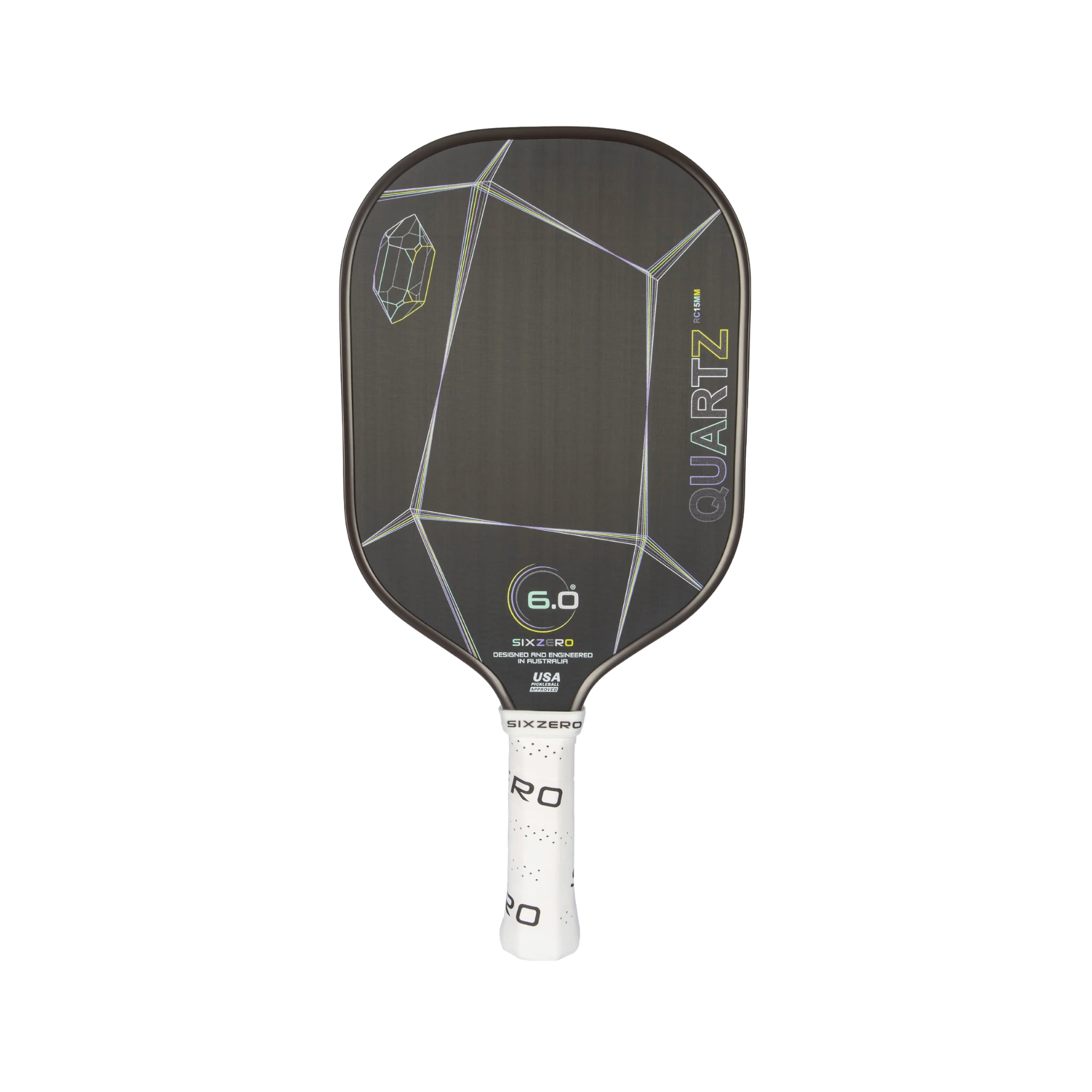
The honest way into raw carbon. The Quartz’s face is genuine raw carbon fiber, not a painted finish pretending to be one, which is the trap this tier of the market usually hides. The grade is stated plainly, here and in the box: T300, a softer, lower-modulus carbon than the T700 used by every other pick on this page.
Six Zero sells it openly as its Gem-series entry build, and I would rather print a true T300, plainly labelled, than a vague carbon headline that hopes you never ask which grade you bought.
In play it is light control.
The published line reads a 108 swing weight, a 6.4 twist weight and 1,950 RPM of spin, respectable figures for a standard-shape paddle averaging 7.9 ounces, and they matched what I felt across my sessions: counters arrive on time, drives dip enough to stay aggressive, and the 15mm honeycomb core gives contact a livelier, more informative edge than the thick control builds give.
The step down is real and should be named rather than smoothed over. T300 texture and stiffness sit below the T700 class, so the spin ceiling and the face’s bite start lower, and there are no foam walls or unibody claims here: it is a one-piece build with a real carbon face and honest numbers.
Approval is USA Pickleball only. That honesty is why it is also the best value carbon fiber pickleball paddle on this page.
Buy it if you want your first carbon face to be a real one, honestly graded. Skip it if you are chasing flagship texture and stiffness.
How to Choose the Best Carbon Fiber Pickleball Paddle in 2027
Carbon is the easiest word in pickleball to print and the hardest to verify. Most carbon fiber pickleball paddle reviews rank the headline claim first and the face line second, which is exactly backwards.
The six sections below are the checks I run before a paddle earns a place on a list like this one: what the face actually is, how long its spin survives, what sits underneath the carbon, and which paperwork and variant details decide whether the paddle in the box is the paddle you researched.
Run in order, they answer what is the best carbon fiber pickleball paddle for your game instead of naming one paddle for everyone.
Raw, Woven, or Graphite: How to Tell What You Are Actually Buying
Start with the face line of the brand’s own spec block. That single line, not the listing headline, tells you which of three different materials you are holding. Raw carbon is unidirectional: the fibres run one way under a peel-ply texture, and it is the modern default performance face, the T700 class on most of this page.
Grade honesty matters inside that class: pick 10’s face is T300, a softer grade, printed as T300, and a listing that will not name its grade is telling you something.
Woven carbon runs its strands over and under in tows, bundles of filaments: 3K means 3,000 filaments per tow, 12K means 12,000, and 18K means 18,000.
The tow size changes the weave’s stiffness, its feel and its texture pattern, which is why pick 7’s 3K and pick 8’s 18K play like relatives rather than twins. A 3K carbon fiber pickleball paddle and an 18K one are both woven carbon, separated by strand width rather than by class.
Graphite is the third material, and it is not a synonym. Graphite faces belong to the older material class: thinner, crisper, more prone to chipping, with a roster of their own that this site covers in its graphite guide.
A paddle whose face line reads graphite is a graphite paddle, however the headline above it is worded, and it does not become a carbon pick by marketing. The one-line test that protects you is simple: read the face line, and believe the face line.
Grit Fade: The Spin You Keep vs the Spin You Buy
Raw carbon’s spin is a texture, and a texture is a wear surface. The peel-ply grit that brushes the ball rounds over months of contact, and measured spin falls with it: the paddle you play in month six is not spinning like the paddle you unboxed.
That is not a defect in any one model. It is the physics of the material, true of all raw carbon fiber pickleball paddles, and any list that quotes a new paddle’s spin figure without saying so is describing your first month, not your season.
The market’s answers are all on this page. Pick 3’s face is infused for texture life, with the brand claiming four times the life of plain raw carbon. Pick 5 wears an applied texture the brand rates at three times the spin life of a raw carbon surface. Picks 1 and 6 make no such claim: their raw carbon is a consumable, accepted as one.
Check your own face with a fingernail dragged lightly across it, and with a ball pressed into it and twisted: a face that no longer grabs is a faded face.
Clean it with a rubber eraser made for carbon faces and never with solvents, and understand that cleaning recovers bite hidden under ball residue, not texture that has worn away. When the fade arrives, it, not breakage, is your replacement signal.
Carbon Through the Whole Paddle: Face, Core, Edge
The face-first rule at the top of this page is also a buying skill. Carbon inside a paddle is real engineering, but it answers a different question than the face does.
Pick 7 is the genuine case: its core is a carbon rib structure rather than honeycomb, and that changes dwell and feel in ways I can point to on court. But that paddle earned its place here on its face, and the core is the bonus, not the qualification.
Around that genuine case sits a ring of lesser claims: carbon-reinforced perimeters, carbon edge walls, a carbon layer somewhere inside a layup whose hitting surface is fiberglass. Those are stability features, and some of them are good ones, but they do not make a carbon-faced paddle.
Marketing knows the order buyers read in, so it puts the core material in the headline and the face material in the fine print. Read in the opposite order: face line first, core second. Any paddle whose face line you cannot find is a paddle whose face is unproven.
What the Carbon Sits On: Honeycomb vs Foam Cores
The same raw carbon face plays like three different paddles depending on what it is bonded to. Over a 16mm polypropylene honeycomb, picks 6 and 8, it plays connected and honest: contact is crisp, feedback through the handle is clear, and the ball leaves when you tell it to.
In a foam-injected thermoformed build, picks 1 and 9, the face gains dwell and a livelier perimeter, and mishits near the edge keep more of their pace than a plain honeycomb build returns.
Over a full foam core, picks 2 and 3, contact goes quiet and pocketed, and power comes from the core’s rebound rather than from the strike itself.
The failure modes differ too, and they matter before you choose: honeycomb cores can eventually crush in one spot under repeated hard contact, while foam builds trade that risk for consistency questions across a long life.
Cold-pressed and thermoformed generations of the same face differ the same way. None of the three is the correct answer; they are three personalities wearing one material, and your soft game should pick between them.
Shape and Swing Weight in Carbon Builds
Carbon is stiff, and stiffness hands the decision to shape. The face will not flex a mishit back into line for you, so where the mass sits decides how forgiving a carbon paddle feels. Elongated frames, picks 1, 2 and 6, put leverage behind serves and drives and ask for a committed swing in exchange.
The widebody at pick 4 answers with twist weight: 7.4, the highest here, which is the laboratory version of a face that refuses to rotate on the off-centre contact widebody players actually make.
Pick 9 is the outlier that proves the axis matters: a swing weight around 99 makes it the fastest hands-battle tool on the page and the least stable blocker at the same time, and both facts are the same fact.
Hold the two numbers together when you shop: swing weight for how fast the head moves, twist weight for how the face behaves when you miss the middle. Then fit the handle like clothing rather than a feature: circumference and length are measured against your hand, and no face material compensates for a grip that does not fit it.
Approval and Variant Checks Before You Buy
Two approval bodies govern sanctioned play, and carbon paddles sit under both. USA Pickleball approval is the list most leagues and tournaments check. UPA-A is the separate approval tied to the pro tour game.
A paddle can hold both, or either, or, and this is the trap, UPA-A only: the 11SIX24 Vapor Power 2 is the standing example in the wider market, a genuinely strong carbon paddle approved by UPA-A and not by USA Pickleball, which makes it unusable for USA Pickleball sanctioned play however well it plays.
Never let one body’s approval be read as the other’s.
Then check the variant, because approval and data both belong to an exact build. Family listings sell several paddles under one page: picks 2, 5 and 9 all require the right thickness or version to be selected, and the wrong selection is a different paddle with different figures.
Faces change under one model name too, as the Halo line’s older and current listings show. Before any sanctioned event, find your exact model name, at your exact thickness and shape, on the approved list. Approval belongs to a model. It has never belonged to a brand.
Frequently Asked Questions (FAQs)
1. What is a carbon fiber pickleball paddle?
A carbon fiber pickleball paddle is a paddle whose face, the layer that strikes the ball, is carbon fiber.
On this page that means one of three sold forms: raw unidirectional carbon under a peel-ply texture, woven carbon in its tow grades, or a carbon fiber skin over a foam or honeycomb core where the maker sells the face itself as carbon fiber.
Carbon buried in a core or an edge does not qualify a paddle on its own. The test is always the face line of the maker’s own spec block, never the listing headline.
2. Is carbon fiber the same as graphite?
No. Carbon fiber and graphite are cousins, not the same material, whatever older articles claim. Graphite is the earlier material class: its faces are thinner, its strike is crisper, and its surface chips more readily.
Modern carbon fiber faces are raw unidirectional layups or woven tow constructions, built for grip and dwell, and they play differently enough that the two materials keep separate rosters and separate guides on this site. If a face line reads graphite, the paddle is a graphite paddle, and no headline wording changes that.
3. What is the difference between raw carbon and woven carbon?
Raw carbon runs its fibres in one direction under a textured peel-ply finish, and it is the modern default: it bites the ball hard and posts the highest measured spin figures on this page. Woven carbon crosses its strands over and under in bundles called tows, in the visible pattern you can see on the faces of picks 7 and 8.
The weave changes the face’s stiffness and feel, and woven faces generally trade a little of raw carbon’s bite for their own texture character. Neither construction is automatically better; they are two answers to the same question.
4. What do 3K, 12K and 18K carbon fiber mean?
They count filaments. The K number is the number of individual carbon filaments bundled into each strand, or tow, of the weave: 3K is 3,000 filaments per tow, 12K is 12,000, and 18K is 18,000.
A larger tow weaves a wider, flatter strand, which changes the face’s stiffness, its feel and its texture pattern. The number is a construction description, not a quality ladder: pick 8’s 18K weave plays soft and muted, pick 7’s 3K plays with heavy dwell, and both are genuine carbon faces.
5. Does a carbon fiber paddle give you more spin?
Yes, with two honest conditions. A textured carbon face grips the ball harder than fiberglass or graphite, and the measured figures on this page run from about 1,950 RPM up to 2,401 RPM at the top.
The first condition is technique: spin comes from brushing up the back of the ball, and a flat swing produces a flat ball off any face ever made. The second is wear: carbon texture is a consumable surface, and the spin you measure in the first month fades as the grit rounds. The guide above covers how to check a face and slow that fade.
6. Why does the spin on my carbon paddle fade, and can I get it back?
Because the spin lives in a surface texture, and surfaces wear. Every contact rounds the peel-ply grit a little, and months of play leave the face smoother than it started.
You can recover part of what seems lost: ball residue builds up inside the texture and mutes it, and a rubber eraser made for carbon faces lifts that residue and restores the bite hiding underneath.
What cleaning cannot do is rebuild worn texture. Once the grit itself has rounded away, the fade is permanent, and it, rather than breakage, is the usual end of a carbon paddle’s best life.
7. Is carbon fiber better for power or for control?
Neither, by itself. The face contributes bite and consistency; the core and the shape decide whether a carbon paddle plays as a power tool or a control tool.
On this page the same material family produces the thick-cored control pick at 5, the foam spin build at 2 and the elongated flagship at 1. Choose the build for the game you play, then let the carbon face do its own job: gripping the ball, and answering contact the same way every time.
8. If a paddle has carbon in its core or edge, is it a carbon fiber paddle?
Not on that evidence alone. The label belongs to the face: a paddle is a carbon fiber paddle when its outer hitting layer is carbon fiber. Carbon inside can be excellent engineering, and pick 7’s carbon rib core is the genuine article, but that paddle qualifies here because its face is woven carbon, with the core as a bonus.
A carbon-reinforced edge or perimeter under a fiberglass face is a fiberglass paddle with a stability feature. Read the face line first, and let it settle the question.
9. How long does a carbon fiber paddle last?
Usually, the texture goes before the structure does. A carbon face’s grit fades across months of regular play, faster for daily players and slower for weekend ones, and that fade is the practical end of the paddle’s prime even while the paddle still plays soundly.
Structurally, honeycomb cores can eventually crush in one spot and foam cores can lose consistency over time, but for most players the face gives the first honest retirement signal: when drives stop dipping and the fingernail test finds no grab left, the paddle has given you what it had.
10. Is a carbon fiber paddle a good choice for a beginner?
Yes, if the shape and the fit are right. Carbon’s bite helps a developing swing learn to shape the ball, and an honest carbon face at the entry tier, like pick 10’s, teaches real technique instead of a painted imitation.
What matters more at the start is a forgiving shape and a grip that fits your hand, because footwork, positioning and consistent contact decide beginner points long before face material does. Choose the carbon paddle whose shape suits the game you are building, and the material will keep rewarding you as your swing grows into it.
11. Do I need a USA Pickleball approved paddle, and what does UPA-A approval mean?
For sanctioned play, yes: leagues and tournaments check the USA Pickleball approved list, and arriving with an unlisted paddle can mean borrowing one at check-in. UPA-A is a separate approval body tied to the pro tour game, and the two lists are not interchangeable.
A paddle can hold both approvals, only USA Pickleball approval, or only UPA-A approval, and a UPA-A-only paddle is not legal for USA Pickleball sanctioned events. Approval belongs to an exact model at an exact thickness and shape, so check your precise paddle name against the list before you travel.
12. How should I clean and care for a raw carbon fiber face?
Clean it with a rubber eraser made for carbon faces, worked gently across the surface to lift ball residue out of the texture. Never use solvents, household cleaners or anything abrasive: they attack the finish the texture lives in.
Between sessions, store the paddle out of heat and direct sun, and let the edge guard, not the face, take the scrapes against the ground. Check the face monthly with a fingernail drag or a ball pressed and twisted against it; a face that still grabs is a face that still spins.

Michael Stevenson
Hi, my name is Michael Stevenson and I’m a passionate pickleball player. I’ve been playing the game for many years and I’m pretty highly skilled at it. Pickleball is one of my favorite topics so naturally, I love to write about it.
Whether it’s tips for beginners, guides for experts, reviews of new paddles, or advanced playing techniques – if it relates to pickleball then I have something interesting to write about it. So if you’re looking for entertaining and informative information on the topic of pickleball, look no further than my written works!