
You know the exact moment a paddle stops working for you. It’s game three, your shoulder is barking, a dink you’ve hit a thousand times floats long, and the paddle that looked perfect online suddenly feels like a plank with a handle. I’ve bought that paddle. More than once.
The best pickleball paddles in 2027 earned their place the slow way. I played the current lineup past the honeymoon, past the first week shine, to where grit wears thin, edges start to feel loose, and dead spots show themselves, and I cut everything that could not survive real games. What is left is 15 paddles that still felt honest in week six: power that does not launch your blocks into the fence, control that does not feel dead at the net, spin that is still there in month two. Whatever your game, power, control, spin, comfort, or budget, your paddle is on this list.
The 15 Best Pickleball Paddles in 2027, Ranked by How You Play
Every paddle below earned its place the same way: it survived weeks of real games, not one good afternoon. The order is not set by price, and it is not set by brand size. It is set by what each paddle does best, matched to the way you play: power for players who drive and speed up the ball, control for a patient dinking game, spin for players who shape their shots, comfort for sore arms and elbows, and budget picks that play far above their price. Under each paddle you will find how it felt on court, the specs that actually matter (weight, core thickness, shape), who should buy it, and who should skip it and move down the list. Short on time? The first pick is the one I would hand to most players. Already know your game? Jump straight to your style and start there.
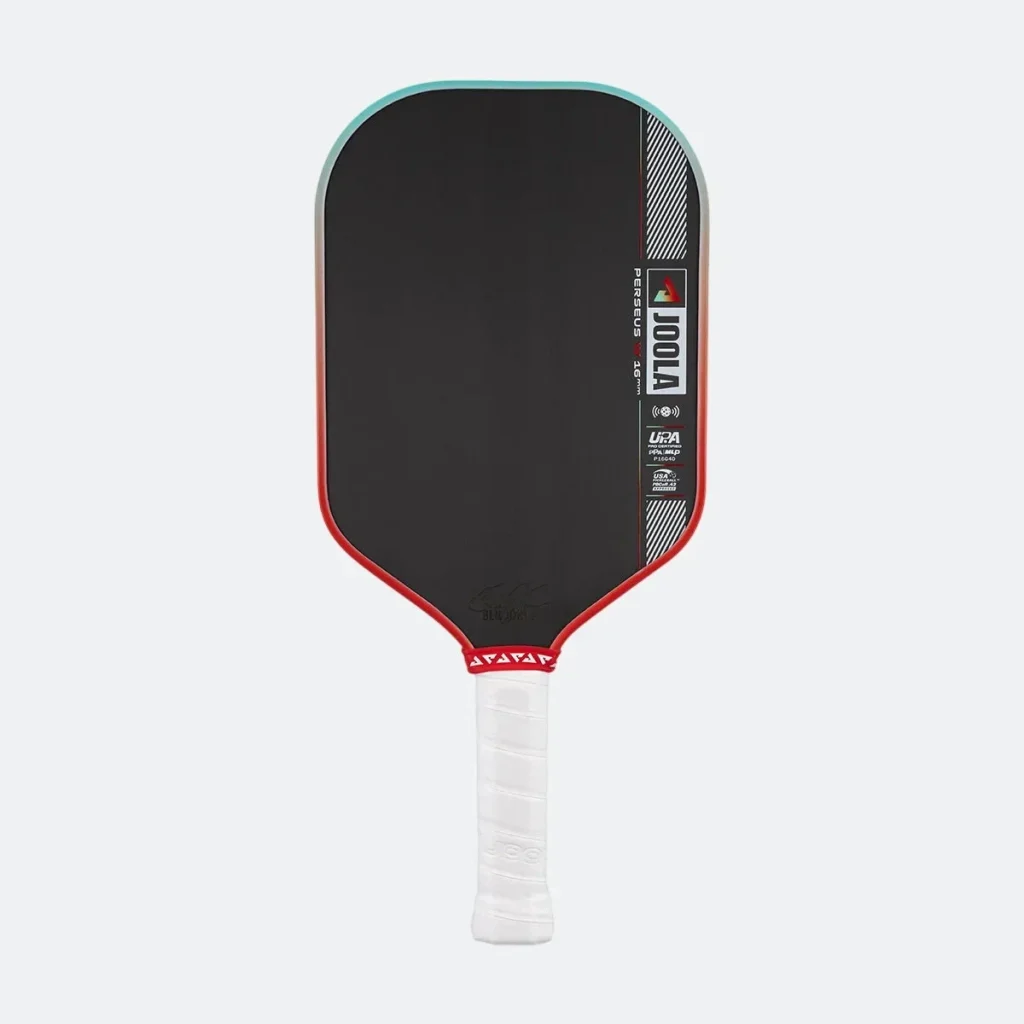
1JOOLA Perseus Pro V 16mm: Best Overall Pickleball Paddle in 2027
AT A GLANCE
Perseus Pro V 16mm
WEIGHT
8.1 oz
SWING WEIGHT
117
TWIST WEIGHT
6.26
SPIN
2,060 RPM
Shape: Elongated, 16.5 x 7.5 in
Grip: 5.5 in, 4.25 in circumference
Core: Propulsion Core + foam edge wall, 16mm
Face: Textured carbon fiber
Approval: USAP and UPA-A
Feel: Firm, connected
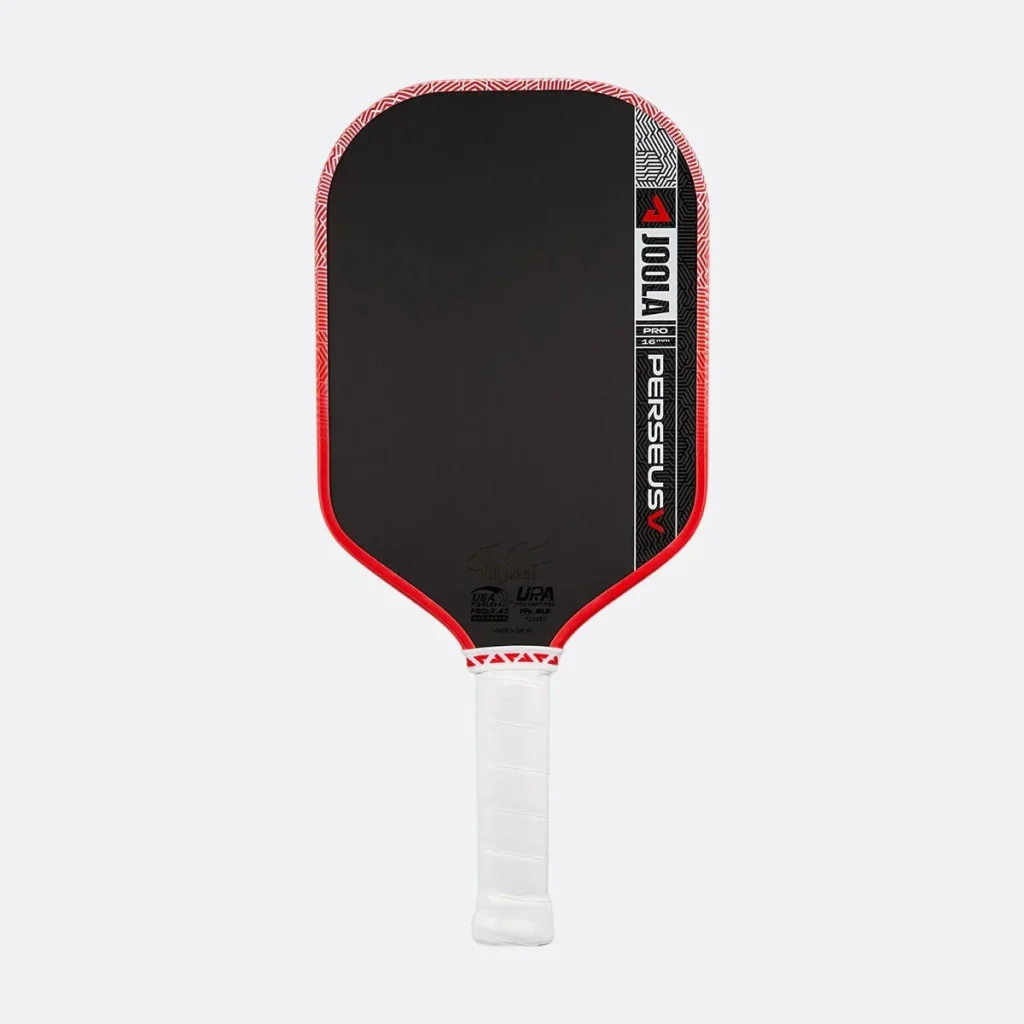
The first two sessions, I nearly wrote this paddle off. It felt muted, almost sleepy, and my drives landed a foot short of where I expected. Then it broke in, and everything changed.
The Pro V does not hand you power. It waits for your swing, and when you commit, the ball jumps off the textured carbon face with real pace and stays heavy through the baseline. I could feel the ball sit on the face for a heartbeat on drives, then launch. Counters and rolls came off clean, and the spin bit hard enough to pull dipping shots down inside the line.
What surprised me most was the soft game. The Pro IV I played before it had a habit of firing the odd reset too hot. This one absorbs pace. Blocks settled, dinks stayed low, and off-center hits did not twist in my hand, because the foam edge wall keeps the face steady and the sweet spot wide. At 8.1 ounces with a 16.5 inch elongated frame, it gives you reach at the kitchen and room on the 5.5 inch handle for a two-handed backhand.
The honest tradeoffs: the elongated head feels slower in frantic hands battles, lazy swings get exposed, and the grit wears like normal raw carbon, so the spin will fade over a long season.
Buy it if you are an intermediate or advanced player who generates your own power and wants one paddle that does everything at a high level. Skip it if you are still building your fundamentals. Cheaper paddles below will forgive more while you learn.
Full review: I have gone deeper on this paddle on its own in my JOOLA Perseus Pro V 16mm review.
2CRBN TruFoam Genesis: Best Pickleball Paddle for Spin in 2027
AT A GLANCE
CRBN TruFoam Genesis
WEIGHT
8.1 oz
SWING WEIGHT
119
TWIST WEIGHT
6.21
SPIN
2,401 RPM
Shape: Hybrid, 16.5 x 7.5 in
Grip: 5.25 in, 4.125 in circumference
Core: TruFoam full foam, 14mm
Face: T700 raw carbon + fiberglass
Approval: USAP and UPA-A
Feel: Soft, connected
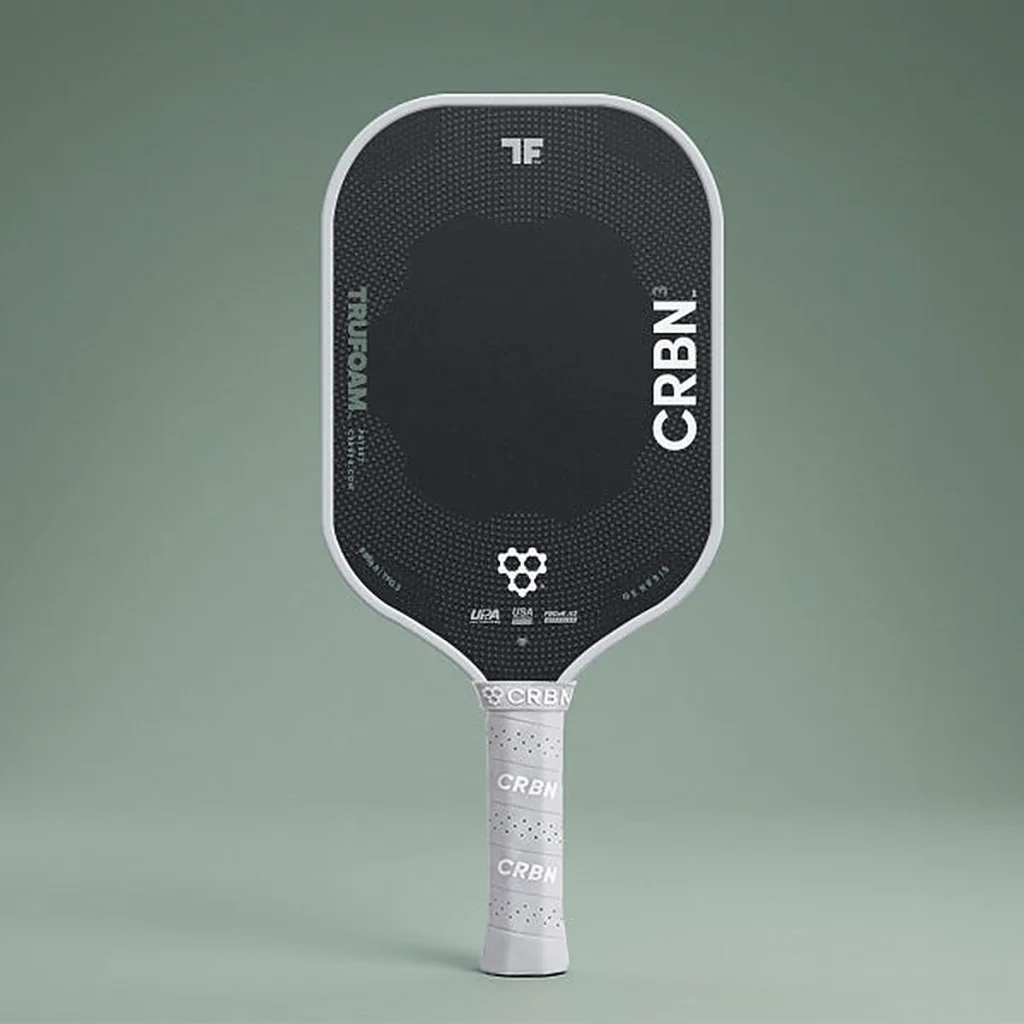
The first thing I noticed about the Genesis is how long the ball stays on the face. It is a 14mm paddle, but the full TruFoam core pockets the ball like a 16mm, and that extra dwell time changes what you can do with a shot. My third shot drops stopped sailing and started dipping. Roll volleys bit harder. Serves came back less often, because the spin pulled them down and kicked them up off the bounce.
That spin is the headline here. The raw carbon face grabs the ball better than anything else I played this season, and it does it without the harsh, hollow crack of a stiff honeycomb paddle. Contact feels soft and connected, and the foam swallows vibration, so my arm felt fresher after long drilling sessions than it does with most power paddles.
It is not a free power paddle. Drives need a full, committed swing, and the swing weight feels like a 16mm paddle, so my hands were not as quick at the kitchen as the 14mm label promises. The fiberglass layer in the hitting zone also surprised me a few times in the first week, launching two resets higher than I meant to. Once I adjusted, that same liveliness became useful on counters.
Buy it if spin, dwell, and a softer connected feel are how you win points. Skip it if you want the paddle to create pace for you, or if your game is built on lightning hands at the net.
3Vatic Pro Prism Flash 16mm: Best Value Pickleball Paddle in 2027
AT A GLANCE
Vatic Pro Prism Flash 16mm
WEIGHT
7.9 oz
SWING WEIGHT
114
TWIST WEIGHT
6.40
SPIN
1,650 RPM
Shape: Hybrid, 16.2 x 7.7 in
Grip: 5.3 in, 4.125 in circumference
Core: Polymer honeycomb + foam edge walls, 16mm
Face: Raw T700 carbon fiber
Approval: USAP
Feel: Soft, plush
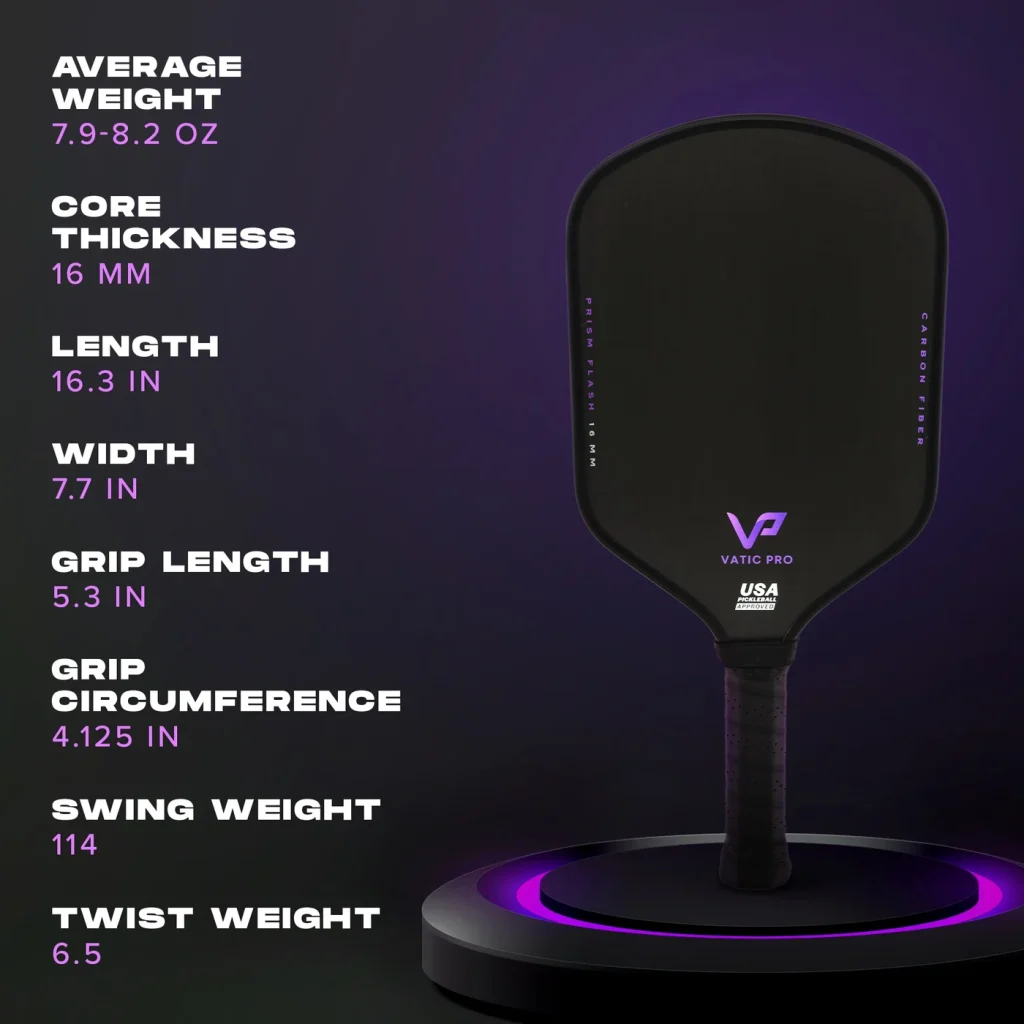
Some paddles take a month to understand. The Prism Flash took one drilling session. Blocks landed where I aimed them, drops settled into the kitchen, and resets that I usually fight stayed calm and low. It is the easiest paddle on this list to trust, and that is exactly why it has stayed in my bag as the control benchmark.
The feel is plush without being dead. The polymer honeycomb core has foam injected around the edges, so off-center contact does not twist or rattle, and the ball comes off the raw carbon face with a soft, predictable launch. At a 114 swing weight it moves quickly in hand battles, and the hybrid shape, 16.2 inches long and 7.7 wide, gives you a sweet spot that forgives the contact you make under pressure, not just the contact you make in practice.
Spin is honest rather than spectacular. There is enough bite for dipping topspin serves and aggressive roll volleys, but this paddle wins with placement, not with jaw-dropping rotation. Power is the real limit. I had to swing fully to finish points from the baseline, and hard hitters will feel the ceiling quickly.
The face also loses its bite faster than the premium raw carbon paddles here, so heavy players should expect the spin to fade across a long season. Buy it if you are a developing player or a touch player who wants control you can feel from day one. Skip it if you finish points with raw pace.
Full review: I have gone deeper on this paddle on its own in my Vatic Pro Prism Flash review.
4Six Zero Black Opal: Best All-Court Pickleball Paddle in 2027
AT A GLANCE
Six Zero Black Opal
WEIGHT
8.2 oz
SWING WEIGHT
114
TWIST WEIGHT
6.4
SPIN
2,307 RPM
Shape: Hybrid, 16.3 x 7.7 in
Grip: 5.5 in, 4.125 in circumference
Core: Solid foam + Power Gel layer, 14mm
Face: Diamond Tough raw carbon
Approval: USAP and UPA-A
Feel: Dense, springy
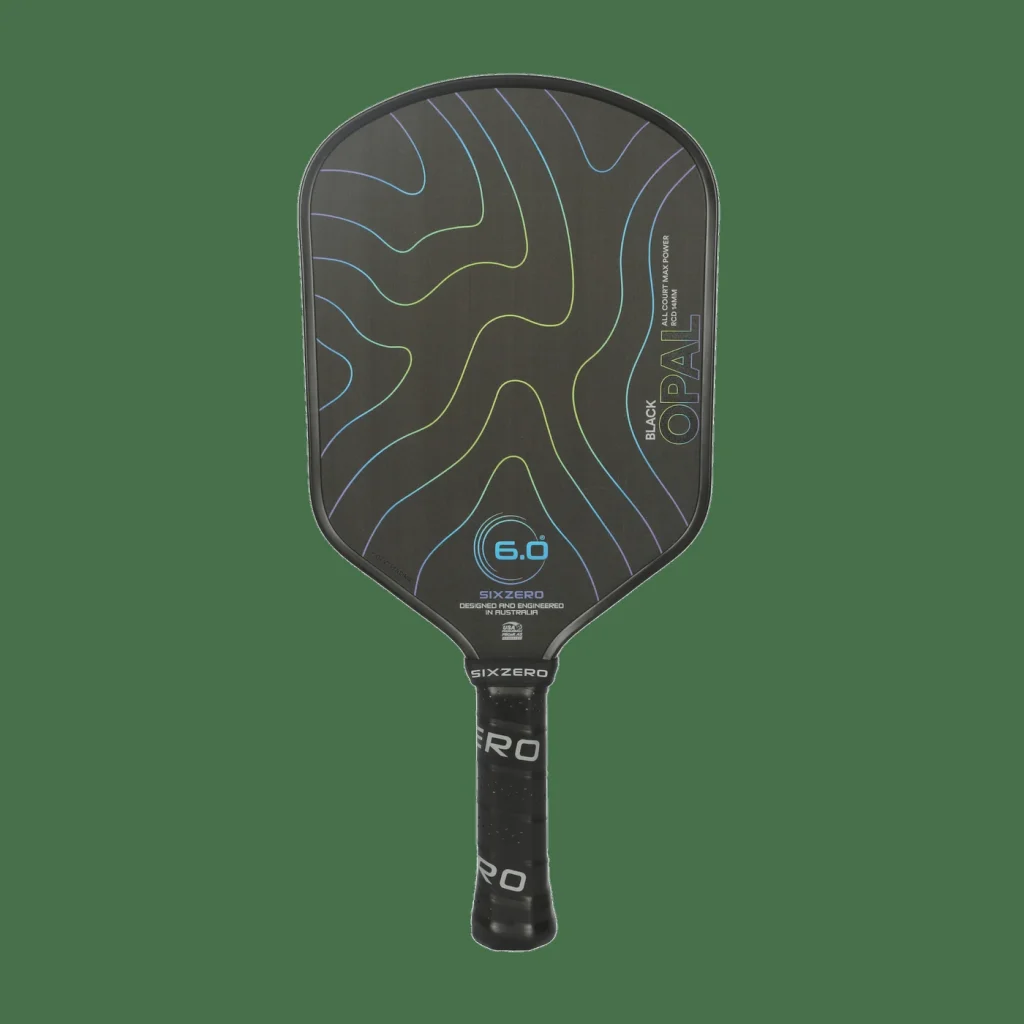
The Black Opal does not feel like other foam paddles. Contact is dense and springy, almost thuddy, and then the ball is simply gone. My first three serves sailed long while I adjusted, and once I shortened my swing and let the paddle work, drives started pushing opponents behind the baseline and staying there.
Underneath that power is a solid foam core with an energy layer Six Zero calls Power Gel, and it changes the rhythm of a rally. Counters come off hot without a big wind-up. Speed-ups jump off the face. The Diamond Tough carbon surface bites hard, dipping topspin drives dropped at my opponents’ feet, and the grit is built to keep that bite far longer than standard raw carbon faces do.
Now the honest part. The sweet spot sits lower than you expect and it is not generous. Defensive contact, the stretched block, the late reset, gets punished, and early on my soft game leaked pop-ups while I learned how little swing this paddle needs. It took me two weeks before my dinks behaved. Players who strike the ball clean will call that a fair trade. Players still building technique will call it frustrating, and both are right.
Buy it if you are a confident, aggressive player around the 4.0 level or above who wants power and spin in one frame. Skip it if forgiveness matters more than firepower right now. The control picks further down this list will treat you better.
5Six Zero Double Black Diamond Control 16mm: Best Pickleball Paddle for Comfort and Control in 2027
AT A GLANCE
Six Zero DBD Control 16mm
WEIGHT
8.1 oz
SWING WEIGHT
115
TWIST WEIGHT
6.67
SPIN
1,700 RPM
Shape: Hybrid, 16.3 x 7.7 in
Grip: 5.5 in, 4.125 in circumference
Core: Thermoformed polymer honeycomb, 16mm
Face: Raw T700 carbon fiber
Approval: USAP
Feel: Plush, controlled
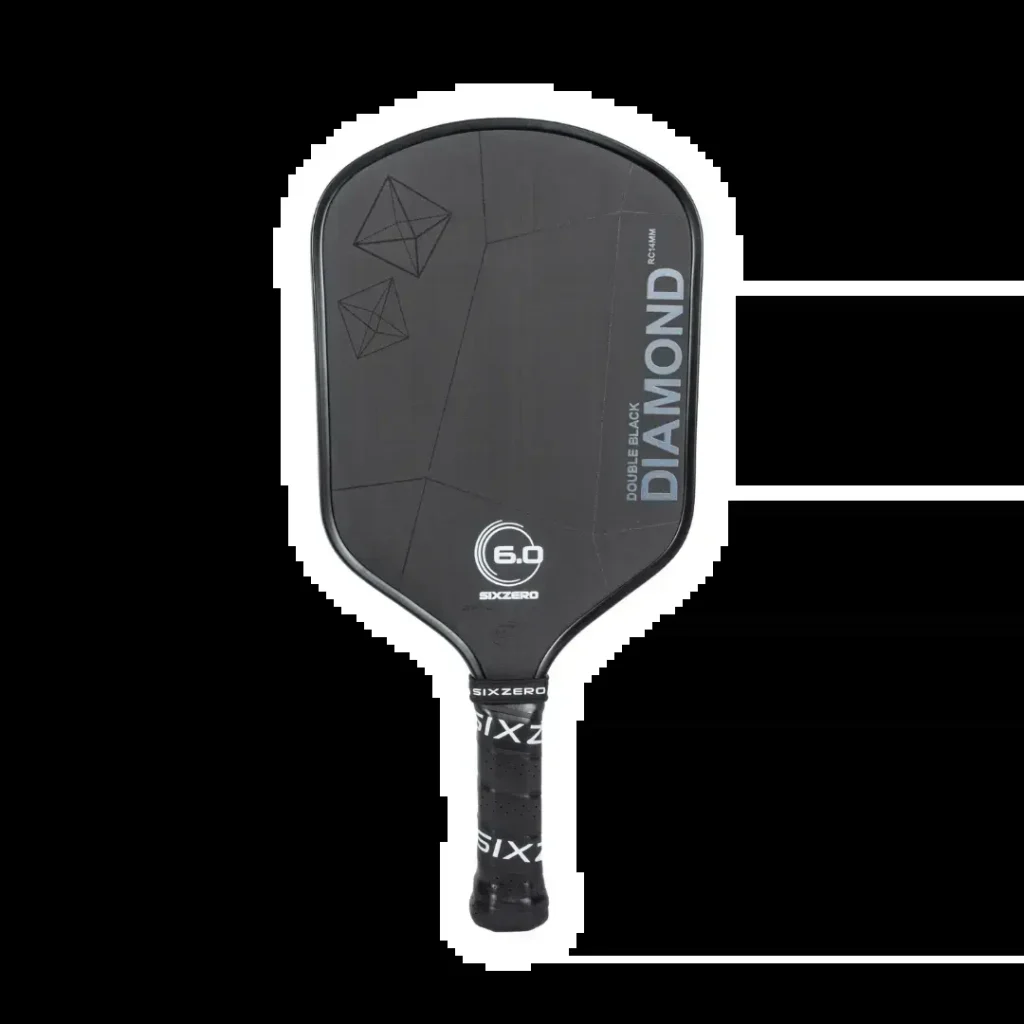
This is the paddle I hand to players who ask me what control actually feels like. The Double Black Diamond Control is thermoformed, but it plays plush. The ball pockets, holds for a fraction, and leaves in the direction you chose. My drops became boring in the best way: same height, same depth, rally after rally.
The sweet spot is the real story. The hybrid shape, 16.3 inches long, forgives contact out toward the edges, and even shots near the throat stayed alive instead of dying into the net, which is where most control paddles betray you during a stretched defensive scramble. Spin from the raw carbon face is strong enough to shape drives and keep serves honest, and when a rally speeds up, there is enough pop to counter without swinging out of your shoes.
It is not perfect. For a control paddle it runs lively, and my drops popped up during the first week until I softened my grip and let the face absorb pace. The stock grip is thin and got slippery in hot sessions, so an overgrip is not optional for me. Heavy daily play will also wear the grit down over time, like every raw carbon face in this class.
Buy it if you are an all-court player who wins with placement, patience, and a soft game you can trust under pressure. Skip it if you want maximum reach or maximum power. This one rewards the player, not the swing.
6Franklin C45 Aurelius 16mm: Best Pickleball Paddle for Fast Hands in 2027
AT A GLANCE
Franklin C45 Aurelius 16mm
WEIGHT
7.8 oz
SWING WEIGHT
99
TWIST WEIGHT
6.01
SPIN
2,052 RPM
Shape: Widebody, 15.7 x 7.9 in
Grip: 5.1 in, 4.125 in circumference
Core: PowerFlex polymer + foam channel, 16mm
Face: T700 carbon at 45 degrees
Approval: USAP and UPA-A
Feel: Light, fast
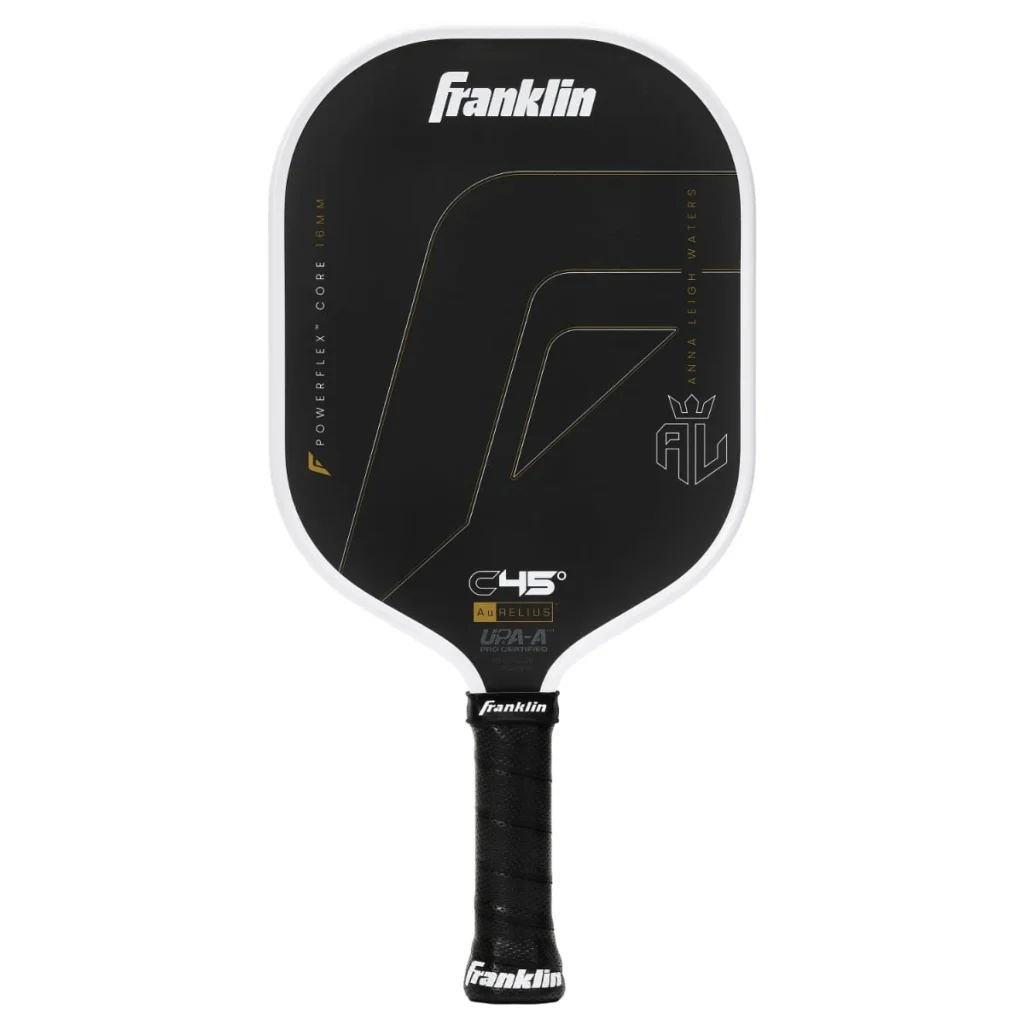
Nothing on this list moves like the Aurelius. It is Anna Leigh Waters’ signature shape, short and wide at 15.7 by 7.9 inches, light in the hand, and the swing weight is so low that hand battles at the kitchen stop feeling like reactions and start feeling like choices. Counters I normally block became counters I could aim.
The carbon face is laid at a 45 degree angle, and you feel that design in the spin. Topspin drives dip hard, rolls shape easily, and serves come off with a bite that heavier paddles need twice the effort to produce. The 16mm core gives the soft game real dwell, so drops and dinks sit down instead of floating, and the whole paddle feels calm in the hand even when the rally is not.
Stock, though, it has a weakness you feel immediately. Hit off-center and the face twists, because there is so little mass to hold it steady. This paddle is famous among players for one reason: a little added weight transforms it. Tape along the sides settles the twisting, widens the sweet spot, and turns good drives into heavy ones, all without giving back the hand speed.
The handle is short at 5.1 inches, so two-handed backhand players should look elsewhere. Buy it if your game is speed, spin, and quick hands, and you enjoy tuning a paddle to your taste. Skip it if you want power and forgiveness straight out of the wrapper.
711SIX24 Vapor Power 2: Best Pickleball Paddle for Power in 2027
AT A GLANCE
11SIX24 Vapor Power 2
WEIGHT
8.1 oz
SWING WEIGHT
111
TWIST WEIGHT
6.7
SPIN
2,335 RPM
Shape: Hybrid, 16.25 x 7.75 in
Grip: 5.75 in, 4.125 in circumference
Core: Floating foam core, 16mm
Face: HexGrit carbon fiber
Approval: UPA-A only
Feel: Firm, direct
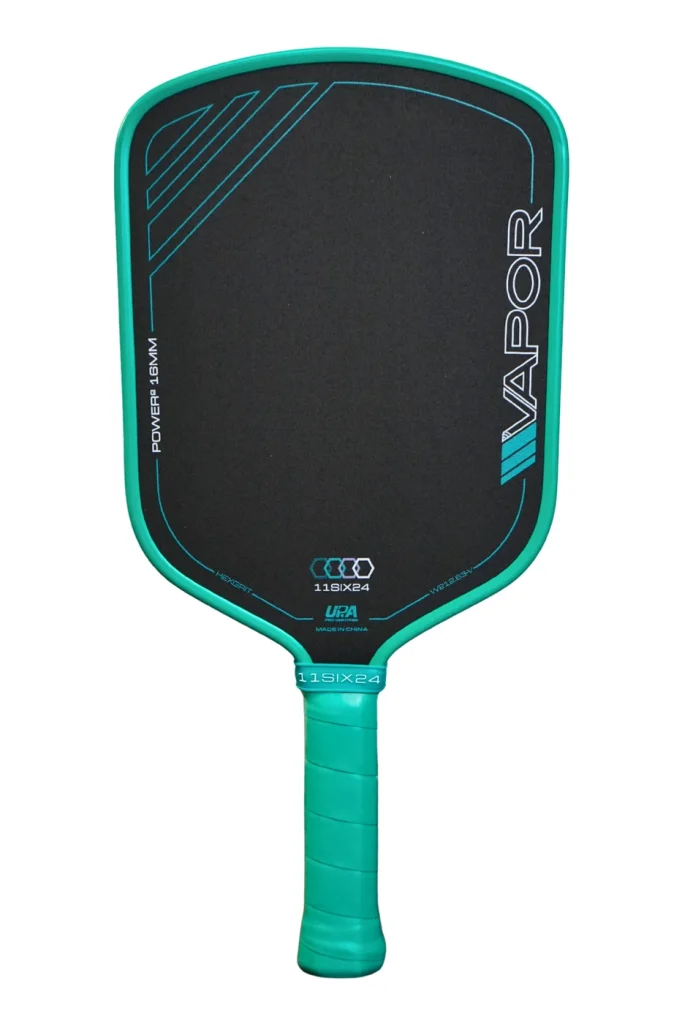
Every paddle on this list loses spin as the months pass, except this one. The Vapor Power 2 uses a surface called HexGrit, tiny silicon carbide particles embedded in the face, and it bites the ball in month three the way most raw carbon paddles bite in week one. My dipping drives kept dipping. My serves kept kicking. That staying power is why it sits this high.
The rest of the package matches the face. The floating foam core in this 16mm hybrid gives drives real weight without the hollow crack of a thermoformed paddle, and power builds with your swing, so a full cut from the baseline holds its line instead of ballooning. It swings light and fast for a power paddle, which makes it dangerous in counters and speed-ups at the kitchen.
Two honest warnings. First, after the break-in period it gets livelier, and my drops and resets needed a looser grip and a softer hand before they behaved again. Players with a loose soft game will adjust faster than players who block with a firm wrist. Second, and this matters: the grit that makes this paddle special is too rough for USA Pickleball’s surface test, so it is certified for UPA-A play only and is not legal in USAP sanctioned tournaments.
Buy it if you play leagues, open play, or UPA events and want spin that survives the season. Skip it if USAP tournament legality is a requirement for you.
811SIX24 Jelly Bean: Best Pickleball Paddle for Beginners in 2027
AT A GLANCE
11SIX24 Jelly Bean
WEIGHT
8.1 oz
SWING WEIGHT
111
TWIST WEIGHT
7.5
SPIN
1,914 RPM
Shape: Widebody, 15.8 x 8.0 in
Grip: 5.75 in, 4.125 in circumference
Core: Polymer honeycomb + foam edge walls, 16mm
Face: Carbon and fiberglass layers
Approval: USAP
Feel: Dense, springy
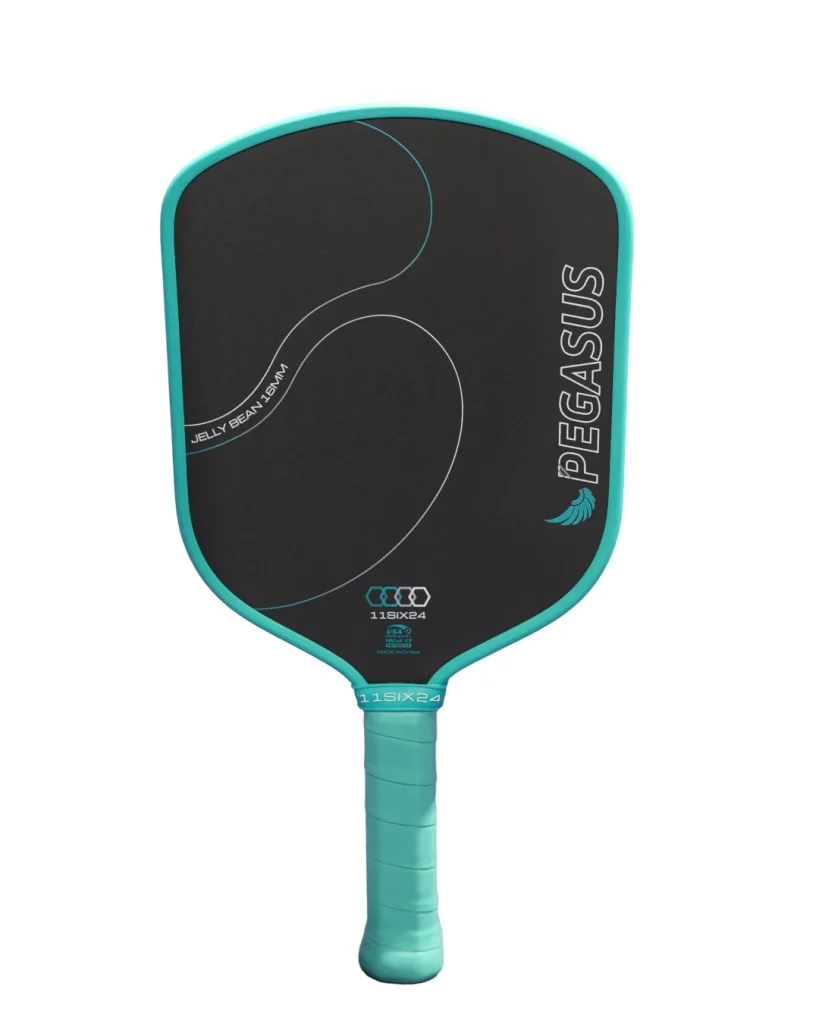
If you are new to this game, the kindest thing a paddle can do is forgive your mistakes while you learn, and that is the Jelly Bean’s whole personality. It is a widebody, 15.8 inches long and just over 8 inches wide, and the hitting area feels enormous. Shots I caught near the edge still crossed the net with something on them, and that forgiveness lets a beginner rally longer, learn faster, and enjoy the game sooner.
The construction is more serious than the name suggests. Two layers of raw carbon fiber sandwich a fiberglass layer over a 16mm core with foam reinforced edges, so contact feels dense and springy rather than hollow or mushy. Spin is genuinely good for this class, enough to learn topspin serves and dipping drives properly, and it swings light, so hands at the kitchen stay quick while your footwork is still catching up.
The long 5.75 inch handle deserves a mention, because it gives smaller hands a comfortable grip and gives growing players room to build a two-handed backhand from the start. What it will not give you is finishing power. When I swung big from the baseline, the ball came off politely rather than violently, and strong players will reach its ceiling fast.
Buy it if you are a beginner or early intermediate who wants control, forgiveness, and real spin while your technique develops. Skip it if you already hit hard and need a paddle that keeps up with your power.
Full review: I have gone deeper on this paddle on its own in my 11SIX24 Jelly Bean review.
9JOOLA Perseus Pro IV 16mm: Best Pickleball Paddle for Easy Power in 2027
AT A GLANCE
JOOLA Perseus Pro IV 16mm
WEIGHT
8.1 oz
SWING WEIGHT
118
TWIST WEIGHT
6.3
SPIN
1,971 RPM
Shape: Elongated, 16.5 x 7.5 in
Grip: 5.5 in, 4.25 in circumference
Core: Propulsion Core + TechFlex foam, 16mm
Face: Textured carbon fiber
Approval: USAP and UPA-A
Feel: Stiff, lively
Think of the Pro IV as the opposite bargain to the paddle at number one. The Pro V makes you earn your power. The Pro IV hands it to you. Serves jumped off the face from the first game, drives carried through the court without a full shoulder turn, and overheads finished points that would have come back against a softer paddle. If your swing is still developing, that built-in help is real.
It is not just a power stick. The 16mm core gives the ball a plush, held feel on drops, the elongated frame adds reach at the kitchen, and the foam injected edges keep blocks stable when you are stretched wide. For a full season this was the paddle shape half the courts around me were playing, and using it again reminded me why: there is no obvious hole in its game.
The tradeoffs are feel and freshness. Contact is stiffer and hollower than the Pro V, with a crack that some players love and I tolerate. Spin sits a step below the newest faces, and at a 118 swing weight it will not win you many frantic hand battles. I will also be straight about this generation: core durability complaints follow it, so register the warranty the day it arrives and keep your receipt.
Buy it if you want flagship JOOLA power that helps your swing instead of testing it. Skip it if you want the most consistent, longest lasting option. That is the Pro V at the top of this list.
10Selkirk SLK Halo Control XL: Best Pickleball Paddle for Control in 2027
AT A GLANCE
Selkirk SLK Halo Control XL
WEIGHT
7.9 oz
SWING WEIGHT
Not published
TWIST WEIGHT
Not published
SPIN
1,450 RPM
Shape: Elongated, 16.4 x 7.4 in
Grip: 5.75 in, 4.25 in circumference
Core: Rev-Control polymer honeycomb, 16mm
Face: 18K UltraWeave raw carbon
Approval: USAP
Feel: Soft, plush
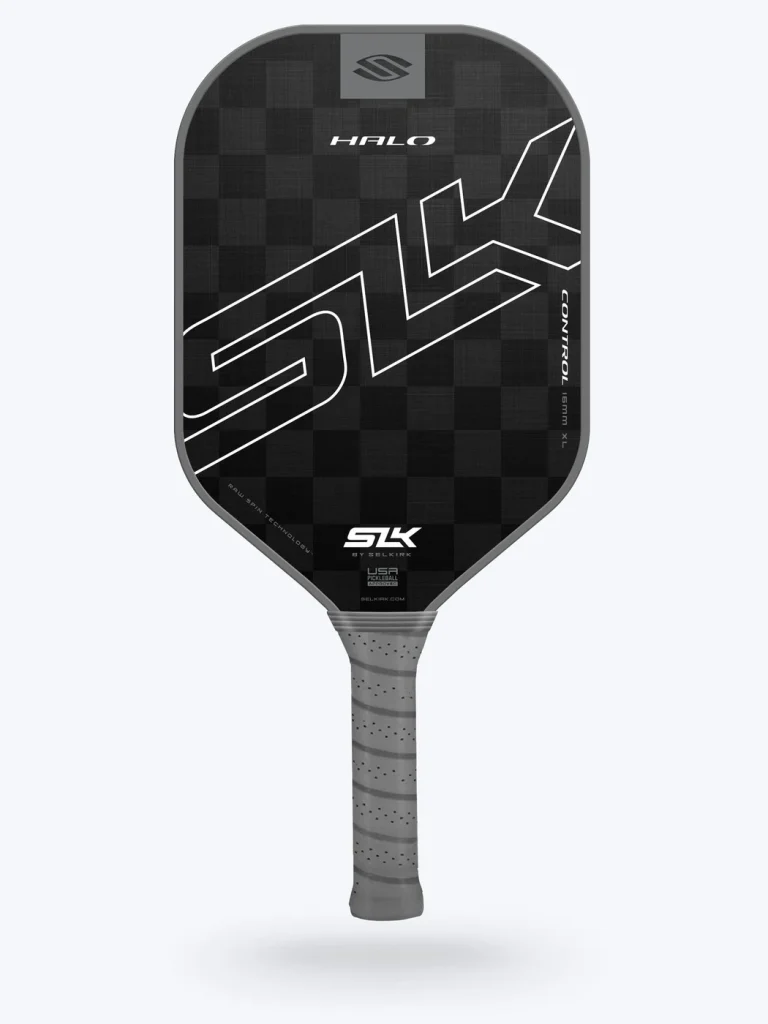
The Halo Control XL is the paddle I reach for when I want a quiet game. Not quiet as in sound, although it is soft. Quiet as in nothing dramatic happens. Hard drives arrive, and the 16mm polymer core drinks the pace. Blocks drop short. Resets land low and die. My unforced errors fell off a cliff in the first week with it, and for a lot of players that alone is worth more than any power number.
The elongated XL shape, 16.4 inches long, gives you reach that most control paddles do not, and the long handle helps on wide defensive gets and takes strain off the elbow. The raw carbon face holds the ball well on dinks and gives you enough spin to keep drops dipping, though it will never top a spin chart. Everything about the response is muted and honest: the ball goes where your hands tell it, at the speed your swing provides, and not one mile per hour faster.
That honesty cuts both ways. Putting a ball away requires a full swing and good position, because the paddle adds almost nothing. The materials also feel a step simpler than Selkirk’s premium lines, and like every raw carbon face, the texture will smooth out with heavy use.
Buy it if you are building your fundamentals, or if your game is patience, defense, and waiting for the other player to miss first. Skip it if you finish points with pace. This paddle will not finish them for you.
11Gearbox GX2 Power Hybrid: Best Pickleball Paddle for Power and Durability in 2027
AT A GLANCE
Gearbox GX2 Power Hybrid
WEIGHT
8.0 oz
SWING WEIGHT
113
TWIST WEIGHT
6.66
SPIN
2,050 RPM
Shape: Hybrid, 16.2 x 7.8 in
Grip: 5.5 in, 4.0 in circumference
Core: Carbon tube core (SST 2.0), 16mm
Face: 3K raw carbon fiber
Approval: USAP
Feel: Firm, pocketing
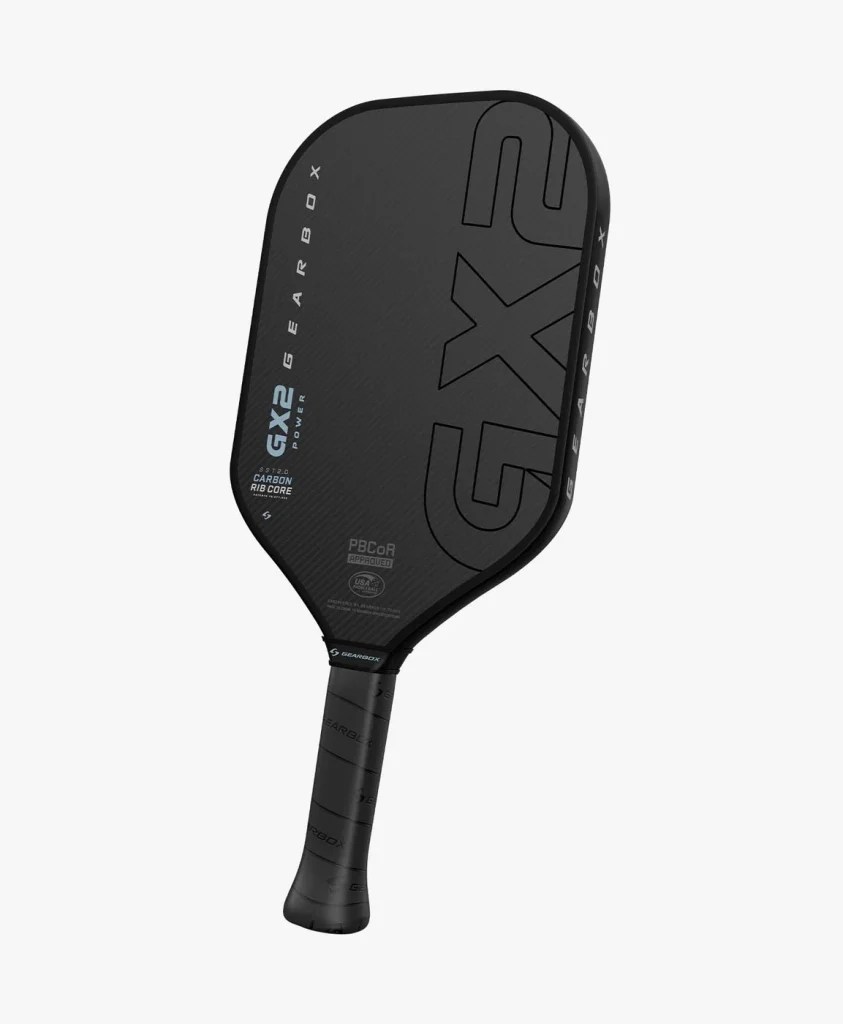
Every power paddle I have owned came with the same quiet worry: how long before the core starts to die? The GX2 Power is built to end that worry. There is no honeycomb and no foam inside. The core is a lattice of carbon fiber tubes standing on end, and it hits with a dwell time I did not expect from the power category. The ball sinks in, loads, and leaves heavy.
On court that means drives with real plow-through and counters that stay stable, helped by the new edge guard, which older Gearbox paddles did without. Spin is properly high, serves and dipping drives behave like a modern carbon paddle should, and the hybrid shape at 16.2 by 7.8 inches keeps enough width in the face for defensive contact. After the short break-in, the response settled and stayed settled, which is the whole point of this construction: no slow fade, no sudden dead patch, no replacement cycle.
The adjustment is real, though. As it breaks in it gets livelier, and my resets needed recalibrating in week two. The grip circumference is small, so most players will build it up with an overgrip or two, which I ended up preferring anyway.
Buy it if you hit hard, play often, and are tired of power paddles going soft on you. Skip it if your soft game is your identity. This paddle always wants to lean forward.
12Engage Pursuit Pro1 6.0: Best Pickleball Paddle for Spin and Touch in 2027
AT A GLANCE
Engage Pursuit Pro1 6.0
WEIGHT
8.0 oz
SWING WEIGHT
118.6
TWIST WEIGHT
5.95
SPIN
2,267 RPM
Shape: Elongated, 16.5 x 7.5 in
Grip: 5.875 in, 4.25 in circumference
Core: MachPro polymer, 16mm
Face: Raw T700 carbon fiber
Approval: USAP
Feel: Soft, connected
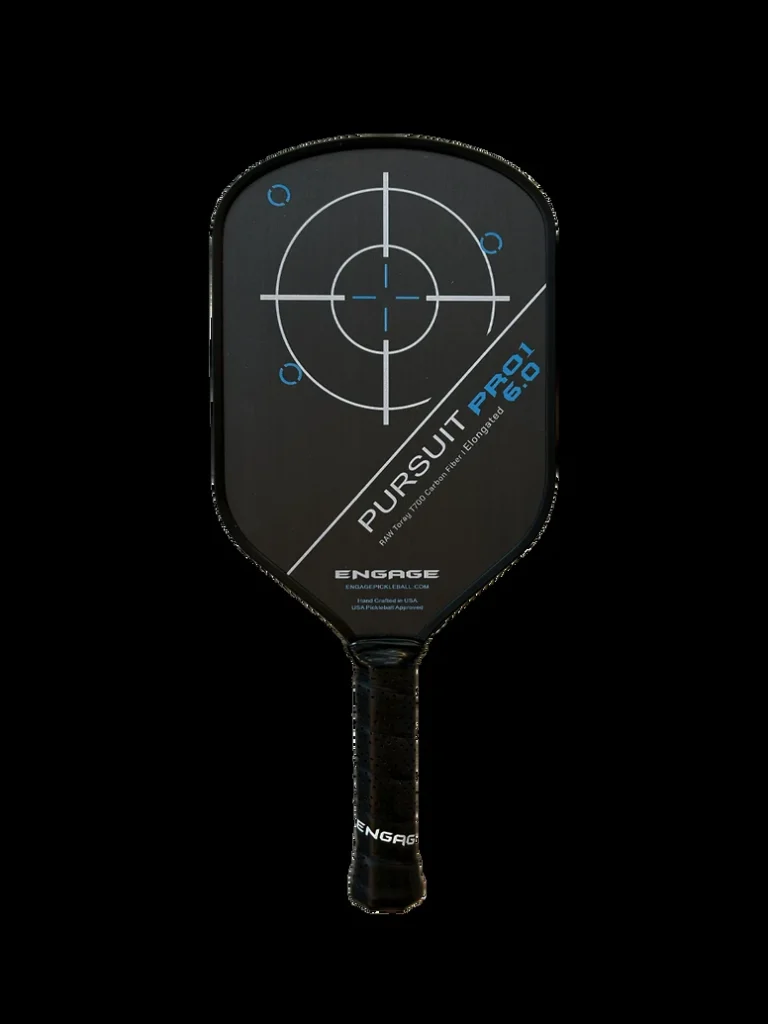
Engage sells this paddle as power. On court, I found something better: the most cooperative touch paddle in the premium class. The Pursuit Pro1 is built the old way, layers pressed cold instead of thermoformed, and you can feel the difference at contact. The ball sits, the face talks to your hand, and thirds, drops, and dinks go where your fingers decided, not where the paddle’s pop sent them.
The raw carbon texture is coarse, and it earns its keep. Serves carried real pace and dipped, roll volleys shaped without effort, and the dwell time let me hold shots a beat longer and wrong-foot players at the kitchen. The elongated frame, 16.5 by 7.5 inches, and the long octagon handle will feel like home to anyone coming from tennis, which is no accident given who designs these paddles. It is also made in the USA, a detail that matters to more players than brands admit.
The compromises: the swing feels head-heavy, and off-center contact twists more than the numbers suggest, so stretched defensive blocks need a firm wrist. And despite the marketing, nobody is getting overpowered by this paddle. Its power is the kind you build with a full swing and good contact.
Buy it if your game is touch, spin, and placement, especially if you come from a tennis background. Skip it if you want a paddle that supplies the pace for you.
13Friday Aura Pro Widebody: Best Lightweight Pickleball Paddle in 2027
AT A GLANCE
Friday Aura Pro Widebody
WEIGHT
7.9 oz
SWING WEIGHT
108
TWIST WEIGHT
6.86
SPIN
2,290 RPM
Shape: Widebody, 16.0 x 8.0 in
Grip: 5.5 in, 4.25 in circumference
Core: Full foam EPP + EVA perimeter, 16mm
Face: T700 raw carbon fiber
Approval: USAP
Feel: Crisp, fast in the hand
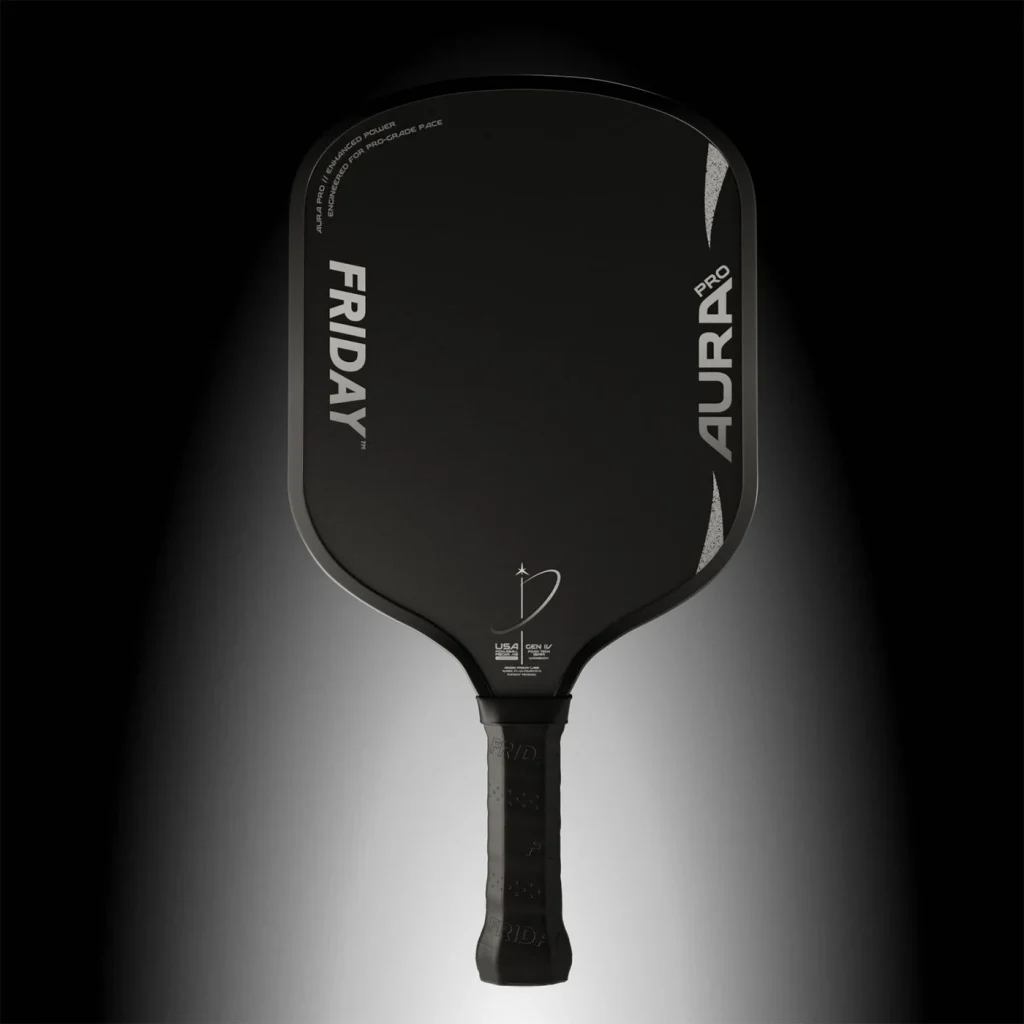
Speed is a skill, and this is the paddle that gives you more of it. The Aura Pro Widebody has the lightest swing weight I have played in this class, around 107, and at the kitchen that number is everything. Hands battles that used to be coin flips became mine. Volleys I normally block became volleys I could redirect, and after three games my forearm still felt fresh.
It is not a feather that hits like one, either. The full foam core gives it a firm, crisp response, more connected than the springy feel of most foam paddles, and power arrives in a straight line: swing a little, get a little; swing hard, and the ball genuinely jumps. Blocks held their line thanks to a stable, wide face, 16 by 8 inches, and the spin is high enough to keep aggressive rolls dipping inside the baseline.
The widebody shape sets the limits. Reach is shorter than the elongated paddles here, so singles players and baseline drivers will feel the missing inches. Resets run firmer than on the standard Aura, so soft hands need a session to calibrate. And like the other peel ply faces in this class, the grit will fade across a few months of heavy play, which is the honest tax on this much spin.
Buy it if doubles and kitchen speed are your game. Skip it if you live at the baseline and win with reach.
14Diadem Icon Infinity Pro: Best Pickleball Paddle for Arm Comfort in 2027
AT A GLANCE
Diadem Icon Infinity Pro
WEIGHT
8.1 oz
SWING WEIGHT
113
TWIST WEIGHT
5.3
SPIN
2,114 RPM
Shape: Elongated, 16.5 x 7.3 in
Grip: 5.5 in, 4.125 in circumference
Core: Dual foam + honeycomb center, 13.7mm
Face: Carbon RP2 double grit
Approval: USAP
Feel: Smooth, damped
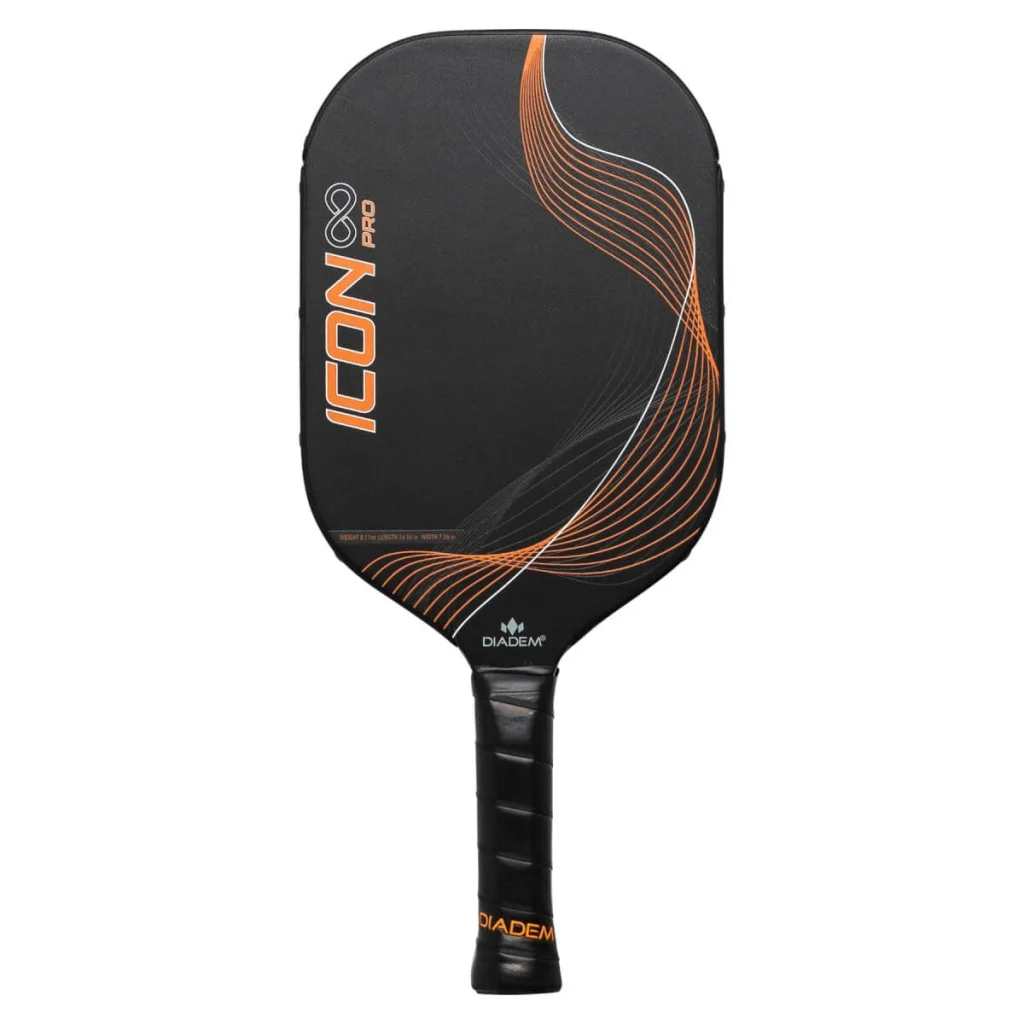
Play four or five days a week and your arm starts voting on your equipment. The Icon Infinity Pro is the paddle my arm voted for. Diadem builds foam around a honeycomb center, and the result drinks vibration the way a good pair of shoes drinks impact. Long sessions ended without the usual buzz in my forearm, and my elbow never sent me a single complaint.
The shape is a narrow elongated, 16.5 inches long and only about 7.3 wide, which gives it reach at the kitchen and a quick, slicing feel through the air. The dual grit face grabs well for drops and rolls, contact feels smooth and controlled rather than explosive, and the near-edgeless frame has a trick nobody else on this list offers: the edge guards are replaceable, so the part of the paddle that meets the court and the tape line is not a one-time wear item.
Now the limits, because they are real. The face is narrow and the stability on off-center contact is the weakest here; stretched mishits twist and die. Lab power and spin numbers sit in the middle of the pack, not at the top. And the grit finish itself can scuff and chip with hard use, so players who scrape the court on low balls will mark it up.
Buy it if comfort, reach, and smooth control matter more than raw numbers. Skip it if you strike off-center often or want elite power.
15Vatic V-SOL Pro 16mm: Best Budget Pickleball Paddle in 2027
AT A GLANCE
Vatic V-SOL Pro 16mm
WEIGHT
8.0 oz
SWING WEIGHT
112
TWIST WEIGHT
6.4
SPIN
2,140 RPM
Shape: Hybrid, 16.2 x 7.7 in
Grip: 5.3 in, 4.125 in circumference
Core: Floating EPP foam + EVA ring, 16mm
Face: Raw T700 carbon fiber
Approval: USAP
Feel: Soft, pocketing
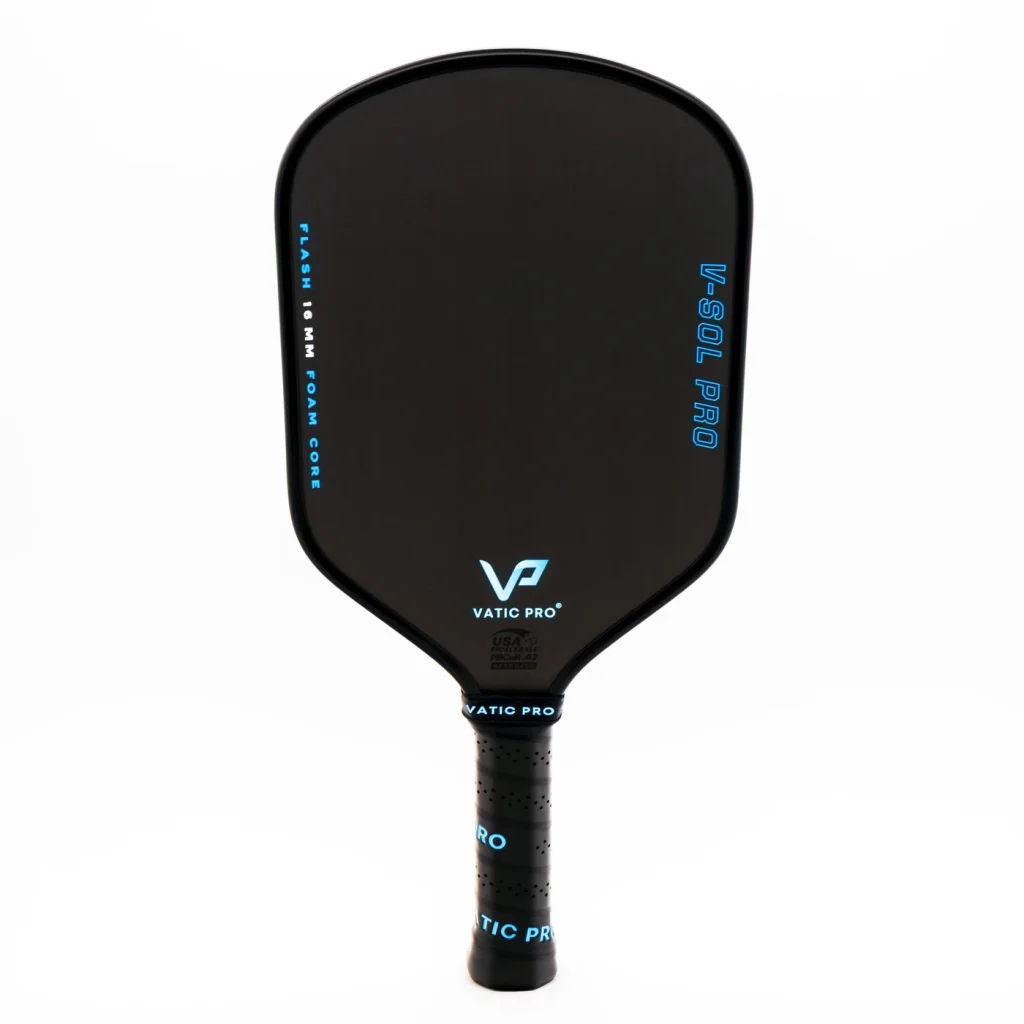
The first session with the V-SOL Pro, I thought I had made a mistake. Everything felt quiet and muted, like hitting through a pillow. By session five, I understood it. The floating foam core needs a few games to wake up, and once it does, the ball dwells, placement sharpens, and the paddle starts feeling like it belongs with the flagships on this list. Judging this one on day one is the only wrong way to judge it.
That foam construction is the real article: a full EPP foam core ringed with EVA foam, the same architecture the flagship foam paddles use. The ring pushes the sweet spot out toward the edges, so off-center contact stays stable instead of twisting, and the deep pocketing feel makes drops and resets genuinely easy to control. Drives need a real swing, but when you give it one, the ball leaves with honest pace and the spin is there to keep it down.
It is also kind to your arm. Foam this soft, plus shock absorbing inserts in the grip, means long sessions without the buzz that honeycomb paddles send up your forearm. The watchpoint is the face: the raw carbon grit starts strong, but heavy play smooths it faster than the best surfaces here, and edge contact can vibrate until you add a little weight.
Buy it if you want the modern foam feel and real forgiveness while your game grows. Skip it if you want instant pop from lazy blocks.
Full review: I have gone deeper on this paddle on its own in my Vatic Pro V-SOL Pro review.
How to Choose the Best Pickleball Paddle in 2027
You do not need to understand every spec to pick the right paddle. You need to understand about six of them, because those are the ones that change how a paddle actually plays. Every number in the At a Glance boxes above maps to one of the sections below, so read this once and the whole list gets easier to compare. Start with how you play, then work down: core, thickness, shape, the two weight numbers, face, and grip.
Start With How You Play, Not With a Brand
The right paddle is the one that fixes your most common miss. If your blocks sail long, you need absorption, not power. If your drives land soft and get attacked, you need help with pace. Beginners should buy forgiveness first: a 16mm core, a hybrid or widebody shape, and a high twist weight, because most beginner misses happen off center. Intermediate players should buy for their style, control, power, or spin, and advanced players are usually chasing one specific trait and already know what it is. Every pick on my list is labelled by what it does best for exactly this reason.
Core: Foam vs Honeycomb, and What Thermoformed Means
Honeycomb polymer is the classic core, foam is where the game is heading. A honeycomb core feels crisp and direct, with a familiar crack on contact, but hard use can crush cells or separate the face over time. A foam core pockets the ball longer, feels quieter and softer on the arm, and has no cells to crush, which is why most of the newest flagships on this list, the Genesis, the Black Opal, and the Vapor Power 2 among them, are built on foam. Thermoformed simply means the paddle is moulded in one piece under heat, which usually adds pop and a firmer edge. It is a construction method, not a core type, and it is not automatically better.
Core Thickness: 14mm vs 16mm
As a rule, 16mm plays soft and forgiving, 14mm plays fast and lively. The thicker core gives the ball more dwell time, a bigger sweet spot, and calmer resets, which is why most control and beginner paddles are 16mm. The thinner core answers quicker, pops harder on counters, and rewards fast hands, but it punishes off-center contact more. Construction can bend the rule: the 14mm Genesis uses a full foam core and pockets the ball like a 16mm, while some stiff 16mm paddles still feel firm. Treat thickness as your starting point, then check the feel line in the At a Glance box.
Shape: Elongated, Hybrid, or Widebody
Shape decides your reach and your forgiveness, and it is the one thing you cannot change later with tape. Elongated paddles (16.5 inches long) add reach, leverage on serves and drives, and room for a two-handed backhand, but the sweet spot sits higher and the head can feel slower in fast exchanges. Widebody paddles are shorter and wider, with the biggest sweet spot and the quickest hands at the kitchen, which is why the Jelly Bean and the Aura Pro Widebody forgive so much contact. Hybrid shapes sit between the two, and they are the safest default if you are unsure.
Weight and Swing Weight: The Two Numbers That Decide Feel
Static weight tells you what the paddle weighs on a scale. Swing weight tells you what it weighs in your hand mid-swing, and swing weight is the one you feel. Two paddles can both weigh 8.1 ounces and play completely differently: the head-heavy one drives through the ball and tires your arm, the balanced one flicks around at the kitchen. On my list the swing weights run from 99 on the Franklin C45 Aurelius, which is why it feels so fast, up to 119 on the Genesis and the Pursuit Pro1, which is where plow-through power lives. Under 110 swings quick, 110 to 118 is the all-court middle, and above that you are trading hand speed for heaviness on the ball. If a paddle feels heavier than its listed weight, this number is why.
Twist Weight: The Forgiveness Number
Twist weight measures how much the paddle resists rotating when you catch the ball off center. A high twist weight keeps the face square on stretched blocks and late counters, so the ball still goes where you aimed. A low one twists in your hand and the shot sprays. Anything around 6.5 or higher feels stable for most players; the Jelly Bean’s 7.5 is the highest on this list and a big reason beginners find it so easy to trust. If your misses come from contact near the edges, this number matters more to you than raw power.
Face and Grit: Where Spin Comes From, and How Long It Lasts
Spin comes from the face grabbing the ball, and raw carbon fiber is the standard every paddle on this list is judged against. The textured surface bites, the ball dwells for a fraction longer, and topspin pulls the shot down. What separates paddles is not how much spin they make in week one, it is how much is left in month three. Plain raw carbon slowly goes smooth with play. Durable grit surfaces, like the HexGrit face on the Vapor Power 2, are built to hold their bite far longer. When you compare spin numbers, ask how long they survive, not just how high they start.
Grip Size and Handle Length
A grip that is too big tires your forearm and locks your wrist; too small and the paddle twists and your fingers overwork. To find your size, measure from the crease across the middle of your palm to the tip of your ring finger. That measurement in inches is close to your grip circumference. When you are between sizes, choose the smaller one and build it up with an overgrip, which adds roughly a sixteenth of an inch and can always be replaced. Handle length is separate: if you play a two-handed backhand, look for 5.5 inches or more, like the Halo Control XL or the Vapor Power 2, so your second hand actually fits.
Approval: USAP and UPA-A Are Not the Same Thing
USA Pickleball (USAP) and the UPA-A run separate approval lists, and a paddle approved by one is not automatically approved by the other. Most local and sanctioned tournaments follow the USAP list. Events connected to the pro tour follow UPA-A certification. Fourteen of the fifteen paddles on this list carry USAP approval; the Vapor Power 2 is certified for UPA-A play only, because its grit is too aggressive for the USAP surface test, and its section says so openly. Before any tournament, check the exact model, shape, and thickness against the official list for that event. Approvals can change, and the list, not the box the paddle came in, is what counts.
How Long a Paddle Lasts, and How to Make It Last Longer
A paddle dies slowly, not suddenly: the grit smooths out, the core softens, and one day your best drive stops dipping. How fast depends on hours, not months. A daily player can wear the bite off a raw carbon face in a season, while a twice-a-week player may get well over a year of honest play. Foam cores tend to hold their feel longer because there are no honeycomb cells to crush. Help yours along: keep it out of a hot car, wipe the face with a damp cloth or a carbon eraser to clear ball dust, use edge guard tape if you scrape the ground on low balls, and replace your overgrip before it gets slick.
Frequently Asked Questions (FAQs)
1. What is the best pickleball paddle for beginners?
The best beginner paddle is a forgiving one: a 16mm core, a hybrid or widebody shape, and a high twist weight, so off-center contact still lands in. On this list that is the 11SIX24 Jelly Bean, whose 7.5 twist weight is the highest of all fifteen and whose wide body forgives the contact beginners actually make. If you already play another racket sport and know you will stick with it, the Vatic Pro Prism Flash is the pick you will not outgrow in three months.
2. How do I choose a pickleball paddle for my skill level?
Choose by your most common miss, not by your rating number. Beginners miss off center, so buy forgiveness: thicker core, wider shape, high twist weight. Intermediates usually know their style, so buy for it: control players toward the DBD Control or the Prism Flash, power players toward the Vapor Power 2 or the Black Opal, spin players toward the Genesis. Advanced players buy one specific trait, hand speed, reach, or grit that lasts, and accept the tradeoff that comes with it.
3. Do more expensive paddles play better?
Not automatically, and the difference is smaller than the marketing suggests. What the step up actually buys is consistency and durability: foam cores that hold their feel, grit that keeps biting for months instead of weeks, and tighter quality control from paddle to paddle. A mid-range paddle like the Prism Flash plays close to the flagships on day one. The gap shows up in month four, when the cheaper face has gone smooth and the flagship still grips the ball.
4. Should I choose a 14mm or 16mm core?
Choose 16mm if your game is built on dinks, drops, and resets, or if you are still developing touch, because the thicker core dwells longer and forgives more. Choose 14mm if you drive, counter, and finish points with hand speed, and your contact is already clean. One exception: foam construction bends the rule, so a 14mm full foam paddle like the Genesis pockets the ball more like a 16mm. When in doubt, start at 16mm. Control problems are easier to fix than confidence problems.
5. What is the difference between a foam core and a honeycomb core paddle?
A honeycomb core is a grid of polymer cells: crisp, direct, and proven, but the cells can crush and the face can separate under hard, long use. A foam core is solid: it pockets the ball longer, feels softer and quieter, sends less shock into your arm, and has no cells to crush. In 2027 most new flagships are foam for a reason, but a good honeycomb paddle still plays beautifully. Foam usually holds its original feel longer; honeycomb usually feels more immediate on day one.
6. What is swing weight, and what range should I look for?
Swing weight is how heavy a paddle feels while you swing it, and it matters more than the weight on the scale. Under 110 feels fast and suits hands battles and players protecting a sore arm. Between 110 and 118 is the all-court middle where most players on this list are happiest. Above 118 adds plow-through on drives and serves but slows your counters and loads your shoulder and elbow over a long session. Every At a Glance box above lists it, so compare this number first when two paddles look similar.
7. What is twist weight, and why does it matter?
Twist weight is how strongly a paddle resists twisting when you hit away from the center of the face. Higher means your stretched blocks and late counters stay square and land closer to your target. Lower means the face rotates in your hand and the ball sprays. Around 6.5 and above feels stable for most players. If your worst misses happen on defense, reaching, blocking, scrambling, choose twist weight over almost any other spec. It is listed in every At a Glance box on this page because it decides forgiveness more than any headline feature.
8. Elongated, hybrid, or widebody: which shape fits my game?
Pick elongated for reach, serve and drive leverage, and room for a two-handed backhand, and accept a smaller, higher sweet spot. Pick widebody for the biggest sweet spot and the fastest hands at the kitchen, which is why it suits beginners and doubles players who live at the net. Pick hybrid if you want a bit of both and no real weakness; it is the shape I recommend when a player genuinely does not know. Shape cannot be fixed later with tape, so it is worth choosing carefully.
9. How do I find my correct grip size?
Measure from the crease across the middle of your palm to the tip of your ring finger; that number of inches is roughly your grip circumference. Most adults land between 4 and 4.25 inches, which covers nearly every paddle on this list. If you fall between sizes, take the smaller grip and add an overgrip, which builds it up by about a sixteenth of an inch and can be swapped when it wears. A grip that is too large will show up as forearm fatigue and a wrist that cannot roll the ball.
10. I play a two-handed backhand. What handle length do I need?
You need 5.5 inches of handle at minimum, and 5.75 is better, so your top hand is not crowded against the throat. Several picks on this list qualify, including the Halo Control XL and the Vapor Power 2 at 5.75 inches and the Black Opal and Perseus Pro V at 5.5. Forcing two hands onto a short handle changes your grip pressure and can bruise your top hand, so if the two-hander is a real part of your game, treat handle length as a filter, not a nice extra.
11. What makes a pickleball paddle good for spin?
A textured face that grabs the ball, enough dwell time for the ball to bite, and a swing you are willing to brush up the back of the ball. Raw carbon fiber is the standard face because its texture grips without any coating. Technique still does most of the work: the same paddle produces very different spin in different hands. What the paddle controls is how long the spin survives, because grit wears. If spin is your weapon, durability of the surface matters as much as the headline number.
12. What spin RPM is considered good for a pickleball paddle?
In lab testing, around 1,800 RPM is solid, above 2,000 is strong, and anything past 2,200 is elite territory. The paddles on this list run from about 1,450 on the control-focused Halo Control XL to 2,401 on the CRBN Genesis, the highest spin number I have measured in this group. Treat RPM as a comparison tool between paddles tested the same way, not an absolute grade, and remember the number that matters in month three is the one the worn face still produces.
13. What paddle specs are easiest on tennis elbow?
Look for a 16mm core, a swing weight under about 115, and a high twist weight, in a paddle with a soft, plush feel. The DBD Control and the Prism Flash fit that profile on this list, and the Diadem Icon Infinity Pro is built around damping vibration. Be honest about the limits: players often blame vibration, but arm pain usually tracks swing weight, head-heavy shapes, and gripping too hard, and a very light, unstable paddle can make you swing and squeeze harder. The right paddle removes one aggravating factor. It does not heal a tendon, so persistent pain deserves rest and medical advice, not just new equipment.
14. My dinks and resets keep popping up. Is it the paddle or me?
Usually it is both, and the paddle half is fixable. Lively faces, thin cores, and thermoformed pop will launch soft shots if your grip is firm, and I went through exactly this adjusting to the Black Opal. Loosen your grip first and let the face absorb the ball. If pop-ups survive a softer hand, move to a calmer tool: a 16mm control paddle like the DBD Control or the Prism Flash absorbs pace instead of returning it. If every paddle you touch pops the ball up, that is technique, and an hour of drilling beats a new purchase.
15. My paddle keeps twisting in my hand on blocks. How do I fix it?
Fix it with twist weight, one way or another. The direct route is a paddle that already has it: the Jelly Bean at 7.5 and the Aura Pro Widebody at 6.86 stay square on off-center blocks. The cheaper route is adding a little tungsten or lead tape at the 3 and 9 o’clock positions of the frame, which raises twist weight without making the paddle feel much heavier in your swing. What will not fix it is simply buying a heavier paddle; static weight and stability are not the same thing.
16. How long does a pickleball paddle actually last?
Count hours, not birthdays. A player on court three to five times a week will usually feel a raw carbon face lose its bite within a season, while the core may still be sound. A twice-a-week player can get well over a year before wear changes how the paddle plays. Foam cores generally hold their feel longer than honeycomb, which can soften, crush, or delaminate over time. The honest answer is that your paddle is a consumable, closer to a pair of court shoes than to a tennis racket.
17. How can I tell if my paddle is dying?
Look for three things. First, spin: if dipping drives that used to dive now sail, and the face feels smooth to a fingernail where it once felt gritty, the surface is worn. Second, sound and feel: tap the face with a ball across a grid; a healthy face sounds consistent, while a dead spot sounds dull and hollow. A crunching noise when you press the face, or a rattle inside, points to core damage or delamination. Third, consistency: if the same swing starts producing different results from the same contact point, the paddle has changed, not you.
18. My paddle has lost its spin. Can I get the grit back?
Partly. Ball dust and court grime fill the texture, so clean the face first with a damp cloth or a carbon eraser; on a merely dirty paddle that restores real bite. But if the texture itself has worn smooth, no cleaning brings it back, because the material is gone. Do not sand the face or apply grit coatings: altering the surface can make the paddle illegal for sanctioned play and can ruin the face. When a cleaned face still will not grip, the paddle is telling you it is done.
19. Do foam core paddles need a break-in period?
Yes, and judging one in the first session is a mistake. Foam cores settle over the first several games: the face opens up, power comes in, and the feel you get in week two is the paddle you actually bought. I nearly wrote off the Perseus Pro V in my first two sessions because it felt muted and short, and after it broke in it became the best overall pick on this list. Give any foam paddle at least three or four real sessions before you decide, and be suspicious of a honeymoon review, including your own.
20. What is the difference between USAP approval and UPA-A certification, and which one do I need?
They are two separate lists from two separate bodies, and approval by one does not imply approval by the other. USA Pickleball (USAP) approval is what most local, league, and sanctioned tournaments require. UPA-A certification covers events connected to the professional tour. If you only play recreationally, either is fine. If you enter tournaments, check the exact model and thickness on the list your event uses. It matters on this very page: the Vapor Power 2 is UPA-A certified only, so it cannot be used in USAP-sanctioned events, however well it plays.

Michael Stevenson
Hi, my name is Michael Stevenson and I’m a passionate pickleball player. I’ve been playing the game for many years and I’m pretty highly skilled at it. Pickleball is one of my favorite topics so naturally, I love to write about it.
Whether it’s tips for beginners, guides for experts, reviews of new paddles, or advanced playing techniques – if it relates to pickleball then I have something interesting to write about it. So if you’re looking for entertaining and informative information on the topic of pickleball, look no further than my written works!