
Best pickleball paddles under $50 give you real construction from real brands: honeycomb cores, fiberglass or graphite faces, and approved play.
I tested every paddle on this list on court myself and checked the figures, so the ranking follows real games, not cheap promises. No paddle here posts flagship lab numbers, and most makers publish none at all, so every box says honestly what is missing.
My number one pick is the JOOLA Essentials, the best pickleball paddle under $50 because its soft core keeps drops calm. Its 12mm honeycomb core gives contact a soft, pocketed feel, and its fiberglass face stays calm away from the center too.
So your drops and resets behave while your touch is still growing, and the standard shape stays easy to place. Check the JOOLA Essentials on Amazon if you want the under $50 paddle I recommend first as one sound starting answer.
The 10 Best Pickleball Paddles Under $50 in 2027
1JOOLA Essentials: Best for Beginners Pickleball Paddle in 2027
AT A GLANCE
JOOLA Essentials
WEIGHT
8.2 oz
SWING WEIGHT
-
TWIST WEIGHT
-
SPIN
-
Shape: Standard
Grip: 4.75 in handle, 4.0 in circumference
Core: Response Polymer polypropylene honeycomb, 12mm
Face: Reinforced fiberglass
Approval: USAPA approved
Feel: Soft and forgiving, built for new players

The Essentials is the single paddle I hand to a new player who wants one sound answer and no homework. Its standard shape keeps the head easy to place, the 12mm Response Polymer core gives contact a soft, pocketed feel, and the reinforced fiberglass face stays calm when the ball lands away from the center.
During my sessions with it, drops and resets behaved themselves, which is exactly what a developing touch needs most.
At 8.2 ounces it sits in the comfortable middle: solid enough to block a driven ball without the face folding, light enough that my hand still wins most kitchen exchanges. The 4.0 inch grip circumference is genuinely small, and I liked what that did for my wrist.
My fingers wrapped fully, my hold stayed relaxed, and rolls and flicks came easier than on the chunkier handles in this group. Bigger hands will want an overgrip to build it up.
The honest limits are clear. JOOLA publishes no swing weight, twist weight or spin figure for this model, and I will not dress it up with borrowed numbers.
The fiberglass face grips the ball less than the textured MaxGrit surface on the Franklin Pilot below, and power is modest: putaways need a full swing and good court position rather than a flick of the wrist.
Buy it if you want the most balanced starting point here. Skip it if heavy spin or easy power leads your list.
2HEAD Radical Elite: Best Control Pickleball Paddle in 2027
AT A GLANCE
HEAD Radical Elite
WEIGHT
8.1 oz
SWING WEIGHT
-
TWIST WEIGHT
-
SPIN
-
Shape: Widebody, 16 x 7 7/8 in
Grip: 5.1 in handle, 4 1/8 in circumference, Ergo Grip
Core: OTC polypropylene honeycomb, 15mm
Face: Fiberglass composite (Composite Hitting Surface), smooth
Approval: USAP approved
Feel: Soft, comfort-first, quiet at contact
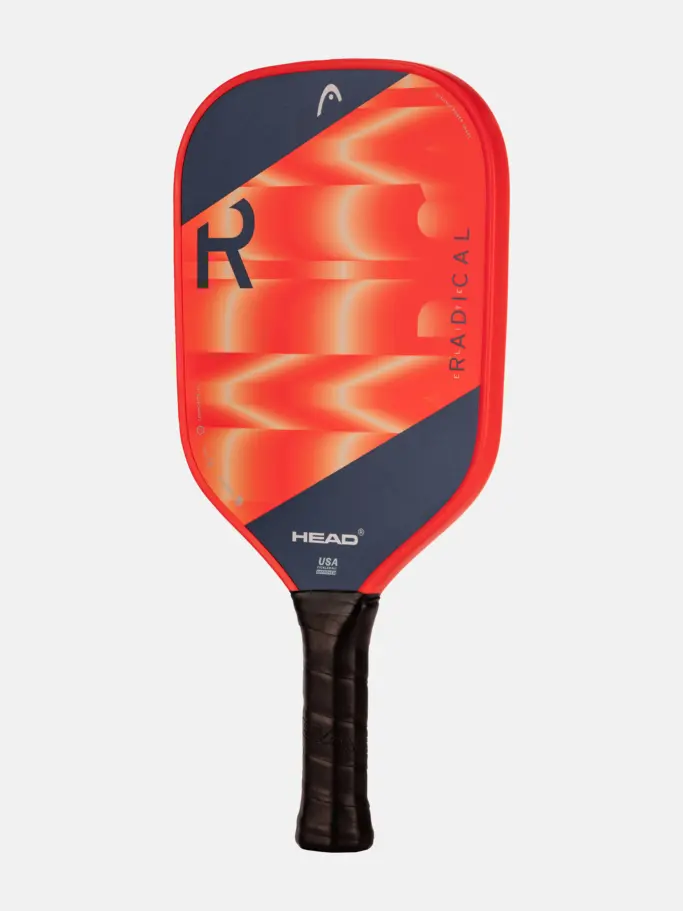
The Radical Elite is the control pick because of what it refuses to do. It does not jump off the face, it does not hurry your hands, and it does not turn a firm block into a trampoline.
The fiberglass composite face answers contact with a soft, muted thud, and the ball stays where your swing puts it. In dinking rallies and third shot drops it was the calmest paddle in this group, and that calm is a skill builder.
HEAD lists the current build with a 15mm core, up from the thinner figures attached to older versions of this listing, and the thicker core shows: blocks settle instead of springing, and resets drop softly even when my position was imperfect.
At 8.1 ounces with a widebody outline, it presents a broad, stable face that forgives contact away from the middle better than most standard shapes here.
The trade is plain. The smooth face produces the least spin of any single paddle on this page, and players building a topspin game will feel that ceiling quickly. It is also a paddle that asks you to supply the pace: drives need your own swing speed behind them. What you get in return is control you can trust rally after rally.
Buy it if touch and placement are your game. Skip it if you want spin or free power.
3Franklin Pilot: Best Spin Pickleball Paddle in 2027
AT A GLANCE
Franklin Pilot
WEIGHT
7.7-8.2 oz
SWING WEIGHT
-
TWIST WEIGHT
-
SPIN
-
Shape: Widebody, 16 x 8 in
Grip: 5 in handle, 4.25 in circumference, non-slip cushioned
Core: Polypropylene honeycomb, 10mm
Face: MaxGrit textured fiberglass
Approval: USAP approved
Feel: Crisp and lively, with real surface bite for this class
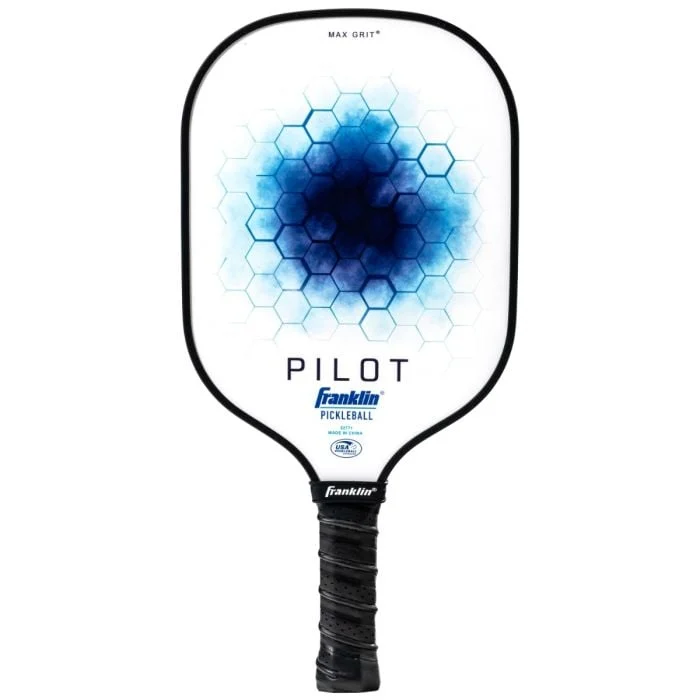
The Pilot is where this list stops being polite. Franklin’s MaxGrit surface is a genuinely textured fiberglass face, and it changes what a developing swing can do to the ball.
My drives dipped harder, my roll volleys bit instead of skidding, and my serves carried a shape that the smoother faces in this group simply cannot copy. For a player whose topspin is starting to arrive, that grip on the ball is the whole argument.
The rest of the build supports the idea. The widebody outline, a full 16 by 8 inches, gives that textured face a generous stage, and contact away from the middle stays useful instead of dying.
The cushioned, non-slip grip kept my hold secure through sweaty summer sessions, and the weight range, 7.7 to 8.2 ounces, means a player can land on a livelier or steadier example from the same model line.
Here is the honesty the thin core demands. At 10mm, the Pilot plays firm. Blocks pop more than they settle, resets need soft hands and good position, and mishits send more feedback up the handle than the thick-cored picks here do.
It is a lively paddle, not a plush one, and the spin comes from texture plus technique: a flat swing still produces a flat ball.
Buy it if spin is the skill you are chasing. Skip it if you want a soft, quiet, thick-cored feel.
4GAMMA Fusion Power: Best Power Pickleball Paddle in 2027
AT A GLANCE
GAMMA Fusion Power
WEIGHT
~8.0 oz
SWING WEIGHT
-
TWIST WEIGHT
-
SPIN
-
Shape: Widebody/traditional, 15.5 x 8.25 in
Grip: GAMMA Pro Lite, 5.0 in handle, circumference -
Core: Polypropylene honeycomb, 13mm
Face: Textured fiberglass
Approval: USAPA approved (model RFPOW10)
Feel: Poppy with a very large sweet spot
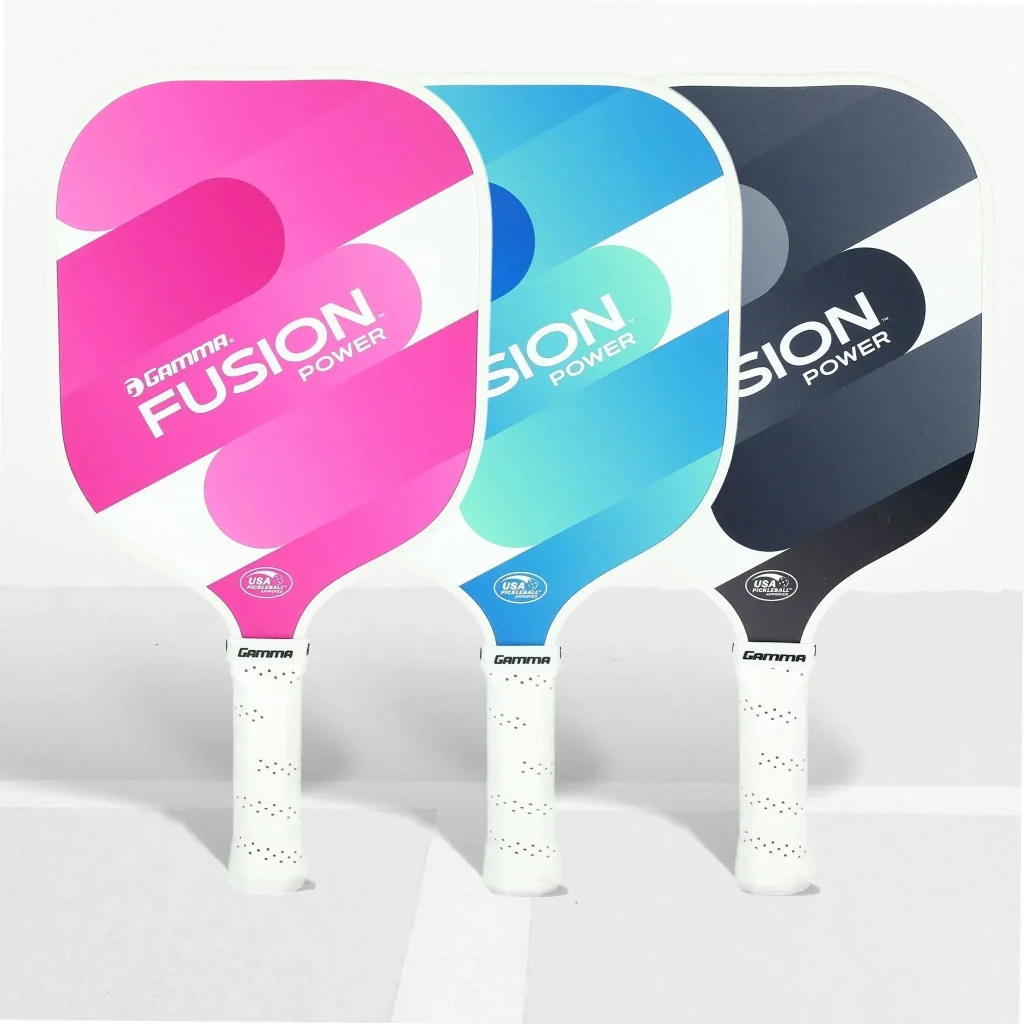
The Fusion Power makes its case the moment you see it. At 8.25 inches across, this is one of the widest faces I have put in a player’s hand, and that width is not decoration.
Contact that would twist a narrower paddle open stays playable here, and the sweet spot feels less like a spot and more like a postcode. For players whose contact point still wanders from rally to rally, that forgiveness changes games.
Under the face, a 13mm polypropylene honeycomb core gives the paddle its pop. Drives jump off the textured fiberglass with real intent, counters punch back instead of merely surviving, and the surface texture adds enough bite to keep those drives dipping and honest.
GAMMA built its name on grips, and the Pro Lite handle shows it: secure, cushioned and comfortable across a long afternoon, at about 8 ounces all in.
The trade for all that width and pop is touch. A face this lively asks for soft hands on resets, and a tense block can sail long before you adjust to it.
Fast hands battles at the kitchen also feel a touch less nimble than on the standard shapes here, simply because there is more paddle to move. Neither point is a flaw so much as a personality: this is the confident, attacking option in the group.
Buy it if you want power with the largest margin for error. Skip it if your game is built on soft resets and quick hands.
5Diadem Hero V2: Best Lightweight Pickleball Paddle in 2027
AT A GLANCE
Diadem Hero V2
WEIGHT
7.6 oz
SWING WEIGHT
-
TWIST WEIGHT
-
SPIN
-
Shape: Standard, 15.6 x 7.8 in
Grip: 5 in handle, 4 in circumference
Core: Polypropylene honeycomb, 8mm cell core (overall paddle thickness ~14mm including faces and edge)
Face: HMT glass fiber (fiberglass)
Approval: USAPA approved
Feel: Light and fast in the hand, reinforced edge bumper for durability
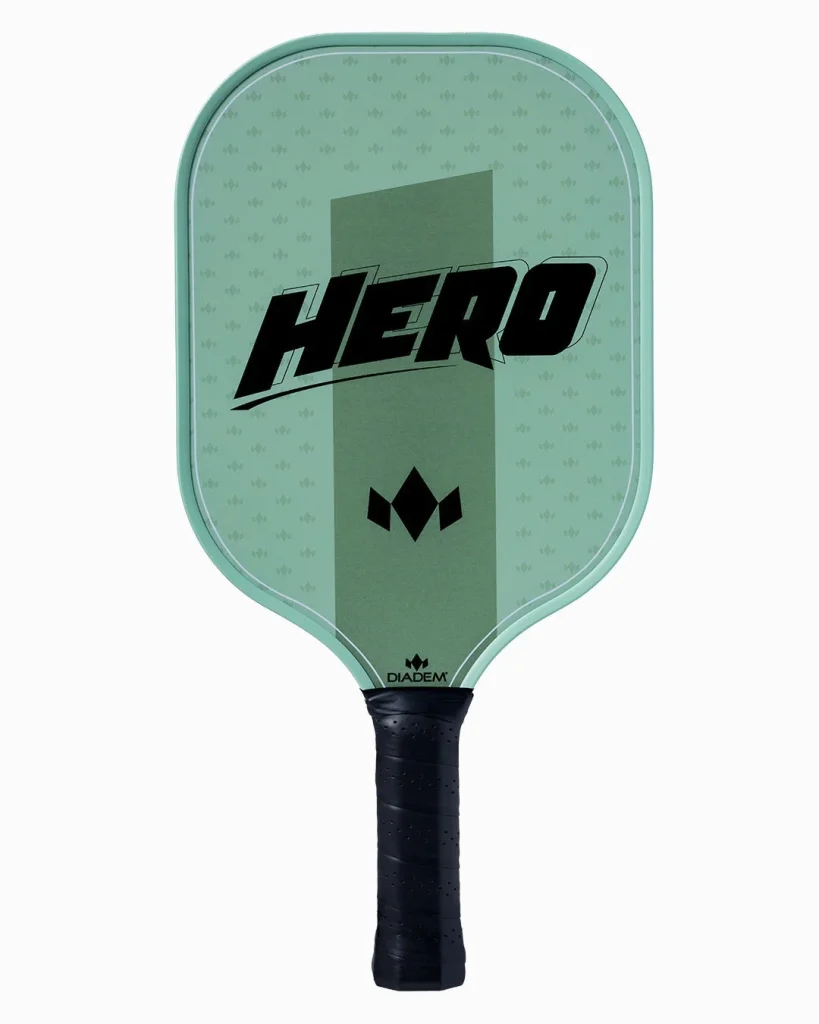
Pick up the Hero V2 and the first thing you notice is what is missing: weight. At 7.6 ounces it is the lightest single paddle on this page, and that lightness is a playing style.
My hand arrived at the kitchen line earlier, counters snapped up without a wind-up, and long sessions left my forearm fresher than any other paddle here did. Players with smaller frames, or anyone whose game is built on quick hands, will feel at home immediately.
Diadem builds it around an 8mm polypropylene honeycomb core, with the full build measuring about 14mm thick once the HMT glass fiber faces and the reinforced edge bumper are counted.
That bumper matters more than it sounds: light paddles live close to the ground on digs and low balls, and the Hero V2 is built to shrug off the scrapes that come with them. The 4 inch grip is the smallest here alongside the JOOLA, suiting smaller hands and a relaxed, wrist-friendly hold.
The physics of light and thin still apply. There is less mass behind a block, so heavy drivers can push this paddle around if your positioning is late, and baseline power comes from your own swing speed rather than the paddle’s plow-through. It rewards players who take the ball early and stay busy at the net.
Buy it if hand speed and a light swing are your priorities. Skip it if you face heavy hitters and need mass to hold your ground.
6Niupipo MX-19 Fiberglass Set of 2: Best Two-Paddle Starter Set in 2027
AT A GLANCE
Niupipo MX-19 Fiberglass Set of 2
WEIGHT
-
SWING WEIGHT
-
TWIST WEIGHT
-
SPIN
-
Shape: Standard (2-paddle set)
Grip: 4.72 in handle, 4.25 in circumference
Core: Polypropylene honeycomb, thickness -
Face: Fiberglass
Approval: USAPA approved per listing
Feel: Soft and forgiving for first games

Plenty of players do not start pickleball alone, and this set is built for exactly that first afternoon. The box carries two MX-19 fiberglass paddles, balls and a carry bag, so a couple, two friends or a parent and teenager can walk onto a court with nothing else left to arrange.
I keep a set like this around for visiting family, and the bag alone removes the usual scramble of loose gear rolling around the car.
The paddles themselves are honest starter tools. The fiberglass faces play soft and forgiving, the polypropylene honeycomb cores keep contact calm, and the standard shape gives new swings a sensible target to aim with.
The grips measure 4.25 inches around with a 4.72 inch handle, a middle-of-the-road fit that suited every hand I passed one to. First drop shots stayed manageable, and nobody had to fight the equipment while learning the scoring.
The compromises are the ones any set makes. Niupipo publishes little beyond the basics: no paddle weight and no core thickness figure I can quote to you, and each paddle is a step simpler in finish and feel than the strongest singles on this page.
The listing carries USAPA approval, which keeps these legal as your games grow more serious, but a player who catches the bug hard will eventually want one better paddle of their own.
Buy it if two people are starting together. Skip it if you play solo and every bit of quality should go into one paddle.
7A11N HyperFeather SE Set of 2: Best Grip/Comfort Pickleball Paddle Set in 2027
AT A GLANCE
A11N HyperFeather SE Set of 2
WEIGHT
7.3 oz per paddle
SWING WEIGHT
-
TWIST WEIGHT
-
SPIN
-
Shape: Standard (2-paddle set)
Grip: Cushion grip, 4.92 in handle, 4 1/4 in circumference
Core: Polymer honeycomb, thickness -
Face: Graphite
Approval: USAPA approved
Feel: Light with a soft, cushioned hold
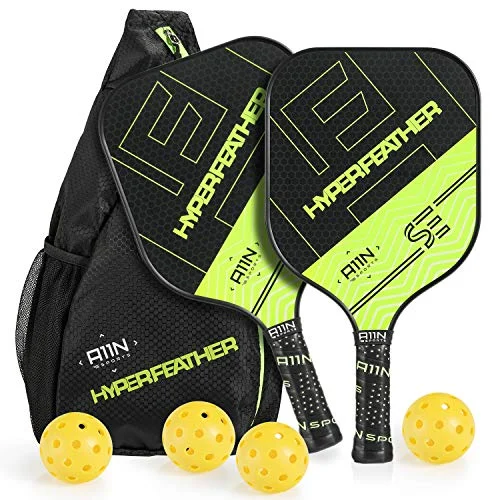
Comfort is the reason this set exists. Each HyperFeather SE paddle weighs just 7.3 ounces, the graphite face keeps contact crisp without harshness, and the cushion grip is the best hold in this entire group.
My fingers stayed relaxed through long sessions, the 4 1/4 inch circumference filled my palm without bulk, and the 4.92 inch handle gave my two-handed backhand proper room to work. For players who finish sessions rubbing their hands, that grip is not a detail. It is the point.
As a package it covers a first season neatly: two paddles, four outdoor balls and a sling bag. The paddles play light and cooperative, with a soft, controlled response that suits the dink-heavy learning phase every beginner passes through, and USAPA approval means they stay legal when open play turns into league night.
The paddles themselves are the strong part of this package, and they have built a loyal following among recreational players for good reason.
One honest warning belongs here: the included balls are the weak link. They crack early, far sooner than the paddles wear, and regular sessions will get through them quickly.
Treat the balls as a starter supply, and pick up proper outdoor balls before your first month is out. Judged on the paddles and that grip, which is how it should be judged, this is the comfort pick of the page.
Buy it if grip comfort decides your enjoyment. Skip it if you expect the included balls to last the season.
8Franklin Forte Youth: Best for Kids/Juniors Pickleball Paddle in 2027
AT A GLANCE
Franklin Forte Youth
WEIGHT
7.2-7.6 oz
SWING WEIGHT
-
TWIST WEIGHT
-
SPIN
-
Shape: Standard youth, 15.7 x 7.8 in
Grip: 4.75 in handle, circumference -
Core: Polypropylene, 10mm
Face: Textured fiberglass
Approval: USAP approved
Feel: Light and easy to swing for smaller hands and shorter arms
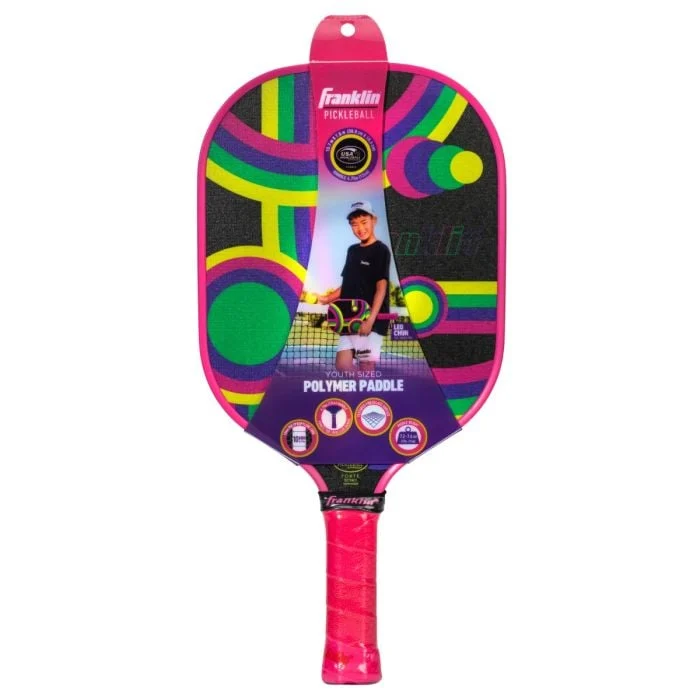
Most youth paddles are toys wearing a paddle costume. The Forte Youth is a real Franklin, scaled honestly. It keeps near-adult dimensions, 15.7 by 7.8 inches, so a young player learns on a face that behaves like the grown-up game, while the 7.2 to 7.6 ounce weight and shorter 4.75 inch handle suit smaller hands and shorter arms.
The juniors I handed it to swung freely, without the wrist droop I always see when kids borrow adult paddles.
The build supports that learning. A textured fiberglass face gives growing swings something to grip the ball with, the 10mm polypropylene core keeps the response lively and encouraging, and contact feels like pickleball rather than a muted thud.
Because it carries USAP approval, it stays legal as a young player moves into junior events and open play, instead of needing to be replaced the moment games turn official.
Two honest notes for parents. Franklin does not publish the grip circumference, so if a shop visit is possible, smaller hands should try the handle before committing.
And children grow: a paddle that fits a ten-year-old may feel small by thirteen, which is a sizing fact, not a quality complaint. Adults reading this page in search of a light paddle should look at the Diadem Hero V2 above instead. This one is for the kids, and it respects them.
Buy it if a junior in your life is starting out. Skip it if you are an adult chasing a lighter paddle.
9PROLITE Bolt: Best Widebody Sweet Spot Pickleball Paddle in 2027
AT A GLANCE
PROLITE Bolt
WEIGHT
7.7 oz
SWING WEIGHT
-
TWIST WEIGHT
-
SPIN
-
Shape: Widebody
Grip: -
Core: Polypropylene honeycomb, 10mm
Face: Carbon fiber and polycarbonate blend
Approval: USAP approved per brand
Feel: Quiet and soft with a broad sweet spot
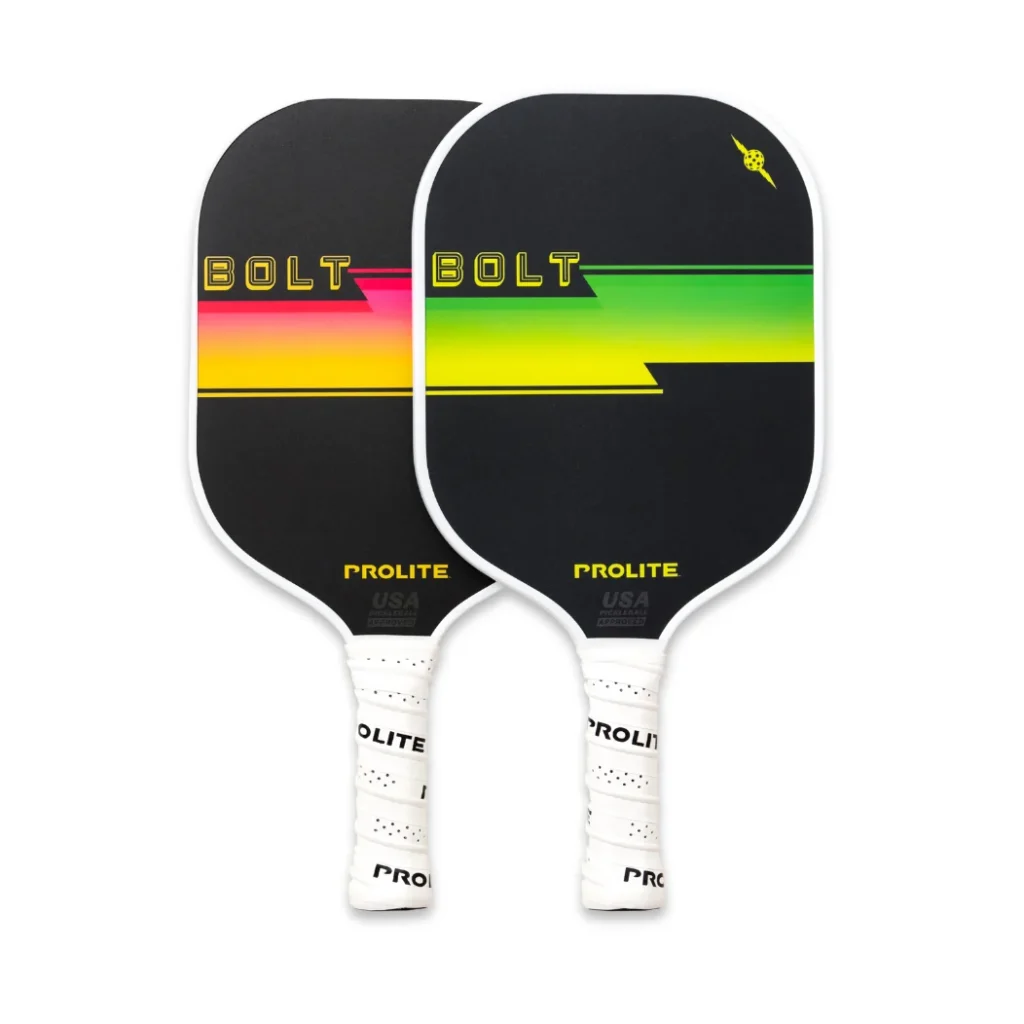
PROLITE has been building pickleball paddles since the 1980s, longer than most brands on this page have existed, and the Bolt shows what that heritage is for. It is a quiet paddle.
The carbon fiber and polycarbonate blend face answers contact with a soft, muted thud rather than a sharp crack, and on early-morning courts and noise-sensitive neighbourhoods, those manners matter. My playing partners noticed the hush before they noticed anything else about it.
The widebody shape is the other half of the design. Contact spreads across a broad, calm sweet spot, so blocks hold their line and off-center balls stay playable instead of twisting away.
At 7.7 ounces with a 10mm polypropylene honeycomb core, the Bolt plays soft and controlled rather than explosive, and I found myself trusting it most in the patient parts of a rally: dinks, resets, and the third shot drop that sets everything else up.
Honesty about the gaps: PROLITE publishes little handling data for this model, and the grip circumference is not among the figures I can give you.
The muted face also returns less feedback, so players who like a sharp, informative strike may find it vague, and outright power is ordinary. None of that troubles the player this paddle is made for, the one who wins points by keeping the ball low, quiet and in play.
Buy it if you prize a soft touch and a wide margin for error. Skip it if you want crisp feedback and easy power.
10Diadem Icon: Best Carbon Fiber Pickleball Paddle in 2027
AT A GLANCE
Diadem Icon
WEIGHT
7.7-8.0 oz (Lite and Mid weights)
SWING WEIGHT
-
TWIST WEIGHT
-
SPIN
-
Shape: Standard, 16 x 7.6 in
Grip: 5 in handle, 4 1/8 in circumference
Core: Polypropylene honeycomb, 11.43mm
Face: HMT carbon fiber with Spin RP polyurethane coating
Approval: USAPA approved
Feel: Soft, controlled power, head-light and quick
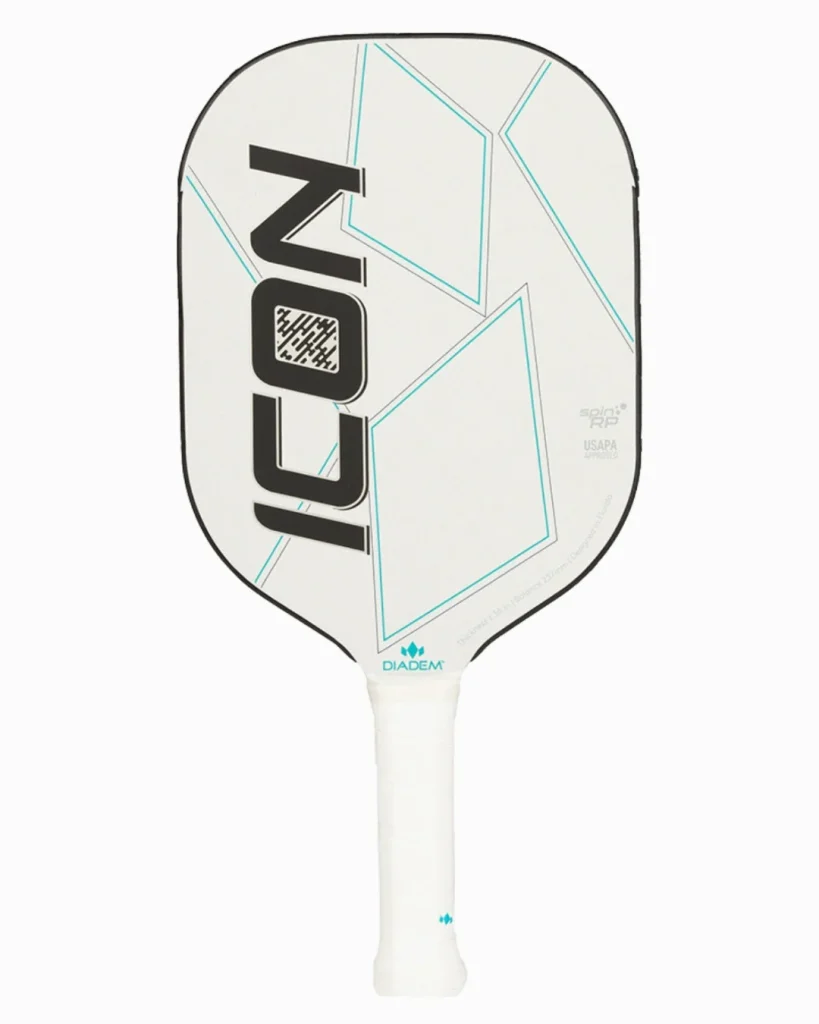
Everything else on this page wears fiberglass or graphite. The Icon wears carbon fiber.
It was Diadem’s first ever pickleball paddle, and it is built a different way from the rest of this list: the HMT carbon face is molded around the polypropylene honeycomb core rather than laid over it, finished with a replaceable three-piece edge guard fixed into the frame.
In my testing that molded build produced the surprise of this group: controlled power with a softer touch than an 11.43mm paddle has any right to give.
The face carries Diadem’s Spin RP polyurethane coating, and it holds the ball in a way I could feel on dinks and third shot drops: contact grips instead of skidding, so shaped shots stay honest without a violent swing.
The balance sits a touch head light, so the Mid weight plays quicker than its 8.0 ounces suggest, and off-center contact stays stable instead of wobbling. It comes in Lite and Mid weights on the same slim 4 1/8 inch grip, which kept my wrist loose and my rolls easy.
Honesty about what it is: this is the original Icon, an earlier design that Diadem has since followed with newer Icon generations above it in the range, and it plays like a step up rather than a starter.
The thin build returns real feedback on mishits, the narrower outline forgives less than the widebodies here, and a first-week beginner will find the calmer thick-cored picks easier to learn on. The coating that grips the ball also wears with heavy play, like every textured surface on this page.
Buy it if your strokes are already forming and you want a genuine carbon face with touch. Skip it if you are brand new and need a wide, forgiving face to learn on.
How to Choose the Best Pickleball Paddle Under $50 in 2027
Choosing well at this level starts with honest expectations and ends with the shape of your own game. None of these paddles is a flagship in disguise, and the player who understands what this class does well will be happier than the one chasing a headline.
Work through the six sections below in order: what quality is realistic, the materials underneath, why approval matters, how grip sizing works, the set question, and the signs that it is time to move up.
What Quality Is Realistic at This Level
Here is the honest baseline: fiberglass or graphite faces, polypropylene honeycomb cores in the thin-to-middle range, and basic edge guards are what this class is made of.
What you give up against flagship paddles is measurable: lab-published spin figures, thermoformed unibody construction, and grit engineered to stay sharp across seasons.
No paddle here currently clears the strict verified-performance bar that serious testing applies to top models, and the boxes above say so plainly wherever a figure is unpublished.
What you do not give up matters just as much. Every pick on this page is a legal, approved paddle from a brand that stands behind it, with a real sweet spot and a response you can learn on.
Points at beginner and intermediate level are decided by footwork, shot selection and consistency, not by the last few hundred RPM. A sound paddle from this list lets you build all three without the equipment arguing back.
Core and Face Materials
Almost everything here is built on a polypropylene honeycomb core, a grid of hexagonal cells that balances lightness, consistency and durability. Core thickness is the number that shapes the feel.
A 10mm core plays firm and lively, returning more feedback and a quicker pop, which suits the Franklin Pilot and the PROLITE Bolt. A 13mm core splits the difference toward stability. At 15mm and 16mm, the HEAD Radical Elite and the Franklin Signature Pro play calmer and softer, absorbing pace and settling blocks.
Faces decide how the ball leaves. Fiberglass feels springy and forgiving, and in textured MaxGrit form it grips the ball well enough to shape real topspin. Graphite plays crisper and lighter in the hand, with a direct, controlled strike.
A carbon fiber and polycarbonate blend, as on the Bolt, mutes contact into a soft, quiet response. None of these faces matches raw carbon for spin ceiling, and their textures wear smoother with heavy play, which is a fact of this class rather than a defect in any one paddle.
USAP Approval and Why It Matters
Approval is easy to dismiss when you only play casually, until the day it is not. Open play groups, leagues and tournaments increasingly ask for paddles on the approved list, and showing up with an unlisted paddle can mean borrowing one on the spot.
Approval also acts as a quality floor: an approved paddle has passed dimensional and performance checks, which is a meaningful signal in a class where no-name products cut corners freely.
That is why every pick on this page carries USAP or USAPA approval, including the two sets and the youth paddle. It costs you nothing as a casual player and protects every direction your game might grow.
When you shop beyond this page, treat approval as a first filter rather than an afterthought, and check the exact model name against the list, because approval belongs to a specific paddle and not to a brand as a whole.
Grip Size and Handle Length
Grip fit shapes your whole game quietly. The common way to size up: hold the paddle and check that a fingertip fits between your fingers and your palm; if your fingers touch your palm, the grip is likely too small.
Most beginners do well with the smaller circumferences on this page, around 4 to 4 1/4 inches, because a smaller grip keeps the wrist loose and the hold relaxed instead of squeezed.
If a grip feels slightly small, an overgrip is the simple fix: it adds a small step of size, refreshes the tack, and can be replaced as it wears. Handle length is the second half of the choice.
Standard handles around 4.75 to 5 inches suit one-handed play, while the longer handles here, up to 5.6 inches on the Signature Pro, give two-handed backhands the room they need. Players with smaller hands should also know that some models, the Radical Elite among them, offer a slimmer grip variant made for smaller hands.
Set vs Single Paddle
A two-paddle set is the smart first purchase in one clear situation: two people starting together. A couple, two friends, or a parent teaching a teenager gets paddles, balls and usually a bag in one box, and nobody has to wait for a second order before the first game happens.
The Niupipo and A11N sets on this page exist for exactly that reader, and both stay approved and playable well past the first month.
The trade is per-paddle refinement. A set divides the same total across two paddles, balls and a bag, so each paddle is necessarily simpler in finish, published data and feel than a single paddle bought on its own.
If you play solo, or you already know this sport has its hooks in you, one better single from this list serves you longer. A common middle path: buy the single for yourself and keep a spare set later for guests, once you know your own game is settled.
When to Upgrade
A first paddle rarely dies all at once; it fades. The clearest signs are physical: dead spots where contact feels hollow and the ball drops without energy, a face texture worn smooth until your drives stop dipping, an edge guard cracked or lifting, or any hint of the core separating, which players call delamination.
Any of those means the paddle is no longer the one you tested and learned on.
The other sign is your own game. When your strokes are grooved and a specific weakness keeps costing points, whether that is resets popping up, drives lacking shape, or blocks folding against hard hitters, you have outgrown the paddle rather than worn it out.
The step up buys you thermoformed construction, published handling figures to choose by, longer-lasting face texture and a wider range of shapes and swing weights. Upgrade when you can name the exact limitation you are removing, and the next paddle will feel like a tool chosen on purpose.
Frequently Asked Questions (FAQs)
1. Are entry-level pickleball paddles a good choice for a beginner?
Yes. A beginner’s points are decided by footwork, positioning and consistent contact, and every paddle on this page provides a legal, forgiving platform to learn those on.
What matters most at the start is a shape that forgives off-center contact and a grip that fits your hand, both of which this class delivers without asking you to guess at flagship specifications you cannot feel yet.
2. Can I use one of these paddles in a tournament?
Yes. Every pick on this page, singles, sets and the youth paddle included, carries USAP or USAPA approval, which is what sanctioned events require.
Approval belongs to the exact model, so if you enter a formal event, confirm your precise paddle name appears on the approved list before you travel, and you will have no surprises at check-in.
3. What is the difference between a fiberglass and a graphite paddle at this level?
Fiberglass plays softer and springier, with a forgiving feel that helps the ball off the face, and textured fiberglass surfaces grip well for spin. Graphite plays crisper and more direct, usually a touch lighter in feel, with a controlled strike that many players prefer for dinks and blocks.
Neither is better in the abstract; fiberglass suits players who want help with pace and comfort, graphite suits players who want feedback and touch.
4. Is a paddle set or a single paddle better for a new player?
It depends on who is starting with you. If two people are learning together, a set with balls and a bag gets both of you playing immediately, and the sets on this page stay legal and useful as you improve.
If you are starting alone, a single paddle concentrates all the quality into the one paddle you will actually hold, and it is the better long-term choice.
5. How long will a paddle at this level last?
For most recreational players, expect a full season or more of regular play. The face texture wears first, gradually smoothing until spin drops off, while the edge guard protects the core from the scrapes and taps of everyday use.
Playing several times a week shortens that timeline; occasional weekend play stretches it well beyond a year. Retire the paddle when dead spots appear or the face feels polished smooth.
6. What weight paddle should a beginner choose?
Most beginners do well in the middle of this page’s range, roughly 7.6 to 8.2 ounces. Lighter paddles, like the 7.3 ounce A11N paddles and the 7.6 ounce Diadem Hero V2, favour quick hands and smaller players.
Heavier examples add stability on blocks against hard hitters. If you have no reference point yet, start in the middle and let your first month of play tell you which direction to lean.
7. Do paddles at this level have enough spin?
Yes, with the right face and a real swing. Textured surfaces like Franklin’s MaxGrit on the Pilot grip the ball hard enough for dipping drives and shaped roll volleys.
Smooth faces, like the HEAD Radical Elite, produce noticeably less. Technique decides most of the result at every level: brush up the back of the ball and even a starter paddle will bend it; swing flat and no face will save the shot.
8. What grip size should I get?
Start with the smaller end of the range unless your hands are large. Circumferences around 4 to 4 1/4 inches suit most beginners, keep the wrist loose, and discourage squeezing, which is a common source of mishits and tired forearms.
Use the fingertip test when you first hold the paddle: a small gap between your fingers and your palm means the size is close. An overgrip adds a small step up whenever you need one.
9. Can kids use a regular adult paddle, or do they need a youth paddle?
A youth paddle is the better start for most kids. Adult paddles are heavier and longer in the handle, and that combination pulls a child’s wrist down and distorts the swing they are trying to learn.
The Franklin Forte Youth keeps near-adult face dimensions at a lighter weight with a shorter handle, so juniors learn real technique on equipment sized for them, and its approval keeps it legal as they grow into events.
10. Why do some paddles at this level feel dead or sound hollow?
Some of it is construction: a honeycomb core is literally a grid of empty cells, so a hollow note at contact is normal, especially on thinner cores. A genuinely dead feel is different.
It usually means contact landed far from the sweet spot, or the core has been damaged or worn by heavy use. If a paddle that once felt lively turns dull across the whole face, that change is one of the clearest signs it is reaching the end of its life.
11. Is a thicker core better for a beginner?
Usually, yes. A thicker core, 15mm or 16mm, plays calmer and more forgiving: blocks settle, resets stay low, and mishits lose less energy. That steadiness helps a beginner build touch.
It is not a rule, though. Players who already have soft hands may prefer the livelier feedback of a thinner core, and very light, thin builds like the Diadem Hero V2 suit quick-handed players of any age.
12. When should I upgrade from my first paddle?
Upgrade when you can name the specific limitation you want removed. The honest signals are a face worn smooth, dead spots in the core, a cracked or lifting edge guard, or a game that has clearly outgrown the paddle’s shape and response.
The next step buys thermoformed construction, published swing and twist figures to choose by, and texture that lasts longer. Until one of those signals shows up, your first paddle is not holding you back.

Michael Stevenson
Hi, my name is Michael Stevenson and I’m a passionate pickleball player. I’ve been playing the game for many years and I’m pretty highly skilled at it. Pickleball is one of my favorite topics so naturally, I love to write about it.
Whether it’s tips for beginners, guides for experts, reviews of new paddles, or advanced playing techniques – if it relates to pickleball then I have something interesting to write about it. So if you’re looking for entertaining and informative information on the topic of pickleball, look no further than my written works!