
The ball is a full step wide of my forehand, low, dropping, and by every law of my footwork it is gone. I stretch, the paddle reaches out on the end of my arm, and the face meets it with two inches to spare.
The block does not just survive, it lands low in the kitchen, and the point resets. That is the elongated bargain in one shot: balls that were somebody else’s point become yours.
Here is the honest version of that bargain. An elongated paddle is longer and narrower than a standard one, usually 16.5 inches long and about 7.5 inches wide, and the extra length buys reach and leverage on serves, drives, and overheads.
What it charges you is a smaller sweet spot that sits higher on the face, and hands that change direction a fraction slower at the kitchen.
Older guides, including the one this page replaces, claimed elongated paddles have bigger sweet spots. That is backwards, and this page will not repeat it. Every paddle below earned its place knowing exactly what the shape gives and what it takes.
The 10 Best Elongated Pickleball Paddles in 2027
1JOOLA Perseus Pro IV 16mm: Best Overall Elongated Pickleball Paddle in 2027
AT A GLANCE
JOOLA Perseus Pro IV 16mm
Weight
8.1 oz
Swing Weight
118
Twist Weight
6.3
Spin
1,971 RPM
Shape: Elongated, 16.5 x 7.5 in, 5.5 in handle
Core: Gen 3 Propulsion Core
Face: Raw carbon fiber
Grip: Not published
Approval: USAP and UPA-A
Feel: Plush power
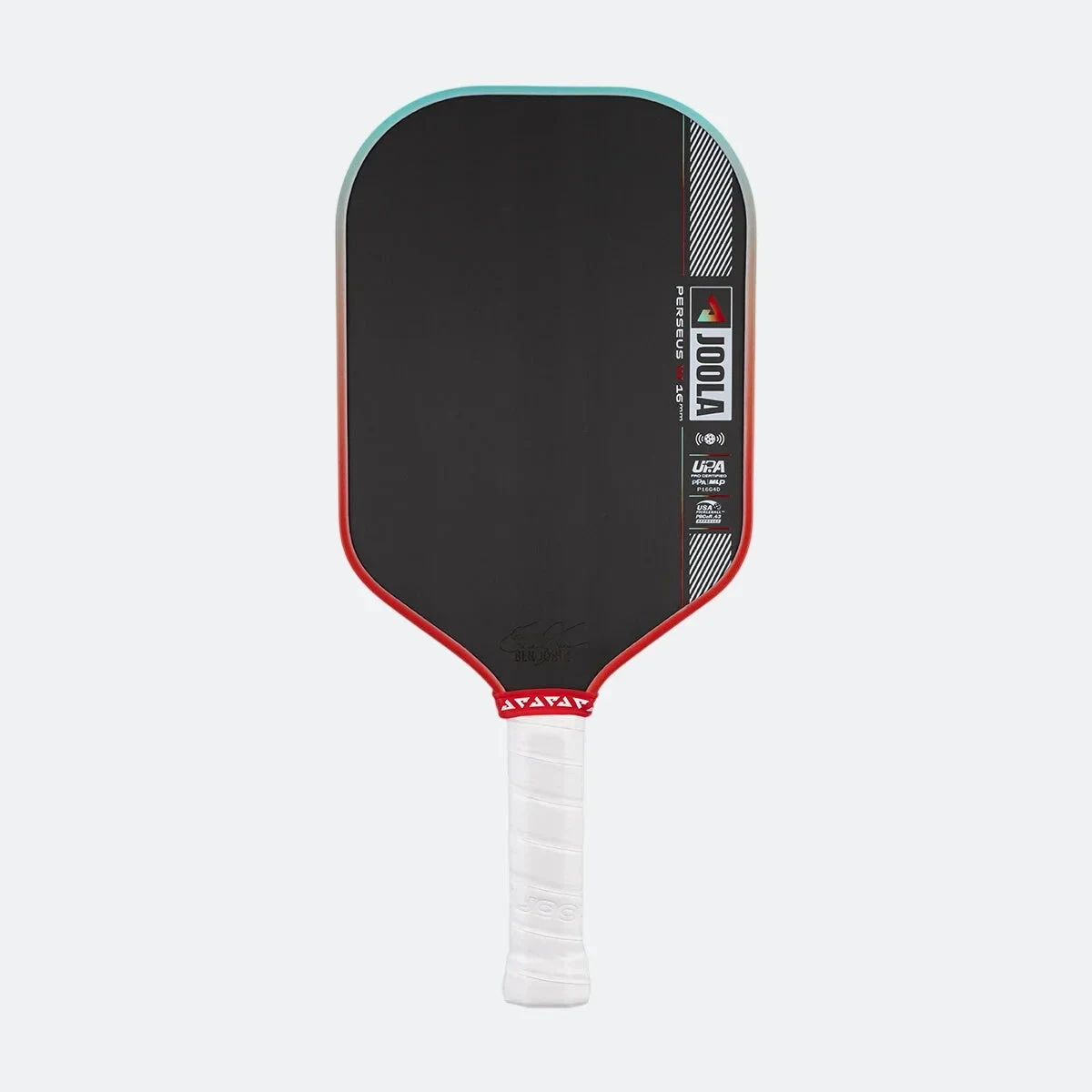
If you want one elongated paddle that does the whole job, this is still the reference.
The Perseus Pro IV takes the shape’s natural leverage and pairs it with a 16mm Propulsion Core that behaves in both directions: full swings produce serves and drives with real weight behind them, and then the same face pockets the ball on a third shot drop and sits it down in the kitchen.
That switch from pace to calm, inside one rally, is what most elongated paddles promise and few deliver.
The reach is the shape working as advertised. Stretched blocks at the kitchen stay stable because the foam injected edges hold the frame, and the 5.5 inch handle leaves honest room for a two-handed backhand.
At a 118 swing weight the drives carry genuine plow-through, and counters do not get bullied by hard hitters the way lighter elongated frames do.
The trade is hand speed. That swing weight will not win frantic exchanges against a quick widebody, and contact sounds stiffer and hollower than the softest foam paddles I play. This generation also carries core durability complaints, so register the warranty the day it arrives and keep your receipt.
Buy it if you want the elongated shape with no obvious hole in its game. Skip it if kitchen hand speed is your whole identity.
2JOOLA Perseus Pro V 16mm: Best Power Flagship Pickleball Paddle in 2027
AT A GLANCE
JOOLA Perseus Pro V 16mm
Weight
8.1 oz
Swing Weight
117
Twist Weight
6.26
Spin
2,060 RPM
Shape: Elongated, 16.5 x 7.5 in, 5.5 in handle
Core: Propulsion Core (Gen 3.5)
Face: Raw carbon fiber
Grip: Not published
Approval: USAP and UPA-A
Feel: Firm consistency
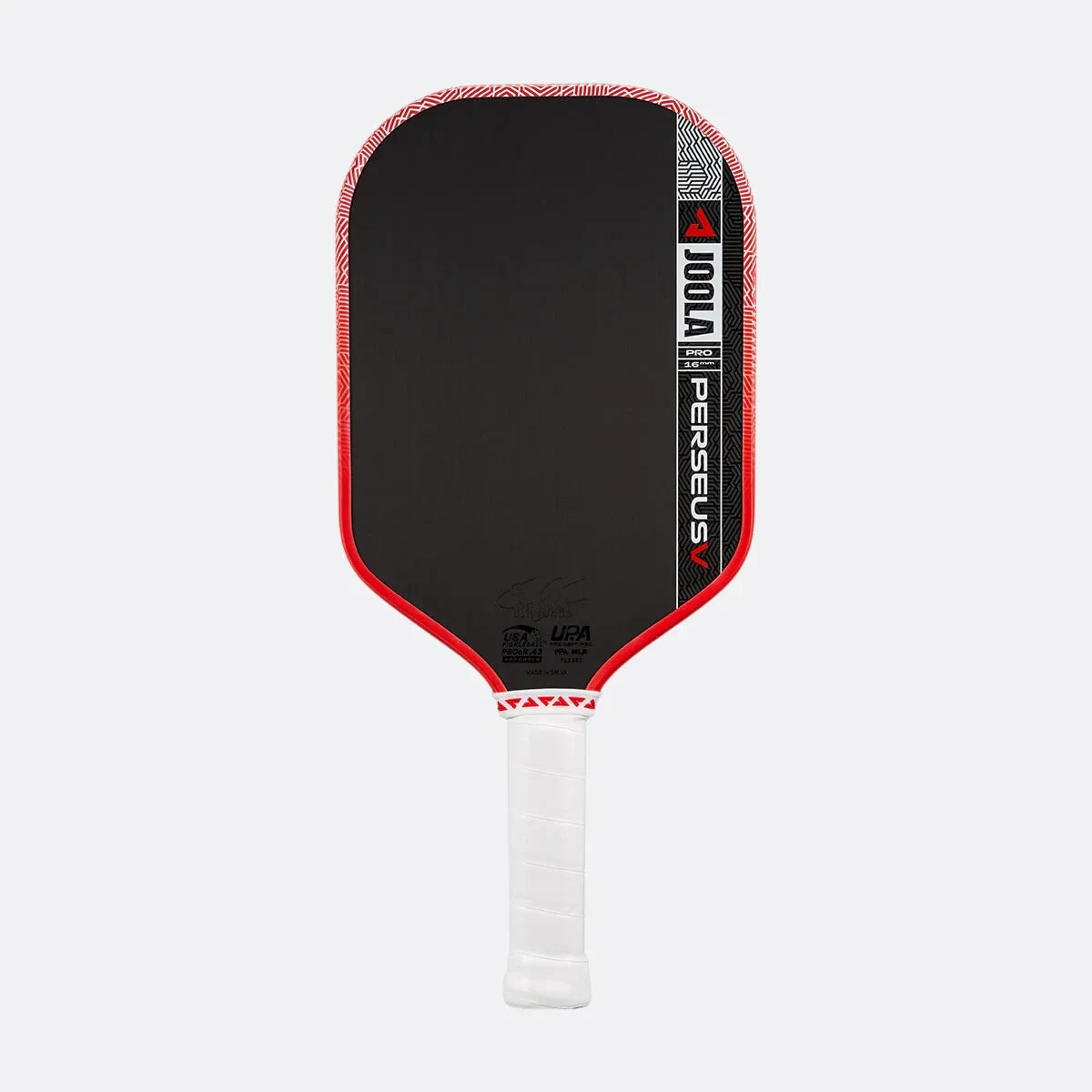
The Pro V is the flagship for players who would rather earn their power than have it handed to them, and the first sessions will test your patience.
Mine felt muted and short for two games, the ball dying off the face while I wondered what the fuss was about. Then the core broke in, and the paddle I had actually bought showed up: firm, direct, and relentlessly consistent from one contact to the next.
What consistency buys an elongated player is trust at full stretch. The sweet spot on a 16.5 inch frame sits high, and the Pro V answers the same way whether I catch the ball at the center or an inch above it, so stretched counters and wide defensive gets stopped surprising me.
Spin at 2,060 RPM keeps full blooded drives dipping, and at a 117 swing weight it changes direction a touch quicker than its predecessor while keeping the leverage that makes the shape worth playing.
It is not a soft paddle, and it will not flatter a lazy swing. Power here is built from swing speed and clean contact, and players who block with a short, passive motion will find the ball landing shorter than they expect.
Buy it if you swing fully, strike cleanly, and want the most consistent elongated flagship I tested. Skip it if you want the paddle to supply the pace.
3CRBN TruFoam Genesis: Best Elongated Pickleball Paddle for Spin and Dwell in 2027
AT A GLANCE
CRBN TruFoam Genesis
Weight
8.0 oz
Swing Weight
117
Twist Weight
5.64
Spin
2,151 RPM
Shape: Elongated, 16.5 x 7.35 in, 5.5 in handle
Core: TruFoam full foam, 14mm
Face: T700 raw carbon fiber with fiberglass layer
Grip: Not published
Approval: USAP and UPA-A
Feel: Soft dwell
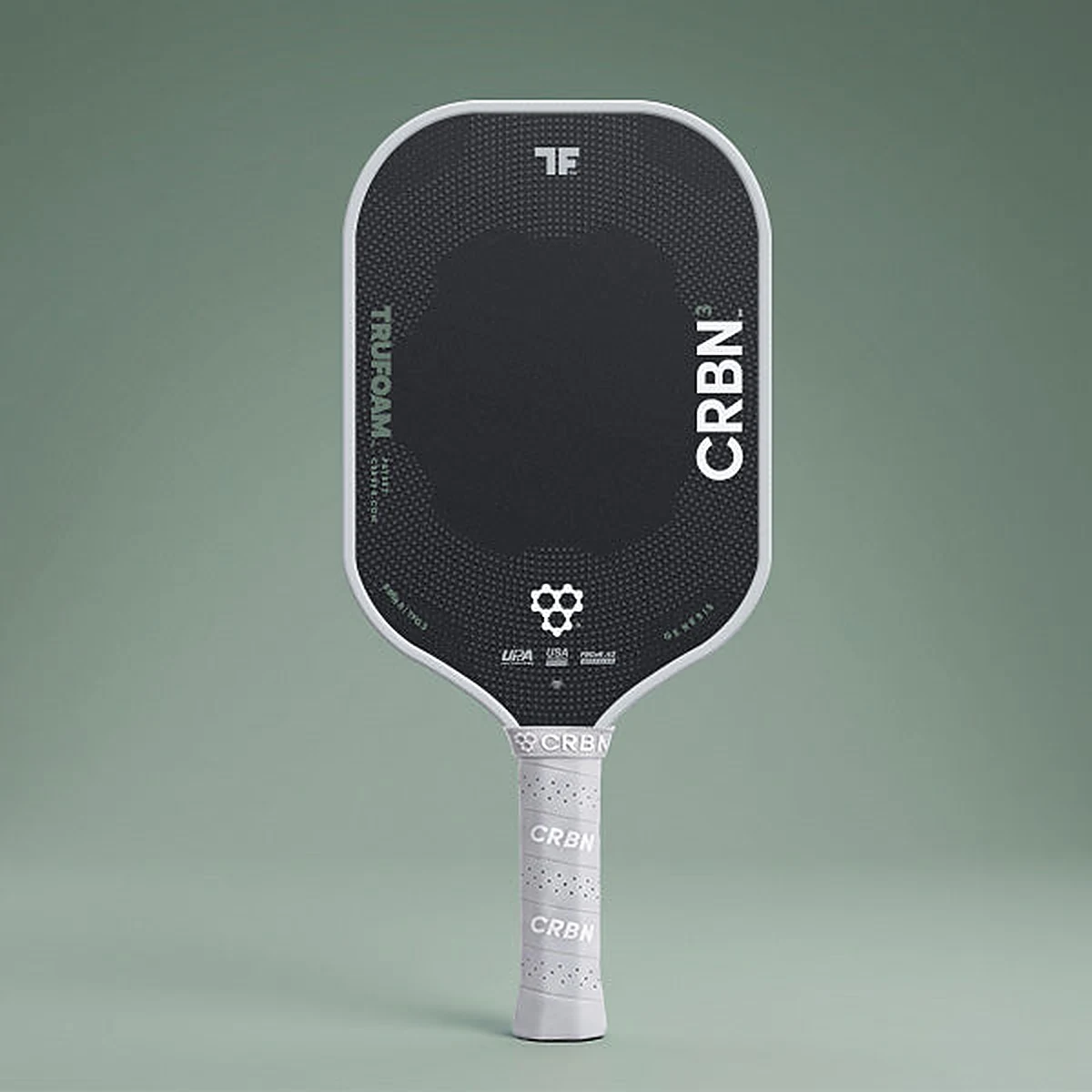
The first thing I noticed about the Genesis in its elongated shape is how long the ball stays on the face. It is a 14mm paddle, but the full TruFoam core pockets the ball like a 16mm, and that dwell time changes what an elongated paddle can do in the soft game.
Third shot drops from the baseline stopped sailing and started dipping. Roll volleys at the kitchen bit and curved. Serves came back less often because the spin pulled them down and kicked them off the bounce.
Measured spin of 2,151 RPM in this narrow 7.35 inch frame is the headline, and it is real. The raw carbon face grabs the ball as well as anything I played this season, and it does it without the harsh, hollow crack of a stiff honeycomb paddle.
Contact feels soft and connected, and the foam swallows vibration, so long drilling sessions left my arm fresher than most power paddles do.
The elongated shape collects its tax in stability. A 5.64 twist weight is the lowest in the top half of this list, so off-center contact twists more than it does on the widebody version of this paddle, and the swing weight feels like a 16mm even though the core is 14.
The fiberglass layer in the hitting zone also launched a few early resets higher than I meant before my grip learned to soften.
Buy it if spin, dwell, and a softer connected feel are how you win points. Skip it if your defense is built on stretched, messy contact.
4Selkirk SLK ERA Power Elongated: Best Predictable Power Pickleball Paddle in 2027
AT A GLANCE
Selkirk SLK ERA Power Elongated
Weight
7.9-8.4 oz
Swing Weight
117
Twist Weight
6.28
Spin
~2,020 RPM
Shape: Elongated, 16.5 x 7.45 in, 5.8 in handle
Core: Dynamic Fusion Core, polymer honeycomb with EVA foam
Face: T700 carbon fiber and woven fiberglass
Grip: Not published
Approval: USAP and UPA-A
Feel: Linear power

Selkirk built this paddle around a single idea: power you can predict. Plenty of elongated paddles hit hard. The ERA Power hits the same hard on the tenth drive as on the first, and in my testing that repeatability is what separates it.
The Dynamic Fusion Core pairs a polymer honeycomb with an EVA foam layer, and the foam takes the trampoline randomness out of the response. A three-quarter swing produced a three-quarter drive, every time, and that linearity made my soft game easier to trust than on most power frames.
The face blends T700 carbon fiber with woven fiberglass, and you can feel both materials at work. The carbon grips and shapes the ball, spin measured around 2,020 RPM, while the fiberglass adds the pop that finishes counters and speed-ups.
The elongated frame and 117 swing weight give drives genuine weight through the court, and the 5.8 inch handle is one of the longest in this class, which two-handed backhand players will notice on the first rally.
Control here means something specific. Resets behave because the response is linear, not because the face is soft. If your soft game depends on a pocketing, dwell heavy feel, this paddle plays firmer than you want, and off-center blocks get mid pack help from the 6.28 twist weight.
Buy it if you swing big and want the result to match the swing. Skip it if your touch runs on softness.
5Selkirk LUXX Control Air Invikta with InfiniGrit: Best Elongated Pickleball Paddle for Control in 2027
AT A GLANCE
Selkirk LUXX Control Air Invikta with InfiniGrit
Weight
8.05 oz
Swing Weight
117
Twist Weight
5.83
Spin
1,993 RPM
Shape: Elongated, 16.4 x 7.5 in, 5.35 in handle
Core: X7 Thikset honeycomb, 19mm
Face: Florek carbon fiber with InfiniGrit
Grip: Not published
Approval: USAP
Feel: Muted control
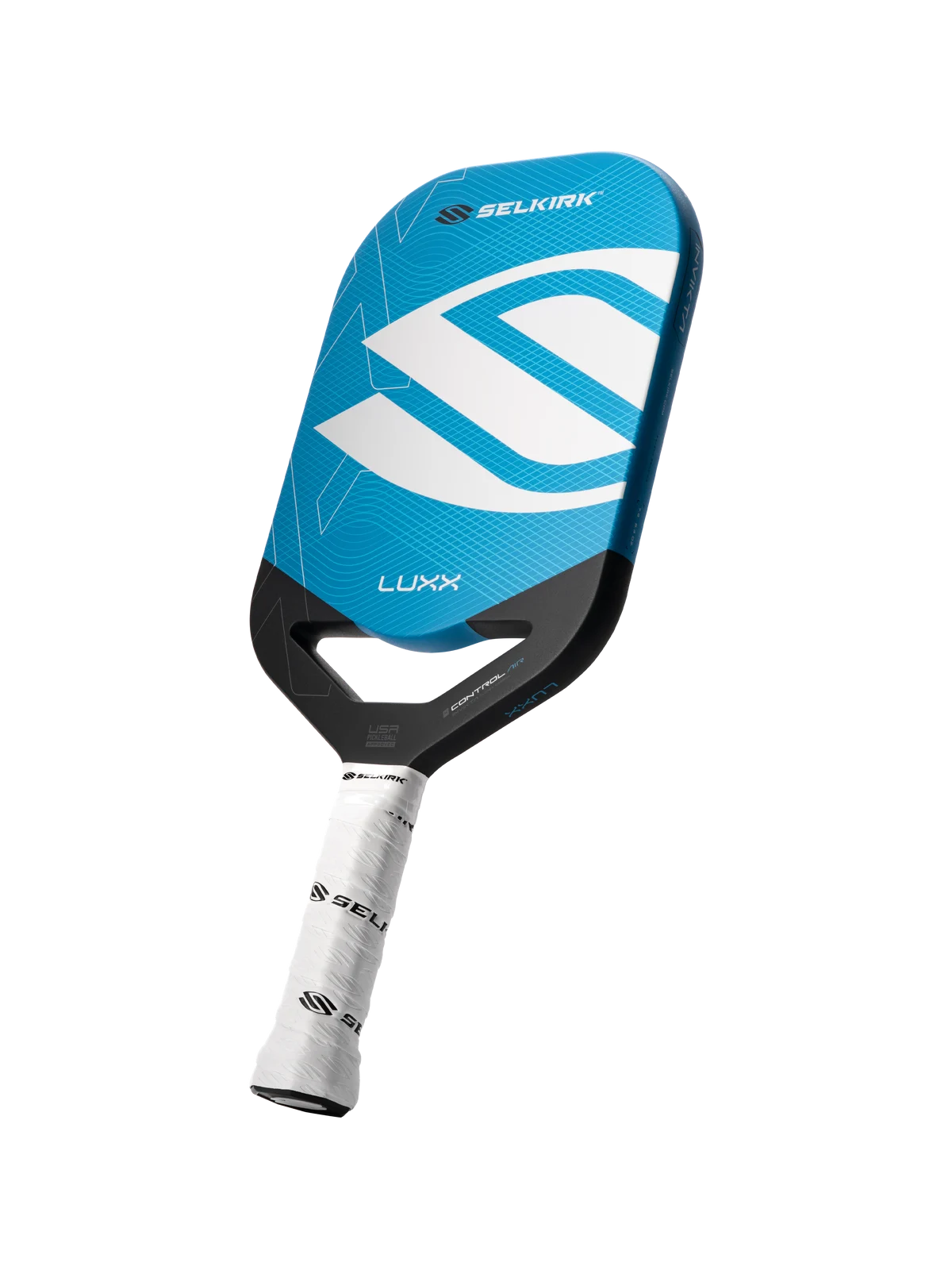
Most elongated paddles sell you reach and power. The LUXX Invikta sells you reach and restraint, and the restraint comes from the thickest core on this list. At 19mm, the X7 Thikset honeycomb drinks pace in a way no other elongated frame here matches.
Hard drives arrived and simply sat down. Blocks dropped short and low, resets died where I aimed them, and my unforced errors fell in the first week because the paddle refused to add anything I did not ask for.
That calm is exactly what a control player wants from the shape. The Invikta frame still gives you the extra half inch of reach at the kitchen and on wide defensive gets, and the long hitting zone suits players who dink and drop their way forward rather than driving through people.
The InfiniGrit surface is the control player’s spin tool: measured at 1,993 RPM, it is a durable grit built to keep biting after plain raw carbon surfaces have smoothed out, so dipping drops keep dipping across a season.
The honesty is that power must be manufactured. Putting a ball away takes a full swing and good position, because this face adds almost nothing, and at a 117 swing weight it is not a fast hands paddle either, despite the control label. Blocks are calm, counters are placed, and points are won by the other player’s mistakes.
Buy it if your game is patience, defense, and reach. Skip it if you finish points with pace.
6Engage Pursuit Pro1 6.0 Elongated: Best Elongated Pickleball Paddle for Touch That Firms Up in 2027
AT A GLANCE
Engage Pursuit Pro1 6.0 Elongated
Weight
8.0 oz
Swing Weight
118.6
Twist Weight
5.95
Spin
2,267 RPM
Shape: Elongated, 16.5 x 7.5 in
Core: MachPro polymer with Variable Release 2.0
Face: Raw Toray T700 carbon fiber
Grip: Not published
Approval: USAP
Feel: Connected touch

Engage sells this paddle as power. On court I found the most cooperative touch paddle in the premium elongated class, and then, underneath the touch, more drive than the marketing needed to invent.
The Pursuit Pro1 is built the old way, layers pressed cold instead of thermoformed, and contact tells you immediately. The ball sits, the face talks to your hand, and thirds, drops, and dinks go where my fingers decided instead of where a lively core sent them.
The power shows up when you commit to the swing. The elongated frame and a swing weight of 118.6, the highest on this list, give a full cut real plow-through, and the coarse raw Toray T700 texture, measured at 2,267 RPM of spin, lets that pace dip and stay in.
Serves carried and dropped. Roll volleys shaped without effort. The dwell even lets you hold a shot a beat longer and wrong-foot players at the kitchen, which is a form of offense no radar gun measures. The long octagon handle will feel like home to anyone arriving from tennis.
The compromises live where the numbers say they do. Off-center contact twists more than the 5.95 twist weight suggests, stretched blocks need a firm wrist, and the head-heavy swing will not win frantic hands battles at the net.
Buy it if your game is touch, spin, and placement with a full swing behind it. Skip it if you want pace supplied for you.
7Paddletek Bantam TKO-C 14.3mm: Best Fast and Tunable Power Pickleball Paddle in 2027
AT A GLANCE
Paddletek Bantam TKO-C 14.3mm
Weight
7.9 oz
Swing Weight
115-117
Twist Weight
6.4-6.5
Spin
1,910 RPM
Shape: Elongated, 16.5 x 7.5 in, 5.25 in handle
Core: Bantam polymer honeycomb, 14.3mm
Face: PT-700 raw carbon with glass epoxy
Grip: Not published
Approval: USAP and UPA-A
Feel: Crisp and quick
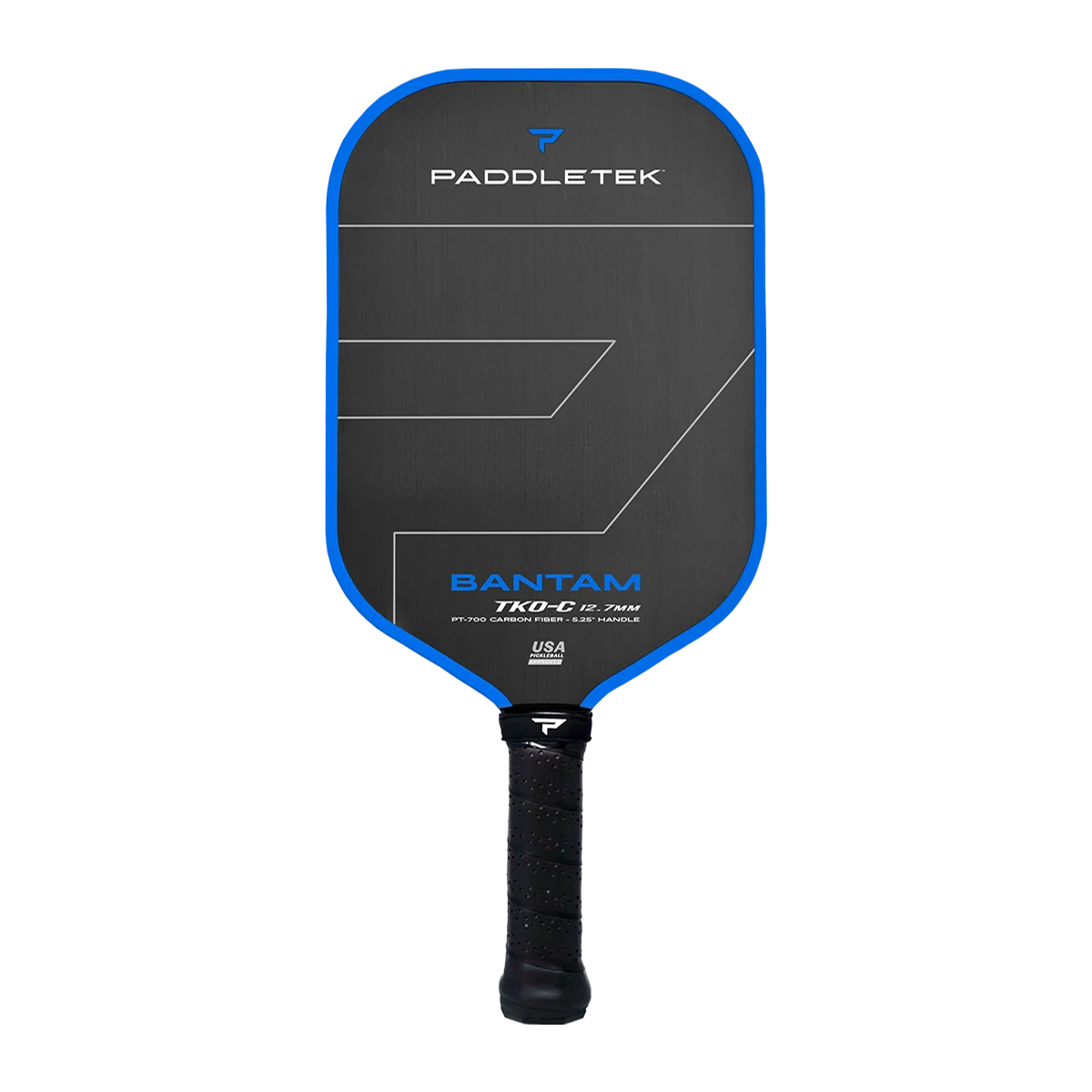
The Bantam TKO-C is the elongated paddle for players who refuse to give up hand speed to get reach.
At 7.9 ounces with a swing weight in the 115 to 117 band, it sits at the quick end of this list, and at the kitchen that shows up immediately: counters and speed-ups come off my shoulder instead of my wind-up, and hands battles feel like exchanges I can win rather than storms I survive.
The stability surprised me more than the speed. A twist weight of 6.4 to 6.5 is the best on this list, which is unusual for a narrow frame, and stretched blocks stayed square instead of spraying.
The PT-700 raw carbon face with its glass epoxy layer gives contact a crisp, connected crack, and spin measured at 1,910 RPM is enough to keep drives honest and dipping. Power is the quick, punchy kind rather than the heavy plow-through kind: this paddle finishes points with counters and placement, not by bowling through the baseline.
The tunable part matters. Because it starts light, there is genuine headroom to add weight tape at the head or sides and build the exact balance you want, more plow-through or more stability, without pushing the swing weight into the sluggish zone the heavier paddles on this list already live in.
Stock, baseline drives need your swing to do the heavy work.
Buy it if you want elongated reach with fast hands and a paddle you can tune. Skip it if you want heavy, finished power out of the wrapper.
811SIX24 Hurache-X Power 2: Best Elongated Pickleball Paddle for Two-Handed Backhands in 2027
AT A GLANCE
11SIX24 Hurache-X Power 2
Weight
8.0-8.3 oz
Swing Weight
116
Twist Weight
5.9
Spin
2,354 RPM
Shape: Elongated, 16.5 x 7.5 in, 6.0 in handle
Core: Gen 4 floating foam (MPP), 16mm
Face: HexGrit textured carbon
Grip: Not published
Approval: UPA-A only, not USAP
Feel: Raw bite
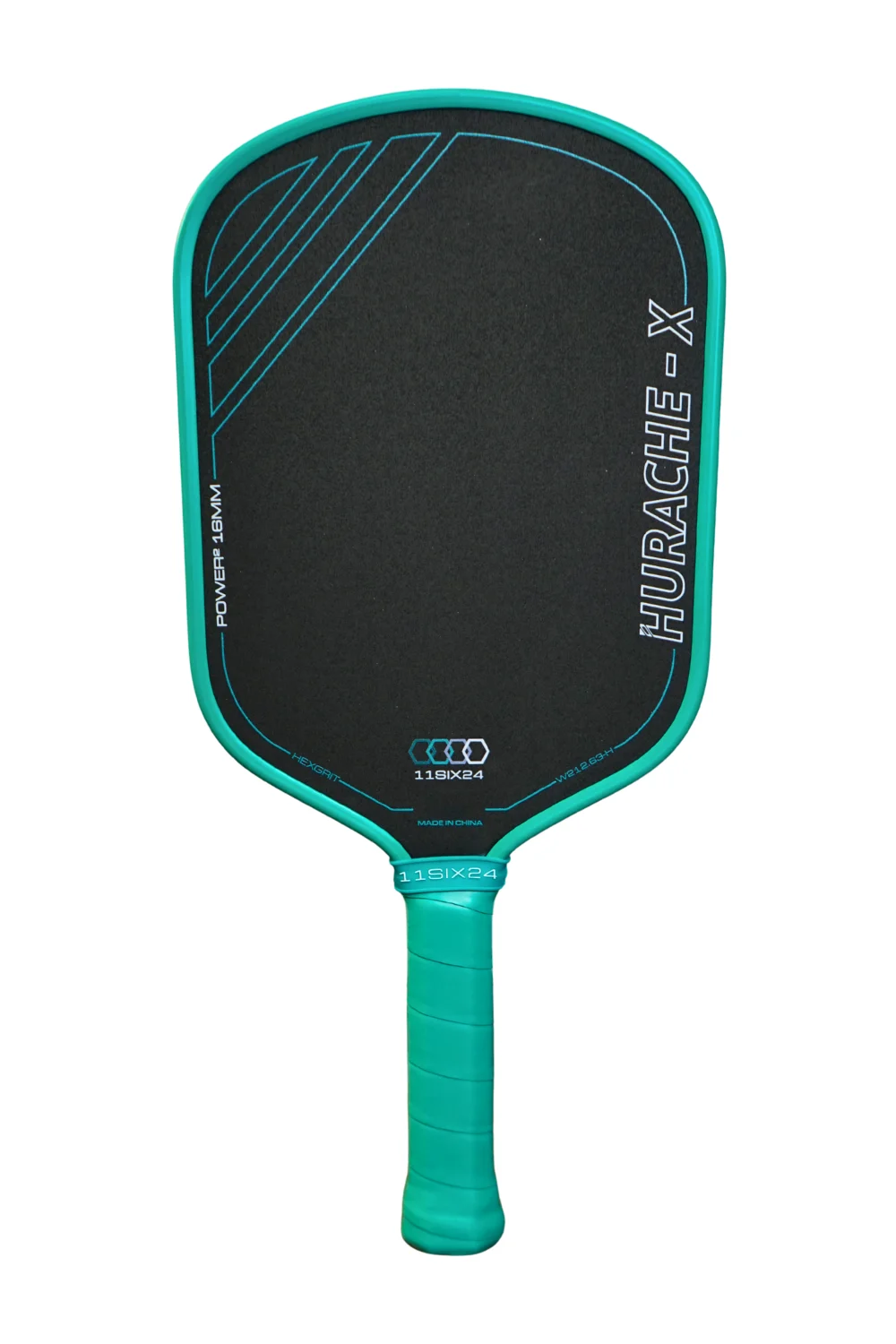
Start with the handle, because on this paddle the handle is the headline. At 6.0 inches it is the longest on this list by a clear margin, and it changes the two-handed backhand from a cramped compromise into a real stroke.
My top hand sits fully on the grip instead of crowding the throat, the backhand drives with leverage from both arms, and the shot that most elongated paddles quietly tax becomes the shot this one is built around.
The rest of the paddle backs it up. The HexGrit surface, silicon carbide particles embedded in the face, measured 2,354 RPM of spin, the second highest here, and heavy topspin is what lets a two-handed drive swung hard still land.
The Gen 4 floating foam core builds power with your swing rather than cracking it out, so full cuts hold their line, and at a 116 swing weight it turns fast enough for counters at the kitchen. Like every HexGrit face, the bite is built to survive months of play instead of smoothing out by mid season.
Now the warning, stated plainly. That grit is too rough for USA Pickleball’s surface test, so the Hurache-X Power 2 is certified for UPA-A play only and is not legal in USAP sanctioned tournaments.
Buy it if a two-handed backhand is central to your game and you play league, open play, or UPA events. Skip it if USAP tournament legality is a requirement.
9Vatic Pro V-SOL Pro V7: Best Value Elongated Pickleball Paddle in 2027
AT A GLANCE
Vatic Pro V-SOL Pro V7
Weight
8.2 oz
Swing Weight
114
Twist Weight
6.5
Spin
-
Shape: Elongated, 16.5 x 7.5 in, 5.3 in handle
Core: Full EPP foam with EVA ring, 16mm
Face: Raw Toray T700 carbon fiber
Grip: Not published
Approval: USAP
Feel: Soft pocket
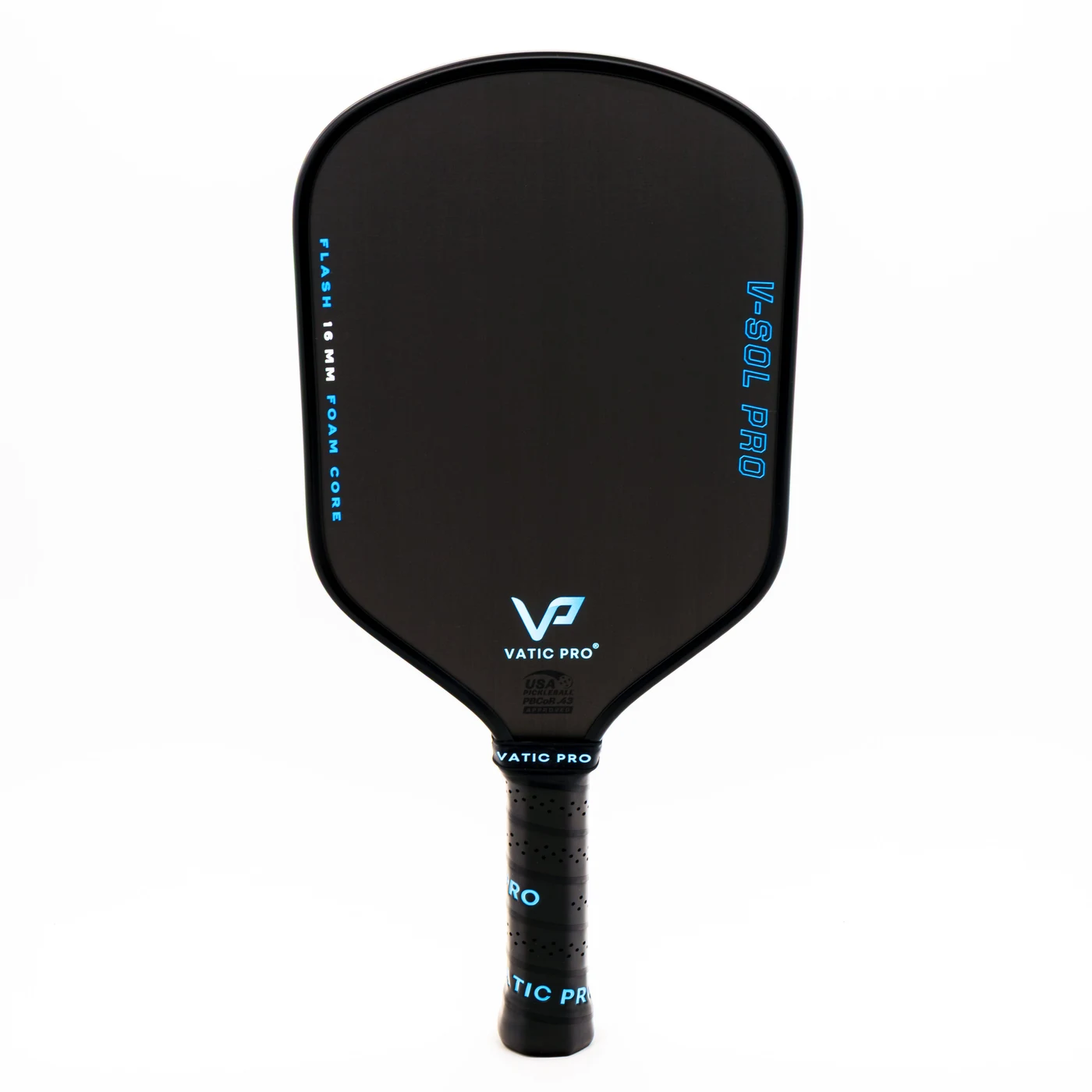
Judge this paddle by its architecture, because the architecture is the argument.
The V7 shape of the V-SOL Pro puts Vatic’s full EPP foam core and EVA perimeter ring into the elongated frame, which is the same construction recipe the flagship foam paddles on this list use: a solid foam heart that pockets the ball, ringed by a firmer foam edge that pushes stability outward toward the sides of the face.
On a narrow elongated frame, that ring matters more than anywhere, because elongated sweet spots are small by design and this one fights to widen it.
The numbers back the design. A 6.5 twist weight is the joint best on this list, so stretched blocks and late counters hold their line instead of twisting away, and at a 114 swing weight it is the quickest swinging paddle here, which partly refunds the hand speed the shape usually takes.
Contact dwells and feels soft, drops and resets are genuinely easy to control, and the foam sends so little shock up the arm that long sessions stayed comfortable.
Like its sibling shape, it needs a few games to wake up. The first sessions felt quiet and muted, and only by the fourth or fifth did the ball start pocketing and leaving the way the design intends. Drives also need a real swing. Nothing here is given.
Buy it if you want modern foam construction and real forgiveness in the elongated shape. Skip it if you judge paddles in one session.
10Engage Axiom Elongated 16mm: Best Elongated Pickleball Paddle for Gen 3 Spin and Pop in 2027
AT A GLANCE
Engage Axiom Elongated 16mm
Weight
7.94 oz
Swing Weight
116
Twist Weight
6.08
Spin
2,394 RPM
Shape: Elongated, 16.5 x 7.5 in, 5.5 in handle
Core: Gen 3 polymer honeycomb, 16mm
Face: Durable Grit carbon fiber
Grip: Not published
Approval: USAP and UPA-A
Feel: Lively pop
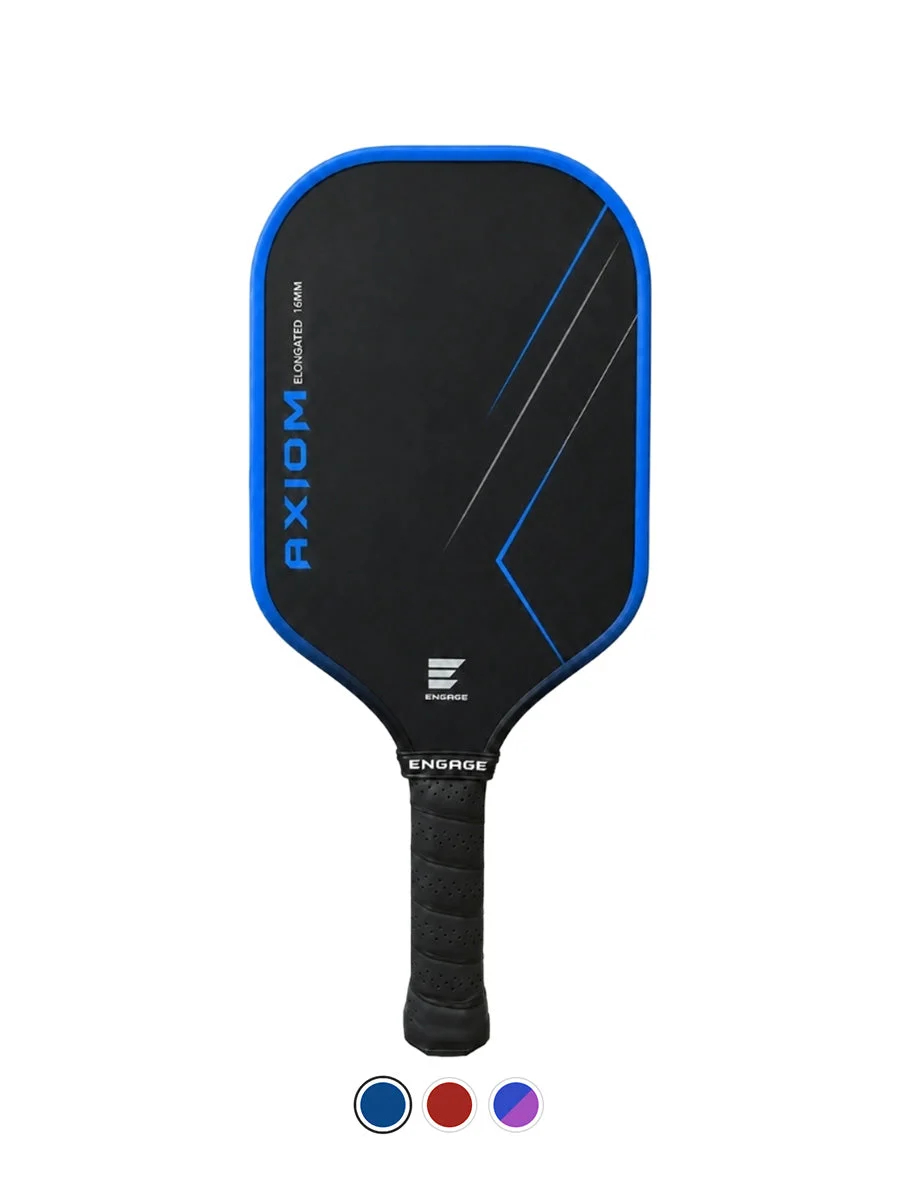
The Axiom is my pick for players who want the modern elongated game without the foam learning curve. There is no foam in this paddle at all: a Gen 3 polymer honeycomb core, thermoformed in the style that defined the modern power era, under a carbon face Engage calls Durable Grit.
The response is immediate in a way foam never is. The ball cracks off the face, counters jump without a wind-up, and there is no break-in week where you wonder what you bought.
Then there is the spin number. At 2,394 RPM, the Axiom measured the highest spin on this entire list, and on court that bite is not subtle. Serves kick, dipping drives dive late and hard, and roll volleys at the kitchen shape in ways that make defenders guess.
Spin at this level is a control tool as much as a power one, because the harder the ball rotates, the harder you can swing while it still lands. The grit is also built for survival, so the bite I tested in week one is closer to the bite still there in month three than plain raw carbon manages.
The honeymoon has honest limits. A 6.08 twist weight is mid pack, so off-center blocks get less help than the leaders give, and honeycomb cores ask for the usual respect over a long life of hard play.
Buy it if you want list leading spin and instant pop in a long frame. Skip it if forgiveness is your first priority.
How to Choose an Elongated Pickleball Paddle in 2027
An elongated paddle is not a standard paddle with a bonus inch. It is a different distribution of everything: reach, leverage, sweet spot, and swing weight all move when the face stretches, and they do not all move in your favor.
This guide works through the trade honestly, so the numbers in the At a Glance boxes above mean something when you compare them. Read it once, and you will know whether the shape fits your game before you spend a session finding out the hard way.
Reach vs Hand Speed: The Core Trade
Everything an elongated paddle gives you starts with reach. The extra length covers wide balls at the kitchen, stretches your defensive range on gets you would otherwise watch land, and adds a half step of court in singles.
On serves and overheads the longer lever also produces pace from the same swing, which is why power players drift toward this shape season after season.
The payment is hand speed. A longer face puts its mass further from your hand, so the paddle changes direction slower in the exchanges that decide doubles points at the net.
Hands battles that feel like reactions with a widebody become commitments with an elongated frame: you win them by positioning and anticipation rather than by flicking late. If your doubles game is built on winning four ball speed-ups at the kitchen, that payment is real, and no spec on this page refunds it.
Neither side of the trade is better in the abstract. Reach wins points you never touch with a shorter paddle. Hand speed wins points that happen too fast for reach to matter. Your match footage, not the marketing, knows which points you are actually losing.
Swing Weight: The Hidden Cost of Length
Swing weight is where the length sends its bill. In measured averages across the current market, elongated paddles run a swing weight around 117.6, against roughly 111.9 for hybrids and 108.8 for widebodies.
That gap is the shape itself talking: stretch the same construction longer and the swing weight climbs, whether the scale weight changes or not. Two paddles can both read 8.1 ounces and the elongated one will feel a class heavier in motion.
Feel is only half of it. Higher swing weight means more plow-through on drives and serves, which is genuine power, and it also means more load on your wrist, forearm, and shoulder across a long session, plus slower counters when a speed-up arrives at your chest.
This is why the swing weight line matters more on this page than on any other list I write. The Vatic V-SOL Pro V7 at 114 and the Bantam TKO-C in the 115 to 117 band are the quick end of elongated. The Pursuit Pro1 at 118.6 is the heavy end, and it plays like it.
If you are moving to the shape for the first time, I would start at the lower end of that range and let your hands adjust before chasing the heavy frames.
Sweet Spot Position and Twist Weight
The elongated sweet spot is smaller than a standard paddle’s, and it sits higher, further from your hand.
That position is the whole technique adjustment of this shape: contact you used to make at the center of a shorter face now needs to happen an inch or two higher, and contact at the old spot, down near the throat, comes off deader and weaker.
Players who switch shapes and call the paddle underpowered are usually hitting the bottom of its face.
Twist weight decides how much the misses punish you. It measures the face’s resistance to rotating on off-center contact, and on a narrow 7.5 inch face, contact strays sideways more often than it does on a widebody.
Around 6.5, where the Bantam TKO-C and the V-SOL Pro V7 sit, stretched blocks stay usefully square. Down at 5.64, where the elongated Genesis sits, the same block twists and sprays, and your hand has to supply the stability the frame does not.
Read the two numbers together on this page: swing weight tells you what the length demands, twist weight tells you how forgiving the length will be when your contact is honest rather than perfect.
Handle Length and the Two-Handed Backhand
Handle length is a filter on this page, not a detail. A two-handed backhand needs room for the top hand to sit fully on the grip, and in my testing that means 5.5 inches at minimum, with anything longer playing noticeably better.
Crowding the top hand against the throat changes your grip pressure, shortens the stroke, and turns a weapon into a block with ambitions.
The handles on this list span a real range. Most sit at 5.5 inches, which works. The SLK ERA Power stretches to 5.8, and the Hurache-X Power 2 runs a full 6.0 inches, the longest here, and it is no accident that the two-handed pick on this list is built around that handle.
At the other end, the LUXX Invikta at 5.35 inches and the Bantam TKO-C at 5.25 are one-handed paddles in practice, whatever their other virtues.
If the two-hander is a genuine part of your game, shortlist by this number first and compare everything else second. If you play one-handed, a longer handle is harmless, but do not pay for it in swing weight you do not need.
Core Thickness and Build in a Long Frame
Thickness behaves the same way in a long frame as in any other, then the shape amplifies it. A 16mm core dwells and forgives, which on an elongated paddle also calms the higher, smaller sweet spot, and that is why most of this list is 16mm.
A thinner core answers faster and pops harder, and in a long frame that liveliness arrives with leverage already attached, so 14mm elongated paddles like the Genesis and the 14.3mm Bantam TKO-C feel quicker and sharper than their numbers suggest.
Construction matters alongside thickness. Full foam cores, the Genesis, the Hurache-X Power 2, and the V-SOL Pro V7 here, pocket the ball and hold their feel because there are no honeycomb cells to crush.
Thermoformed honeycomb, like the Axiom’s Gen 3 build, answers with instant pop and accepts the long term durability questions that follow honeycomb under hard use. Propulsion style cores pair honeycomb with foam structures to chase both, which is the JOOLA recipe in the top two spots.
Judge the combination, not the label: thickness sets the dwell, construction sets the personality, and the long frame multiplies whichever you choose.
Singles, Doubles, and Who Should Not Go Elongated
Singles is where this shape argues hardest for itself. The court is wider when you are alone on it, passing shots reward reach and leverage, and there is no partner whose kitchen exchanges your slower hands can lose.
Most of the elongated case writes itself for singles players and for doubles players who create their offense from the baseline with drives and serves.
Doubles asks the harder question, because doubles points are decided at the kitchen, at hand speed range. Plenty of doubles players thrive elongated, especially counter punchers with anticipation and players who take balls early out of the air with their reach.
But if your doubles identity is winning pure reflex battles at the line, a hybrid or widebody will serve you better, and that is not a downgrade. It is the shape fitting the job.
Beginners should not start here, and sore armed players should be careful: the smaller sweet spot punishes developing contact, and the higher swing weight loads the arm more than the scale weight suggests. Start on a forgiving shape, build clean contact, and let elongated be the second paddle you choose on purpose.
Frequently Asked Questions (FAQs)
1. What is an elongated pickleball paddle?
An elongated paddle is longer and narrower than a standard paddle, typically about 16.5 inches long and 7.5 inches wide, with a longer handle. The extra length adds reach at the net and leverage on serves, drives, and overheads. The trade is a smaller sweet spot that sits higher on the face and slower hands in fast kitchen exchanges.
2. What is the difference between elongated and standard paddles?
The difference is distribution. A standard paddle puts its hitting area lower and wider, giving a bigger sweet spot and quicker hands.
An elongated paddle stretches that area upward, trading some of the sweet spot and hand speed for reach and swing leverage. Same weight on the scale, different paddle in motion, because the elongated frame’s swing weight runs higher.
3. Are elongated paddles better than standard paddles?
No, they are better at specific jobs. Elongated paddles win on reach, serve and drive leverage, and two-handed backhand room. Standard and widebody paddles win on forgiveness and hand speed at the kitchen.
The right choice is the one matched to where your points are won and lost, which is why this page lists the shape’s trade-offs alongside its benefits.
4. Are elongated paddles better for power?
Yes, for swing-built power. The longer lever and higher swing weight put more plow-through behind drives, serves, and overheads for the same swing effort.
What elongated paddles do not give you is quick pop: counters and speed-ups at the kitchen come from hand speed, and there the shape is a step behind. Your power goes up from the baseline and down at the net.
5. Do elongated paddles have smaller sweet spots?
Yes. The sweet spot on an elongated paddle is smaller than on a standard or widebody paddle, and it sits higher on the face, further from your hand. Contact low, near the throat, comes off noticeably deader.
Twist weight decides how punishing the misses are: higher numbers, around 6.5, keep off-center blocks square, while lower numbers let the face twist and spray.
6. Do elongated paddles have more spin?
No. Spin comes from the face surface and your swing, not from the shape, and measured spin averages across elongated, hybrid, and widebody paddles are near equal.
An elongated frame can help indirectly, because the longer lever adds swing speed, but the bite itself is the face’s work. That is why the spin leaders on this list, the Axiom and the Hurache-X Power 2, win with their surfaces, not their silhouette.
7. Is an elongated paddle good for beginners?
No, not as a first paddle. Beginners miss off center while their contact develops, and the elongated shape offers the smallest sweet spot and a higher swing weight that loads a learning arm.
A forgiving hybrid or widebody teaches cleaner contact faster. Elongated makes an excellent second paddle once your contact point is consistent and you know reach is what your misses are asking for.
8. Can you hit a two-handed backhand with an elongated paddle?
Yes, provided the handle is long enough, and handle length is the first thing to check. You need 5.5 inches at minimum so the top hand sits fully on the grip rather than crowding the throat, and longer is better.
The Hurache-X Power 2 on this list runs a 6.0 inch handle and is built for exactly this shot, while the ERA Power at 5.8 inches also gives two hands honest room.
9. Are elongated paddles better for singles or doubles?
Singles, on balance. Singles rewards the shape’s strengths, reach across a wider court, leverage on passing shots and serves, and room for a two-handed backhand, and there is no kitchen reflex battle tax to pay.
Doubles players can thrive with one, particularly counter punchers and players who take balls early, but pure hand speed at the net belongs to shorter shapes.
10. Elongated vs hybrid: which should I choose?
Choose elongated if reach, baseline leverage, or a two-handed backhand is what your game is missing, and your contact is already clean. Choose hybrid if you want a middle path: some reach, a friendlier sweet spot, and quicker hands, with no real weakness.
If you genuinely do not know, start hybrid. It is the safer default, and elongated will still be there when your misses tell you reach is the answer.
11. Are elongated paddles legal in tournaments?
Yes, within the size limits every paddle must meet. USA Pickleball rules cap a paddle’s length at 17 inches and its combined length plus width at 24 inches, and every elongated paddle on this list, at 16.5 inches long and about 7.5 inches wide, sits inside both numbers.
Always check your exact model against the approved list for your event, because approval attaches to the model, not the shape.
12. Who should NOT buy an elongated paddle?
Players whose game is pure kitchen hand speed, beginners still building consistent contact, and players managing a sore arm who need a low swing weight.
Elongated paddles also frustrate players who make contact low on the face, because the dead zone near the throat is real. If your points are won on forgiveness and reflexes rather than reach and leverage, a hybrid or widebody will make you better faster.