
Fourth shot of the rally and I am pinned a step behind the kitchen line, stretching for a reset that has to land soft or the point is over. It lands soft.
Two shots later the same rally hands me a waist-high ball at the net, and the counter has to be hit with intent or it comes back faster. Same point, same hands, two completely opposite demands inside ten seconds.
That is the real shape of modern pickleball. Power and control are not two ends of one slider, where gaining one means surrendering the other.
They are two separate axes, and the paddles worth owning score high on both: pace when you swing, predictability when you cannot. I tested for exactly that combination, and the ten paddles below are the ones that refused to make me choose.
The 10 Best Pickleball Paddles for Control and Power in 2027
1JOOLA Perseus Pro IV 16mm: Best Overall Balance Pickleball Paddle in 2027
AT A GLANCE
Perseus Pro IV
WEIGHT
8.1 oz
SWING WEIGHT
118
TWIST WEIGHT
6.3
SPIN
1,971 RPM
Shape: Elongated
Grip: 5.5 in, 4.25 in circumference
Core: Gen 3 Propulsion Core
Face: Raw carbon fiber
Approval: USAP and UPA-A
Feel: Plush power
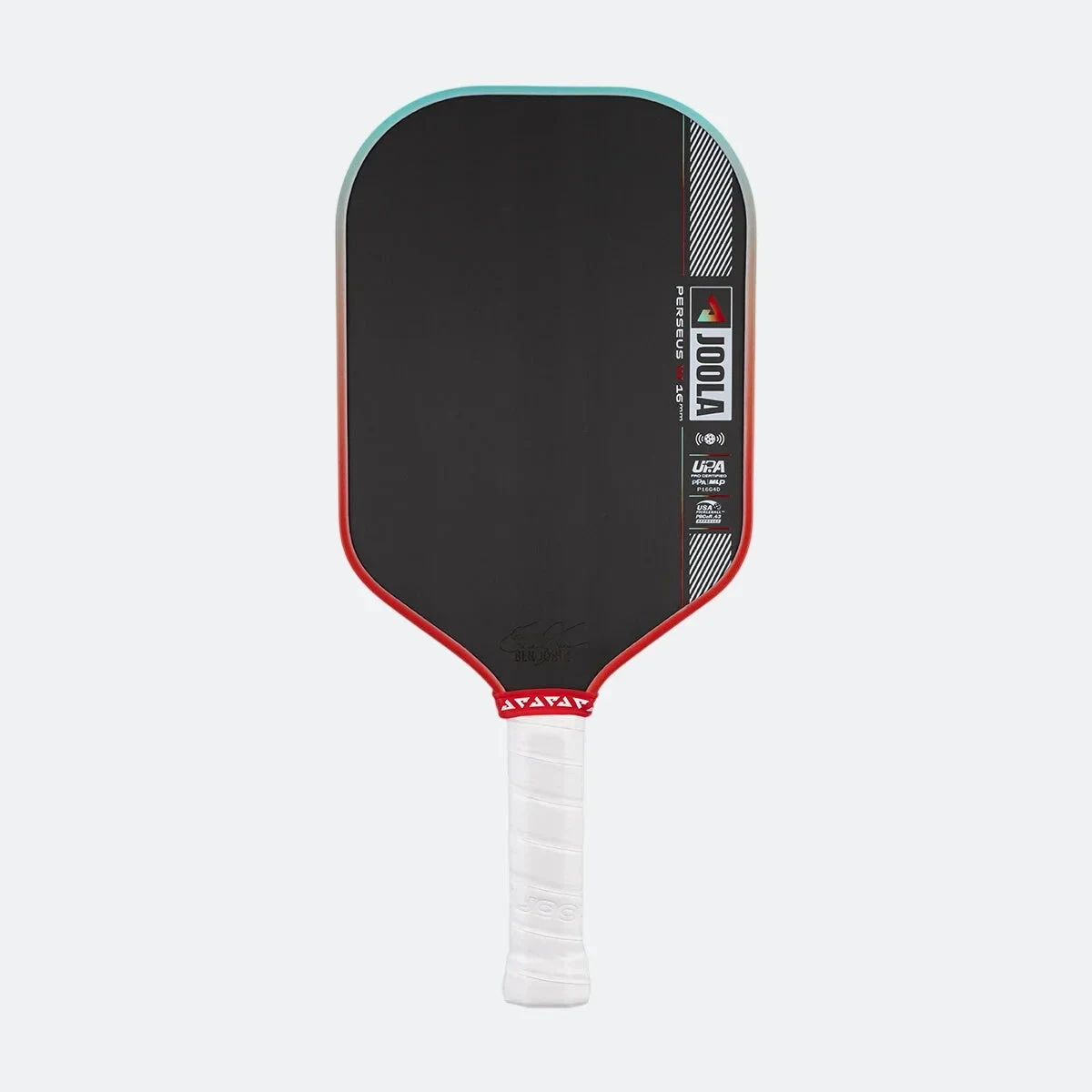
The balance question is the one this paddle answers best. My serves and drives leave with real weight behind them, the kind that pushes returners a step behind the baseline, and then in the very next rally the same paddle sits the ball down on a third shot drop without any argument.
That switch, power on the swing and calm on the touch shot, is exactly what most paddles promise and very few deliver.
The 16mm Propulsion Core is doing the work. Contact feels plush and held on soft shots, so drops and dinks land where my hands aimed them, while a full swing wakes the core up and the ball jumps.
The elongated frame adds reach at the kitchen, the foam injected edges keep stretched blocks stable, and at a 118 swing weight the drives carry genuine plow-through. Counters do not get bullied by hard hitters, which is where lighter balanced paddles usually fold.
The compromises are honest ones. Contact sounds stiffer and hollower than the softest paddles I play, spin sits a step below the newest grit faces, and that swing weight will not win frantic hands battles against a quick widebody.
This generation also carries core durability complaints, so register the warranty the day it arrives and keep your receipt.
Buy it if you want one paddle that finishes points and still plays the soft game. Skip it if kitchen hand speed is your whole identity.
2JOOLA Scorpeus Pro IV 16mm: Best Widebody Balance Pickleball Paddle in 2027
AT A GLANCE
Scorpeus Pro IV
WEIGHT
8.24 oz
SWING WEIGHT
114.95
TWIST WEIGHT
7.4
SPIN
2,221 RPM
Shape: Widebody
Grip: 5.25 in, 4.25 in circumference
Core: Gen 3 Propulsion Core
Face: -
Approval: USAP and UPA-A
Feel: Stable plush
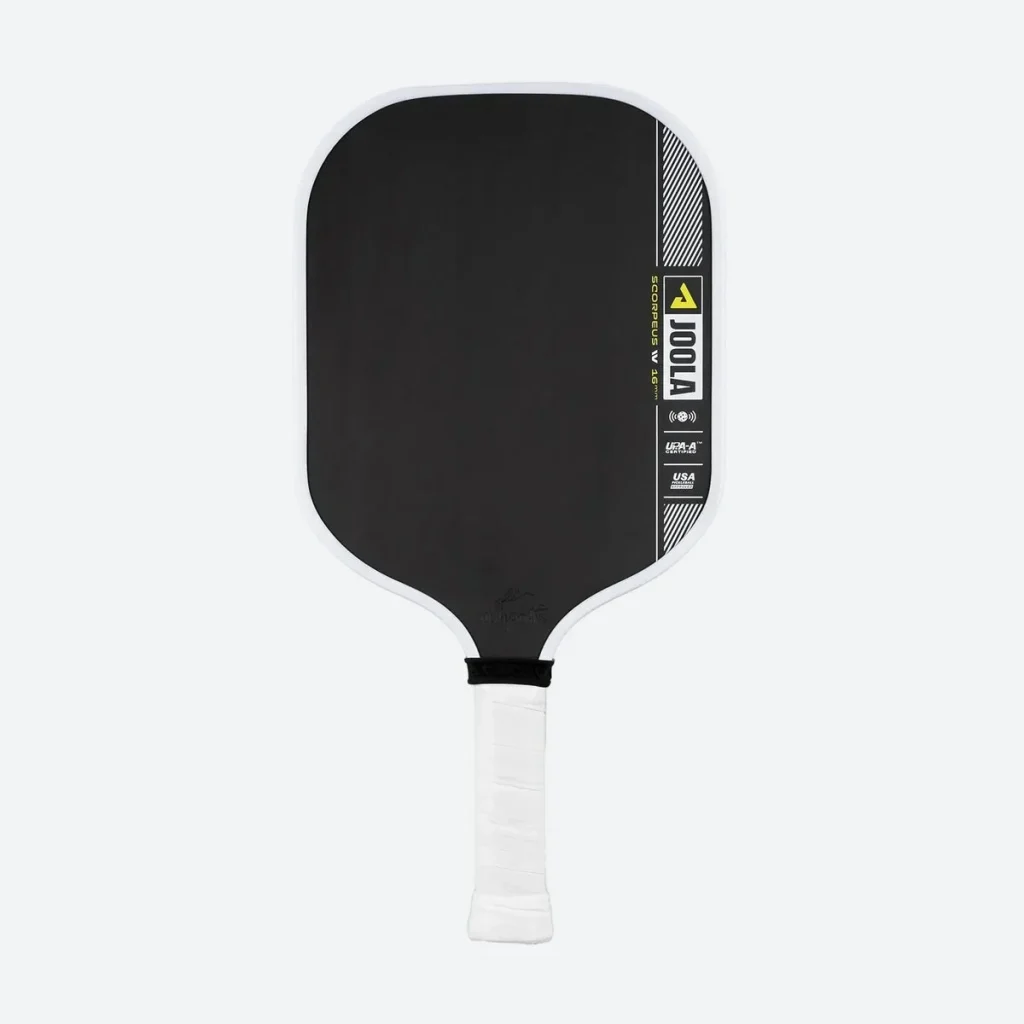
Take the Perseus power recipe and put it in a frame built for defense, and you get the Scorpeus. The widebody shape spreads the hitting surface out instead of stretching it long, and the number that explains the whole paddle is the 7.4 twist weight, the highest on this list.
Hard drives caught off center simply do not turn the face over. Blocks stay square, resets land low, and the ball goes where it was aimed even when my feet were still moving.
The surprise is how much of the JOOLA power survives the move. The same Gen 3 Propulsion Core sits inside, so serves still jump and drives still carry, and the measured spin, 2,221 RPM, is actually higher than its elongated sibling.
At a swing weight just under 115 it also changes direction faster than the Perseus, so counters at the kitchen feel like choices rather than reactions. Power here is not about reach and leverage. It is about a stable face that lets you swing with confidence from defensive positions.
What you give up is length. The widebody gives back the extra reach on wide gets and overheads, and players who live on a two-handed drive will feel the shorter hitting zone. The soft game is calm rather than buttery, closer to firm control than to a foam pocket.
Buy it if your points start with defense and end with a counter. Skip it if reach and elongated leverage are how you create power.
3CRBN TruFoam Genesis 2: Best Foam Core Balance Pickleball Paddle in 2027
AT A GLANCE
CRBN TruFoam Genesis 2
WEIGHT
7.9-8.3 oz
SWING WEIGHT
113
TWIST WEIGHT
6.7
SPIN
~1,992 RPM
Shape: Widebody
Grip: -
Core: TruFoam full foam, 14mm
Face: T700 raw carbon fiber with fiberglass layer
Approval: USAP and UPA-A
Feel: Soft dwell
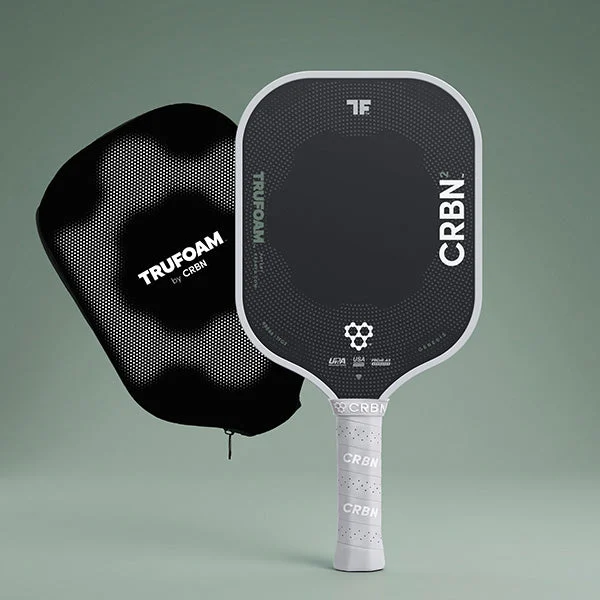
The original Genesis changed how I think about 14mm paddles, because its full foam core pockets the ball like a 16mm. The Genesis 2 takes that same recipe into a square widebody shape, and the balance shifts in a direction I like even more.
The swing weight drops to 113, the twist weight climbs to 6.7, and suddenly the dwell and spin come with quick hands and a forgiving face attached.
On court, the control half is the foam. The ball sinks in, holds, and leaves on the line I chose, so drops dip instead of floating and resets absorb pace instead of returning it.
The power half hides in the face layup: raw carbon over a fiberglass layer, which adds a lively kick on counters and speed-ups that pure foam paddles usually make you swing harder for. Spin measured around 1,992 RPM is plenty to keep aggressive drives diving inside the baseline.
It still is not a free power paddle. Baseline drives need a committed swing, and that fiberglass liveliness surprised me early, launching a few resets higher than I meant before my grip learned to soften. Once calibrated, that same pop became the reason counters started winning points instead of just surviving them.
Buy it if you want foam control with a counterpunch built in. Skip it if you want the paddle to supply baseline pace for you.
4Six Zero Double Black Diamond Control 16mm: Best Control Pickleball Paddle That Fights Back in 2027
AT A GLANCE
DBD Control
WEIGHT
8.1 oz
SWING WEIGHT
114
TWIST WEIGHT
6.8
SPIN
-
Shape: Hybrid
Grip: 5.5 in, 4.125–4.25 in circumference
Core: Thermoformed polymer honeycomb
Face: Toray 700K raw carbon fiber
Approval: USAP
Feel: Plush pop
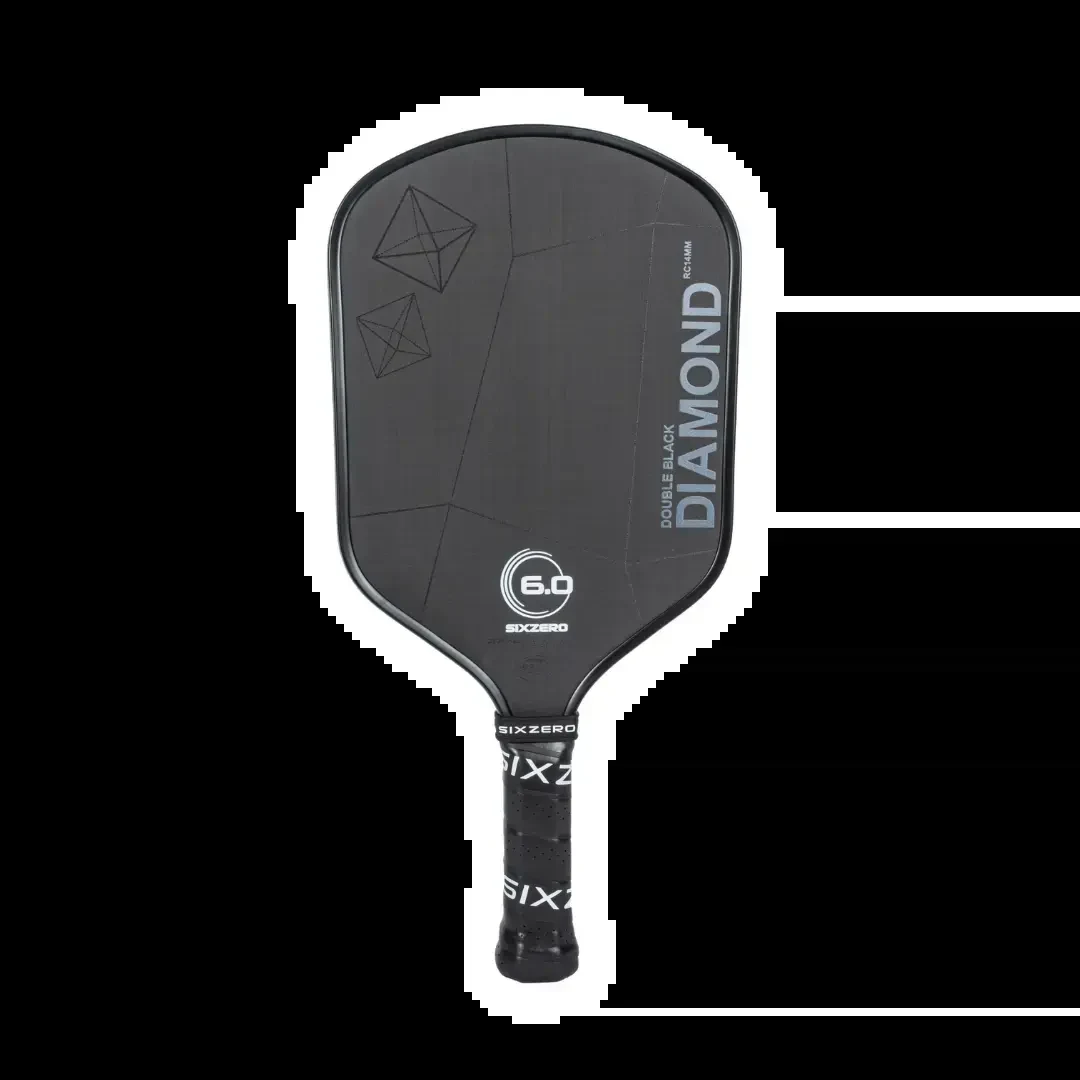
Control is in the name, and the name is honest, but it undersells the paddle. The Double Black Diamond Control is the calmest tool I own for the soft game: the ball pockets on the thermoformed face, holds for a fraction, and leaves in the direction I picked.
My drops turned boring in the best way, same height and same depth rally after rally, and the hybrid shape forgives contact so far out toward the edges that even shots near the throat stayed alive during stretched defensive scrambles.
Then a rally speeds up, and this is where it fights back. There is real pop stored in this frame. Counters punch above what the control label promises, speed-ups jump without a wind-up, and the raw carbon face spins serves and drives enough to keep opponents honest.
The 6.8 twist weight keeps blocks square, and at a 114 swing weight my hands stay quick enough to use that pop at the kitchen instead of just admiring it from the baseline.
The calibration tax is real. For a control paddle it runs lively, and my drops popped up for the first week until I softened my grip and let the face absorb pace. The stock grip is thin and gets slippery in hot sessions, so an overgrip is not optional for me, and heavy daily play wears the grit down like every raw carbon face.
Buy it if placement is your weapon but you refuse to be pushed around. Skip it if you want maximum power or maximum reach.
5Six Zero Black Opal: Best Power Pickleball Paddle That Still Resets in 2027
AT A GLANCE
Black Opal
WEIGHT
8.2 oz
SWING WEIGHT
114
TWIST WEIGHT
6.4
SPIN
2,307 RPM
Shape: Hybrid
Grip: 5.5 in, 4.125 in circumference
Core: G4 solid foam with Power Gel
Face: Diamond Tough raw carbon fiber
Approval: USAP and UPA-A
Feel: Dense spring
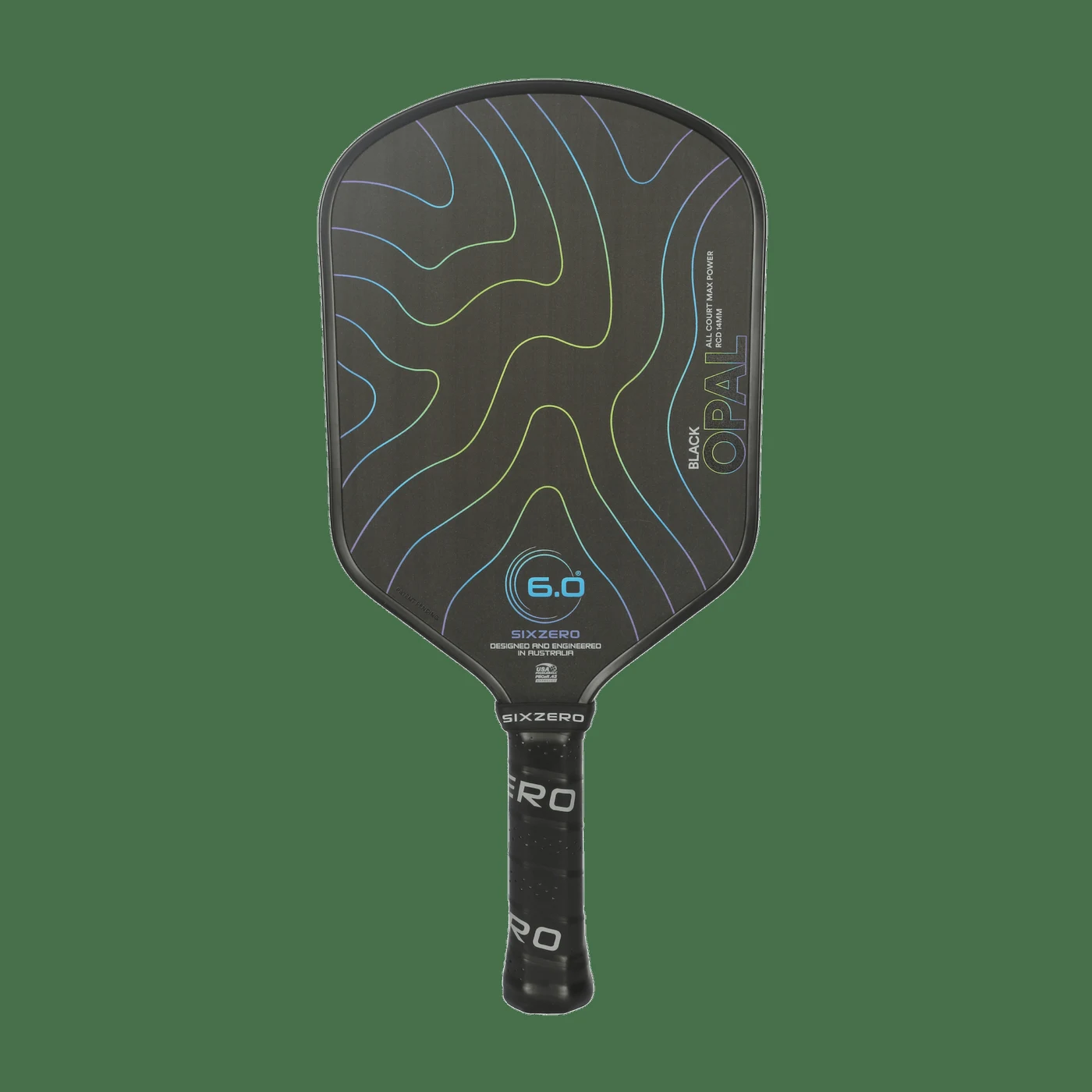
Most power paddles make you choose between hitting hard and resetting well. The Black Opal is the one that let me stop choosing, once I paid the learning fee. Contact is dense and springy, almost thuddy, and then the ball is simply gone.
Counters come off hot without a wind-up, speed-ups jump off the face, and the Diamond Tough carbon bites hard enough, 2,307 RPM worth, that dipping drives dropped at my opponents’ feet and kept dipping months later.
The control half comes from the solid foam core and its Power Gel layer. Foam dwells where honeycomb cracks, so once I shortened my swing and stopped helping, resets started sitting down and drops stopped sailing. That is the honest sequence, though.
My first three serves went long, my soft game leaked pop-ups for two weeks, and the sweet spot sits lower than you expect and is not generous. Stretched defensive contact gets punished in a way forgiving paddles never punish it.
This is a 14mm power paddle with a foam heart, and it plays like one: it rewards clean strikers and exposes sloppy ones, sometimes in the same rally. Around the 4.0 level and up, that trade stops feeling like a flaw and starts feeling like feedback.
Buy it if your contact is clean and you want power that still plays the soft game. Skip it if your defense is built on stretched, late contact. The calmer paddles above will treat you better.
6Selkirk SLK ERA Power Elongated: Best Predictable Power Pickleball Paddle in 2027
AT A GLANCE
SLK ERA Power
WEIGHT
8.0 oz
SWING WEIGHT
117
TWIST WEIGHT
6.28
SPIN
~2,020 RPM
Shape: Elongated
Grip: 4.25 in
Core: Dynamic Fusion Core, polymer honeycomb with EVA foam
Face: 3-layer carbon fiber and fiberglass
Approval: USAP and UPA-A
Feel: Linear power
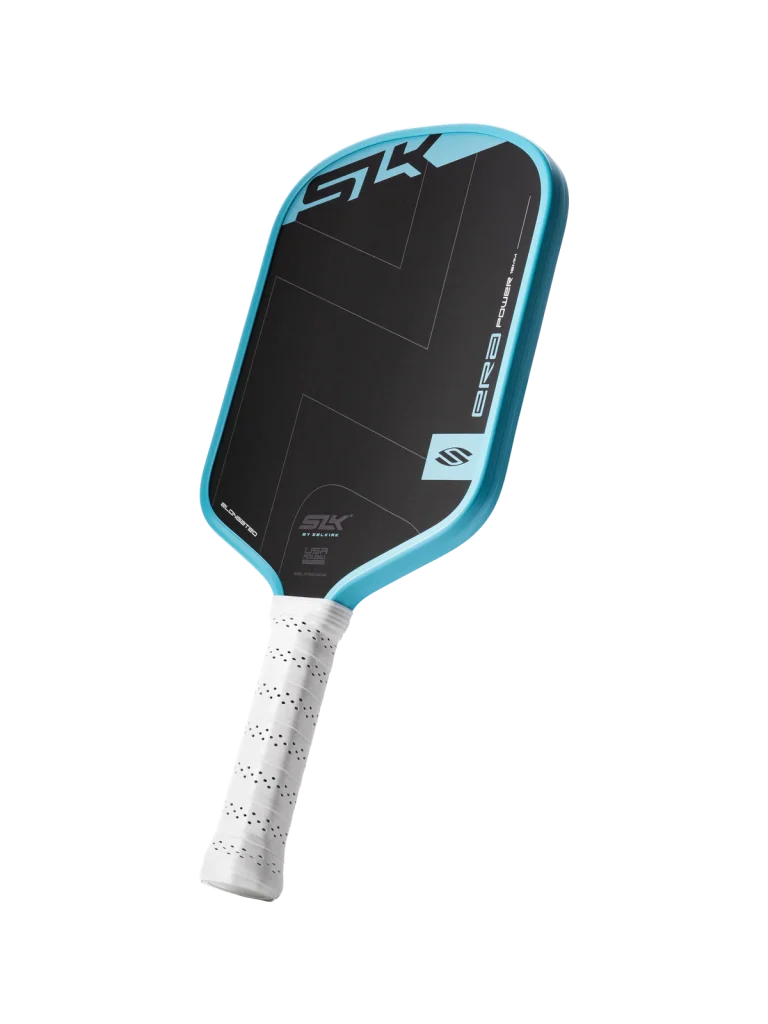
Selkirk built this paddle around a single idea: power you can predict. Plenty of paddles hit hard. The ERA Power hits the same hard on the tenth drive as on the first, and in my testing that repeatability is what separates it.
The Dynamic Fusion Core pairs a polymer honeycomb with an EVA foam layer, and the foam takes the trampoline randomness out of the response. A three-quarter swing produced a three-quarter drive, every time, and that linearity made the soft game easier to trust than on most power frames.
The face is a three layer blend of carbon fiber and fiberglass, and you can feel both materials doing their jobs. The carbon grips and shapes the ball, spin measured around 2,020 RPM, while the fiberglass adds the pop that finishes counters and speed-ups.
The elongated shape and a 117 swing weight give drives genuine weight through the court, and at 8.0 ounces the paddle never felt like a burden across long sessions.
Control here means something specific. Resets behave because the response is linear, not because the face is soft. If your soft game depends on a pocketing, dwell heavy feel, this paddle will feel firmer than you want, and the 6.28 twist weight is mid pack, so wild off-center blocks get less help than the Scorpeus gives.
Buy it if you swing big and want the result to match the swing. Skip it if your touch game runs on dwell and softness.
7Franklin C45 Aurelius 16mm: Best Pickleball Paddle for Fast Hands in 2027
AT A GLANCE
C45 Aurelius
WEIGHT
7.8 oz
SWING WEIGHT
~99
TWIST WEIGHT
6.2
SPIN
-
Shape: Widebody
Grip: 5.1 in, 4.125 in circumference
Core: PowerFlex polymer, double thermoformed
Face: T700 carbon fiber, 45-degree peel-ply
Approval: USAP and UPA-A
Feel: Feather fast
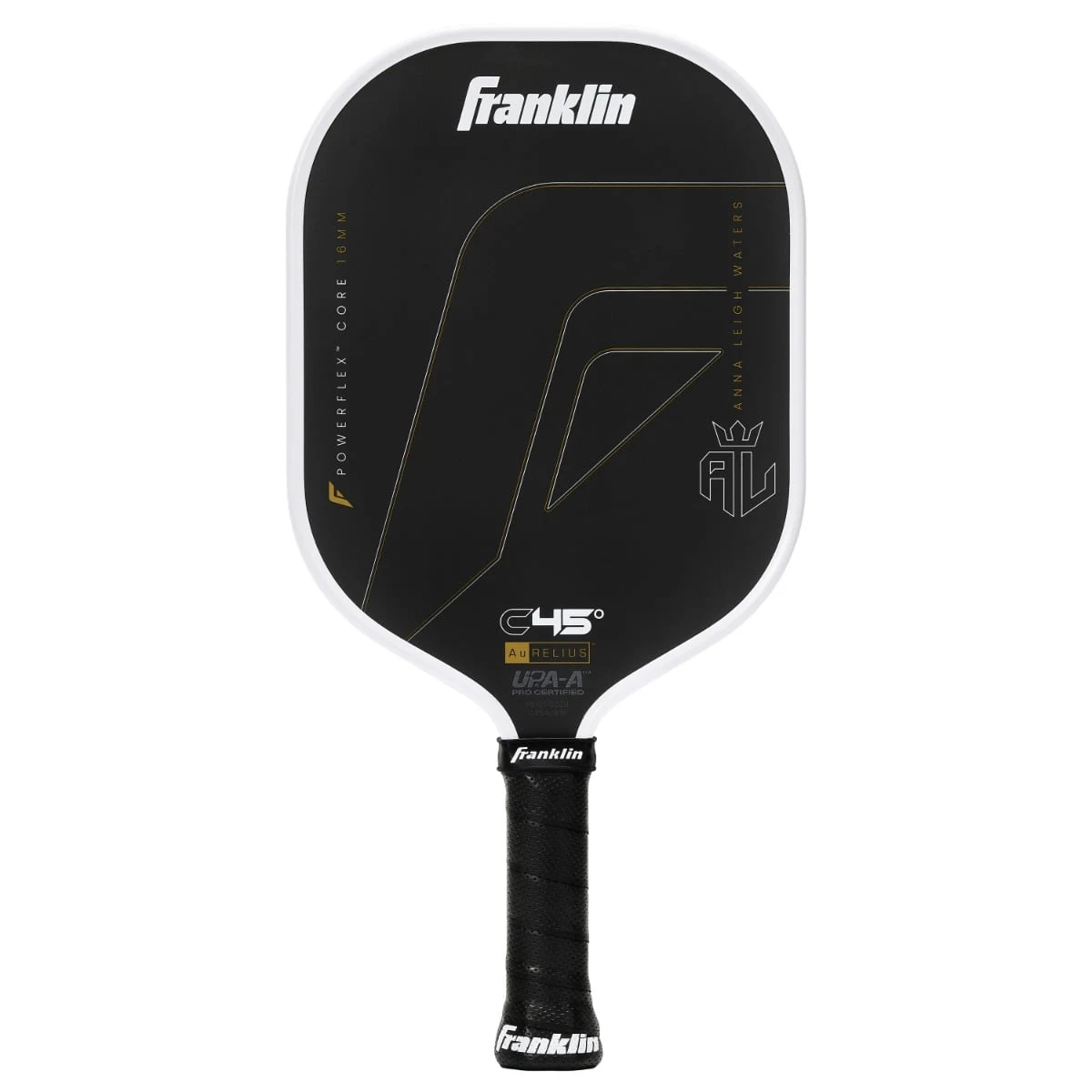
Nothing here moves like the Aurelius, and movement is its form of control. The short, wide frame, 15.7 by 7.9 inches, and a swing weight around 99 on my test unit mean hand battles at the kitchen stop feeling like reactions and start feeling like choices.
Counters I normally block became counters I could aim, and in fast exchanges that aim is worth more than raw stability numbers.
The power half arrives in two ways. First, the 45 degree carbon layup bites the ball hard, so topspin drives dip, rolls shape easily, and serves come off with spin that heavier paddles need twice the effort to produce. Second, this paddle is famously tunable.
Stock, off-center contact twists the face, because there is so little mass holding it steady. A little weight tape along the sides settles the twisting, widens the sweet spot, and turns good drives into heavy ones, all without giving back the hand speed that makes the paddle special.
The 16mm core keeps the soft game calm, with real dwell on drops and dinks, and the whole paddle feels relaxed in the hand even when the rally is not. The limits are physical: the 5.1 inch handle crowds a two-handed backhand, and players who want forgiveness and plow-through straight out of the wrapper will not find it here.
Buy it if your game is speed, spin, and quick hands, and you enjoy tuning. Skip it if you want a finished, stable paddle on day one.
811SIX24 Vapor Power 2 16mm: Best Spin and Power Pickleball Paddle in 2027
AT A GLANCE
Vapor Power 2
WEIGHT
8.0-8.3 oz
SWING WEIGHT
107.55
TWIST WEIGHT
6.6
SPIN
2,335 RPM
Shape: Hybrid
Grip: 5.75 in, 4.125 in circumference
Core: Gen 4 full foam, MPP
Face: HexGrit textured carbon
Approval: UPA-A only, not USAP
Feel: Raw bite
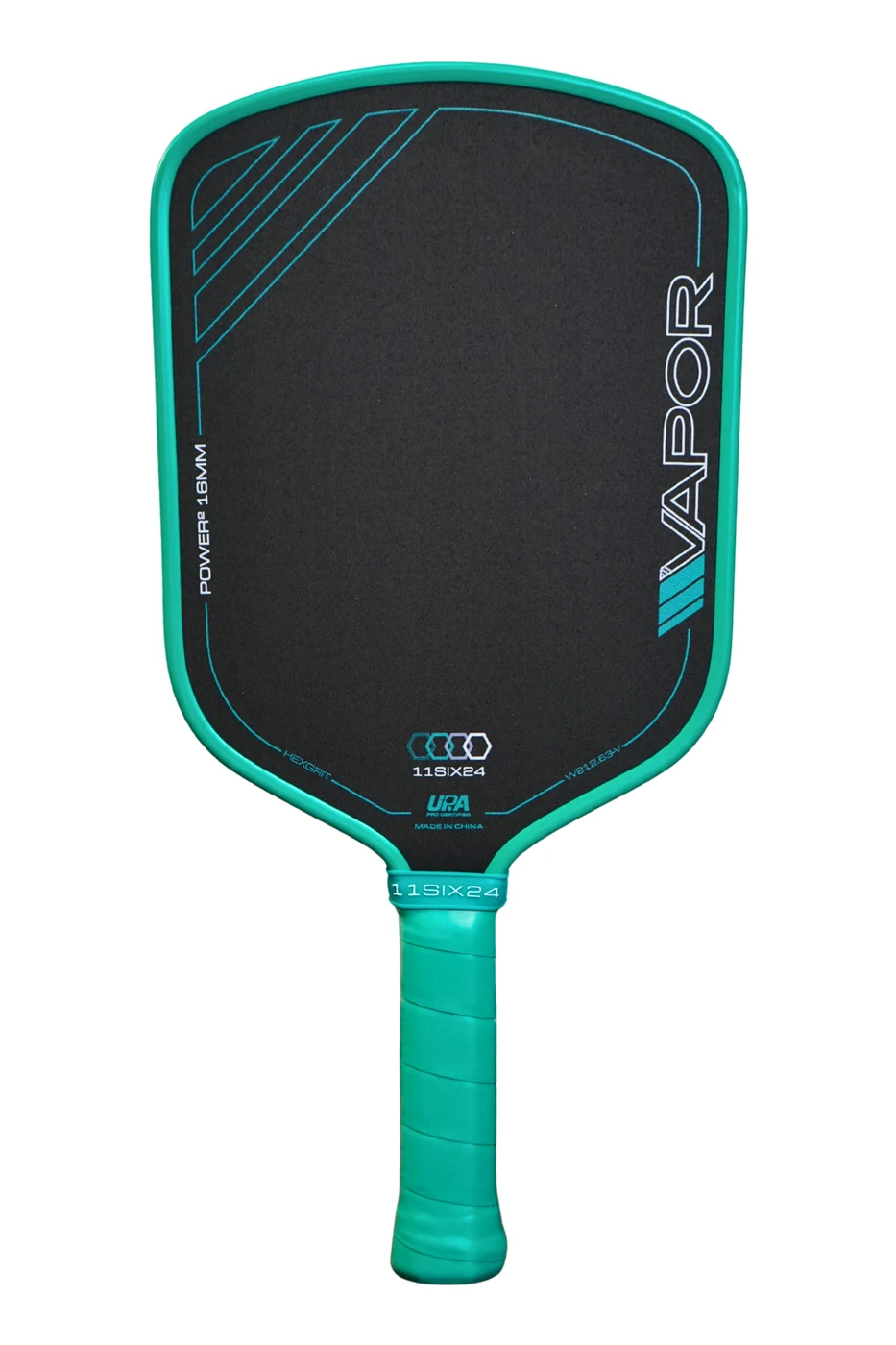
Spin is a power stat and a control stat at the same time, and no paddle on this list makes that case harder than the Vapor Power 2. The HexGrit surface, silicon carbide particles embedded in the face, bites the ball at 2,335 RPM, and heavy topspin is what lets a hard drive stay hard and still land.
My dipping drives kept dipping in month three, long after most raw carbon faces have gone smooth, and serves kept kicking off the bounce. That staying power is the control: the harder I swung, the more the ball obeyed.
The Gen 4 full foam core supplies the power half with a different personality than thermoformed honeycomb. There is no hollow crack.
Pace builds with your swing, so a full cut from the baseline holds its line instead of ballooning, and at a swing weight under 108 it changes direction fast enough to be dangerous in counters and speed-ups at the kitchen.
Drops and resets needed a looser grip after the break-in period, because the foam wakes up livelier than it starts, and soft hands adjust to it faster than firm wrists do.
Now the warning, stated plainly. The grit that makes this paddle special is too rough for USA Pickleball’s surface test, so the Vapor Power 2 is certified for UPA-A play only. It is not legal in USAP sanctioned tournaments.
Buy it for league, open play, and UPA events, if spin driven power is your game. Skip it if USAP tournament legality is a requirement.
9Gearbox GX2 Power Hybrid: Best Pickleball Paddle for Dwell and Touch Power in 2027
AT A GLANCE
GX2 Power Hybrid
WEIGHT
8.0 oz
SWING WEIGHT
113
TWIST WEIGHT
6.66
SPIN
~2,050 RPM
Shape: Hybrid
Grip: 5.5 in, 4.0 in circumference
Core: SST 2.0 CarbonRibCore
Face: 3K raw carbon fiber
Approval: USAP
Feel: Heavy dwell
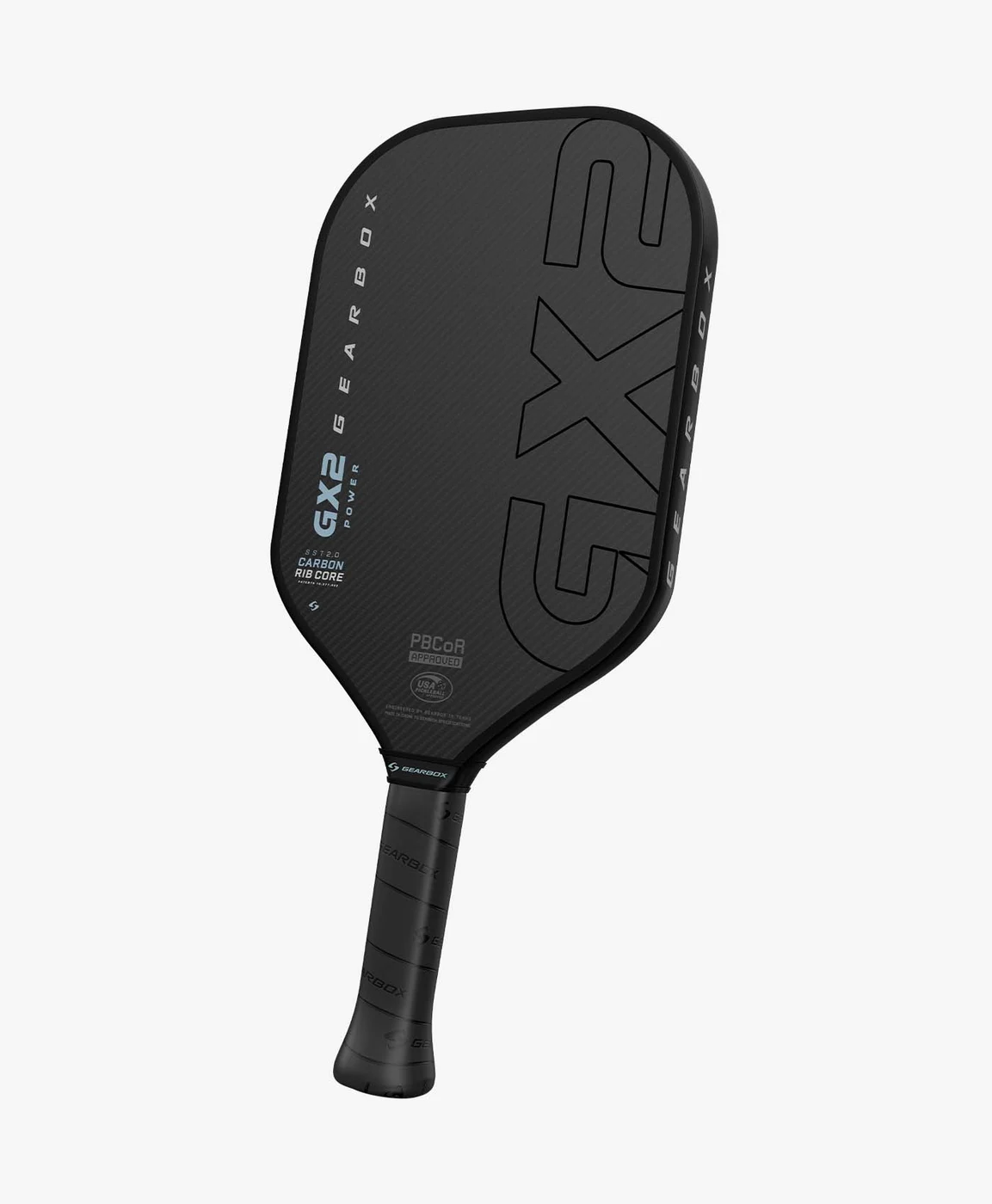
Every power paddle I have owned came with the same quiet worry: how long before the core starts to die and the balance goes with it. The GX2 Power Hybrid is built to end that worry. There is no honeycomb and no foam inside.
The core is a lattice of carbon fiber tubes standing on end, and it produces a dwell time I did not expect from the power category. The ball sinks in, loads, and leaves heavy, and that pocketing is the touch half of this paddle’s balance.
The power half is plow-through. Drives carry real weight, counters stay stable through contact, and spin around 2,050 RPM keeps aggressive shots dipping. The hybrid shape, 16.2 by 7.8 inches, keeps enough width in the face for defensive contact, and a 6.66 twist weight backs that up when contact strays off center.
After the short break-in the response settled, and then it stayed settled, which is the entire point of this construction: no slow fade, no sudden dead spot, no recalibrating your soft game every few weeks.
The adjustment period is real. As it breaks in it gets livelier, and my resets needed recalibrating in week two. The grip circumference runs small, so most players will build it up with an overgrip or two, which I ended up preferring anyway.
Buy it if you hit hard, play often, and want power and touch that stay married. Skip it if your soft game is your whole identity. This paddle always leans forward.
10Engage Pursuit Pro1 6.0 Elongated: Best Touch Pickleball Paddle That Firms Up in 2027
AT A GLANCE
Pursuit Pro1 6.0
WEIGHT
8.0 oz
SWING WEIGHT
118.6
TWIST WEIGHT
5.95
SPIN
2,267 RPM
Shape: Elongated
Grip: 5.875 in, 4.25 in circumference
Core: MachPro polymer with Variable Release 2.0
Face: Raw Toray T700 carbon fiber
Approval: USAP
Feel: Connected touch
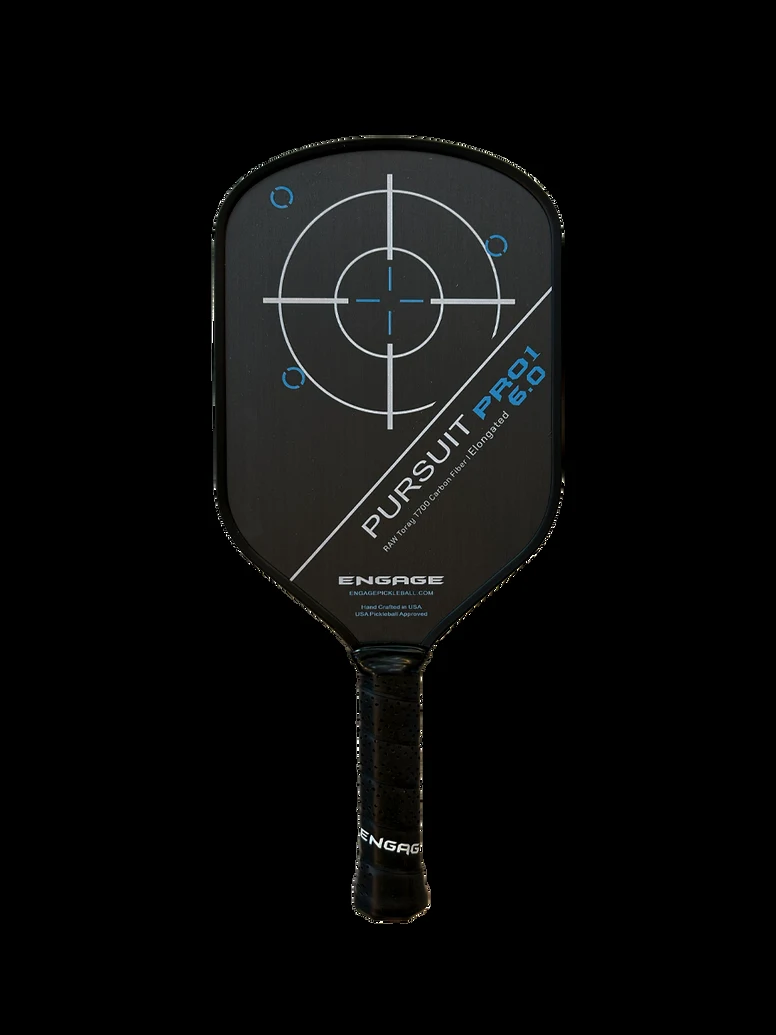
Engage sells this paddle as power. On court I found the most cooperative touch paddle in the premium class, and then, underneath the touch, more drive than the marketing needed to invent.
The Pursuit Pro1 is built the old way, layers pressed cold instead of thermoformed, and contact tells you immediately. The ball sits, the face talks to your hand, and thirds, drops, and dinks go where my fingers decided instead of where a lively core sent them.
The power shows up when you commit. The elongated frame, 16.5 by 7.5 inches, and a swing weight of 118.6 give a full swing real plow-through, and the coarse raw carbon texture, spin measured at 2,267 RPM, lets that pace dip and stay in. Serves carried and dropped.
Roll volleys shaped without effort. The dwell even lets you hold a shot a beat longer and wrong-foot players at the kitchen, which is a form of offense no radar gun measures. The long octagon handle will feel like home to anyone coming from tennis.
The compromises are stability and hand speed. The swing feels head-heavy, off-center contact twists more than the 5.95 twist weight suggests, and stretched blocks need a firm wrist. Nobody gets overpowered by this paddle from a short swing. Its power is built, not given.
Buy it if your game is touch, spin, and placement with a full swing behind it. Skip it if you want pace supplied for you.
How to Choose a Pickleball Paddle for Control and Power in 2027
Every paddle on the list above claims both control and power, and the claims are not all lying. They are just measuring different things.
This guide gives you the working definitions I test against, then works through the specs that actually move the balance: thickness, construction, the two weight numbers, shape, face, and the tuning option most players try last when it should be tried second.
Read it once and the At a Glance data lines above will tell you more than any marketing page.
Power and Control Are Two Axes, Not One Slider
Power is output: how fast the ball leaves the face for a given swing. Control is predictability: whether the ball goes where you aimed it, at the height you aimed for, including when you are absorbing someone else’s pace instead of creating your own.
A paddle can be high on one axis and low on the other, low on both, or, and this is the entire premise of my list, genuinely high on both.
Once you score the two separately, the marketing fog clears. A lively thermoformed paddle that launches your resets is not a balanced paddle with too much power; it is a high output, low predictability paddle.
A soft paddle that never finishes a point is not pure control either, because a ball you cannot put away is a ball your opponent controls. Judge every paddle you demo on both axes, in both directions of play, attacking and defending.
Core Thickness: The Rule, and Where It Breaks
The rule is simple: 16mm plays softer, dwells longer, and forgives more, while 14mm answers quicker and pops harder. Thicker cores give touch players time on the ball.
Thinner cores give fast hands and clean strikers extra pace on counters. As a starting point for the balance question, 16mm leans control and 14mm leans power, and most players should start their search there.
Construction breaks the rule constantly, which is why two paddles on this list carry 14mm cores and still reset beautifully. The Black Opal is 14mm, but its solid foam core pockets the ball like a thick honeycomb, so its soft game behaves once your swing shortens.
The Genesis 2 is also 14mm and dwells more than most 16mm paddles I own. The reverse happens too: a stiff, thermoformed 16mm like the Double Black Diamond Control runs livelier than its thickness suggests. Use thickness to sort the pile, then let construction and feel make the final call.
Construction: Thermoformed Honeycomb vs Foam
Thermoformed honeycomb is the construction that defined the modern power era. The core and face are moulded together under heat, which seals the edges, firms up the perimeter, and produces that familiar pop and crack.
The honest weakness is durability under hard use: honeycomb cells can crush, faces can separate from the core, and a paddle that plays balanced in month one can develop a hot spot or a dead patch by month six. When a thermoformed paddle’s balance changes, it is usually the core changing first.
Foam cores answer with consistency. A solid foam core has no cells to crush and nothing to delaminate, it pockets the ball longer, and it tends to feel the same in month six as in week two, which is why so many of the balance picks above, the Genesis 2, the Black Opal, and the Vapor Power 2 among them, are built on foam.
The newest propulsion style cores blur the line further, pairing honeycomb with foam structures to chase honeycomb pop with foam manners. Whichever construction you choose, judge the balance over time, not just on day one.
Swing Weight and Twist Weight: The Balance Numbers
Static weight tells you what a paddle weighs on a scale. Swing weight tells you what it weighs mid-swing, and it is the better power predictor: higher swing weight means more plow-through on drives and serves, paid for with slower hands and more load on your arm.
Under 110 feels quick and suits kitchen exchanges. Between 110 and 118 is the all-court middle where balanced power lives. Above that, you are buying heaviness on the ball with hand speed.
Twist weight is the control half of the pair. It measures how hard the face resists rotating on off-center contact, and it decides whether your stretched blocks and late counters stay square or spray.
Around 6.5 and above feels stable for most players; the Scorpeus Pro IV’s 7.4 is why its defense feels automatic, and the Pursuit Pro1’s 5.95 is why its otherwise lovely touch needs a firm wrist on hard blocks. When two paddles look identical on paper, the one with the better pairing of these two numbers is usually the balanced one.
Shape: Where the Trade-Off Lives
Shape is the one decision you cannot undo later with tape, and it moves both axes at once. Elongated paddles stretch the face to about 16.5 inches, which adds reach and leverage, so serves and drives gain pace, but the sweet spot sits higher and smaller, and the head feels slower in fast exchanges.
The Perseus Pro IV and the Pursuit Pro1 create their power this way and accept the defensive trade.
Widebody paddles go the other direction: shorter, wider, the biggest sweet spot, and the fastest hands at the kitchen, which is why the Scorpeus and the Genesis 2 defend so calmly. Their power comes from stability and confidence rather than leverage.
Hybrid shapes split the difference and are the safest default for the balance question, which is why half this list, the Double Black Diamond Control, the Black Opal, the GX2, and the Vapor Power 2, wears one. Pick your shape by where your points are won and lost, not by which looks more aggressive.
Face, Grit and Spin: Why Power Needs Grip
Spin is not a separate party trick. It is the mechanism that makes power usable. A drive hit hard stays in because topspin pulls it down, so the more grip a face has, the more of your swing you can actually spend.
Raw carbon fiber is the standard surface because its texture bites without a coating, and the spin numbers in the data lines above, from roughly 1,971 RPM up to 2,335, show the spread across this list.
Face layups tune the balance further. Fiberglass layers, used in the Genesis 2 and the ERA Power, add liveliness and pop on counters, with a launch you have to learn as the trade. Pure carbon faces answer calmer and hold the ball longer.
The last variable is survival: plain raw carbon slowly goes smooth with play, so its spin, and the control that spin provides, fades. Durable grit surfaces like the Vapor Power 2’s HexGrit are built to hold their bite, which means the balance you tested in week one is still the balance you own in month four.
Tuning With Weight Tape Before You Buy Again
Before you replace a paddle that feels almost balanced, tune it. Small strips of weight tape change the two balance numbers independently, and a paddle that is one adjustment away from right is common.
Tape at the 3 and 9 o’clock positions raises twist weight, which steadies off-center blocks and calms a twisting face. Tape across the top of the frame raises swing weight, which adds plow-through and drive power. Tape at the throat or under the grip shifts the feel toward hand speed.
Work in small steps and test for a full session between changes, because every addition moves something else: perimeter tape adds stability but takes a little quickness, and head tape adds power but loads the arm. The Franklin C45 Aurelius is the standing proof on this list.
Stock, it is all speed and not enough stability; with a little tape along the sides it becomes one of the most balanced paddles I own. Tuning will not fix a paddle whose core or shape is wrong for you, but it closes more gaps than another purchase usually does.
Frequently Asked Questions (FAQs)
1. What is the difference between a power paddle and a control paddle?
A power paddle returns more ball speed for a given swing, while a control paddle returns more predictability: the ball goes where you aimed it, including off-center and while you are absorbing pace.
Power shows up on drives, serves, and counters. Control shows up on drops, dinks, blocks, and resets. The paddles on this list are picked for scoring well on both measures at once.
2. Are power and control opposites, or can one paddle do both?
They are not opposites. They are two separate axes, output and predictability, and modern construction lets a paddle score high on both, which is why foam cores and propulsion cores dominate this list.
What you cannot escape is calibration: a high output paddle demands softer hands, and a soft paddle demands a fuller swing. The balance is real, but your technique has to meet it halfway.
3. What is an all-court (hybrid) paddle, and who is it for?
An all-court paddle is built to sit between the power and control extremes, in shape, core, and response, so it has no real weakness in any phase of a rally.
It suits the majority of players: intermediates who both drive and dink, doubles players who defend and counter in the same point, and anyone who does not want their equipment picking a style for them. Most of the ten picks above are all-court paddles in exactly this sense.
4. Should I choose a control paddle or a power paddle?
Choose by your most common miss. If your blocks and resets sail long, buy absorption and predictability first, something like the Double Black Diamond Control.
If your drives sit up and get attacked, buy output, like the Black Opal, and budget a few weeks to tame your soft game. If both misses sound familiar, start all-court and tune from there.
5. Is a 16mm paddle always control and a 14mm always power?
No, it is a tendency, not a law. Sixteen millimeters usually dwells longer and forgives more, and 14mm usually pops harder, but construction bends the rule: the 14mm Black Opal and Genesis 2 pocket the ball like thicker paddles because their cores are foam, while a stiff thermoformed 16mm can play firm and lively.
Check the feel and the core, not just the number on the throat.
6. Does face material decide it (carbon = control, fiberglass = power)?
No, face material tunes the balance rather than deciding it.
Raw carbon grips the ball and answers calmly, which reads as control, and fiberglass adds liveliness and pop, which reads as power, but the core and the layup matter more: the Genesis 2 and the ERA Power blend fiberglass with carbon precisely to borrow pop without surrendering touch. A carbon face over a hot core still plays hot.
7. What swing weight gives power without slow hands?
For most players the window is roughly 112 to 118: enough plow-through for drives and serves, without turning kitchen exchanges into a chore.
Under 110 your hands get quicker but your drives lose weight, and above 118 counters and reactions start losing you points. The Perseus Pro IV at 118 and the Scorpeus at just under 115 sit at the two ends of that window on this list.
8. Should beginners start with control, power, or all-court?
Start all-court, leaning control. Beginners miss off center, so forgiveness, a thicker core, a wider or hybrid shape, and a healthy twist weight, matters more than either extreme, and a balanced paddle teaches both halves of the game instead of hiding one.
The Genesis 2 fits that brief here. Move toward a power or control specialist once your misses have a clear pattern.
9. My drives fly long but my soft game is fine (or the reverse). What do I change?
Change one variable, not the whole paddle. Drives flying long with a healthy soft game usually means too much output for your swing: shorten the swing, add topspin, or move to a calmer face and core.
The reverse problem, soft shots floating while drives behave, points at grip pressure and a lively face: soften your hand first, then consider a paddle with more dwell, like the GX2 Power Hybrid or the Genesis 2, before blaming your technique alone.
10. Can I add lead tape to shift toward power/stability instead of buying new?
Yes, and you should try it before buying. Tape at the sides raises twist weight and steadies blocks, tape at the top raises swing weight and adds drive power, and small steps let you stop at the balance you want.
It will not change a paddle’s core, shape, or face, so it closes small gaps rather than fixing a wrong paddle. The C45 Aurelius on this list is transformed by exactly this adjustment.
11. Thermoformed honeycomb or full foam core: which balances power and control better now?
For consistency of balance over a paddle’s life, full foam has the edge right now: it pockets the ball, absorbs pace, and holds its feel because there are no honeycomb cells to crush and no face to delaminate.
Thermoformed honeycomb still wins on day one pop and crisp feedback, but its balance can drift as the core wears. If you play often and hate recalibrating, foam is the safer balance. If you love the crack and finish points early, thermoformed remains a fair choice.
12. How do I test the balance before I buy?
Test in both directions of play, in one session. Hit ten drives at full swing and count how many you can keep in with topspin; that is the power you can actually use.
Then play ten reset and block exchanges against the hardest hitter available and count how many balls land low and in the kitchen; that is the control. A balanced paddle passes both counts with your normal technique, not with adjustments you would never make in a match.
About The Author
Michael Stevenson
Hi, my name is Michael Stevenson and I’m a passionate pickleball player. I’ve been playing this wonderful sport for over a decade, and I fell in love with it the moment I stepped onto the court. I love the fast pace, the strategy, and the community that comes with playing pickleball.
As a pickleball enthusiast, I decided to start this blog to share my knowledge and experience with others who are just as passionate about the game as I am. Whether it’s tips for beginners, guides for experts, reviews of new paddles, or advanced playing techniques, I’ve got you covered.