
Best pickleball paddles for beginners are chosen on beginner evidence: a forgiving sweet spot, a swing your arm lasts with, trusted control.
I tested every paddle on this list on court myself and checked the figures, so the ranking follows real games, not famous names. The famous power flagships are absent on purpose, because a paddle that rewards a finished swing teaches a new swing badly.
My number one pick is the Vatic Pro Prism Flash 16mm, the best beginner paddle because its edges forgive your mistakes. It scored 8.8 out of 10 in my testing, and foam inside its edge walls softens contact before the ball leaves you.
So drops leave without drama, resets sit down instead of climbing, and your mishits stay pointing at the court, not wide. Check the Vatic Pro Prism Flash 16mm on Amazon if you want the first paddle I recommend for learning the soft game.
On this page
- The 10 Best Pickleball Paddles for Beginners in 2027
- How to Choose the Best Pickleball Paddle for Beginners in 2027
- Frequently Asked Questions (FAQs)
The 10 Best Pickleball Paddles for Beginners in 2027
1Vatic Pro Prism Flash 16mm: Best Overall Pickleball Paddle in 2027
AT A GLANCE
Vatic Pro Prism Flash 16mm
WEIGHT
7.9-8.2 oz
SWING WEIGHT
114
TWIST WEIGHT
6.47
SPIN
~1,900 RPM
Shape: Hybrid, 16.25 x 7.7 in
Grip: 5.3 in handle, 4.25 in circumference
Core: 16mm C7 polymer honeycomb with foam-injected edge walls
Face: Raw carbon fiber, T700 class
Approval: USAP
Feel: Plush control
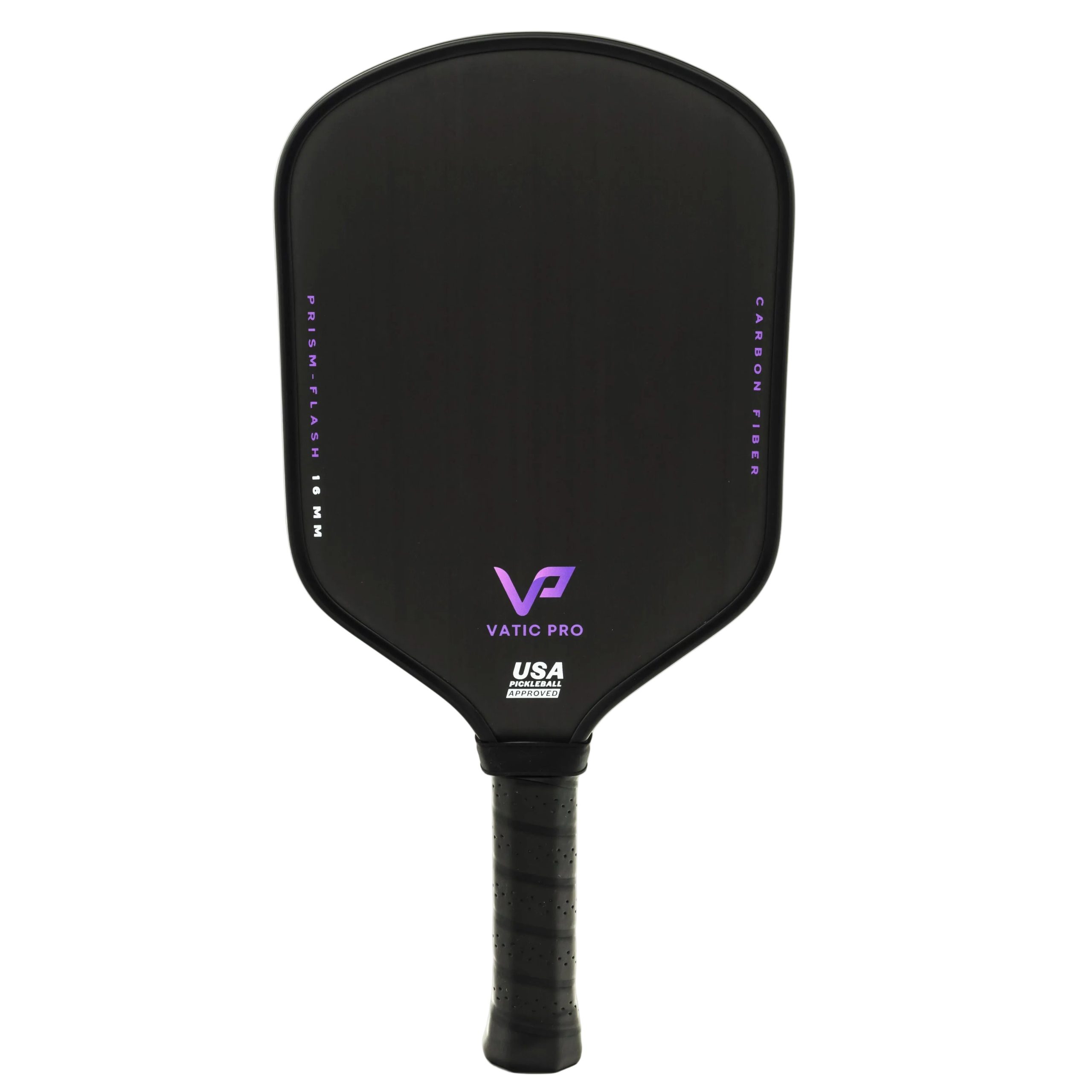
If you ask me for one first paddle and refuse to hear a shortlist, this is the one I hand over. Its 16mm polymer honeycomb core has foam-injected edge walls, and the result is calm, pocketed contact that forgives a beginner’s timing.
Drops leave the face without drama, resets sit down instead of climbing, and when a harder drive arrives at your chest, the block stays low instead of jumping into trouble.
The measured figures explain the steadiness. Twist weight tells you how much a paddle twists in your hand on off-center contact, and at 6.47 this one keeps mishits pointing at the court instead of spraying wide.
The 114 swing weight feels substantial without dragging on your arm, and the raw carbon face produces around 1,900 RPM of measured spin, enough to learn a dipping drive and a roll volley. The hybrid shape splits the difference between reach and forgiveness.
The honest limit is power. This paddle will not manufacture putaways for a short, tentative swing, and I count that as correct here. You can add pace later with technique; you cannot add control to a paddle that does not have it. Learn the soft game on this one and it stays a sensible paddle long after your first season.
Buy it if you want the most complete first paddle on this page. Skip it if you already know you want a livelier, foam-driven response.
211SIX24 Jelly Bean 16mm: Best Widebody Forgiveness Pickleball Paddle in 2027
AT A GLANCE
11SIX24 Jelly Bean 16mm
WEIGHT
8.0-8.3 oz
SWING WEIGHT
107
TWIST WEIGHT
7.21
SPIN
2,103 RPM
Shape: Widebody (Pegasus), 16 x 8 in
Grip: 5.75 in handle, 4.125 in circumference
Core: 16mm polymer honeycomb, thermoformed
Face: CFC: two layers of Toray T700 raw carbon fiber over one fiberglass layer
Approval: USAP
Feel: Soft forgiveness
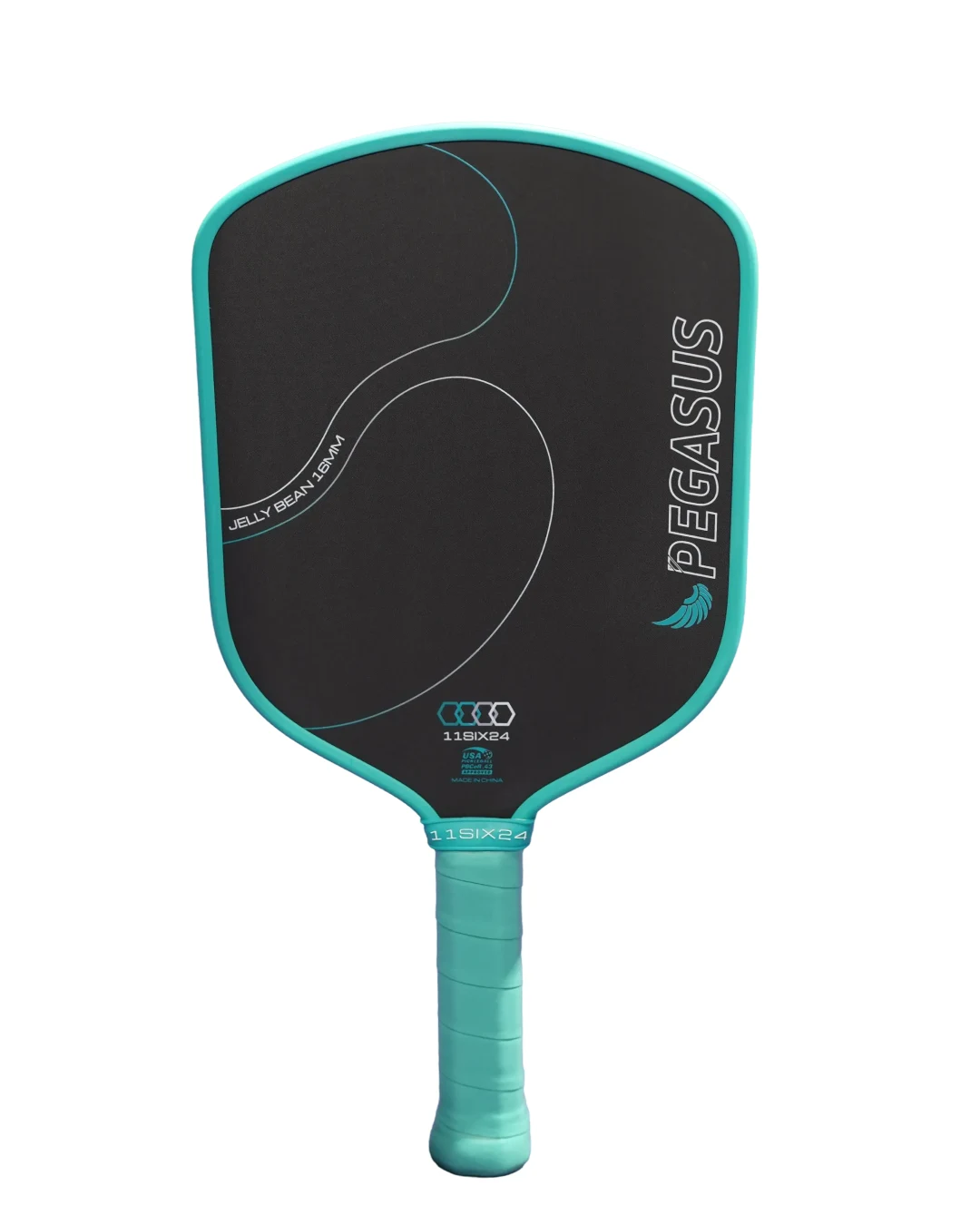
Beginners do not miss in the middle of the paddle. They miss high, low, and toward the edges, which is exactly the contact this widebody was built to absorb.
The Pegasus shape stretches the face to a full 8 inches wide, and its measured twist weight of 7.21 is the highest among the proven picks on this page. In plain terms, when you catch the ball near the frame, the paddle barely twists, and a shot that felt like a mistake still lands in play.
That forgiveness comes with a surprisingly lively face for learning spin. The layered surface, two sheets of raw carbon laid over a fiberglass layer, produces a measured 2,103 RPM, the strongest spin figure here.
New players feel a topspin drive dip for the first time on this paddle, and roll volleys bite instead of floating. The thermoformed 16mm honeycomb core keeps the response soft and settled, so blocks and dinks stay under control while you experiment.
Two things to know before ordering. First, this is a family listing: choose the Jelly Bean 16mm in the Pegasus widebody shape, because the same brand sells narrower hybrid and elongated versions under similar names.
Second, at 8.0 to 8.3 ounces it is not the lightest paddle here, though the easy 107 swing weight keeps it moving well in exchanges.
Buy it if your contact still wanders and you want the widest margin for error. Skip it if you already strike the center reliably and want elongated reach instead.
3Selkirk SLK Halo Control Max 16mm: Best for Learning Control Pickleball Paddle in 2027
AT A GLANCE
Selkirk SLK Halo Control Max 16mm
WEIGHT
7.7-8.0 oz (brand figures)
SWING WEIGHT
-
TWIST WEIGHT
-
SPIN
-
Shape: Max, 16 x 7.85 in
Grip: 4.85 in handle, 4.25 in circumference
Core: 16mm Rev-Control polymer honeycomb
Face: 18K UltraWeave carbon fiber
Approval: USAP
Feel: Soft, muted control
The Halo Control Max is the quietest paddle on this page, and for learning the soft game, quiet is a feature. Its 16mm Rev-Control polymer core and 18K UltraWeave carbon face produce a soft, muted contact that takes pace off the ball instead of returning it.
Dinks land where you aim them, drops settle instead of floating long, and resets against a hard drive stay down. If your early games are lost on balls popping up, this response is the correction.
The Max is Selkirk’s largest-surface shape, 16 by 7.85 inches, which gives new contact patterns more face to find. The 4.85 inch handle and standard 4.25 inch grip suit most hands without adjustment.
I should be plain about the data: no independent lab has published swing weight, twist weight, or spin figures for this exact shape, so the box leaves those fields unpublished rather than borrowing numbers from other Halo variants.
What I can report from playing it is a paddle that rewards soft hands and punishes nothing except impatience.
Choose the current 18K UltraWeave Control version in the 16mm Max shape, because older Halo Control listings with a different face material still circulate. Selkirk lists the line as USA Pickleball approved; check the exact Max variant against the approved list before a sanctioned event, the same variant care this site applies everywhere.
Buy it if you want to learn touch, drops, and resets on a paddle that never rushes you. Skip it if you want measured lab figures or a livelier response.
4Onix Graphite Z5: Best Widebody Classic Pickleball Paddle in 2027
AT A GLANCE
Onix Graphite Z5
WEIGHT
7.5-8.2 oz (brand figures)
SWING WEIGHT
-
TWIST WEIGHT
-
SPIN
-
Shape: Widebody, 15.5 x 8.125 in
Grip: 5 in handle, 4.25 in circumference
Core: Nomex honeycomb
Face: Graphite
Approval: USAP
Feel: Crisp control
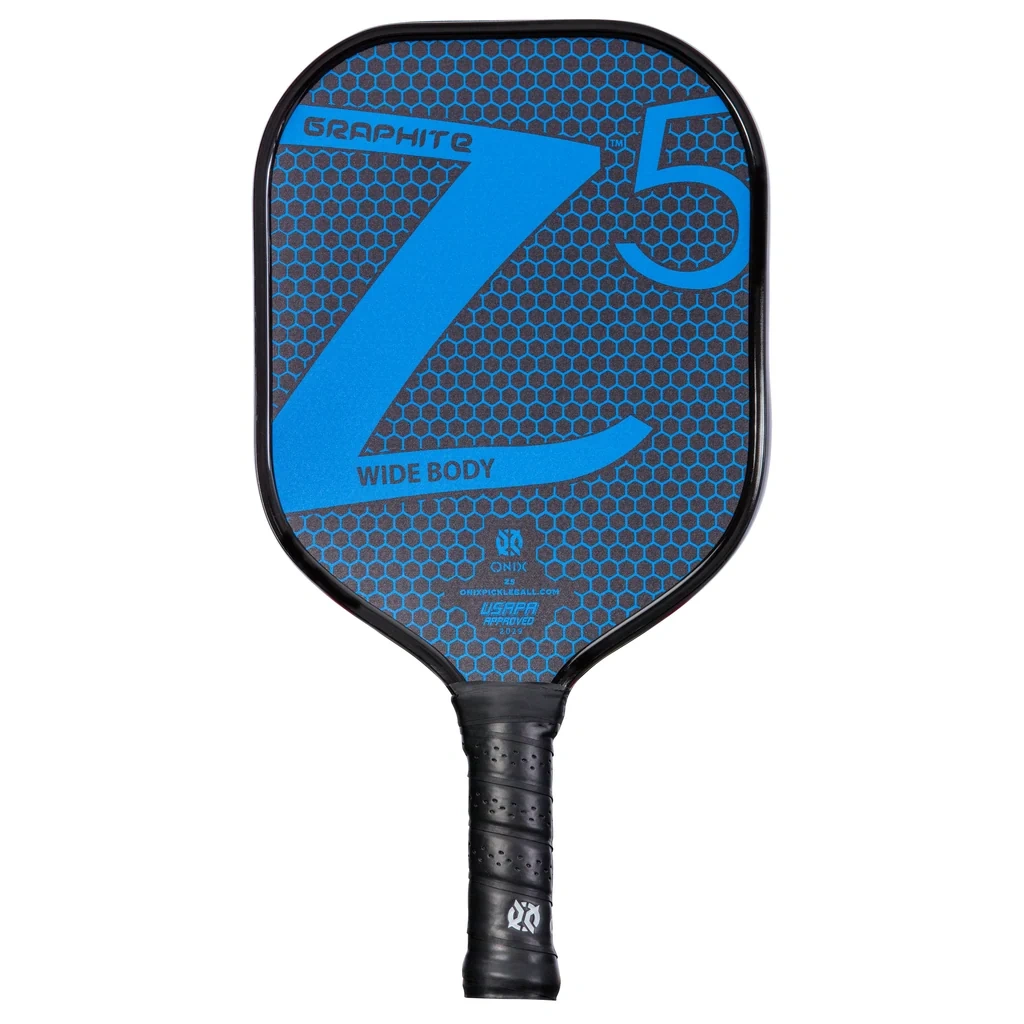
Some paddles on this page are new. The Z5 is the opposite: it has been the default first paddle at public courts for about a decade, and thousands of players learned the game on one. The formula is simple and still sound.
A widebody face, 15.5 by 8.125 inches, gives you the broadest target in this list, and the graphite face over a Nomex honeycomb core, a stiff honeycomb material used in paddles for years, answers contact immediately, so you always know where on the face you struck the ball.
That feedback is why the Z5 teaches so well. Softer modern paddles muffle your mistakes; this one reports them honestly, and many players find their contact cleans up faster for it.
Blocks come off crisply, volleys feel precise, and the wide face rescues stretched contact that a narrower paddle would dump into the net. There are no published lab figures for swing weight, twist weight, or spin on this long-running design, and the box says so rather than dressing it in borrowed numbers.
The trade-offs are equally clear. Nomex plays firmer and louder than the polymer cores around it, so mishits feel harsher through the handle.
The smooth graphite face grips the ball less than a raw carbon surface, which means spin develops more slowly and your dipping drives will come later. For a player who wants the proven, straightforward route and plans to upgrade once their strokes settle, neither point rules it out.
Buy it if you want the classic widebody that generations of beginners started on. Skip it if a plush feel and early spin matter more than direct feedback.
5Vatic Pro V-SOL Pro 16mm: Best to Grow Into Pickleball Paddle in 2027
AT A GLANCE
Vatic Pro V-SOL Pro 16mm
WEIGHT
~7.9 oz (measured)
SWING WEIGHT
108
TWIST WEIGHT
6.43
SPIN
2,060 RPM
Shape: Hybrid (Flash)
Grip: 5.3 in handle, 4.125 in circumference
Core: Full EPP foam with EVA perimeter ring, 16mm (Gen 4)
Face: Raw carbon fiber
Approval: USAP
Feel: Lively all-court
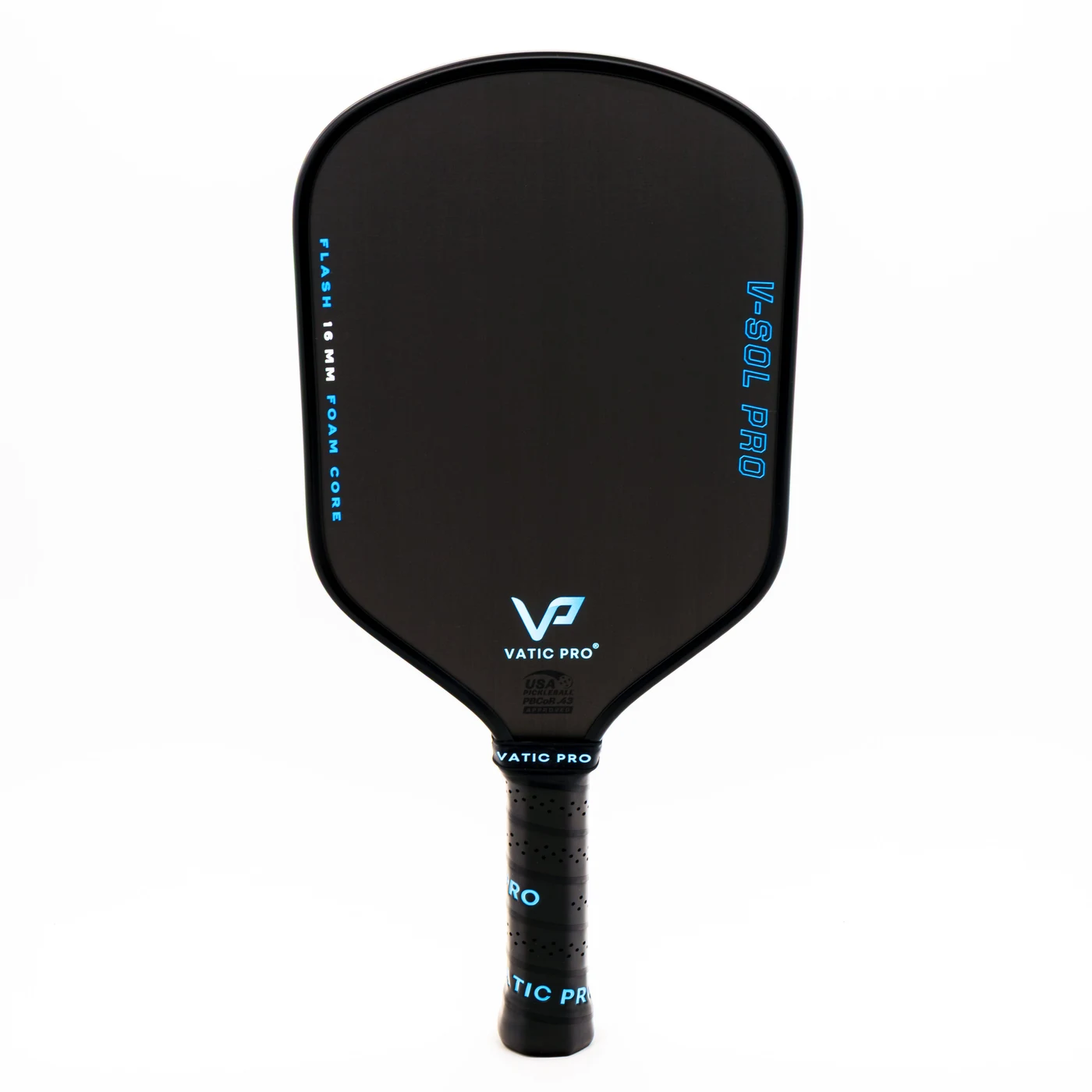
Every other paddle on this page asks how you play now. The V-SOL Pro asks how you will play in six months. Its full foam core, an EPP foam build with an EVA ring around the perimeter, returns more energy than the polymer honeycomb picks here, and the raw carbon face produces a measured 2,060 RPM of spin.
Drives jump, serves carry real dip, and as your technique improves, this paddle improves with you instead of being outgrown by spring.
The handling figures keep that liveliness honest. A 108 swing weight is easy to move at the kitchen, and the 6.43 twist weight runs close to the Prism Flash at the top of this list, so off-center contact stays respectable. You are not buying a wild power paddle; you are buying a controlled one with a higher ceiling.
Now the framing this pick requires. It is the liveliest paddle here, and brand-new hands will find the Prism Flash, pick 1, calmer while learning touch. Foam gives back energy on every contact, including the blocks and resets a beginner is still learning to soften, and early on that can mean balls floating long.
My honest advice: if this is your very first week, start with the Prism. If you are a few months in, improving fast, and already annoyed at a starter paddle holding your drives back, this is the one to grow into without buying twice.
Buy it if you are progressing quickly and want headroom. Skip it if you are brand new and still learning to keep a block in play.
6Franklin Signature Pro 16mm: Best Elongated for Tennis Converts Pickleball Paddle in 2027
AT A GLANCE
Franklin Signature Pro 16mm
WEIGHT
7.9-8.3 oz
SWING WEIGHT
116
TWIST WEIGHT
6.95
SPIN
-
Shape: Elongated, 16.5 x 7.3 in
Grip: 5.6 in handle, 4.5 in circumference
Core: 16mm polypropylene
Face: Fiberglass with MaxGrit surface
Approval: USAP
Feel: Solid power

This is the one pick on the page with a condition attached: it is for players arriving from tennis or another racket sport, whose swings are already grooved. If that is you, the shape will feel like home.
The elongated frame, 16.5 by 7.3 inches, adds reach your tennis instincts expect, and the 5.6 inch handle is the longest here, with genuine room for a two-handed backhand. The fiberglass face carries a textured MaxGrit surface that grips the ball well enough to shape a drive.
It is also, honestly, the most demanding paddle on this list. The swing weight of 116 is the highest here, so the head carries real momentum you have to manage, and the feel is firm and power-leaning rather than soft.
What saves it for a convert is stability: a 6.95 twist weight is genuinely high for an elongated shape, so contact away from the center stays honest instead of folding open. Those handling figures are retailer-published; no big lab has published a spin figure for this paddle, so the box leaves spin unpublished.
If you are a true first-week player with no racket background, skip this one for now and start with picks 1 to 3. Your touch is still forming, and this paddle will not help you find it. Converts with real groundstrokes, though, often stall on short, soft paddles; this is the beginner page’s answer for them.
Buy it if you bring a tennis swing and want reach, handle room, and stability. Skip it if you are learning the game from zero.
7JOOLA Essentials: Best for Small Hands Pickleball Paddle in 2027
AT A GLANCE
JOOLA Essentials
WEIGHT
8.2 oz (brand figure)
SWING WEIGHT
-
TWIST WEIGHT
-
SPIN
-
Shape: Standard
Grip: 4.75 in handle, 4.0 in circumference
Core: Response Polymer polypropylene honeycomb, 12mm
Face: Reinforced fiberglass
Approval: USAPA approved
Feel: Soft and forgiving, built for new players

Grip size is the beginner topic nobody mentions until a forearm starts aching. Most paddles in this list use a 4.25 inch grip circumference, which suits average hands.
The JOOLA Essentials uses a 4.0 inch grip, the smallest here, and for players with smaller hands that difference decides whether the paddle feels like an extension of the arm or a fence post you are wrestling. Fingers wrap properly, the wrist stays loose, and volleys stop feeling like arm wrestling.
The rest of the build is a straightforward entry model from a major brand: a reinforced fiberglass face over a polypropylene honeycomb core, a standard shape, and approval for sanctioned play.
JOOLA publishes the figures itself and no independent lab has measured this model, so the handling fields in the box are honestly unpublished. In play it feels soft and forgiving, built for new players, with contact that stays friendly while your mechanics form.
One honest note on the core: at 12mm it is the thinnest on this page, and thinner cores play firmer than the 16mm picks. Treat this as the entry route it is, the paddle that gets your grip and your basics right, rather than the plushest teacher here.
A slim grip can be built up with an overgrip if your hands grow into it, but starting from the right size beats correcting the wrong one. Small-handed players rarely get a pick aimed at them; this is the one.
Buy it if smaller hands make standard grips feel bulky. Skip it if you want the calmest 16mm response or a grip at the standard size.
8Paddletek Phoenix G6: Best for Bigger Hands Pickleball Paddle in 2027
AT A GLANCE
Paddletek Phoenix G6
WEIGHT
7.8-8.1 oz (brand figures)
SWING WEIGHT
-
TWIST WEIGHT
-
SPIN
-
Shape: Standard, 15 5/8 x 7 3/4 in
Grip: 5 in handle, 4.25 in circumference, ultra-cushion high-tack wrap
Core: Polymer honeycomb (brand Graphite PolyCore)
Face: Composite (polycarbonate/graphite composite surface)
Approval: USAPA approved
Feel: Comfort-first control
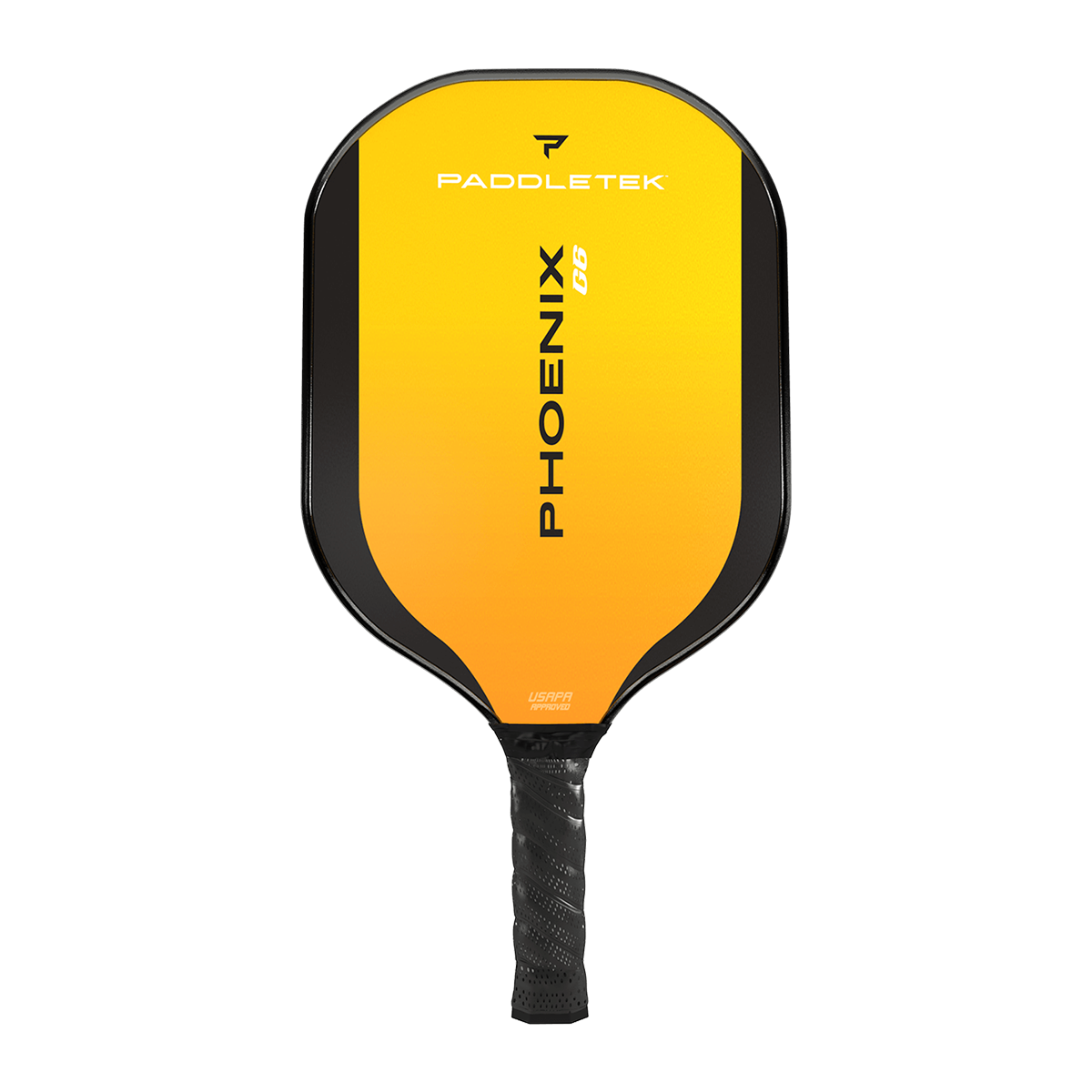
The Phoenix G6 was the old version of this page’s top pick, and it survives the rebuild in a new role: the comfort pick for bigger hands. The 5 inch handle wears the thickest cushioned wrap in this list, a high-tack ultra-cushion grip that fills a larger palm instead of leaving fingers straining around a slim handle.
In my own testing the same trait showed from the other direction: this grip suits a bigger hand better than a small one, so I am placing it where that trait is the point.
On court it plays as a comfort-first control paddle. The polymer honeycomb core and composite face give a broad, friendly sweet spot, contact feels settled rather than sharp, and the 7.8 to 8.1 ounce weight range sits in the window most new players are happiest in.
Paddletek publishes the figures and no lab has measured this model, so the box marks the handling fields unpublished rather than guessing at them.
Two pieces of honesty. First, buy the single paddle; Paddletek also sells this model in a two-paddle set, and the single is the pick here.
Second, the review history for this model includes complaints about handles breaking, and while the brand warranty covers manufacturing defects, I will praise this paddle’s comfort without pretending it has a spotless toughness record.
For a larger-handed beginner who wants a cushioned, confidence-first start, it remains an easy recommendation.
Buy it if bigger hands find standard grips cramped. Skip it if you want a slim handle or published lab data.
9HEAD Radical Elite: Best Comfort-First Widebody Pickleball Paddle in 2027
AT A GLANCE
HEAD Radical Elite
WEIGHT
8.1 oz
SWING WEIGHT
-
TWIST WEIGHT
-
SPIN
-
Shape: Widebody, 16 x 7 7/8 in
Grip: 5.1 in handle, 4 1/8 in circumference, Ergo Grip
Core: OTC polypropylene honeycomb, 15mm
Face: Fiberglass composite (Composite Hitting Surface), smooth
Approval: USAP approved
Feel: Soft, comfort-first, quiet at contact
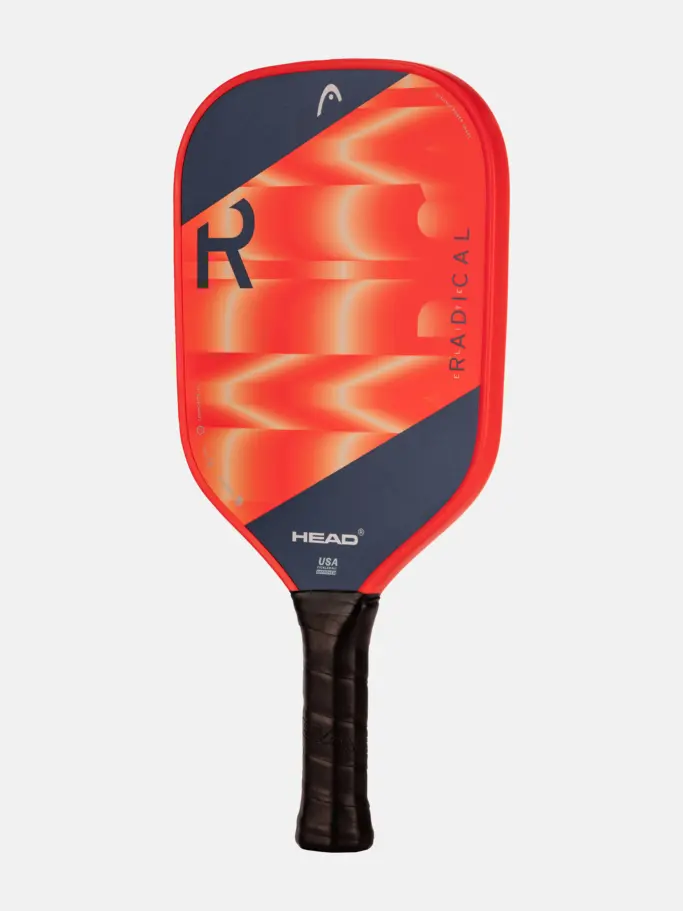
Some paddles feel busy at contact. The Radical Elite feels like a deep breath, and for a new player whose arm is still learning what a session costs, that calm is the whole argument.
The widebody outline, 16 by 7 7/8 inches, puts a broad face behind the ball, and the thick polypropylene core soaks up pace instead of returning it with interest. When a hard drive arrived at my chest, the block simply settled, and my resets dropped low instead of climbing into trouble.
HEAD’s Ergo Grip deserves its own mention. The handle sits in the palm with a shaped, secure feel, and across long sessions my hand never felt like it was working just to hold on.
At 8.1 ounces this is no feather, but the weight reads as steadiness rather than sluggishness: the face stays where you point it on stretched contact, and the whole package plays quiet, which your ears and your doubles partners will both appreciate.
It is the long-running entry model from a tennis brand that knows how beginners actually start, and it plays like it.
The honest trade is the face. The Composite Hitting Surface is smooth, and smooth faces do not bite: my topspin drives carried less dip than the textured faces elsewhere on this page produce, so spin develops more slowly here and passing shots need more shape and more margin.
HEAD publishes no lab handling figures for this model, so the box leaves them unpublished rather than borrowing numbers. Older listings also describe this paddle’s core differently; the box follows HEAD’s current published figure.
Buy it if comfort, calm contact, and a steady widebody are what your first season needs. Skip it if you want a textured face that teaches spin early.
10Niupipo MX-19 Fiberglass Set of 2: Best Starter Set in 2027
AT A GLANCE
Niupipo MX-19 Fiberglass Set of 2
WEIGHT
-
SWING WEIGHT
-
TWIST WEIGHT
-
SPIN
-
Shape: Standard (2-paddle set)
Grip: 4.72 in handle, 4.25 in circumference
Core: Polypropylene honeycomb, thickness -
Face: Fiberglass
Approval: USAPA approved per listing
Feel: Soft and forgiving for first games

Sometimes the right first purchase is not one paddle but two. If you are starting with a partner, a spouse, or a teenager who keeps borrowing yours, this set is the honest way in: two fiberglass paddles, balls, and a carry bag from an established brand, labelled plainly as a set rather than dressed up as anything fancier.
Both of you can be on court the same afternoon, learning the same game, instead of one player waiting on a second order.
The paddles themselves are sensibly built for first games. A polypropylene honeycomb core and fiberglass face give a soft, forgiving response, the standard shape keeps contact simple, and the listing carries USAPA approval, so the set stays legal if your casual games turn into league nights.
The grip, 4.72 inches of handle with a 4.25 inch circumference, suits most hands without fuss. Niupipo publishes little beyond the basics: no paddle weight and no core thickness figure, so those fields sit unpublished in the box rather than invented.
Set the expectation correctly and this pick makes sense. Each paddle is a step simpler in finish and feel than the strongest singles above it, and a player who catches the bug hard will eventually want one better paddle of their own; that is the natural order of things, not a failure of the set.
As the shared starting point for two beginners, nothing else on this page does the job.
Buy it if two of you are starting together. Skip it if you are buying for one player who is ready for a dedicated single paddle.
How to Choose the Best Pickleball Paddle for Beginners in 2027
Your first paddle shapes your first season more than any other equipment decision in this sport, because it decides what practice feels like while your habits are forming.
The eight sections below cover the choices that actually matter, in the order I would make them: shape and sweet spot first, then weight, grip, and face material, then the control question, then approval, then the step up to intermediate play, and finally the honest signs that you have outgrown your first paddle.
Sweet Spot and Shape Come First
Beginners miss away from the center. That single fact should drive your first choice, because a paddle that forgives off-center contact keeps rallies alive while your timing develops, and long rallies are where learning happens.
Widebody shapes spread the face to a full 8 inches wide and protect exactly those misses. Hybrid shapes give up a little width for a little reach. Elongated shapes trade the most forgiveness for the most leverage, which is why only one elongated pick, aimed at racket-sport converts, appears on this page.
Twist weight is the lab figure behind forgiveness. It measures how much a paddle resists twisting in your hand when contact is off center: higher is steadier.
When a box on this page publishes a twist weight, that is the number to compare first. When it says Not published, judge the paddle by its shape and width instead, and be wary of any seller quoting a figure no lab produced.
Weight and Swing Weight Basics
Two different numbers describe how heavy a paddle feels. Static weight is what the scale says. Swing weight is how heavy the paddle feels while you swing it, and it is the one your arm actually notices: two paddles at the same scale weight can feel completely different if one carries its mass toward the head.
Most new hands are happiest in the middle: roughly 7.8 to 8.2 ounces on the scale, with swing weights around 105 to 115 where labs publish them.
Go too heavy and a new forearm tires, volleys arrive late, and form collapses into wrist flicks. Go very light and the paddle feels quick but flutters when a hard-hit ball arrives, because there is little mass to hold the face steady.
Start in the middle and let your first months of play tell you which direction, if any, to move. If a light swing is your main need rather than a middleweight one, my lightweight list ranks paddles on both measures, scale weight and swing weight.
Grip Size Basics
Grip size is the most skipped beginner decision and one of the most important, because you hold the paddle on every single shot.
To estimate yours, grip the paddle in your playing hand and check the gap: the index finger of your other hand should fit snugly between your fingertips and your palm. A ruler works too: measure from the tip of your ring finger to the middle crease of your palm.
A grip that is too big locks your wrist and slows the quick adjustments the kitchen game demands. A grip that is too small makes you squeeze, which tires the forearm and lets the paddle twist on off-center contact. Small differences are easy to fix: an overgrip adds a little size and fresh tack.
Fine-tune with that, and use the pointers on this page, pick 7 for smaller hands and pick 8 for larger ones, to start from the right size rather than correcting the wrong one.
If your hands are well under the standard size, my small-grip list ranks paddles built for them, and my grip-size guide walks through both measuring methods step by step.
Carbon Fiber or Fiberglass: Which Face for a First Paddle?
Raw carbon fiber is the better face for most beginners. Its textured surface grips the ball, so drives dip and roll volleys bite, and it teaches spin from the first month. Fiberglass feels springier and friendlier on first contact, and it suits players who want the easiest possible start.
On this page the carbon picks are the Prism Flash, the Jelly Bean, the Halo Control Max, and the V-SOL Pro. The Jelly Bean layers its carbon over fiberglass, so it plays softer than a pure carbon face while keeping real bite.
The fiberglass picks are the Signature Pro, the JOOLA Essentials, the Radical Elite, and the Niupipo set. Their faces feel a little livelier and a little less grippy, which is why spin develops more slowly on them.
Graphite is the third face you will meet. The Z5 at pick 4 uses it. It plays crisp and direct, and its smooth surface grips the ball less than raw carbon, so spin comes later. It is a fine teacher if you like direct feedback, and a slower route to spin.
Choose carbon if you want to shape the ball early. Choose fiberglass if easy, friendly contact matters more while your swing forms. If you want the full carbon story beyond first paddles, my carbon fiber list ranks the premium builds the same way this page ranks first ones.
Why Control Beats Power While Learning
Watch a beginner match and count how points end. Almost none end because a shot was hit too softly. They end on balls driven into the net, floated long, or popped up for an easy putaway.
The first skills in pickleball are the soft ones: the dink that stays low, the drop that lands in the kitchen, the reset that takes a hard drive and sets it down gently.
A control paddle helps you learn all three, because its calmer response keeps a slightly firm hand from becoming an error. Power is not locked out; it arrives with technique, timing, and leg drive, and it transfers to every paddle you will ever own.
Control learned early never has to be unlearned. That is why this page leaves the famous power flagships off the list entirely: they reward swings that are already finished, and yours is still being built.
Approval and Where Beginners Actually Play
Two approval bodies matter. USAP, short for USA Pickleball, approves paddles for sanctioned play, and UPA-A covers events on the United Pickleball Association pathway.
The honest beginner picture is simple: open play, park games, and most local leagues never check your paddle at all. Sanctioned tournaments do, and they check the exact model and variant, not the brand name.
That is why every pick on this page carries approval for sanctioned play, and it means your first paddle never has to be replaced for eligibility reasons when you enter your first event.
One caution follows from the same rule: approval belongs to the precise version, so when a listing offers several shapes or generations under one name, select the exact variant named in the section.
From Beginner to Intermediate: When a First Paddle Stops Being Enough
Three paddles on this page already play at intermediate level. The Prism Flash, the Jelly Bean, and the V-SOL Pro all rank on my intermediate list too. Buying one of them as a first paddle means you do not buy twice when your game steps up.
The step up is about contact, not equipment. You have crossed the line when you find the center of the face most rallies, when your third shot drop lands more often than it floats, and when you hold your own in intermediate games. At that point the three paddles above keep up, because their forgiveness and spin still serve a forming game.
The pure entry builds on this page do not cross the line with you. The JOOLA Essentials, the Phoenix G6, and the Niupipo set taught you the game, and that was their job. Your second paddle can then be a shape or a face your first one cannot offer. My intermediate list ranks those second paddles the same way this page ranks first ones.
When to Upgrade
A first paddle is outgrown in one of two ways: your game passes it, or it wears out. The game signs are encouraging ones. You are finding the center of the face most rallies, your third shot drop is becoming a real shot instead of a hope, and you are holding your own in intermediate games.
At that point a second paddle can offer a shape that fits your style, a face with more bite, or a livelier core, and you will feel the difference because your contact is consistent enough to use it.
The wear signs are simpler: a face that has gone smooth and lost its grip on the ball, dead or inconsistent spots on contact, or an edge guard working loose. Replace for either reason and the upgrade is a step. Replace out of impatience in month two and it is usually the same paddle wearing a different logo.
Frequently Asked Questions (FAQs)
1. What is the best pickleball paddle for beginners?
The Vatic Pro Prism Flash 16mm. Its 16mm core and foam-injected edges give it the calmest, most forgiving contact on this page, its measured twist weight of 6.47 keeps mishits in play, and its raw carbon face adds real spin for the shots you will learn next.
If your contact wanders badly, the wider Jelly Bean at pick 2 is the other answer.
2. What is the best starter pickleball paddle?
The Vatic Pro Prism Flash 16mm. A starter paddle and a first paddle are the same purchase: a forgiving sweet spot, a midweight swing, and control you can trust at the kitchen line.
The Prism Flash leads this page on all three, with a 16mm core, a twist weight of 6.47, and around 1,900 RPM of measured spin. If two of you are starting together, the Niupipo set at pick 10 is the starter purchase for a pair, and it is the only set on this page.
3. What is a good pickleball paddle for beginners?
A good first paddle does three things. It forgives contact away from the center, so mishits stay in play. It swings in the middle weight range, roughly 7.8 to 8.2 ounces, so your arm lasts the session. And it plays for control first, so dinks, drops, and resets land where you aim them.
The three paddles on this page that do all three best are the Prism Flash at pick 1, the Jelly Bean at pick 2, and the Halo Control Max at pick 3. Any of the ten picks here clears the bar. Those three clear it by the widest margin.
4. Should my first paddle have a thick (16mm) core?
Yes, for most beginners. A 16mm core plays calmer and more forgiving than a thin one: blocks settle, resets stay low, and mishits lose less energy, all of which helps while your touch is forming.
Most picks on this page use 16mm. The exceptions have a stated reason, such as the slim-gripped JOOLA Essentials at 12mm, which is the entry route for smaller hands rather than the softest teacher here.
5. What weight paddle should a beginner start with?
Start in the middle, roughly 7.8 to 8.2 ounces. That window gives you enough mass to hold the face steady against hard-hit balls without tiring a new forearm over a full session.
Lighter examples here, like the Halo Control Max starting at 7.7 ounces, suit smaller players and quick hands. Much heavier builds ask for strength and timing a beginner is still developing.
6. What is the best lightweight pickleball paddle for beginners?
This page has no dedicated lightweight pick, because a first paddle should be chosen for forgiveness first and lightness second. The lightest starting weights here are the Onix Z5 at 7.5 ounces and the Halo Control Max at 7.7 ounces, and the easiest swings are the Jelly Bean at a 107 swing weight and the V-SOL Pro at 108.
Judge lightness by swing weight, not by the scale: a paddle can weigh little and still swing heavy. If a light swing is your main need, my lightweight list ranks paddles on both measures, scale weight and swing weight.
7. How do I figure out my grip size?
Use the finger test: hold the paddle in your playing hand, and the index finger of your other hand should fit snugly in the gap between your fingertips and your palm. A ruler works too: measure from the tip of your ring finger to the middle crease of your palm.
Most adults land near the standard 4.25 inch circumference. Smaller hands should look at the 4.0 inch grip at pick 7, bigger hands at the cushioned grip at pick 8, and an overgrip fine-tunes anything in between.
8. Is a widebody or an elongated paddle better for learning?
A widebody, for almost every beginner. Its broader face and higher twist weight forgive the off-center contact that defines a first season, so more of your shots stay in play while your timing develops.
An elongated paddle adds reach and leverage but shrinks your margin for error. The one elongated pick on this page, the Signature Pro, is aimed at players arriving with a grooved tennis swing, not at first-week learners.
9. What is the best pickleball paddle for women beginners?
There is no women-specific paddle construction to shop for, so the answer is the same list, fitted properly. Brands change the color and the graphics for women, not the core or the face. What matters is fit: a grip you can close your fingers around and a swing weight your arm can move all session.
On this page that means the JOOLA Essentials at pick 7 with its 4.0 inch grip, the V-SOL Pro at pick 5 with its 4.125 inch grip and 108 swing weight, and the Jelly Bean at pick 2 with its 4.125 inch grip and 107 swing weight. My paddles for women list ranks the same idea for every level, with fit first and color nowhere in the ranking.
10. Do I need a USA Pickleball approved paddle just to start playing?
No. Open play, park games, and most local leagues never check. You need approval for sanctioned tournaments and some organized events, where the exact model and variant must appear on the approved list. Every pick on this page carries approval anyway, so the paddle you learn on stays legal when you are ready for your first event.
11. Should I buy one good paddle or a two-paddle set?
It depends who is starting. If you are starting alone and expect to play regularly, one good single paddle serves you better and stays useful longer into your development.
If two of you are starting together, a set like the Niupipo at pick 10 gets both players on court the same day with approved, honestly built paddles. What I would not do is buy a no-name set with unverifiable approval claims just because it contains more pieces.
12. Carbon fiber or fiberglass: which face is better for a beginner?
Raw carbon fiber, if spin and control are your priorities: its textured surface grips the ball, helps drives dip, and supports the roll volleys you will learn at the kitchen.
Fiberglass feels a little springier and friendlier on first contact, and several good beginner paddles, including picks 6, 7, and 9, use it. Neither is a mistake. Choose carbon if you want to shape the ball early; choose fiberglass if easy, friendly contact matters more while your swing forms.
13. How much spin should a first paddle have?
Enough to learn with, not the maximum on the market. A textured face that lets you feel a drive dip and a roll volley bite is the goal; on this page the measured figures run from around 1,900 RPM on the Prism Flash to 2,103 RPM on the Jelly Bean.
Technique creates most of your spin, and a forgiving paddle that keeps you in rallies teaches you that technique faster than a spin-first paddle with a small sweet spot.
14. Can a beginner just start with a power paddle?
You can, but I would not advise it. Power paddles reward a finished swing and punish a developing one: their livelier response turns slightly firm contact into balls hit long or popped up, exactly the errors beginners already make.
They also tend to place their sweet spots for players who already find the center. Learn on control first, and the power you add later with technique will be yours on any paddle.
15. How long does a first paddle last, and when should I upgrade?
A first paddle typically lasts until your game or the paddle gives out, and for regular play that is often somewhere in your first year or two.
Upgrade when you find the center consistently and want a shape or a face your current paddle cannot offer, or when the face has gone smooth, dead spots appear, or the edge guard loosens. Upgrading because you can name the exact limitation is a step; upgrading out of month-two impatience usually is not.
16. What else do I need besides a paddle to start playing?
Surprisingly little. You need balls: outdoor balls are harder and built for rougher surfaces, indoor balls are softer with larger holes, and most clubs and starter sets supply them.
You need court shoes, or any supportive athletic shoe with good side-to-side support rather than a running shoe, because pickleball moves laterally. After that, most public courts and open-play groups provide the net and the rules rundown.

Michael Stevenson
Hi, my name is Michael Stevenson and I’m a passionate pickleball player. I’ve been playing the game for many years and I’m pretty highly skilled at it. Pickleball is one of my favorite topics so naturally, I love to write about it.
Whether it’s tips for beginners, guides for experts, reviews of new paddles, or advanced playing techniques – if it relates to pickleball then I have something interesting to write about it. So if you’re looking for entertaining and informative information on the topic of pickleball, look no further than my written works!