
Best pickleball paddles for large hands fix two separate problems: grip thickness around the handle, and handle length before the throat starts.
I tested every paddle on this list on court myself and checked the figures, so the ranking follows real games, not printed claims. Every pick here qualifies on thickness, on length, or on both, and every section says plainly which one your hand is getting.
My number one pick is the Franklin Signature Pro 16mm, the best paddle for large hands because both fit problems end here. It scored 7.9 out of 10 in my testing, and it is the only paddle here big on both fit measures.
Its grip measures 4.5 inches around, a full size above standard, on a long 5.6 inch handle, so fingers close fully. Check the Franklin Signature Pro 16mm on Amazon if you want the large-hand paddle I recommend first, straight from the box.
The 10 Best Pickleball Paddles for Large Hands in 2027
1Franklin Signature Pro 16mm: Best Overall Pickleball Paddle in 2027
AT A GLANCE
Franklin Signature Pro 16mm
WEIGHT
7.9-8.3 oz
SWING WEIGHT
116 (retailer-published)
TWIST WEIGHT
6.95 (retailer-published)
SPIN
-
Shape: Elongated, 16.5 x 7.3 in
Grip: 5.6 in handle, 4.5 in circumference
Core: 16mm polypropylene
Face: Fiberglass with MaxGrit surface
Approval: USAP
Feel: Solid power

This is the only current paddle I could verify that tops both of this page’s axes at once. The grip measures 4.5 inches in circumference, a full size above the 4.25 inch standard, and it sits on a 5.6 inch handle, so a large hand gets thickness and length in the same hold with no build-up and no compromise on either axis.
One piece of spec honesty belongs here: Franklin’s own sheets disagree about this grip, printing 4.5 inches on one and 4.75 on another. I use the smaller figure. If the larger sheet is the right one, the paddle is bigger than this page claims, never smaller.
On court it plays like the elongated power build its shape promises. The 16.5 by 7.3 inch frame reaches into the kitchen, the fiberglass MaxGrit face answers drives with a solid, direct launch, and the published swing weight of 116 gives the ball real plow-through when I swing through it.
What the big grip changes is the connection: my fingers close fully, the handle fills the hand, and off-center contact stops twisting the paddle before my grip catches up. Blocks feel planted instead of pinched.
The limits are feel and data. The fiberglass face plays firmer and less pocketed than the raw carbon picks below, spin has no published figure I can stand behind, and this is a power-leaning paddle that asks for softer hands on resets than a control build does.
Buy it if you want one paddle that fits a large hand on both axes, straight out of the box. Skip it if touch and published spin data lead your game.
2Engage Encore MX 6.0: Best for Two-Handed Backhands Pickleball Paddle in 2027
AT A GLANCE
Engage Encore MX 6.0
WEIGHT
7.5-8.3 oz (Lite 7.5-7.8, Standard 7.9-8.3)
SWING WEIGHT
-
TWIST WEIGHT
-
SPIN
-
Shape: Elongated, 16.5 x 7.5 in
Grip: 6.0 in handle, 4 3/8 in circumference (standard grip option; a 4 1/8 in thin option exists)
Core: ControlPro polymer, 0.6 in
Face: FiberTEK fiberglass
Approval: USAPA approved
Feel: Soft, connected control

Start with the variant, because on this paddle the variant is the pick. The Encore MX 6.0 sells with two grip options, a standard at 4 3/8 inches and a thin at 4 1/8, and this pick is the standard grip configuration.
Pair that verified above-standard circumference with a 6.0 inch handle, as long as any verified handle on this page, and both hands stack onto a grip that is genuinely bigger, not just longer. For a two-handed backhand played by large hands, no other pick here maxes both axes inside a control build.
On court the personality is soft and connected. The elongated 16.5 by 7.5 inch head gives reach without head-heavy drama, the FiberTEK fiberglass face pockets the ball on drops and resets, and contact feedback through the handle is clear enough that I always know where on the face the ball landed.
The Standard weight build is the configuration behind these figures; a lighter build of the same paddle exists for players who want the same fit with a quicker swing.
The honest limits are data and finish. No lab has published swing weight, twist weight or spin for this line, so the box leaves all three unpublished rather than borrowing numbers.
And the handle finishing under the tape is rough, with gaps you can feel through the grip; it plays softer than the flagship picks below, but it feels less finished in the hand than they do.
Buy it if your two-hander needs length and circumference together in a control paddle. Skip it if you shop by published lab figures.
3Selkirk SLK Halo Control XL: Best for Touch Play Pickleball Paddle in 2027
AT A GLANCE
Selkirk SLK Halo Control XL
WEIGHT
7.7-8.0 oz
SWING WEIGHT
-
TWIST WEIGHT
-
SPIN
-
Shape: Elongated (XL)
Grip: 5.75 in handle, 4.25 in circumference
Core: Rev-Core polymer, 16mm
Face: T700 raw carbon fiber
Approval: USAP
Feel: Calm control with reach
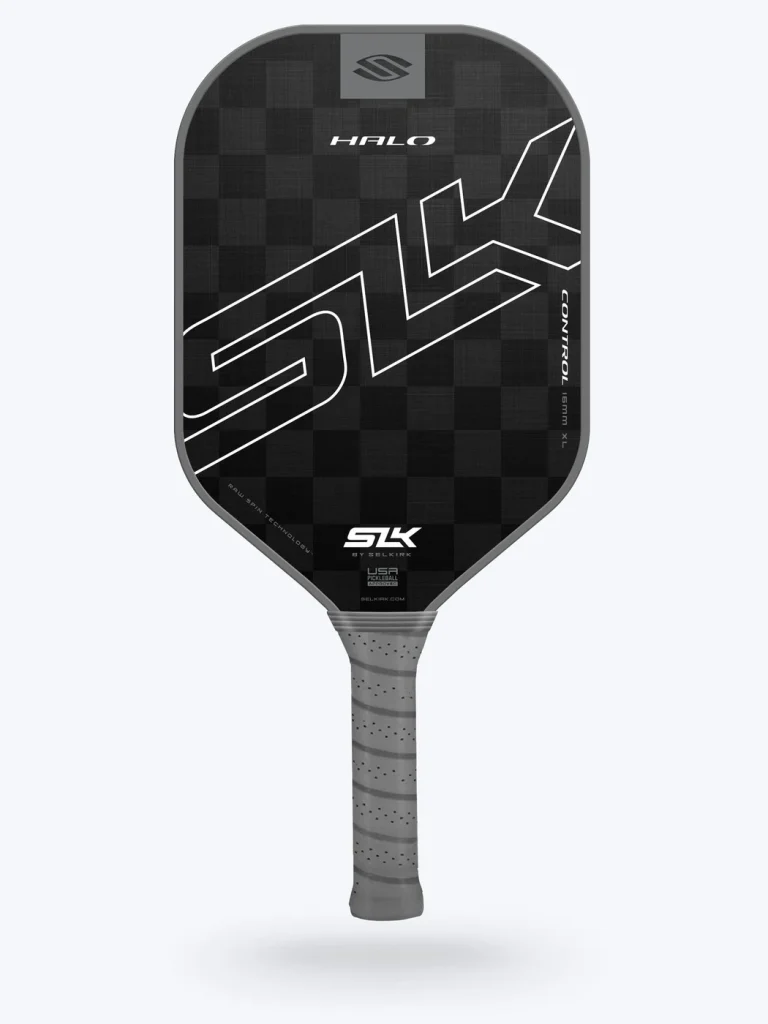
This pick qualifies on both axes, and one of them comes with a story the box tells in full. Selkirk prints this grip at 4.25 inches, the industry standard.
A hands-on tape measurement reads 4.35 inches. On other pages of this site the brand figure leads and the measurement rides along as a caution against calling the paddle slim-gripped, which it is not.
On this page the measurement is the qualifying fact, so the brand figure of 4.25 leads in the box while the hands-on measurement of 4.35 rides beside it. Add a 5.75 inch handle and this is a control paddle that measures oversize and runs long.
On court it is the touch game’s pick. The elongated XL frame and 16mm Rev-Core polymer core produce calm, pocketed contact: resets settle, dinks stay low, and blocks absorb pace instead of arguing with it.
The raw carbon face gives the ball enough bite to roll a volley without forcing the motion. For a large-handed touch player, the rare thing here is that the handle feels full in the hand with no build-up at all, so the soft game never starts with a squeezing hand.
The limits are published data and intent. No lab swing weight, twist weight or spin figure exists for this variant, and nothing is borrowed from the standard Halo to fill the gap.
The 4.35 is one careful hands-on measurement against a printed spec, stated plainly rather than rounded into a claim. And this is a control paddle: players who want free power should look further down the list.
Buy it if you play a touch game and want a handle that measures big. Skip it if you want drive power and a full lab line.
4Paddletek Bantam EX-L Pro: Best Heavyweight Pickleball Paddle in 2027
AT A GLANCE
Paddletek Bantam EX-L Pro
WEIGHT
8.3-8.7 oz
SWING WEIGHT
-
TWIST WEIGHT
-
SPIN
-
Shape: Widebody, 16 x 8 in
Grip: 4 3/4 in handle, 4 3/8 in circumference (Standard Grip variant; a Thin Grip 4 1/8 in variant exists)
Core: Bantam SRT (Smart Response Technology) polymer composite
Face: Velvet textured polycarbonate
Approval: USAPA approved
Feel: Heavy, stable, old-school solid
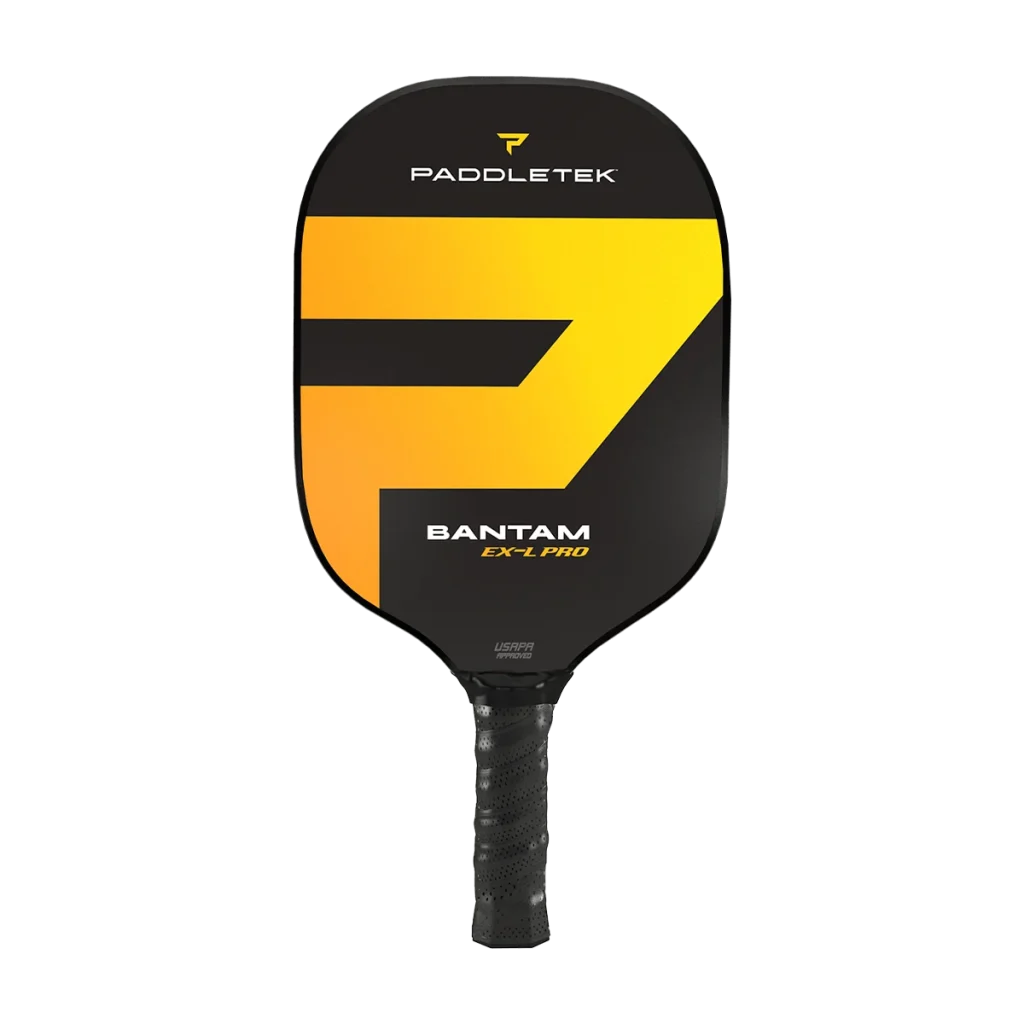
This pick qualifies on circumference alone, and it comes with the sharpest variant warning on the page. The pick is the Bantam EX-L Pro in its Standard Grip variant, 4 3/8 inches.
The plain Bantam EX-L, without the Pro name, is a different spec whose grip prints 4 1/4 inches, which is standard size wearing a similar name. A thin grip variant of the Pro also exists at 4 1/8 inches. Buy the Pro, in the Standard Grip, or you have bought a different promise than this page made.
Behind that grip sits the heaviest verified paddle here, 8.3 to 8.7 ounces, on a widebody 16 by 8 inch head.
Contact is heavy, stable and old-school solid: the velvet textured polycarbonate face and the SRT polymer core answer with a dense, planted thud, and the mass does the work on blocks and counters that lighter builds make your hand do. The 4 3/4 inch handle is ordinary length, stated plainly, because this pick was never about length.
The generation honesty matters as much as the grip. This is a long-running legacy flagship from Paddletek’s Smart Response era, still sold and fulfilled, not a current-generation thermoformed build.
No lab swing weight, twist weight or spin figure exists for it in my data, so the box leaves all three unpublished. It earns its place on the grip system and the mass, and a large-handed power player who finds modern foam builds vague will understand exactly why.
Buy it if your fit problem comes with a power game and you want real mass behind a big grip. Skip it if you want current-generation construction or a long handle.
5Engage Encore EX 6.0: Best Standard-Shape Large Grip Pickleball Paddle in 2027
AT A GLANCE
Engage Encore EX 6.0
WEIGHT
7.5-8.4 oz (Lite/Standard)
SWING WEIGHT
-
TWIST WEIGHT
-
SPIN
-
Shape: Standard, 16 x 8 in
Grip: 5 in handle, 4 3/8 in circumference (standard grip; a 4 1/8 in thin option exists)
Core: ControlPro polymer, 0.6 in
Face: FiberTEK fiberglass
Approval: USAPA approved
Feel: Soft control
This is the cleanest contrast on the page. Pick 2 and this pick share Engage’s two-option grip system, a standard at 4 3/8 inches and a thin at 4 1/8, and the pick here is again the standard grip configuration.
Everything else about the brief is opposite: where the MX maxes handle length at 6.0 inches on an elongated head, the EX runs a conventional 16 by 8 inch standard shape on a 5 inch handle.
This pick qualifies on circumference alone, for the large-handed player who does not want an elongated paddle or a long handle and simply wants a factory grip that fits.
On court it is a soft control paddle in the classic mould. The wide standard head forgives contact toward the edges, the FiberTEK fiberglass face and ControlPro polymer core pocket the ball on drops and resets, and the whole swing feels unhurried and predictable.
One-handed backhands keep the index finger free for touch, and nothing about the shape asks you to relearn your game around reach you never asked for.
The honest limit is the sweet spot, which plays smaller than Engage’s own claims for the line suggest: contact near the frame loses more than the wide outline promises.
No lab swing weight, twist weight or spin figure exists for this line either, so the box leaves them unpublished, and the thin grip option on the same listing is a different configuration than the one ranked here. Select the standard grip when you buy.
Buy it if you want a verified large factory grip on a normal-shaped control paddle. Skip it if you need elongated reach or two-handed handle room.
6Engage Pursuit Pro1 6.0: Best Pro Flagship Pickleball Paddle in 2027
AT A GLANCE
Engage Pursuit Pro1 6.0
WEIGHT
8.0 oz
SWING WEIGHT
118.6
TWIST WEIGHT
5.95
SPIN
2,267 RPM
Shape: Elongated, 16.5 x 7.5 in
Grip: 5.875 in handle, 4.25 in circumference
Core: MachPro polymer with Variable Release 2.0
Face: Raw Toray T700 carbon fiber
Approval: USAP
Feel: Connected touch
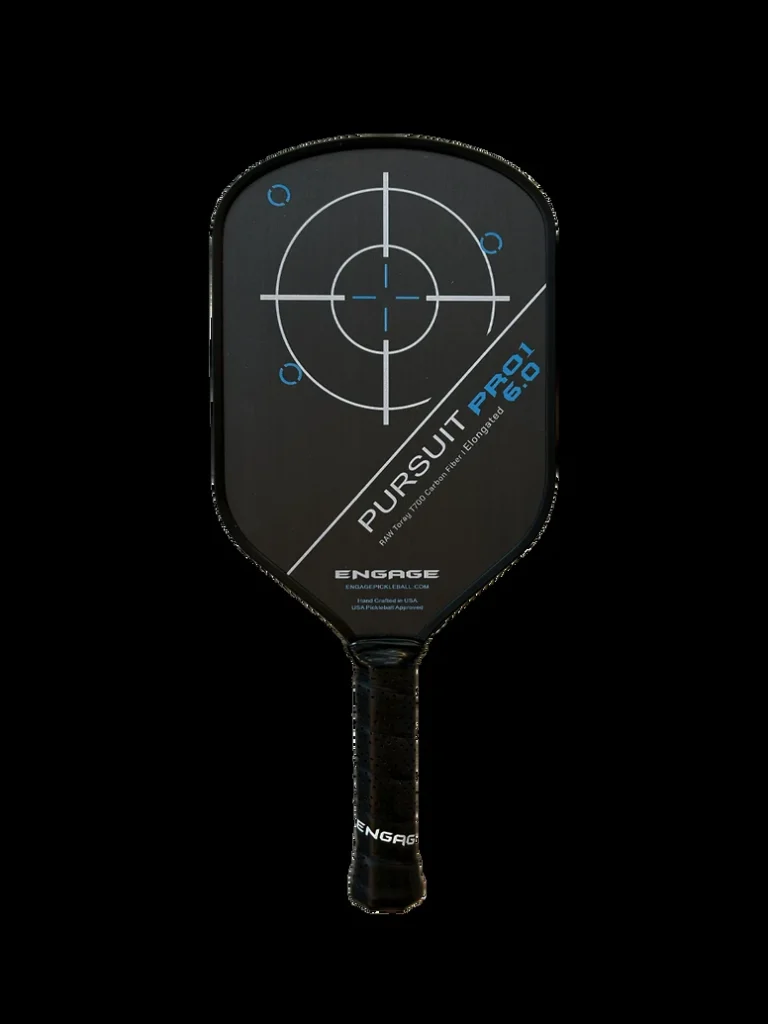
Axis honesty first, because this pick depends on it: the Pursuit Pro1 6.0 qualifies on length alone. Its handle runs 5.875 inches, the longest handle on this page that arrives with a full lab line behind it, and large hands get complete handle coverage with the two-hander never borrowing the throat.
Its grip circumference is 4.25 inches, the industry standard, and this page will not dress that up as large. If circumference is your problem first, picks 1 to 5 and the build-up section of the guide are your route. If length is your problem, this is the flagship answer.
On court it plays like the connected all-court flagship it is, the same paddle my two-handed backhand list ranked first overall. The measured line tells the story: swing weight 118.6, twist weight 5.95, spin 2,267 RPM from the raw Toray T700 face.
Drives dip, counters arrive with authority, and the MachPro core keeps enough pocketing for resets to stay honest. Contact feels direct without going harsh.
The tradeoffs ride along with that swing weight. At 118.6 this is a load in fast hands battles, and the 5.95 twist weight means off-center contact needs a firmer hand than the twist numbers further down this list demand.
The standard circumference also means a player chasing thickness will be building this grip up, which is a legitimate plan, and the guide below works through exactly that ladder.
Buy it if handle length is your fit problem and you want the proven flagship. Skip it if circumference is the problem and you refuse to build a grip up.
7Six Zero DBD Elongated 15mm: Best Control Pickleball Paddle in 2027
AT A GLANCE
Six Zero DBD Elongated 15mm
WEIGHT
8.1 oz
SWING WEIGHT
118 (retailer-published)
TWIST WEIGHT
5.85
SPIN
-
Shape: Elongated, 16.6 x 7.4 in
Grip: 6.0 in handle, 4.25 in circumference
Core: Polypropylene honeycomb with foam edge injection, 15mm
Face: Japanese Toray 700K raw carbon fiber
Approval: USAP
Feel: Cushioned control
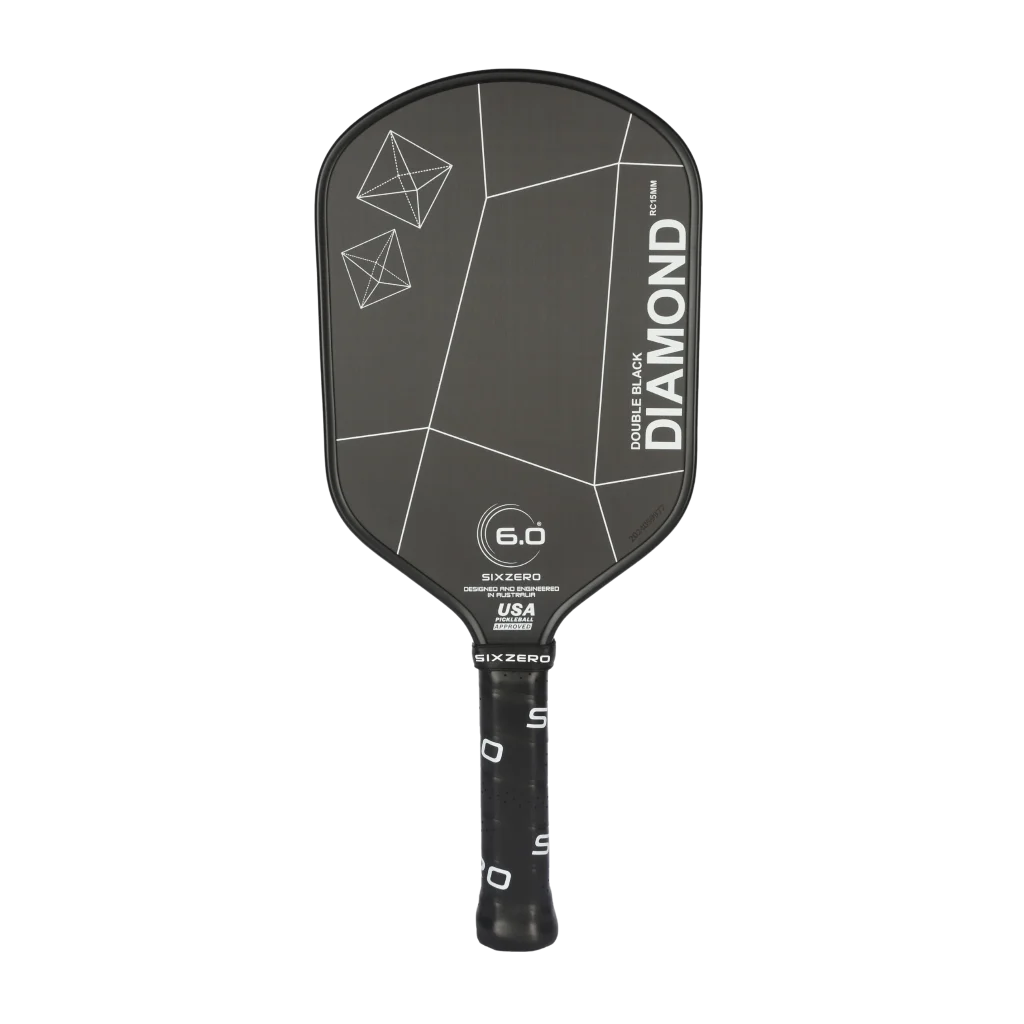
Length is the whole qualification here, stated as plainly as on pick 6. The DBD Elongated runs a 6.0 inch handle, joint-longest on this page, under the longest overall frame here at 16.6 inches. Its grip circumference is the standard 4.25 inches, and nothing on this page pretends otherwise.
This is the elongated sibling of the Double Black Diamond Control, a distinct variant, and no figure crosses between the two: the hybrid’s spin figure, in particular, is never imported into this box.
The brief is control played as a placement shot. The foam-injected edge walls and 15mm honeycomb core give contact a cushioned, settled character, the narrow elongated head reaches balls at the kitchen that wider shapes make you lunge for, and a two-handed backhand built on placement rather than pace gets all the handle it can use.
For the large-handed player whose two-hander is a drop and a roll instead of a drive, this is the fit.
The tension in the numbers deserves stating. The retailer-published swing weight of 118 is high for a control paddle, and the cushioned feel is the counterweight that makes it work; hands battles still ask for early preparation.
Spin stays unpublished for this variant. And a player whose problem is grip thickness gets nothing here that build-up would not have to supply.
Buy it if you want maximum handle length under a control build. Skip it if grip circumference is your problem or you want published spin.
8Selkirk SLK ERA Power Elongated: Best Power Pickleball Paddle in 2027
AT A GLANCE
Selkirk SLK ERA Power Elongated
WEIGHT
7.9-8.4 oz
SWING WEIGHT
117
TWIST WEIGHT
6.28
SPIN
~2,020 RPM
Shape: Elongated, 16.5 x 7.45 in
Grip: 5.8 in handle, 4.25 in circumference
Core: Dynamic Fusion Core, polymer honeycomb with EVA foam
Face: T700 carbon fiber and woven fiberglass
Approval: USAP and UPA-A
Feel: Linear power
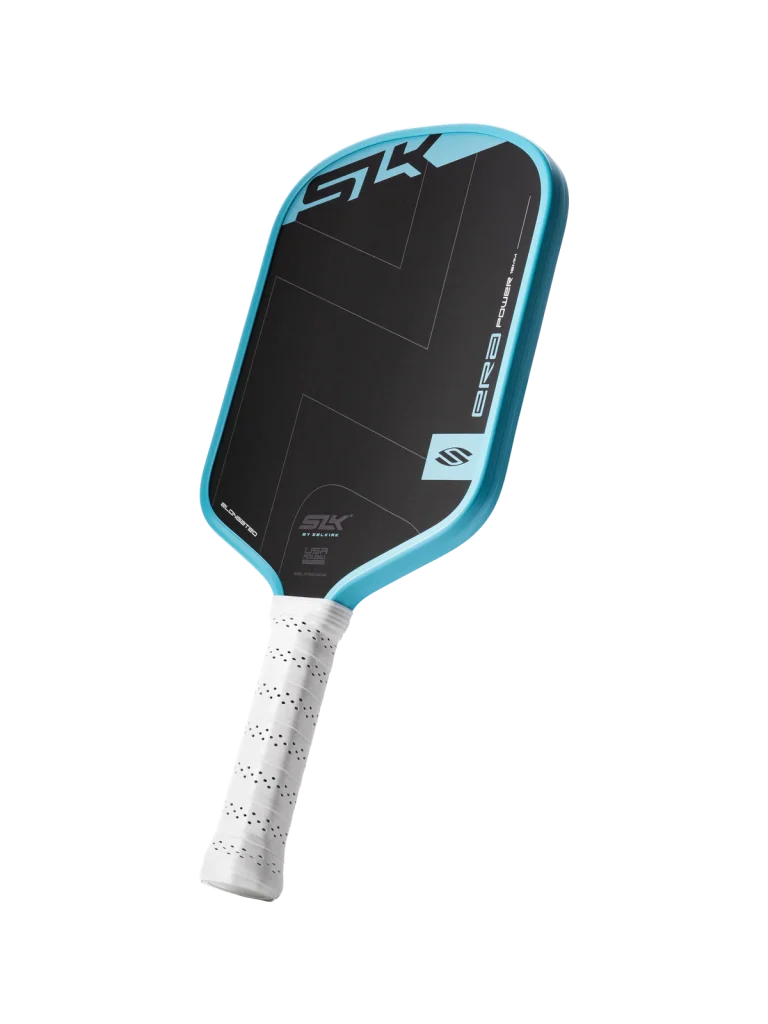
Length qualifies this pick, and the axis statement stays as plain as on the two picks above it: the handle runs 5.8 inches, which puts a large hand fully on the grip with room to spare, and the circumference is the standard 4.25 inches.
This is the length class’s power slot, for the player whose fit problem is a crowded handle and whose game problem is finishing points.
On court the drive is the story. The Dynamic Fusion Core and the blended carbon and fiberglass face produce a linear, honest launch: swing through the ball and it leaves with pace, at a measured swing weight of 117.
What keeps that pace usable for a big hand is the twist weight of 6.28, the strongest stability figure in this part of the list, so off-center contact at full swing holds its line instead of twisting open.
Measured spin around 2,020 RPM gives dipping drives and rolling serves their shape, and dual USAP and UPA-A approval covers sanctioned play under either body.
The tradeoffs are the usual ones for a power brief, taken in touch rather than in fit. Resets need disciplined soft hands, because the same launch that finishes points sends careless blocks long, and the elongated head is a fraction slower to reposition in the fastest kitchen exchanges than a widebody.
A player who needs circumference as well as length is back to picks 1 to 5 or the build-up ladder.
Buy it if you want drive power on a handle your whole hand fits. Skip it if touch leads your game or thickness is the real problem.
9Paddletek Bantam TKO-CX 14.3: Best Heavy-Swing Power Pickleball Paddle in 2027
AT A GLANCE
Paddletek Bantam TKO-CX 14.3
WEIGHT
7.8-8.2 oz
SWING WEIGHT
123
TWIST WEIGHT
7.35
SPIN
1,910 RPM
Shape: Elongated, 16.5 x 7.5 in
Grip: 5.75 in handle, 4.25 in circumference
Core: Bantam PolyCore honeycomb, 14.3mm, steel perimeter weighting
Face: PT-700 raw carbon fiber with glass epoxy
Approval: USAP and UPA-A
Feel: Heavy stability
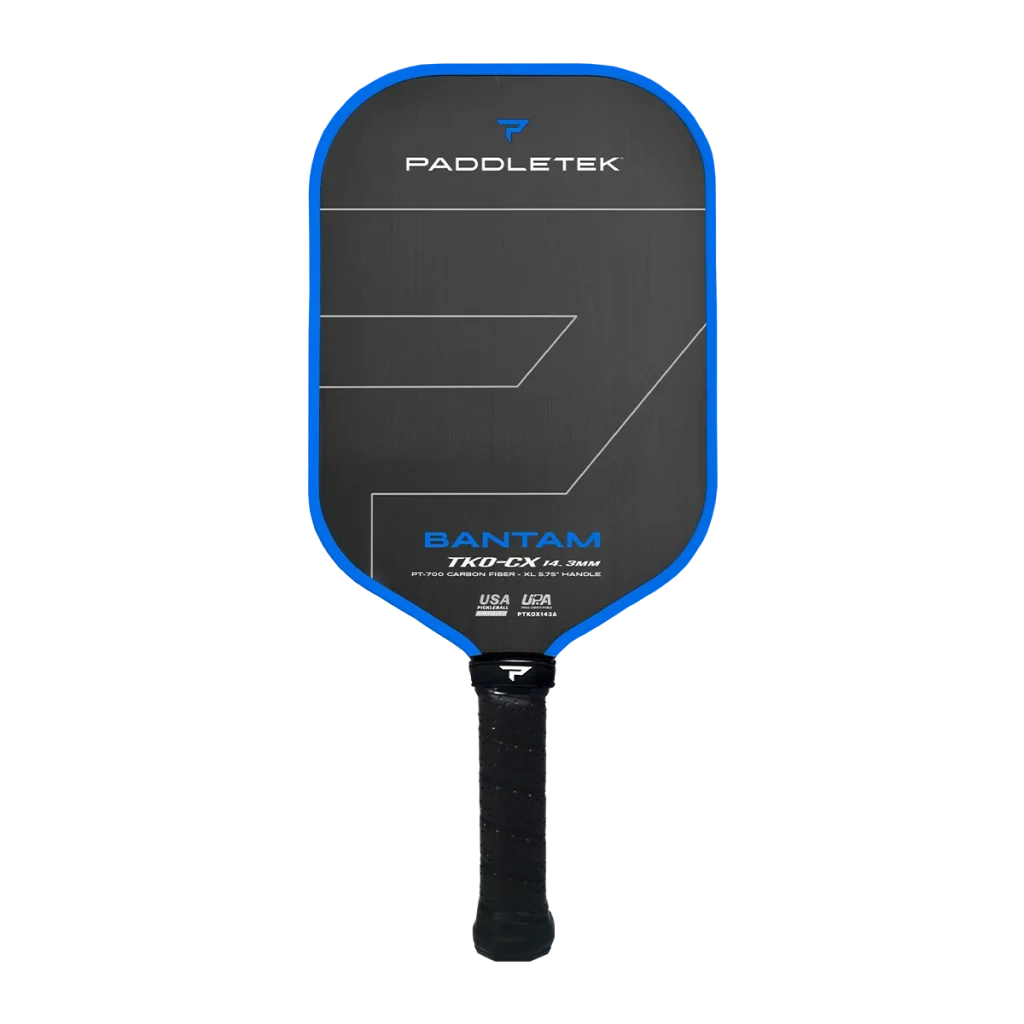
The caution leads, because on this paddle the caution is the headline. The swing weight is 123, the highest figure on this page and the highest I have published anywhere on this site.
In a large hand, with a big player’s leverage behind it, that is a genuine load: drives arrive like they were hit by the paddle rather than by you, and long sessions will test whether your shoulder and timing actually want it. This pick is for strong, committed power players, and it is framed that way on purpose.
The length axis is what qualifies it here: the CX is Paddletek’s extended-handle variant at 5.75 inches, a different paddle from the standard TKO-C and its 5.25 inch handle, and no figure crosses between them.
What keeps the load playable is the twist weight of 7.35, the highest on this page, so the steel-weighted perimeter holds the face steady when contact drifts. Spin measures 1,910 RPM, enough shape for dipping drives without pretending this is a finesse tool.
One generational note belongs in the open. Paddletek’s current Bantam line prints the standard 4.25 inch circumference, and this pick’s grip is exactly that, stated plainly.
The brand’s legacy Bantams at pick 4 carried a 4 3/8 inch standard grip; the brand moved its grip system, and this page’s two Paddletek generations show the change. Length earns this slot. Circumference does not.
Buy it if you are a strong power player who wants the heaviest stable swing here. Skip it if 123 of swing weight sounds like work, because it is.
10JOOLA Perseus Pro IV 16mm: Best Elongated Flagship Pickleball Paddle in 2027
AT A GLANCE
JOOLA Perseus Pro IV 16mm
WEIGHT
8.1 oz
SWING WEIGHT
118
TWIST WEIGHT
6.3
SPIN
1,971 RPM
Shape: Elongated, 16.5 x 7.5 in
Grip: 5.5 in handle, 4.25 in circumference
Core: Gen 3 Propulsion Core
Face: Raw carbon fiber
Approval: USAP and UPA-A
Feel: Plush power
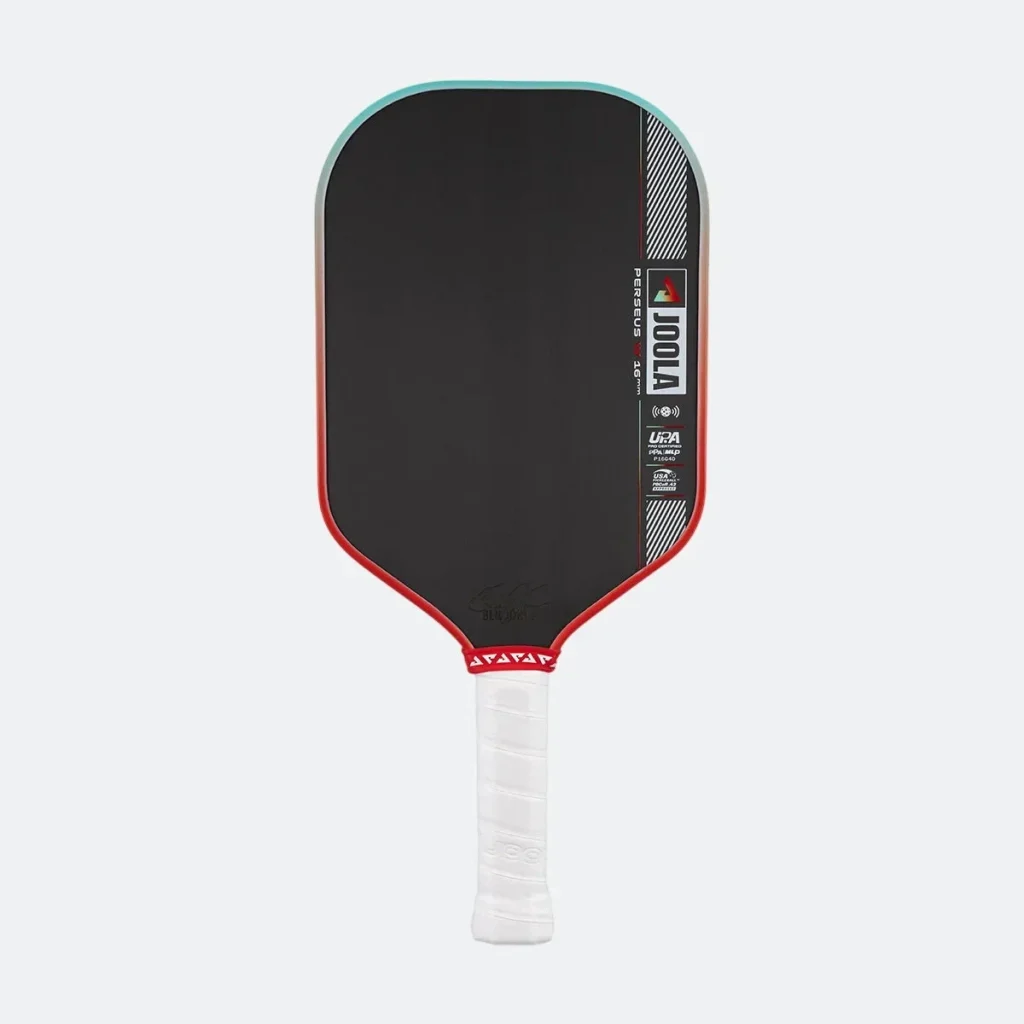
Length qualifies this pick too, and at the floor of the genuine class, which the copy states without decoration. At 5.5 inches, both hands fit with the top hand riding high on the handle: workable, proven, and the compromise most tour players accept, but not room to spare.
If your hand crowds even that, the picks above this one run 5.75 inches and longer for a reason, and they are the honest direction to look. The grip circumference is the standard 4.25 inches, like every length-axis pick in this half of the list.
On court this is the tour-standard elongated build, with a full measured line behind it: swing weight 118, twist weight 6.3, spin 1,971 RPM from the raw carbon face.
The Gen 3 Propulsion Core gives contact a plush, pocketed power, drives carry through the court, and counters stay stable when a big hand swings through them. It is the flagship closer for the large-handed player who wants the proven paddle and accepts a standard circumference.
The sibling note belongs here rather than in a second slot. The Perseus Pro V shares this exact handle length and grip circumference and is interchangeable with the Pro IV on the two axes this page ranks.
The Pro IV takes the slot because its measured data line is the more completely verified of the two in my testing records. And if the standard grip is the one thing that gives you pause, this is precisely the paddle class the guide’s build-up ladder was worked out on.
Buy it if you want the proven flagship and 5.5 inches of handle is enough. Skip it if you need handle room to spare or a factory grip above standard.
How to Choose the Best Pickleball Paddle for Large Hands in 2027
The six sections below are the method behind the list above: the two axes and why they are different problems, how to measure your own hand, the build-up ladder with its verified increments, how to read grip specs with a skeptic’s eye, what handle length does on its own, and what the wrong size does to your shots.
Read these and you can judge any fit claim on any listing, including the claims that did not survive onto this page.
Two axes, and they are not the same problem
Circumference is how thick the handle is. Length is how long it is. A large hand can need either one, or both, and the fix for one does nothing for the other: the longest handle in the sport wrapped in a thin grip still leaves your fingers over-closing, and the thickest grip on a short handle still crowds your top hand into the throat.
That is why every pick on this page names its axis instead of hiding behind the phrase “good for big hands.”
The honest census of the current market is the second thing to understand.
The verified above-standard circumference class is five paddles deep: one 4.5 inch grip at pick 1, a 4 3/8 inch cluster produced by two brands’ documented grip systems at picks 2, 4 and 5, and one paddle at pick 3 that only measures oversize against its own printed spec.
The 5.5 inch and longer handle class, by contrast, is deep, which is why half this list qualifies on length. That scarcity is exactly why the build-up sections below exist, and why no pick on this page presents a printed 4.25 inch grip as large.
Measure your hand before you measure paddles
Use the palm method. Open your dominant hand flat, then measure from the middle crease of your palm to the tip of your ring finger. That inch figure maps directly onto grip circumference, so it can be compared with any paddle’s spec sheet, which is the entire point of measuring.
The readings that matter here: a measurement around 4 3/8 inches and up puts you in the above-standard class this page ranks, and at 4.5 inches and up, exactly one factory grip on this list fits without build-up, with everything else starting from a standard grip and the ladder in the next section.
Cross-check the number with the wrap test. Grip a standard paddle the way you play: if your fingertips dig into your palm or overlap it, the grip is too small for your hand regardless of what any spec sheet says.
One method correction needs stating plainly, because bad advice circulates: measuring around your hand below the knuckles is not a grip size and cannot be compared with a paddle specification, so ignore any guide that teaches it.
And when your measurement lands between sizes, take the larger factory size. A grip slightly big plays fine; a grip slightly small makes the hand squeeze, and the next sections explain what that squeeze does.
The build-up ladder: when a standard grip plus work beats hunting a large one
A standard grip is not a dead end, because circumference is the one fit dimension you can add to. The verified increments, each approximate and labelled as such: one standard overgrip adds roughly 1/16 of an inch. Grip sizes step in 1/8 inch increments, so two overgrips add about one full size.
A heat-shrink build-up sleeve comes in a half-size version adding about 1/16 of an inch and a full-size version adding about 1/8, it preserves the handle’s bevels better than stacked overgrips, sleeves can be stacked, and each one adds roughly 15 to 20 grams of handle weight by racket-sport figures, shifting the balance a step toward head-light.
Swapping a thick cushioned replacement grip for a thin factory wrap is the smallest step of all, roughly the same step as one overgrip, and no manufacturer publishes a standard increment for it.
The worked math is what makes this section useful. A 4.25 inch grip plus two overgrips lands at about 4 3/8 inches, which exactly replicates the Engage and Paddletek factory standard at picks 2, 4 and 5. A 4.25 plus a full-size sleeve plus an overgrip reaches about 4 7/16 inches.
Reaching a true 4.5 from a 4.25 base takes a sleeve stack, and by then you have given up bevel definition and added roughly 30 grams sitting in the handle, which is precisely the point where pick 1’s factory 4.5 inch grip wins outright.
The decision rule: build up when the paddle you actually want exists only at standard size, which is most of the market, or when you sit between sizes. Buy the factory grip when one exists on a paddle you want, for clean bevels, no added handle mass, and the same fit repeated across every paddle you own.
Printed versus measured: read grip specs like a skeptic
Grip tolerances are real. Spec pages themselves warn that actual grip sizes may vary by up to 1/8 of an inch, so read any single printed circumference as a claim with an error bar, not a measurement.
This list contains the proof in both directions. Pick 3 prints 4.25 inches and measures 4.35, a discrepancy that helps a large hand, and the same measurement that kept it off the small-grip page.
Pick 1’s brand cannot agree with itself, printing 4.5 inches on one sheet and 4.75 on another; this page prints the smaller, conservative figure, so the claim can only undersell the paddle.
Retailer spec blocks print 4 3/8 inches for a sibling of pick 6, whose settled figure is the brand’s listed 4.25, and the two numbers describe different paddles.
The habits that protect you follow from that. Prefer paddles whose grip system is documented in two sizes, because a brand that publishes a thin and a standard option is telling you its standard is a deliberate size rather than a default.
Prefer a hands-on measured figure over a printed one whenever both exist. And never choose a paddle for a large-grip claim that nobody has actually measured.
Length: the other half of a large hand’s fit
A big hand on a short handle crowds the throat. The top hand rides up onto the neck of the paddle, the index finger creeps onto the face, and the effective lever shortens just when a two-handed backhand needs it longest.
The thresholds from the list above are simple: at 5.5 inches, both hands and a full grip coexist, which is why that figure is this page’s floor. At 5.75 inches and up there is room to spare, and the top hand stops negotiating with the throat entirely.
The list’s own spread is the teaching set. Picks 6 to 10 qualify on length alone and say so in their sections. Pick 2 pairs the longest class of handle with a genuinely large grip.
And the counter-example proves the axes are independent: one well-known elongated paddle pairs a 5 5/8 inch handle with the two smallest factory grips in the industry, so a long handle says nothing at all about circumference.
Shop in the right order for your game: two-handed players start with length, then check circumference; one-handed players with big palms may find circumference alone solves the whole problem.
What the wrong size does, and approval when you buy
The wrong size is a mechanics problem before it is a comfort problem. Too small, and the fingers over-close around the handle, so the hand has to squeeze to keep hold of the paddle. That tension runs up the forearm, and on off-center contact the paddle twists because there is not enough handle in the hand to resist it.
Too big, and the opposite dullness arrives: wrist snap softens, finger dexterity in fast exchanges goes clumsy, and the paddle feels like it is swinging you. The target is specific: a grip your fingers close around with the fingertips just reaching the palm.
None of that is a medical claim, and fit advice is not a substitute for professional care. If you play with an existing arm or hand injury, get a professional’s view on grip size alongside everything else they tell you, and let their guidance outrank a buying guide.
Approval, plainly: all ten picks on this page are USA Pickleball approved, so no pick needs an eligibility warning, and picks 8 and 10 also carry UPA-A approval for events run under that body. Buy on fit first and approval never becomes the problem.
Frequently Asked Questions (FAQs)
1. What grip size do I actually need for large hands?
Measure first, then shop: use the palm method in the guide above, from the middle crease of your palm to the tip of your ring finger. A measurement around 4 3/8 inches and up puts you in the above-standard class, where the factory grips at picks 1 to 5 of this list live.
At 4.5 inches and up, exactly one factory grip on the list fits without build-up, and the honest alternatives are that paddle or a standard grip built up the ladder.
2. What is the largest grip circumference I can buy on a current pickleball paddle?
4.5 inches, on the Franklin Signature Pro at pick 1 of this list. The other famous 4.5 inch grip in the sport belonged to the Electrum Model E, which is currently sold out with no brand-sold listing to buy, and its successor models measure at standard size.
That is why build-up matters so much on this page: the thickest factory grip in the sport is one paddle deep, and the second-thickest is not buyable new at all right now.
3. How do I measure my hand for the right grip size?
Open your dominant hand flat and measure from the middle crease of your palm to the tip of your ring finger; that inch figure is your grip size and compares directly with paddle specifications.
Cross-check it by holding a paddle: your fingertips should just reach your palm, not dig into it or overlap it. Measuring around your hand below the knuckles is not a grip size, whatever older guides say, and it cannot be compared with any number a brand prints.
4. Can I make a standard 4.25 inch grip bigger?
Yes, and this page’s guide works the ladder in full.
One overgrip adds roughly 1/16 of an inch, two overgrips add about one full grip size, a heat-shrink sleeve adds about 1/16 of an inch in its half-size version or 1/8 in its full-size version while keeping the bevels cleaner, and a thick replacement grip swapped for a thin factory wrap adds roughly the same as one overgrip.
Circumference is the one dimension of fit you can always add to after buying.
5. How much bigger does one overgrip make a grip?
Roughly 1/16 of an inch per layer, approximately. Grip sizes step in 1/8 inch increments, so two layers of overgrip move a standard 4.25 inch grip to about 4 3/8 inches, exactly the factory standard grip that three picks on this list ship with.
The trade is bevel definition: each layer softens the edges of the handle a little, which is why sleeves exist for players who build up further.
6. What is a heat-shrink build-up sleeve, and how much does it add?
It is a sleeve that shrinks tight over the bare handle under heat, sold in a half-size version that adds about 1/16 of an inch and a full-size version that adds about 1/8 of an inch. Sleeves preserve the handle’s bevels better than stacked overgrips and can be stacked for a bigger build.
Each sleeve adds roughly 15 to 20 grams of weight in the handle by racket-sport figures and shifts the balance a step toward head-light, which some players like and some feel immediately.
7. Is it better to buy a large factory grip or build a standard one up?
Buy the factory grip when it exists on a paddle you actually want: clean bevels, no added handle mass, and the identical fit every time you replace the paddle. Build up when your preferred paddle exists only at standard size, which is most of the market, or when your hand sits between sizes.
The math in the guide shows where the line sits: build-up replicates 4 3/8 inches exactly and reaches about 4 7/16 comfortably, but a true 4.5 takes a sleeve stack that dulls the bevels and adds roughly 30 grams to the handle, at which point the factory grip wins.
8. Does grip size change how a paddle plays, or is it just comfort?
It changes how the paddle plays. A grip that fits lets the hand hold securely without squeezing, which keeps the forearm loose and the wrist free.
A grip that is too small makes the hand squeeze for hold, and the paddle twists more on off-center contact because there is not enough handle in the hand to resist it. A grip that is too big dulls wrist snap and finger speed in fast exchanges. Fit is a performance variable, not a luxury.
9. I have big hands and play a two-handed backhand. Which matters more, grip size or handle length?
Handle length first. Two hands need physical room before they need thickness: shop 5.75 inches and up, which on this list means picks 2, 3, 6, 7, 8 and 9. Then check circumference.
Pick 2 is the one that maxes both axes at once, a 6.0 inch handle with a verified 4 3/8 inch grip, which is why it carries the two-handed category on this page.
10. Are the grip sizes brands print actually accurate?
Only within an error bar: actual sizes can vary by up to 1/8 of an inch from the printed figure. The stories run in both directions on this very list. Pick 3 prints 4.25 inches and measures 4.35 in the hand.
Pick 1’s brand prints 4.5 inches on one of its own sheets and 4.75 on another, and this page uses the smaller figure. Trust two-size grip systems and hands-on measurements over any single printed number.
11. My fingertips overlap my palm when I hold my paddle. What should I do?
Your grip is too small for your hand, and the fix is one full size. Move to a 4 3/8 inch factory grip, which is picks 2, 4 and 5 on this list, or build your current grip up one full size with a full-size heat-shrink sleeve or two overgrips.
If your measurement runs to 4.5 inches, pick 1 is the factory fit. Do not simply squeeze harder; the overlap is the measurement, and it is telling you the handle is the wrong size.
12. Are all of these paddles approved for tournament play?
Yes. All ten picks are USA Pickleball approved, so every one is legal for sanctioned play, and picks 8 and 10 also carry UPA-A approval for events run under that body. The one UPA-A-only paddle connected to this page sits in its reserve list and is labelled as such wherever it appears; nothing in the ten needs an eligibility warning.

Michael Stevenson
Hi, my name is Michael Stevenson and I’m a passionate pickleball player. I’ve been playing the game for many years and I’m pretty highly skilled at it. Pickleball is one of my favorite topics so naturally, I love to write about it.
Whether it’s tips for beginners, guides for experts, reviews of new paddles, or advanced playing techniques – if it relates to pickleball then I have something interesting to write about it. So if you’re looking for entertaining and informative information on the topic of pickleball, look no further than my written works!