Best HEAD pickleball paddles reward reading the fine print, because one family name here can hide older models with different briefs.
I tested every paddle on this list on court myself and checked the figures, so the ranking follows real games, not famous names. Each pick is separated from its nearest sibling, because with this brand the sibling is usually the real choice you are making.
My number one pick is the HEAD Radical Pro 15, the best HEAD paddle for stability because edge contact stays on line. Its twist weight of 6.9 is the highest in this range, and twist weight means how much the face resists turning sideways.
So blocks stay on line, counters do not twist open, and resets from mid-court land without you babying every single shot played. Check the HEAD Radical Pro 15 on Amazon if you want the HEAD I recommend first for one paddle covering everything.
The 10 Best HEAD Pickleball Paddles in 2027
1HEAD Radical Pro 15: Best Overall Pickleball Paddle in 2027
AT A GLANCE
HEAD Radical Pro 15
WEIGHT
8.3 oz
SWING WEIGHT
112
TWIST WEIGHT
6.9
SPIN
~2,200 RPM
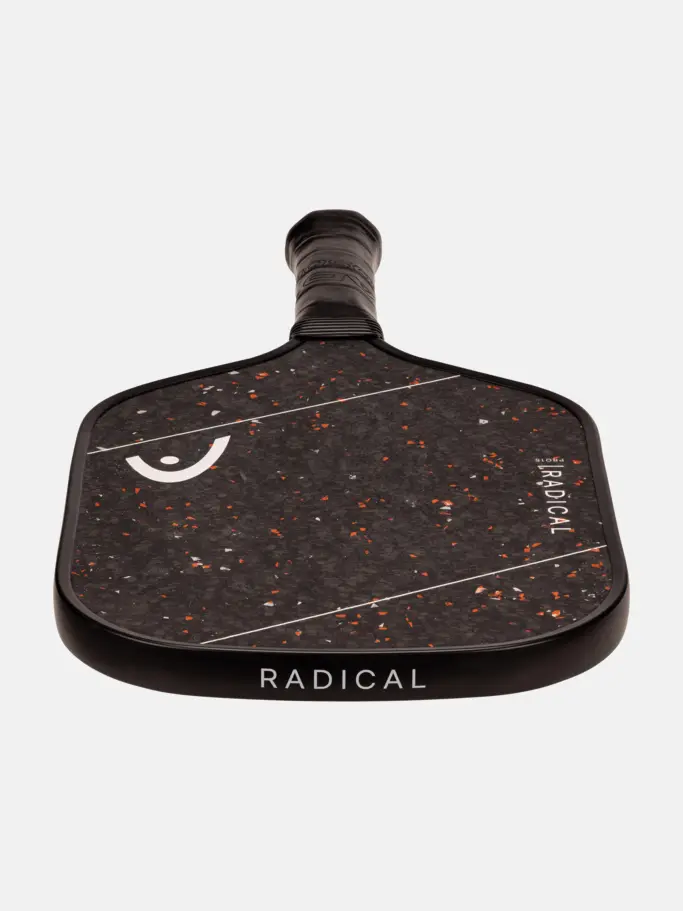
The Radical Pro 15 is the HEAD I hand to a strong doubles player who wants one paddle to cover the whole court.
Its widebody shape gives me a broad hitting surface without turning the paddle into a brick, and the measured profile explains why it feels so settled: a 112 swing weight keeps it moving, while the 6.9 twist weight is the highest in this range and shows up whenever contact drifts toward the edge.
Blocks stay on line, counters do not twist open, and I can reset from the transition zone without babying the shot.
The TRIFLEX Versatility core and T700 Carbon face give it a crisp, connected response. I feel the ball leave cleanly on drops, yet there is enough texture and dwell to roll a volley or dip a drive at the feet.
The spin figure in the box sits around 2,200 RPM, and on court that bite feels believable rather than theatrical. It is not the longest HEAD here, and it will not give a baseline driver the same leverage as the EX15. The 5.0 in handle also leaves less room for a full two-handed backhand than its elongated sibling.
Buy it if you want HEAD’s most complete current paddle. Skip it if reach and a long handle matter more than forgiveness.
2HEAD Radical Pro EX15: Best Elongated Pickleball Paddle in 2027
AT A GLANCE
HEAD Radical Pro EX15
WEIGHT
8.5 oz
SWING WEIGHT
117
TWIST WEIGHT
6.46
SPIN
~2,200 RPM
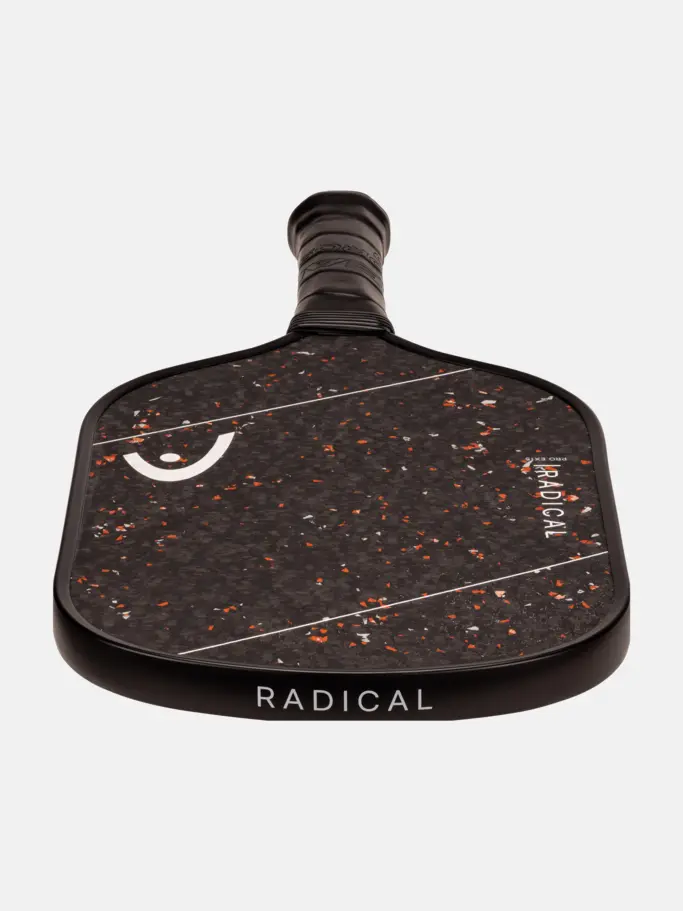
The Radical Pro EX15 takes the flagship brief and stretches it. The 16.5 in elongated frame and 5.5 in handle change the way I play the ball: serves get more leverage, overheads reach higher, and a two-handed backhand has real room instead of a top hand stranded on the throat.
Its 117 swing weight is noticeable, but it stays manageable because the paddle still behaves like an all-court tool rather than a pure power frame.
On measured figures it matches the widebody’s spin at about 2,200 RPM, with a 6.46 twist weight that keeps off-center contact honest for a narrow paddle. The face feels crisp and direct, and the TRIFLEX Versatility core gives drives a firm launch without making drops feel harsh.
The honest limit is right there in the balance: this is a balanced elongated paddle, not an explosive one. If your game is built on sudden putaway speed, the Boom Pro EX15 is the louder answer in this same range.
The narrower face also asks for cleaner contact at the kitchen, and fast exchanges reward early preparation more than late wrist flicks.
Buy it if you want the flagship with reach and two-handed room. Skip it if a wide, forgiving face is the first thing you need.
3HEAD Project FLEX: Best for Feel and Control Pickleball Paddle in 2027
AT A GLANCE
HEAD Project FLEX
WEIGHT
8.1 oz
SWING WEIGHT
-
TWIST WEIGHT
-
SPIN
-
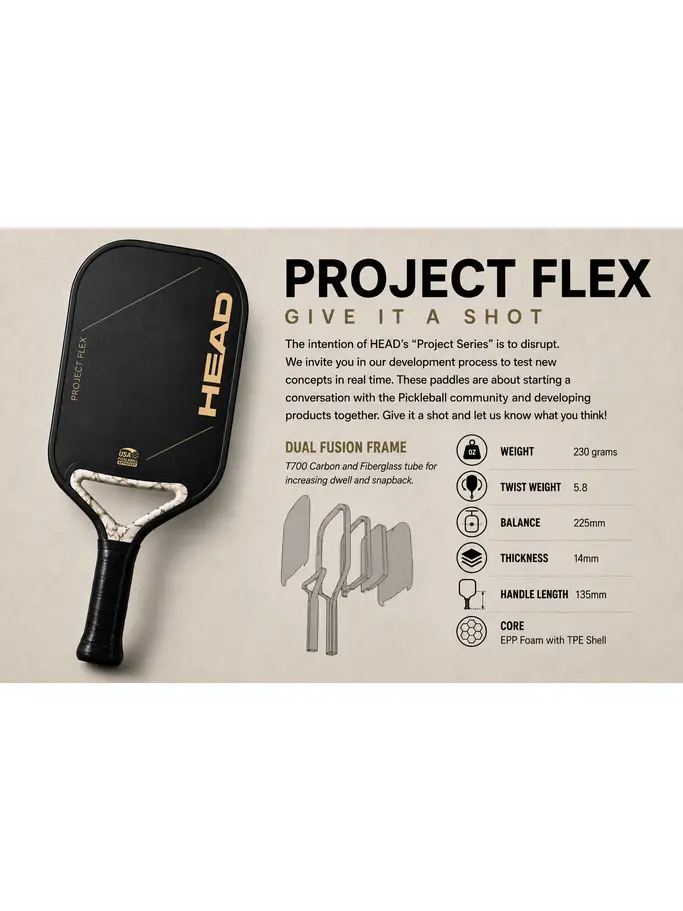
Project FLEX is the paddle that made me stop reading HEAD’s range as one ladder. It launched in October 2026 as a different idea: a DualFusion Frame with a stable carbon outer frame and a compliant inner layer, built to flex in a predictable way and keep the ball on the face longer.
Around an EPP foam core sits a 360-degree TPE shell, and the T700 raw carbon face finishes a construction that does not borrow the TRIFLEX recipe from the 15 series.
In play, the appeal is dwell. Drops sit down softly, blocks feel less abrupt, and I can shape a roll with my hands instead of muscling it. The hybrid shape is 16.4 in long with a 5.3 in handle, so it still offers useful reach and some two-handed room, but the personality is touch first.
The trade is proof. This is a new model with no published swing weight, twist weight or spin figure on the scale this page uses, so the box leaves those fields unpublished rather than dressing up feed figures as measurements. Its track record is also short by definition.
Buy it if feel and control are the reason you choose a paddle. Skip it if you want the measured record of the Radical Pro pair.
4HEAD Gravity Pro EX15: Best Hybrid Shape Pickleball Paddle in 2027
AT A GLANCE
HEAD Gravity Pro EX15
WEIGHT
8.3 oz
SWING WEIGHT
-
TWIST WEIGHT
-
SPIN
-
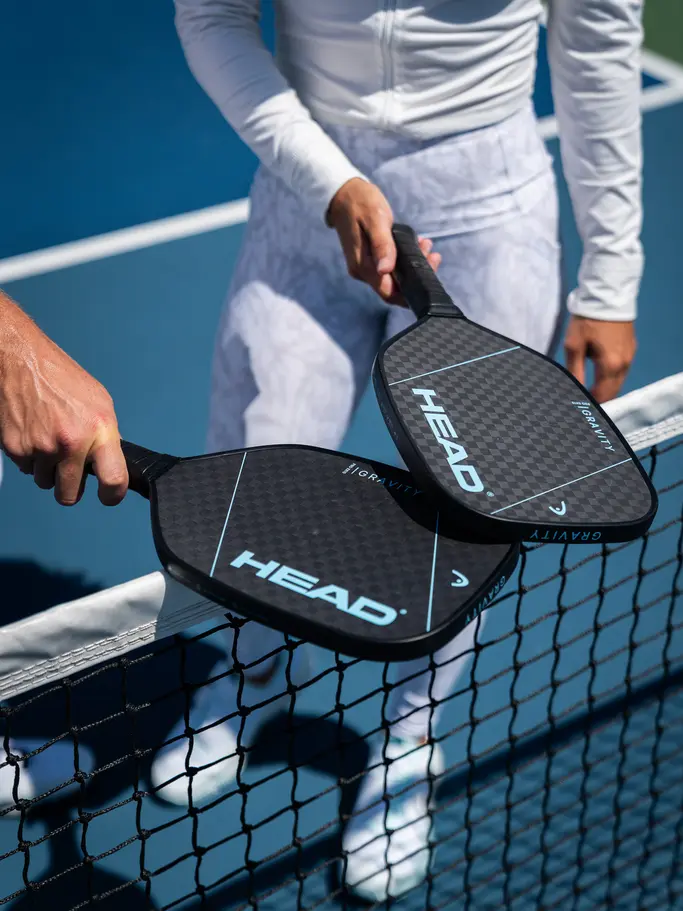
The Gravity Pro EX15 is HEAD’s elongated answer for players who want the sweet spot to feel bigger than the frame looks. HEAD builds the Gravity family around control, spin and stability, and this flagship carries that brief into a 16.5 x 7.5 in shape with a 5.5 in handle.
Its 12K raw carbon face and 15mm TRIFLEX core give contact a stable, slightly calmer edge than the Radical Pro EX15, which is the nearest sibling it has to beat.
I feel the difference most on stretched blocks and high contact. The face stays calm, the ball leaves on the line I chose, and the paddle does not ask me to swing hard to produce a useful drive. That makes it a strong elongated for a player who builds points rather than trying to end every rally from the baseline.
The limits are data and certainty. No independent bench in the material I could verify has published swing weight, twist weight or spin for this model, so those fields stay unpublished. Its approval also rests on retailer listings, which is why a sanctioned player should check the exact model before an event.
Buy it if you want an elongated HEAD with a stable, high-feeling sweet spot. Skip it if published lab figures are how you choose.
5HEAD Boom Pro EX15: Best Power Pickleball Paddle in 2027
AT A GLANCE
HEAD Boom Pro EX15
WEIGHT
8.1 oz
SWING WEIGHT
-
TWIST WEIGHT
-
SPIN
-
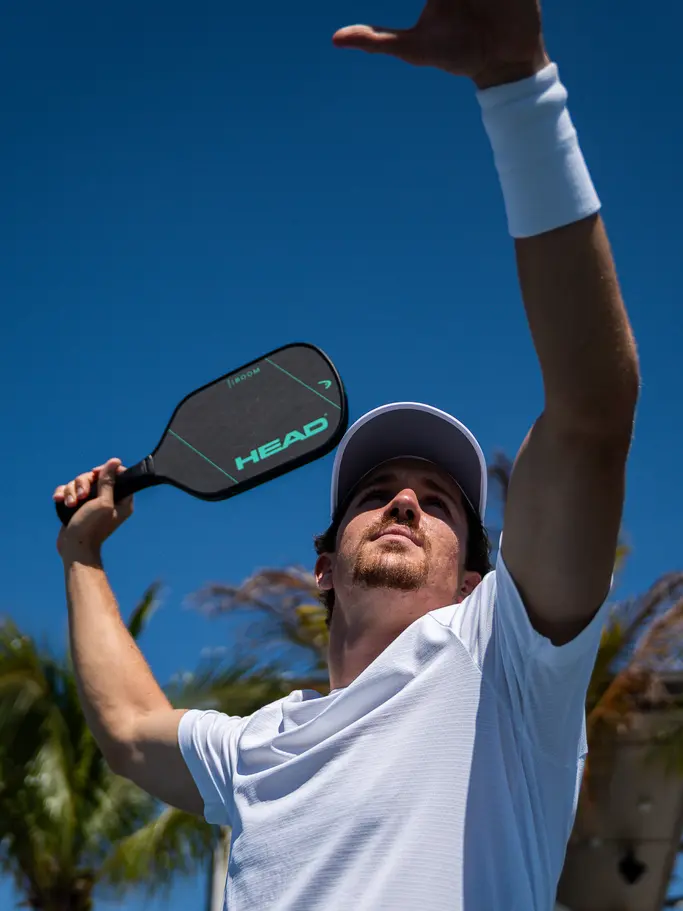
The Boom Pro EX15 is the power brief with no apology attached. It is HEAD’s only full-foam paddle in the current top line: PP foam, EVA foam and EPP foam in the TRIFLEX Power build, behind a Hexagon raw carbon face.
The elongated 16.5 x 7.4 in frame and 5.5 in handle give that foam something to swing with, and drives come off with a lively push that the Radical Pro EX15 deliberately does not chase.
At 8.1 oz it is lighter on the scale than several paddles here, so the power is not simply mass. Counters jump back with intent, serves carry through the court, and the face has enough texture to keep a hard drive dipping.
The other side of that liveliness is control discipline: a loose block can travel, and soft hands matter more at the kitchen than they do with the Gravity Tour.
No standard-scale bench figures for swing weight, twist weight or spin were published in the material behind this page, so the box leaves them unpublished rather than borrowing a sibling’s numbers.
One separate caution: approval listings for this model conflict, so a sanctioned player should confirm the exact model on the current approved list before relying on it.
Buy it if your first question is how hard a HEAD can drive the ball. Skip it if your first question is how quietly it can reset one.
6HEAD Gravity Tour (2025): Best Control Pickleball Paddle in 2027
AT A GLANCE
HEAD Gravity Tour (2025)
WEIGHT
8.5 oz
SWING WEIGHT
-
TWIST WEIGHT
-
SPIN
-
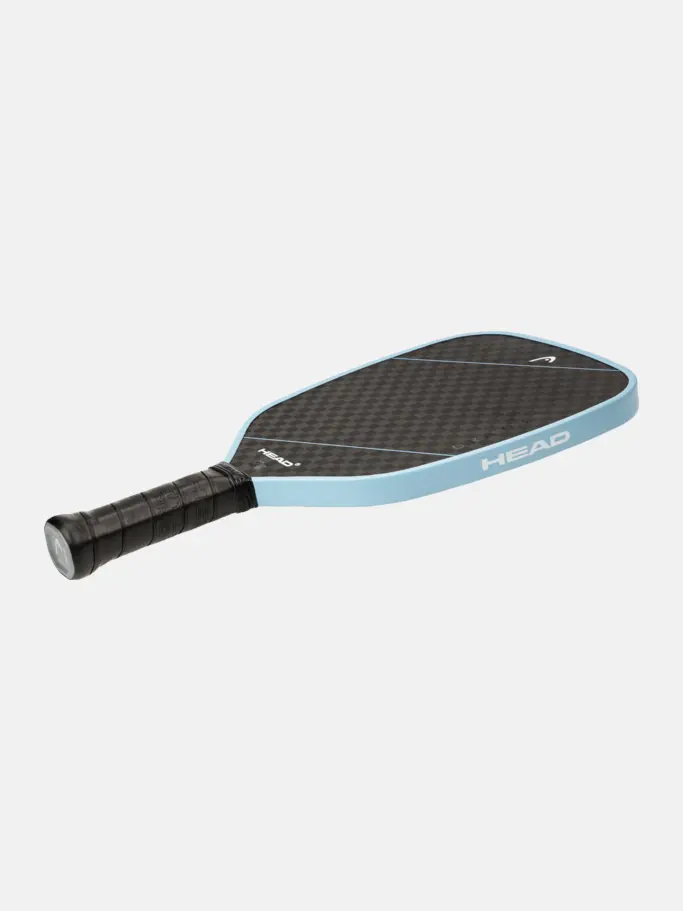
Start with the name, because HEAD makes this one easy to get wrong. The Gravity Tour I am ranking here is the 2025 model: a compact widebody with a 12K raw carbon face and a genuine 17mm polypropylene honeycomb core.
It is not the discontinued 2020 paddle with the same name and a hybrid face, and the difference is obvious the moment the ball lands. This is the thickest core HEAD sells, and it plays like a control instrument.
The 15.75 x 8.1 in face is the widest on this page, the handle is only 4.9 in, and the whole paddle is built around dwell and placement. Blocks sit down, drops leave without a jump, and I can take pace off a drive without the face feeling dead. That calm comes with clear boundaries.
The short handle gives a two-handed backhand little room, the 8.5 oz weight is not light, and plain honeycomb does not produce the same launch as the TRIFLEX and foam models above it. There are also no standard-scale published swing, twist or spin measurements behind this pick, so the box does not pretend otherwise.
Buy it if control means placement, dwell and a calm block. Skip it if you need a long handle or easy launch.
7HEAD Radical Tour EX15: Best Tour-Tier Elongated Pickleball Paddle in 2027
AT A GLANCE
HEAD Radical Tour EX15
WEIGHT
8.6 oz
SWING WEIGHT
-
TWIST WEIGHT
-
SPIN
-
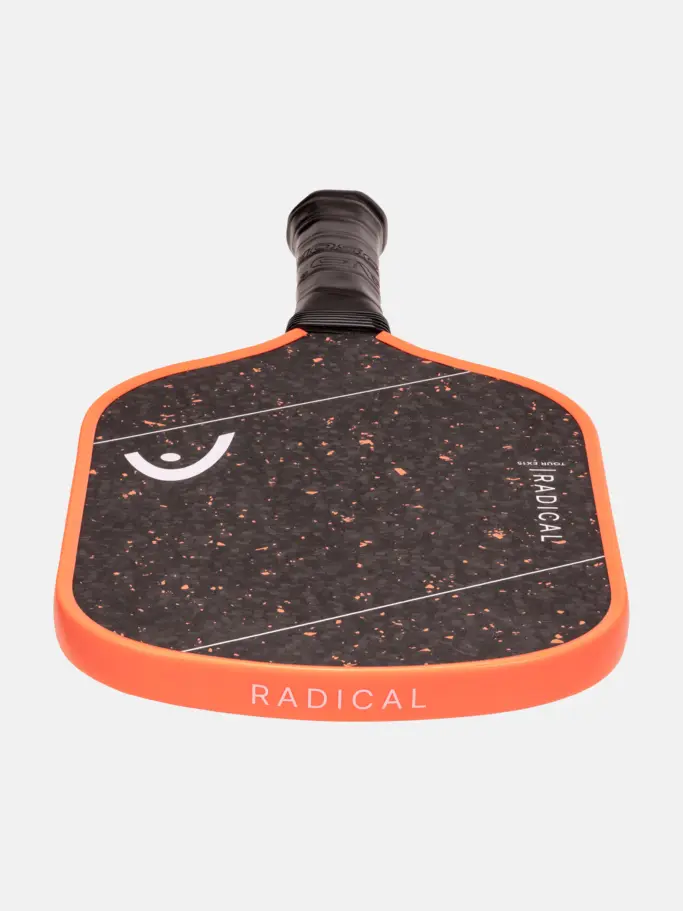
At 8.6 oz, the Radical Tour EX15 tells you its brief before the first rally. It is the heaviest current HEAD in this list, and I am leading with that because the mass is both the reason to choose it and the reason to walk away.
In the elongated 16.5 x 7.5 in Tour-tier frame, that weight becomes planted blocks, drives that push through contact, and a face that does not flutter when a hard ball finds the edge.
The construction keeps it in the current family: a thermoformed 15mm TRIFLEX core and the micro-forged raw carbon face used across the Radical line. The 5.5 in handle gives a two-handed backhand proper room, and the paddle rewards a player who prepares early and swings with intent.
It is not the flagship, and it does not carry the Radical Pro EX15’s published measured line behind it; swing weight, twist weight and spin stay unpublished here.
It also will tire a smaller arm over a long session, and kitchen exchanges ask for earlier hands than a lighter paddle forgives. Think of it as the tour tier’s heavy tool, not a quieter copy of the flagship.
Buy it if planted blocks and plow-through are your game. Skip it if long sessions leave your arm tired.
8HEAD Radical Team 15: Best First Serious Paddle Pickleball Paddle in 2027
AT A GLANCE
HEAD Radical Team 15
WEIGHT
8.3 oz
SWING WEIGHT
-
TWIST WEIGHT
-
SPIN
-
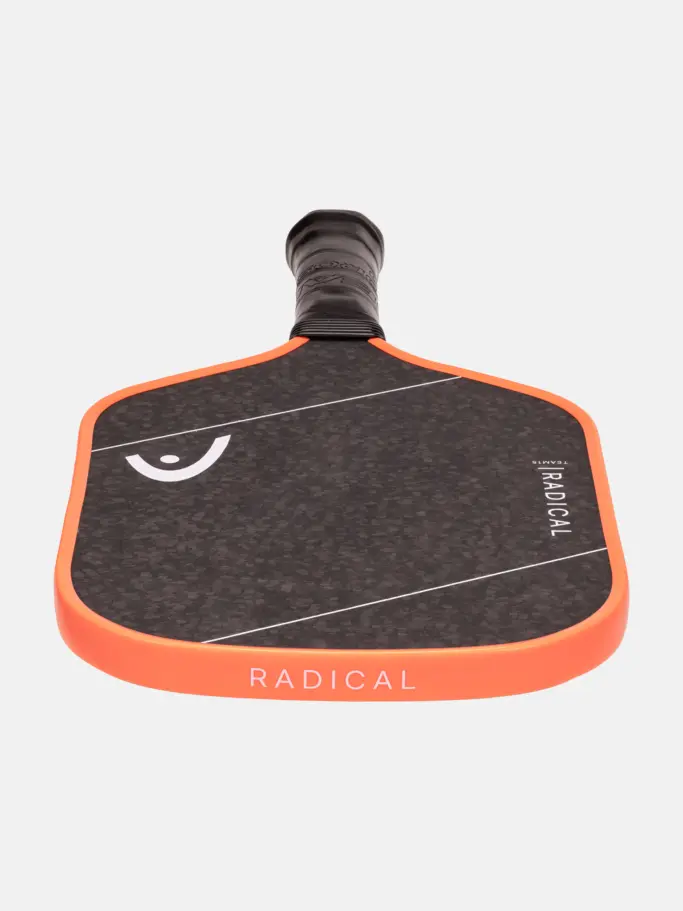
The Radical Team 15 is where HEAD’s current construction stops being a flagship story and becomes a developing player’s paddle. It uses the same TRIFLEX family idea and a micro-forged raw carbon face in the widebody 16 x 7 3/4 in shape, with a 5.0 in handle and a verified 4 1/8 in grip from HEAD’s own specification block.
That makes it the natural first serious step for a player who likes the Radical Pro 15’s shape but is still building the contact habits the flagship rewards.
One detail in its specification deserves attention: HEAD lists a 14.2mm polypropylene honeycomb core inside a 15mm overall profile. The name is a profile, not a promise that the core itself measures 15mm, and the box prints both numbers for that reason.
On court the paddle feels balanced and forgiving, with enough face to learn clean contact and enough response to grow into drives and rolls.
The honest caveat is measurement: no independent bench line sits behind this model yet, so swing weight, twist weight and spin are unpublished. It is a strong brief on paper, and my court time backed it, but it has not earned the flagship’s data record.
Buy it if you want current HEAD construction in the forgiving shape. Skip it if published measurements matter more than the shape and core story.
9HEAD Gravity Tour Lite: Best Lightweight Pickleball Paddle in 2027
AT A GLANCE
HEAD Gravity Tour Lite
WEIGHT
7.6 oz
SWING WEIGHT
-
TWIST WEIGHT
-
SPIN
-
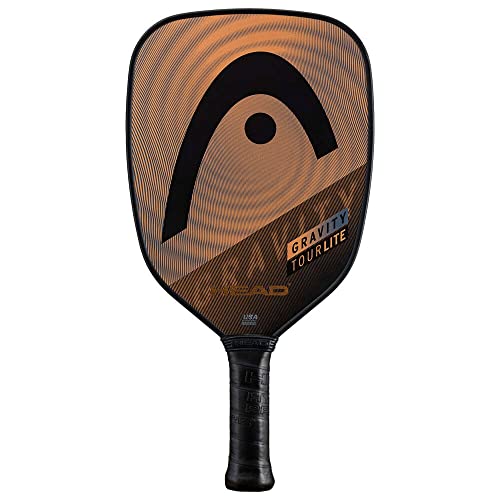
The Gravity Tour Lite needs its generation stated before anything else. This is the lightweight model from the original Gravity family, not a Lite version of the 2025 Gravity Tour and not a sibling of the raw carbon Gravity Pro EX15.
I am ranking the standard grip version here, with a 4 1/8 in circumference; the same model also exists with a smaller 3 7/8 in grip, and that variant is a different buying brief.
What earns it the slot is simple: at 7.6 oz, with a wide 15.75 x 8.1 in face and a 14mm Sweetspot Power Core, it remains the lightest verified HEAD on this page and one of the softest feeling. The hybrid face blends polypropylene, carbon fiber and glass fiber, so contact is even and gentle rather than sharp.
That helps a player with tired hands or a developing swing keep the ball in play. It also sets the ceiling.
The older hybrid surface does not bite or launch like the current raw carbon models, and no lab swing, twist or spin figures are published for it. It is a prior generation’s Lite, honestly labelled, not current flagship stock at a smaller weight.
Buy it if light and soft are the brief. Skip it if you want the current Gravity generation; start with picks 4 and 6.
10HEAD Radical Xceed: Best Entry Pickleball Paddle in 2027
AT A GLANCE
HEAD Radical Xceed
WEIGHT
8.3 oz
SWING WEIGHT
-
TWIST WEIGHT
-
SPIN
-
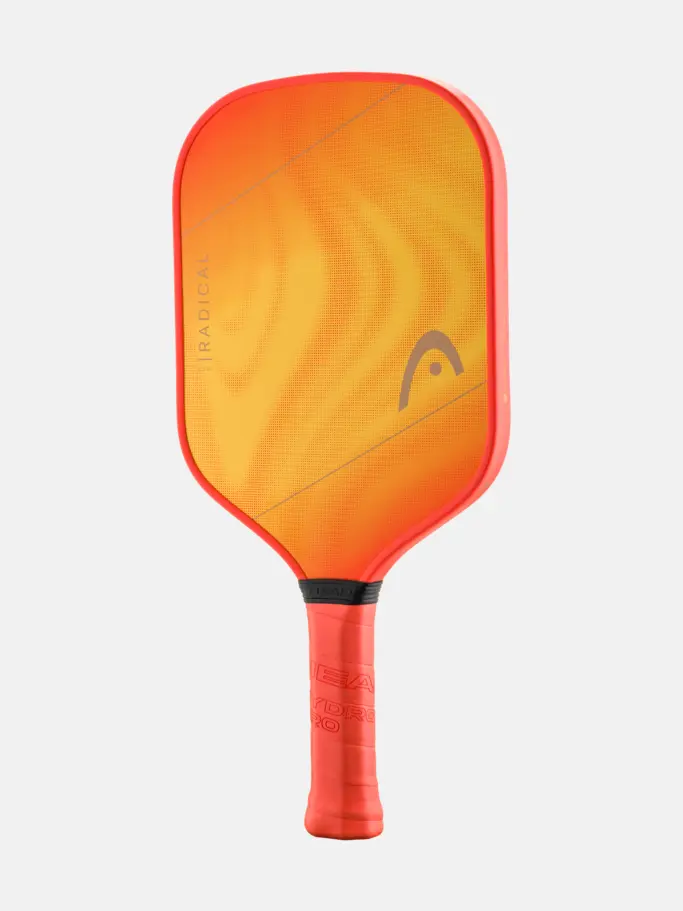
The Radical Xceed 2026 is HEAD’s current entry line, and it takes this slot because it is the honest successor to the Radical Elite’s brief. It is a widebody fiberglass paddle: a fiberglass composite face with HEAD’s SpinOn lacquer finish over a 15mm Standard Core, in a 16 x 7.8 in shape with a 5.0 in handle and a 4 1/8 in grip.
Contact is soft and quiet, the face forgives contact away from the middle, and a new player can learn where clean contact lives without the paddle punishing every miss.
On court it behaves like a teaching paddle should. Blocks sit down instead of jumping, drops leave without a pop, and the 8.3 oz weight gives it enough substance that a developing swing does not have to force the ball. The limits are the fiberglass limits.
The SpinOn finish adds some texture, but this face will never bite like the raw carbon models above it, and a player who is already driving with intent will outgrow its launch quickly.
That is the correct trade at this end of the range: the Xceed shows a beginner the shape of the game, and the Team, Tour and Pro models above it are the steps that follow.
One limitation has to be stated plainly, because it decides who should buy this paddle. I could not verify any USA Pickleball approval for the Radical Xceed 2026: it does not appear on the USAP approved list, so treat it as a recreational paddle, not a sanctioned-event one.
For learning the game and playing social and club pickleball, that changes nothing about how it plays. But a beginner who already knows tournaments are the goal should start at pick 8 instead, the Radical Team 15, which is USAP approved.
Buy it if you want HEAD’s current, gentlest starting point. Skip it if raw carbon bite is already part of your game.
How to Choose the Best HEAD Pickleball Paddles in 2027
The HEAD range, decoded
HEAD’s range reads cleanly once the ladder is separated from the forks. The families tell you the brief: Radical is the all-court line, Gravity is built around control and sweet spot, and Boom is the power family.
The tiers then tell you the level of finish: Pro at the top, Tour below it, Team as the developing player’s tier, and Xceed at the entry end. Project FLEX does not sit neatly on that ladder, because its point is engineered frame flex, and the Gravity Tour (2025) steps sideways with a thick plain honeycomb core instead of TRIFLEX.
TRIFLEX itself is HEAD’s three-layer core idea, and it comes in two documented builds on this page. The Versatility build pairs a polypropylene honeycomb with EPP and EVA foam.
The Power build in the Boom Pro EX15 uses a full foam recipe instead. Same core family name, different response: one is a foam-supported honeycomb, the other is foam all the way through.
The naming traps, and how to not buy the wrong paddle
HEAD reuses model names across generations with no year markers, and this page contains the proof. Radical Pro has been a fiberglass paddle, a composite paddle and now the raw carbon Pro 15.
Gravity Tour has been a hybrid-face paddle and is now a 12K raw carbon control paddle. The Extreme family has left the range entirely and survives as cleared stock, still wearing current-looking listings. A familiar name on this brand tells you almost nothing by itself.
The working rules are simple. “15” means the current TRIFLEX generation. “EX” means elongated. A suffix-free familiar name usually means an older paddle. The Radical Tour RAW generation sits between the graphite era and TRIFLEX, and it explains where the current line came from, but it is not the current line.
Above all: a listing that does not state dimensions, handle length and grip size is a listing to walk away from, because those three fields are what separate the generations.
Grip size: the HEAD-specific decision
Grip is the decision HEAD makes easiest to get wrong. The same model can be sold in a 3 7/8 in grip and a 4 1/8 in grip, with legacy lines also carrying 4 1/4 in, and the variant sits in a silent selector on the listing rather than in the product name.
Two paddles with identical names can arrive with different grips, and both listings will look correct.
Measure your hand before choosing, then apply the asymmetry that governs this whole section: a grip can be built up, never shrunk down.
An overgrip adds roughly 1/16 in per layer, so a small grip plus an overgrip can reach the feel of the next size, while a grip that starts too large stays too large. That is why the smaller grip is the safer buy when you sit between sizes.
This site’s own builds carry the cautionary tales: a captured Gravity Tour Lite listing that turned out to be the 3 7/8 in variant under a standard presentation, and a replacement link whose grip was never verified at all.
At the extreme end sits the Gravity Tour SH, with a 4.25 in handle and dual small grip options, the clearest proof that HEAD handles grip and handle as two separate decisions.
Core thickness across the range: 11 to 17mm
HEAD spans the widest thickness ladder on this site, and each step changes the brief. At 11mm, the previous Boom generation’s core is a power recipe: short dwell, fast launch. At 14mm, Project FLEX pairs its foam core with a flexing frame for touch.
The 15mm TRIFLEX line is the range’s centre of gravity, balancing dwell and launch across the Radical, Gravity Pro and Boom Pro shapes. At 17mm, the Gravity Tour’s plain honeycomb is a control recipe: the ball stays, settles and leaves when you tell it to.
Thickness is not the whole story, and the Radical Team 15 is the worked example. Its name carries the 15, and its overall profile measures 15mm, but the honeycomb core inside it measures 14.2mm.
Read the number in a HEAD name as a profile until a specification block tells you the core itself. Construction matters just as much as the number: a 15mm full-foam Boom and a 15mm supported-honeycomb Radical are the same thickness and different paddles.
Approvals: USAP yes, UPA-A no
The approval picture for this brand is unusually plain. HEAD paddles sit on the USA Pickleball side of the sport. No HEAD paddle is UPA-A certified, which means PPA Tour and Major League Pickleball divisions are closed to the whole brand.
The performance lines ranked here are legal for USA Pickleball play; the one exception on this page is the entry-level Radical Xceed at pick 10, which does not appear on the USAP approved list at all, and it is exactly why the check-your-model habit matters.
Two habits protect you inside that picture. First, several retailer listings for current models carry the PBCoR.43 mark, which speaks to the paddle’s power certification testing; it is not a substitute for checking your exact model.
Second, per-model approval on this page is stated as retailer-listed wherever retailer listings are the evidence behind it, so before a sanctioned event, confirm your exact model and variant on the current approved list.
The system does move: an unreleased HEAD model already appears on that list, which tells you something new is in the pipeline even though nothing about it can be bought or tested yet.
Current stock vs run-out stock
The last skill this brand demands is telling a current paddle from a cleared one. The Extreme family and the original Gravity family are clearance only now, whatever their listings look like.
Run-out stock disappears unevenly: the common sizes linger, the grip variant you need goes first, and a model can look widely available right up to the week your size is gone.
The Radical Elite is the worked example, and its story finished while this page was being built. Retailers described it as discontinued or running out, and HEAD published nothing either way; then the brand’s own US shop stopped listing it, and price trackers marked it discontinued with no Amazon-sold offer behind it.
Both things were true at once right up until they were not, and the practical response is the same in either reading: on any HEAD whose stock looks thin, settle the exact grip size first time and confirm the variant on the listing before you commit, because the version you want is the one that disappears first.
Frequently Asked Questions (FAQs)
1. What is the best HEAD pickleball paddle overall?
The HEAD Radical Pro 15. It pairs the current TRIFLEX Versatility core and a T700 Carbon face with the strongest measured profile in the range: a 112 swing weight, a 6.9 twist weight and spin around 2,200 RPM.
Its widebody shape forgives contact toward the edges while staying quick enough for kitchen exchanges, which is why it leads this list.
2. What does “15” and “EX” mean in HEAD paddle names?
“15” marks the current TRIFLEX generation of 15mm-profile paddles, and “EX” marks the elongated version of a shape. A Radical Pro 15 is the widebody flagship; a Radical Pro EX15 is its elongated sibling. A familiar HEAD name with no suffix usually belongs to an older generation, which is why the suffixes matter more than the family name.
3. What is TRIFLEX, and which HEAD paddles have it?
TRIFLEX is HEAD’s three-layer core system, built from polypropylene, EPP foam and EVA foam. In this list it appears in the Radical Pro 15, Radical Pro EX15, Gravity Pro EX15, Boom Pro EX15 (in its full-foam TRIFLEX Power form), Radical Tour EX15 and Radical Team 15.
Project FLEX uses a different construction, and the Gravity Tour (2025) uses plain honeycomb.
4. Which HEAD paddle has the most power?
The Boom Pro EX15. It is the range’s only full-foam top-line paddle, with a TRIFLEX Power core behind a Hexagon raw carbon face in an elongated frame, and it drives and counters with more launch than any other pick here. The Radical Tour EX15 is the heavier, mass-driven alternative, but the Boom is the power answer.
5. Which HEAD paddle is best for control?
The Gravity Tour (2025). Its genuine 17mm polypropylene honeycomb core, the thickest HEAD sells, sits behind the widest face in the range and produces the calmest block and the longest dwell here.
If you want control through flex and touch rather than thickness, Project FLEX is the other answer, built around a frame that flexes and an EPP foam core.
6. Which HEAD paddle is best for a beginner?
Start with the Radical Xceed at pick 10 if you are new to the game: it is HEAD’s current entry line, a fiberglass face with a spin-friendly lacquer finish, soft and forgiving while you learn clean contact.
Move to the Radical Team 15 as the first serious step once you are committed, because it brings the current TRIFLEX core and a raw carbon face in the same forgiving widebody shape.
The older Radical Elite filled this role for years, but HEAD’s own shop no longer lists it and its remaining stock is third-party run-out, so it is history now rather than a recommendation.
7. Are HEAD paddles approved for USA Pickleball and UPA-A tournament play?
The performance models in this list are on the USA Pickleball approved list, and none of them is UPA-A certified, so PPA Tour and Major League Pickleball divisions are closed to the brand.
The one exception to name is pick 10, the Radical Xceed 2026: it does not appear on the USAP approved list, so it is a recreational paddle only. Whatever you choose, check your exact model and variant on the current approved list before a sanctioned event.
8. Which HEAD paddle has the smallest grip?
The smallest grip documented on this page is 3 7/8 in, offered as a variant of the Gravity Tour Lite; the standard version ranked in the list uses 4 1/8 in. Because HEAD sells the same model in both sizes under one name, confirm the grip variant on the listing itself before ordering, not just the model name.
9. What is the difference between the HEAD Radical Pro 15 and the Radical Pro EX15?
Shape and leverage. The Pro 15 is a 16.0 x 7.75 in widebody with a 5.0 in handle, a 112 swing weight and a 6.9 twist weight, so it forgives more and moves quicker.
The EX15 is a 16.5 x 7.5 in elongated paddle with a 5.5 in handle and a 117 swing weight, so it reaches further, drives with more leverage and gives a two-handed backhand real room.
10. Is the HEAD Radical Elite discontinued?
In practice, yes. HEAD has published no announcement, but its own US shop no longer lists the paddle, price trackers mark it discontinued with no Amazon-sold offer behind it, and the stock that remains is third-party run-out.
That is why it is not in the list above: the current entry line is the Xceed series, and the Elite stands in this page’s guide as the worked example of how a paddle leaves a range without ever being formally retired. If you already own one, nothing changes. If you are buying, buy the current line.
11. What is the HEAD Project FLEX, and how is it different from the “15” series?
Project FLEX, launched in October 2026, is HEAD’s engineered-flex flagship: a DualFusion Frame with a stable carbon outer frame and a compliant inner layer, an EPP foam core inside a 360-degree TPE shell, and a T700 raw carbon face at 14mm.
The “15” series instead uses TRIFLEX cores in thermoformed frames, so FLEX trades that recipe for flex, dwell and touch.
12. How do I make sure I am buying the current version of a HEAD paddle, not an older one with the same name?
Check the full name, the suffix and the specification block together. “15” signals the current TRIFLEX generation and “EX” the elongated shape; then confirm the listing states the dimensions, handle length and grip size that match the current model, since generations share names without sharing specifications.
If a listing omits those fields, or its numbers match an older generation, read it as the older paddle until proven otherwise.

Michael Stevenson
Hi, my name is Michael Stevenson and I’m a passionate pickleball player. I’ve been playing the game for many years and I’m pretty highly skilled at it. Pickleball is one of my favorite topics so naturally, I love to write about it.
Whether it’s tips for beginners, guides for experts, reviews of new paddles, or advanced playing techniques – if it relates to pickleball then I have something interesting to write about it. So if you’re looking for entertaining and informative information on the topic of pickleball, look no further than my written works!