
Fourth game, tied at eight, and my partner has just left me a ball I have to win with my backhand.
It is a high, short ball, the kind that begs to be put away, and I have played this exact shot a hundred times with paddles that cost far more than anything on this list. I step in, I roll it cross-court, and it dips hard and lands inside the line.
My partner laughs and asks what changed. Nothing changed except the paddle, and that is the point of this list. The best budget pickleball paddles are no longer a compromise you apologise for. They are real paddles with real construction, and the nine below are the ones I would hand to a friend who wants to play well without overspending.
Cheap pickleball paddles used to mean a dead core, a slick face and a grip that twisted in your hand. That is not what this band is anymore. What stepping up from the lowest tier buys here is construction: a true flagship control paddle, full foam cores, araw carbon face, all in one list, with published numbers to choose by.
I tested all nine the way buyers actually use them: kitchen exchanges, blocks against hard drives, resets under pressure, drops from the baseline and the wide gets that decide doubles points.
My homepage list of the 15 best paddles shows where these picks sit against the rest of the sport, and my under-150 list shows the tighter band below this one, for players who want to spend even less.
The guide after the list explains the whole band in plain words, including whether cheap paddles are worth it and which build suits your game.
The 9 Best Pickleball Paddles Under $200 in 2027
1Six Zero Double Black Diamond Control 16mm: Best Pickleball Paddles Under $200 in 2027 for Overall Play
At a Glance
Six Zero Double Black Diamond Control 16mm
Weight
8.0-8.2 oz
Swing Weight
114
Twist Weight
6.8
Spin
-
Shape: Hybrid, 16.3 x 7.7 in
Grip: 5.5 in handle, 4.125-4.25 in circumference
Core: 16mm thermoformed polymer honeycomb with foam edge walls
Face: Raw Toray T700 carbon fiber
Approval: USAP
Feel: Connected all-court
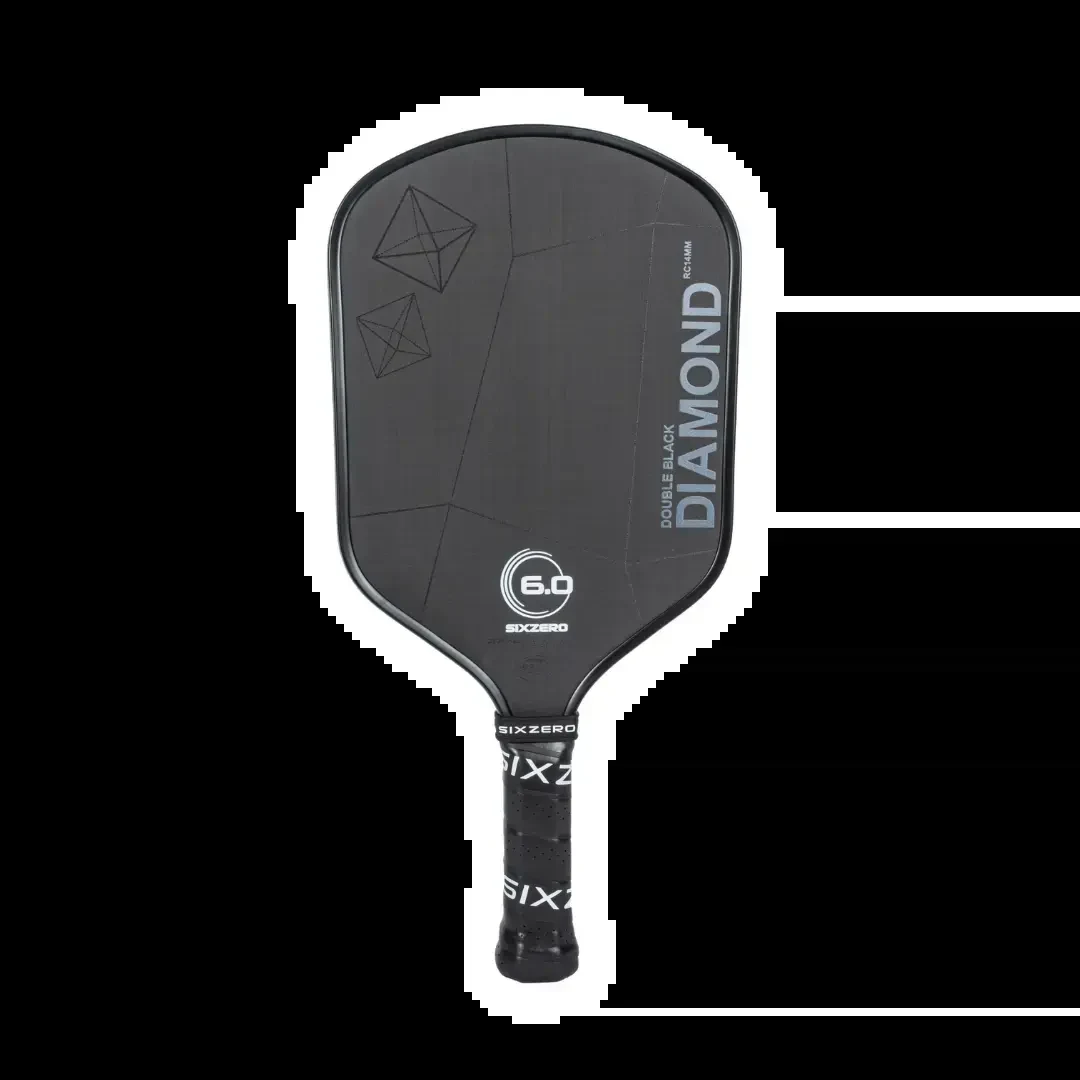
The Double Black Diamond Control is the best overall pick on this page, and it wins on resets. The core is a 16mm thermoformed polymer honeycomb with foam in the edge walls.
Thermoformed means the paddle was pressed under heat and pressure so the face, core and edge fuse into one solid piece. Contact feels connected and plush for a thermoformed build.
The ball pockets and holds for a fraction before leaving, so drops land low and repeatable instead of floating long. That pocketing is the headline.
Blocks absorb pace instead of handing it back, dinks stay soft, and counters come off with weight rather than a slap. At 8.0 to 8.2 ounces with a brand-published swing weight of 114 it moves quickly enough for hands battles.
Swing weight is a number for how heavy a paddle feels when you swing it, and 114 is quick for a control paddle. A brand-published twist weight of 6.8 keeps stretched blocks honest. Twist weight is a number for how much the face resists turning on off-center contact, so a higher number means mishits stay straighter.
Spin is strong in play despite no published figure, so the box prints Not published rather than borrowing a number. Two honest cautions. The grit fades with hours played, so fresh spin is not month-six spin.
And the stock grip is thin and can feel slippery in a hot session, so an overgrip is part of the setup. Buy it if control and reset precision are your whole brief. Skip it if you need maximum putaway power on a short swing.
2Vatic Pro V-SOL Pro 16mm: Best Pickleball Paddles Under $200 in 2027 for Foam Value
At a Glance
Vatic Pro V-SOL Pro 16mm
Weight
~7.9 oz
Swing Weight
108
Twist Weight
6.43
Spin
2,060 RPM
Shape: Hybrid (Flash), 16.25 x 7.7 in class
Grip: 5.3 in handle, 4.125 in circumference
Core: Full EPP foam with EVA perimeter ring, 16mm (Gen 4)
Face: Raw Toray T700 carbon fiber
Approval: USAP
Feel: Lively all-court
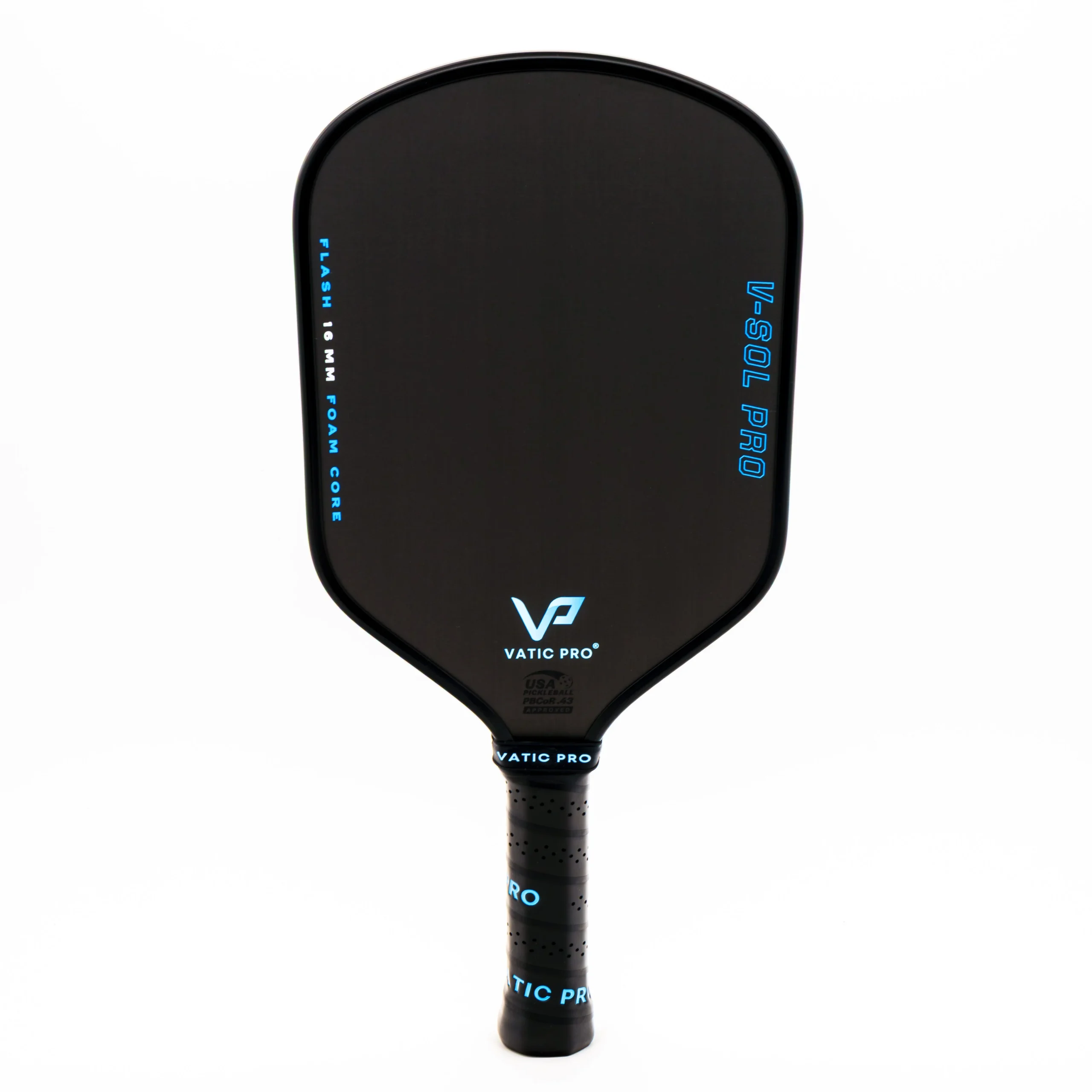
The V-SOL Pro is the best foam value on this page, and it wins on hand speed. The core is full EPP foam with an EVA ring around the edge, and the whole paddle is a Gen 4 build. Gen 4 means the core is solid foam with no honeycomb inside it.
At a swing weight of 108 it is the joint quickest paddle on this list, so it arrives at the kitchen quicker than paddles that weigh less on the scale. That speed turns blocked volleys into redirected ones. The foam gives a lively pop from short swings, and the sweet spot plays large for a hybrid because the EVA ring stiffens the edges.
Spin measures 2,060 RPM, which is real working spin for serves and thirds that dive. The 5.3 inch handle fits most one-handed games. Two honest cautions.
The grit fades with hours played, losing a fifth or more of its spin after heavy use. And it is lively on blocks and resets, so tense blocks can push long until the hand learns to stay soft.
There is also an honest break-in split in the record: the site says about five sessions to wake up, while one hands-on tester says it is ready from session one. Buy it if you want the quickest hands among the foam picks and you like a lively answer. Skip it if you want the calmest, softest resets on this page.
3Friday Aura Pro Widebody 16mm: Best Pickleball Paddles Under $200 in 2027 for Fast Hands
At a Glance
Friday Aura Pro Widebody 16mm
Weight
7.85 oz
Swing Weight
108
Twist Weight
6.86
Spin
2,097 RPM
Shape: Widebody, 16 x 8 in class
Grip: 5.5 in handle, 4.25 in circumference
Core: Gen 4 full foam, 16mm
Face: Raw texture peel-ply carbon fiber
Approval: USAP
Feel: Lively power with a wide, stable face
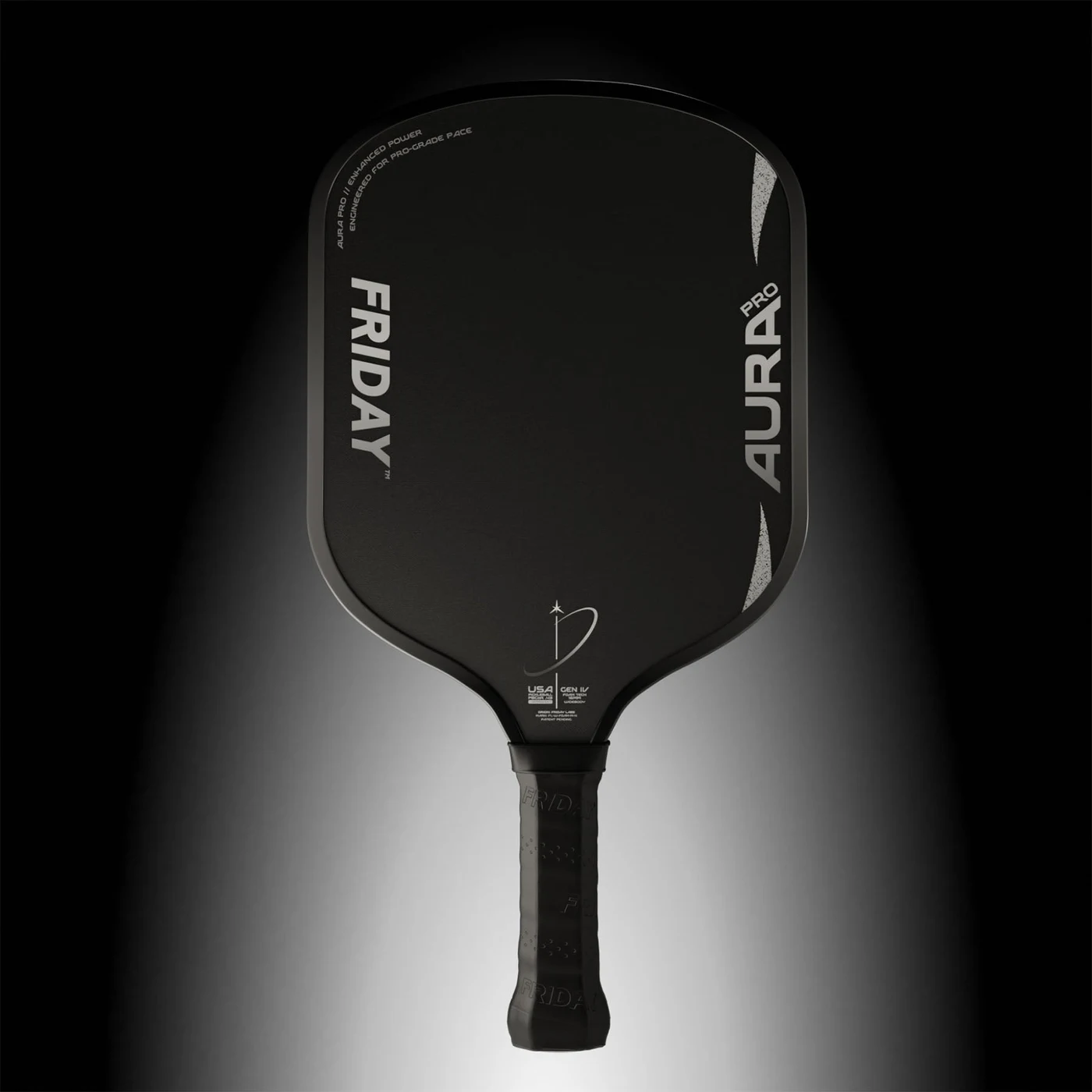
The Aura Pro Widebody is the fast-hands pick on this page, and it wins at the kitchen line. The core is Gen 4 full foam, which means a solid foam core with no honeycomb inside, and the face is raw carbon fiber with a peel-ply texture, which is a rough finish pressed onto the face to grip the ball.
At a swing weight of 108 it matches the V-SOL Pro as the quickest paddle here, so hand battles stop feeling like reactions and start feeling like choices. The foam answers firm and crisp, more connected than springy foam paddles, and the wide stable face holds blocks on line.
Spin measures 2,097 RPM, which is high enough to keep aggressive rolls dipping inside the baseline. The 5.5 inch handle leaves room for a two-handed backhand, which is a backhand played with both hands on the grip. Two honest cautions. The peel-ply grit fades across a few months of heavy play, which is the honest tax on this much spin.
And the reach is shorter than elongated paddles, so singles players and baseline drivers feel the missing inches. Resets also run firmer than on the standard Aura, so soft hands need a session to calibrate. Buy it if your points are won at the kitchen and you want speed with spin. Skip it if reach and baseline power lead your game.
4Selkirk SLK Halo Power XL 13mm: Best Pickleball Paddles Under $200 in 2027 for Value Power
At a Glance
Selkirk SLK Halo Power XL 13mm
Weight
7.7-8.0 oz
Swing Weight
-
Twist Weight
-
Spin
1,400-1,450 RPM
Shape: Elongated, 16.4 x 7.4 in, 5.75 in handle
Grip: 5.75 in handle, 4.25 in circumference
Core: 13mm Rev-Core Power polymer honeycomb, thermoformed
Face: T700 raw carbon fiber (CarbonFusion)
Approval: USAP
Feel: Firm, light, quick hands
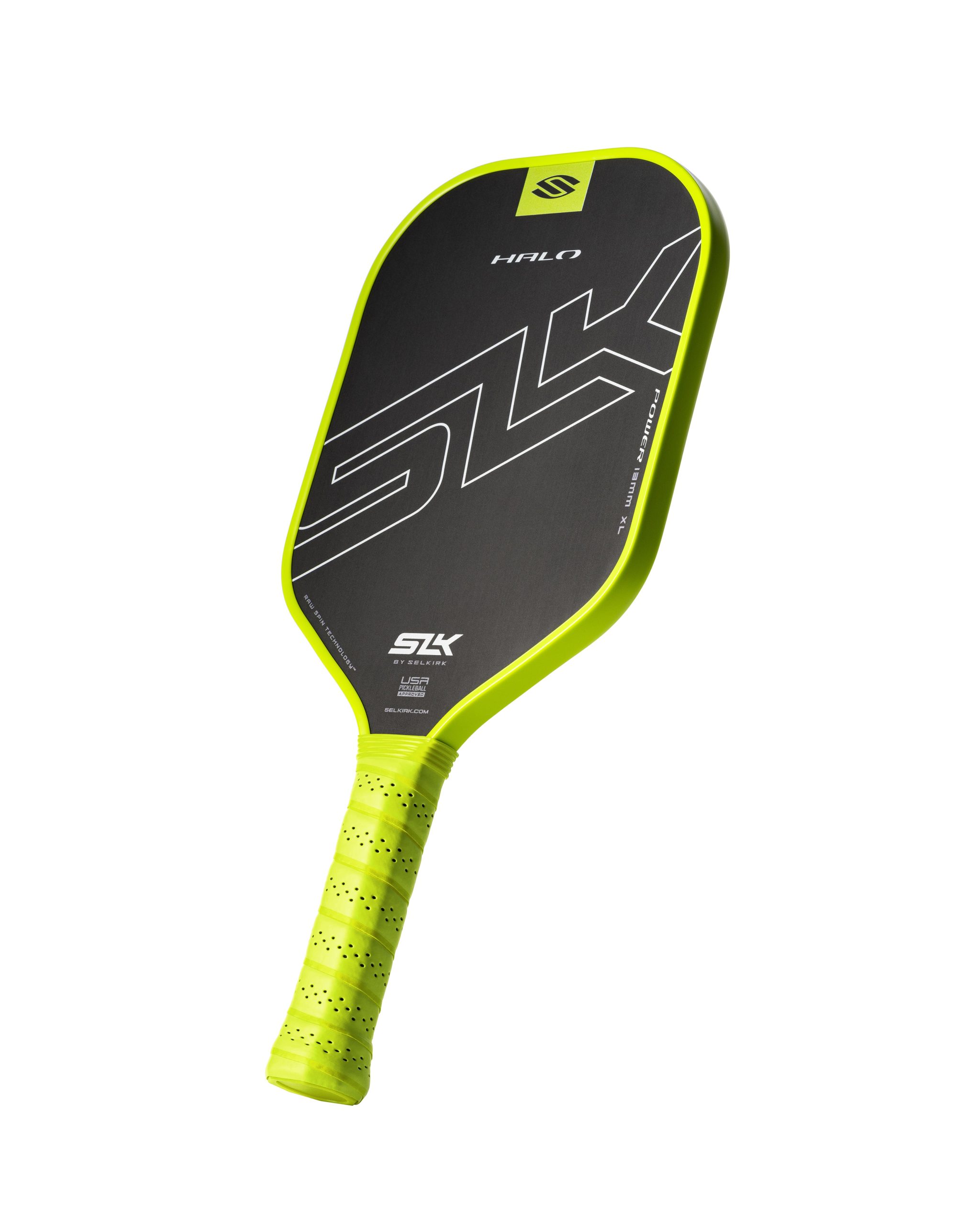
The Halo Power XL is the value power pick on this page, and it wins on easy head speed. The core is a 13mm Rev-Core Power polymer honeycomb, pressed under heat into a thermoformed build, and the face is T700 raw carbon fiber. At 7.7 to 8.0 ounces it is light in the hand, so drives and flicks get depth without a big wind-up.
The long 5.75 inch handle leaves room for a two-handed backhand, and the quick hands at the kitchen stay quick through long exchanges. No lab has published swing weight or twist weight for this paddle, so those cells print Not published rather than borrowing numbers from the Max or the Control XL, which are different shapes.
Spin measures 1,400 to 1,450 RPM, which is the lowest measured figure among the power picks here, so topspin drives dip less and serves kick less than the foam picks above.
One lab’s verdict is blunt that it does not quite earn a power label on output alone. The thin 13mm core also makes it firmer and less forgiving than the foam picks, so stretched blocks need a firm wrist.
That is the trade, and it is a fair one: this is the most affordable way into real power on this page, and my power list ranks it against the bigger hitters so you can see exactly what the step up buys. Buy it if you want light, quick power and a long handle for a modest outlay. Skip it if spin or soft forgiveness leads your game.
5Franklin Signature Pro 16mm: Best Pickleball Paddles Under $200 in 2027 for Fiberglass Value
At a Glance
Franklin Signature Pro 16mm
Weight
7.9-8.3 oz
Swing Weight
116
Twist Weight
6.95
Spin
-
Shape: Elongated, 16.5 x 7.3 in
Grip: 5.6 in handle, 4.5 in circumference
Core: 16mm polypropylene
Face: Fiberglass with MaxGrit surface
Approval: USAP
Feel: Solid power

The Signature Pro is the fiberglass value pick on this page, and it wins on solid, honest power. The face is fiberglass with a MaxGrit surface, which is a rough textured coating that grips the ball, instead of raw carbon fiber.
Fiberglass plays differently from carbon: it answers with more pop and a livelier feel, and it forgives a short swing better than the carbon faces above.
The core is a 16mm polypropylene core, a plastic honeycomb core, and the elongated shape at 16.5 by 7.3 inches adds reach and leverage for serves and overheads.
At 7.9 to 8.3 ounces with a retailer-published swing weight of 116 it carries real plow-through, which is the way a heavier swinging paddle keeps moving through the ball, so drives carry deep from a full swing.
A retailer-published twist weight of 6.95 keeps the face steady on contact away from the center. No lab has published a spin figure for this paddle, so the box prints Not published rather than guessing.
Two honest cautions. The fiberglass face is the weakest face story on a page full of raw carbon, so spin players will feel the difference on serves that need to dip late.
And the 4.5 inch grip is the widest here, so smaller hands should test the fit before committing, because a grip that is too big tires the hand. Buy it if you want the most power per coin on this page and you like a lively fiberglass answer. Skip it if maximum spin is a condition of your buy.
6Engage Pursuit Pro1 6.0 Elongated: Best Pickleball Paddles Under $200 in 2027 for Touch
At a Glance
Engage Pursuit Pro1 6.0 Elongated
Weight
8.0 oz
Swing Weight
118.6
Twist Weight
5.95
Spin
2,267 RPM
Shape: Elongated, 16.5 x 7.5 in
Grip: 5.875 in handle, 4.25 in circumference
Core: MachPro polymer with Variable Release 2.0
Face: Raw Toray T700 carbon fiber
Approval: USAP
Feel: Cooperative touch
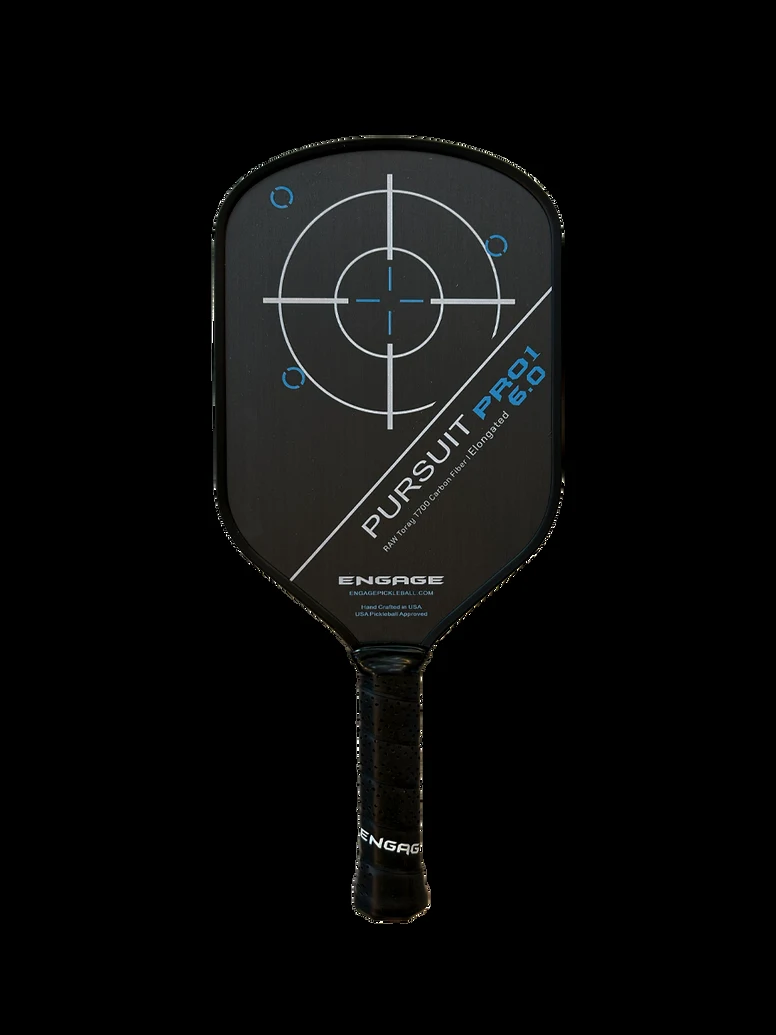
The Pursuit Pro1 is the touch pick on this page, and it wins on drops that land soft. The core is MachPro polymer with Variable Release 2.0, a core design that lets the face give a little on soft shots and firm up on hard ones, and the face is raw Toray T700 carbon fiber.
Drops land soft, dinks stay low, and resets feel calm, which is why this is the most cooperative touch in the premium class. The coarse raw carbon face earns real spin on serves and roll volleys, and spin measures 2,267 RPM, the highest figure on this page.
The long octagon handle at 5.875 inches feels like home to tennis crossovers, and it serves a two-handed backhand properly. Two honest cautions. At a swing weight of 118.6 it is the heaviest swinging paddle here, so the head arrives with momentum to manage in fast exchanges.
And at a twist weight of 5.95 it is the lowest on this page, so off-center contact twists more and stretched blocks need a firm wrist. Power is built with a full swing, and a short or lazy swing lands short. Buy it if touch and drops lead your game and you swing fully. Skip it if quick hands in fast exchanges are your first need.
711SIX24 Jelly Bean 16mm: Best Pickleball Paddles Under $200 in 2027 for Forgiveness
At a Glance
11SIX24 Jelly Bean 16mm
Weight
8.0-8.3 oz
Swing Weight
107
Twist Weight
7.21
Spin
2,103 RPM
Shape: Widebody (Pegasus), 15.82 x 8.04 in
Grip: 5.75 in handle, 4.125 in circumference
Core: 16mm polypropylene honeycomb, Gen 1.5 unibody with foam-injected edge walls
Face: CFC: two layers of Toray T700 raw carbon fiber over one fiberglass layer
Approval: USAP
Feel: Soft, springy forgiveness
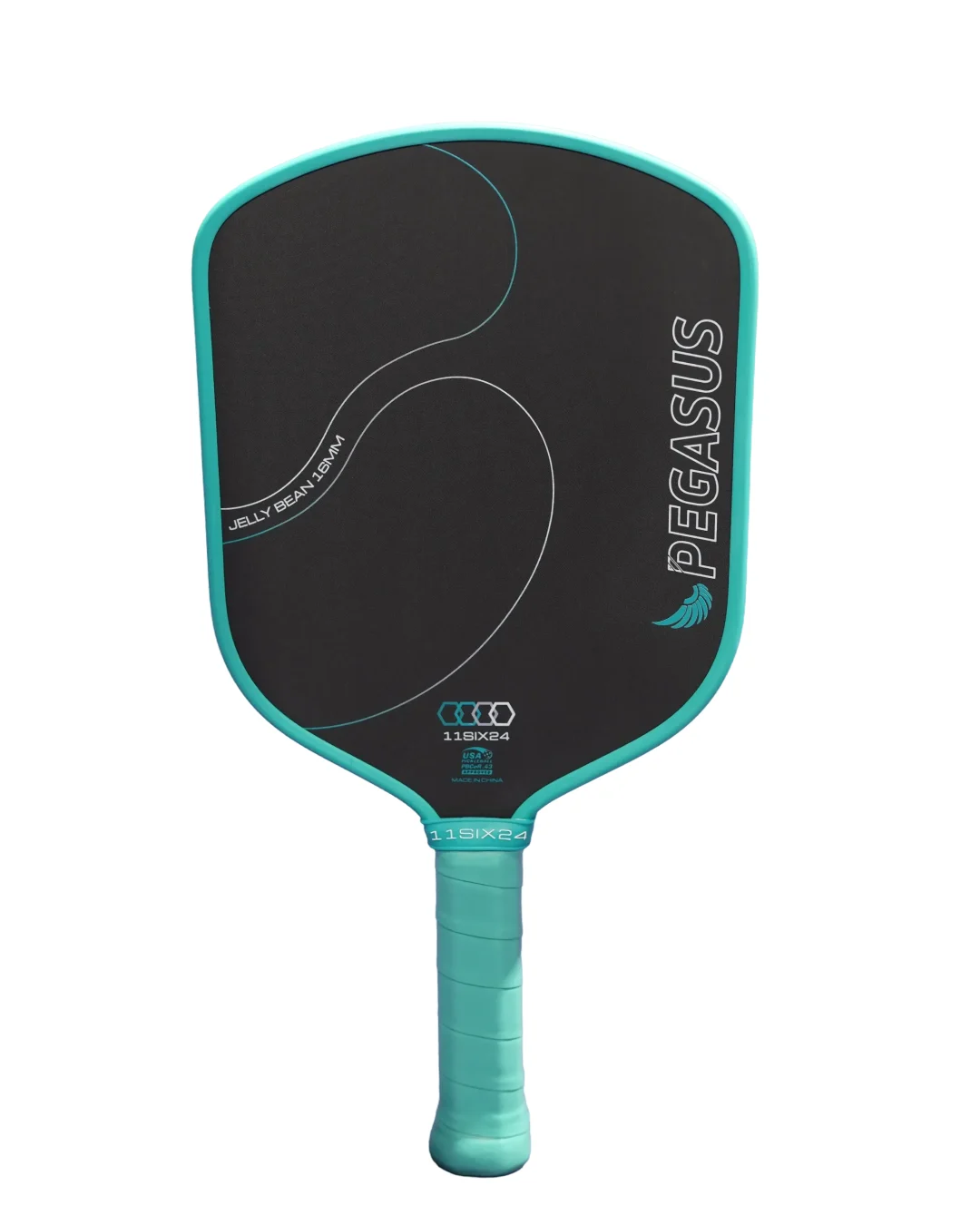
The Jelly Bean is the forgiveness pick on this page, and it wins on stretched blocks. The core is a 16mm polypropylene honeycomb with foam injected into the edge walls, built as a Gen 1.5 unibody, which means the face and core are fused into one piece with foam in the rim but without the full heat-pressed build of the newer generations.
Forgiveness is measurable here and leads the page: a twist weight of 7.21 means the face resists turning on off-center contact better than any other paddle on this list, so stretched blocks and late defensive stabs stay playable.
At a swing weight of 107 it is the lowest on this page, so it arrives at the kitchen quicker than paddles that weigh less on the scale. Spin measures 2,103 RPM, which is genuine spin for serves and drives that dip. The 5.75 inch handle leaves real room for a two-handed backhand. Two honest cautions.
Drives come off politely, and the softness that forgives so completely caps putaway sting, so strong players reach its ceiling fast. And the face collects dust, so a paddle eraser belongs in the bag.
Baseline power is the hole it will not fill. Buy it if you defend first and want the most forgiving paddle in this band. Skip it if putaway power from the baseline leads your game.
8Vatic Pro Prism Flash 16mm: Best Pickleball Paddles Under $200 in 2027 for Budget Control
At a Glance
Vatic Pro Prism Flash 16mm
Weight
7.9-8.2 oz
Swing Weight
114
Twist Weight
6.47
Spin
~1,900 RPM
Shape: Hybrid, 16.25 x 7.7 in
Grip: 5.3 in handle, 4.25 in circumference
Core: 16mm C7 polymer honeycomb with foam-injected edge walls
Face: Raw Toray T700 carbon fiber
Approval: USAP
Feel: Plush control
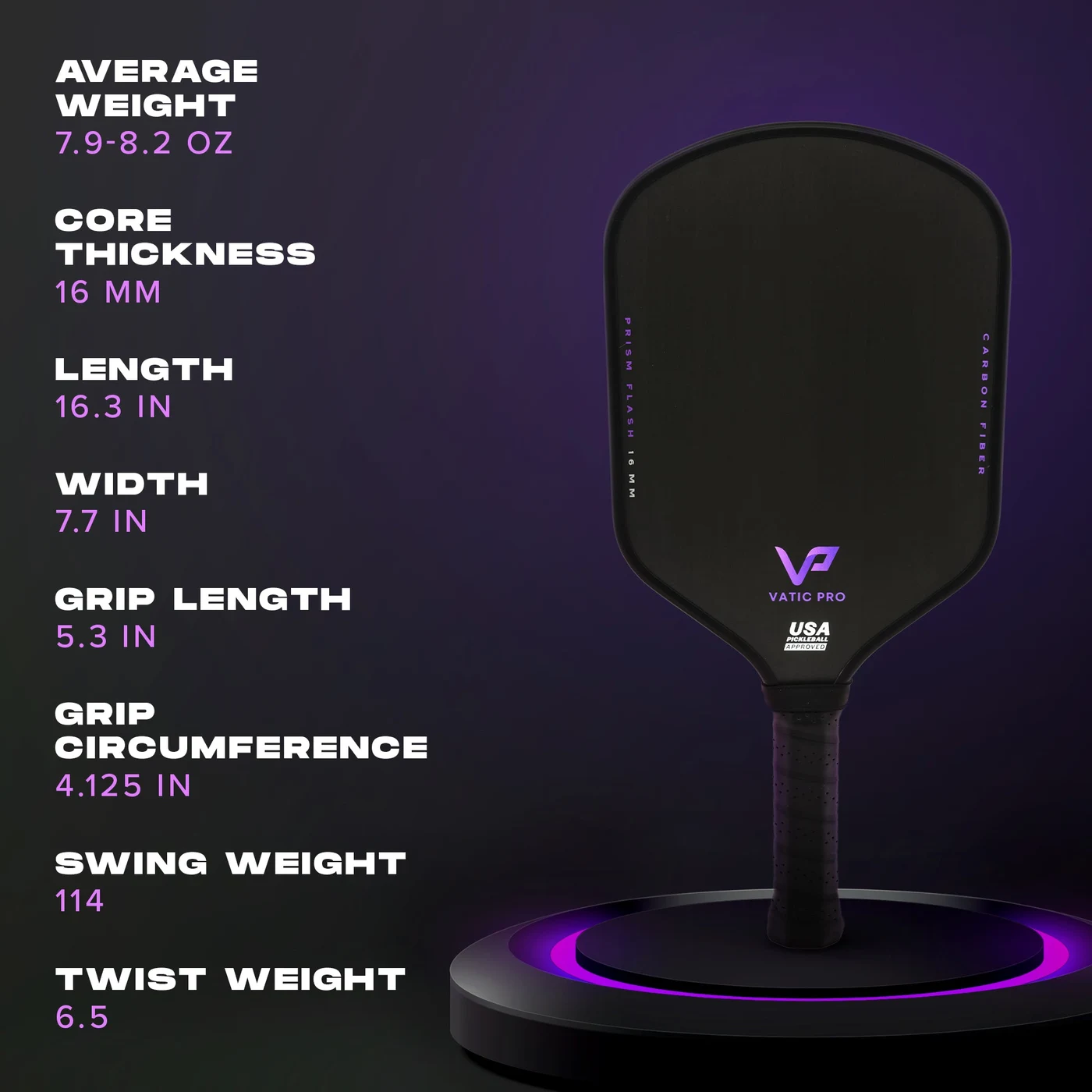
The Prism Flash is the budget control pick on this page, and it wins on trust from day one. The core is a 16mm C7 polymer honeycomb with foam injected into the edge walls, and the face is raw Toray T700 carbon fiber.
Contact is calm, soft and quiet, with a plush control feel that suits drops, dinks and resets far more than it suits baseline bashing.
Blocks land where aimed, drops settle, and resets stay calm, which is why this is the easiest paddle on this page to trust from the first session.
The measured line is honest mid-pack: 7.9 to 8.2 ounces, a swing weight of 114, a twist weight of 6.47, and spin around 1,900 RPM, which is genuine working spin for drives that dip and serves that bite.
What it will not do is finish points from the baseline on a short swing. Its power is placement power, not putaway power, and the 114 swing weight taxes the hands in fast exchanges more than the number suggests. That is the trade, and it is a fair one.
The grit holds well for months, which sets it apart from the faster-fading faces above, and the 5.3 inch handle fits most one-handed games while leaving two-handed players a little crowded.
Buy it if you want control you can trust from session one and your game is built on placement. Skip it if you need the paddle itself to supply your power.
9Volair Mach 2 Forza 16mm: Best Pickleball Paddles Under $200 in 2027 for Widebody Stability
At a Glance
Volair Mach 2 Forza 16mm
Weight
8.0 oz
Swing Weight
112
Twist Weight
7.37
Spin
-
Shape: Widebody (patented), 15.88 x 8.12 in
Grip: 5.5 in handle, 4.15 in circumference (brand-published)
Core: 16mm polypropylene honeycomb with foam-injected walls, thermoformed unibody
Face: T700 carbon fiber
Approval: USAP
Feel: Plush control, very large sweet spot
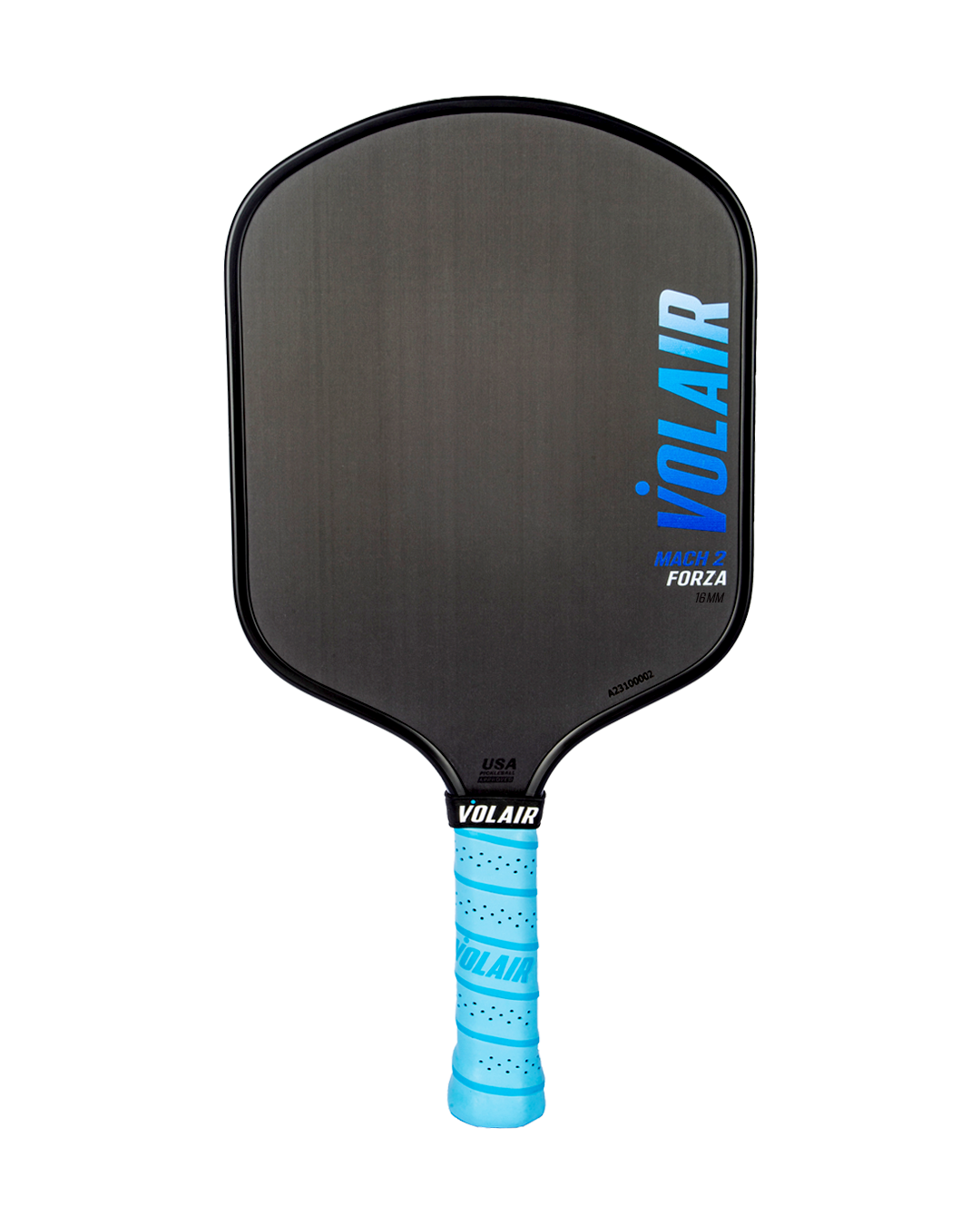
The Mach 2 Forza is the widebody stability pick on this page, and it wins on the size of its sweet spot.
The core is a 16mm polypropylene honeycomb with foam injected into the walls, pressed into a thermoformed unibody, which is one fused piece with no seams to work loose. The face is T700 carbon fiber, a grade of carbon fiber known for grip and spin.
At 15.88 by 8.12 inches it spreads the hitting surface wider than any other paddle here, and a brand-published twist weight of 7.37 keeps that wide face square on stretched contact, so blocks and resets hold their line when the ball catches the outer third. A brand-published swing weight of 112 keeps it quick enough for hands battles.
Every figure on this paddle is Volair’s own, labelled as such in the box, and no lab has published a spin figure for it, so the spin cell reads Not published rather than guessing. One honest limit: do not buy this paddle for power.
Independent testing rates its power far below the other widebodies the site covers, so buy it for what it actually does, which is keep the ball in play and on target from defensive positions.
The 5.5 inch handle leaves room for a two-handed backhand, and the 4.15 inch grip is the slimmest here, which suits smaller hands and builds up easily with an overgrip. Buy it if control and forgiveness are your whole brief and you swing fully. Skip it if putaway power leads your game.
How to Choose the Best Pickleball Paddles Under $200 in 2027
This band is where budget paddles stop being a compromise and start being a choice, but the word cheap still covers a wide range, from flagship construction to dead cores.
Work through the sections below in order: what this band unlocks, whether cheap paddles are worth it, the two core builds, face materials, the approval check, shape and the two weight numbers, the best pick for your game, and the lower tiers plus the upgrade path.
If you want the control half of the argument, my control list ranks the paddles that put the ball where you aimed it.
What This Band Unlocks
This band unlocks construction, not a different sport. The step up from the lowest tier buys a true flagship control paddle in the Double Black Diamond Control, full foam cores in the V-SOL Pro and the Aura Pro, and fiberglass value in the Signature Pro, all with published numbers to choose by.
What that changes on court is simple: drops land lower, blocks hold their line, and spin becomes a tool you can plan around instead of a hope. Against the lower band, the difference you feel first is not power.
It is repeatability. The same shot behaves the same way rally after rally, because the cores are built to hold their shape. That is what the published numbers are for: swing weight tells you how quick a paddle feels in the hand, twist weight tells you how steady it stays off center, and spin tells you how much the ball will dip.
A paddle in this band stays competitive for a long season, and the honest sign you have outgrown it is not a number. It is the day your drops are perfect and your putaways still fall short.
Are Cheap Paddles Worth It? Cheap vs Expensive
Yes, cheap paddles are worth it, with one honest limit. The case for them is strong: the best cheap pickleball paddles on this page carry the same raw carbon faces, foam cores and thermoformed builds as paddles in the flagship tier, and the gap between them is now about refinement, not about whether the paddle works.
A cheap paddle is worth it when it is built right, and every pick above is built right. The limit is the face. Raw carbon grit fades with play on every paddle at every tier, and the cheaper faces fade no faster than the dearer ones in most cases, but a worn face is a worn face, and no paddle in this band escapes it.
The expensive tier buys dual approval on some models, flagship lab lines, pro-signature builds and a little more consistency from unit to unit. It does not buy a different game.
If you are a beginner or an intermediate player, a paddle from this band is the right buy, and the money you save buys court time, which improves your game more than any paddle will. If you are an advanced player whose putaways already fall short, test the flagship tier before you decide.
Foam Core vs Honeycomb Core
Two core builds share this list, and the core decides the feel. A full foam core, in the V-SOL Pro and the Aura Pro, is a solid block of foam with no honeycomb inside it.
Foam cores dwell longer, which is the short moment the ball stays on the face, so the ball pockets and leaves with a softer, livelier response and more free power on short swings.
A honeycomb core, in the DBD Control, the Prism Flash, the Forza, the Jelly Bean, the Halo Power XL and the Signature Pro, is a plastic honeycomb with air cells inside it, often with foam injected into the edge walls.
Honeycomb answers firmer and crisper, with a quick ball exit and more control on touch shots. Break-in differs too. Foam cores wake up over a few sessions, and honeycomb plays the same from day one. Choose foam if you want free power and a soft pocket. Choose honeycomb if you want control and a crisp answer.
Face Materials: Raw Carbon, Peel-Ply Carbon and Fiberglass
The face is the part that grips the ball, and three faces share this page. Raw T700 carbon fiber, on the DBD Control, the V-SOL Pro, the Prism Flash, the Pro1 and the Halo Power XL, is a grade of carbon fiber known for grip and spin.
It bites the ball, so serves dip and drives shape, and it is the face most spin players should choose. The Signature Pro brings fiberglass with a MaxGrit surface, which is a rough textured coating.
Fiberglass pops livelier than carbon and forgives a short swing, but it spins less. Two things wear every face down. Peel-ply grit, on the Aura Pro, is a rough finish pressed onto the face, and it fades across a few months of heavy play.
Plain raw carbon slowly goes smooth too. Drag a fingernail across the face and feel for bite, and see whether a ball still grabs when you roll it over the surface. When the bite is gone, an eraser buys a little time, but it does not restore a worn face.
Approval, Stated Plainly
Every pick on this page is approved by USA Pickleball for the exact variant listed, so all nine play in sanctioned league and tournament events. USA Pickleball, known as USAP, is the body that approves paddles for sanctioned play in the United States.
UPA-A is the pro tour’s approval, and a UPA-A-only paddle is not legal for USAP-sanctioned events however well it plays, so check your exact model on the current approved list before entering a sanctioned event rather than trusting the badge printed on a listing.
Approval is granted per model and per thickness, not per brand, which is why the exact variant matters: the Halo Power XL is approved as the XL, and the Aura Pro as the widebody.
One paddle that buyers often ask about, the Vapor Power 2, is UPA-A-only and does not appear on this page, because it also fails this band on its list price. If you never play sanctioned events, approval does not change how a paddle plays. If you do, check the list before you buy, and keep the receipt.
Shape, Swing Weight and Twist Weight: 13mm vs 16mm
Shape and thickness decide how a paddle feels more than any other choice. Widebody frames, the Aura Pro, the Jelly Bean and the Forza, give the largest sweet spot and the quickest hands, and give back reach. Elongated frames, the Halo Power XL, the Signature Pro and the Pro1, add reach and leverage for serves and overheads.
Hybrid frames, the DBD Control, the V-SOL Pro and the Prism Flash, split the difference and suit most players. Swing weight is the hand-speed number: it runs from the quick 107 of the Jelly Bean and 108 of the V-SOL Pro and Aura Pro up to the 118.6 of the Pro1, which is the plow-through end of the range.
Twist weight is the steadiness number: it runs from the 5.95 of the Pro1 up to the 7.37 of the Forza and the 7.21 of the Jelly Bean, which is why those two forgive stretched blocks so well.
Thickness splits the same way. The 16mm core is the control class here: eight of the nine picks run 16mm, with a softer answer, a bigger sweet spot and more forgiveness on touch shots.
The 13mm Halo Power XL is the quick exception: thinner, firmer and faster through the air, with more pop on short swings and less margin on mishits. Grip circumference runs from the slim 4.125 inches of the V-SOL Pro and the Jelly Bean to the 4.5 inches of the Signature Pro, and a slim grip builds up easily with an overgrip.
The Best Pick for Your Game: Beginners, Spin, Control and Power
The best paddle in this band depends on your game, not on the ranking. For beginners, the Prism Flash is the pick: it is the easiest paddle here to trust from day one, with blocks that land where aimed and a plush feel that forgives a learning swing, and the Jelly Bean is the second choice for a beginner who defends first.
For spin, the Pro1 leads at 2,267 RPM, with the Jelly Bean at 2,103 RPM and the Aura Pro at 2,097 RPM close behind, and all three keep aggressive rolls dipping inside the baseline.
For control, the DBD Control is the pick, with the Prism Flash as the softer, quieter second choice, and both make drops land low and repeatable.
For power, the Halo Power XL is the value power pick, with the Signature Pro as the fiberglass alternative for players who like a livelier answer, and both need a full swing to finish from the baseline.
For fast hands, the V-SOL Pro and the Aura Pro share the quickest swing weight on this page at 108. For forgiveness, the Jelly Bean leads on twist weight at 7.21. Pick the section that matches your game, not the number at the top of the list.
The Lower Tiers and the Upgrade Path
Several picks on this page also sit in the lower tiers of this band, and the lower tiers deserve their own note.
My under-100 list ranks the picks that sit in the lowest tier, and the V-SOL Pro, the Jelly Bean and the Prism Flash all appear there too, which tells you something honest: the bottom of this band is not a different class of paddle, it is the same paddles at a lower rung.
What the lower tiers give up is mostly refinement: a woven face here, a flagship lab line there, a little consistency from unit to unit. What they keep is the build that matters: raw carbon faces, foam cores and thermoformed honeycomb.
The upgrade path above this band buys dual approval on some models, flagship lab lines, pro-signature builds and a little more pop on the same swing.
The honest signs you have outgrown this band are three: your drops are perfect and your putaways still fall short, your spin has faded and a new face no longer fixes it, or your game has moved to a shape this band does not offer.
Until one of those is true, a paddle from this list is the right paddle, and the court time you buy with the saving matters more than the next tier up.
Frequently Asked Questions (FAQs)
1. What is the best pickleball paddle under $200 overall?
The Six Zero Double Black Diamond Control is the best overall pick on this page. It wins on resets: its thermoformed honeycomb core with foam edge walls makes drops land low and repeatable, its plush connected feel suits the soft game, and its brand-published swing weight of 114 keeps it quick enough for hands battles.
The Vatic Pro V-SOL Pro is the best foam value on the page, and the Vatic Pro Prism Flash is the best budget control pick for players who want the calmest feel.
2. Is a paddle under $200 good enough for league and tournament play?
Yes. Every pick on this page is approved by USA Pickleball for the exact variant listed, so all nine play in sanctioned league and tournament events.
Approval is granted per model and per thickness, not per brand, so check your exact model on the current approved list before entering a sanctioned event. If you never play sanctioned events, approval does not change how a paddle plays.
3. Foam core or honeycomb core: which should I choose?
Choose foam if you want free power and a soft pocket, and honeycomb if you want control and a crisp answer.
A full foam core, in the V-SOL Pro and the Aura Pro, dwells longer, which is the short moment the ball stays on the face, so the ball pockets and leaves with a softer, livelier response. A honeycomb core answers firmer and crisper, with a quick ball exit and more control on touch shots.
4. What is the difference between USAP and UPA-A approval?
USAP is USA Pickleball, the body that approves paddles for sanctioned play in the United States. UPA-A is the pro tour’s approval.
A UPA-A-only paddle is not legal for USAP-sanctioned events however well it plays, so check your exact model and thickness on the current approved list before entering a sanctioned event. All nine picks on this page are USAP approved for the exact variant listed.
5. Raw carbon or fiberglass face: does it actually matter?
Yes, it matters, and the difference is feel and spin. Raw T700 carbon fiber bites the ball, so serves dip and drives shape, and it is the face most spin players should choose.
Fiberglass with a MaxGrit surface, on the Signature Pro, pops livelier than carbon and forgives a short swing, but it spins less. Every face wears with play, so drag a fingernail across it and feel for bite before you decide a paddle has lost its spin.
6. Which shape is best: widebody, hybrid, or elongated?
It depends on your game. Widebody frames, the Aura Pro, the Jelly Bean and the Forza, give the largest sweet spot and the quickest hands, and give back reach. Elongated frames, the Halo Power XL, the Signature Pro and the Pro1, add reach and leverage for serves and overheads.
Hybrid frames, the DBD Control, the V-SOL Pro and the Prism Flash, split the difference and suit most players. If you are unsure, start with a hybrid, because it asks for the fewest adjustments.
7. How much spin can I honestly expect from a paddle in this band?
You can honestly expect real, measurable spin, and the numbers on this page prove it. The Pursuit Pro1 leads at 2,267 RPM, with the Jelly Bean at 2,103 RPM, the Aura Pro at 2,097 RPM and the V-SOL Pro at 2,060 RPM close behind, and the Prism Flash sits around 1,900 RPM.
The Halo Power XL is the honest floor at 1,400 to 1,450 RPM, so its topspin drives dip less and its serves kick less. The DBD Control, the Signature Pro and the Forza carry no published spin figure, so their boxes print Not published rather than borrowing a number, and their spin in play is strong but unmeasured.
8. How long will the face grit last before it fades?
Face grit fades across a few months of heavy play on most paddles in this band, and the speed depends on the face. The DBD Control fades fastest on this page, while the Prism Flash holds its bite well for months, and the Aura Pro’s peel-ply grit fades across a few months of heavy use.
The V-SOL Pro loses a fifth or more of its spin after heavy use. Drag a fingernail across the face and feel for bite, and see whether a ball still grabs when you roll it over the surface. An eraser buys a little time, but it does not restore a worn face.
9. Is a previous-generation flagship better than a current mid-tier paddle?
Not always, and the honest answer is that it depends on what the older paddle gives up. A previous-generation flagship can offer a better face or a more refined build than a current mid-tier paddle, but it can also carry an older core design, a shorter remaining warranty, or a face that has already started to fade if it has been played.
The picks on this page are current mid-tier and current value paddles with full current builds, so they do not ask you to trade newness for a badge. Judge any older flagship on its own numbers, its exact variant and its condition, not on its launch reputation.
10. What swing weight and twist weight should I look for?
Look for a swing weight near 108 if you want the quickest hands, and near 116 to 118 if you want plow-through on drives. Swing weight is a number for how heavy a paddle feels when you swing it, and on this page it runs from the 107 of the Jelly Bean up to the 118.6 of the Pro1.
Look for a twist weight near 7 or above if you want forgiveness on off-center contact, and accept a lower figure if touch matters more than forgiveness. Twist weight is a number for how much the face resists turning on off-center contact, and on this page it runs from the 5.95 of the Pro1 up to the 7.37 of the Forza.
11. Can a beginner start with a paddle in this band?
Yes. A beginner can start with a paddle in this band, and the Prism Flash is the pick: it is the easiest paddle here to trust from day one, with blocks that land where aimed and a plush feel that forgives a learning swing.
The Jelly Bean is the second choice for a beginner who defends first, because its twist weight of 7.21 keeps stretched blocks playable.
The limit to watch is pop: a livelier paddle answers hotter, so a mistimed shot travels further out, and a player still learning the third-shot drop may find their misses landing longer. Start soft, then move up the list as your strokes settle.
12. When does it make sense to move up to a flagship paddle?
It makes sense to move up when one of three signs is true: your drops are perfect and your putaways still fall short, your spin has faded and a new face no longer fixes it, or your game has moved to a shape this band does not offer.
The flagship tier above this band buys dual approval on some models, flagship lab lines, pro-signature builds and a little more pop on the same swing. Until one of those signs is true, a paddle from this list is the right paddle, and the court time you buy with the saving matters more than the next tier up.