
Third game, tied at nine, and the rally has already gone twelve shots. I have defended, reset, dinked, and waited, and now a ball finally sits up at my shoulder, high and slow, begging to be put away. I wind up, I swing clean through it, and the ball comes back. Not because I missed. Because the paddle did not finish the job. My partner looks at me. I look at the paddle. That is the moment a power paddle earns its place in your bag, or loses it.
Power is the most misunderstood word in this sport. It is not swinging harder. It is the paddle returning more of your swing as ball speed, so the same effort ends the point instead of restarting it. I tested for exactly that: serves that push returners back, drives that stay down while they travel fast, counters that need no wind-up, and overheads that do not come back. The ten paddles below are the ones that finished points for me, ranked by how much help they give your swing and how honestly they behave when you ask for everything.
The 10 Best Pickleball Paddles for Power in 2027
1. JOOLA Perseus Pro V 16mm: Best Overall Power Pickleball Paddle in 2027
AT A GLANCE
JOOLA Perseus Pro V 16mm
WEIGHT
8.1 oz
SWING WEIGHT
117
TWIST WEIGHT
6.26
SPIN
2,060 RPM
Shape: Elongated, 16.5 x 7.5 in, 5.5 in handle
Grip: 4.25 in circumference
Core: Propulsion Core, polypropylene with EVA foam, 16mm
Face: Raw carbon fiber
Approval: USAP and UPA-A
Feel: Firm consistency
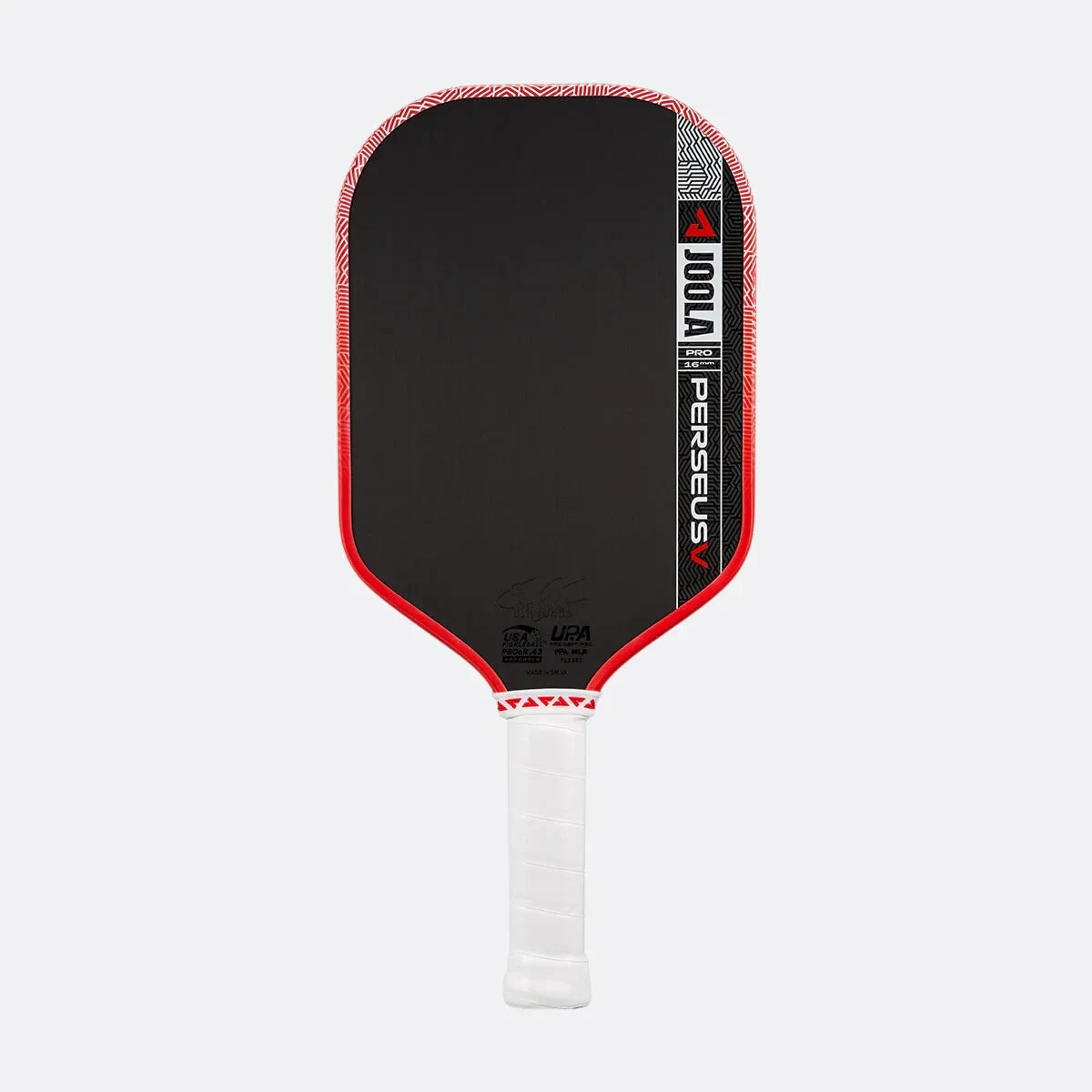
The Perseus Pro V tops this list because its power is the kind you can repeat. The elongated frame and a 117 swing weight give every drive real plow-through, and the Propulsion Core with its EVA foam layer answers the same way on the tenth drive as on the first. Serves jumped off the face and stayed down, thanks to 2,060 RPM of spin pulling them into the court, and counters held their line when contact drifted toward the edge. This is not a paddle that hands you one heroic shot and then betrays you. It is a paddle that hits hard on schedule.
The feel is firm and consistent rather than soft, and that firmness is the whole point. The KineticFrame throat flexes at contact, stores a little energy, and returns it as the ball leaves, so the power feels built into the frame instead of borrowed from a hot core. The 5.5 inch handle gives two-handed players real room, and the elongated reach wins overheads that shorter paddles watch sail past. Across long sessions it never changed character, which is rarer than it sounds in this category.
The honest limits are feel and forgiveness. Contact is firmer than the foam paddles below, the sweet spot sits high on the elongated face, and at a 117 swing weight it will not win frantic hands battles against a quick widebody. This is the flagship for players who already swing well and want their paddle to make that swing count for more.
Buy it if you want the most repeatable power in the game. Skip it if your soft game needs a pocketing, forgiving face more than your drives need pace.
2. 11SIX24 Vapor Power 2 16mm: Best Spin-Driven Power Pickleball Paddle in 2027
AT A GLANCE
11SIX24 Vapor Power 2 16mm
WEIGHT
8.0-8.3 oz
SWING WEIGHT
107.55
TWIST WEIGHT
6.6
SPIN
2,335 RPM
Shape: Hybrid
Grip: Not published
Core: Gen 4 full foam, MPP
Face: HexGrit textured carbon
Approval: UPA-A only, not USAP
Feel: Raw bite
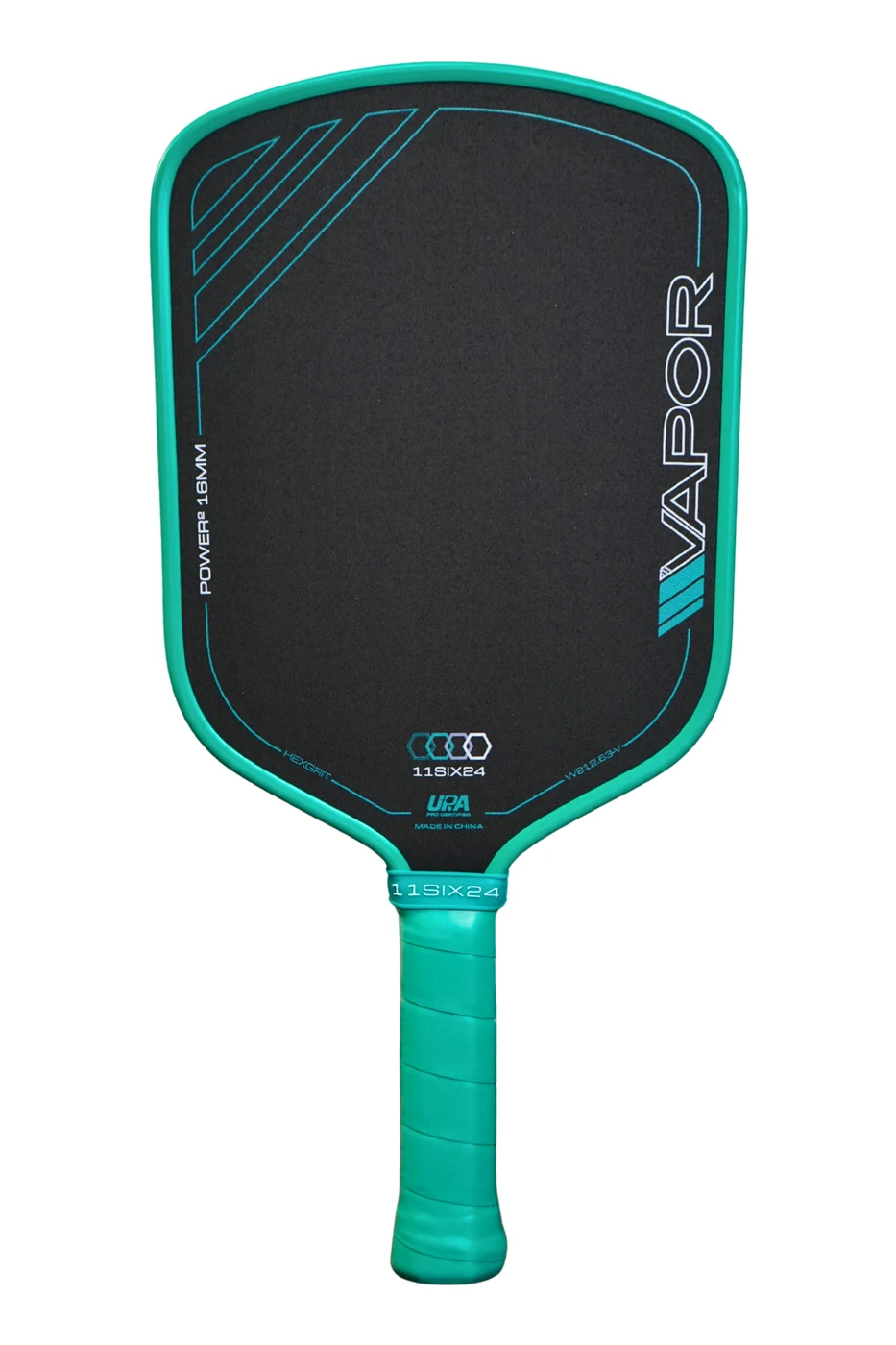
Spin is a power stat, and no paddle on this list proves it harder than the Vapor Power 2. The HexGrit surface, silicon carbide particles embedded in the face, bites the ball at 2,335 RPM, the highest spin figure on this page, and heavy topspin is what lets a hard drive stay hard and still land. My dipping drives kept dipping in month three, long after most raw carbon faces have gone smooth, and serves kept kicking off the bounce. That staying power is the control inside the power: the harder I swung, the more the ball obeyed. It also tops my spin list for the same reason, and the two lists agree on what makes this paddle special.
The Gen 4 full foam core supplies the power half with a different personality than thermoformed honeycomb. There is no hollow crack. Pace builds with your swing, so a full cut from the baseline holds its line instead of ballooning, and at a swing weight under 108 it changes direction fast enough to be dangerous in counters and speed-ups at the kitchen. Drops and resets needed a looser grip after the break-in period, because the foam wakes up livelier than it starts, and soft hands adjust to it faster than firm wrists do.
Now the warning, stated plainly. The grit that makes this paddle special is too rough for USA Pickleball’s surface test, so the Vapor Power 2 is certified for UPA-A play only. It is not legal in USAP sanctioned tournaments.
Buy it for league, open play, and UPA events, if spin-driven power is your game. Skip it if USAP tournament legality is a requirement.
3. Six Zero Black Opal: Best Foam Power Pickleball Paddle in 2027
AT A GLANCE
Six Zero Black Opal
WEIGHT
8.2 oz
SWING WEIGHT
114
TWIST WEIGHT
6.4
SPIN
2,307 RPM
Shape: Hybrid
Grip: Not published
Core: G4 solid foam with Power Gel
Face: Diamond Tough raw carbon fiber
Approval: USAP and UPA-A
Feel: Dense spring
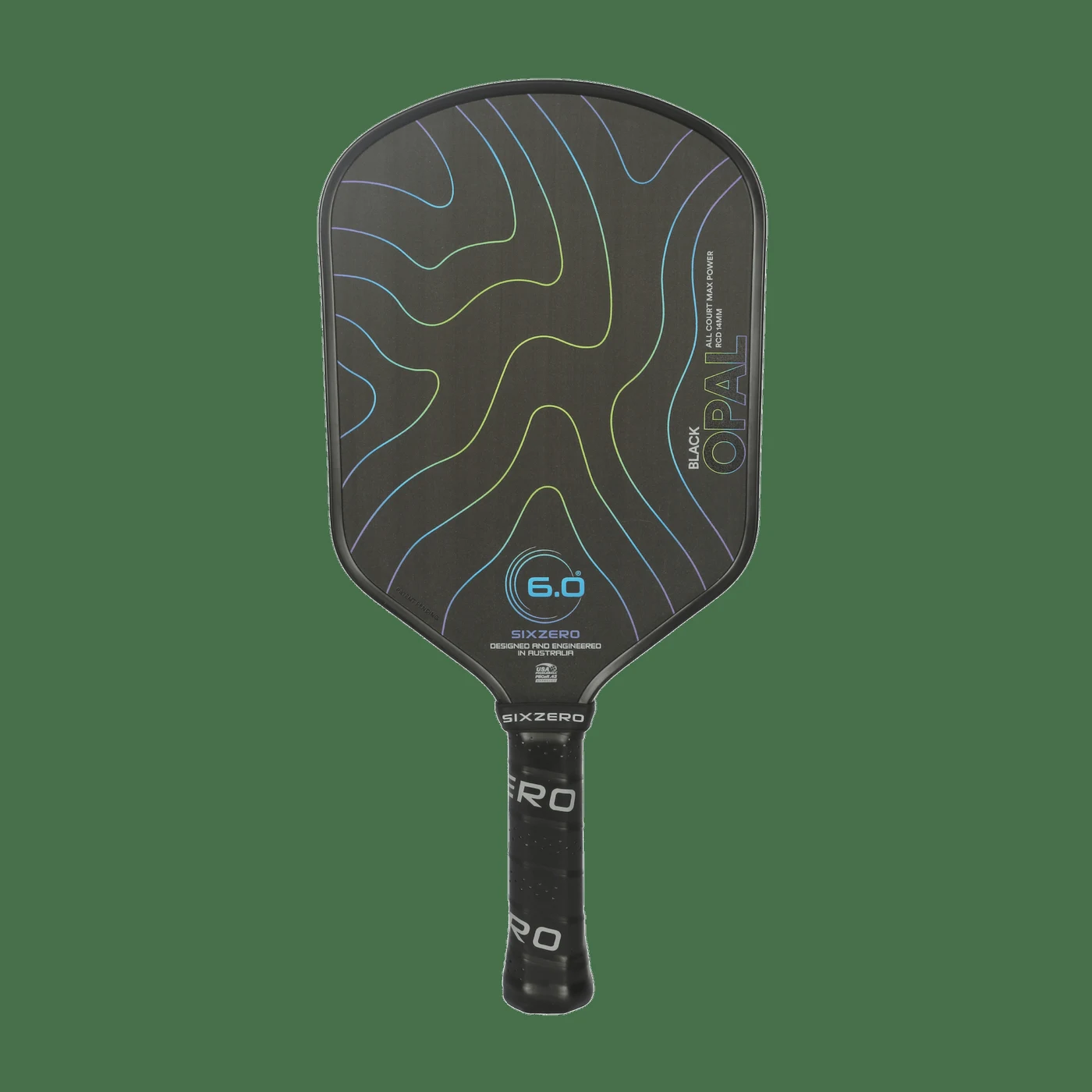
Most power paddles announce themselves with a crack. The Black Opal announces itself with a thud, and then the ball is simply gone. Contact is dense and springy, and the solid foam core with its Power Gel layer turns a committed swing into pace that pushes opponents behind the baseline and keeps them there. Counters come off hot without a wind-up, speed-ups jump off the face, and the Diamond Tough carbon bites hard enough, 2,307 RPM worth, that dipping drives dropped at my opponents’ feet and kept dipping months later. This is the paddle for the player who wants the ball to leave angry.
The power here is honest about what it asks of you. The sweet spot sits lower than you expect and it is not generous, so stretched defensive contact gets punished in a way forgiving paddles never punish it. My first three serves went long, my soft game leaked pop-ups for two weeks, and only once I shortened my swing and stopped helping did the resets start sitting down. That learning fee is real, and players still building technique will call it frustrating. Around the 4.0 level and up, the same trade stops feeling like a flaw and starts feeling like feedback.
What the foam gives back is consistency over time. There are no honeycomb cells to crush and no face to separate from the core, so the power you test in week one is the power you still own in month six. The grit is also built to hold its bite far longer than standard raw carbon faces do.
Buy it if your contact is clean and you want power that still plays the soft game once you learn it. Skip it if your defense is built on stretched, late contact.
4. Gearbox GX2 Power Hybrid: Best Power Pickleball Paddle That Never Goes Soft in 2027
AT A GLANCE
Gearbox GX2 Power Hybrid
WEIGHT
8.0 oz
SWING WEIGHT
113
TWIST WEIGHT
6.66
SPIN
~2,050 RPM
Shape: Hybrid, 16.2 x 7.8 in
Grip: 4.0 in circumference, 5.5 in handle
Core: SST 2.0 CarbonRibCore
Face: 3K raw carbon fiber
Approval: USAP
Feel: Heavy dwell
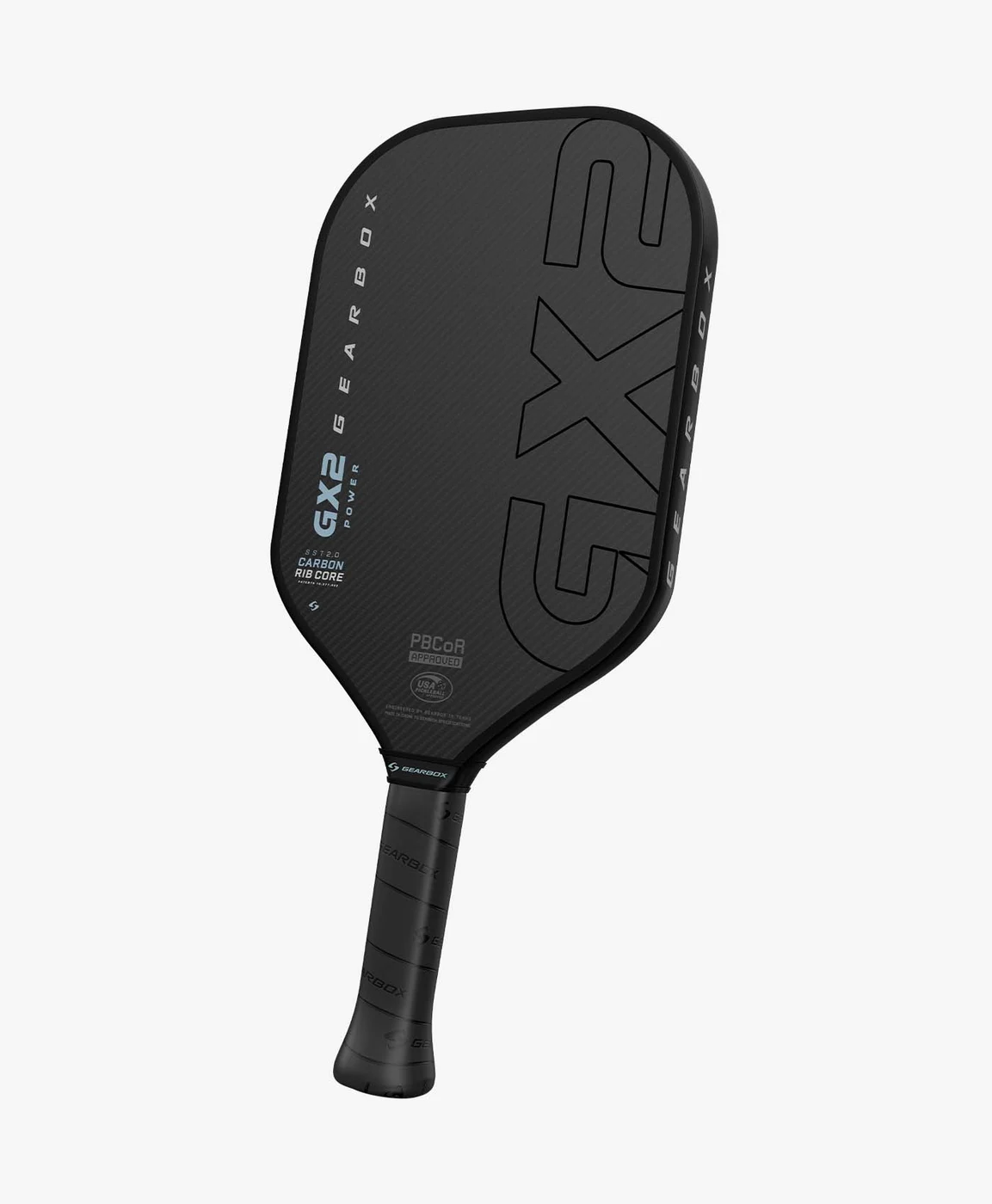
Every power paddle I have owned came with the same quiet worry: how long before the core starts to die and the power goes with it. The GX2 Power Hybrid is built to end that worry. There is no honeycomb and no foam inside. The core is a lattice of carbon fiber tubes standing on end, and it produces a dwell time I did not expect from the power category. The ball sinks in, loads, and leaves heavy, and that pocketing is what makes the power usable instead of wild. Drives carry real weight, counters stay stable through contact, and spin around 2,050 RPM keeps aggressive shots dipping.
The hybrid shape, 16.2 by 7.8 inches, keeps enough width in the face for defensive contact, and a 6.66 twist weight backs that up when contact strays off center. After the short break-in the response settled, and then it stayed settled, which is the entire point of this construction: no slow fade, no sudden dead spot, no recalibrating your soft game every few weeks. For a player who plays four or five days a week, that steadiness is worth more than a few extra miles per hour on day one.
The adjustment period is real. As it breaks in it gets livelier, and my resets needed recalibrating in week two. The grip circumference runs small, so most players will build it up with an overgrip or two, which I ended up preferring anyway.
Buy it if you hit hard, play often, and want power that stays married to touch. Skip it if your soft game is your whole identity. This paddle always leans forward.
5. Selkirk SLK ERA Power Elongated: Best Predictable Power Pickleball Paddle in 2027
AT A GLANCE
Selkirk SLK ERA Power Elongated
WEIGHT
8.0 oz
SWING WEIGHT
117
TWIST WEIGHT
6.28
SPIN
~2,020 RPM
Shape: Elongated
Grip: Not published
Core: Dynamic Fusion Core, polymer honeycomb with EVA foam
Face: 3-layer carbon fiber and fiberglass
Approval: USAP and UPA-A
Feel: Linear power
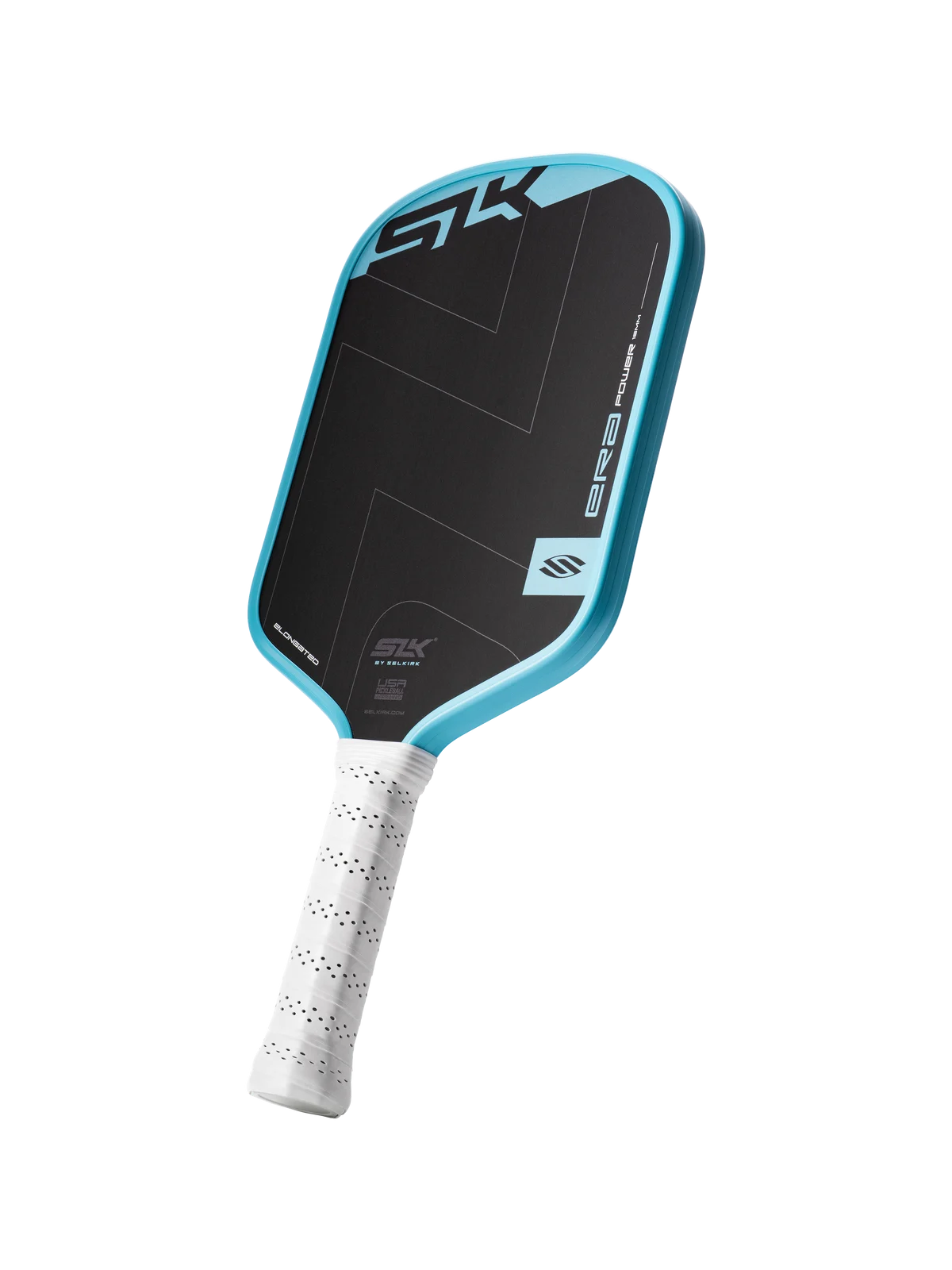
Selkirk built this paddle around a single idea: power you can predict. Plenty of paddles hit hard. The ERA Power hits the same hard on the tenth drive as on the first, and in my testing that repeatability is what separates it. The Dynamic Fusion Core pairs a polymer honeycomb with an EVA foam layer, and the foam takes the trampoline randomness out of the response. A three-quarter swing produced a three-quarter drive, every time, and that linearity made the soft game easier to trust than on most power frames. If your drives fly long on one paddle and fall short on the next, this is the paddle that ends that guessing.
The face is a three layer blend of carbon fiber and fiberglass, and you can feel both materials doing their jobs. The carbon grips and shapes the ball, spin measured around 2,020 RPM, while the fiberglass adds the pop that finishes counters and speed-ups. The elongated shape and a 117 swing weight give drives genuine weight through the court, and at 8.0 ounces the paddle never felt like a burden across long sessions. Serves carried, overheads finished, and nothing about the response surprised me after the first week.
Control here means something specific. Resets behave because the response is linear, not because the face is soft. If your soft game depends on a pocketing, dwell heavy feel, this paddle will feel firmer than you want, and the 6.28 twist weight is mid pack, so wild off-center blocks get less help than the most stable paddles on this page give.
Buy it if you swing big and want the result to match the swing. Skip it if your touch game runs on dwell and softness.
6. Engage X2 Widebody: Best Foam Flagship Power Pickleball Paddle in 2027
AT A GLANCE
Engage X2 Widebody
WEIGHT
8.2 oz
SWING WEIGHT
111
TWIST WEIGHT
7.1
SPIN
2,289 RPM
Shape: Widebody (dimensions Not published)
Grip: Not published
Core: Quad-density foam, 100% foam architecture, 16mm
Face: Micro-weave carbon fiber
Approval: USAP and UPA-A
Feel: Dense, soft pocketing

The X2 is the paddle Engage now leads with, and the widebody is the shape most players should buy it in. There is no honeycomb anywhere inside it: the core is foam built in densities, a soft outer layer that lets the ball dwell and a firm inner core that gives the rebound back, wrapped in a full-perimeter foam layer with fiberglass perimeter weighting. Across my sessions the personality was consistent: contact feels dense and soft at once, the ball pockets instead of pinging, and the shot that leaves the face is the shot I shaped, even when contact drifted toward an edge.
The measured line is why this shape sits this high. Its twist weight of 7.1 is the highest figure on this page, which is the laboratory version of what I felt on stretched blocks. Its swing weight of 111 is moderate, so that stability does not arrive with a sluggish head, and its measured spin of 2,289 RPM was recorded on this widebody shape specifically. That combination is the power story here: a stable face that lets you swing with full confidence from defensive positions, and a foam core that returns your swing as pace without the jumpiness of a hot honeycomb.
The honest limits are two. Foam feel is a taste: dense and muted, a long way from the crisp strike of a honeycomb paddle, and players raised on that feedback may never take to it. And the widebody gives back some reach on overheads and wide gets, so singles players who live on leverage should look at the elongated picks above.
Buy it if you want flagship foam power with the most stable face on this page. Skip it if you need elongated reach or a crisp honeycomb crack.
7. Selkirk Vanguard Power Air Epic: Best Edgeless Power Pickleball Paddle in 2027
AT A GLANCE
Selkirk Vanguard Power Air Epic
WEIGHT
7.7-8.1 oz
SWING WEIGHT
Not published
TWIST WEIGHT
Not published
SPIN
Not published
Shape: Epic, 15.75 x 8 in, edgeless
Grip: 5.25 in handle, 4.25 in circumference
Core: SuperCore polymer honeycomb, 13mm
Face: Hybrid QuadFlex: fiberglass + carbon fiber
Approval: USAP
Feel: Edgeless hybrid power
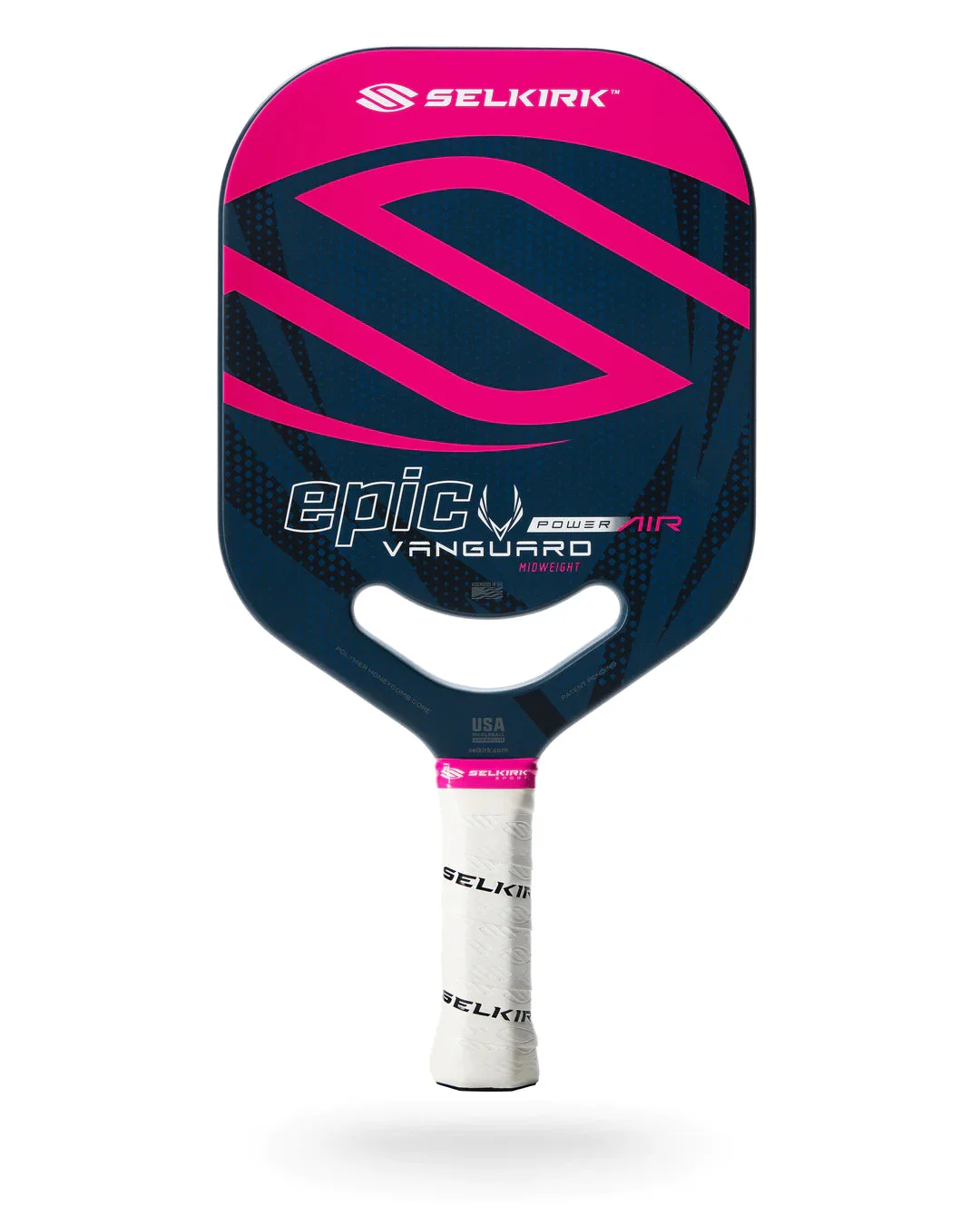
The Vanguard Power Air is the paddle this page’s edgeless slot was built for, and it is a true hybrid: Selkirk’s QuadFlex face stacks two FiberFlex fiberglass layers with two Quantum+ carbon layers, four layers in total, over a thin 13mm SuperCore polymer core, in the same edgeless Epic frame as its AMPED sibling. That recipe is a power recipe, and it plays like one. The thin core answers immediately, the carbon layers add structure and bite, and the fiberglass layers keep the response from turning harsh or dead.
Serves and drives left with real weight behind them, speed-ups jumped without a wind-up, and the edgeless throat kept the whole swing feeling clean through contact. The 5.25 inch handle is long enough for a two-handed backhand, and the wide 8 inch face gives the sweet spot room to breathe. Of the hybrids on this page, this is the one that leans hardest toward offense, and it is not close. The fiberglass flex does part of the work for you, which is exactly what a player with a timing-based swing rather than a fast arm wants from a power paddle.
The trade is forgiveness. A 13mm core forgives the least of any thickness on this page, so off-center contact loses more than it does on the 16mm picks above, and the edgeless frame gives up the edge guard’s protection against court scrapes. The lab fields read Not published honestly here, because no settled lab line exists for this paddle.
Buy it if you want edgeless speed and fiberglass-assisted power. Skip it if you miss off center often or scrape the court on low balls.
8. Friday Aura Pro Widebody: Best Fast-Hands Power Pickleball Paddle in 2027
AT A GLANCE
Friday Aura Pro Widebody
WEIGHT
7.85 oz (measured)
SWING WEIGHT
108
TWIST WEIGHT
6.86
SPIN
2,097 RPM
Shape: Widebody, 16 x 8 in class
Grip: 5.5 in handle, 4.25 in circumference
Core: Gen 4 full-foam, 16mm
Face: Raw texture peel-ply carbon fiber
Approval: USAP
Feel: Lively power with a wide, stable face
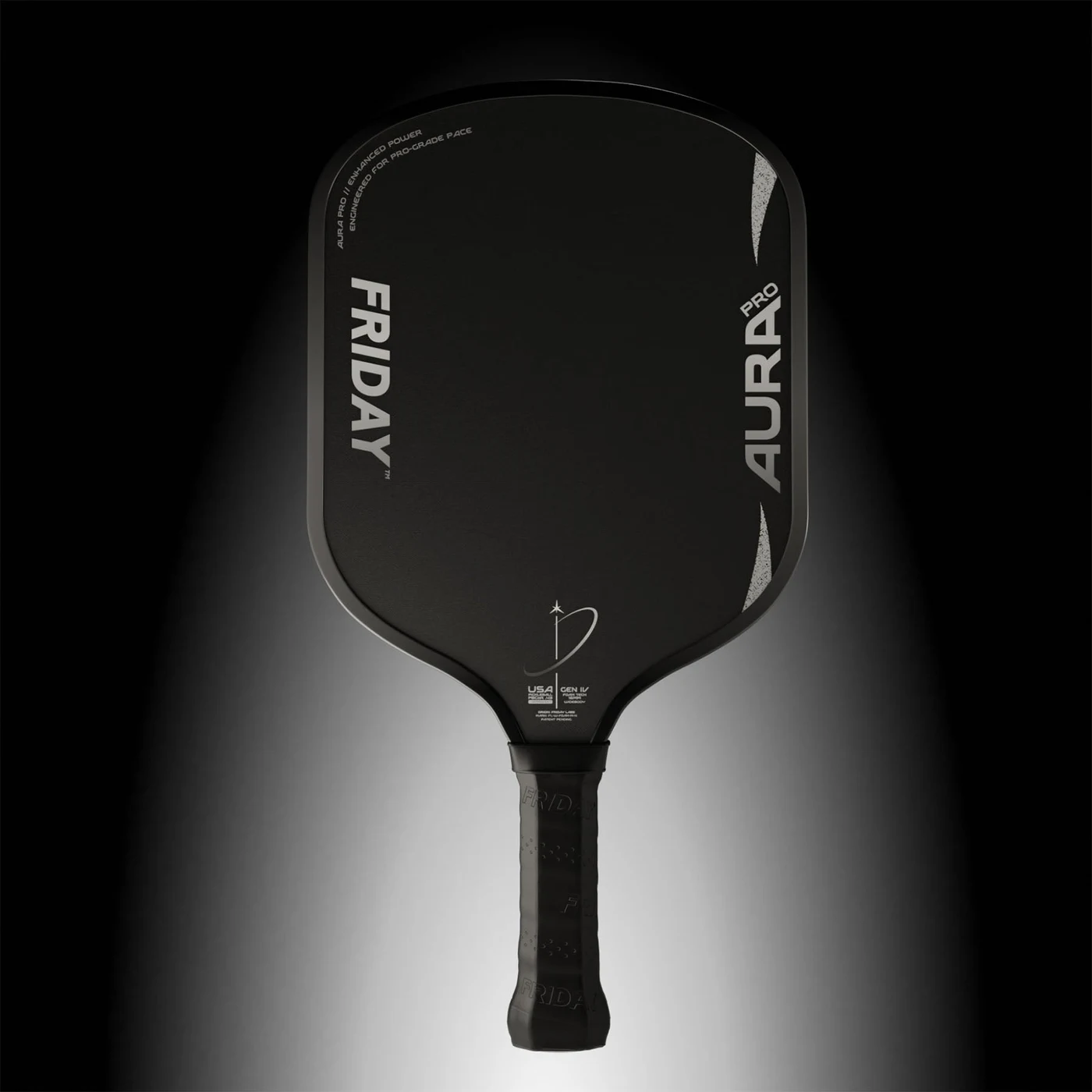
Speed is a skill, and this is the paddle that gives you more of it. The Aura Pro Widebody has one of the lightest swing weights in this class, 108, and at the kitchen that number is everything. Hands battles that used to be coin flips became mine. Volleys I normally block became volleys I could redirect, and after three games my forearm still felt fresh. That hand speed is a form of power no radar gun measures: the paddle that gets to the ball first wins the point.
It is not a feather that hits like one, either. The full foam core gives it a firm, crisp response, more connected than the springy feel of most foam paddles, and power arrives in a straight line: swing a little, get a little; swing hard, and the ball genuinely jumps. Blocks held their line thanks to a stable, wide face, 16 by 8 inches, and the spin is high enough, 2,097 RPM, to keep aggressive rolls dipping inside the baseline. The 5.5 inch handle leaves room for a two-handed backhand, which the widebody shape usually crowds out.
The widebody shape sets the limits. Reach is shorter than the elongated paddles here, so singles players and baseline drivers will feel the missing inches. Resets run firmer than on the standard Aura, so soft hands need a session to calibrate. And like the other peel ply faces in this class, the grit will fade across a few months of heavy play, which is the honest tax on this much spin.
Buy it if doubles and kitchen speed are your game. Skip it if you live at the baseline and win with reach.
9. Volair Mach 2 Forza 16mm: Best Widebody Stability Power Pickleball Paddle in 2027
AT A GLANCE
Volair Mach 2 Forza 16mm
WEIGHT
8.0 oz avg (brand-published)
SWING WEIGHT
112 (brand-published)
TWIST WEIGHT
7.37 (brand-published)
SPIN
Not published
Shape: Widebody (patented), 15.88 x 8.12 in
Grip: 5.5 in handle, 4.15 in circumference (brand-published)
Core: 16mm polypropylene honeycomb with foam-injected walls, thermoformed unibody
Face: T700 carbon fiber
Approval: USAP
Feel: Plush control, very large sweet spot
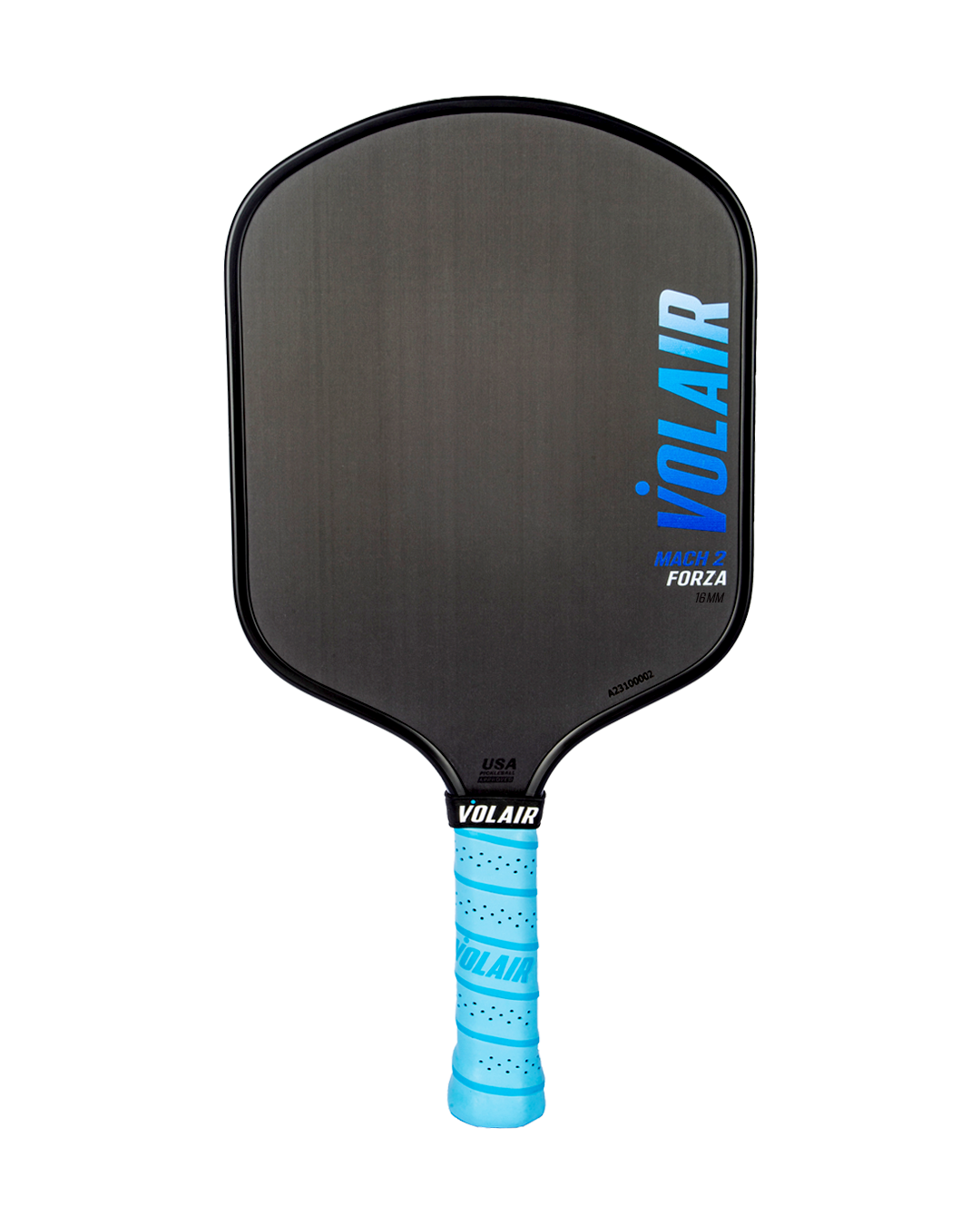
The Mach 2 Forza is built around a single idea, executed without apology: the sweet spot is the paddle. Volair’s patented widebody, 15.88 by 8.12 inches, is the broadest face on this page, and the twist weight on the brand’s own figures, 7.37, is the highest printed number on this list. In play that reads as calm: contact that lands toward the edges, the contact every player makes under pressure, comes back playable instead of twisting away, and blocks hold their line against pace that turns narrower paddles in the hand. Power here is not about leverage. It is about a stable face that lets you swing with confidence from defensive positions.
The feel matches the shape. The thermoformed unibody wraps a 16mm honeycomb core with foam-injected walls, and contact is plush rather than crisp: resets sit down, drops land soft, and the paddle absorbs the rally’s pace instead of reflecting it. The T700 carbon face gives the strike its shape, the 5.5 inch handle is a genuine two-handed length, and the 4.15 inch grip sits a touch under standard, suiting a relaxed hold. Drives carry honest pace once you give them a full swing, and counters stay planted.
The honesty here is about evidence. Every figure in this box is Volair’s own, published on its product page and labelled as such, because no settled lab line exists for this paddle; spin reads Not published for the same reason. The widebody also gives back some manoeuvrability in the fastest hands battles.
Buy it if off-center contact is where your rallies go to die. Skip it if you only trust lab-measured numbers or live on quick hands battles.
10. Selkirk SLK Halo Power XL: Best Value Power Pickleball Paddle in 2027
AT A GLANCE
Selkirk SLK Halo Power XL
WEIGHT
7.7-8.0 oz
SWING WEIGHT
Not published
TWIST WEIGHT
Not published
SPIN
1,400-1,450 RPM
Shape: Elongated, 16.4 x 7.4 in, 5.75 in handle
Grip: 4.25 in circumference
Core: 13mm Rev-Core Power Polymer honeycomb, thermoformed
Face: T700 raw carbon fiber (CarbonFusion)
Approval: USAP
Feel: Firm, light, quick hands
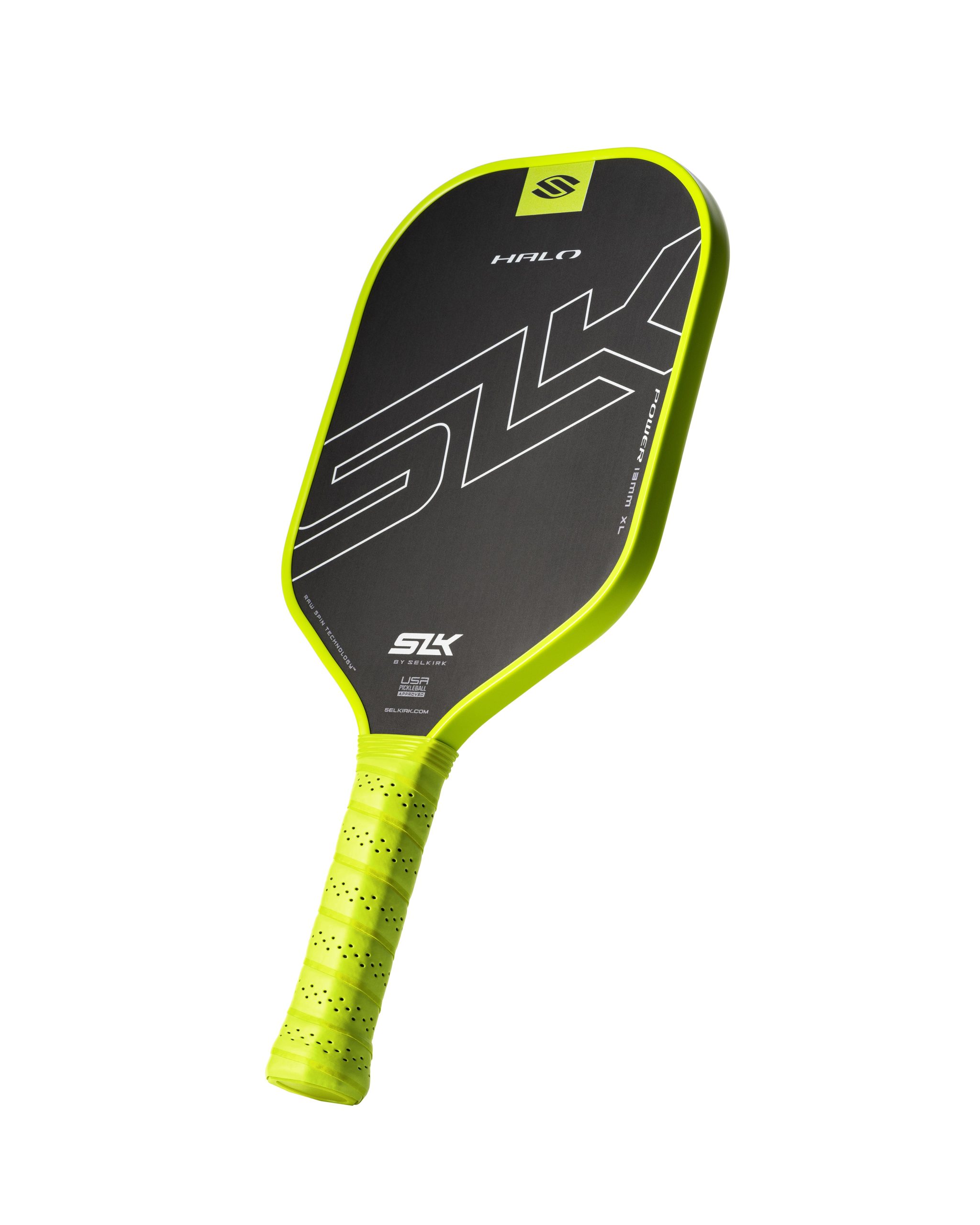
The Halo Power XL closes this list the way a value pick should: by doing the job honestly at a fraction of the flagship effort. The T700 raw carbon face over a thin 13mm Rev-Core Power Polymer core gives a firm, direct response, and the elongated shape, 16.4 by 7.4 inches, pairs that firmness with real reach and a long 5.75 inch handle with room for a two-handed backhand. At 7.7 to 8.0 ounces it is light in the hand, and that lightness is the power story here: head speed comes easily, so drives and flicks get depth without a big wind-up, and quick hands at the kitchen stay quick.
Be clear about what it is not. The spin, measured between 1,400 and 1,450 RPM, is the lowest figure on this page, and the gap to the 2,000-plus flagships above is real: topspin drives dip less, serves kick less, and one lab’s verdict is blunt that this paddle does not quite earn a power label on output alone. The thin grip and the 13mm core also make it firmer and less forgiving than the foam picks above, and stretched blocks need a firm wrist. I rank it here because it is the most affordable way onto this list, and because for a player moving up from a beginner paddle, the step up in pace is genuine even if the ceiling is lower.
Buy it if you want your first real power paddle without flagship commitment. Skip it if you already swing hard and need the top tier’s spin and stability.
How to Choose a Pickleball Paddle for Power in 2027
Power is the most marketed word in this sport and the least defined, so this guide starts with the definition I test against, then works through the specs that actually move the number: swing weight, core construction, thickness, shape, face, and the tuning option most players try last when it should be tried second. Read it once and the At a Glance data lines above will tell you more than any marketing page. If you want the other half of the equation, my control-and-power list ranks the paddles that refuse to choose between the two, and my advanced-players list shows where these power picks sit against the rest of the premium class.
What Power Actually Is
Power is output: how fast the ball leaves the face for a given swing. It is not effort, it is not noise, and it is not the crack a stiff paddle makes. A paddle with real power returns more of your swing as ball speed, so the same effort ends the point instead of restarting it. That is the whole test. Hit ten drives at full swing and count how many you can keep in with topspin; that is the power you can actually use. A paddle that launches two of them long is not more powerful than one that keeps all ten in. It is less useful.
Swing Weight: The Power Number That Matters Most
Static weight tells you what a paddle weighs on a scale. Swing weight tells you what it weighs mid-swing, and it is the better power predictor: higher swing weight means more plow-through on drives and serves, paid for with slower hands and more load on your arm. Under 110 feels quick and suits kitchen exchanges. Between 110 and 118 is the all-court middle where most usable power lives, and the Perseus Pro V and the ERA Power sit at the top of that window at 117. Above 118, you are buying heaviness on the ball with hand speed, and few players need to pay that price. The Aura Pro at 108 proves the other direction: quick hands can be their own kind of power.
Core Construction: Honeycomb, Foam, and the New Hybrids
Thermoformed honeycomb is the construction that defined the modern power era. The core and face are moulded together under heat, which seals the edges, firms up the perimeter, and produces that familiar pop and crack. The honest weakness is durability under hard use: honeycomb cells can crush, faces can separate from the core, and a paddle that hits hard in month one can develop a hot spot or a dead patch by month six. The GX2 answers that weakness by removing the core entirely: its lattice of carbon fiber tubes cannot crush, cannot delaminate, and holds its feel.
Foam cores answer with consistency of a different kind. A solid foam core has no cells to crush, it pockets the ball longer, and it tends to feel the same in month six as in week two, which is why the Black Opal, the Vapor Power 2, and the X2 all sit high on this list. The newest propulsion style cores blur the line further, pairing honeycomb with foam structures to chase honeycomb pop with foam manners. Whichever construction you choose, judge the power over time, not just on day one.
Core Thickness: 13mm Hits, 16mm Holds
The rule is simple: 16mm plays softer, dwells longer, and forgives more, while 13mm and 14mm answer quicker and pop harder. Thicker cores give touch players time on the ball. Thinner cores give fast hands and clean strikers extra pace on counters. The Halo Power XL and the Vanguard Power Air are both 13mm, and both play like it: immediate, firm, and honest about contact. The 16mm foam picks, the Vapor Power 2, the X2, and the Aura Pro, break the rule the other way: their foam cores pocket the ball like a thick honeycomb while still answering fast. Use thickness to sort the pile, then let construction and feel make the final call.
Shape: Where the Power Comes From
Shape is the one decision you cannot undo later with tape, and it moves power and control at once. Elongated paddles stretch the face to about 16.5 inches, which adds reach and leverage, so serves and drives gain pace, but the sweet spot sits higher and smaller, and the head feels slower in fast exchanges. The Perseus Pro V, the ERA Power, and the Halo Power XL create their power this way, and my elongated list ranks the shape class on its own if reach is your priority.
Widebody paddles go the other direction: shorter, wider, the biggest sweet spot, and the fastest hands at the kitchen. Their power comes from stability and confidence rather than leverage, which is why the X2, the Aura Pro, and the Forza defend so calmly and still finish points. Hybrid shapes split the difference and are the safest default for most players, which is why the Vapor Power 2, the Black Opal, and the GX2 all wear one. Pick your shape by where your points are won and lost, not by which looks more aggressive.
Face, Grit and Spin: Why Power Needs Grip
Spin is not a separate party trick. It is the mechanism that makes power usable. A drive hit hard stays in because topspin pulls it down, so the more grip a face has, the more of your swing you can actually spend. Raw carbon fiber is the standard surface because its texture bites without a coating, and the spin numbers in the data lines above, from roughly 1,400 RPM up to 2,335, show the spread across this list. The Vapor Power 2 at the top and the Halo Power XL at the bottom are nearly a thousand RPM apart, and that gap is the difference between swinging freely and holding back.
Face layups tune the power further. Fiberglass layers, used in the ERA Power and the Vanguard Power Air, add liveliness and pop on counters, with a launch you have to learn as the trade. Pure carbon faces answer calmer and hold the ball longer. The last variable is survival: plain raw carbon slowly goes smooth with play, so its spin, and the power that spin makes usable, fades. Durable grit surfaces like the Vapor Power 2’s HexGrit are built to hold their bite, which means the power you tested in week one is still the power you own in month four.
Tuning With Weight Tape Before You Buy Again
Before you replace a paddle that feels almost powerful enough, tune it. Small strips of weight tape change the power numbers independently, and a paddle that is one adjustment away from right is common. Tape across the top of the frame raises swing weight, which adds plow-through and drive power. Tape at the 3 and 9 o’clock positions raises twist weight, which steadies off-center blocks and calms a twisting face. Tape at the throat or under the grip shifts the feel toward hand speed.
Work in small steps and test for a full session between changes, because every addition moves something else: head tape adds power but loads the arm, and perimeter tape adds stability but takes a little quickness. Tuning will not fix a paddle whose core or shape is wrong for you, but it closes more gaps than another purchase usually does, and it costs almost nothing to try.
Frequently Asked Questions (FAQs)
1. What makes a pickleball paddle powerful?
A powerful paddle returns more of your swing as ball speed. The main drivers are swing weight, which is how heavy the paddle feels mid-swing, core construction, which decides how much energy the face returns, and face grip, which lets topspin keep a hard drive inside the lines. A paddle can look powerful on a spec sheet and still fail the only test that matters: ten full drives kept in with topspin.
2. What swing weight should I look for in a power paddle?
For most players the window is roughly 112 to 118: enough plow-through for drives and serves, without turning kitchen exchanges into a chore. The Perseus Pro V and the ERA Power sit at 117, the top of that window on this list. Under 110 your hands get quicker but your drives lose weight, and the Aura Pro at 108 is the exception that proves the rule, because it trades weight for hand speed. Above 118, counters and reactions start losing you points.
3. Is a 13mm paddle always more powerful than a 16mm paddle?
No, it is a tendency, not a law. Thirteen millimeters usually pops harder and answers faster, and 16mm usually dwells longer and forgives more, but construction bends the rule: the 16mm Vapor Power 2 and Black Opal hit harder than most 13mm paddles because their foam cores and grit faces do the work thickness alone cannot. Check the feel and the core, not just the number on the throat.
4. Does a power paddle hurt my soft game?
It can, and the honest answer is that every high-output paddle demands softer hands. Drops, dinks, and resets need a looser grip and a shorter swing on a lively face, and the first two weeks with the Black Opal or the Vapor Power 2 will prove it. Foam cores help, because they pocket the ball and absorb pace, which is why the foam picks on this list reset better than their output suggests. If your soft game is your whole identity, start with my control-and-power list instead.
5. What is the difference between a power paddle and an all-court paddle?
A power paddle is built to maximise output: pace on drives, serves, counters, and overheads. An all-court paddle is built to sit between the power and control extremes, with no real weakness in any phase of a rally. Most players are better served by all-court, and the paddles on this list that come closest to it are the X2 Widebody and the GX2 Power Hybrid, which pair their power with real forgiveness. Buy pure power only when finishing points is your clearest need.
6. Do I need a power paddle to play at a higher level?
No. Power helps, but placement, spin, and consistency win more points than raw pace at every level below the professional game. Many strong players choose a control or all-court paddle and generate their own pace with technique. A power paddle is worth it when your drives sit up and get attacked, or when your counters need to finish points instead of just surviving them. If your misses are blocks sailing long, buy absorption first.
7. Why does spin matter for power?
Because spin is what keeps a hard drive inside the court. Topspin pulls the ball down, so a face with more grip lets you swing harder without the ball sailing long. That is why the Vapor Power 2, at 2,335 RPM, can be swung at full speed while the Halo Power XL, at about 1,400 RPM, asks you to hold back. Spin is the mechanism that turns raw output into usable power, and it is also why grit faces fade: as the texture smooths, the power you can actually use fades with it.
8. Are foam core paddles powerful?
Yes, and three of the top six picks on this list are foam builds. A solid foam core pockets the ball and returns energy without the hollow crack of thermoformed honeycomb, and modern foam paddles pair that pocketing with grit faces that spin hard. The Black Opal, the Vapor Power 2, and the X2 all prove the point. Foam also holds its feel longer, because there are no honeycomb cells to crush, so the power you test in week one is the power you still own months later.
9. Can I add lead tape to make my paddle more powerful?
Yes, and you should try it before buying. Tape across the top of the frame raises swing weight and adds plow-through on drives. Tape at the sides raises twist weight and steadies blocks. Work in small steps, a gram or two at a time, and test for a full session between changes. Tape will not change a paddle’s core, shape, or face, so it closes small gaps rather than fixing a wrong paddle, but it is the cheapest power upgrade in the sport.
10. Should beginners buy a power paddle?
Usually not. Beginners miss off center, so forgiveness, a thicker core, a wider or hybrid shape, and a healthy twist weight matter more than output, and a lively power paddle punishes exactly the contact beginners make most. Start all-court, leaning control, and move toward a power specialist once your misses have a clear pattern. The one exception on this list is the Halo Power XL at pick 10, which is light, forgiving enough, and honest about its ceiling for a player moving up from a beginner paddle.
11. What is the difference between the JOOLA Perseus Pro V and the Pro IV?
The Pro V is the current flagship: a Propulsion Core with EVA foam, a flexing KineticFrame throat, and a measured line of 117 swing weight and 2,060 RPM of spin, built for repeatable, consistent power. The Pro IV is the previous generation, and it hands you power more easily, with a slightly higher swing weight and a livelier response, but with a stiffer, hollower feel and core durability complaints that follow the generation. If you want the most consistent option, buy the Pro V. If you want the easiest pace, the Pro IV still earns its place on my homepage list of the 15 best paddles.
12. How do I test a power paddle before I buy?
Test in both directions of play, in one session. Hit ten drives at full swing and count how many you can keep in with topspin; that is the power you can actually use. Then play ten reset and block exchanges against the hardest hitter available and count how many balls land low and in the kitchen; that is the control you are paying for it. A good power paddle passes both counts with your normal technique, not with adjustments you would never make in a match. If it fails the second count, the power is not worth the price.

Michael Stevenson
Hi, my name is Michael Stevenson and I’m a passionate pickleball player. I’ve been playing the game for many years and I’m pretty highly skilled at it. Pickleball is one of my favorite topics so naturally, I love to write about it.
Whether it’s tips for beginners, guides for experts, reviews of new paddles, or advanced playing techniques – if it relates to pickleball then I have something interesting to write about it. So if you’re looking for entertaining and informative information on the topic of pickleball, look no further than my written works!