
Third game, tied at nine, and the rally has gone the way long rallies go: nobody missing, everybody waiting for the ball that forces a stretch. It comes at my backhand hip, hard, from a player who has decided the point ends on his terms. I have half a step and no time to set my feet.
I reach, I block, and the ball I send back is not a prayer. It drops low over the net and dies in the kitchen, and the point is ours. Two points later I am at the baseline, and the same paddle drives a ball deep enough to win the point outright. That is the whole case for an all-court paddle, and it is the shot this list is built around.
An all court pickleball paddle is a paddle that does everything well enough to win points from anywhere on the court. It drives from the baseline with real pace. It drops, dinks and resets with a soft, calm touch at the kitchen.
And it swings light enough to play a full session without your arm going quiet. It may not lead in any one area, and that is the point. A power paddle hits harder but asks more of your soft game. A control paddle is calmer but adds almost nothing to your drives.
The best all court pickleball paddles refuse that trade, and the ten below are the ones that refuse it best.
I tested them the way all-court buyers actually use them: drives from the baseline, third-shot drops, dinks, resets under pressure, blocks against hard drives, and the kitchen exchanges that decide doubles points. My homepage list of the 15 best paddles shows where these all-court picks sit against the rest of the sport.
The 10 Best All-Court Pickleball Paddles in 2027
1Six Zero Black Opal 14mm: Best All-Court Pickleball Paddles in 2027 for Overall Balance
AT A GLANCE
Six Zero Black Opal 14mm
WEIGHT
8.1 oz
SWING WEIGHT
114
TWIST WEIGHT
6.4
SPIN
2,307 RPM
Shape: Hybrid
Grip: -
Core: Gen 4 solid foam with Power Gel energy layer, 14mm
Face: Diamond Tough raw carbon fiber
Approval: USAP and UPA-A
Feel: Dense, springy, thuddy power
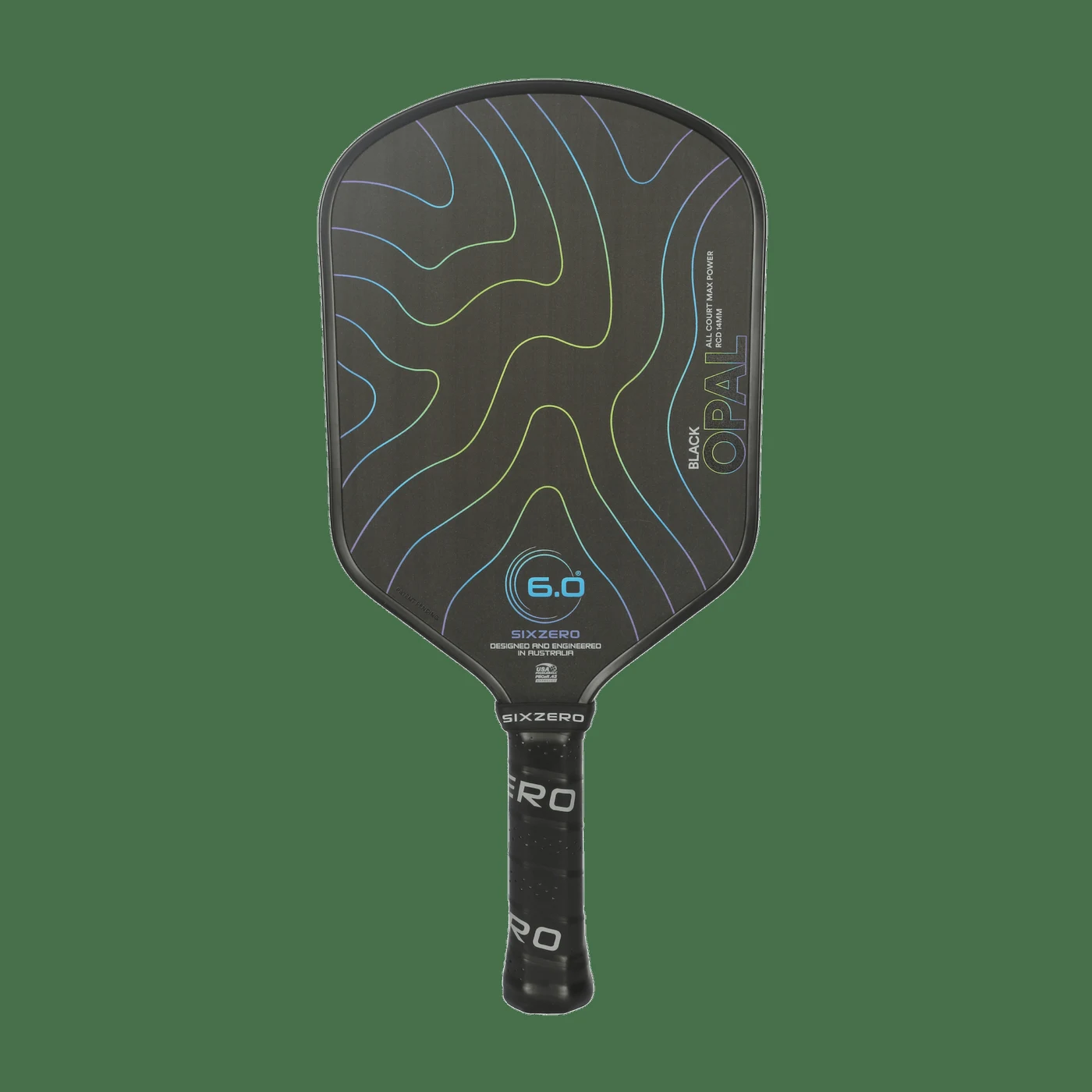
The Black Opal is the best all-court paddle on this page because it refuses to pick a side. The core is Gen 4 solid foam, foam all the way through with a Power Gel energy layer, and the face is Diamond Tough raw carbon fiber, a tougher grit surface built to keep its bite.
Contact feels dense and springy at once. The ball sinks in, holds for a fraction, and leaves with real baseline pop, and the same frame settles into a calm kitchen game once your swing shortens.
The measured line is honest about the trade. At 8.1 ounces with a twist weight of 6.4, the sweet spot sits low and is not generous, so stretched blocks and late resets get punished when contact drifts.
Twist weight is the forgiveness number: it measures how hard the face resists turning on off-center contact, and 6.4 is solid rather than forgiving.
The soft game also leaks pop-ups for the first two weeks until the swing shortens and the hands learn the dwell, which is how long the ball stays on the face. Confident strikers call that a fair trade. Developing players call it frustrating, and they are not wrong.
What sets the Opal apart over a season is the face. The Diamond Tough grit holds far longer than standard raw carbon, with one long tester finding it still biting after 25 hours of hard play, while most raw carbon faces go smooth in a season.
Buy it if you want one paddle that does everything well and you are willing to earn the soft game in the first two weeks. Skip it if your contact still wanders and you need the widest forgiveness on this page.
2Six Zero Double Black Diamond Control 16mm: Best All-Court Pickleball Paddles in 2027 for Control
AT A GLANCE
Six Zero Double Black Diamond Control 16mm
WEIGHT
8.0-8.2 oz (Standard)
SWING WEIGHT
114 (brand-published)
TWIST WEIGHT
6.8 (brand-published)
SPIN
-
Shape: Hybrid, 16.3 x 7.7 in
Grip: 5.5 in handle, 4.25 in circumference
Core: 16mm thermoformed polymer honeycomb with foam edge walls
Face: Raw Toray T700 carbon fiber
Approval: USAP
Feel: Connected all-court
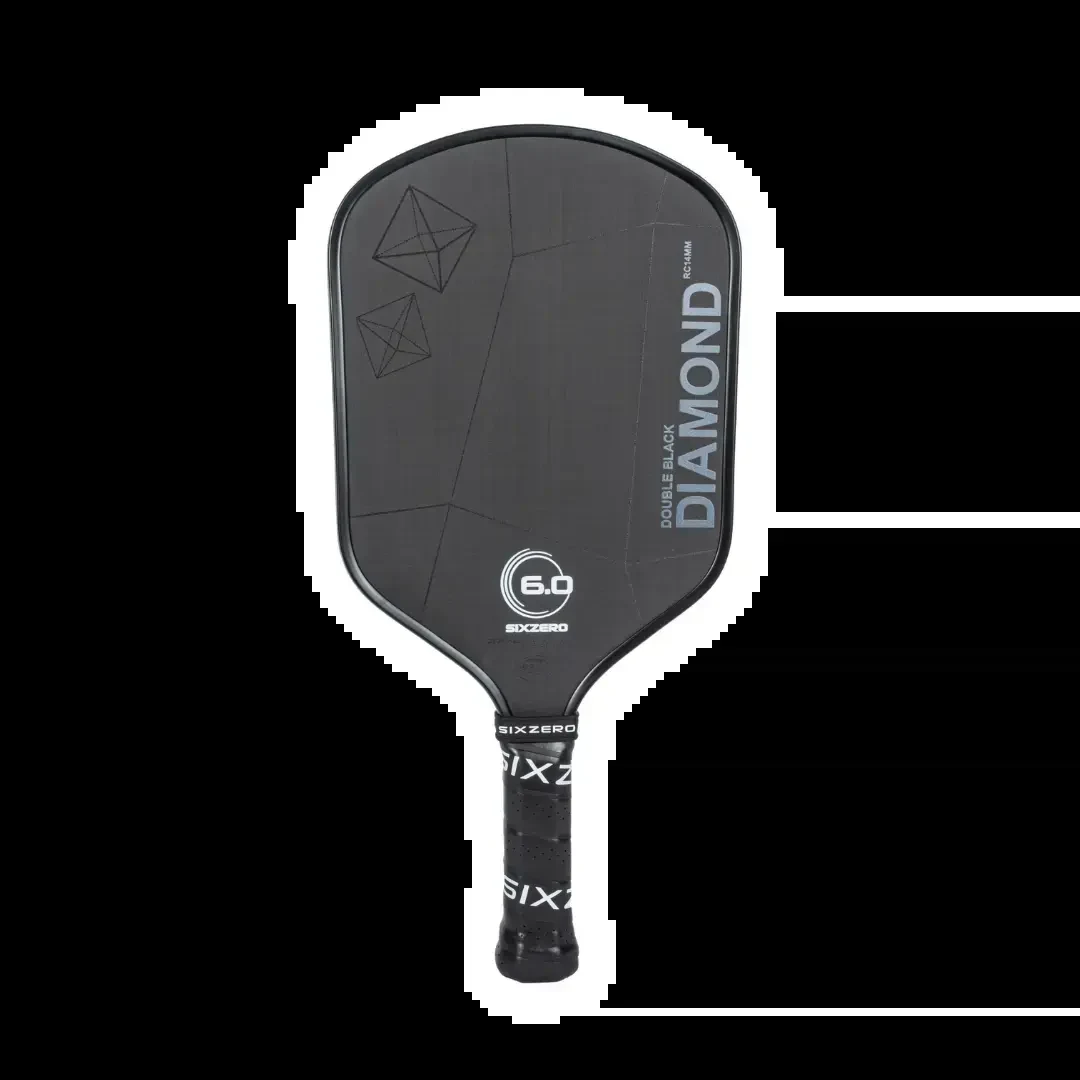
The DBD Control is the paddle the whole control class is measured against, and it earns that place with a build that sounds like a contradiction. Thermoformed means the layers were bonded with heat and pressure, which usually makes a paddle firm and unforgiving. This one plays plush for its class.
Under a raw Toray T700 carbon fiber face sits a 16mm polymer honeycomb core, and foam edge walls stiffen the perimeter, so contact near the edges behaves more like contact in the middle. The ball pockets, holds for a fraction, and leaves where you aimed it. Drops land low and repeatable. Resets stay calm. Dinks stay low.
The spin figure is not published, and the box says so honestly. In play the spin is strong anyway, with independent tests landing in the high 1900s to over 2,000 RPM, and it shows on serves that dip late and drives that hold their line. The grit fades with hours played, so the spin you test fresh is not the spin you own in month six.
The stock grip is thin and can feel slippery in a hot session, so an overgrip is part of the setup, not an accessory. One warning about the name: the figures here belong to the 16mm Standard only.
Six Zero sells other weight classes and a thinner 14mm under the same name, and their numbers are different, so select the DBD Control 16mm Standard on the listing.
Buy it if your points leak through balls sailing long, pop-ups at the net, and a sweet spot that feels smaller than it should. Skip it if you finish rallies with raw pace and need a paddle that manufactures putaways on big swings.
3Vatic Pro Prism Flash 16mm: Best All-Court Pickleball Paddles in 2027 for Value
AT A GLANCE
Vatic Pro Prism Flash 16mm
WEIGHT
7.9-8.2 oz
SWING WEIGHT
114
TWIST WEIGHT
6.47
SPIN
~1,900 RPM
Shape: Hybrid, 16.25 x 7.7 in
Grip: 5.3 in handle, 4.25 in circumference
Core: 16mm C7 polymer honeycomb with foam-injected edge walls
Face: Raw Toray T700 carbon fiber
Approval: USAP
Feel: Plush control
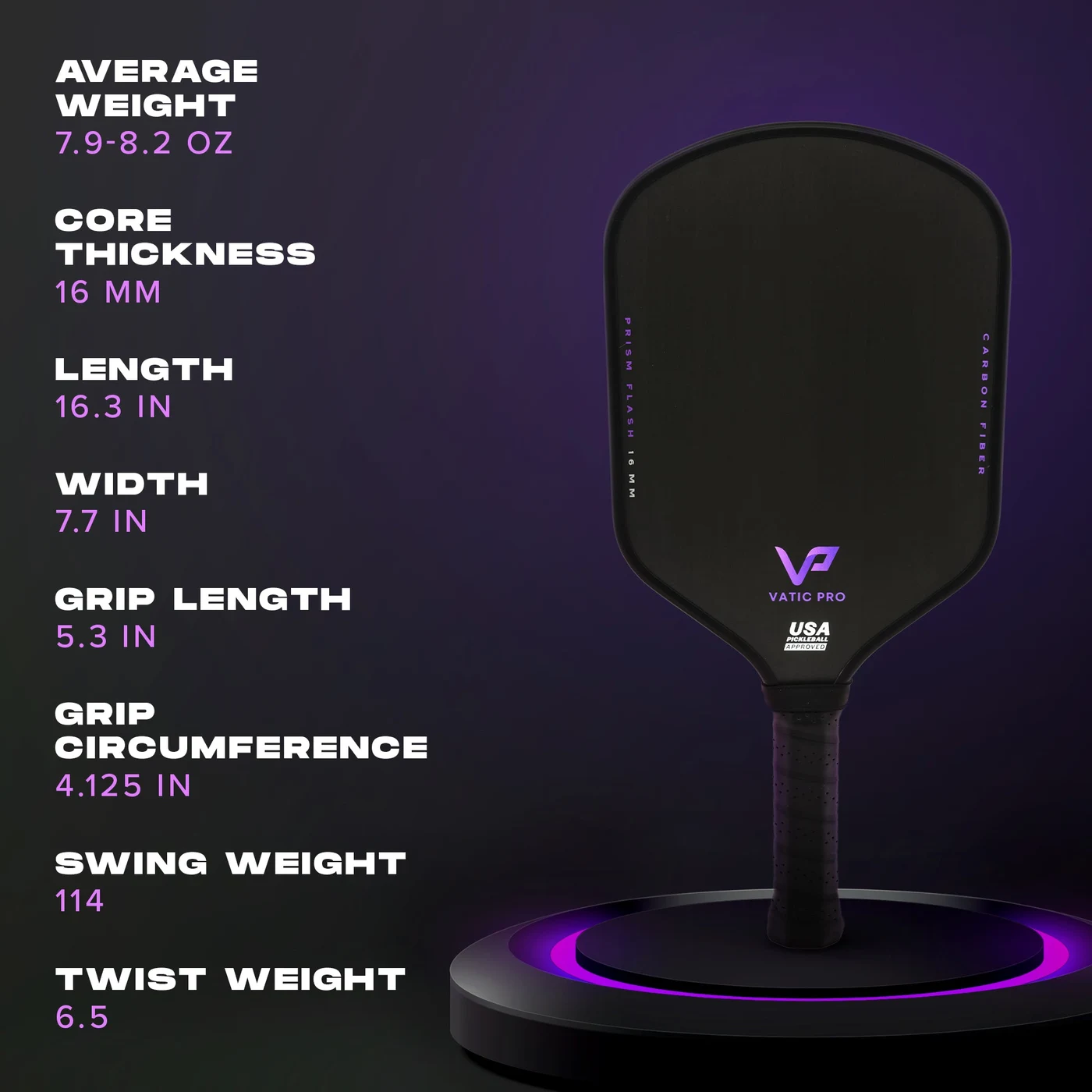
The Prism Flash is the easiest paddle on this page to trust from day one. Blocks land where aimed. Drops settle. Resets stay calm. The core is 16mm polymer honeycomb with foam-injected edge walls, and the raw Toray T700 carbon fiber face gives the strike a plush, connected feel without going dead.
At a swing weight of 114 it moves quickly in hand battles, and a twist weight of 6.47 keeps stretched blocks honest when contact drifts toward the edge.
The limit is power, and I will say so plainly. A full swing is needed to finish from the baseline, and a short or lazy swing lands short. Spin is honest rather than spectacular at around 1,900 RPM, enough bite for dipping drives and roll volleys that fall at the feet, but not the shaped serves the spin-first paddles throw.
The face also loses bite faster than premium raw carbon faces over a long season, so the spin softens with months of play. One warning about the listing: it is a family listing, so select the Flash 16mm on it. The other Vatic shapes under the same family name are different paddles with different numbers.
Buy it if you want the most trustworthy all-court paddle for the least money and you are happy to supply your own pace. Skip it if baseline power is the hole in your game, because this paddle will not fill it for you.
4CRBN TruFoam Genesis 14mm: Best All-Court Pickleball Paddles in 2027 for Spin
AT A GLANCE
CRBN TruFoam Genesis 14mm
WEIGHT
7.9-8.3 oz
SWING WEIGHT
119
TWIST WEIGHT
6.21
SPIN
2,401 RPM
Shape: Elongated hybrid, 16.5 x 7.5 in
Grip: 5.25 in handle, 4.125 in circumference
Core: Full TruFoam foam, 14mm
Face: T700 raw carbon fiber with fiberglass backing layer
Approval: USAP and UPA-A
Feel: Soft dwell
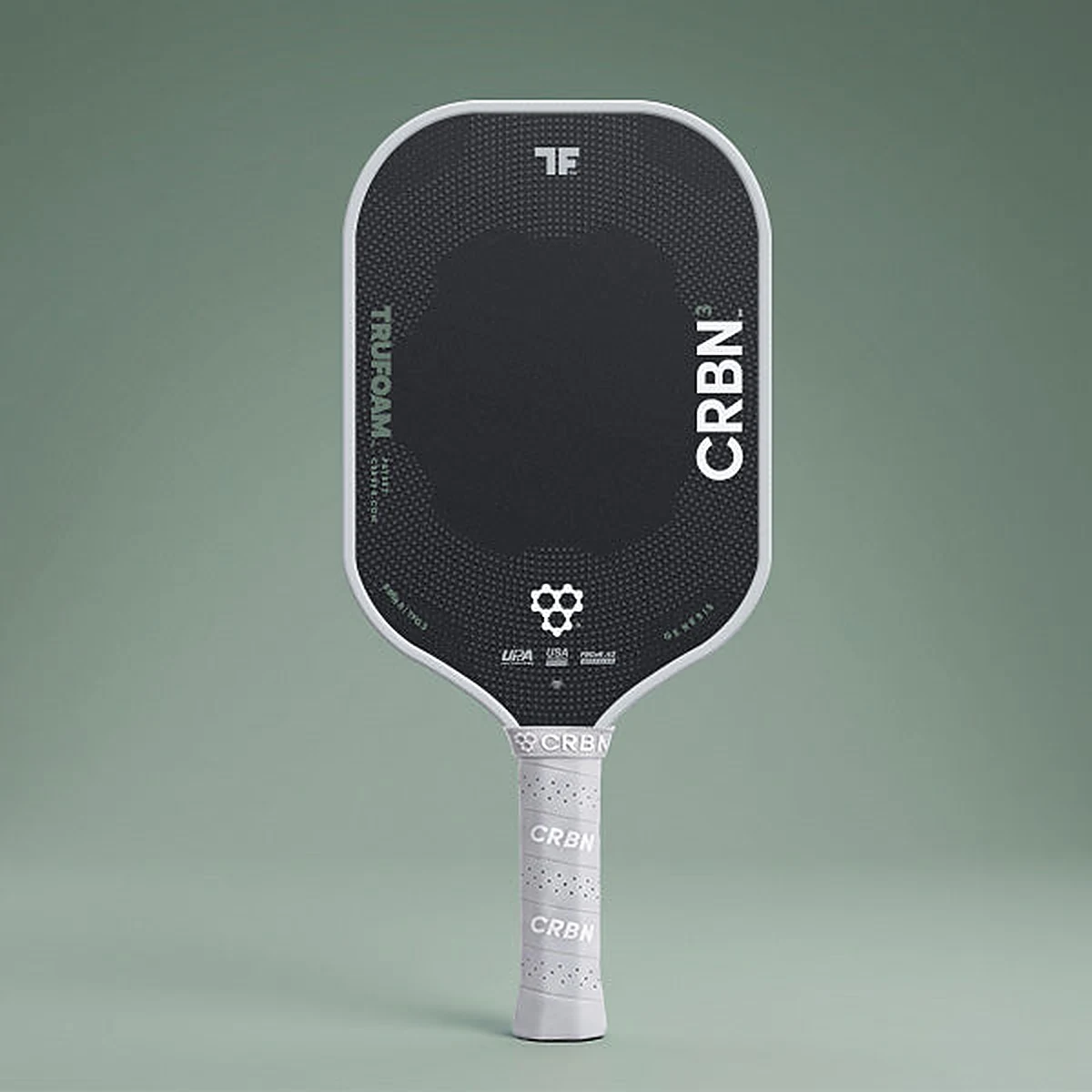
The Genesis is the spin king of this page, and the number is not close: 2,401 RPM measured, the highest figure published anywhere on this site. The mechanism is dwell, which is how long the ball stays on the face.
The core is full TruFoam foam, 14mm thick, with no honeycomb anywhere in the build, so the ball sinks in and stays a fraction longer than a honeycomb build allows.
That extra contact time is working time. The T700 raw carbon face holds the ball while your swing brushes up the back of it, and the result is a drive that keeps climbing over the net and then drops, and a serve that dips late and kicks off the bounce.
The tax is swing weight. At 119 it is the slowest Genesis and one of the two heaviest swings on this page, and your hands feel it in fast kitchen exchanges, where the head arrives a touch later than the light paddles.
The fiberglass backing layer under the carbon can also launch early resets high until your grip softens, so the first week asks for patience.
One warning about the listing: it carries four Genesis shapes, and the figures here belong to the TFG3 elongated hybrid only, the 16.5 by 7.5 inch shape. Select it by name and dimensions, because the other shapes carry different numbers.
Buy it if spin is the first thing you shop for and you swing with time to brush. Skip it if hand speed at the kitchen is your whole game, because this swing weight will tax you in fast exchanges.
5JOOLA Perseus Pro V 16mm: Best All-Court Pickleball Paddles in 2027 for Flagship Play
AT A GLANCE
JOOLA Perseus Pro V 16mm
WEIGHT
8.1 oz
SWING WEIGHT
117
TWIST WEIGHT
6.26
SPIN
2,060 RPM
Shape: Elongated, 16.5 x 7.5 in
Grip: 5.5 in handle, 4.25 in circumference
Core: Propulsion Core (polypropylene honeycomb with EVA foam, Hyper-Foam Edge Wall, KineticFrame throat)
Face: Textured raw carbon fiber
Approval: USAP and UPA-A
Feel: Firm consistency
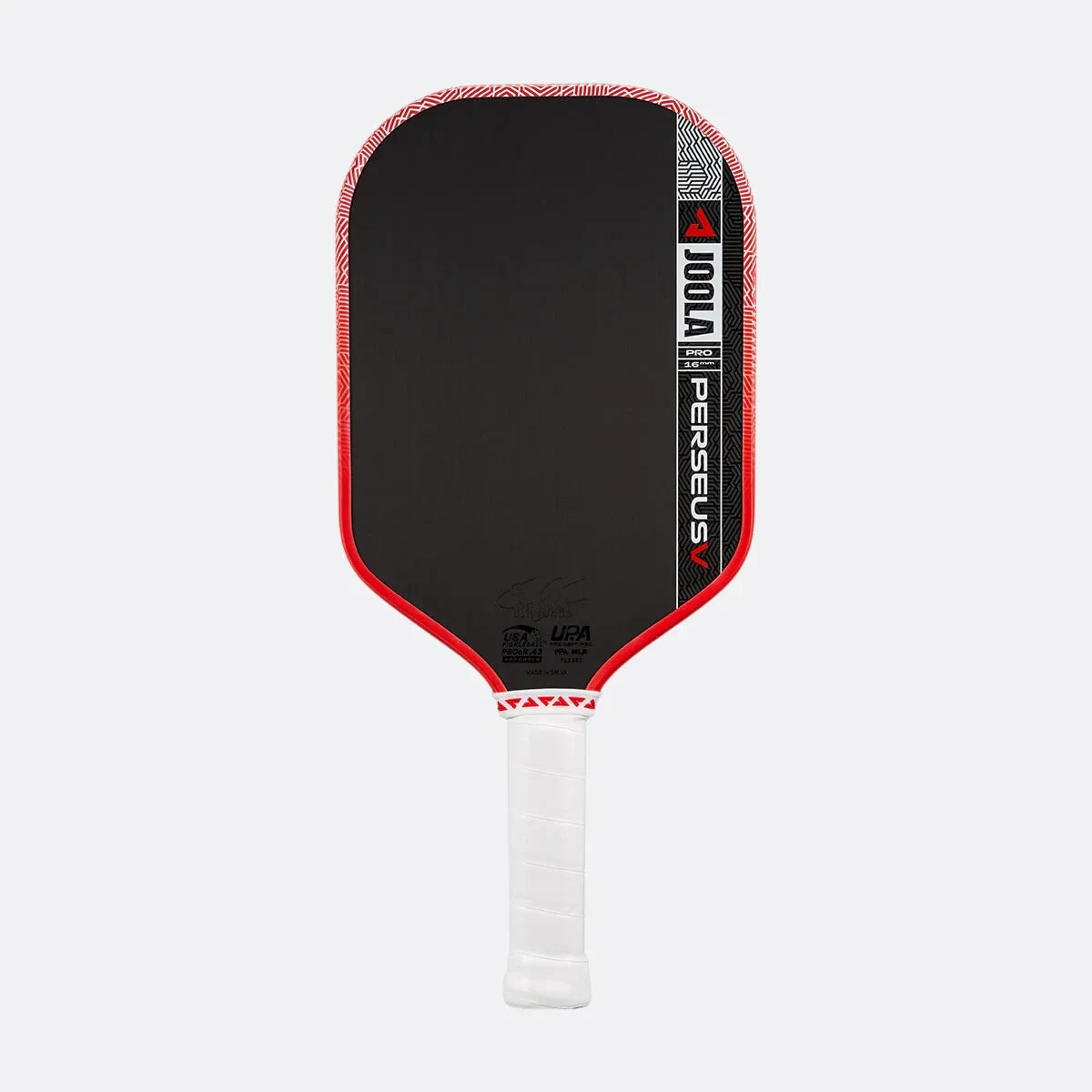
The Perseus Pro V is the flagship of this page, the paddle the site ranks first overall, and it plays like a flagship should: firm, consistent, and honest about what it asks of you.
The Propulsion Core is a polypropylene honeycomb with EVA foam inside, a Hyper-Foam Edge Wall, and a KineticFrame throat, and the textured raw carbon face gives the strike a connected feel on drives and putaways.
Power here is earned, not given. A full swing gets rewarded with a ball that comes off heavy, with spin that keeps it inside the lines, and the elongated 16.5 inch frame gives serves and overheads the leverage the shorter shapes cannot.
The trade is the swing weight. At 117 the head arrives with momentum you have to manage, and it exposes imprecise contact and taxes hands in frantic kitchen exchanges.
The sweet spot is placed for players who already find the middle, so a developing player will produce less with it than the raw figures suggest, because the brush has to be earned.
Spin measures 2,060 RPM, mid-pack on this page, and the paddle earns its place on the combination no other pick matches: a genuinely grippy raw carbon face on an elongated Propulsion build with the pace to weaponize it. One warning about the listing: it is a family listing, so select the Perseus Pro V 16mm, the Ben Johns edition, on it.
Buy it if your mechanics are already in place and you want a flagship that rewards a full swing. Skip it if forgiveness matters more than leverage, because this paddle makes you earn your power.
6Vatic Pro V-SOL Pro 16mm: Best All-Court Pickleball Paddles in 2027 for Foam Value
AT A GLANCE
Vatic Pro V-SOL Pro 16mm
WEIGHT
~7.9 oz (measured)
SWING WEIGHT
108
TWIST WEIGHT
6.43
SPIN
2,060 RPM
Shape: Hybrid (Flash), 16.25 x 7.7 in class
Grip: 5.3 in handle, 4.125 in circumference
Core: Full EPP foam with EVA perimeter ring, 16mm (Gen 4)
Face: Raw Toray T700 carbon fiber
Approval: USAP
Feel: Lively all-court
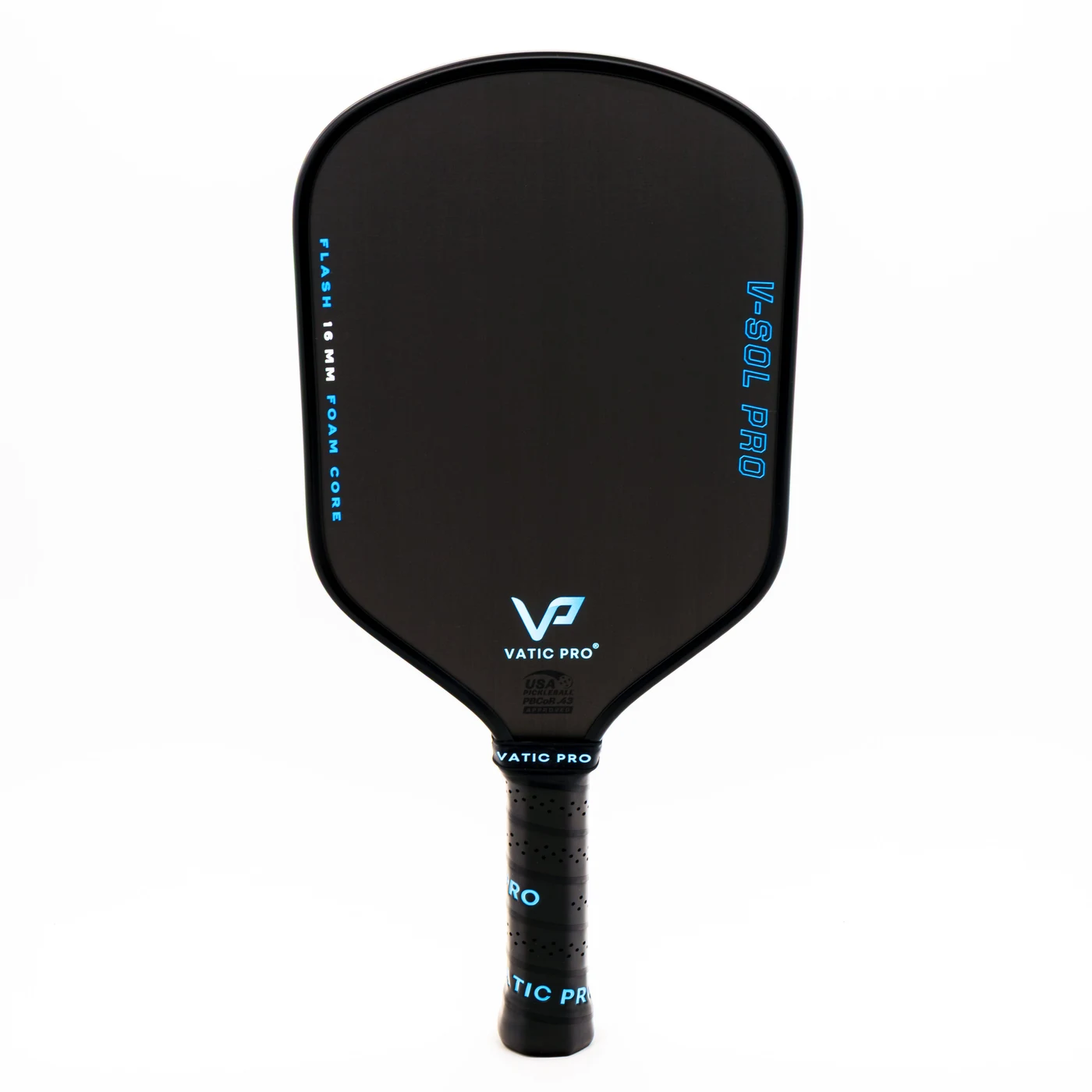
The V-SOL Pro Flash is the quick-hands foam paddle on this page, and the number that explains it is the 108 swing weight. Swing weight is the hand-speed number: it measures how heavy the head feels when you swing it, and 108 is the second-quickest on this list.
Hands stay fast in kitchen exchanges, counters arrive on time, and short swings still get free pop, because the full EPP foam core with its EVA perimeter ring pockets the ball and hands the energy back.
Spin measures 2,060 RPM off the raw Toray T700 face, real working spin for serves and thirds that dive, and the sweet spot plays large for a hybrid, because the EVA ring stiffens the edges.
The cautions are honest ones. The grit fades with hours played, losing a fifth or more of its spin after heavy use, so the spin is strong fresh and softens with the season. The paddle is lively on blocks and resets, and tense blocks can push long until your hand learns to stay soft.
One honest split belongs here: the site says it takes about five sessions for the paddle to wake up, while one hands-on tester says it was ready from session one.
One warning about the listing: buy the Flash hybrid only. The Bloom widebody and the V7 elongated are different shapes with different figures, and their numbers must never be borrowed for this paddle.
Buy it if you want foam-core quickness and real spin for a fraction of flagship cost. Skip it if you want the calmest blocks on this page, because this one plays lively until your hand learns it.
711SIX24 Jelly Bean 16mm: Best All-Court Pickleball Paddles in 2027 for Forgiveness
AT A GLANCE
11SIX24 Jelly Bean 16mm
WEIGHT
8.0-8.3 oz
SWING WEIGHT
107
TWIST WEIGHT
7.21
SPIN
2,103 RPM
Shape: Widebody (Pegasus), 15.82 x 8.04 in
Grip: 5.75 in handle, 4.125 in circumference
Core: 16mm polypropylene honeycomb, Gen 1.5 unibody with foam-injected edge walls
Face: CFC: two layers of Toray T700 raw carbon fiber over one fiberglass layer
Approval: USAP
Feel: Soft, springy forgiveness
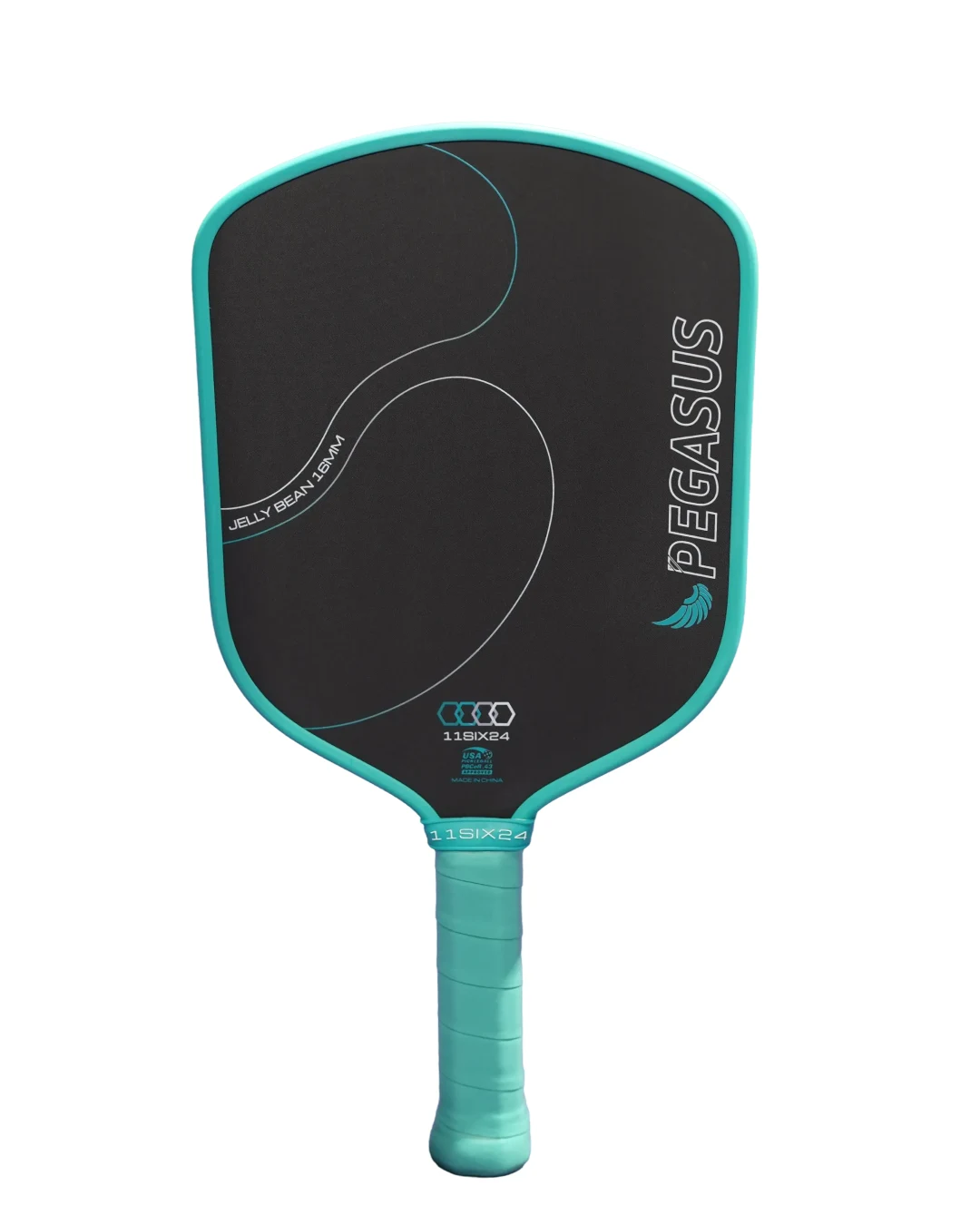
Forgiveness is a measurable thing, and for a game that is still getting cleaner, this is where it peaks.
The Jelly Bean is the Pegasus widebody, a full 8 inches across, and its measured twist weight of 7.21 means contact caught wide of center still leaves on your line, so stretched blocks and late defensive stabs stay playable instead of spraying toward the fence.
Those are the contacts that decide rallies, and this paddle wins more of them than any other here.
At 8.0 to 8.3 ounces it is midweight on the scale, but its measured swing weight of 107 is the lowest on this page, so in play it arrives at the kitchen quicker than paddles that weigh less in the hand.
The layered CFC face, two layers of raw carbon over one fiberglass layer, produces genuine spin at 2,103 RPM, and the 5.75 inch handle leaves real room for a two-handed backhand. It also sits on my intermediate-players list for the same reason: it keeps a developing player in rallies long enough to learn.
What it will not do is finish points from the baseline. Drives come off politely, and the softness that forgives so completely also caps putaway sting, so strong players reach its ceiling fast.
The face collects dust, so keep a paddle eraser in your bag. Buy it if mishits and stretched defense are where your points leak away. Skip it if baseline power is the hole in your game.
8JOOLA Scorpeus Pro IV 16mm: Best All-Court Pickleball Paddles in 2027 for Widebody Play
AT A GLANCE
JOOLA Scorpeus Pro IV 16mm
WEIGHT
8.24 oz
SWING WEIGHT
114.95
TWIST WEIGHT
7.4
SPIN
2,221 RPM
Shape: Widebody
Grip: 5.25 in handle, 4.25 in circumference
Core: Gen 3 Propulsion Core, 16mm
Face: Peel-ply carbon fiber
Approval: USAP and UPA-A
Feel: Stable plush
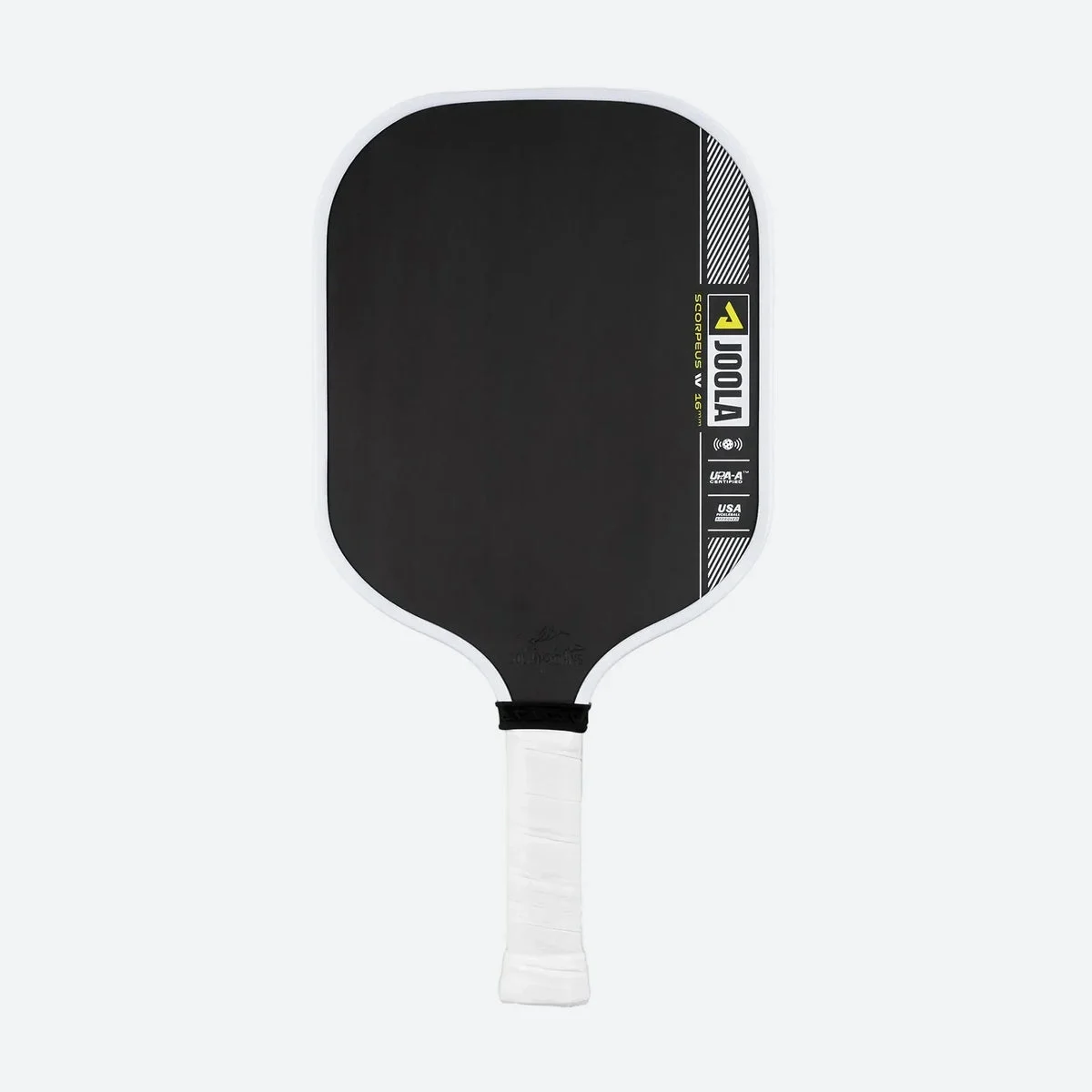
Take the Perseus power recipe and put it in a frame built for defense, and you get the Scorpeus Pro IV. The widebody shape spreads the hitting surface out instead of stretching it long, and the number that explains the whole paddle is the 7.4 twist weight, the highest on this page and the highest the site publishes for any paddle.
Hard drives caught off center simply do not turn the face over. Blocks stay square, resets land low, and the ball goes where it was aimed even when my feet were still moving.
That stability is the control story here: a face that refuses to twist is a face that keeps your defense honest. The surprise is how much of the JOOLA power survives the move.
The same Gen 3 Propulsion Core sits inside, so serves still jump and drives still carry, and the measured spin, 2,221 RPM, actually beats its elongated sibling, which is why it also leads my spin list for the widebody shape.
At a swing weight just under 115 it changes direction faster than the Perseus, so counters at the kitchen feel like choices rather than reactions.
What you give up is length. The widebody gives back the extra reach on wide gets and overheads, and players who live on a two-handed drive will feel the shorter hitting zone.
The soft game is calm rather than buttery, closer to firm control than to a foam pocket, and the peel-ply face is a wear surface, so its bite softens with months of play. Buy it if your points start with defense and end with a counter. Skip it if reach and elongated leverage are how you create power.
9Engage Pursuit Pro1 6.0 Elongated: Best All-Court Pickleball Paddles in 2027 for Touch
AT A GLANCE
Engage Pursuit Pro1 6.0 Elongated
WEIGHT
8.0 oz
SWING WEIGHT
118.6
TWIST WEIGHT
5.95
SPIN
2,267 RPM
Shape: Elongated, 16.5 x 7.5 in
Grip: 5.875 in handle, 4.25 in circumference
Core: MachPro polymer with Variable Release 2.0
Face: Raw Toray T700 carbon fiber
Approval: USAP
Feel: Cooperative touch
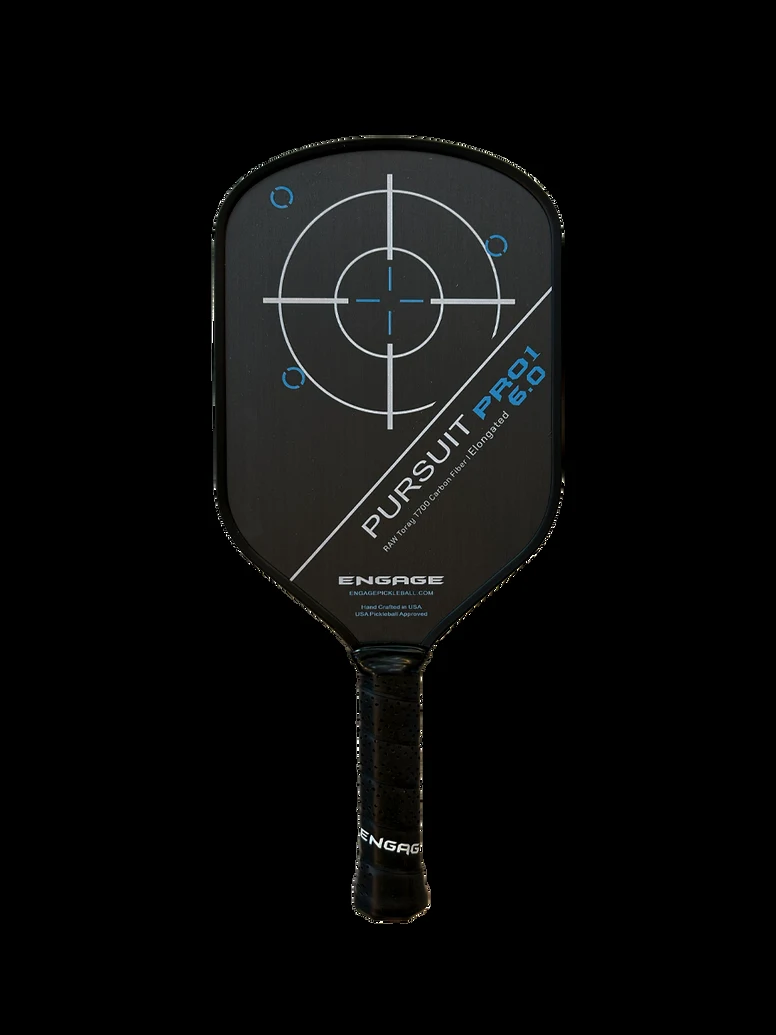
The Pursuit Pro1 is the most cooperative touch paddle in the premium class, and the build explains why. It is cold-pressed, which means the layers were pressed together without the heat bonding that thermoforming uses, so the ball sits on the face instead of bouncing off it.
Drops land soft, dinks stay low, and resets feel calm, because the MachPro polymer core with Variable Release 2.0 gives the ball back on your timing instead of its own.
The coarse raw Toray T700 carbon face earns its keep on serves and roll volleys, with measured spin of 2,267 RPM, and the long octagon handle feels like home to tennis crossovers. At 5.875 inches it is the longest handle on this page, so two-handed backhands have genuine room.
At 118.6 the swing weight is the heaviest on this page, so the head feels head-heavy and arrives with momentum you have to manage in fast exchanges.
And at 5.95 the twist weight is the lowest here, so off-center contact twists more than the numbers suggest, and stretched defensive blocks need a firm wrist. Its power is built with a full swing and good contact, and a short or lazy swing lands short.
One warning about the listing: Amazon listings blur the Pro and Pro1 generations, so confirm the page is the Pro1’s own listing, with the 4.25 inch grip and 5.875 inch handle, before you buy. The box prints no thickness figure, because the “6.0” in the name is Engage’s 0.6 inch class, not a thickness in millimetres.
Buy it if your game is touch, feel and placement, and you want a paddle that cooperates. Skip it if your contact still wanders, because this paddle asks for centered contact and a firm wrist.
10Franklin C45 Aurelius 12.7mm: Best All-Court Pickleball Paddles in 2027 for Fast Hands
AT A GLANCE
Franklin C45 Aurelius 12.7mm
WEIGHT
-
SWING WEIGHT
-
TWIST WEIGHT
-
SPIN
-
Shape: Widebody, 15.7 x 7.9 in
Grip: 5.1 in handle, circumference -
Core: PowerFlex polymer, 12.7mm, double thermoformed
Face: T700 carbon fiber, 45-degree peel-ply
Approval: USAP and UPA-A
Feel: Feather fast
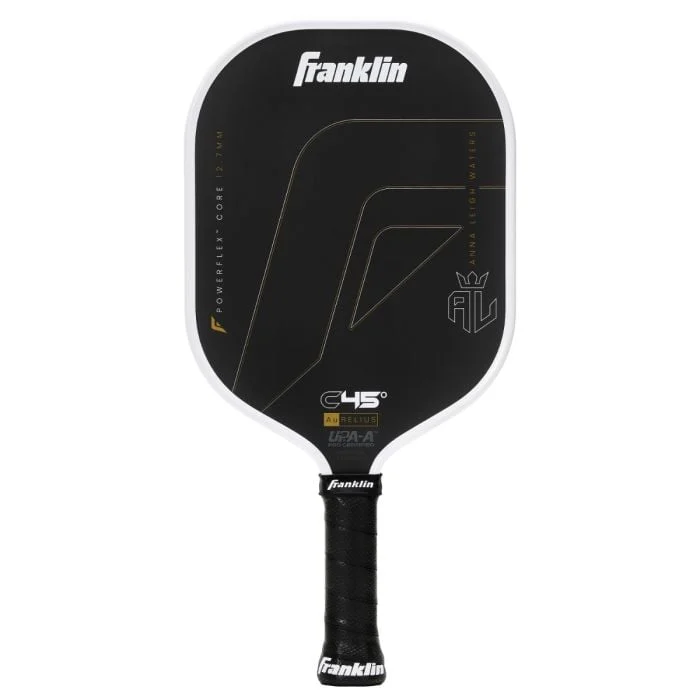
Nothing on this list moves like the Aurelius. It is the signature widebody, short and wide at 15.7 by 7.9 inches, light in the hand, and so quick that hand battles at the kitchen stop feeling like reactions and start feeling like choices.
Counters I normally block became counters I could aim. That speed is control: the paddle arrives on time, so the reset I meant to hit is the reset I actually hit, and the dink I shaped with my wrist lands shaped instead of late.
The carbon face is laid at a 45 degree angle, and you feel that design in the spin. Topspin drives dip hard, rolls shape easily, and serves come off with a bite that heavier paddles need twice the effort to produce. Choose the 12.7mm ALW variant: the thicker versions are different paddles, heavier swinging and slower to redirect.
Stock, it has a weakness you feel immediately. Hit off-center and the face twists, because there is so little mass to hold it steady, and no lab has published swing or twist figures for this thickness, so the box prints those cells honestly as unpublished.
This paddle is famous among players for one reason: a little added weight transforms it.
Tape along the sides settles the twisting, widens the sweet spot, and turns good drives into heavy ones while keeping the hand speed. The 5.1 inch handle crowds two-handed backhand players, so they should look elsewhere.
Buy it if your game is speed, spin and quick hands, and you enjoy tuning a paddle. Skip it if you want power and forgiveness straight out of the wrapper.
How to Choose the Best All-Court Pickleball Paddles in 2027
An all-court paddle is a compromise you choose on purpose, so buy it with the compromise in mind. Work through the sections below in order: what all-court actually means, the two weight numbers that decide most of it, how foam changed the power story, the shape choice, handles, face and spin, and the approval check before you buy.
If you want the control half of the argument, my control list ranks the paddles that put the ball where you aimed it, and my foam-core list shows where the foam picks on this page sit against the rest of the sport.
What All-Court Actually Means
An all-court paddle balances power and control without leaning hard in either direction. It has enough drive power to finish points from the baseline, a soft game that stays calm at the kitchen, and a swing weight a player can swing all session.
It may not lead in any one area, and that is the point. A pure power build demands advanced technique and punishes a soft game. A pure control build is calm but adds almost nothing to your drives.
The test is simple: can one paddle drive, drop, dink and reset, all in the same rally, without asking you to change your swing for each shot. If it can, it is all-court. If it needs a different swing for each job, it is a specialist wearing an all-court name.
Who should not buy one: pure power hitters who finish every point from the baseline, and pure touch players who never drive at all. Both are better served by a specialist, because a specialist does their one job better than any compromise can.
Swing Weight: The Hand-Speed Number
Swing weight measures how heavy the head feels when you swing it, and it is the number that decides hand speed. On this page it runs from 107 on the Jelly Bean to 119 on the Genesis.
Toward 107 and 108, the Jelly Bean and the V-SOL Pro, hand speed and long-session freshness come first, which suits kitchen players and hands battles. From 114 upward, the Black Opal, the DBD Control and the Prism Flash add stability and plow-through, which is the push a drive keeps after contact.
At 117 to 119, the Perseus Pro V, the Genesis and the Pursuit Pro1 add the most plow-through of all, and they ask the most of your hands in return. A heavy swing costs you in kitchen exchanges, where the head arrives later, and it buys you on drives, where the head carries through the ball.
The best all court pickleball paddle for you is the one whose swing weight matches where your points are won: quick hands for kitchen players, heavier heads for baseline drivers.
Twist Weight: The Forgiveness Number
Twist weight measures how hard the face resists rotating on off-center contact, and it is the forgiveness number. On this page it runs from 5.95 on the Pursuit Pro1 to 7.4 on the Scorpeus Pro IV.
The widebody cluster leads it: the Scorpeus Pro IV at 7.4 and the Jelly Bean at 7.21 forgive the most, because their wide faces spread the hitting surface out. The elongated end trails it: the Pursuit Pro1 at 5.95 and the Genesis at 6.21 twist more on mishits, because their long, narrow faces give off-center contact more leverage.
What a 7-plus twist weight feels like is simple: a stretched block stays square, a late counter keeps its line, and the ball goes where your hands sent it even when your feet had not caught up.
What a sub-6.5 twist weight feels like is also simple: the face turns in your hand, the ball sprays, and your wrist pays for the miss. If your contact still wanders, buy twist weight first and everything else second.
Foam vs Honeycomb vs the Rib Core
Three core types share this page, and each one changes the feel. Full foam cores, in the Black Opal, the Genesis and the V-SOL Pro, let the ball sink in and stay on the face a fraction longer.
That dwell is working time for spin and soft shots, and foam is quiet, arm-friendly, and cannot crush or delaminate the way a honeycomb can. The trade is a muted feel some players never warm to, and power that arrives on a full swing rather than a short one.
Polymer honeycomb cores, in the Prism Flash, the DBD Control, the Jelly Bean, the Scorpeus Pro IV and the Pursuit Pro1, answer crisper and give a more connected strike, with feedback at contact that foam hides. The trade is a core that can crush over a long season and a feel that is firmer on the arm.
The third way is the carbon rib core, a lattice of carbon fiber tubes with no honeycomb and no foam, which the Gearbox GX2 uses as a reserve on this page. It is built for a dwell time that does not fade with age. Pick the core by the feel you want to live with for a season, not by the power number on the box.
Face, Grit and Spin: Why Spin Fades
The spin figures on this page run from around 1,900 RPM on the Prism Flash to 2,401 RPM on the Genesis, and the interesting thing is not the top of the range. It is how long the spin lasts.
Most raw carbon faces are a wear surface: the texture that grips the ball slowly goes smooth with play, so the spin you test in week one is not the spin you own in month six. That fade is the dominant long-term complaint across this whole page.
The Genesis, the V-SOL Pro and the DBD Control all soften with hours played. The Prism Flash fades over a long season. The Black Opal is the exception: its Diamond Tough grit is built to hold, and one long tester found it still biting after 25 hours of hard play.
Two simple checks tell you where your face stands: drag a fingernail across it and feel for bite, and see whether a ball still grabs when you roll it over the surface. If the ball slides, the face is worn, and no new grip will bring the spin back.
Shape: Hybrid, Elongated or Widebody
Shape is the reach-versus-forgiveness trade, and this page carries all three. Hybrids split the difference: the Black Opal, the DBD Control, the Prism Flash and the V-SOL Pro sit between long and wide, which is why four of the ten picks are hybrids and why the hybrid is the safest default for most players.
Elongated frames stretch to about 16.5 inches long and 7.5 wide, which adds reach and leverage for serves, overheads and wide gets, and shrinks the sweet spot. The Genesis, the Perseus Pro V and the Pursuit Pro1 are the elongated picks here.
Widebodies run short and wide, about 15.7 to 16 inches long and 8 wide, with the largest sweet spots and the highest twist weights. The Jelly Bean, the Scorpeus Pro IV and the C45 Aurelius are the widebodies here.
Handle length rides with the shape: the 5.75 inch Jelly Bean and the 5.875 inch Pursuit Pro1 leave real room for a two-handed backhand, while the 5.1 inch C45 crowds two hands badly. Choose the shape your weaker game needs, because the shape covers the weakness and your technique covers the rest.
The Power and Control Balance
Every all-court paddle pays for its balance somewhere, so ask where the payment falls before you buy. The best all court pickleball paddle for power on this page is the Black Opal, with foam pop and 2,307 RPM, and the Perseus Pro V, with flagship drive power that you earn with a full swing.
The best control pickleball paddle on this page is the DBD Control, with reset precision that defines the class, and the Prism Flash, with the calmest soft game for the money.
The spin-first pick is the Genesis, the forgiveness-first pick is the Jelly Bean, and the fast-hands pick is the C45 Aurelius. None of them leads in every area, and none of them needs to. The right question is not which paddle is best in general.
It is which payment you are happiest to make: a little power for a lot of control, a little hand speed for a lot of plow-through, or a little forgiveness for a lot of reach. Pick the payment, and the paddle follows.
Reliability, Brands and the Most Durable Pick
The most reliable all court pickleball paddle is the one that still plays the same in month six as it did in week one, and reliability has three parts: a core that does not crush, a face that does not go smooth, and a brand that stands behind it.
Full foam cores cannot crush, which is why the foam picks lead on core reliability. Diamond Tough grit leads on face reliability, holding its bite where plain raw carbon fades.
The leading all court pickleball paddle brands on this page, Six Zero, CRBN, JOOLA, Vatic Pro, 11SIX24, Engage and Franklin, all sell through their own Amazon stores, which is where authenticity is easiest to check.
Buy from the brand’s own store or from Amazon itself, never from an unfamiliar third-party listing, and register the paddle when it arrives. A paddle that cannot be verified is not a bargain, however well it plays.
Approvals, Authenticity and Warranty
Every pick on this page is approved by USA Pickleball for the exact variant listed, and five add UPA-A approval on top, so all ten play in sanctioned events.
The distinction matters because the two approvals are not interchangeable: UPA-A is the pro tour’s approval, and a UPA-A-only paddle is not legal for USAP-sanctioned events however well it plays, so check your exact model on the current approved list before entering a sanctioned event rather than trusting the badge printed on a listing.
Approval rules can also change, and one testing site notes that USA Pickleball tightened its spin test in late 2026, so a paddle certified earlier may not have passed the newer test, which is one more reason to check the exact variant, not just the model name.
Warranty terms vary by brand: the Genesis carries a 1-year limited warranty once registered, the DBD Control a limited 12-month structural warranty, and the other boxes print Not published where no warranty figure was verified for the exact variant.
Check the brand’s warranty page before you buy, keep the receipt, and registration starts the record.
Frequently Asked Questions (FAQs)
1. What is an all-court pickleball paddle?
An all-court pickleball paddle is a paddle that balances power and control without leaning hard in either direction. It has enough drive power to finish points from the baseline, a soft game that stays calm at the kitchen, and a swing weight a player can swing all session.
It may not lead in any one area, and that is the point: one paddle that drives, drops, dinks and resets, all in the same rally, without asking you to change your swing for each shot.
2. All-court, power or control: which type should I choose?
Choose by where your points are won and lost, because no type is best in general. Choose an all-court paddle if your game has no finished shape yet, or if you play both singles and doubles and want one paddle for both.
Choose a power paddle if you finish most points from the baseline and your soft game is already solid. Choose a control paddle if your points leak through balls sailing long and pop-ups at the net. If you are stepping up from a first paddle, the all-court paddle is the safest default.
3. What swing weight should I look for in an all-court paddle?
For most players, a swing weight between 107 and 115. Toward 107 and 108, the Jelly Bean and the V-SOL Pro, hand speed and long-session freshness come first, which suits kitchen players and hands battles.
From 114 upward, the Black Opal, the DBD Control and the Prism Flash add stability and plow-through. At 117 to 119, the Perseus Pro V, the Genesis and the Pursuit Pro1 add the most drive weight of all, and they ask the most of your hands in return. Match the number to where your points are won.
4. What twist weight should I look for in an all-court paddle?
For most players, a twist weight at or above 6.4, and above 7.0 if your contact still wanders. Twist weight measures how hard the face resists rotating on off-center contact, so it is the forgiveness number.
The Scorpeus Pro IV at 7.4 and the Jelly Bean at 7.21 forgive the most on this page, because their wide faces spread the hitting surface out. The Pursuit Pro1 at 5.95 and the Genesis at 6.21 twist more on mishits, and both ask for centered contact and a firm wrist.
5. Are all-court paddles good for beginners?
Yes, they are the best first serious paddle for most beginners. The balance means a new player does not have to choose between power and control before their game has a shape, and the forgiving picks on this page keep mishits in play while strokes form.
The 11SIX24 Jelly Bean 16mm is the best first all-court paddle on this list for that reason, with the lowest swing weight here and the widest face, and the Vatic Pro Prism Flash 16mm is the calmest teacher for a player who wants a trustworthy paddle from day one.
6. Are all-court paddles good for doubles? For singles?
Yes to both, and that is the whole point of the category. In doubles, where the kitchen decides points, the soft game and the quick hands of the Jelly Bean, the V-SOL Pro and the Scorpeus Pro IV win rallies.
In singles, where one player covers the whole court, the reach and drive power of the Perseus Pro V, the Genesis and the Pursuit Pro1 cover the ground. If you play mostly doubles, lean toward the widebody and hybrid picks. If you play mostly singles, lean toward the elongated picks.
7. Can I hit a two-handed backhand with an all-court paddle?
Yes, if the handle is long enough. Handles at 5.5 inches and beyond leave genuine room for a two-handed backhand, and four picks here clear that bar: the Pursuit Pro1 at 5.875 inches, the Jelly Bean at 5.75, the DBD Control and the Perseus Pro V at 5.5.
The C45 Aurelius at 5.1 inches crowds two hands badly and suits a one-handed game, while the Scorpeus Pro IV and the Prism Flash at 5.25 inches are tight but workable with a compact second hand. Test the fit before you commit if two hands are part of your game.
8. Foam core or honeycomb core: which is better for all-court play?
Neither is better in general, because they feel different rather than ranking differently. A full foam core lets the ball sink in and stay on the face a fraction longer, which builds spin and calms soft shots, and it cannot crush or delaminate.
A polymer honeycomb core answers crisper and gives a more connected strike, with feedback at contact that foam hides. Foam suits players who want dwell, quiet and arm comfort. Honeycomb suits players who want feedback and a crisp answer. Play both if you can, and pick the feel you want to live with for a season.
9. Why does my paddle lose spin after a few months?
Because most raw carbon faces are a wear surface, and the texture that grips the ball slowly goes smooth with play. The spin you test in week one is not the spin you own in month six, and that fade is the dominant long-term complaint across this whole page.
The Genesis, the V-SOL Pro and the DBD Control all soften with hours played, and the Prism Flash fades over a long season.
The Black Opal is the exception, because its Diamond Tough grit is built to hold, and one long tester found it still biting after 25 hours of hard play. Check your face by dragging a fingernail across it: if the ball slides instead of grabbing, the face is worn.
10. Which all-court paddle has the biggest sweet spot?
The JOOLA Scorpeus Pro IV, on the number that matters most: its 7.4 twist weight is the highest on this page, so contact caught toward the edges still leaves on your line. On face width alone the Jelly Bean wins, at 15.82 by 8.04 inches, the widest face here.
And the V-SOL Pro deserves a mention for a different reason: its EVA perimeter ring stiffens the edges, so its sweet spot plays large for a hybrid frame. All three forgive; they forgive in different ways.
11. Can I add weight tape to an all-court paddle, and where?
Yes, and you should try it before buying a new paddle. Tape at the 3 and 9 o’clock positions raises twist weight, which steadies off-center blocks and calms a twisting face. Tape at the throat or under the grip shifts the feel toward hand speed.
Work in small steps and test for a full session between changes, because every addition moves something else: perimeter tape adds stability but takes a little quickness.
The C45 Aurelius on this list is transformed by exactly this adjustment. Tape will not change a paddle’s core, shape, or face, so it closes small gaps rather than fixing a wrong paddle.
12. Are all of these paddles legal for league and tournament play?
Yes, under the approval that sanctioned play runs on. All ten are approved by USA Pickleball for the exact variant listed, and the Black Opal, the Genesis, the Perseus Pro V, the Scorpeus Pro IV and the C45 Aurelius carry UPA-A approval as well.
The distinction matters because the two approvals are not interchangeable: UPA-A is the pro tour’s approval, and a UPA-A-only paddle is not legal for USAP-sanctioned events however well it plays.
Before you travel to an event, confirm your exact model name on the approved list, because approval rules can change and a listing badge is not the list.
About The Author
Michael Stevenson
Hi, my name is Michael Stevenson and I’m a passionate pickleball player. I’ve been playing this wonderful sport for over a decade, and I fell in love with it the moment I stepped onto the court. I love the fast pace, the strategy, and the community that comes with playing pickleball.
As a pickleball enthusiast, I decided to start this blog to share my knowledge and experience with others who are just as passionate about the game as I am. Whether it’s tips for beginners, guides for experts, reviews of new paddles, or advanced playing techniques, I’ve got you covered.