
You can feel it happen half a second before it costs you the point. The rally speeds up at the kitchen, you plant and push sideways, and instead of your foot driving the shoe, the shoe lets your heel lift, slide, and hunt for the back of the heel cup.
By game two there is a hot spot forming where the friction lives, and by game three you are playing around your footwear instead of through it. That is what a shoe built on the wrong last does, and most women players have worn one, because most court shoes were shaped around a man’s foot and then shrunk.
Women’s feet are not smaller men’s feet. The heel runs narrower relative to the forefoot, the arch sits and loads differently, and a shoe that ignores that geometry gives you a choice between a squeezed forefoot and a swimming heel.
So this list is built on the things that actually decide a women’s court shoe: proper women’s lasts, genuine heel lockdown, honest type labelling (most picks are pickleball-specific, two are tennis crossovers, and one is an indoor specialist), and real wide options sold in women’s sizing, not length added and called width.
What none of them is, is a running shoe.
The short answer is the Skechers Viper Court Pro. It is my best overall pick for women because it pairs a supportive Arch Fit insole with honest cushioning and a roomy Relaxed Fit.
If heel slip is your main problem, start with the K-Swiss Express Light Pickleball instead. If your feet are genuinely wide, start with the FitVille Women’s Wide Width Court Shoes in 2E or 4E.
On this page
- The 10 best pickleball shoes for women in 2027
- How to choose pickleball shoes for women in 2027
- Which brands make wide pickleball shoes for women?
- Best pickleball shoes for women with heel pain or plantar fasciitis
- Frequently asked questions (FAQs)
The 10 Best Pickleball Shoes for Women in 2027
1Skechers Viper Court Pro: Best Overall Pickleball Shoes for Women in 2027
AT A GLANCE
Skechers Viper Court Pro
WEIGHT
-
OUTSOLE
Goodyear rubber
CUSHIONING
ULTRA FLIGHT
FIT
Relaxed Fit, true to size, Wide available
Type: Pickleball-specific
Sizing: Women’s
Upper: Engineered mesh
Midsole: ULTRA FLIGHT
Non-marking: -
Arch support: Arch Fit insole system
Insole: Removable Arch Fit
Feel: Cushioned and supported
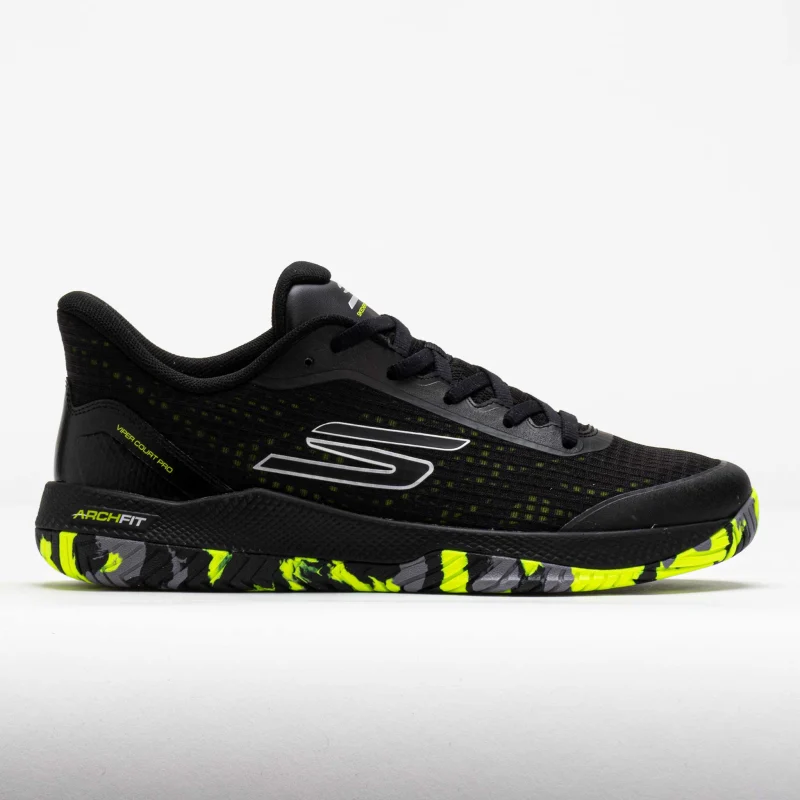
If I could hand a first-time buyer one shoe and walk away, it would be this one, because the Viper Court Pro is the most complete answer to what a women’s pickleball shoe has to do. It starts with the insole.
Skechers builds the shoe around its Arch Fit system, a removable insole whose design the brand describes as podiatrist-certified, and in play that shaped support is what you notice across a long session: the arch feels held rather than flattened, and the foot lands the same way in game five as it did in game one.
Above that sits ULTRA FLIGHT cushioning, a moderate, honest cushion that takes the sting out of hard stops without the vague, marshmallow feeling that makes quick players distrust a shoe.
The engineered mesh upper keeps the build light in feel, and the Goodyear rubber outsole grips hard courts with the calm consistency you want when a rally turns into a scramble.
The Relaxed Fit is the other half of the story: a roomier toe and forefoot that run true to size, with a proper Wide version sold alongside, so forefoot room does not have to be faked by sizing up.
Two honest notes. Skechers does not publish a weight or a non-marking rating for this shoe, so both boxes say so rather than guessing; if your indoor facility is strict about soles, check before you commit.
And players with very narrow heels can feel a little movement in the heel cup, because the room that frees the forefoot is shared, slightly, at the back.
Buy it if you want the balanced default: support, cushion and room in one shoe. Skip it if your heel is very narrow and slips in roomier cups.
2Selkirk CourtStrike Pro 3.0: Best Tournament Pickleball Shoes for Women in 2027
AT A GLANCE
Selkirk CourtStrike Pro 3.0
WEIGHT
10.6 oz (women’s US 7)
OUTSOLE
4-way grip rubber with outrigger
CUSHIONING
High-Rebound EVA PureFoam
FIT
True to length, snug; wide feet size up half
Type: Pickleball-specific
Sizing: Women’s
Upper: Engineered mesh with 3D-printed overlays
Midsole: EVA PureFoam
Non-marking: -
Stability: TPU shank
Insole: Removable supercritical foam
Warranty: 6-month outsole guarantee
Feel: Light and responsive
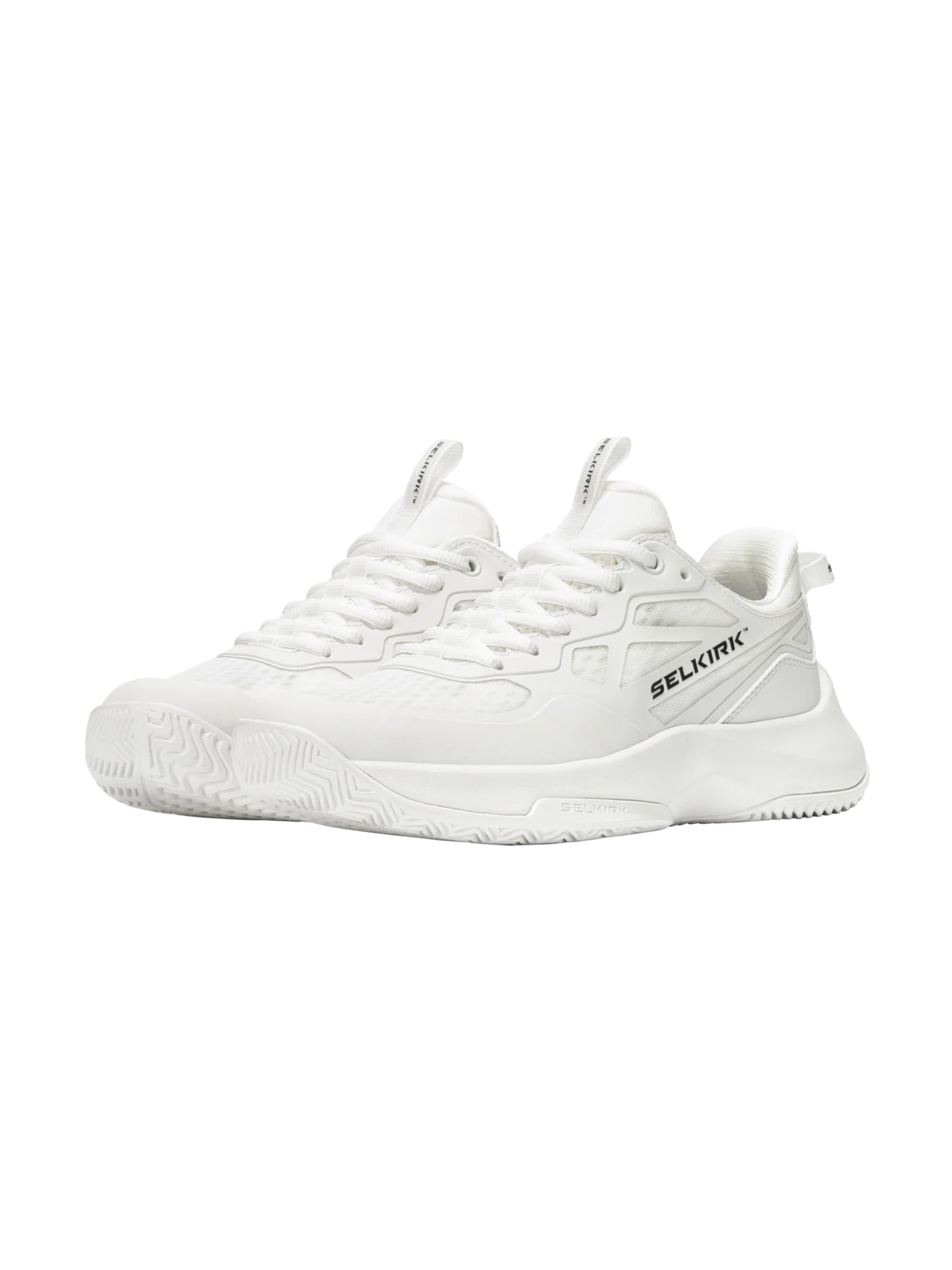
Tournament players ask a shoe for three things: grip that survives a full day, a platform that stays stable at full stretch, and proof the outsole will last the season. The CourtStrike Pro 3.0 is the Selkirk built for exactly that reader, and it is the lightest purpose-built shoe on this page at 10.6 ounces in a women’s size 7.
The outsole is a pickleball-specific 4-way grip pattern with an outrigger flaring at the forefoot, so plants bite in every direction a rally demands and the base widens exactly where a hard lateral push tries to roll a shoe over.
The High-Rebound EVA PureFoam midsole returns energy instead of swallowing it, a TPU shank keeps the midfoot from twisting on off-balance contacts, and the insole is a removable supercritical foam, so players who run their own insoles can swap it out.
The upper is an engineered mesh with 3D-printed overlays that mold to the foot as it warms and moves, holding the midfoot without a stiff cage.
Then there is the guarantee, and it is published, not implied: Selkirk backs the outsole with a 6-month durability guarantee, the clearest durability promise on this page. For a player on court four or more days a week, that turns the shoe’s hardest-working part into a covered part.
Fit notes matter here. The shoe runs true to length with a snug, performance fit, and Selkirk itself advises wide feet to size up half a size. Narrow feet may find the toe box roomier than expected. Selkirk does not publish a non-marking rating, so the box says so.
Buy it if you play often and hard and want the warranty to match. Skip it if you need a wide, forgiving fit.
3K-Swiss Hypercourt Supreme 2: Best Stability and Durability Pickleball Shoes for Women in 2027
AT A GLANCE
K-Swiss Hypercourt Supreme 2
WEIGHT
12.5 oz (women’s US 8.5)
OUTSOLE
DragGuard 7.0 / Aosta 7.0 rubber, modified herringbone
CUSHIONING
Dual-density midsole with OrthoLite liner
FIT
Snug and secure, half size up advised
Type: Pickleball-specific
Sizing: Women’s
Upper: Seamless synthetic/mesh bootie with DuraWrap X
Midsole: Dual-density with midfoot shank
Non-marking: Yes
Stability: Midfoot shank, DuraWrap X drag protection
Insole: OrthoLite liner
Feel: Secure and substantial
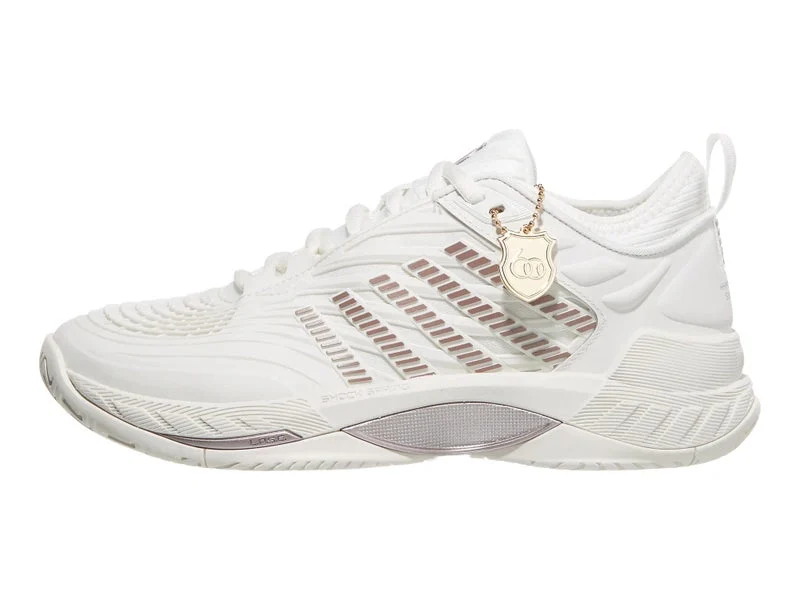
This is the heavyweight of the list, and I mean that as a compliment. At 12.5 ounces in a women’s 8.5, the Hypercourt Supreme 2 is a tennis-bred court shoe that K-Swiss markets for tennis and pickleball alike, and what the weight buys is the most secure, durable build on this page.
The upper is a seamless bootie construction, synthetic and mesh with a soft collar that closes around the ankle like a sock, and DuraWrap X drag protection armours the areas that toe-draggers and lungers shred first.
Underfoot, a dual-density midsole pairs with a midfoot shank, so the shoe cushions without going soft through the middle, and an OrthoLite liner adds a step-in comfort layer.
The Aosta 7.0 outsole runs a modified herringbone with DragGuard 7.0 rubber in the high-wear zones, and it is confirmed non-marking, which makes this one of the few shoes here that answers an indoor facility’s sole rule with a straight yes.
The fit is the snug, locked end of the spectrum: the bootie holds the whole foot, heel included, with none of the slip that plagues roomier shoes. K-Swiss recommends sizing up half a size, and I agree with them; ordered true to size, the secure fit tips into squeeze for most feet.
What it will not give you is a light, eager first step. This shoe answers effort with stability and durability, and for competitive movers who kill lighter shoes in a season, that trade is the entire point.
Buy it if you are hard on shoes and want lockdown that lasts. Skip it if low weight and a quick feel matter more.
4K-Swiss Express Light Pickleball: Best Heel Lockdown Pickleball Shoes for Women in 2027
AT A GLANCE
K-Swiss Express Light Pickleball
WEIGHT
-
OUTSOLE
Aosta 7.0 rubber, modified herringbone with DragGuard
CUSHIONING
K-EVA midsole with OrthoLite sockliner
FIT
Women’s-specific last, tighter heel cup; Wide SKU available
Type: Pickleball-specific
Sizing: Women’s
Upper: Synthetic/mesh with Durawrap toe protection
Midsole: K-EVA
Non-marking: Yes
Stability: 180 PSC chassis
Insole: OrthoLite sockliner
Feel: Light, low and locked in
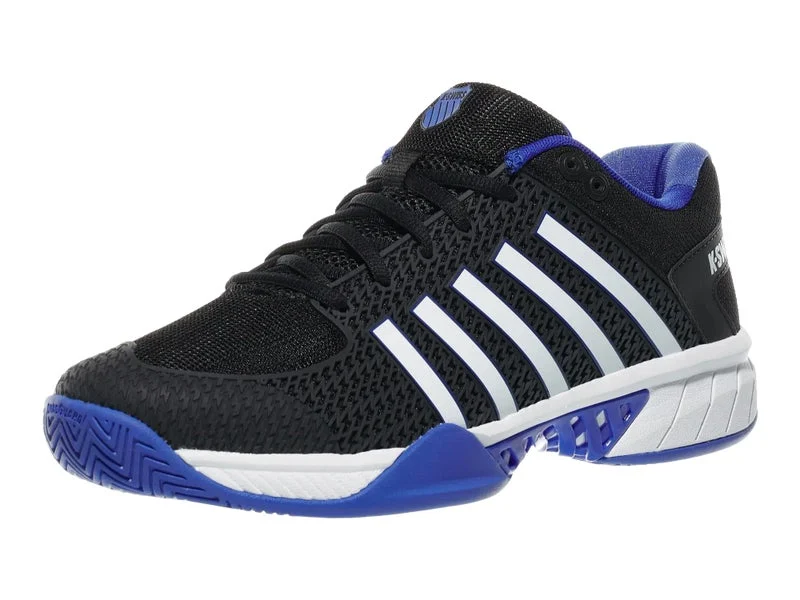
Heel slip is the complaint I hear from women players more than any other: the forefoot fits, the length fits, and the heel still lifts on every split step until the friction builds a blister.
The Express Light is the shoe built around fixing that, and it does it with a named feature rather than a hope. K-Swiss lines the heel with a Heel Grip Lining, interlocking fibers that grip your sock and minimise the heel’s movement inside the shoe.
The last underneath is women-specific, with a tighter heel cup than the unisex court shoes most players start in, and the rest of the build is the proven Express Light formula: an Aosta 7.0 outsole in a modified herringbone that is confirmed non-marking, DragGuard in the toe and heel wear areas, a K-EVA midsole with an OrthoLite sockliner for a medium, honest cushion, and the 180 PSC chassis keeping the midfoot tracking straight through lateral pushes.
Durawrap protects the toe where kitchen lunges drag it.
The width story deserves its own sentence, because K-Swiss sells a dedicated Express Light Wide for women: a genuinely wider forefoot last with the same heel security, not a longer shoe pretending to be a wider one.
One honest flag: sizing reports on this shoe conflict, with some players calling it small and others large, so treat the try-on as part of the purchase and keep the returns option open until you have planted hard in them.
K-Swiss does not publish a women’s weight for it, so the box leaves that unpublished rather than borrowing a figure from the men’s version.
Buy it if heel slip has been your problem. Skip it if your heel is happy and you want maximum cushion instead.
5ASICS Gel-RENMA 2: Best Locked-In Fit Pickleball Shoes for Women in 2027
AT A GLANCE
ASICS Gel-RENMA 2
WEIGHT
-
OUTSOLE
Wrap-up outsole with flex grooves
CUSHIONING
Forefoot GEL
FIT
Snug and narrow, narrow toe box
Type: Pickleball-specific
Sizing: Women’s
Upper: Synthetic leather and mesh
Midsole: Forefoot GEL with TRUSSTIC
Non-marking: -
Stability: TRUSSTIC system
Insole: Solution-dyed sockliner (removable)
Feel: Locked-in and precise
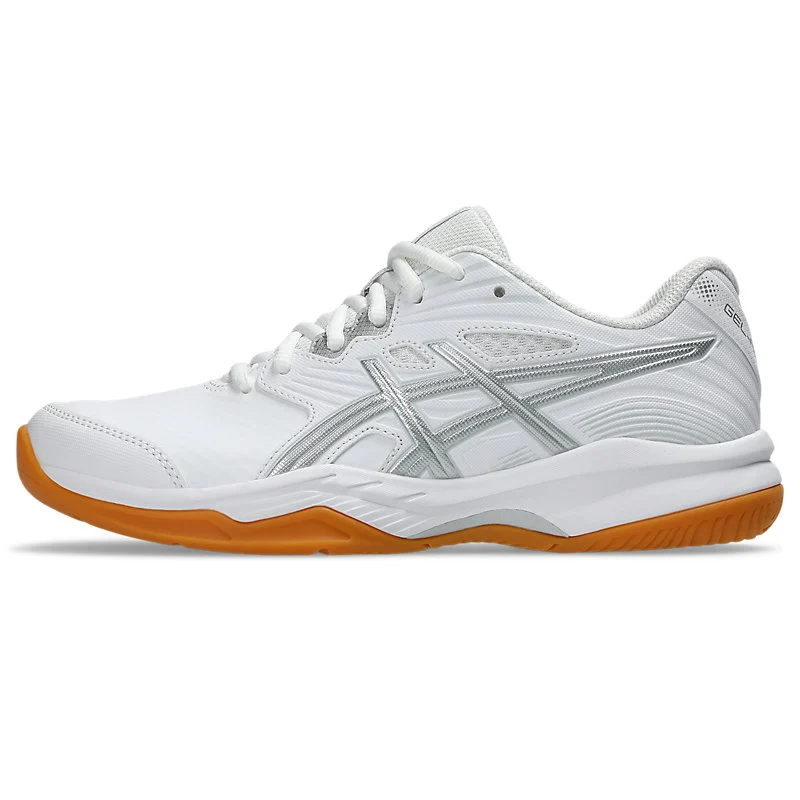
Some players want room. Others want the shoe to disappear into a locked, precise fit, and the Gel-RENMA 2 is ASICS’ answer for the second group.
It is built on a women’s last with a snug fit and a narrower toe box, and from the first lacing the heel feels seated in a way roomier shoes never quite manage. If heel lift has followed you from shoe to shoe, this is the fit to try.
The outsole wraps up at the edges with flex grooves, so rubber stays between your foot and the floor when a wide defensive lunge rolls you onto the side of the shoe, and the forefoot can bend through a split step instead of fighting it.
Forefoot GEL cushioning handles the impact of repeated stops, and the TRUSSTIC system through the midfoot keeps the shoe from twisting when a plant lands slightly wrong. Synthetic leather overlays over mesh hold the foot close and give the upper more structure than a knit shoe offers.
Now the honest boundary, stated plainly: this is not the wide-foot pick, and it does not pretend to be.
The toe box is narrow by design, and wide feet should go straight to the Express Light Wide or the FitVille at the end of this list instead of sizing up and hoping. ASICS also publishes neither a weight nor a non-marking rating for the shoe, and both boxes say so.
Buy it if you have narrow to medium feet and want the most locked-in fit here. Skip it if you need forefoot room.
6Mizuno Wave Enforce Tour 2 AC: Best Tennis Crossover Pickleball Shoes for Women in 2027
AT A GLANCE
Mizuno Wave Enforce Tour 2 AC
WEIGHT
-
OUTSOLE
DuRubber with outrigger
CUSHIONING
ENERZY NXT
FIT
Slightly snug, size up half
Type: Tennis all-court
Sizing: Women’s
Upper: Bootie construction with DynaHeel Lock
Midsole: ENERZY NXT with Foam Wave
Non-marking: -
Stability: MIZUNO WAVE plate
Warranty: 6-month outsole guarantee
Feel: Stable and locked down
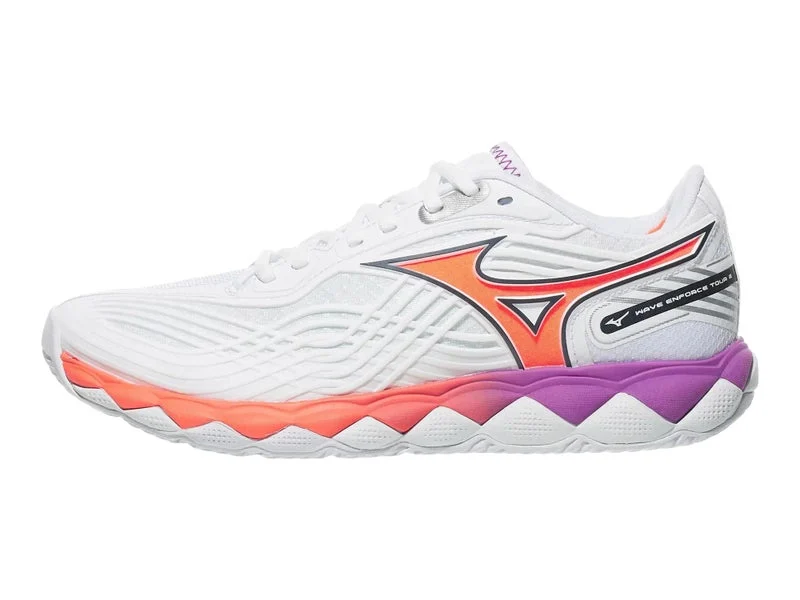
Honest labelling first: this is a tennis all-court shoe, Mizuno’s stability flagship, and it earns its place because the two things it does best are the two things women players ask me about most: heel lockdown and a stable platform.
The DynaHeel Lock system and bootie construction close around the heel and ankle so the back of the shoe moves with your foot instead of behind it, and once sized right there is no lift left to manage.
The platform comes from the MIZUNO WAVE plate, which disperses impact across the midsole while holding the shoe stable under lateral load, paired with ENERZY NXT cushioning that keeps the ride from feeling like a plank.
The DuRubber outsole carries an outrigger for rotational support, widening the base where pivots and plants try to tip a shoe over.
Mizuno also publishes the second real outsole guarantee on this page: six months of outsole durability cover on this model. Alongside Selkirk’s, it is the clearest signal a brand can send about how long it expects its rubber to keep working.
The sizing needs respect. The fit runs slightly snug, and most testers went up half a size to get the lockdown without the squeeze; I would start there too.
Mizuno does not publish a usable consumer weight for this model, and it publishes no non-marking rating either, so both boxes stay unpublished rather than borrowing numbers without a size basis behind them.
Buy it if heel lockdown and stability top your list and you play mostly on all-court surfaces. Skip it if you want a roomy, relaxed fit.
7K-Swiss Ultra Court: Best Maximum Cushioning Pickleball Shoes for Women in 2027
AT A GLANCE
K-Swiss Ultra Court
WEIGHT
-
OUTSOLE
Rubber with DragGuard 7.0
CUSHIONING
Surge 7.0 thick midsole
FIT
Roomier, comfort fit
Type: Pickleball-specific
Sizing: Women’s
Upper: Lightweight synthetic with Durawrap forefoot
Midsole: Surge 7.0
Non-marking: -
Stability: 180 PSC chassis
Feel: Plush and easygoing
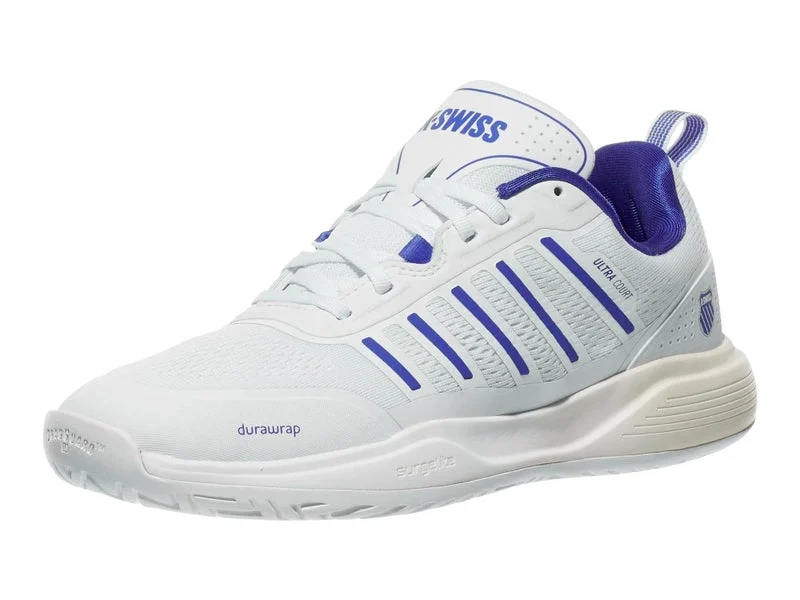
If your first question about any shoe is how much cushion sits under it, the Ultra Court is your K-Swiss. Its defining feature is the thickest midsole K-Swiss puts in a pickleball shoe here: Surge 7.0, a deep, plush stack that changes how hard courts feel across a long session.
Stops land softer, landings land softer, and the accumulated hardness of an outdoor court reaches your feet filtered rather than raw.
Plush shoes often pay for their cushion with wobble, and this is where the Ultra Court is smarter than it looks. The 180 PSC chassis runs through the midfoot, the same structured support system as the Express Light, so the shoe keeps a stable spine under the soft stack and tracks straight when you plant and push sideways.
DragGuard 7.0 reinforces the toe and heel wear areas of the rubber outsole, and a lightweight synthetic upper with Durawrap across the forefoot keeps the whole build from feeling like a pillow with laces.
The fit is the roomier, comfort end of the K-Swiss range, closer to a favourite trainer in feel than to a racing shoe, which suits social players and long drilling sessions as much as it suits anyone whose feet are complaining by the third game.
The honest gaps: K-Swiss publishes neither a weight nor a non-marking rating for this model, so both boxes say so, and strict indoor facilities are a check-before-you-play situation. The trade for the cushion is court feel; players who live on split-second first steps may prefer the lower, leaner Express Light.
Buy it if cushioning is your first priority. Skip it if you want the lowest, quickest ride.
8Wilson Pickle Pro: Best Roomy Toe Box Pickleball Shoes for Women in 2027
AT A GLANCE
Wilson Pickle Pro
WEIGHT
Around 10 to 10.3 oz per shoe (varies by size)
OUTSOLE
Duralast rubber
CUSHIONING
Court EVA with high-density OrthoLite insole
FIT
Roomy toe box, true to size and width
Type: Pickleball-specific
Sizing: Women’s
Upper: SecureKnit
Midsole: Court EVA
Non-marking: -
Stability: Midfoot support
Insole: High-density OrthoLite
Feel: Light and roomy
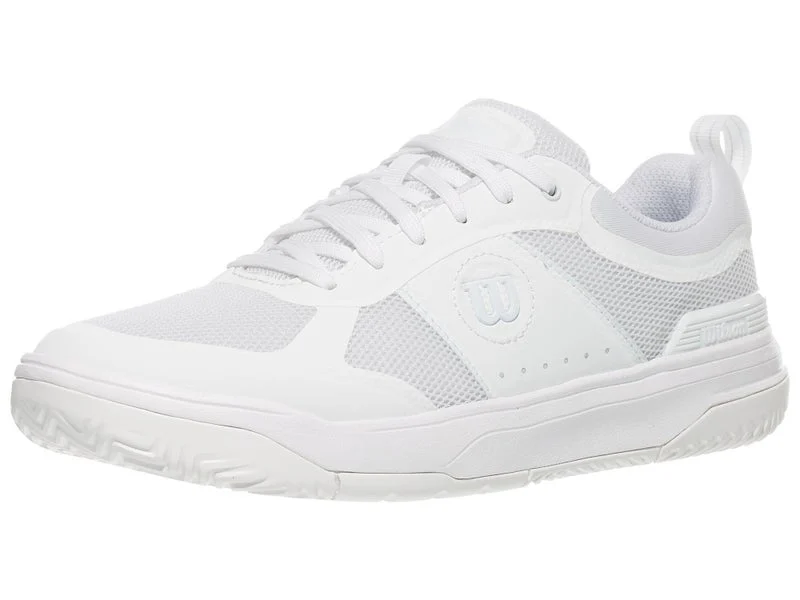
The Pickle Pro is the lightest feeling shoe on this page, at roughly 10 to 10.3 ounces per shoe depending on size, and its signature is space.
The toe box is genuinely roomy in a standard medium width, so toes can splay on plants and spread on stops the way feet want to, without the squeezed, stacked feeling narrow shoes give you by the second hour.
Wilson keeps the rest of the build purposeful rather than fancy.
A SecureKnit upper wraps the midfoot, a contoured midfoot support system holds the foot through lateral movement, and the court EVA midsole with a high-density OrthoLite insole gives a medium, responsive cushion: not plush, not harsh, and ready to play without a break-in period.
The Duralast rubber outsole is Wilson’s durable court compound, built for the stop-and-pivot pattern pickleball repeats all session long.
Fit is true to size and true to width in my testing, which sounds like a small thing until you have played the sizing lottery with court shoes. The honest flip side of the room: narrow feet may find this shoe too spacious, with the forefoot floating where it should be held, and those players should look at the Gel-RENMA 2 above instead.
Wilson does not publish a non-marking rating for the Pickle Pro, so the box says so plainly; check your indoor facility’s rules if that is where you play most of your games.
Buy it if you want light weight and room for your toes to work. Skip it if your feet are narrow and like to be held tight.
9adidas Crazyflight: Best Indoor Cushioning Pickleball Shoes for Women in 2027
AT A GLANCE
adidas Crazyflight
WEIGHT
-
OUTSOLE
Indoor rubber
CUSHIONING
BOOST with stabilizing EVA frame
FIT
Snug, locked-in
Type: Indoor volleyball
Sizing: Women’s
Upper: Lightweight mesh with TPU midfoot reinforcement
Midsole: BOOST
Non-marking: -
Stability: TPU midfoot reinforcement, EVA frame
Feel: Springy and secure
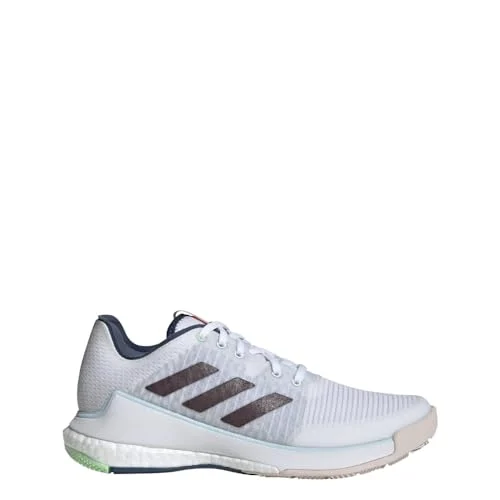
Honest label first, because it is the reason this shoe is here: the Crazyflight is a volleyball shoe, built for indoor courts, and indoor pickleball is played on exactly the floors it was designed for. If your pickleball life happens in gyms and sports halls, this is the specialist pick on the page.
The headline is BOOST, adidas’ energy-return midsole foam, and it delivers the liveliest cushioning here. Indoor floors are concrete wearing a thin disguise, and BOOST is the midsole that absorbs that hardness while still returning something on the push-off, so the comfort never turns into the dead, sinking feeling softer foams can bring.
A stabilizing EVA frame surrounds the foam and keeps the shoe composed when movement turns sideways, and TPU reinforcement through the midfoot adds the structure a pure cushioning shoe would otherwise lack. The lightweight mesh upper fits snug and locked-in, holding the foot exactly where the midsole expects it to be.
The limits are real and worth stating.
The indoor rubber outsole is made for polished floors, and playing outdoors on asphalt will chew through it quickly, so treat this as a change-at-the-venue shoe and carry it rather than wearing it across the car park. adidas publishes neither a weight nor a non-marking rating for it, and both boxes say so; most indoor venues accept indoor-court shoes as a class, but a strict facility is worth one question before you rely on it.
Buy it if you play indoors and want the most forgiving cushion on this page. Skip it if you play mostly outdoors.
10FitVille Women’s Wide Width Court Shoes: Best Extra Wide Pickleball Shoes for Women in 2027
AT A GLANCE
FitVille Women’s Wide Width Court Shoes
WEIGHT
-
OUTSOLE
Rubber court outsole
CUSHIONING
EVA
FIT
Wide 2E and X-Wide 4E, roomy toe box; half size up commonly advised
Type: Pickleball/tennis court
Sizing: Women’s wide widths
Upper: Breathable mesh and synthetic
Midsole: EVA
Non-marking: -
Stability: Anti-torsion TPU, stabilizing heel cup
Arch support: Built-in arch-support insole
Feel: Roomy and steady
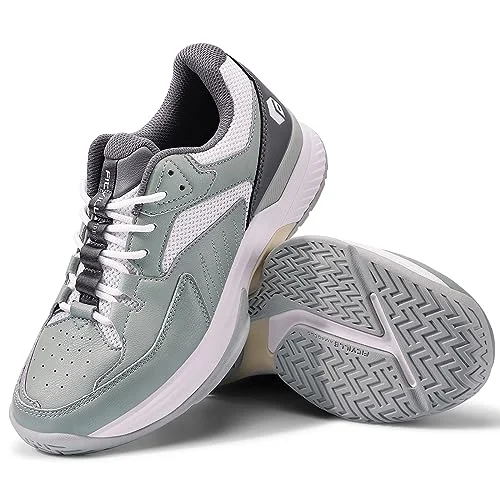
Every other shoe on this page asks wide feet to fit into its world, in a wide version if one exists. FitVille starts from the other direction.
These are built in genuine Wide (2E) and X-Wide (4E) widths in women’s sizing, with a roomy toe box, and for players whose feet have never once fit a standard court shoe, that difference is not a detail. It is the whole shoe.
The build underneath the width is honest court equipment. A rubber court outsole, an anti-torsion TPU element through the midfoot to resist twisting, a stabilizing heel cup that holds the back of the foot, and a built-in arch-support insole round out a package aimed at steady, comfortable play rather than tournament speed.
The breathable mesh and synthetic upper keeps things light in feel, and the common fitting advice is to go up half a size with your playing socks on, which suits feet that swell as a session goes on.
I will be plain about the paper gaps, because they are larger here than anywhere else on the page: FitVille publishes no weight and no non-marking rating for this shoe, and several construction details go unpublished too, so the data line is the sparsest one here.
What is not sparse is the fit itself, and fit is the spec that decides whether a shoe gets worn every week or shelved by the door.
Buy it if your feet are genuinely wide and standard shoes have always squeezed. Skip it if you have standard-width feet and want a performance build.
How to Choose Pickleball Shoes for Women in 2027
Women’s pickleball footwear looks like a smaller version of the men’s problem and is not. Heel proportions, width distribution and the way a woman’s foot loads a court shoe all differ, and the failures follow from that: heels that slip, forefeet that get squeezed, cushion that packs down while the shoe still looks new.
Get the fit geometry right first and the technology questions below mostly answer themselves. Work through the sections in order and the list above reads itself.
Women’s Fit and Heel Lockdown
Start with proportion. A typical woman’s foot carries a narrower heel relative to its forefoot than a man’s, which is why a scaled-down men’s last so often produces the same failure: the forefoot fits, the heel swims, and every split step becomes a small slide followed by a friction burn.
Heel slip is not a comfort quirk. It steals the confidence to plant hard, because a foot that moves inside the shoe cannot be trusted at full stretch.
A proper women’s last is the structural fix, shaped for that narrower heel from the start.
On top of the last, look for lockdown features with names: grip linings that hold your sock, lockdown straps or reinforced midfoot panels, and a top eyelet you can use for a runner’s loop when you need the last increment of heel hold. The heel should sit low and seated, with no lift when you push off sideways.
The front of the shoe needs the opposite quality: room. Aim for a locked heel and midfoot with about a thumb’s width beyond your longest toe, and enough forefoot space for your toes to splay on plants.
Try shoes on late in the day, in your playing socks, and judge them on a hard lateral plant rather than a walk down the aisle. That one movement is the whole job interview.
Width Options in Women’s Lasts
Sizing up is not width. Going a full size longer adds length in front of your toes and behind nothing at all; the last itself stays the same narrow shape, your foot slides forward on every hard stop, and the heel fit you needed gets worse, not better. If your forefoot is being squeezed, the answer is a wider last, not a longer shoe.
The good news is that genuine wide options in women’s lasts finally exist. On this page alone, the Skechers Viper Court Pro is sold in a Wide, K-Swiss makes a dedicated Express Light Wide with a wider forefoot last and the same heel security as the standard version, and FitVille builds in true 2E and 4E widths.
Those are different shoes in shape, not different sizes of the same shoe, and the difference shows up in the first rally.
Width is not only about the tape measure, either. Toe box height matters for higher arches, which need vertical room the way wide feet need horizontal room.
The tells that you need a wider last are consistent: forefoot numbness by the third game, toes stacking or crossing on plants, or your foot visibly spilling over the edge of the midsole when you load it sideways.
Which Brands Make Wide Pickleball Shoes for Women?
Several brands make genuine wide pickleball shoes for women. Skechers sells the Viper Court Pro in Wide. K-Swiss sells a dedicated Express Light Wide. FitVille builds its women’s court shoes in Wide 2E and X-Wide 4E. New Balance and ASICS also sell wide versions of their court shoes in women’s sizing.
A wide version is not the same as a roomy standard shoe. A wide version is built on a wider last, so the whole shoe is wider in the right places. A roomy standard shoe gives extra space at the front but keeps a standard heel and midfoot.
Start with the brands above if your forefoot goes numb by the third game in standard shoes. If you want the full wide range in one place, including men’s and women’s widths side by side, see my wide-feet shoes list.
The three wide picks on this page are the Skechers Viper Court Pro in Wide, the K-Swiss Express Light Wide, and the FitVille Women’s Wide Width Court Shoes in 2E and 4E.
Cushioning vs Court Feel
Cushioning is a trade, not a ladder. At the plush end, deep stacks like the Ultra Court’s Surge 7.0 and the Crazyflight’s BOOST absorb more of every landing and feel kinder across long sessions on hard floors, but they sit you higher off the court and mute the floor a little.
At the lean end, lower builds like the Express Light’s K-EVA and the RENMA 2’s forefoot GEL keep you close to the ground, and the first step out of a split step feels immediate and precise.
Match the trade to your game and your calendar. Players logging long sessions several times a week, or playing on unforgiving outdoor concrete, usually end up happier at the cushioned end.
Players whose game is built on kitchen-line quickness usually prefer the connected end. Most players land happily somewhere in the middle, which is exactly where shoes like the Viper Court Pro are pitched.
The one genuinely wrong answer is dead foam. Midsole cushioning packs down gradually with mileage, so a shoe can look presentable while its cushion has quietly stopped working.
If your current pair feels harsher than it used to on the same courts, that is the foam talking, not your imagination, and no insole swap fully restores a packed-out midsole.
Best Pickleball Shoes for Women with Heel Pain or Plantar Fasciitis
Start with structured support, not softness alone. The picks that help sore heels most on this page are the Skechers Viper Court Pro, the K-Swiss Ultra Court, and the K-Swiss Express Light Pickleball.
All three put a named support system under the arch. The Viper Court Pro uses the Arch Fit insole. The Ultra Court and the Express Light use the 180 PSC Plantar Support Chassis.
Cushioning still matters. The Ultra Court has the thickest cushioning on this page, with its Surge 7.0 midsole. The Viper Court Pro has ULTRA FLIGHT cushioning with the Arch Fit insole above it. The Express Light is the lighter option, with K-EVA cushioning and the same 180 PSC chassis underneath.
Be clear about what a shoe can and cannot do. No shoe on this page cures plantar fasciitis. A good court shoe stops adding strain. It holds the arch up, keeps the heel seated, and cushions hard stops. The rest of the work belongs to rest days, sensible playing volume, and a professional if the pain keeps building.
If heel pain is your main problem, read my plantar fasciitis shoes list as well. It ranks ten shoes by support and comfort for sore heels, and it explains how to judge arch support with your own hands.
Stability for a Quick Lateral Game
Pickleball is a sideways sport wearing a forward sport’s clothes. The rally is won on split steps, lateral plants, and short explosive pushes, and stability is what lets you commit to those movements without your shoe folding, twisting, or rolling at the edge.
Soft foam alone cannot do this job; on a hard cut, an unstructured shoe deforms exactly when you need it to hold a shape.
So judge stability by named structure. A midfoot chassis like K-Swiss’s 180 PSC, a stability system like ASICS’ TRUSSTIC, a plate like Mizuno’s WAVE, a TPU shank like Selkirk’s, and outriggers flaring at the forefoot are all physical answers to the same moment: the plant at full stretch.
Uppers matter here too; overlays, bootie constructions and reinforced midfoot panels are what stop your foot sliding across the top of the sole.
A quick shop test helps. Hold a shoe by the heel and toe and twist: a stable court shoe resists through the middle rather than wringing out like a towel. Then press the midsole walls at the heel; they should feel like structure, not sponge. Shoes that pass both tests are the ones that stay honest in a hands battle.
Outsoles by Surface
The outsole is where the shoe meets your actual life, and the right answer depends on where you play. Indoors, the rules are set by the facility: polished wood and sport-court floors demand non-marking rubber, and softer, high-grip compounds bite best on those surfaces.
That is why the indoor specialist on this page exists. If a shoe’s non-marking status is not published, treat it as unknown rather than assuming, because being turned away at the door is a poor way to learn a spec.
Outdoors, the enemy changes from slip to wear. Asphalt and concrete are abrasive, and the outsoles that survive them are harder, durability-led compounds: DragGuard rubber in the wear zones, Mizuno’s DuRubber, deep herringbone that keeps its edges.
A soft indoor compound played outdoors does not just wear; it wears fast and unevenly, and its grip is spent exactly where you plant hardest.
One habit protects either kind. Keep court shoes off pavement when you are not playing. Walking to and from the venue in them grinds the tread and loads the rubber with grit. Carry your shoes, change at the court, and whichever pair you own will play like itself for far longer.
Durability and When to Replace Them
Court shoes die in two ways, and usually only one of them is visible. The first is tread: the outsole wears smooth at the forefoot pivot point and the heel, grip fades, and a clean sole no longer restores it.
The second is quieter: the midsole foam packs down until it stops rebounding, and the shoe that looks fine starts sending every landing through to your feet and knees.
For the second failure, use the thumb-press test. Press your thumb hard into the heel foam; living cushioning pushes back and recovers, while dead foam stays compressed and feels boardy.
Combine that with the calendar: at three sessions a week, expect roughly 8 to 12 months from a pair played indoors and 5 to 8 months outdoors, where concrete is harsher on both rubber and foam.
Two habits stretch those numbers. Rotating between two pairs lets each midsole recover between sessions, so each pair lasts longer. Storing shoes cool and dry keeps foams from ageing in a hot car.
Finally, read warranties as a buying signal: two shoes on this page, the Selkirk CourtStrike Pro 3.0 and the Mizuno Wave Enforce Tour 2 AC, carry published 6-month outsole guarantees, and a brand willing to guarantee its rubber is telling you something about the rubber.
Frequently Asked Questions (FAQs)
1. How should women’s pickleball shoes fit?
A snug heel with no lift, a locked midfoot, and about a thumb’s width between your longest toe and the end of the shoe. Your forefoot should have room to splay on plants without your foot sliding forward on hard stops.
Try shoes on late in the day, wearing your playing socks, and judge the fit on a hard lateral plant rather than a walk: that single movement tells you more than the size label does.
2. What are the best pickleball shoes for women with wide feet?
Start with dedicated wide versions built on wider lasts: the Skechers Viper Court Pro in Wide, the K-Swiss Express Light Wide, and, for genuinely extra-wide feet, the FitVille court shoes in 2E and 4E.
A true wide last widens the whole shoe in the right places, while sizing up only adds length and usually costs you heel security. If your forefoot goes numb by the third game in standard shoes, a wide last is the fix, not a bigger size.
3. Do women need different pickleball shoes than men?
Not by rule, but proportions differ, and the difference is practical. Women’s feet typically pair a narrower heel with the forefoot, and the arch sits and loads differently, so a true women’s last, shaped for that geometry, usually means less heel slip and a forefoot that is neither squeezed nor swimming.
Plenty of women play happily in unisex or men’s models, but if heel lift has followed you from shoe to shoe, a women’s last is the first thing to change.
4. Can I wear men’s pickleball shoes if I am a woman?
Yes, if the fit works for your feet. As a conversion, order roughly 1.5 sizes below your women’s size, so a women’s 9 starts around a men’s 7.5, and expect a wider heel cup and more forefoot volume than the equivalent women’s last.
Plant hard and push sideways in them before committing: if the heel lifts in the shop, it will lift worse in a rally. If you want to compare the men’s options first, see my men’s pickleball shoes list.
5. Can I use tennis shoes for pickleball?
Yes. Tennis and pickleball shoes are branches of the same court-shoe family, built for the same lateral movement, and two picks on this page, the K-Swiss Hypercourt Supreme 2 and the Mizuno Wave Enforce Tour 2 AC, are tennis shoes.
Check two things before you play: that the outsole is non-marking if you play indoors, and that the fit holds your heel, because that is where tennis lasts sometimes run wider.
6. Are running shoes OK for pickleball?
No. Running shoes are built for straight-line forward motion, with a raised, cushioned heel and a soft upper that offers no lateral support, so on a hard sideways cut your foot rides up over the heel and the upper gives way.
They are also frequently not non-marking, which can bar them from indoor courts entirely. Any proper court shoe, pickleball-branded or not, is a safer and better tool for this sport.
7. Do I need different shoes for indoor and outdoor pickleball?
Ideally, yes. Indoor play wants softer, high-grip, non-marking rubber for polished floors, while outdoor play wants harder, abrasion-resistant compounds that survive concrete, and each wears badly in the other’s world.
One pair can cover both if you accept the compromise: clean the soles before indoor sessions, and expect the indoor grip to fade faster than it would on a dedicated pair.
8. How long do women’s pickleball shoes last?
At three sessions a week, plan on roughly 8 to 12 months for a pair played indoors and 5 to 8 months outdoors.
Judge by the two failure signs rather than the calendar alone: tread worn smooth at the pivot point, or midsole foam that fails the thumb-press test, staying compressed instead of springing back when you press hard into the heel. Shoes usually die underfoot well before they look worn out.
9. Do pickleball shoes need a break-in period?
Most modern court shoes need little to none. Knit and mesh builds generally play well straight from the box, while structured stability models can take a few sessions to settle around your foot. If a shoe still hurts after three or four sessions, treat that as a fit problem rather than a break-in problem, and change the shoe or the size.
10. What cushioning should I look for if my knees or heels feel sore after playing?
Look for the higher-cushion builds with real structure underneath. The K-Swiss Ultra Court has the thickest cushioning on this page, with its Surge 7.0 stack over the 180 PSC chassis.
The adidas Crazyflight has BOOST cushioning for indoor play. The Skechers Viper Court Pro pairs ULTRA FLIGHT cushioning with the Arch Fit insole. All three put more impact-absorbing foam underfoot than the low-profile picks.
Just as often, though, post-play soreness tracks the age of the shoe you are already wearing, so run the thumb-press test on your current pair before buying anything.
The heel-pain section in the guide above names the same three picks and explains the support systems behind them. If soreness keeps building session after session rather than easing, get your feet and gait looked at professionally instead of expecting a shoe to solve it.
11. What pickleball shoes do women pros wear?
Mostly the top models from the big court-shoe brands, with Selkirk, Skechers and K-Swiss lines all visible on pro feet, in the same women’s models sold to everyone else. The useful lesson is not the logo.
Pros choose by fit and support structure, and they replace their shoes far more often than recreational players do, because they feel the midsole die long before it shows.
12. Do I need special shoes for pickleball?
You need court shoes, but not necessarily pickleball-branded ones. The requirements are lateral support, court rubber underfoot, and a non-marking outsole for indoor play, and good tennis or indoor-court shoes meet all three; two picks on this page are exactly that.
What you cannot substitute is a running shoe or a casual trainer, because neither is built to hold a foot that is pushing sideways.
13. Which brands make wide pickleball shoes for women?
Skechers, K-Swiss, FitVille, New Balance and ASICS all make wide pickleball shoes for women. Skechers sells the Viper Court Pro in Wide. K-Swiss sells a dedicated Express Light Wide. FitVille builds its women’s court shoes in Wide 2E and X-Wide 4E.
Look for a dedicated wide version built on a wider last, not just a roomy standard shoe. A wider last widens the whole shoe in the right places, while sizing up only adds length and usually costs you heel security.
14. What are the best pickleball shoes for women with heel pain?
The best pickleball shoes for women with heel pain are the Skechers Viper Court Pro, the K-Swiss Ultra Court, and the K-Swiss Express Light Pickleball. The Viper Court Pro pairs ULTRA FLIGHT cushioning with the Arch Fit insole. The Ultra Court pairs the thickest Surge 7.0 cushioning on this page with the 180 PSC Plantar Support Chassis.
The Express Light is the lighter option, with K-EVA cushioning and the same 180 PSC chassis. All three hold the arch up and cushion hard stops. If the pain keeps building session after session rather than easing, get your feet looked at professionally instead of expecting a shoe to solve it.
15. What are the best pickleball shoes for women with plantar fasciitis?
The best pickleball shoes for women with plantar fasciitis are the structured-support picks on this page: the Skechers Viper Court Pro with its Arch Fit insole, and the K-Swiss Ultra Court and K-Swiss Express Light Pickleball with the 180 PSC Plantar Support Chassis.
No shoe cures plantar fasciitis. A good court shoe stops adding strain by holding the arch up, keeping the heel seated, and cushioning hard stops. My plantar fasciitis shoes list ranks ten shoes by support and comfort for sore heels, and it explains how to judge arch support with your own hands.

Teresa Wilson
I’m Michael Stevenson, an avid pickleball enthusiast with years of dedicated play under my belt. As a seasoned player who has honed his skills to a remarkable degree, pickleball has become not only a sport but a passion that drives me.
With an insatiable desire to delve into all things pickleball, I find myself naturally drawn to putting pen to paper – or rather, fingers to keyboard – to share my insights and experiences.
Whether I’m unraveling the intricacies for beginners, charting the course for seasoned experts, scrutinizing the latest paddle innovations, or uncovering the nuances of advanced playing techniques, my prose reverberates with the vibrant pulse of pickleball.