
Best pickleball paddle for seniors is not a special senior paddle, because no brand builds a paddle only for older players.
I tested normal performance paddles and ranked them by fit: swing effort, forgiveness on mishits, grip comfort and court coverage combined. Each pick has one clear job, like easy swinging or steady blocking, because the right fit depends on your own game.
My number one pick is the Vatic Pro Prism Flash 16mm, which scored 8.8 out of 10 in my on-court testing. Its thick 16mm core feels plush and calm, so blocks and resets sit down low instead of jumping off the face.
Its twist weight of 6.47 keeps the face square on mishits, and twist weight means how much the face turns sideways. Check the Vatic Pro Prism Flash on Amazon if you want the balanced paddle I hand to most senior players first.
The 10 Best Pickleball Paddles for Seniors in 2027
1Vatic Pro Prism Flash 16mm: Best Overall Pickleball Paddle in 2027
AT A GLANCE
Vatic Pro Prism Flash 16mm
WEIGHT
7.9-8.2 oz
SWING WEIGHT
114
TWIST WEIGHT
6.47
SPIN
~1,900 RPM
Shape: Hybrid, 16.25 x 7.7 in
Grip: 5.3 in handle, 4.25 in circumference
Core: 16mm C7 polymer honeycomb with foam-injected edge walls
Face: Raw carbon fiber, T700 class
Approval: USAP
Feel: Plush control
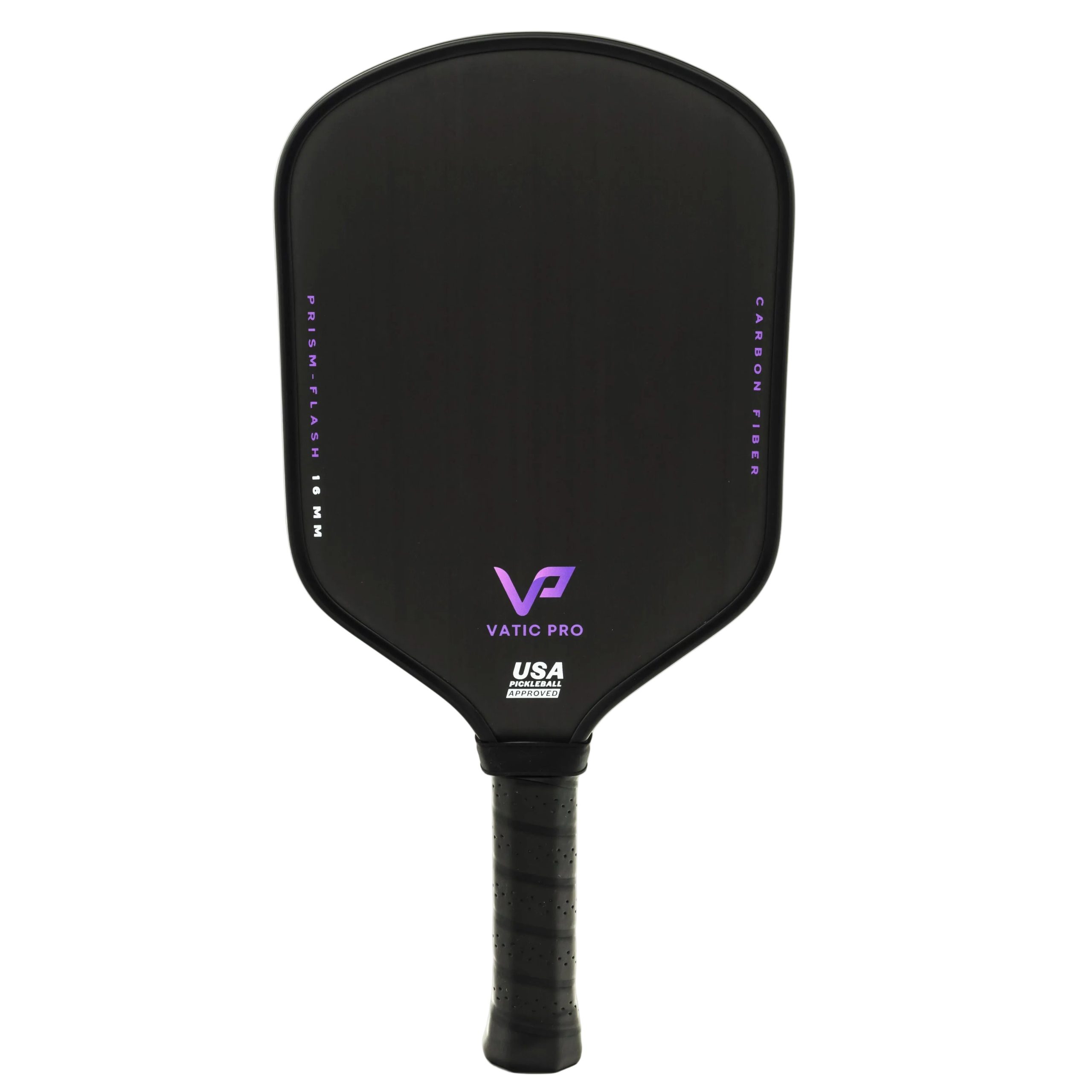
The Prism Flash earns the top spot here on balance rather than on any single number, and balance is what most players actually need.
The 16mm C7 polymer honeycomb core, its edge walls injected with foam, produces a plush, settled strike: blocks absorb pace instead of returning it, resets sit down low, and the third shot drop becomes a shot you aim instead of a shot you survive. Contact feels calm even when the rally is not.
The published figures explain the calm. A twist weight of 6.47 keeps the face square when contact drifts toward the edges, so mishits stay in the court instead of twisting away, and spin around 1,900 RPM is honest working spin for dipping drives and shaped roll volleys.
The 5.3 inch handle and the standard 4.25 inch grip circumference suit a relaxed hold, and the hybrid shape gives the face enough width to forgive without dulling its reach.
Its swing weight of 114 is the highest on this page, right at the ceiling I set for the list, so pure hand-speed players will find quicker options below.
Baseline power is placement power rather than putaway power, and the raw carbon texture, like every face texture, smooths across a long season of heavy play. None of that moves the verdict: as the all-round fit for the most players, nothing here beats it.
Buy it if you want the balanced default: plush control, real forgiveness and a standard grip. Skip it if your game lives on hand speed at the net; picks three and ten swing quicker.
Ask me for the best pickleball paddle for senior men and I will hand you this same paddle, because the fit axes on this page, swing effort, grip and forgiveness, do not split by gender.
2ProKennex Pro Flight: Best Low-Effort Swing Pickleball Paddle in 2027
AT A GLANCE
ProKennex Pro Flight
WEIGHT
7.3-7.6 oz (brand figures)
SWING WEIGHT
-
TWIST WEIGHT
-
SPIN
-
Shape: Standard, 15.43 x 7.6 in
Grip: 4 7/8 in handle, 4.0 in tapered circumference
Core: Cloud Cell polymer honeycomb (core thickness -)
Face: Toray T700 carbon fiber with Diamond Frost texture
Approval: USAP
Feel: Light and quiet, with the Kinetic handle system
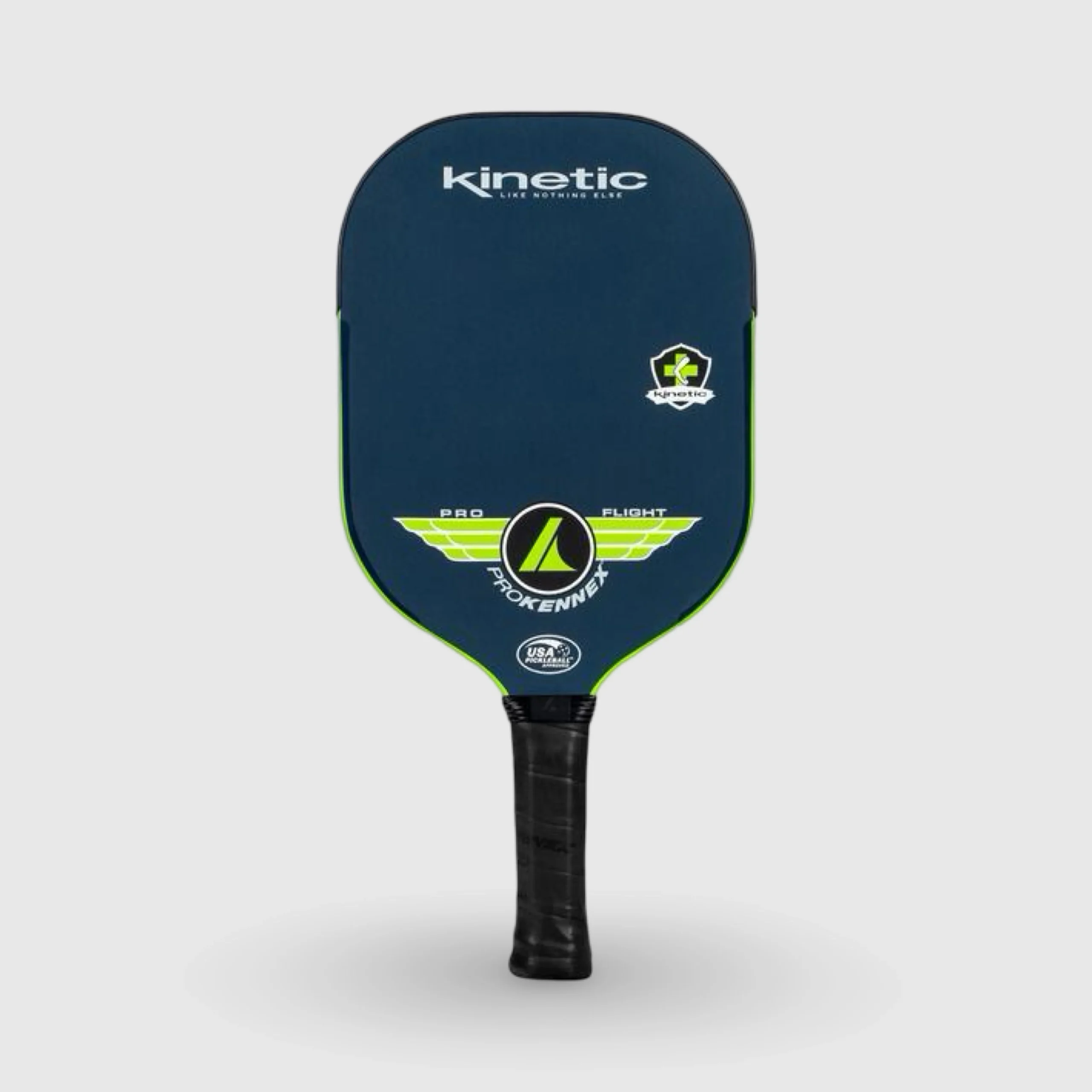
The Pro Flight makes its case on the scale and in the handle. Its brand-published weight band, 7.3 to 7.6 ounces, is the lightest mainstream band on this page, and it feels that way from the first warm-up rally: short strokes move it, counters happen on a flick, and a long morning of games never turns into carrying work.
The Cloud Cell polymer honeycomb plays soft and quiet behind that lightness, so contact stays muted rather than hollow.
Inside the handle sits ProKennex’s Kinetic system: kinetic material built into the grip that the brand documents as absorbing vibration at impact. I describe it exactly that way on purpose.
It is a documented mechanism, not a promised outcome, and what I can report from play is the character it gives this paddle: contact feels filtered and calm, with none of the harsh buzz a thin, stiff build sends up the handle.
The small, tapered 4.0 inch grip circumference also builds up cleanly with overgrips, which the guide below covers in full.
The honest gaps are in the data. ProKennex publishes no lab swing weight, twist weight or spin figure for this paddle, so the box leaves all three unpublished rather than borrowing numbers from its siblings, and its swing effort is judged by its static weight and its feel.
Power is modest, and determined drivers will push it around if your positioning is late. As a low-effort swing argued on mechanics alone, though, it has no rival here.
Buy it if the lightest swing effort and a quiet contact are your priorities. Skip it if you want published lab numbers to choose by, or if you finish points with raw pace.
311SIX24 Jelly Bean 16mm (Pegasus): Best Forgiveness Pickleball Paddle in 2027
AT A GLANCE
11SIX24 Jelly Bean 16mm (Pegasus)
WEIGHT
8.0-8.3 oz
SWING WEIGHT
107
TWIST WEIGHT
7.21
SPIN
2,103 RPM
Shape: Widebody (Pegasus), 16 x 8 in
Grip: 5.75 in handle, 4.125 in circumference
Core: 16mm polymer honeycomb, thermoformed
Face: CFC (two layers of Toray T700 raw carbon fiber over one fiberglass layer)
Approval: USAP
Feel: Soft forgiveness
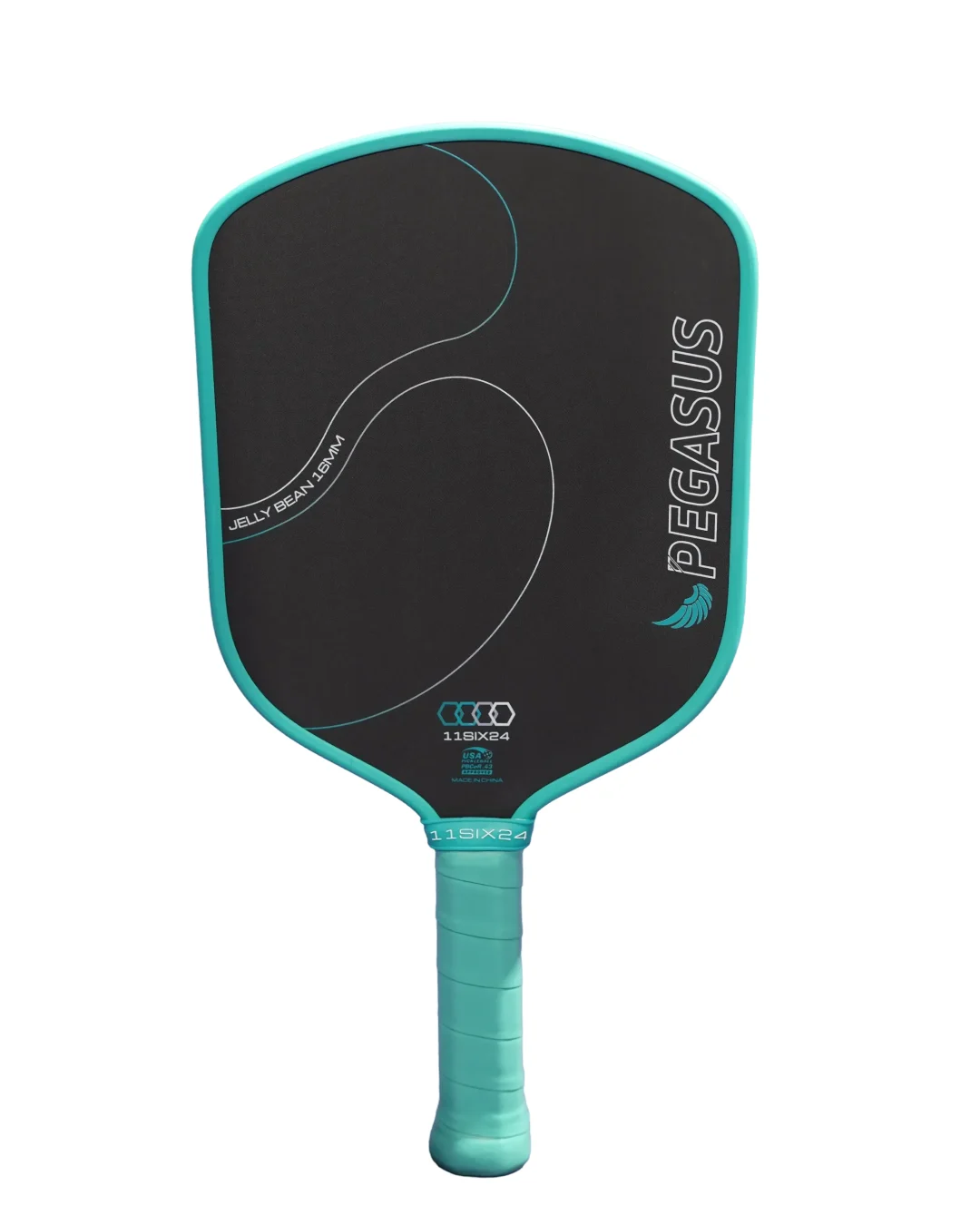
Forgiveness is a measurable thing, and this is where it peaks in a widebody. The Jelly Bean’s Pegasus shape is the widest face on the page, a full 8 inches across, and its measured twist weight of 7.21 is the second-highest here: contact caught wide of centre still leaves on line, because the face simply refuses to rotate in your hand.
Stretched blocks and late defensive stabs, the contacts that decide long rallies, stay playable instead of spraying wide.
The surprise is how it swings. The static weight is midweight, 8.0 to 8.3 ounces, and I will not pretend otherwise; on the scale this is no feather.
But its measured swing weight is 107, the second-lowest published figure on this page, so in play it arrives at the kitchen quicker than paddles that weigh less. The CFC face adds genuine spin at 2,103 RPM, and the 5.5 inch handle leaves real room for a two-handed backhand.
What it will not do is finish points from the baseline. Drives come off politely, and the softness that forgives so well also caps its putaway sting. Players who win by placement will never notice the ceiling. Players who win by pace should read on.
Buy it if mishits and stretched defence are where your points leak away. Skip it if the number on the scale is your first priority; pick nine is built for that.
4Selkirk LUXX Control Air Epic with InfiniGrit: Best Premium Control Pickleball Paddle in 2027
AT A GLANCE
Selkirk LUXX Control Air Epic with InfiniGrit
WEIGHT
7.9-8.3 oz
SWING WEIGHT
109 (Selkirk-published)
TWIST WEIGHT
6.6 (Selkirk-published)
SPIN
-
Shape: Epic, 16 x 8 in
Grip: 4.25 in circumference
Core: X7 Thikset honeycomb, 19mm
Face: Florek carbon fiber with InfiniGrit
Approval: USAP
Feel: Muted, plush control
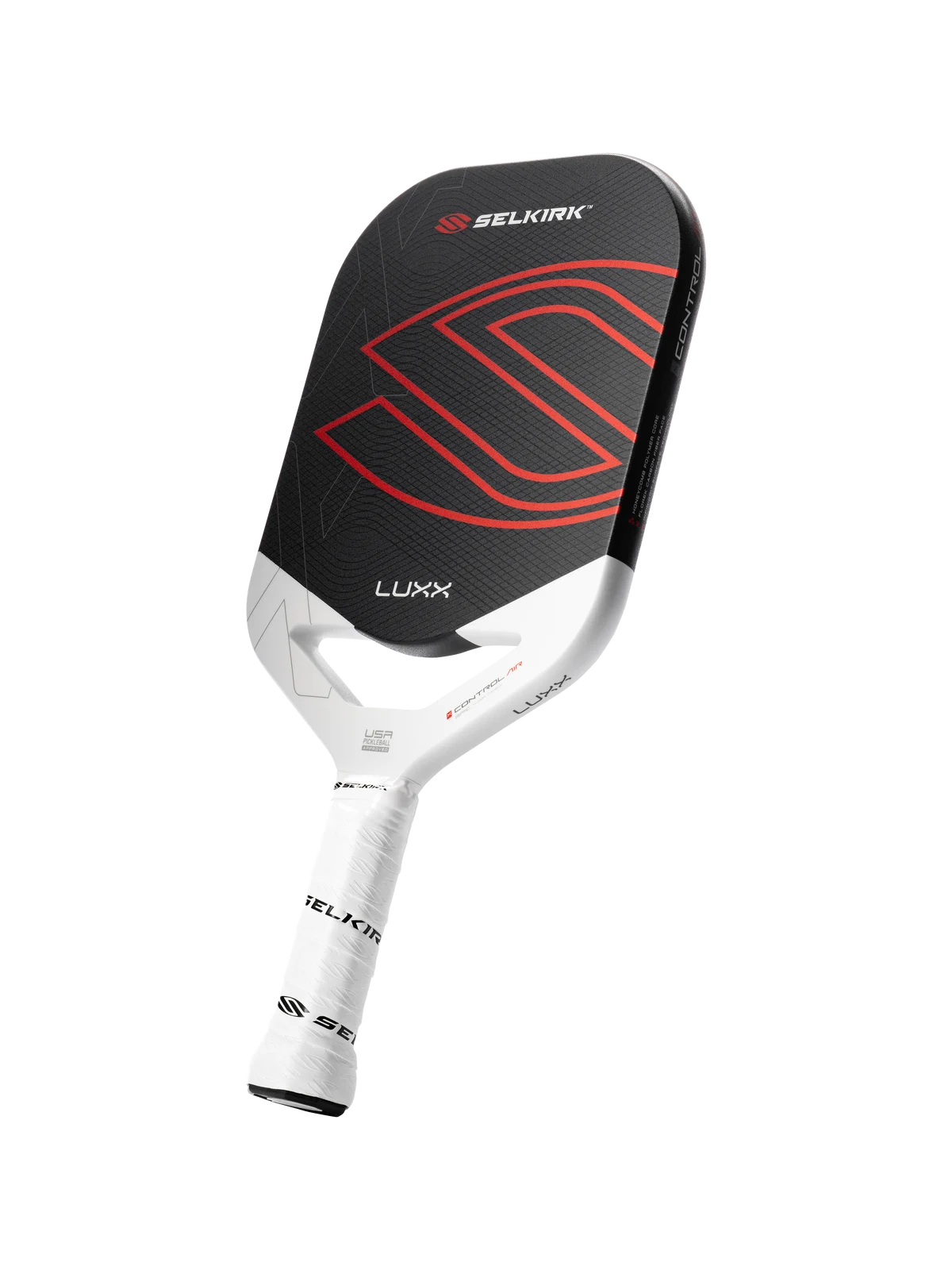
This is the pick that makes the page’s promise concrete, because nothing about it is a concession. The LUXX Control Air Epic is Selkirk’s flagship control build: an X7 Thikset honeycomb core at 19mm, the thickest on this page, inside the wide Epic shape.
That depth of core is dwell you can feel. The ball sits on the face, holds through the stroke, and leaves where your hands sent it, which is why the soft game, dinks, drops and resets played with touch instead of hope, is where this paddle separates itself.
Selkirk publishes a swing weight of 109 and a twist weight of 6.6 for this shape, brand figures the box labels as such, and both sit comfortably inside the fit this page ranks by.
The Florek carbon face carries the InfiniGrit texture, and the brand’s CM Anti-Torque construction is part of how the face stays stable when contact wanders toward the edges.
There is no verified lab spin figure for the Epic shape, so the box leaves spin unpublished rather than borrowing numbers measured on a different shape in the same line.
The trade is urgency. Putaways take placement and patience rather than a flick, and an applied texture asks for the long-ownership check the guide below describes. If your game is built on outlasting people at the kitchen line, this is the most complete control paddle on the page, full stop.
Buy it if touch, dwell and a muted soft game are your whole identity as a player. Skip it if you finish rallies with power; this paddle will not manufacture it for you.
5Vatic Pro V-SOL Pro 16mm (Flash): Best Foam-Core Feel Pickleball Paddle in 2027
AT A GLANCE
Vatic Pro V-SOL Pro 16mm (Flash)
WEIGHT
~7.9 oz (measured)
SWING WEIGHT
108
TWIST WEIGHT
6.43
SPIN
2,060 RPM
Shape: Flash hybrid
Grip: 5.3 in handle, 4.125 in circumference
Core: Full EPP foam with EVA perimeter ring
Face: Raw carbon fiber, T700 class
Approval: USAP
Feel: Plush foam dwell
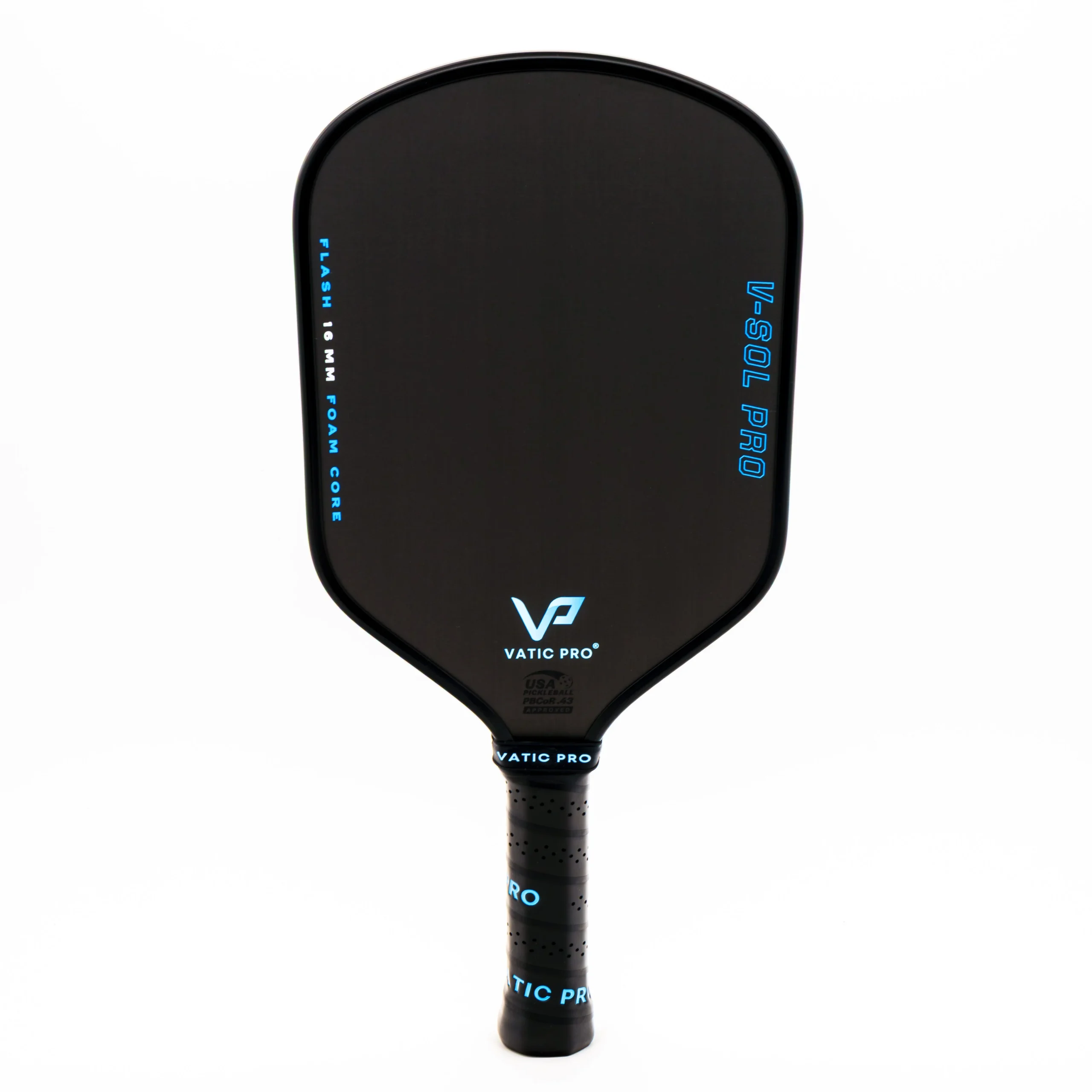
The V-SOL Pro is the modern foam answer in the top half of this list, and it feels like it from the first rally. There is no honeycomb inside at all: a full EPP foam core ringed with EVA pockets the ball at contact, holds it a fraction longer than the honeycomb picks do, and returns it with a soft, heavy shape.
Drops land softer, resets sit down instead of climbing, and the whole contact carries a plush dwell that honeycomb builds at this swing effort rarely match.
The measured line backs the feel. A swing weight of 108 keeps it quick at the net, a twist weight of 6.43 keeps stretched contact honest, and spin measured at 2,060 RPM is genuine working spin for drives that dip and rolls that bite.
The grip circumference is a slimmer 4.125 inches on a 5.3 inch handle, which suits a relaxed, wrist-friendly hold and builds up easily if you want more in your palm.
Foam’s honesty: this is the liveliest feel in the top half of the list. Counters jump off it, and a tense block can carry long until your hands learn its timing, so the softness needs a session of calibration rather than arriving instantly.
Players who like their contact quiet and entirely predictable should start with the honeycomb picks above.
Buy it if you want the foam feel, real dwell and a low swing effort in one build. Skip it if you prefer the settled, predictable strike of a traditional honeycomb core.
6Selkirk SLK Halo Control XL 16mm: Best Reach Pickleball Paddle in 2027
AT A GLANCE
Selkirk SLK Halo Control XL 16mm
WEIGHT
7.7-8.0 oz
SWING WEIGHT
-
TWIST WEIGHT
-
SPIN
-
Shape: XL elongated, handle 5.75 in
Grip: 4.25 in circumference
Core: 16mm Rev-Control polymer honeycomb
Face: 18K UltraWeave carbon fiber
Approval: USAP
Feel: Soft, muted control
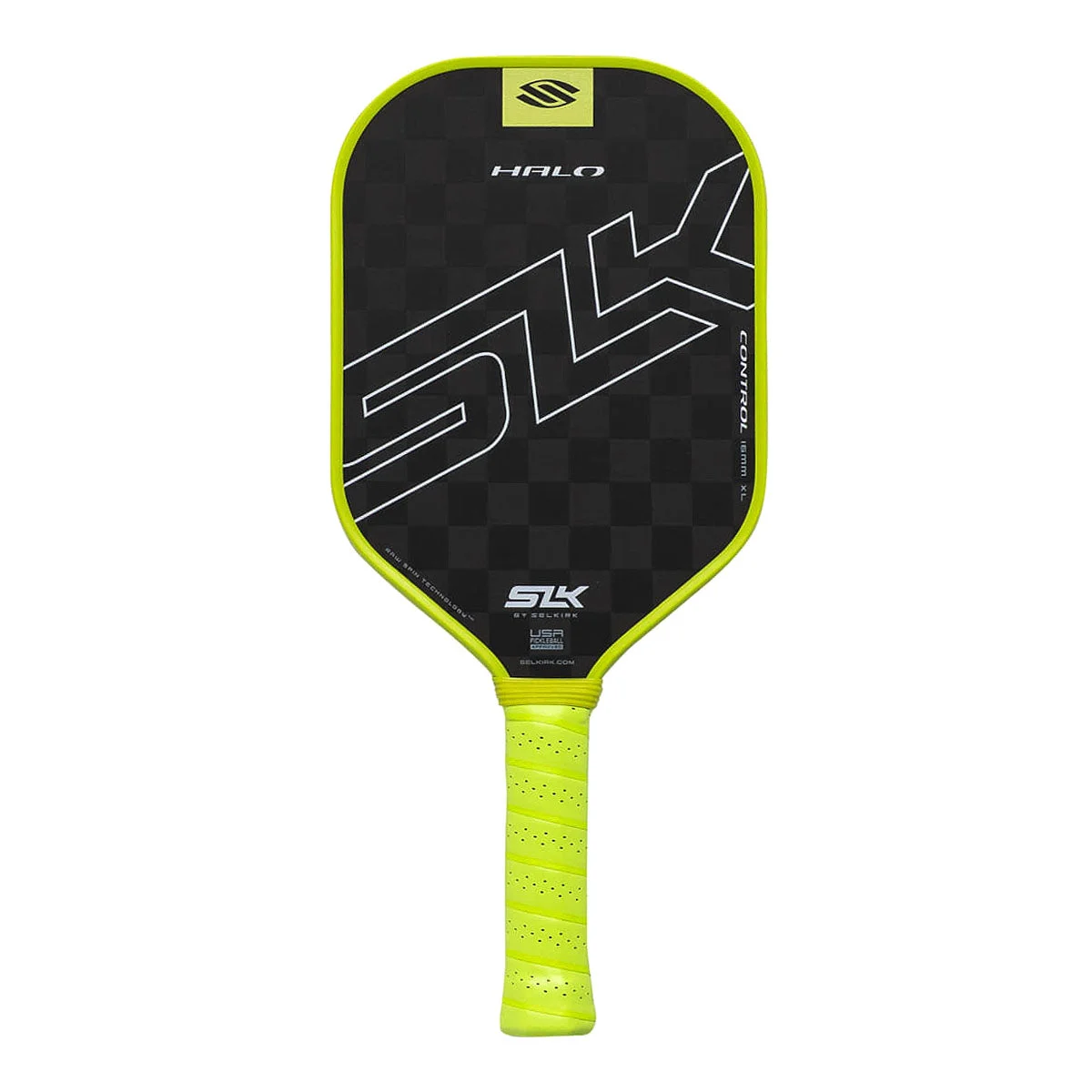
Reach is the argument, and this paddle makes it with length in both directions.
The XL’s elongated head and 5.75 inch handle, the longest handle on this page, put the contact point further from your body than anything else here: balls taken at full stretch on the backhand side, lobs chased down in a step fewer, dinks reached early off the bounce instead of late.
Coverage like that wins points before the rally even develops, and it does it without asking your feet for extra steps.
The feel behind the length is the softest Selkirk sells in this line. The 16mm Rev-Control polymer core answers contact muted and low, the 18K UltraWeave carbon face keeps the strike calm, and the standard 4.25 inch grip circumference is a fit most hands already know.
Let me be plain about one thing, because this paddle gets sold the other way elsewhere: that grip is the standard size, not a slim one, and the reach, not the handle, is the reason it is here.
Two honest gaps. Selkirk publishes no lab swing weight, twist weight or spin line for the XL shape, so the box leaves all three unpublished rather than backfilling numbers measured on its shorter siblings, and length always taxes hand speed a little at the kitchen. Judge it by what it is: a coverage tool with a genuinely soft touch.
Buy it if court coverage and a muted soft game top your list. Skip it if your game is won in fast hands battles right at the net.
7Selkirk SLK Dauntless Widebody: Best Stability Pickleball Paddle in 2027
AT A GLANCE
Selkirk SLK Dauntless Widebody
WEIGHT
7.86 oz (measured)
SWING WEIGHT
110
TWIST WEIGHT
7.36
SPIN
~2,020 RPM
Shape: Widebody
Grip: 5.6 in handle, 4.25 in circumference
Core: SoloCore PureFoam, 16mm
Face: T700 raw carbon fiber
Approval: USAP
Feel: Planted and secure
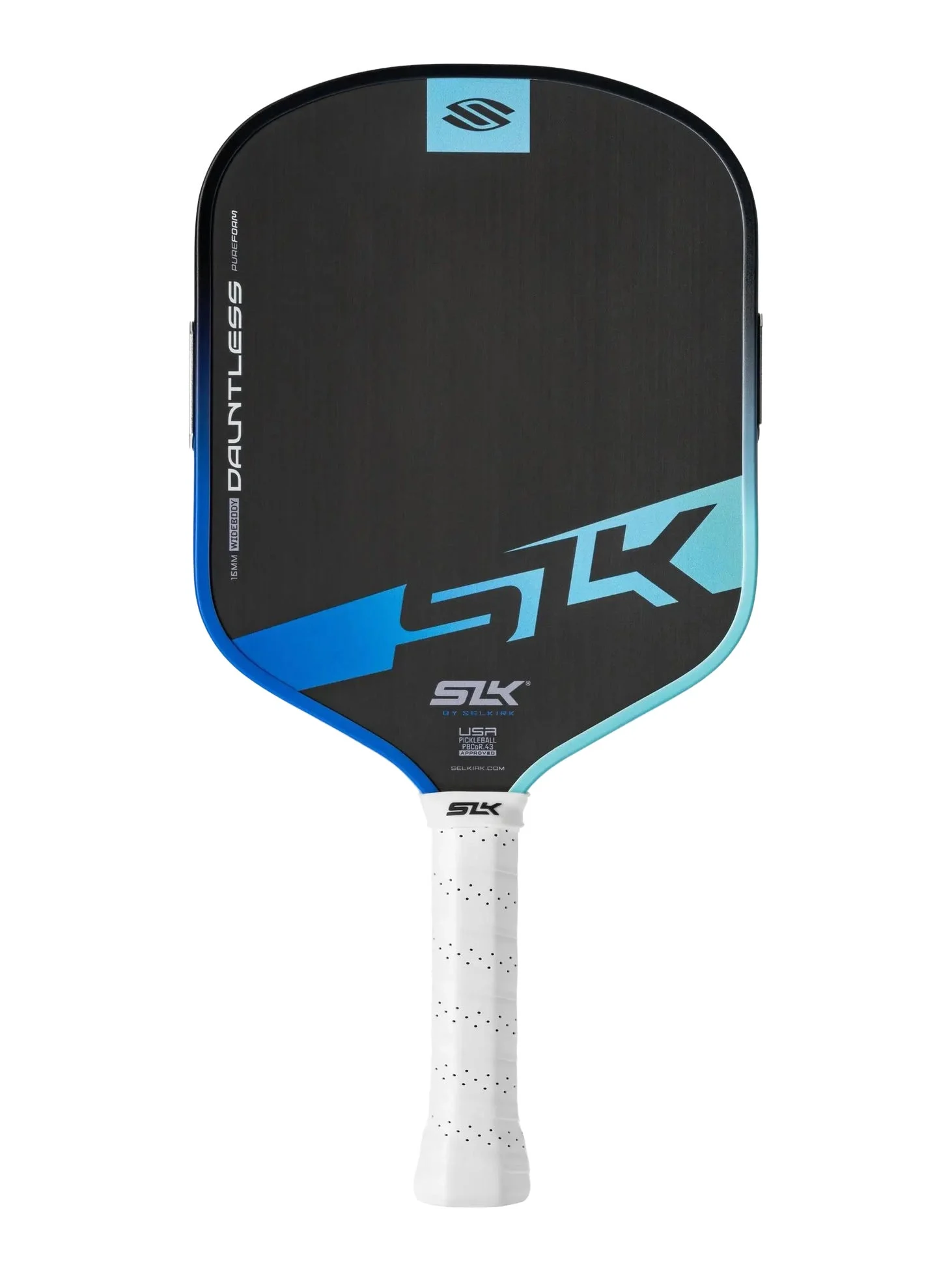
If the Jelly Bean is forgiveness by width, the Dauntless is stability by measurement.
Its twist weight of 7.36 is the highest measured figure on this page, and it plays exactly like the number promises: contact caught anywhere across the widebody face leaves square, blocks hold their line against hard drives, and the paddle never once feels like it is rotating out of your hand.
For players whose points leak away on defensive contact, that planted certainty is the whole case.
Underneath sits Selkirk’s SoloCore PureFoam, a full foam core at 16mm, which gives contact a secure, settled pocket rather than a hollow ring.
The measured weight is 7.86 ounces with a swing weight of 110, inside the page’s ceiling, and spin around 2,020 RPM off the raw carbon face is more than enough shape for drives and rolls. The 5.6 inch handle is the second-longest here and gives a two-handed backhand genuine room to work.
The trade-offs are shape and ceiling. A widebody gives back some of the reach the XL above takes, and players chasing the plushest dwell on the page should compare it directly with the LUXX Epic. As a stability-first paddle that still swings easy, it stands alone here.
Buy it if off-center contact and twisting blocks are where your rallies leak away. Skip it if reach is your priority; the elongated pick above covers more court.
8Paddletek Phoenix G6: Best Grip Comfort Pickleball Paddle in 2027
AT A GLANCE
Paddletek Phoenix G6
WEIGHT
7.8-8.1 oz (brand figures)
SWING WEIGHT
-
TWIST WEIGHT
-
SPIN
-
Shape: Standard, 15 5/8 x 7 3/4 in
Grip: 5 in handle, 4.25 in circumference, ultra-cushion high-tack wrap
Core: Polymer honeycomb (brand Graphite PolyCore)
Face: Composite (polycarbonate/graphite composite surface per the brand listing)
Approval: USAPA approved
Feel: Comfort-first control
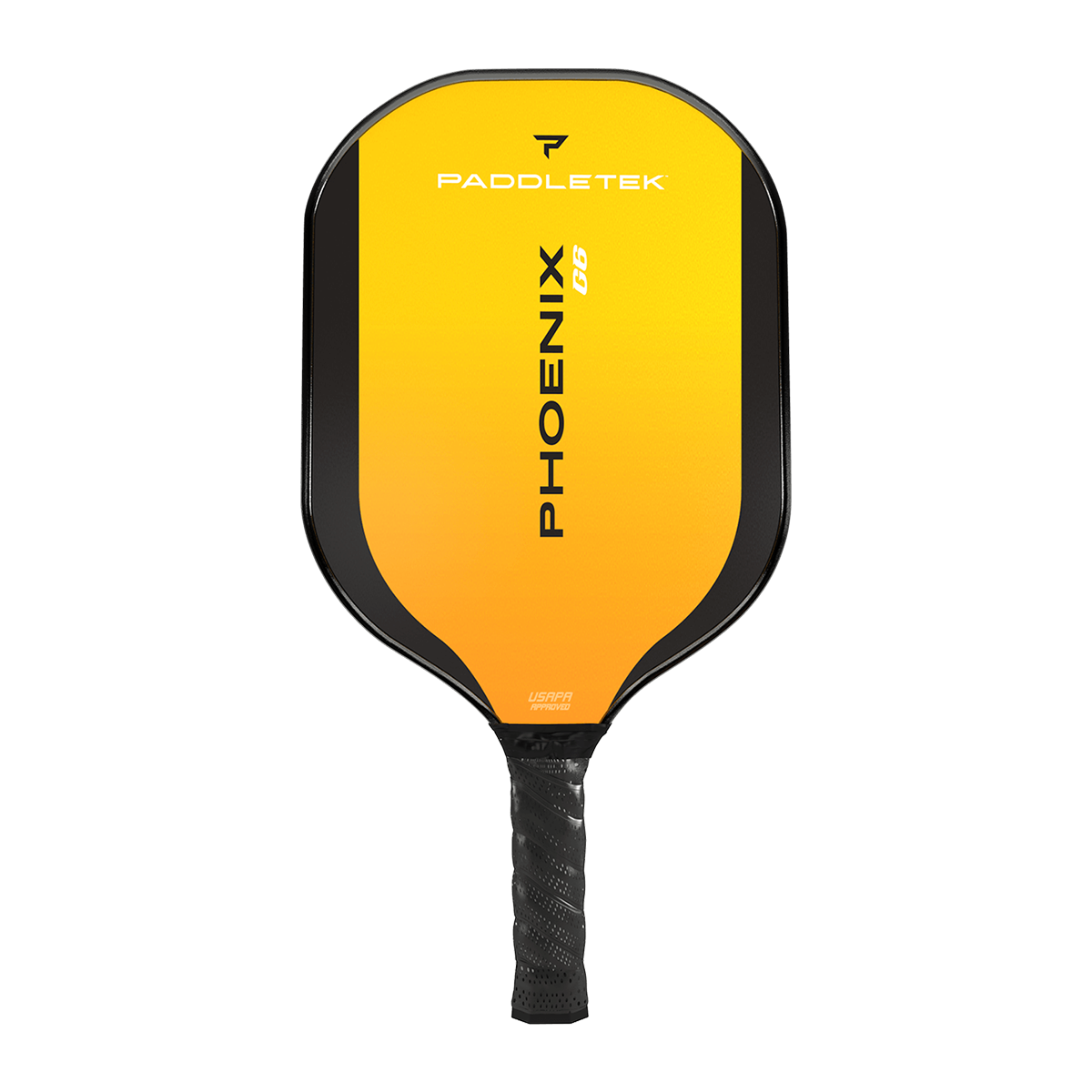
Some players shop for a grip the way other players shop for a core, and this is their paddle. The Phoenix G6 wraps its standard 4.25 inch circumference in the thickest factory cushion wrap sold, an ultra-cushion, high-tack hold that fills the palm and stays soft and secure through long sessions.
No overgrip experiments, no build-up math: the fuller hold most players construct for themselves is simply how this paddle arrives.
The paddle behind the wrap is a default control build that has lasted a decade for good reason. The standard shape carries a large, honest sweet spot, the polymer honeycomb core answers contact calm and predictable, and the whole package plays the patient game, dinks, drops and resets, without surprises.
Paddletek publishes brand figures of 7.8 to 8.1 ounces; no lab swing weight, twist weight or spin line exists for this model, and the box says so rather than guessing.
Now the note that has to travel with this pick. Review history for the G6 includes handle-breakage complaints, and I will not dress that up: the brand warranty covers manufacturing defects, and the wrap’s comfort is a reason to choose this paddle, not a promise about its toughness.
Judged on the hold itself, nothing else on the page is close.
Buy it if a fuller, softer hold straight off the shelf is what your hands have been asking for. Skip it if you want lab figures and modern face texture in the same paddle.
9Paddletek Bantam TS-5: Best Lightest on the Scale Pickleball Paddle in 2027
AT A GLANCE
Paddletek Bantam TS-5
WEIGHT
7.0-7.5 oz (brand spec)
SWING WEIGHT
-
TWIST WEIGHT
-
SPIN
-
Shape: Standard, 15 5/8 x 7 7/8 in
Grip: 5 in handle, 4.25 in circumference
Core: Bantam PolyCore, 12.7mm
Face: Textured fiberglass epoxy hybrid
Approval: USAP
Feel: Light and simple
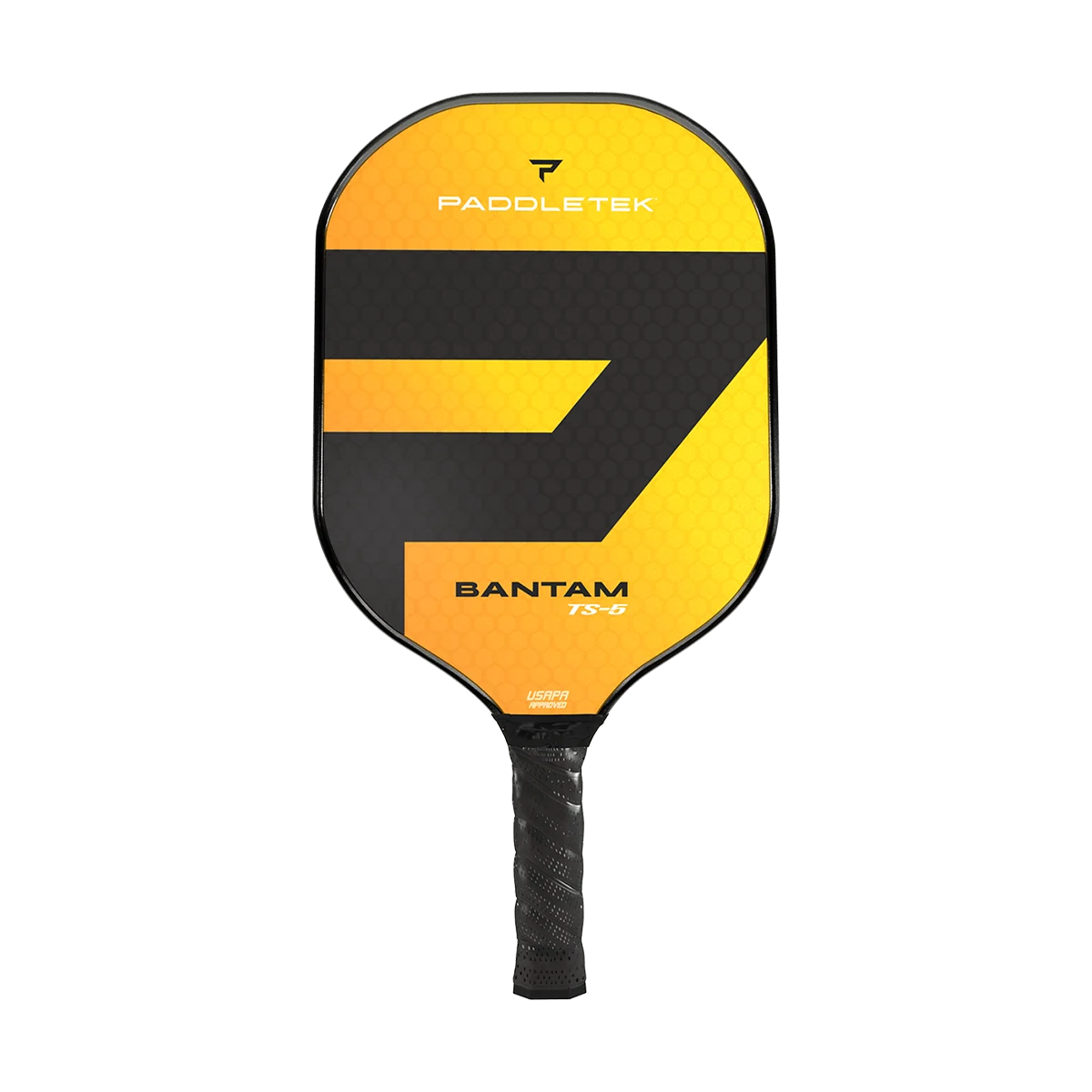
Start with the number, because the number is the pick. The Bantam TS-5’s brand spec band of 7.0 to 7.5 ounces is the lightest static weight sold by a major brand, full stop.
Through a long session that shows up as freshness: the paddle never feels like work to carry, counters happen on short strokes, and the last game of the morning asks no more of your swing than the first one did.
For players whose first priority is the scale, the search ends here. A senior intermediate player hunting for lightweight pickleball paddles will not find a lighter mainstream band than this one.
The build behind the number is straightforward. A 12.7mm Bantam PolyCore and a textured fiberglass epoxy hybrid face produce a light, simple strike, and the standard shape with a 5 inch handle keeps everything familiar.
Contact is honest and direct, the sweet spot is where you expect it, and nothing about the paddle needs learning. Paddletek publishes no lab swing weight, twist weight or spin figures for it, so the box leaves them unpublished.
Honesty about what light and older means. This is a simpler build from an earlier generation: the face texture is not modern raw carbon, a thin core plays firmer and livelier than the 16mm control builds above, and against genuinely hard hitters there is less mass to hold your line in a block.
It wins on grams, openly, and for the right player grams are the point.
Buy it if the lightest possible scale weight is your deciding factor. Skip it if you want modern spin texture or a plush, thick-cored soft game.
10Franklin C45 Aurelius 12.7mm (ALW): Best for Quick Hands Pickleball Paddle in 2027
AT A GLANCE
Franklin C45 Aurelius 12.7mm (ALW)
WEIGHT
7.45 oz average (7.2-7.7 range)
SWING WEIGHT
92.3
TWIST WEIGHT
-
SPIN
-
Shape: Standard/hybrid, 15.7 x 7.9 in
Grip: 5.1 in handle, 3.9 in circumference
Core: PowerFlex polymer, 12.7mm
Face: T700 raw carbon fiber, 45-degree peel-ply
Approval: USAP + UPA-A
Feel: Fast, firm power
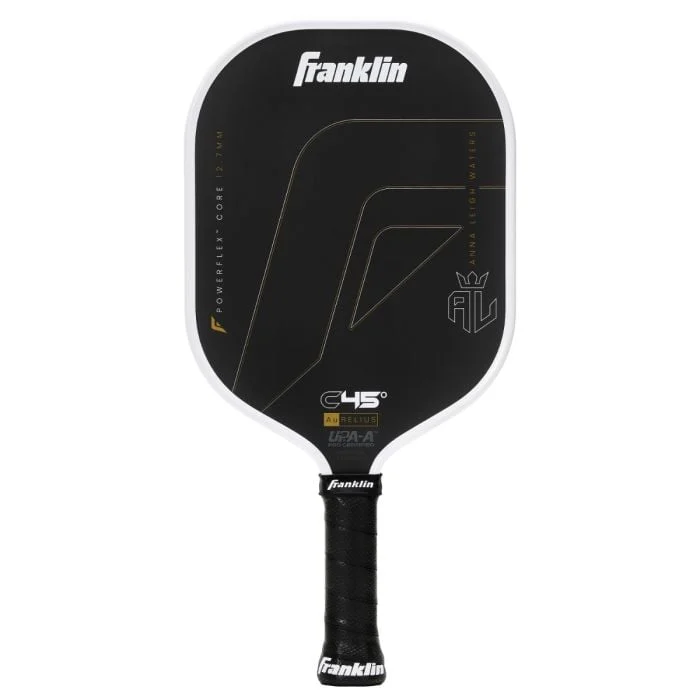
Read this section carefully, because this pick breaks the pattern on purpose. The C45 Aurelius in its 12.7mm build is a tournament power paddle: a thin PowerFlex core, a firm T700 raw carbon face laid at a 45-degree peel-ply angle, and a shape built to drive.
What earns it a place here is one measured number: a swing weight of 92.3, the lowest measured figure on this entire site. It is a power build that arrives at the ball faster than every control paddle above it.
That combination suits a specific, experienced player: the one who generates their own pace, plays on the front foot, and wins hands battles by getting the paddle there first.
The peel-ply texture is the carbon fiber itself rather than a coating, which is the durable end of the texture spectrum the guide describes. Its 3.9 inch grip circumference is the smallest factory grip on this page, a feature if your hands are small, and a build-up project, covered in the guide, if they are not.
The honesty a firm build demands: a thin core gives back more feedback on mishits than the thick, plush builds above, twist weight and spin are not published for this variant, and nothing about it is gentle.
It is here for the strong player who wants real speed without giving up a real power paddle, and it should be chosen for exactly that reason.
Buy it if you are an experienced, aggressive player who wants the quickest swing on this page. Skip it if you want plush forgiveness; that is what picks one and three are for.
How to Choose the Best Pickleball Paddle for Seniors in 2027
Choosing from this list is a fitting exercise, not a talent exercise.
Work through the six sections below in order: how swing effort actually reads, how grip size works and how to change it, what forgiveness means in numbers, what reach buys and what it trades away, how face texture ages, and what comfort construction can and cannot honestly claim.
That is true whether you are comparing pickleball paddles for 70 year old players or for league players twenty years younger: fit first, labels last.
Swing Weight vs Static Weight: Reading Swing Effort
Static weight is what the paddle weighs standing still. Swing weight is what it weighs once it is moving, and the moving number is the one your arm lifts on every swing of the session.
The two routinely disagree: the Jelly Bean is the heaviest paddle on this page on the scale, at 8.0 to 8.3 ounces, yet its measured swing weight of 107 is the second-lowest here, while the Prism Flash at a similar scale weight swings at 114. Balance, where the mass sits along the frame, is what separates them.
Use the numbers this way. Every published swing weight on this page sits at 114 or under, the ceiling I set for the list, and the lower half of that range is where hands battles get easy and long sessions stay comfortable.
Where a box reads Not published, the maker has not released a lab figure; judge those paddles by their static weight, their shape, and how the swing feels in your own hand during a warm-up, and treat anyone quoting you a swing weight the brand never published as guessing.
Grip Sizing and Building Up a Fuller Hold
Fit first: hold the paddle and check the gap between your fingertips and your palm. A fingertip’s width of space means the size is close; fingers touching the palm means the grip is running small for your hand, and a wide gap means it is running large.
Most of this page ships at the standard 4.25 inches, with two deliberate exceptions, the Pro Flight at 4.0 inches and the Aurelius at 3.9 inches, and small factory grips are best understood as a starting point rather than a verdict.
The build-up math is simple and reversible. One standard overgrip layer adds roughly 1/16 of an inch of circumference; two layers add about one full grip size. A heat-shrink sleeve makes a bigger jump in one step.
Going the other way, stripping the factory grip and rewrapping with a single overgrip on the bare handle takes roughly 1/8 of an inch off. And if you would rather skip the arithmetic entirely, the Phoenix G6’s factory cushion wrap is the fuller hold, sold off the shelf.
Forgiveness: Twist Weight and Sweet-Spot Size
Twist weight measures how hard a paddle resists rotating when contact lands away from centre. High numbers mean the face stays square and the ball leaves on the line you chose; low numbers mean mishits twist away and your hand does the correcting.
It is the single best predictor of how a paddle treats your worst contact, which is why this page weighs it as heavily as swing effort.
The pattern in the boxes is no accident: the widebody shapes post the biggest figures, the Dauntless at 7.36 and the Jelly Bean at 7.21, because width puts mass where twisting starts. The honest gap to understand is Not published.
Several makers here release no lab twist weight at all, and an unpublished number is missing information, not a low score. With those paddles, judge by shape and width, and by how off-centre contact behaves in your first sessions with them.
Reach Without Extra Steps: Elongated Shapes and Handle Length
An elongated head and a longer handle move the contact point further from your body, and that distance is court coverage you do not have to run for: the stretch backhand taken in balance, the lob run down in one step fewer, the dink reached early instead of late.
The Halo Control XL is this page’s worked example, an elongated head on a 5.75 inch handle, the longest here.
The trade is hand speed. Length is leverage in both directions, and a longer paddle takes a fraction more time to redirect in a fast exchange at the kitchen.
Handle length has its own second use: room for a two-handed backhand, which is why the Dauntless pairs its stability with a 5.6 inch handle. Choose reach if coverage is where your points leak; choose the standard and widebody shapes if the hands battle is.
Face Texture and Grit Fade: The Long-Ownership Check
Spin comes from texture, and texture is a wearing surface. The builds on this page sit on a spectrum: at the durable end, peel-ply texture that is the carbon fiber itself, as on the Aurelius; in the middle, woven raw carbon faces; at the applied end, textured coatings laid over the face, which start sharp and smooth out fastest.
Every texture fades eventually. Fading is wear, not a defect, and players who keep a paddle for years should shop with the fade in mind.
Check the paddle you already own twice a season. Drag a fingernail lightly across the face and feel whether the bite is still there, then press a ball into the face and twist it: a face that still grabs will turn the ball with it.
When drives stop dipping and the face feels polished, the texture has done its service. That fade is exactly why one strong paddle, the Friday Aura Pro, sits in this page’s reserves rather than its ten: on this page, texture that lasts is part of the fit.
Comfort Construction, Honestly, and the Limits of Equipment
Thicker cores dwell longer and answer contact more quietly; foam cores pocket the ball where honeycomb answers with a crisper ring; and every paddle has a vibration character at contact that is a property of its materials. Those are mechanics, and they are real.
What they are not is a measured health outcome, and this page reads brand claims about damping exactly that way: a documented mechanism, like the material in the Pro Flight’s handle, is a description of construction, not a promise about your body, and any figure a brand cites for it stays the brand’s figure.
The rest of comfort is not equipment at all. A loose grip, contact out in front, a compact swing, sensible session length and rest days do more than any core layup can.
And the line this site’s health pages have always carried stands here too: persistent pain, weakness or numbness is a reason to talk to your doctor or a physiotherapist. A paddle is equipment, not treatment, and no section above should be read as saying otherwise.
Frequently Asked Questions (FAQs)
1. What is the best pickleball paddle for seniors?
There is no senior-specific paddle to name, and that is the honest answer. No maker builds a paddle with a senior construction; what exists are ordinary performance paddles whose numbers fit experienced players better than others.
On fit, the Vatic Pro Prism Flash 16mm leads this list: a plush 16mm control build, a twist weight of 6.47 that forgives mishits, and a swing weight inside the ceiling I set for the page.
Start there, unless one of the axes below, swing effort, grip fit, reach or stability, matters more to your game, in which case the pick ranked for that axis is your answer.
That answer is the same for pickleball paddles for senior women: the axes do not change, only the player’s own numbers do.
2. Are senior paddles actually different from regular paddles?
No. There is no senior-specific construction, and a paddle marketed by age is an ordinary paddle with a label on the listing. The materials, cores and faces on this page are the same ones sold to every player in the sport.
What genuinely differs is the choosing: players with decades of court time tend to weigh swing effort, grip fit and forgiveness more heavily than raw putaway power, and those are the axes this list ranks by. Shop the numbers, not the label.
3. What paddle weight should I choose?
Most players choosing from this page land between 7.3 and 8.3 ounces, and where you land inside that band should follow your game. Toward the lighter end, the TS-5 at 7.0 to 7.5 ounces and the Pro Flight at 7.3 to 7.6, hand speed and long-session freshness come first.
In the middle, the Prism Flash and the Jelly Bean add stability and forgiveness. Read the next answer before you decide, though, because the scale weight is only half the story: how a paddle swings matters more than what it weighs standing still.
4. Which matters more, static weight or swing weight?
Swing weight, for how heavy a paddle feels in play. Static weight is the mass on the scale; swing weight is that mass in motion, and it is set by balance as much as by ounces.
This page carries the proof in both directions: the Jelly Bean is the heaviest paddle here on the scale yet swings at 107, while lighter builds on the scale can swing heavier. Use static weight for carrying and raw plow-through, and swing weight for hand speed, swing effort, and how fresh your arm feels in the third game.
5. What grip size is right for me, and can I make a small grip bigger?
Start with the fingertip test: grip the paddle and look for a fingertip’s width of space between your fingers and your palm. Fingers touching the palm means go bigger; a wide gap means go smaller.
And yes, a small grip builds up easily and reversibly: one overgrip layer adds roughly 1/16 of an inch of circumference, two layers about one full grip size, and a heat-shrink sleeve makes a larger jump.
The small factory grips on this page, at 4.0 and 3.9 inches, are chosen with exactly that build-up in mind, and the Phoenix G6 is there if you want the fuller hold without the work.
6. Is a thicker core better for the soft game?
Generally, yes, for the shots that decide the soft game. A thicker core holds the ball a fraction longer at contact, which reads as dwell: drops land softer, resets stay low, and dinks stop popping up.
The extremes on this page make the point, from the 16mm control builds that anchor the list to the LUXX Epic at 19mm, the thickest core here and the plushest soft game I tested. Thickness is not the whole story, since foam builds dwell too, but if your points are won at the kitchen line, thick is the honest default.
7. Widebody or elongated: which suits my game?
It follows where your points leak. Choose a widebody if they leak on contact: the extra width posts the highest twist weights here, the Dauntless at 7.36 and the Jelly Bean at 7.21, so mishits stay on line and blocks hold against pace.
Choose elongated if they leak on coverage: the Halo Control XL’s length takes balls a step earlier and reaches what a standard shape makes you lunge for. The trade runs both ways, widebody gives back some reach and elongated gives back some hand speed, and neither is the advanced or the gentle option.
8. I play at an advanced level. Are these paddles too basic for me?
No, and the list was built to make that answer concrete.
These paddles are ranked on fit axes, swing effort, forgiveness, grip fit and reach, not on assumed ability, and two of the ten are full-performance builds: the LUXX Control Air Epic is Selkirk’s flagship control paddle, and the Franklin C45 Aurelius 12.7 is a tournament power paddle that happens to post the lowest measured swing weight on this site, 92.3.
If you play at an advanced level, choose by the same numbers everyone else uses here; where you land inside the list is a fit question, not a level question.
9. Will a lighter paddle mean less power?
Some, and which kind matters. A lighter paddle carries less mass into the ball, so blocks meet hard drives with less plow-through and drives need more of your own swing to reach full pace. What light paddles give back is hand speed: counters, flicks and resets happen on shorter motions.
If a light paddle otherwise fits you and you want a touch of the mass back, lead or tungsten tape on the frame is the reversible tune-up: small strips change the balance without changing the paddle, and they peel off when you change your mind.
10. How long does the grit on a paddle face last?
It depends on the texture type, and the honest answer is that all of them fade. Peel-ply textures, where the roughness is the carbon fiber itself, wear slowest; woven raw carbon sits in the middle; applied textures start sharpest and smooth out fastest.
Under regular play, expect a working face to lose its sharpest bite across a season or two rather than a month or two. Check yours with the fingernail drag and the ball-grab test from the guide, and treat a polished-feeling face whose drives have stopped dipping as a paddle asking to be replaced.
11. Are all of these paddles legal for senior tournaments and sanctioned play?
Yes. Every paddle on this page is USAP approved, which is the approval sanctioned events and senior tournaments run under, and the Aurelius 12.7 carries UPA-A approval as well.
That standard is deliberate: this page admits no UPA-A-only paddle, however well it might fit the other axes, because a paddle that cannot be used in sanctioned play fails the reader it is recommended to.
As anywhere, approval attaches to the exact model, so confirm your precise paddle name on the approved list before you travel to an event.
12. My shoulder or elbow aches after I play. Will one of these paddles fix it?
No. No paddle fixes pain, and any listing that implies one can should be read the way this page reads brand damping claims: as marketing, not as a mechanism you can rely on.
What a paddle can honestly do is reduce the aggravating factors under its control: a lower swing weight loads the swing less, a grip that truly fits stops you squeezing, and a stable face stops mishits wrenching in your hand. Beyond that, the answer is the one the guide ends with.
Persistent aching, weakness or numbness belongs with a doctor or a physiotherapist, not with a new paddle. If you are coming back after shoulder surgery, the order matters: play only when your surgeon or physiotherapist clears you, because no paddle helps a shoulder heal.
When you are cleared, start with the lowest swing effort on this page, the TS-5 and the Pro Flight, and keep the first sessions short.
13. What is the best paddle for an elderly beginner pickleball player?
Start with the lightest, simplest builds on this page. The Paddletek Bantam TS-5 weighs 7.0 to 7.5 ounces, plays a familiar standard shape and asks nothing of a new swing, and the ProKennex Pro Flight at 7.3 to 7.6 ounces adds a quiet, filtered contact.
No paddle is built for elderly beginners either; these two simply make the first months easiest on the arm and the hands.
14. Which paddles do women over 50 choose most from this page?
There is no sales table behind ‘most popular’, so read the question as ‘most suggested’. For women over 50, the two starting points I suggest most are the ProKennex Pro Flight when swing effort matters most, and the Vatic Pro Prism Flash when all-round balance matters more.
Both are chosen by the same fit axes as every other pick on this page, because the axes do not change with the player.

Michael Stevenson
Hi, my name is Michael Stevenson and I’m a passionate pickleball player. I’ve been playing the game for many years and I’m pretty highly skilled at it. Pickleball is one of my favorite topics so naturally, I love to write about it.
Whether it’s tips for beginners, guides for experts, reviews of new paddles, or advanced playing techniques – if it relates to pickleball then I have something interesting to write about it. So if you’re looking for entertaining and informative information on the topic of pickleball, look no further than my written works!