
Best pickleball paddles for advanced players give feedback you can trust, hold their spin over a long season, and answer the same in game three. I tested every pick in hard games against strong players, and I checked swing weight, twist weight and spin against published lab measurements first.
At this level you stop buying forgiveness, because your contact is mostly clean, and your misses come from tactics more than from bad technique today.
The JOOLA Perseus Pro V 16mm is the best pickleball paddle for advanced players because its foam lined core answers the same in game three. The same swing gives the same ball all day, and its 2,060 RPM of spin keeps full drives dipping instead of sailing past the baseline.
Contact feels firm but held, so drops sit down without floating, and resets take pace in instead of sending the ball back at your opponents. It weighs 8.1 ounces with a 117 swing weight, and you can check its Amazon listing through the link below for the full details.
The 10 Best Pickleball Paddles for Advanced Players in 2027
1JOOLA Perseus Pro V 16mm: Best Overall Pickleball Paddle for Advanced Players in 2027
AT A GLANCE
JOOLA Perseus Pro V 16mm
Weight
8.1 oz
Swing Weight
117
Twist Weight
6.26
Spin
2,060 RPM
Shape: Elongated
Core: Propulsion Core, polypropylene with EVA foam
Face: Raw carbon fiber
Approval: USAP and UPA-A
Feel: Firm consistency
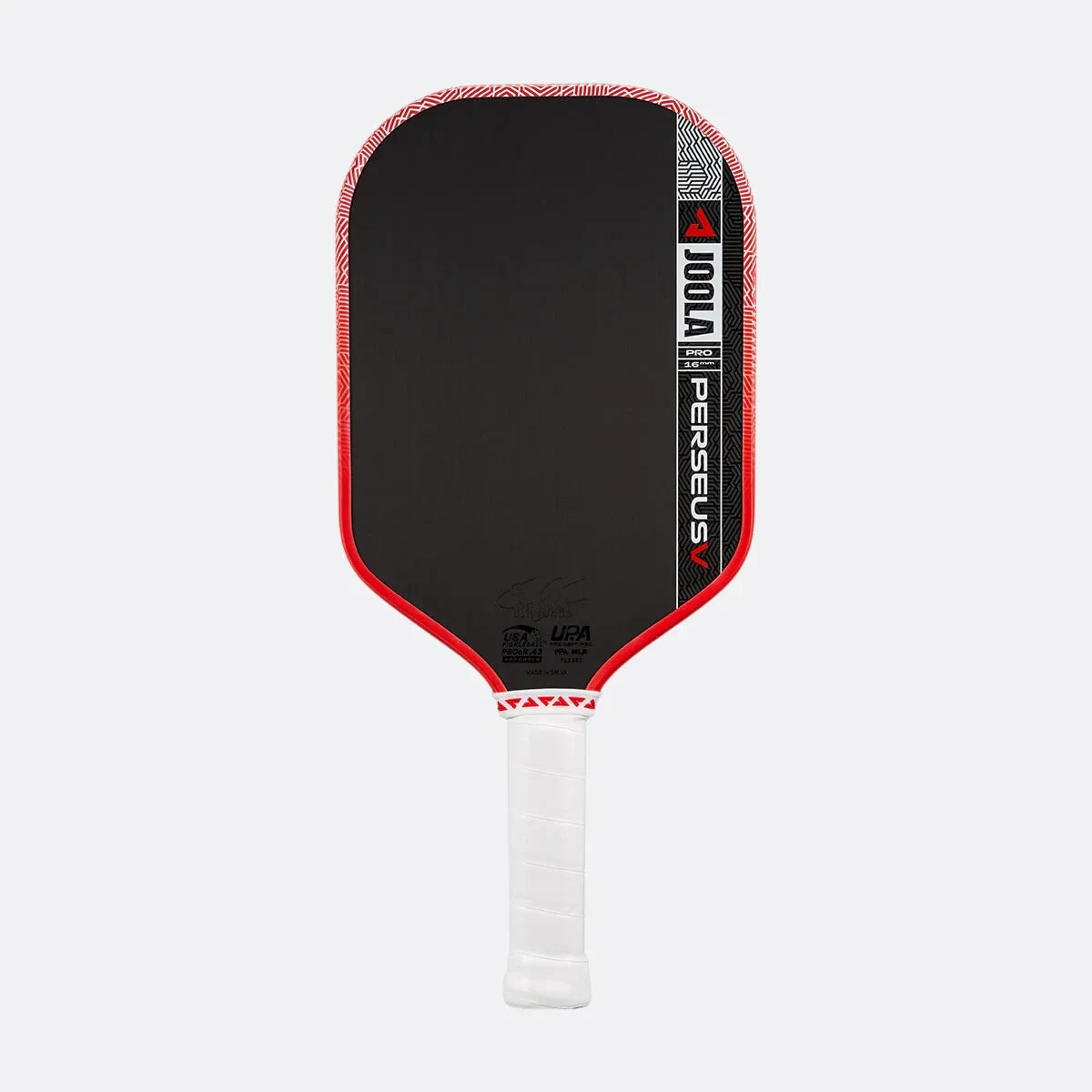
The Pro V is the paddle I trust on the days when the draw is full of strong players and every rally is a negotiation between patience and nerve. What separates it at this level is not a single spectacular trait.
It is the absence of surprises. The same swing produced the same ball in the first game of the morning and the last game of the afternoon, and at advanced level that consistency is worth more than any highlight shot.
The Propulsion Core pairs a polypropylene honeycomb with EVA foam, and the foam is what you feel. Contact is firm but held, so drops sit down without floating and resets absorb pace instead of returning it.
Power is there, but you earn it with a full swing: serves carry real weight at a 117 swing weight, and the 2,060 RPM of measured spin keeps hard drives dipping instead of sailing.
Be honest with yourself about the first week. Mine felt muted and short through the opening sessions, and I nearly moved on.
Foam and EVA constructions settle in, and by the fourth session the response had opened into the paddle Ben Johns carries for a reason: stable at a 6.26 twist weight, honest on defense, and heavy enough on attack to finish the points you build.
Buy it if you play tournaments and want one response you can trust from first serve to last. Skip it if you want a paddle that supplies easy pop. The Pro V rewards the player who brings their own.
2JOOLA Perseus Pro IV 16mm: Best All-Court Pickleball Paddle in 2027
AT A GLANCE
JOOLA Perseus Pro IV 16mm
Weight
8.1 oz
Swing Weight
118
Twist Weight
6.3
Spin
1,971 RPM
Shape: Elongated
Core: Gen 3 Propulsion Core
Face: Textured raw carbon fiber
Approval: USAP and UPA-A
Feel: Plush power
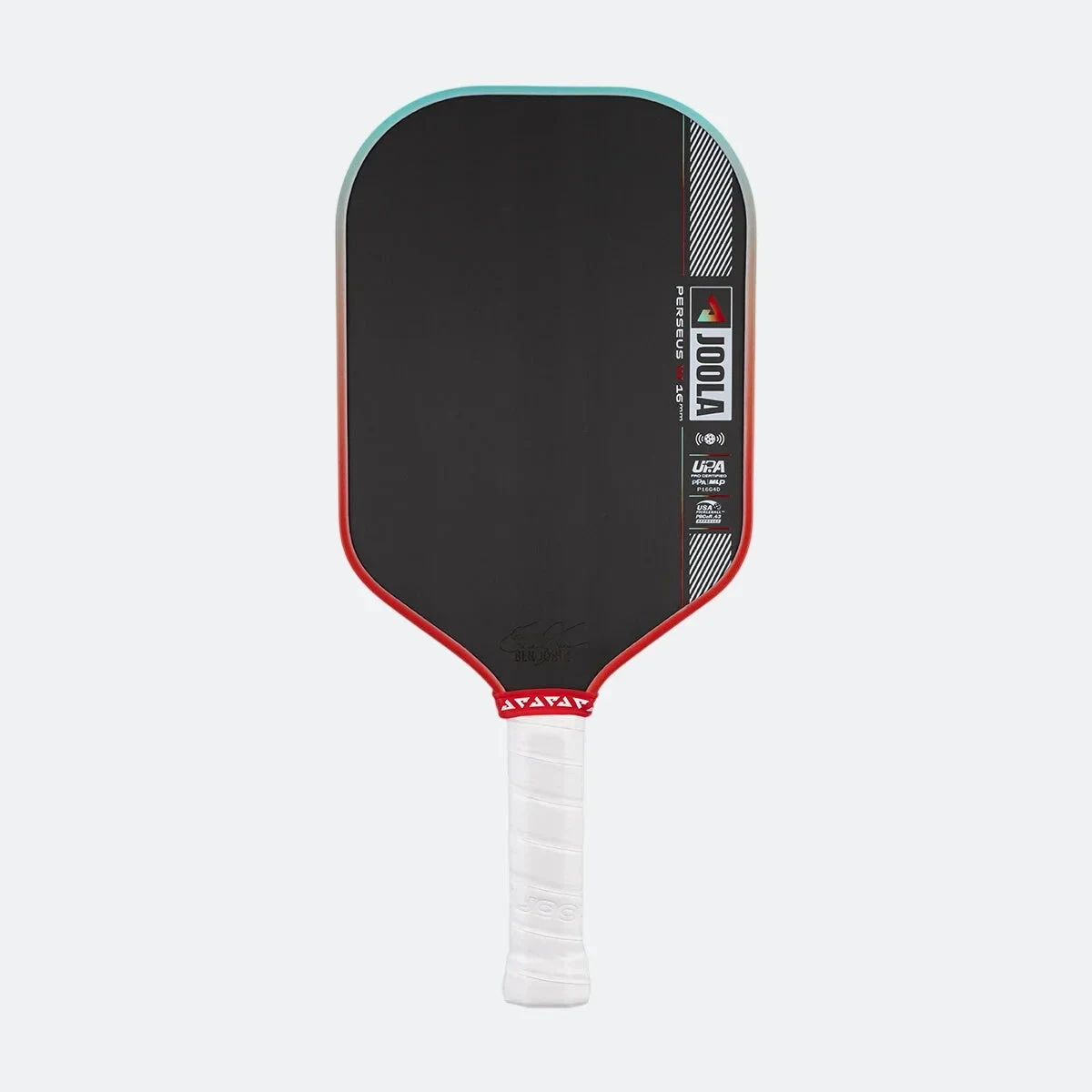
If the Pro V is the technician’s JOOLA, the Pro IV is the all-court one, and for most advanced players it is the easier paddle to win with.
Serves jump off the face without a full shoulder turn, drives carry through the court, and then the 16mm core sits the ball down on a third shot drop without changing its personality. That range, in one frame, is what all-court actually means.
The Gen 3 Propulsion Core does the work: foam structures around a honeycomb heart give contact a plush, held feel on soft shots and a lively answer when you swing.
At a 118 swing weight the drives carry genuine plow-through, the elongated frame adds reach at the kitchen, and measured spin just under 2,000 RPM is enough to keep aggressive shots dipping inside the baseline.
The advanced caveats are real. Contact sounds stiffer and hollower than the Pro V, and spin sits a step below the newest grit faces, so your margin on a full drive is thinner.
This generation also carries core durability complaints, cores that lose their calibration under heavy play, so register the warranty on day one and keep the receipt where you can find it.
Buy it if you want flagship power that helps your swing while your soft game stays intact. Skip it if you prize long term consistency above everything. That is the Pro V, one rung up.
3CRBN TruFoam Genesis: Best Pickleball Paddle for Spin in 2027
AT A GLANCE
CRBN TruFoam Genesis
Weight
7.9-8.3 oz
Swing Weight
119
Twist Weight
6.21
Spin
2,401 RPM
Shape: Not published
Core: Full TruFoam foam, 14mm
Face: T700 raw carbon fiber
Approval: USAP and UPA-A
Feel: Soft dwell
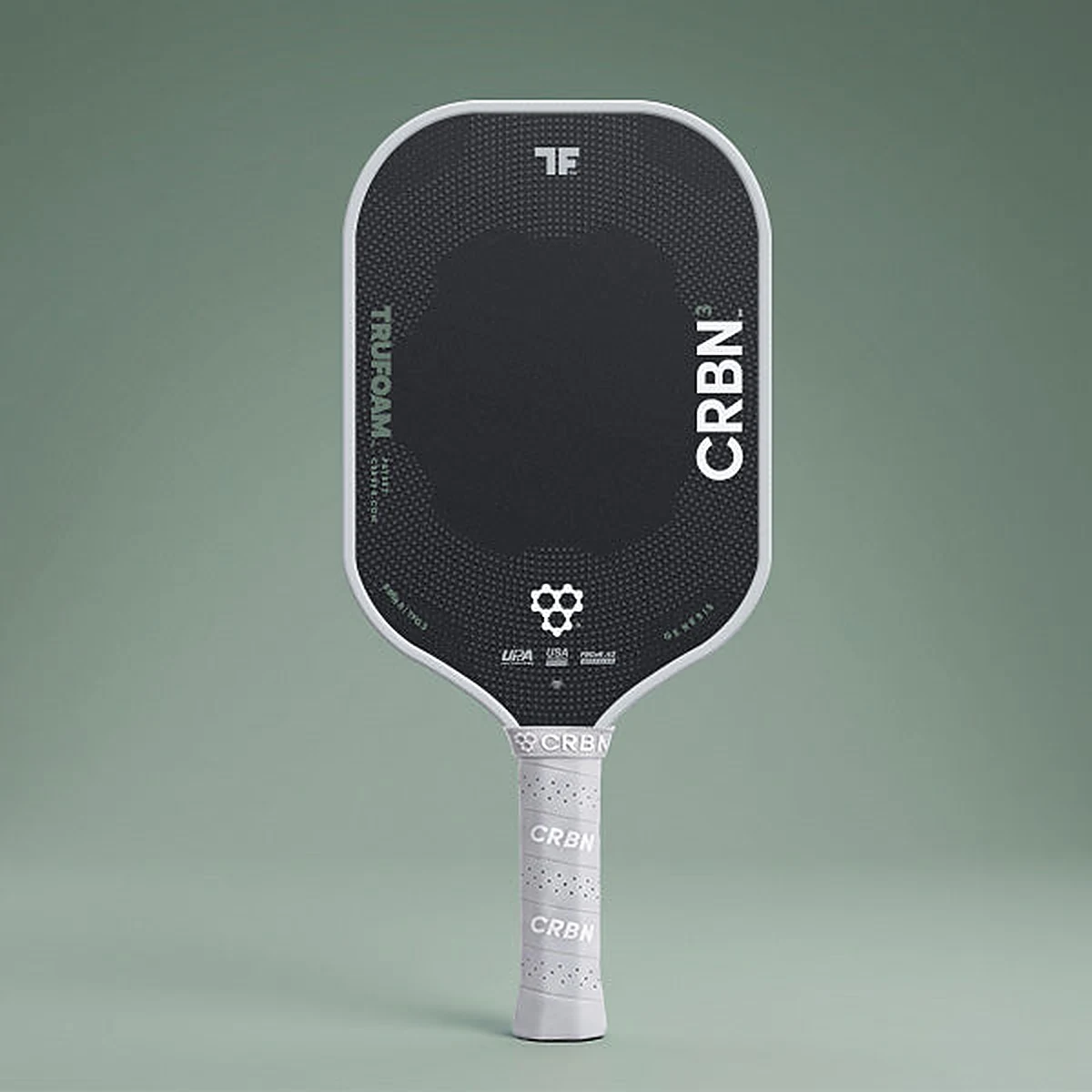
The Genesis makes its argument in one number: 2,401 RPM, the highest spin figure on this page, and the rare case where the lab sheet undersells what happens on court.
The ball stays on the face a fraction longer than a 14mm paddle has any right to hold it, and that dwell turns into shape: serves that kick off the bounce, roll volleys that bite and drop, drives that dive at the last moment.
The reason is the full TruFoam core. There is no honeycomb to crack or rattle, just solid foam that pockets the ball like a thicker paddle and swallows vibration while it does it.
My third shot drops stopped sailing within a session. The raw carbon face grabs without the harsh, hollow crack of stiff honeycomb paddles, so contact feels soft, connected, and honest about where the ball struck.
Advanced players should hear the trades plainly. At a 119 swing weight this is the heaviest swinging paddle here, so frantic kitchen exchanges tax you a step against quicker frames.
Drives need a committed swing, because the foam will not supply pace. And the fiberglass layer in the hitting zone launched a few of my early resets higher than I meant before my grip learned to soften.
Buy it if spin and dwell are how you construct points. Skip it if your game is built on lightning hands and free power. For a spin first player, nothing else on this list is close.
4Six Zero Black Opal: Best Power All-Court Pickleball Paddle in 2027
AT A GLANCE
Six Zero Black Opal
Weight
8.2 oz
Swing Weight
114
Twist Weight
6.4
Spin
2,307 RPM
Shape: Hybrid
Core: G4 solid foam with Power Gel
Face: Diamond Tough raw carbon fiber
Approval: USAP and UPA-A
Feel: Dense spring
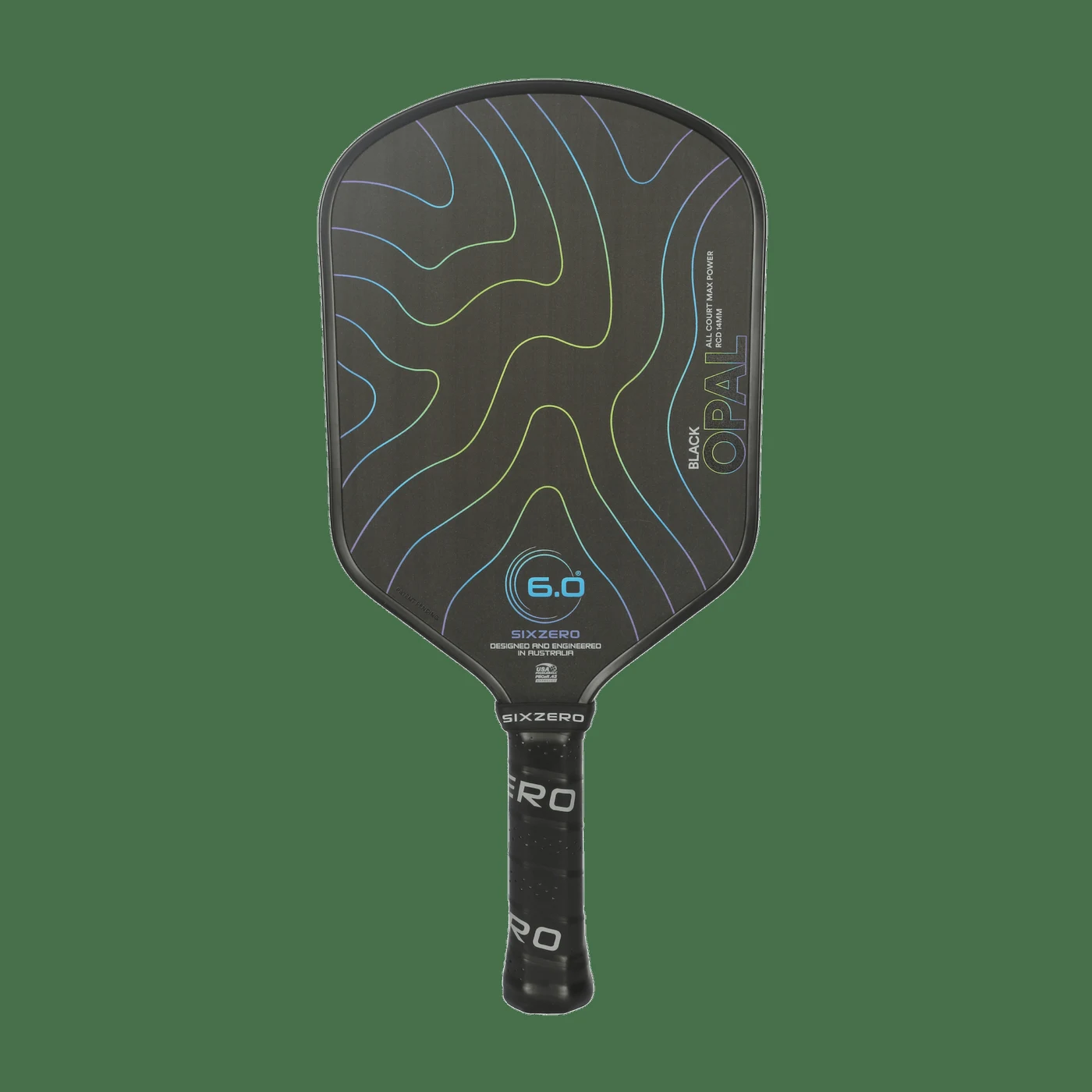
The Black Opal is a power paddle that respects a good reset, and that combination is rarer than it should be. Contact feels dense and springy, almost thuddy, and then the ball is simply gone.
Counters leave hot without a wind-up, speed-ups jump, and the Diamond Tough carbon bites hard enough that dipping drives dropped at my opponents’ feet and were still dropping months later.
The control half lives in the solid foam core and its Power Gel layer. Foam dwells where honeycomb cracks, so once I shortened my swing and stopped helping, resets sat down and drops stopped sailing.
Measured spin sits around 2,307 RPM, which is what lets a paddle this lively stay honest: the harder you swing, the more topspin pulls the ball back inside the lines. It is an all-court paddle with the emphasis firmly on the attacking half.
Now the part advanced players need to hear before anyone else. The sweet spot sits lower than you expect and it is not generous.
Stretched defensive contact, the late block, the reaching reset, gets punished in a way forgiving paddles never punish it, and my soft game leaked pop-ups for two weeks while I learned how little swing this frame needs.
Buy it if your contact is clean, your level is 4.0 and climbing, and you want power that still plays the soft game. Skip it if your defense is built on stretched, late contact.
5JOOLA Scorpeus Pro IV 16mm: Best Defense to Offense Pickleball Paddle in 2027
AT A GLANCE
JOOLA Scorpeus Pro IV 16mm
Weight
8.24 oz
Swing Weight
114.95
Twist Weight
7.4
Spin
2,221 RPM
Shape: Widebody
Core: Gen 3 Propulsion Core
Face: Peel-ply carbon fiber
Approval: USAP and UPA-A
Feel: Stable plush
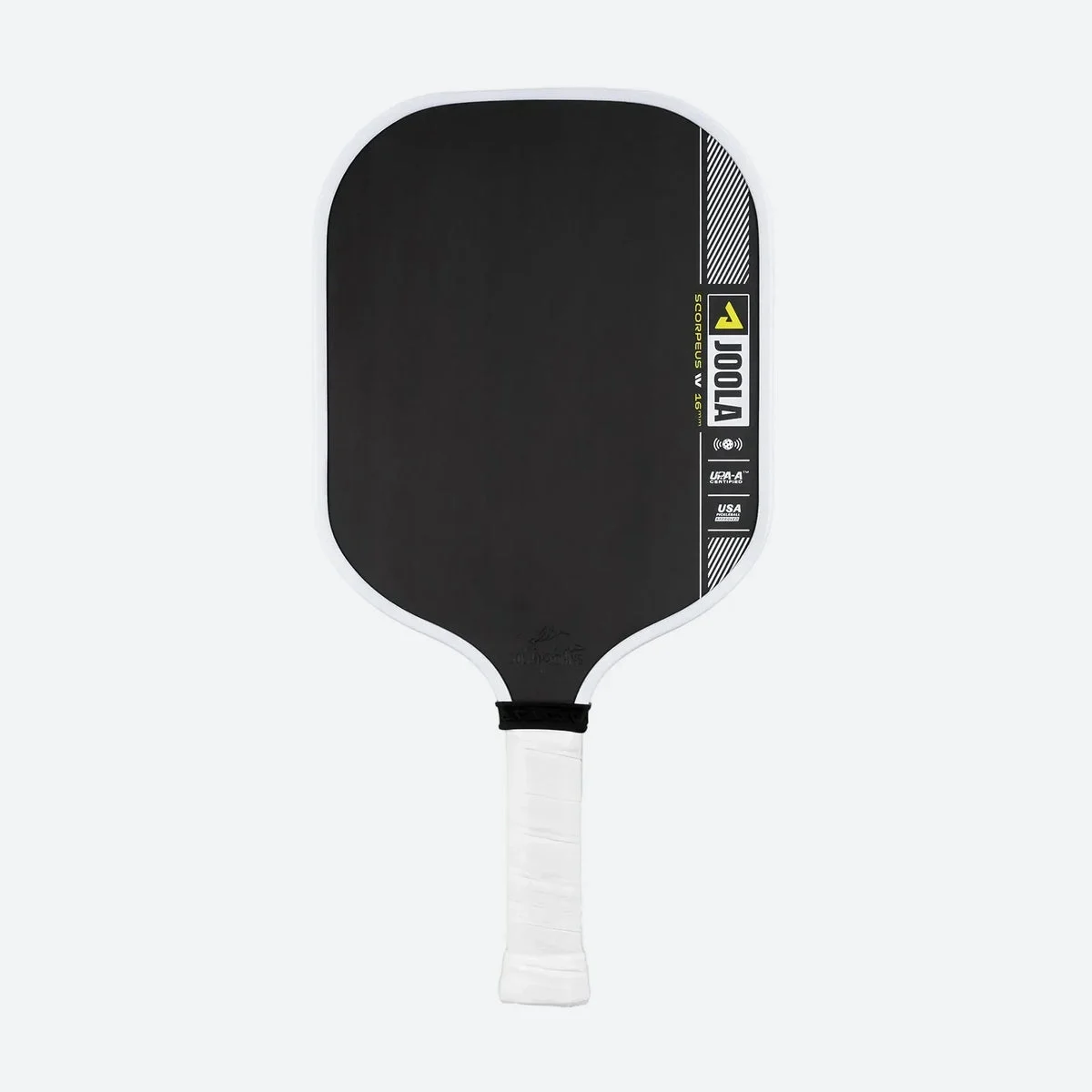
Defense wins advanced points before offense finishes them, and the Scorpeus is the best defense to offense paddle I have played. The number that explains it is the 7.4 twist weight, the highest here. Hard drives caught off center simply do not turn the face over.
Blocks stay square, resets land low, and the ball goes where it was aimed even while my feet were still moving. It is the paddle I reach for against bangers who test the same side twenty times a match.
Then the rally turns, and the widebody surprises people. The same Gen 3 Propulsion Core as the Perseus sits inside, so counters punch and drives carry, and the measured spin, 2,221 RPM, actually beats its elongated sibling.
At a swing weight just under 115 it changes direction faster than the Perseus too, so kitchen counters feel like decisions instead of reactions.
The trades are geometry. A widebody gives back the extra reach on wide gets and overheads, and players who build points on a two-handed drive will feel the shorter hitting zone.
The soft game is calm rather than buttery, firm control instead of a foam pocket, so touch players coming from soft 16mm paddles need a session to recalibrate their drops.
Buy it if your points start with absorbing pressure and end with a counter. Skip it if reach and elongated leverage are how you create your power.
6Six Zero Double Black Diamond Control 16mm: Best Pickleball Paddle for Control in 2027
AT A GLANCE
Six Zero Double Black Diamond Control 16mm
Weight
8.1 oz
Swing Weight
114
Twist Weight
6.8
Spin
~1,700 RPM
Shape: Hybrid
Core: Thermoformed polymer honeycomb
Face: Toray 700K raw carbon fiber
Approval: USAP
Feel: Plush pop
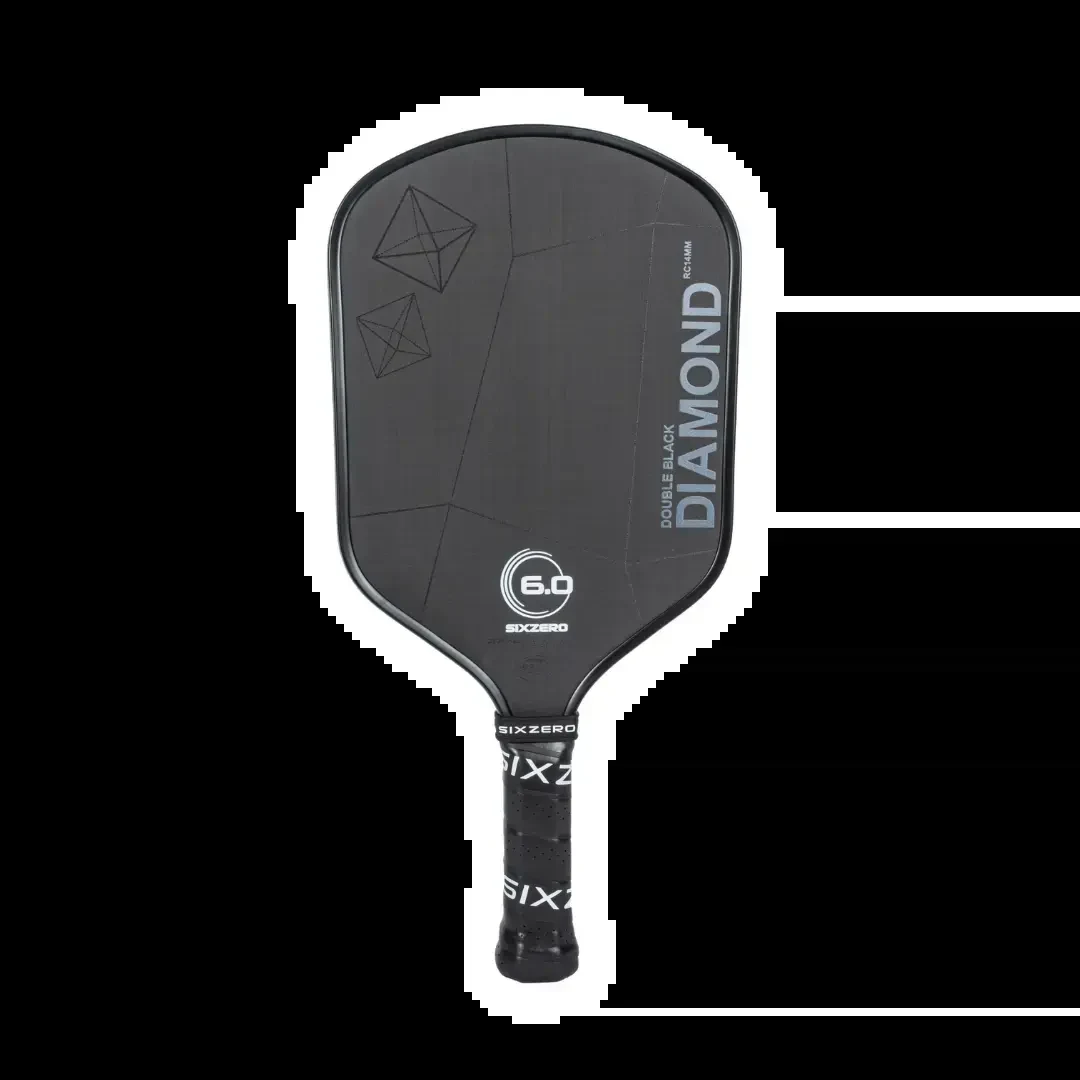
Every advanced player I know has one shot they protect, and for control players it is the reset that lands low no matter what arrived. The Double Black Diamond Control protects that shot better than anything else here.
It is thermoformed, but it plays plush: the ball pockets, holds for a fraction, and leaves in the direction you chose. My drops turned boring in the best way, same height and same depth, rally after rally.
The sweet spot is the second story. The hybrid shape forgives contact far out toward the edges, and shots near the throat stayed alive during stretched scrambles where most control paddles die into the net.
With a 6.8 twist weight and a 114 swing weight, blocks stay square without slowing your hands, and around 1,700 RPM of spin is enough to shape serves and keep returners honest.
It fights back more than the name promises, too. There is real pop stored in this frame when a rally speeds up, and counters punch above the control label.
The calibration tax is real, though: it runs lively for a control paddle, my early drops popped up until I softened my grip, the stock grip is thin and turns slippery in heat, and heavy daily play wears the grit down like every raw carbon face.
Buy it if placement and patience are your weapons. Skip it if you want maximum reach or maximum power.
7Franklin C45 Aurelius 16mm: Best Pickleball Paddle for Fast Hands in 2027
AT A GLANCE
Franklin C45 Aurelius 16mm
Weight
7.8 oz
Swing Weight
~99
Twist Weight
6.2
Spin
-
Shape: Widebody
Core: PowerFlex polymer, double thermoformed
Face: T700 carbon fiber, 45-degree peel-ply
Approval: USAP and UPA-A
Feel: Feather fast
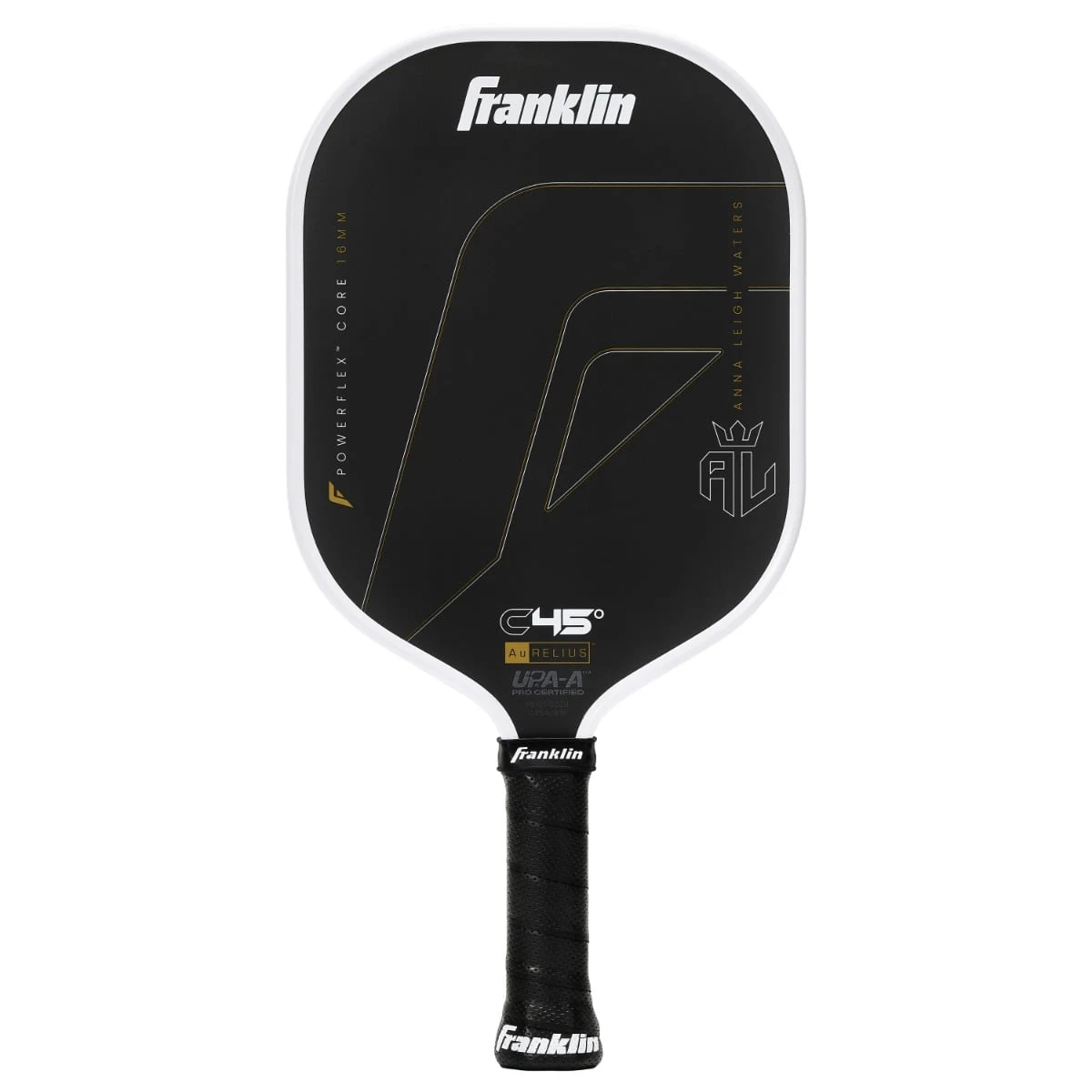
Nothing here moves like the Aurelius, and at advanced level hand speed is a weapon class of its own. The swing weight on my test unit sat around 99, a number most paddles cannot approach, and kitchen exchanges stopped feeling like reactions and started feeling like choices.
Counters I normally block became counters I could aim, and in a fast hands battle aim is the whole game.
The spin comes from the build. The carbon face is laid at a 45 degree angle, and topspin drives dip hard, rolls shape easily, and serves bite in a way heavier paddles need twice the effort to match.
The 16mm PowerFlex core keeps the soft game calm, with genuine dwell on drops and dinks, and the short, wide frame, 15.7 by 7.9 inches, is the shape Anna Leigh Waters made famous at the top of the sport.
Stock, the weakness is stability, and it is not subtle. With so little mass in the head, off-center contact twists the face. This paddle is famous in player circles for the fix: a little weight tape along the sides settles the twisting, widens the sweet spot, and turns good drives into heavy ones, all without surrendering the hand speed.
Note that added weight systems can change a paddle’s certification status, so check the rules before you modify one for tournament play.
The 5.1 inch handle crowds a two-handed backhand. Buy it if your game is speed, spin, and tuning. Skip it if you want stability out of the wrapper.
8Selkirk SLK ERA Power Elongated: Best Predictable Power Pickleball Paddle in 2027
AT A GLANCE
Selkirk SLK ERA Power Elongated
Weight
8.0 oz
Swing Weight
117
Twist Weight
6.28
Spin
~2,020 RPM
Shape: Elongated
Core: Dynamic Fusion Core, polymer honeycomb with EVA foam
Face: 3-layer carbon fiber and fiberglass
Approval: USAP and UPA-A
Feel: Linear power

Selkirk built this paddle around a single idea that advanced players understand immediately: power you can predict. Plenty of paddles hit hard.
The ERA Power hits the same hard on the tenth drive as on the first, and in a long third game that repeatability is the difference between swinging with confidence and swinging with hope. Selkirk tuned it for players who already own the technique and need the paddle to stop improvising.
The Dynamic Fusion Core pairs a polymer honeycomb with an EVA foam layer, and the foam strips the trampoline randomness out of the response. A three-quarter swing produced a three-quarter drive, every time.
The face blends three layers of carbon fiber and fiberglass: the carbon grips and shapes the ball at around 2,020 RPM of measured spin, while the fiberglass adds the pop that finishes counters and speed-ups at the line.
Control here has a specific meaning. Resets behave because the response is linear, not because the face is soft, and if your soft game runs on a pocketing, dwell heavy feel, this frame will feel firmer than you want.
The 6.28 twist weight is mid pack, so wild off-center blocks get less rescue than the Scorpeus offers, and the elongated shape asks for cleaner contact on defense.
Buy it if you swing big and build points on drives that must land. Skip it if your touch game depends on softness and dwell.
911SIX24 Vapor Power 2 16mm: Best Spin and Power Pickleball Paddle in 2027
AT A GLANCE
11SIX24 Vapor Power 2 16mm
Weight
8.0-8.3 oz
Swing Weight
107.55
Twist Weight
6.6
Spin
2,335 RPM
Shape: Hybrid
Core: Gen 4 full foam, MPP
Face: HexGrit textured carbon
Approval: UPA-A only, not USAP
Feel: Raw bite
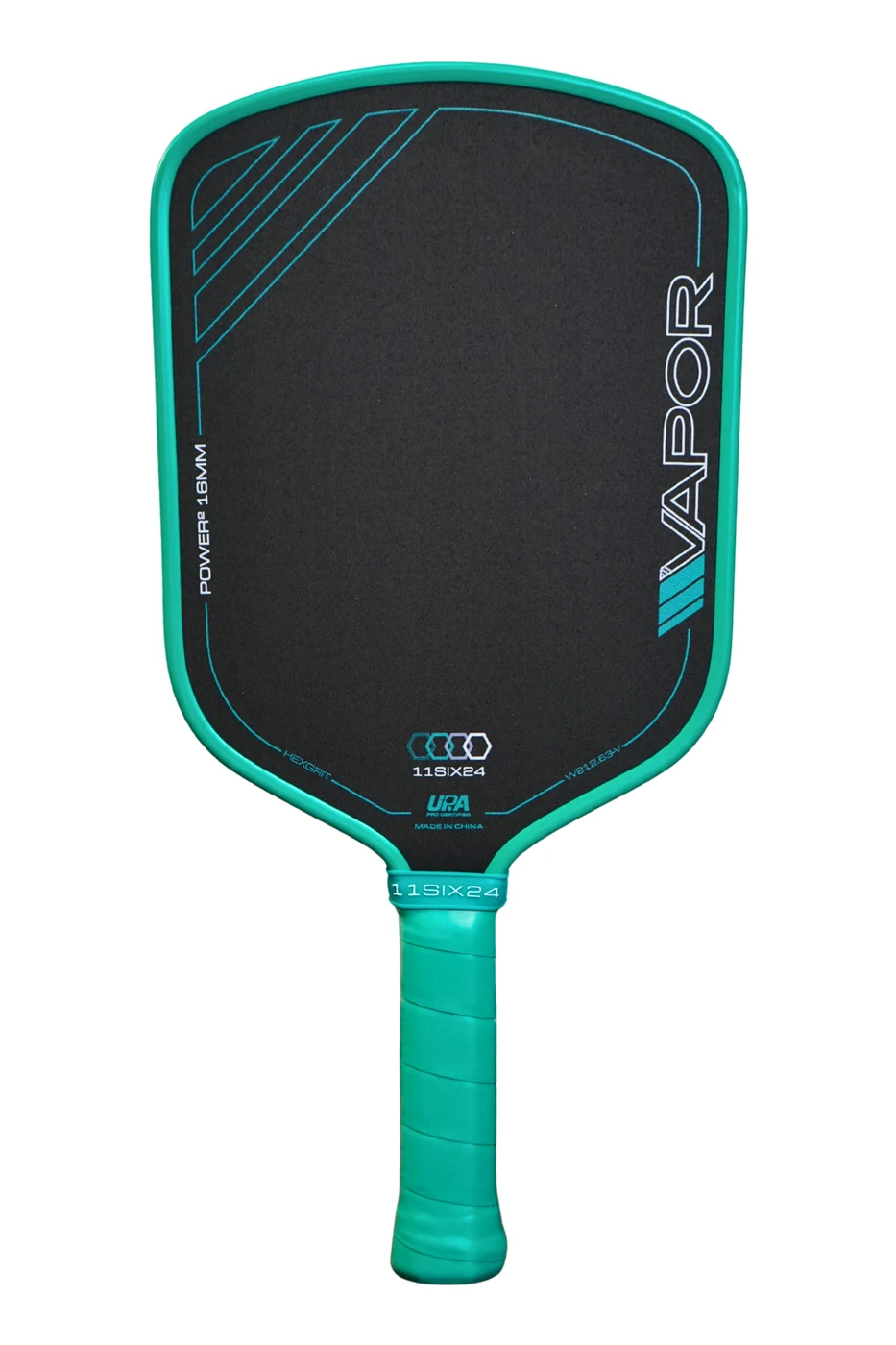
Start with the warning, because it decides whether this paddle belongs in your bag at all. The HexGrit surface is too rough for USA Pickleball’s surface test, so the Vapor Power 2 is certified for UPA-A play only and is not legal in USAP sanctioned tournaments.
Everything below is for league, open play, and UPA events, where it is one of the most dangerous paddles I have tested.
The grit is silicon carbide particles embedded in the face, and it bites at 2,335 RPM in month three the way most raw carbon faces bite in week one.
Heavy topspin is what lets a hard drive stay hard and still land: my dipping drives kept dipping long after other faces had gone smooth, and serves kept kicking off the bounce. That staying power is spin you keep, not spin you rent.
The Gen 4 full foam core supplies power with a different personality than thermoformed honeycomb. There is no hollow crack.
Pace builds with your swing, so a full cut from the baseline holds its line, and at a swing weight under 108 it changes direction fast enough to hurt people in counters and speed-ups. After the break-in period it livens up, and my drops and resets needed a looser grip before they behaved.
Buy it for league, open play, and UPA events, if spin driven power is your game. Skip it, without regret, if USAP tournament legality is a requirement for you.
10Engage Pursuit Pro1 6.0 Elongated: Best Touch and Spin Pickleball Paddle in 2027
AT A GLANCE
Engage Pursuit Pro1 6.0 Elongated
Weight
8.0 oz
Swing Weight
118.6
Twist Weight
5.95
Spin
2,267 RPM
Shape: Elongated
Core: MachPro polymer with Variable Release 2.0
Face: Raw Toray T700 carbon fiber
Approval: USAP
Feel: Connected touch

Engage markets this paddle as power. On court I found the most cooperative touch paddle in the premium class, with more drive underneath than the marketing needed to invent.
It is built the old way, layers pressed cold instead of thermoformed, and contact tells you immediately: the ball sits, the face talks to your hand, and thirds, drops, and dinks go where your fingers decided instead of where a lively core sent them.
The spin is earned by texture. The coarse raw Toray T700 carbon measured 2,267 RPM, so serves carry and dip, roll volleys shape without effort, and the dwell lets you hold a shot a beat longer and wrong-foot players at the kitchen, a form of offense no radar gun measures.
The elongated frame, 16.5 by 7.5 inches, and the long octagon handle will feel like home to anyone arriving from tennis. It is also made in the USA, a detail that matters to more advanced players than brands admit.
Commit to a full swing and the power arrives through plow-through: a swing weight of 118.6 gives drives real weight through the court. What it will not do is supply pace for a short swing.
The compromises are stability and hand speed: the swing feels head-heavy, off-center contact twists more than the 5.95 twist weight suggests, and stretched blocks demand a firm wrist.
Buy it if your game is touch, spin, and placement built on clean contact. Skip it if you want the paddle to create power for you.
How to Choose a Pickleball Paddle for Advanced Play in 2027
Below beginner and intermediate level, a paddle buying guide is mostly about forgiveness. At 4.0 and above the guide changes, because you are no longer asking a paddle to hide your contact, you are asking it to express your game precisely and repeat itself under pressure.
This guide works through the six decisions that actually separate the ten paddles above: what advanced really means, thickness, construction, the two weight numbers, face and grit, and the approval lists you have to read correctly if you compete.
What “Advanced” Actually Means in a Paddle
An advanced paddle is a set of chosen tradeoffs, not a bigger sweet spot. Advanced players accept a smaller, higher sweet spot in exchange for reach, or a livelier face in exchange for calibration work, because they already know which trait wins their points.
A beginner paddle spends its design budget on forgiveness. An advanced paddle spends it on a spin ceiling, on stability at speed, and on feedback.
Feedback is the trait nobody markets and everybody at this level feels. You need to know, without looking, whether contact was center, toe, or throat, because your next shot choice depends on it.
Firm, connected faces report contact honestly. Soft, muted faces forgive it and hide it. Neither is wrong, but if your game is built on touch and adjustment, the honest face teaches you more per rally.
The last piece is consistency: unit to unit, and hour to hour. A paddle whose response drifts as the core warms, wears, or crushes is a paddle you have to re-learn mid-season. At advanced level, where margins are one ball a game, a boring, repeatable response beats a spectacular, variable one.
Core Thickness for Advanced Play: 14mm vs 16mm
The rule still starts here: 16mm dwells longer, absorbs more pace, and calms the soft game, while 14mm answers quicker, pops harder on counters, and rewards hand speed. Advanced doubles players who live on resets and counters often split by role: the steadier partner on a 16mm, the aggressor on a 14mm that finishes balls.
Construction bends the rule, and this list proves it twice. The 14mm Genesis pockets the ball like a thick honeycomb paddle because its core is solid foam, while the thermoformed 16mm Double Black Diamond Control runs livelier than its thickness suggests. Judge thickness together with core type, never as a lone number on the throat.
My honest advice at this level: if your misses are soft shots floating, go thicker or foamier. If your misses are counters arriving a fraction late, go thinner. If both sound familiar, a 16mm all-court frame like the Perseus Pro IV is the middle that gives up the least.
Construction: Thermoformed, Propulsion and Full Foam
Thermoformed honeycomb defined the modern power era: core and face moulded together under heat, sealed edges, firm perimeter, real pop. Its honest weakness is durability under advanced workloads.
Honeycomb cells can crush, faces can separate from the core, and a paddle that played balanced in month one can develop a hot spot or a dead patch by month six. Hard hitters who play daily are exactly the players who find this out.
Propulsion style cores, the Perseus line’s design, pair a honeycomb heart with foam structures to chase honeycomb pop with foam manners.
Full foam cores, the Genesis, the Black Opal, and the Vapor Power 2 here, remove the failure mode entirely: no cells to crush, nothing to delaminate, and a feel that tends to stay the same from week two to month six.
The trade is a break-in period. Foam settles over the first several sessions, so judge a foam paddle in week two, not in game one.
Neither construction is automatically better. Choose thermoformed for day one crack and immediacy, foam for consistency across a season, and propulsion designs when you want the blend and accept the durability questions that follow that generation.
Swing Weight and Twist Weight at 4.0 and Above
Swing weight is your power and fatigue number. Under 110, hands win kitchen exchanges and arms survive long days, which is why the C45 Aurelius at around 99 plays like a fencing foil.
Between 110 and 118 is the all-court band where most of this list lives. At 119, the Genesis buys plow-through and drive weight with hand speed, a trade only clean strikers should make.
Twist weight is your defensive number. Around 6.5 and above, the face stays square on stretched blocks and late counters; the Scorpeus Pro IV at 7.4 is the extreme, a paddle whose defense feels almost automatic.
At the other end, the Pursuit Pro1 at 5.95 trades that stability for dwell and touch, and asks your wrist to supply what the frame does not.
Advanced players can also tune these numbers with weight tape: sides for twist weight, top for swing weight, throat for feel.
One caution belongs in bold print in your mind even though it sits in plain text here: added weight systems can change a paddle’s certification status, so a setup that is legal in open play may not be legal at a sanctioned event. Check before you modify, not after a referee asks.
Face and Grit: Spin You Keep, Not Just Spin You Buy
Every face on this list starts grippy. What separates them is the decay curve.
Plain raw carbon and peel-ply textures slowly smooth with play; a peel-ply face can lose a noticeable share of its bite, on the order of 15 to 20 percent of its spin, within roughly its first 30 hours of hard use. Your week one demo is the best that face will ever be.
Durable grit surfaces answer with embedded texture, the Vapor Power 2’s HexGrit being the extreme example on this page, holding high spin months into a season. The trade for that durability, in that case, is approval: its surface is too aggressive for one of the two major lists, which the next section covers.
When you compare spin numbers, compare them like an advanced player: same lab, same protocol, and with the retention question attached. A paddle at 2,200 RPM that holds 2,000 in month three beats a paddle at 2,400 that is spinning 1,800 by then, because the second paddle’s balance, and your confidence in it, changes underneath you.
Approval Literacy: USAP, UPA-A and PBCoR
USA Pickleball and the UPA-A run separate approval lists, and approval by one body says nothing about the other. Most sanctioned local and regional tournaments play from the USAP list.
Events tied to the professional tour follow UPA-A certification. Nine of the ten paddles on this page carry USAP approval; the Vapor Power 2 is UPA-A only, and its section says so before it says anything nice about it.
PBCoR is USAP’s power standard, a coefficient of restitution measurement that caps how lively an approved paddle may be; paddles listed with PBCoR .43 have passed that power ceiling test.
Spin is capped too: since October 2026, a newly USAP-certified paddle must measure 2,100 RPM or less in the spin rate test, while paddles approved before the rule took effect are grandfathered and stay legal. That is why some older, very gritty paddles remain tournament legal while newer ones cannot copy their surfaces.
The working habits: check the exact model, shape, and thickness against the list your event uses, because approvals attach to variants, not brand names.
Buy from authorized sellers, because counterfeit flagships are a real market now and a fake will not be on any list. And recheck across a season, because lists change and yesterday’s approval is not a lifetime guarantee.
Frequently Asked Questions (FAQs)
1. What makes a paddle an “advanced” paddle?
An advanced paddle trades forgiveness for specific performance: a higher spin ceiling, more stability at speed, and honest feedback about where contact happened.
Its sweet spot may be smaller and its response livelier than a beginner paddle, because the design assumes clean contact and a player who knows which trait wins their points. It is a set of chosen tradeoffs, not simply a stiffer or harder-hitting paddle.
2. What paddles do the pros actually use right now?
Ben Johns plays the JOOLA Perseus Pro V, Anna Bright plays the JOOLA Scorpeus Pro V, and Anna Leigh Waters plays her signature Franklin C45 line.
Read those setups with one caveat: pros play their sponsor’s paddles, their individual units are tuned and replaced far more often than yours will be, and endorsement lists change as contracts change. Copy the trait a pro values, stability, hand speed, or spin, rather than copying the badge.
3. Will a pro’s paddle make me play like a pro?
No, and it can briefly make you worse. Pro models assume clean contact and full technique, so a demanding flagship in developing hands produces more errors, not fewer.
What transfers is direction: if your game resembles a pro’s game, their paddle category is a sensible place to shop. The gap between you and a pro is footwork, shot selection, and ten thousand repetitions, and no face material closes it.
4. Should I choose a 14mm or 16mm core for advanced play?
Choose 16mm if your points are built on drops, resets, and absorbing pace, and 14mm if they are built on counters, speed-ups, and hand speed.
Then check the construction before you finalize, because foam bends the rule: the 14mm Genesis dwells like a thicker paddle, while a stiff thermoformed 16mm can play firm and lively. Many advanced doubles players end up owning one of each and choosing by partner and opponents.
5. What swing weight and twist weight should I look for at 4.0 and above?
For swing weight, 110 to 118 is the all-court band where most advanced players settle: enough plow-through for drives without surrendering kitchen speed. Above that you are buying drive weight with hand speed, below it the reverse.
For twist weight, 6.5 and above keeps blocks and stretched counters square; below 6.0, expect to supply stability with your wrist, as the Pursuit Pro1 asks.
6. Is a foam core or a thermoformed honeycomb better for advanced players now?
For consistency across a season, foam has the edge: it pockets the ball, absorbs pace, and holds its feel because there are no honeycomb cells to crush and no face to delaminate.
Thermoformed honeycomb still wins on day one pop and crisp, immediate feedback, but its balance can drift as the core wears under daily hard play. Propulsion style hybrids sit between the two, chasing pop with better manners and carrying their own durability questions.
7. What is the difference between USAP approval and UPA-A certification, and which one do I need?
They are separate lists from separate bodies, and approval by one does not imply approval by the other. Most sanctioned tournaments use the USAP list; events connected to the pro tour use UPA-A certification, so the list you need is the one your event names.
One current wrinkle: since October 2026, newly USAP-certified paddles must measure 2,100 RPM or less in the spin rate test, while paddles approved earlier are grandfathered and remain legal.
8. Why are some top paddles UPA-A only, and where can I legally play them?
Because the two bodies test surfaces differently, and a face aggressive enough to fail the USAP surface test can still pass UPA-A certification.
The Vapor Power 2 on this list is the standing example: its HexGrit texture is too rough for USAP, so it is legal in UPA-A events, leagues, and open play, and not legal in USAP sanctioned tournaments. Always match the paddle to the rulebook of the event in front of you.
9. How much spin is enough, and how fast does grit wear out?
In current lab testing the median strong paddle sits around 2,250 RPM, anything above 2,000 is genuinely strong, and the number that matters is the one your face still produces in month three.
Peel-ply and plain raw carbon surfaces fade fastest, losing on the order of 15 to 20 percent of their spin within roughly 30 hours of hard play. Cleaning ball dust off the face restores bite on a dirty paddle; once the texture itself has worn smooth, no cleaning brings it back.
10. Should I use the same paddle for singles and doubles?
You can, but the two games reward different traits. Singles rewards reach, serve and drive leverage, and baseline power, which points to elongated frames like the Perseus Pro V.
Doubles rewards hand speed, stability, and resets at the kitchen, which points to widebody and hybrid frames like the Scorpeus Pro IV. If you play both seriously, one of each is a rational kit; if you own one, an elongated all-court paddle covers singles honestly and doubles adequately.
11. How long does a premium paddle last for a 4.0+ player?
Count hours, not months. A player on court four or five times a week will usually feel a raw carbon face lose its bite within a season, while foam cores tend to hold their response longer and thermoformed honeycomb can soften, crush, or delaminate under daily hard hitting.
The warning signs are consistent: dipping drives that start sailing, a face that feels smooth to a fingernail, a duller sound on contact, and the same swing producing different results.
12. How do I spot a fake flagship paddle?
Start with the channel: buy from the brand or an authorized seller, because counterfeits move through marketplace listings and too good to be true offers.
Then check the physical evidence: weigh the paddle and compare it with the brand’s published weight, inspect print quality, edge finishing, and grip work for sloppiness, and confirm the exact model and variant appears on the approval list it claims. A flagship that measures off its own spec sheet is telling you what it is.
About The Author
Michael Stevenson
Hi, my name is Michael Stevenson and I’m a passionate pickleball player. I’ve been playing this wonderful game for quite some time and have grown to love it more with each passing day.
When I first discovered pickleball, I was hooked by its unique blend of strategy, athleticism, and social interaction. Since then, I’ve spent countless hours on the court, honing my skills, and learning all there is to know about this amazing sport.
Whether it’s tips for beginners, guides for experts, reviews of new paddles, or advanced playing techniques, I cover it all in my blog, so why don’t you take a look and see what I have to offer? Have fun and enjoy the game!