
You hear a genuine aluminum core paddle before you see it. I was two courts over, mid-rally, when a bright metallic ping cut through the usual thock of polymer paddles, and I found myself watching the next court instead of my own game.
The player was an older regular with a light, plain-faced paddle, working the soft game beautifully, every dink landing exactly where he wanted it. His paddle belonged to a class the sport has nearly finished leaving behind, and it played like it had nothing left to prove.
I set out to rebuild this list the way I rebuild every list on this site: find the real thing, verify it, and rank it. Here is the honest result. Genuine aluminum honeycomb is the loud, stiff, crisp class of cores, and the category has effectively ended.
After checking every candidate I could find against its own spec block, exactly two genuine aluminum core paddles are still buyable and recommendable, and one of the two carries an approval gap I will show you in its section rather than hide.
A third genuine paddle, the Pickle-Ball Inc. Champion Aluminum, survives as heritage stock, but no brand-sold Amazon listing for it could be verified, so it is honoured in the guide below rather than linked here.
Everything else sold under the word “aluminum” today is an aluminum face, an aluminum name, or a headline its own spec table contradicts.
So this page does two jobs. The first half ranks the genuine few. The second half, clearly labelled, lists the polymer honeycomb paddles that replaced them, one for each job aluminum used to do. Nothing in the second half is aluminum, and every section says plainly why that paddle is here.
The Genuine Aluminum Core Paddles in 2027
1Franklin Jet: Best for New Players Pickleball Paddle in 2027
AT A GLANCE
Franklin Jet
WEIGHT
10.7-11.0 oz
SWING WEIGHT
-
TWIST WEIGHT
-
SPIN
-
Shape: Standard, 16 x 7.75 in
Grip: 4.25 in circumference; handle length 6 in
Core: Aluminum (Franklin’s wording: “CORE: Aluminum”; no honeycomb structure is claimed by Franklin)
Face: Dual-plated aluminum surface
Approval: USAPA Approved per Franklin’s own listing title
Feel: Heavy, solid and durability-first
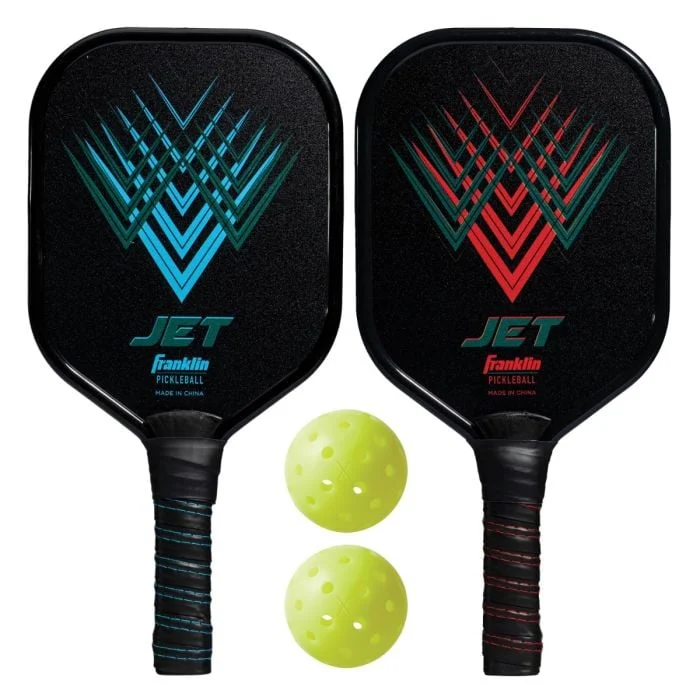
Franklin is the one major brand still selling an aluminum core paddle line, and its own comparison chart is the cleanest evidence on this page: one aluminum row, printed beside the same brand’s wood and polypropylene rows, so the families can be told apart.
I am ranking the Jet on exactly what Franklin claims for it, an aluminum core, and I will be just as plain about what Franklin does not claim. It never calls this paddle a honeycomb paddle, and neither will I. At 10.7 to 11 ounces, the metal here is plate, not honeycomb structure, and the paddle plays the way that sounds.
What that buys a new player is a paddle that is very hard to hurt. The dual-plated aluminum face shrugs off fence posts, court surfaces and the general chaos of a family’s first season, and the long 6-inch handle gives a beginner room to find a grip that feels natural.
In my sessions with it, the hit was steady and predictable, with none of the light honeycomb class’s touch at the net, and the weight made itself known in longer rallies. That is the trade, stated openly: durability and stability first, finesse later.
For a household buying its first set of paddles and wanting them to survive being learned on, this is the genuine aluminum option that still exists, sold by the brand itself.
2Amazin’ Aces Bainbridge: Best for Touch and Control Pickleball Paddle in 2027
AT A GLANCE
Amazin’ Aces Bainbridge
WEIGHT
7.9 oz
SWING WEIGHT
-
TWIST WEIGHT
-
SPIN
-
Shape: Standard, edgeless, 16 x 7.5 in
Grip: 4.25 in circumference (a second source reports approximately 4 in, flagged); grip length 5 in
Core: Aluminum honeycomb
Face: Graphite and fiberglass composite blend
Approval: Not verified (not on the current USAP approved list, checked 2026-11-04); approval is not claimed for this paddle
Feel: Crisp, loud, touch-and-control edgeless play

The Bainbridge is the most modern-feeling genuine aluminum honeycomb paddle I have played: an edgeless touch paddle from an Amazon-native brand that has sold paddles since 2016, with a graphite and fiberglass blend face over a true aluminum honeycomb core. On court it is crisp and honest.
Drops land softly because the core absorbs force at contact, dinks stay low, and you feel precisely where on the face every ball lands. It also announces itself. Aluminum honeycomb hits loudly, and this paddle’s bright ping is the class signature in its purest form.
Now the disclosure this paddle has earned. I checked the current USA Pickleball approved list by manufacturer, and the Bainbridge is not on it, although reviews from its era describe it as approved.
I am not going to claim tournament approval I cannot verify, so here is the honest position: as a recreational and open-play paddle, it is the genuine article and I recommend it on that basis; if you play sanctioned events, treat it as unapproved until you can find its exact model name on the current list yourself.
The other trade-off is the edgeless rim, which chips over time because no edge guard takes the knocks. Accept those two facts, and what remains is the real aluminum honeycomb feel, still buyable, from the brand’s own store.
What Replaced Them: The Best Modern Alternatives in 2027
Everything below this heading has a polymer (polypropylene) honeycomb core, the construction that actually replaced aluminum across the sport. None of these eight paddles is an aluminum paddle, and none is presented as one.
Each is here for one specific job the aluminum class used to be bought for, and each section states that reason openly. One pick’s own listing claims the era’s other classic core material, Nomex, and that disagreement is disclosed inside its section rather than smoothed over.
3Vatic Pro Prism Flash 16mm: Best Modern Alternative for All-Court Play Pickleball Paddle in 2027
AT A GLANCE
Vatic Pro Prism Flash 16mm
WEIGHT
7.9-8.2 oz
SWING WEIGHT
114
TWIST WEIGHT
6.47
SPIN
~1,900 RPM
Shape: Hybrid, 16.25 x 7.7 in
Grip: 5.3 in handle, 4.25 in circumference
Core: 16mm C7 polymer honeycomb with foam-injected edge walls
Face: Raw carbon fiber, T700 class
Approval: USAP
Feel: Plush control
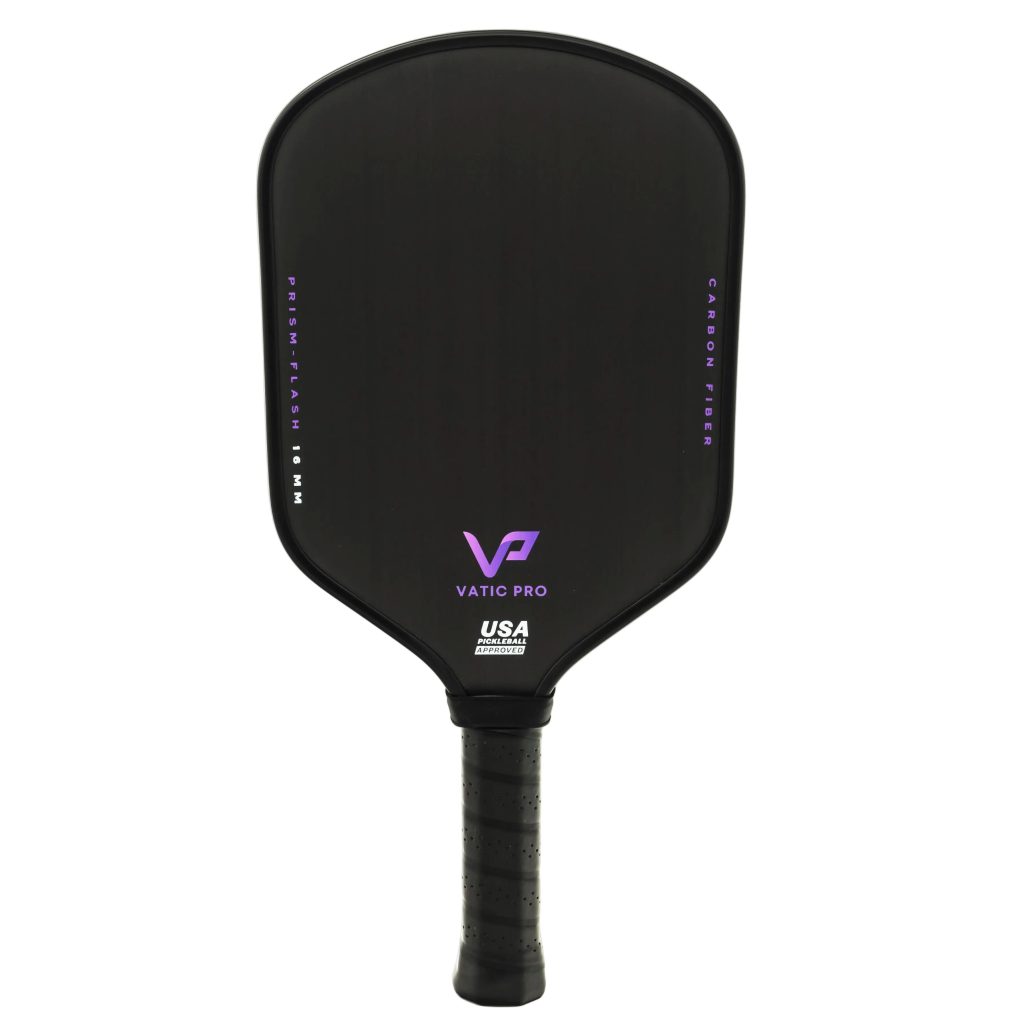
Why it is here: this is the default polymer honeycomb answer, the paddle the classic all-court player who once bought aluminum for its honest, connected feel buys today.
The core is polypropylene honeycomb with foam injected into the edge walls only, and I want that construction stated exactly, because the foam lives in the walls, not the core.
What it gives you that aluminum gave its players is trust in the contact. The ball stays on the raw carbon face a fraction longer than on the old metal-cored paddles, drops land where your swing says they should, and the plush control feel never once turns vague.
Across my sessions it played the complete all-court game without a weak room: resets absorbed pace calmly, third shots dropped on a line, and counters carried enough pace to finish exchanges it had defended.
Its swing weight of 114 asks for a reasonably committed swing, and the grit texture, like every raw carbon face, will fade over a long season of play.
Neither point dents the recommendation. When a reader asks me what replaced the classic aluminum all-court paddle, this is the first name I give, because it kept the honesty of that contact and removed the noise, the harshness and the denting that came with it.
4Engage Pursuit Pro1 6.0 Elongated: Best Modern Alternative for Power Pickleball Paddle in 2027
AT A GLANCE
Engage Pursuit Pro1 6.0 Elongated
WEIGHT
8.0 oz
SWING WEIGHT
118.6
TWIST WEIGHT
5.95
SPIN
2,267 RPM
Shape: Elongated, 16.5 x 7.5 in
Grip: 5.875 in handle, 4.25 in circumference
Core: MachPro polymer with Variable Release 2.0
Face: Raw Toray T700 carbon fiber
Approval: USAP
Feel: Connected touch
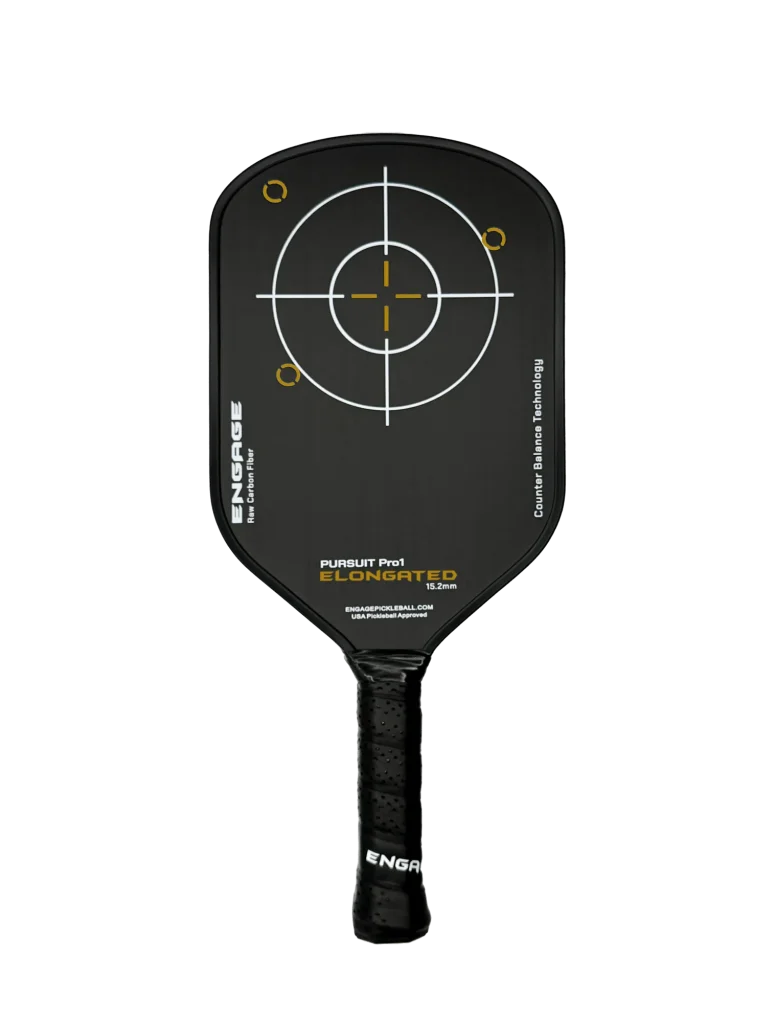
Why it is here: the pop aluminum promised, delivered by a polymer core and a raw carbon face. This is what players who wanted aluminum’s punch actually buy now.
The elongated shape and the long 5.875-inch handle build leverage into every drive, and the raw Toray T700 face turns that leverage into the heaviest ball in this alternatives section, with spin figures to match.
When I caught a drive cleanly, the ball left with a pace and dip that the old metal-cored paddles never produced, and the connected touch in its name is real: you feel the drive load and release rather than guessing at it.
The honesty paragraph matters more for this pick than most. A swing weight of 118.6 is the heaviest in these seven alternatives, and you will feel it in fast hands battles at the net and in a long third game. I am not selling it as an easy-handling paddle, because it is not one.
Its twist weight of 5.95 also means off-center contact twists more than the widebody picks below forgive.
Buy it for the reason it is here: you wanted the decisive, put-away power the aluminum class advertised, in the construction that actually delivers it. Players who need quick hands first should look at the step-up and forgiveness picks further down instead.
5Selkirk SLK Halo Control XL 16mm: Best Modern Alternative for Control Pickleball Paddle in 2027
AT A GLANCE
Selkirk SLK Halo Control XL 16mm
WEIGHT
7.7-8.0 oz
SWING WEIGHT
-
TWIST WEIGHT
-
SPIN
-
Shape: XL elongated, handle 5.75 in
Grip: 4.25 in circumference
Core: 16mm Rev-Control polymer honeycomb
Face: 18K UltraWeave carbon fiber
Approval: USAP
Feel: Soft, muted control
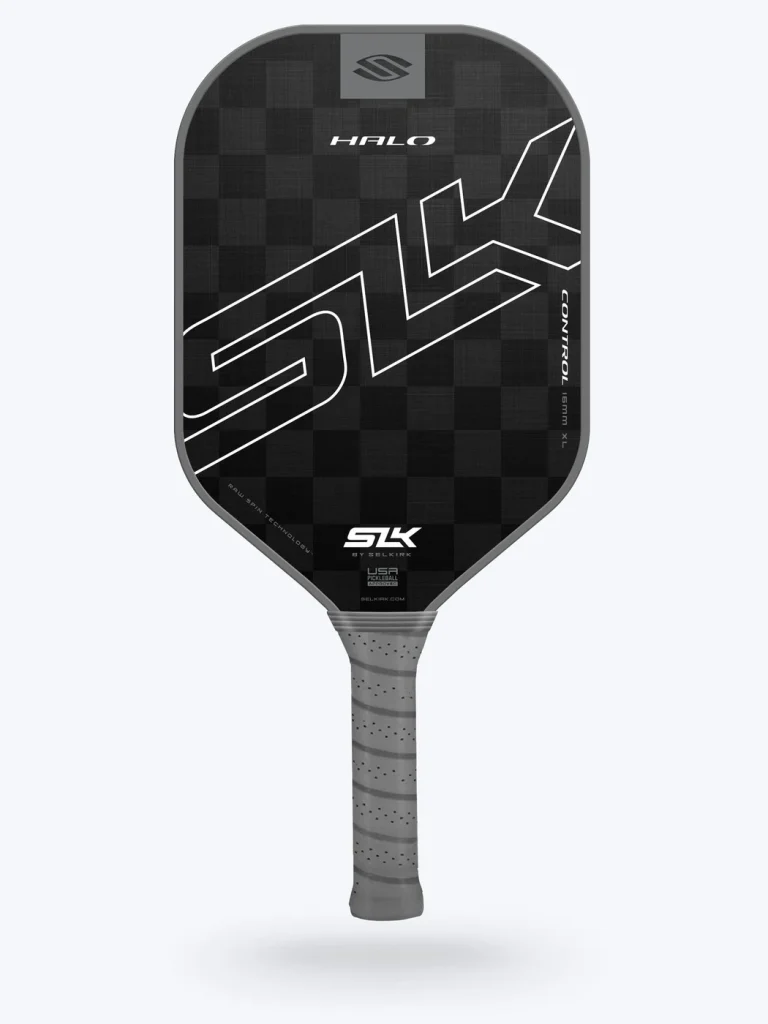
Why it is here: the soft-game correction to aluminum’s harsh edge, the muted, dwell-heavy contact aluminum players cross over to polymer to find. Everything aluminum honeycomb did loudly, this paddle does quietly.
The 16mm polymer core absorbs incoming pace instead of ringing with it, the ball dwells on the woven carbon face, and resets that would have jumped off a metal-cored paddle sit down into the kitchen.
In my net play, that calm contact changed the whole temperature of exchanges: I could take a driven ball at my feet and answer with a drop instead of a desperate block.
The elongated XL shape adds reach for that soft game, stretching to balls at the sideline and giving the two-handed backhand room on its 5.75-inch handle.
I will be straight about the data, too: no laboratory has published swing, twist or spin figures for this paddle in the research behind this site, so those fields read “Not published” rather than borrowing numbers from its Max or standard siblings, which are different paddles.
What I can report is the playing character, and it is consistent: soft, muted and control-first, with put-away power the honest weakness. If your game is built on placement and patience, this is the modern answer to the touch aluminum promised.
6Niupipo MX-19 Fiberglass Set of 2: Best Modern Alternative for New Players Pickleball Paddle in 2027
AT A GLANCE
Niupipo MX-19 Fiberglass Set of 2
WEIGHT
-
SWING WEIGHT
-
TWIST WEIGHT
-
SPIN
-
Shape: Standard (2-paddle set)
Grip: 4.72 in handle, 4.25 in circumference
Core: Polypropylene honeycomb, thickness -
Face: Fiberglass
Approval: USAPA approved per listing
Feel: Soft and forgiving for first games

Why it is here: this is the Franklin Jet’s modern equivalent, two honest polypropylene honeycomb paddles and balls in one box, the way households actually start now. It is a set, and I will label it as a set everywhere: two standard-shape paddles with fiberglass faces, balls and a carry bag, sold by Niupipo’s own storefront.
Judged as what it is, it does its job well. The fiberglass faces are soft and forgiving, the swing is light enough for a genuine beginner to control, and first games feel encouraging instead of punishing, which is the entire point of a starter set.
I have recommended this set on other pages of this site for the same reason, and my view has not changed: most new players learn faster on a forgiving face than on anything stiff, and the classic aluminum-cored sets were never forgiving. The honest limits are the ones you would expect.
There are no laboratory figures for this set, the listing publishes no weight, and a player who catches the bug seriously will outgrow it within a season or two.
None of that is a hidden flaw; it is the shape of the purchase. Buy it to start a household playing this month, and let the players who fall for the game choose their own second paddles from the rest of this list.
711SIX24 Jelly Bean 16mm: Best Modern Alternative for Forgiveness Pickleball Paddle in 2027
AT A GLANCE
11SIX24 Jelly Bean 16mm
WEIGHT
8.0-8.3 oz
SWING WEIGHT
107
TWIST WEIGHT
7.21
SPIN
2,103 RPM
Shape: Widebody (Pegasus), 16 x 8 in
Grip: 5.75 in handle, 4.125 in circumference
Core: 16mm polymer honeycomb, thermoformed
Face: CFC (two layers of Toray T700 raw carbon fiber over one fiberglass layer)
Approval: USAP
Feel: Soft forgiveness
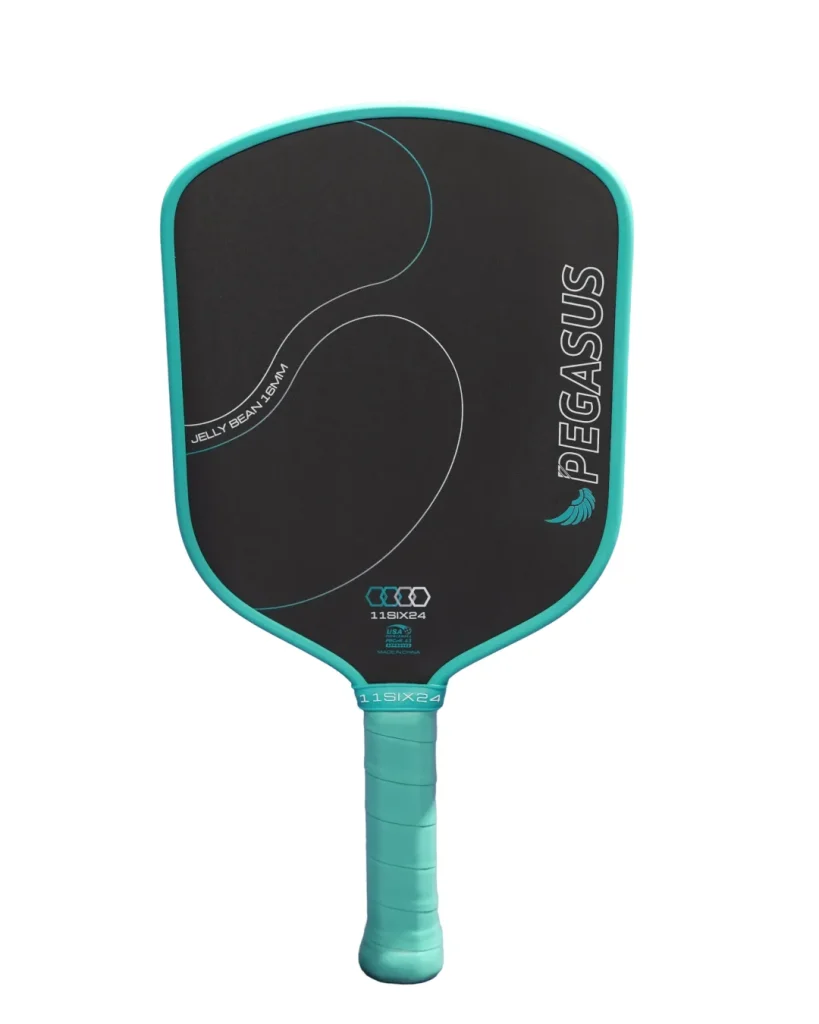
Why it is here: the widebody sweet-spot fix aluminum never offered. Mishits that an aluminum honeycomb punished, twisting in the hand and dying off its small sweet spot, stay in the rally on this face.
The numbers explain the manners: a twist weight of 7.21 is the highest in this alternatives section, the widebody Pegasus frame puts face area where off-center contact actually happens, and a swing weight of 107 keeps the whole package quick enough that forgiveness never feels like dragging a board through the swing.
In my sessions, balls I caught toward the edge still found the kitchen, and that reliability changes how confidently a developing player swings.
The face construction deserves its sentence, because the layered build, two layers of raw carbon over one of fiberglass, is what produces the soft forgiveness in its Feel line: the carbon layers supply spin that measured above 2,100 RPM in the figures this page follows, while the fiberglass layer underneath takes the harshness out of contact.
It is, in character, the opposite pole from the aluminum paddles in the first half of this page, and that is precisely its job. If the genuine class’s feedback came with too many errors for your game, this is the modern paddle built to give those rallies back, one after another.
8Onix Stryker 4 Graphite: Best Modern Alternative from a Classic-Era Name Pickleball Paddle in 2027
AT A GLANCE
Onix Stryker 4 Graphite
WEIGHT
6.9-7.4 oz
SWING WEIGHT
-
TWIST WEIGHT
-
SPIN
-
Shape: -
Grip: -
Core: -
Face: Graphite
Feel: Light, calm-faced touch
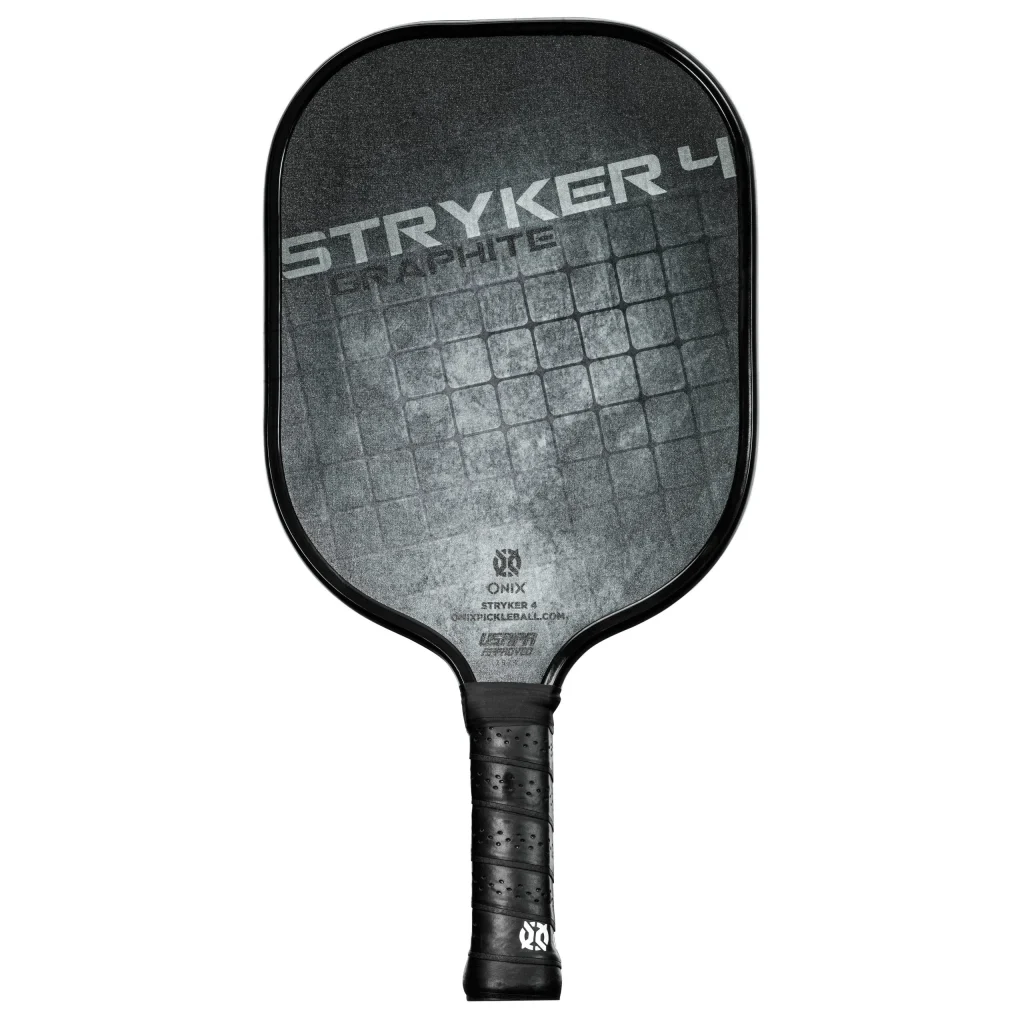
Why it is here: a current, buyable paddle from a founding-era brand, built the classical way, that outlived the aluminum class it played beside. Onix belongs to the sport’s first generation of makers, and the Stryker 4 is a paper-honeycomb-era design in spirit and shape.
That heritage claim needs its disclosure, and I will make it in the open: this model’s own Amazon listing title names a Nomex paper honeycomb core, other retailer copy describes a polypropylene core instead, and the sources never agree.
I am not going to assert either version as settled fact, which is why the Core field above reads “Not published”. The pick stands on its brand, its era and its playing character, which are not in dispute.
On court it is the light, quick, touch-first end of this modern roster, at 6.9 to 7.4 ounces the lightest paddle in the ten, serving the same end of the game the light aluminum paddles once served. The graphite face adds no unwanted pop, contact feels calm, and hands battles are its best room.
One more honesty note: several retailers have moved this model to clearance and end-of-line status, so it is recommended while it lasts rather than as a growing line. Classic-era players who want a familiar name and a familiar, quiet way of playing will feel at home here immediately.
9JOOLA Perseus Pro V 16mm: Best Modern Alternative for a Step Up Pickleball Paddle in 2027
AT A GLANCE
Perseus Pro V 16mm
WEIGHT
8.1 oz
SWING WEIGHT
117
TWIST WEIGHT
6.26
SPIN
2,060 RPM
Shape: Elongated, 16.5 x 7.5 in
Grip: 5.5 in handle, 4.25 in circumference
Core: Propulsion Core, polypropylene with EVA foam
Face: Raw carbon fiber
Approval: USAP and UPA-A
Feel: Firm consistency
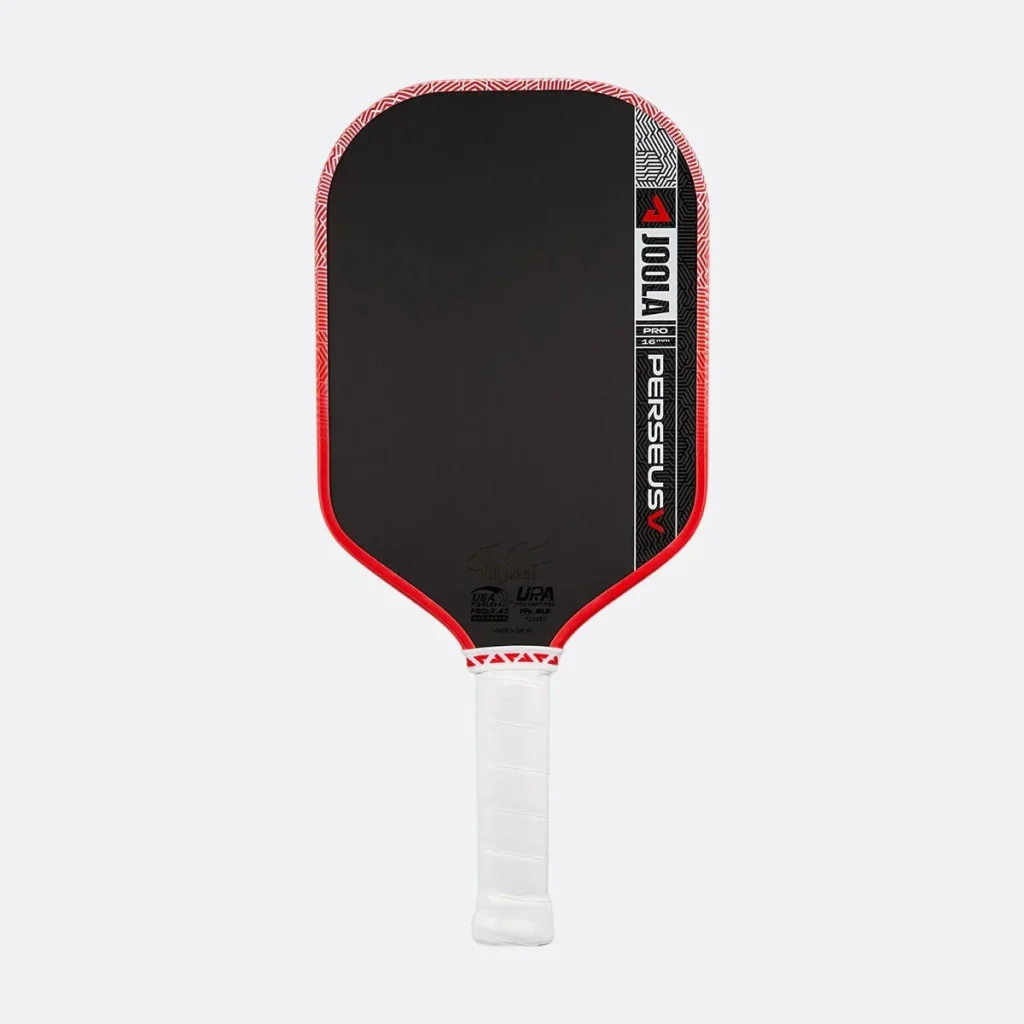
Why it is here: the current-generation build a returning classic-era player should look at. Thermoformed polymer honeycomb construction is where the sport went when it left aluminum behind, and this is that construction in its flagship form.
I rank it first on this site’s homepage list for 2027, and it stands here as the destination rather than the starting point.
The elongated frame, the firm and remarkably consistent response across the whole face, and spin measured at 2,060 RPM add up to a paddle that plays the modern power-and-spin game at full height, a game the aluminum era simply predates.
I will state its character as plainly as I did for the power pick above: it is power-leaning, its swing weight of 117 is a serious ask, and a developing player will score better with the all-court and forgiveness alternatives earlier in this section while their technique catches up. That sequencing is the honest way to read this list.
Start where your game is, and let this be the paddle you grow toward, the one whose ceiling you feel in the first rally and take a season learning to use. The classic-era player who has kept their touch and wants to know what replaced their old core at the highest level will find the answer here.
10Six Zero Double Black Diamond Control 16mm: Best Modern Alternative for All-Court Depth Pickleball Paddle in 2027
AT A GLANCE
Six Zero Double Black Diamond Control 16mm
WEIGHT
8.0-8.2 oz
SWING WEIGHT
114 (brand-published)
TWIST WEIGHT
6.8 (brand-published)
SPIN
-
Shape: Hybrid, 16.3 x 7.7 in
Grip: 5.5 in handle, 4.125–4.25 in circumference
Core: 16mm thermoformed polymer honeycomb
Face: Raw carbon fiber, Toray class
Approval: USAP
Feel: Connected all-court

Why it is here: all-court depth, the modern polymer answer for the player the Champion Aluminum once served, the one who wants one paddle that answers honestly in every room of the game.
The Double Black Diamond Control is Six Zero’s thermoformed all-court build: a 16mm polymer honeycomb core, a raw carbon face, and brand-published figures of a 114 swing weight and a 6.8 twist weight that describe exactly the balance its name promises, present enough to drive with, stable enough to defend with.
In my sessions it played the complete game the way the classic all-court paddles promised to and rarely did: drives carried shape, blocks held their line, and the connected feel through the raw carbon face told me where contact landed without punishing where it landed.
That connectedness is the thread back to the genuine section of this page. Aluminum honeycomb talked to its player through the handle; this paddle talks through its face, and the conversation is calmer, quieter and far more durable.
The honesty lines: its lab figures here are the brand’s own, published and labelled as such, with no settled independent spin figure behind them, so the box leaves spin unpublished. It is also the most modern construction on this page, which some classic-era players will read as distance from the game they grew up in.
As the closing alternative, it earns its place on the same ground the whole second half stands on: it does, in polymer, the job aluminum was bought for, and it does it without pretending to be anything else.
Buy it if you want one connected all-court paddle that answers in every phase of the game. Skip it if your heart is set on the genuine class above; nothing modern replaces that feel, and this page has never claimed otherwise.
How to Choose the Best Aluminum Core Pickleball Paddle in 2027
What an aluminum honeycomb core actually is, and where it went
An aluminum honeycomb core is exactly what the name says: thin aluminum sheet formed into honeycomb cells, bonded between two paddle faces. USA Pickleball’s authorized core materials still name aluminum alongside polymer, Nomex and polypropylene, so the class is legal in principle; it is the market that walked away.
The Selkirk 300A generation made this core the touch player’s choice, a graphite-faced paddle sold in two sizes and loved for finesse, and the Champion Aluminum, honoured in this guide rather than linked in the list above, carries the same construction from the sport’s founding company.
Then the sport chose otherwise, for practical reasons rather than fashion.
Polymer honeycomb is far quieter, and noise rules have spread through the sport’s venues year after year. Polymer is kinder in vibration, transmitting less of the hit’s buzz to the hand. It does not dent, and its cells do not crush into dead spots under the textured modern faces the game now depends on.
Thermoformed polymer construction also became straightforward to manufacture well at every level of the market, while the modern power and spin game, raw carbon faces and foam-assisted builds, was developed entirely on polymer and foam cores.
No major maker kept an aluminum performance line alive through that transition. The one exception proves the shape of the market: Franklin still sells aluminum at the recreational set end, which is where the class now lives.
How to verify a core claim from a spec block
This category’s essential skill is reading a listing the way an auditor would. Ignore the headline entirely and find the core line of the spec table; that line, and only that line, tells you what is inside the paddle.
Franklin’s own comparison chart is the worked example I use with every reader: one brand, one chart, with rows for wood paddles, a polypropylene paddle and a single aluminum row, separated by their core lines even though the product titles sound nearly identical. Then learn the three tells.
First, a face line doing the core’s work: a listing that leads with a dual-plated aluminum surface is describing a face, not a core. Second, a core line that contradicts the title: believe the line, always. Third, a missing core line: an unstated core is an unproven claim, not a benefit of the doubt.
Finish with the approval check, searching the exact model name on USA Pickleball’s current approved list rather than trusting a stamp in a listing photograph. Ten minutes of that discipline will save you from nearly every misleading listing in this category, including several that earlier versions of this very page got wrong.
Aluminum honeycomb’s real playing character and durability, honestly
The touch is real, and I will not pretend otherwise. An aluminum honeycomb core absorbs force at contact, which is why its generation of players built their soft games on it: drops settle, dinks stay low, and the feedback through the handle tells you exactly where the ball met the face.
The trade-offs are just as real. This is the loud core, a clear metallic ping that carries across a facility, and it is the main reason noise-restricted communities keep approved lists that this class rarely appears on.
More of the hit’s vibration reaches your hand than with a polymer core; I describe that as feel and mechanics, because that is what it is, a busier, sharper signal at contact. Durability splits sharply by family. The heavy plated recreational paddles shrug off seasons of abuse because they are overbuilt.
The light honeycomb performance paddles are the fragile ones: cells can crush into dead spots under hard repeated impact, thin faces can dent, and edgeless builds chip at the rim where no guard takes the knocks. Buy the genuine class with both halves of that paragraph in view.
Weight is the tell: the category’s two families
One question sorts nearly every listing in this category before you read another word: does the weight look like honeycomb or like plate? Genuine aluminum honeycomb performance paddles run light, the Champion Aluminum at 7.3 to 8.0 ounces and the Bainbridge at about 7.9, because a honeycomb is mostly air held in a metal lattice.
Recreational paddles wearing the aluminum name run 10.7 to 11.2 ounces, because the metal in them is solid plate chosen for durability. An 11-ounce paddle is not a heavy version of the touch class; it is a different construction sharing a word, built for a different buyer.
The recreational family’s virtues are real: indestructibility, stability, and a steady hit that forgives chaotic beginner swings. The performance family’s virtues are the opposite set: lightness, feedback and touch.
Confusing the two is how buyers end up disappointed in both directions, expecting finesse from a plate paddle or durability from a honeycomb one.
Check the weight first, then confirm the family in the spec block’s core line, exactly as the previous section teaches. If a listing’s weight and core line tell different stories, walk away from it.
Tournament legality in a category full of old approvals
Approval attaches to the exact model, and old models fall off the list.
That single fact explains most of the confusion in this category, where era reviews describe paddles as approved that the current USA Pickleball list no longer carries; the Bainbridge’s section above discloses exactly that situation rather than repeating the old claim.
The check itself takes a minute: open the USAP equipment database, search the exact model name under its manufacturer, and confirm a current Pass status. Do it for any heritage paddle, including the picks in this article, whose verification status is stated in their own sections.
The consequence of skipping the check is concrete: a paddle can be a perfectly good recreational buy and still be refused at a sanctioned event, and the listing’s photograph of an approval stamp will not argue your case at the check-in table.
Recreational players in open play can weigh other things first. Anyone entering tournaments should treat the list, not the listing, as the only authority on legality, and should re-check each season, because list membership in this category changes as old models age out.
Who should still choose aluminum in 2027, and when polymer simply wins
Choose the genuine class if you are a touch player who prizes honeycomb feedback and plays where noise is welcome, if you want the heritage game the founding generation played, or if your household, club or school needs the indestructible recreational end of the category that Franklin still serves.
Choose polymer if you play in a noise-restricted community, if you want modern spin surfaces and thermoformed power, or if your tournament plans need a currently listed model you can verify in a minute.
For most readers, the honest answer is the second half of this page: the eight modern alternatives, each doing one job aluminum was bought for.
The all-court player starts with the Prism Flash, the power hunter with the Pursuit Pro1, the control player with the Halo Control XL, the new household with the MX-19 set, the error-prone rally player with the Jelly Bean, the classic-era loyalist with the Stryker 4, and the ambitious step-up with the Perseus Pro V.
The all-court depth player closes the list with the Double Black Diamond Control.
Frequently Asked Questions (FAQs)
1. What is an aluminum core pickleball paddle?
A paddle whose core is aluminum honeycomb: aluminum sheet formed into honeycomb cells between the two faces. It is one of the core materials USA Pickleball authorizes, and one of the rarest, because most paddles sold as “aluminum” today have an aluminum face or an aluminum name, not an aluminum core.
2. Is an aluminum core the same as an aluminum face?
No. The core is the structure inside the paddle; the face is the hitting surface. A dual-plated aluminum surface over a polymer or unstated core is an aluminum-faced paddle. The genuine section of this list only counts paddles whose core itself is aluminum honeycomb.
3. Are aluminum core paddles still made?
Barely. The performance end of the category is heritage stock from the sport’s earlier era, and the one major brand still selling an aluminum core line, Franklin, sells it as heavy recreational set paddles.
No major performance brand has launched an aluminum honeycomb flagship in years. The performance category was replaced by polymer (polypropylene) honeycomb, and the paddles players buy instead are listed in the second half of this article, labelled as what they are.
4. Are aluminum core paddles legal for tournaments?
Only if the exact model is on USA Pickleball’s current approved list. Approval is per model and old models drop off it, so check the model name in the USAP equipment database before relying on any “approved” claim in a listing, including the picks in this article, whose verification status is stated in their sections.
5. Why are aluminum core paddles so loud?
Metal honeycomb rings where polymer absorbs. The ping is the class’s signature and its biggest practical problem: it is the main reason communities with noise rules restrict paddles, and a real reason to choose polymer if you play in a noise-sensitive venue.
6. How does an aluminum honeycomb core feel to play with?
Light, stiff and full of feedback. The classic aluminum paddles were touch paddles: the core absorbs force at contact, which softens drops and dinks, and you feel exactly where on the face the ball landed. The trade is vibration; more of it reaches your hand than with a polymer core.
7. Do aluminum core paddles dent or wear out?
The heavy plated recreational paddles are close to indestructible. The light honeycomb performance paddles are the fragile ones: cells can crush into dead spots under hard, repeated impact, and edgeless models chip at the rim because no edge guard takes the knocks.
8. Why do some “aluminum” paddles weigh 11 ounces and others under 8?
Because they are different constructions sharing a word. Honeycomb is mostly air, so a genuine aluminum honeycomb paddle is light.
An 11-ounce “aluminum” paddle has its metal in plates, a recreational build where durability, not honeycomb touch, is the point. Weight plus the spec block’s core line tells you which family a listing belongs to.
9. How can I check whether a paddle really has an aluminum core before buying?
Skip the title and read the spec block: find the core line and believe it over the headline. If the core line says polypropylene, the paddle is a polymer paddle whatever the title claims; if there is no core line, treat the claim as unproven.
Franklin’s own comparison charts show how one brand separates its aluminum, wood and polypropylene set paddles row by row.
10. What happened to the Selkirk 300A?
It was the defining aluminum core paddle of the sport’s composite era, a graphite-faced touch paddle sold in two sizes, and it has been discontinued for years. It is not in this list because it cannot be bought new from Selkirk or Amazon today; it survives as the reference point for what the aluminum honeycomb feel was.
11. Is an aluminum core better than a polymer core?
For a narrow band of players, yes: those who want maximum touch feedback and the classic soft-game feel.
For most players in 2027, polymer wins on sound, vibration, durability and the modern textured faces built on it. “Better” here is a feel preference, not a performance gap, and the alternatives section of this article is the worked answer, one modern paddle for each job the aluminum class used to do.
12. Can I use an aluminum core paddle if my courts have noise rules?
Check the venue’s list before you buy. Aluminum honeycomb paddles are among the loudest paddles ever sold, and noise-restricted communities typically approve specific quiet models, a category this class rarely appears in. A polymer paddle is the safe choice for restricted courts.

Michael Stevenson
Hi, my name is Michael Stevenson and I’m a passionate pickleball player. I’ve been playing the game for many years and I’m pretty highly skilled at it. Pickleball is one of my favorite topics so naturally, I love to write about it.
Whether it’s tips for beginners, guides for experts, reviews of new paddles, or advanced playing techniques – if it relates to pickleball then I have something interesting to write about it. So if you’re looking for entertaining and informative information on the topic of pickleball, look no further than my written works!