
Best small grip pickleball paddles are strict about one number: grip circumference, the distance around the handle over its factory wrap, measured honestly.
I tested every paddle on this list on court myself and checked the figures, so the ranking follows real games, not listing claims. Every pick here measures 4.125 inches or under, a genuine small grip on a documented figure, never a standard grip in disguise.
My number one pick is the Franklin C45 Aurelius 12.7mm, the best small grip paddle because your fingers finally close fully here. It scored 8.7 out of 10 in my testing, and its 3.9 inch grip is a full size under the standard grip.
So the paddle stops rotating on off-center contact, and its swing weight of 92.3, the lowest here, keeps your counters snapping around. Check the Franklin C45 Aurelius 12.7mm on Amazon if you want the small-grip paddle I recommend first for fast, secure hands.
The 10 Best Small Grip Pickleball Paddles in 2027
1Franklin C45 Aurelius 12.7mm (ALW): Best Overall Pickleball Paddle in 2027
AT A GLANCE
Franklin C45 Aurelius 12.7mm (ALW)
WEIGHT
7.2-7.7 oz (avg 7.45 oz)
SWING WEIGHT
92.3
TWIST WEIGHT
-
SPIN
-
Shape: Standard/hybrid, 15.7 x 7.9 in
Grip: 5.1 in handle, 3.9 in circumference
Core: PowerFlex polymer, 12.7mm
Face: T700 raw carbon fiber, 45 degree layup
Approval: USAP + UPA-A
Feel: Featherlight swing, poppy and quick
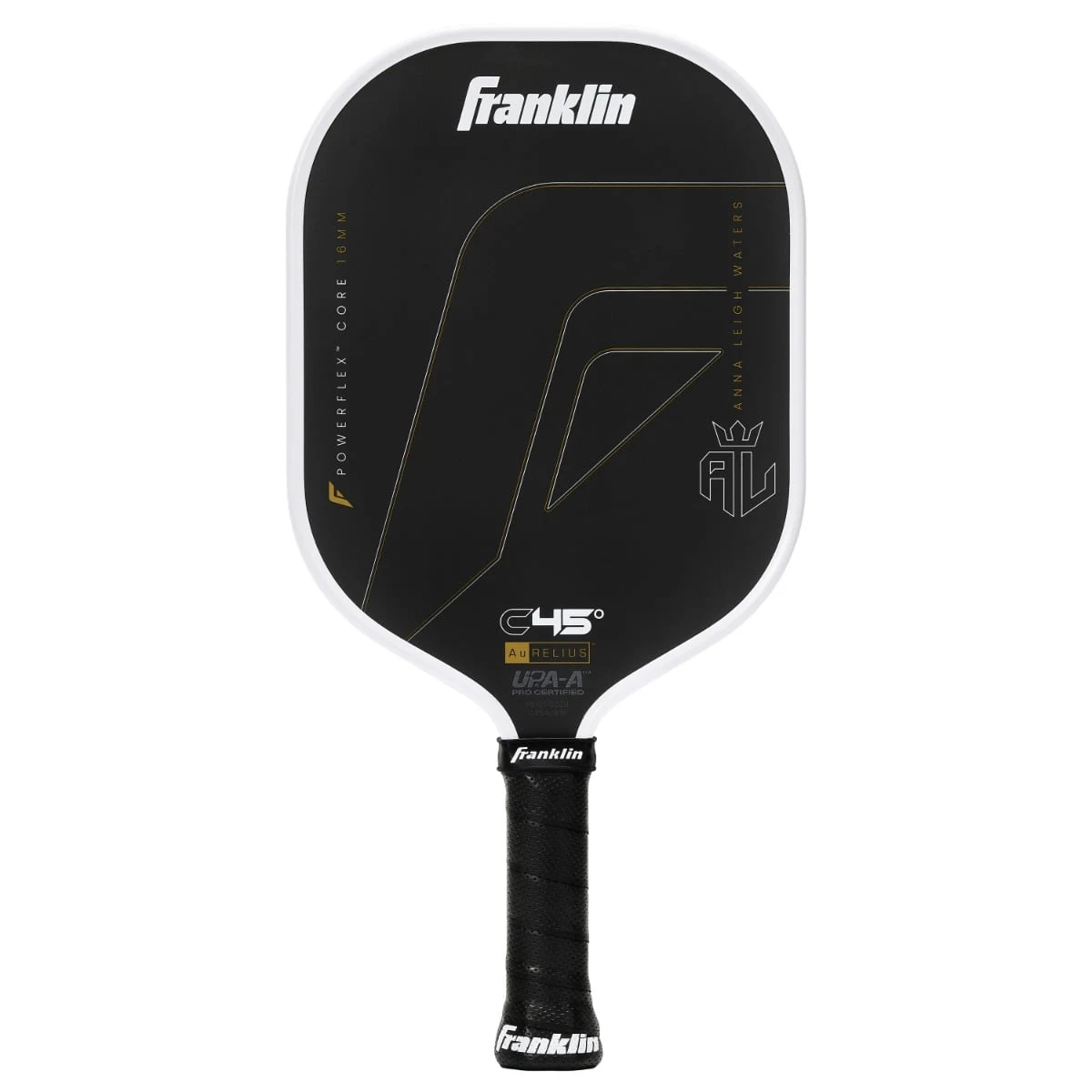
Start with the grip, because on this paddle the grip is only half the story and the swing is the other half. At 3.9 inches in circumference, this is a full size under the 4.25 inch standard, small enough that my fingers close completely and the paddle stops rotating on off-center contact.
That alone would put it near the top of this list. What puts it first is that the smallest grip here sits on a paddle with a measured swing weight of 92.3, the lowest figure on this page by a wide margin, so the fit advantage and the fast-hands advantage arrive in the same hand.
On court it plays exactly like those two numbers suggest. Counters snap around, blocks get in front of balls that would beat a heavier swing, and the 45 degree T700 raw carbon layup answers contact with a firm, poppy response. The 5.1 inch handle is long enough for a finger of the second hand on a backhand without crowding the shot.
One piece of variant discipline matters: this is the 12.7mm ALW build only. The 16mm Aurelius elsewhere on this site is a different paddle with different figures, and nothing crosses between the two. On the listing, select the 12.7mm ALW variant.
The tradeoffs are firmness and unpublished data. A 12.7mm core plays firmer than the 16mm picks below, blocks ask for cleaner hands, and no lab has published twist weight or spin for this variant, so the box leaves both unpublished rather than borrowing the 16mm build’s numbers.
Buy it if small hands have been fighting standard grips and you want the fastest swing here. Skip it if you want thick-core, pocketed contact.
2HEAD Gravity Tour Lite (3 7/8 Grip): Best for the Smallest Hands Pickleball Paddle in 2027
AT A GLANCE
HEAD Gravity Tour Lite (3 7/8 Grip)
WEIGHT
7.6 oz
SWING WEIGHT
-
TWIST WEIGHT
-
SPIN
-
Shape: Wide, 15.75 x 8.1 in
Grip: 3 7/8 in circumference (small-grip variant), handle length -
Core: Sweetspot Power Core polymer honeycomb, 14mm
Face: Hybrid (polypropylene + carbon fiber + glass fiber)
Approval: USAP
Feel: Light and forgiving
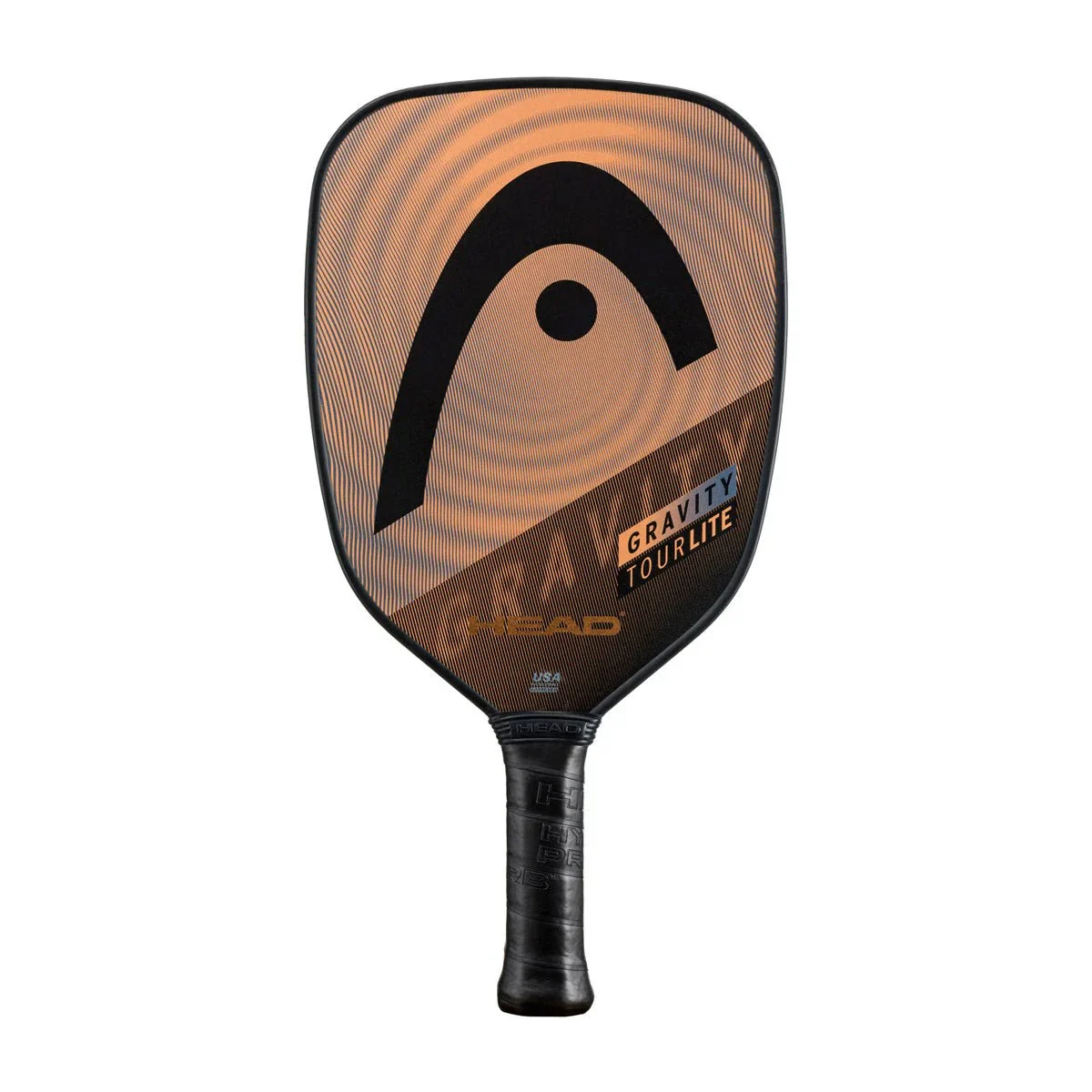
If pick 1 is the best small grip with data behind it, this is the smallest grip, full stop. HEAD builds the Gravity Tour Lite in two grip sizes, 4 1/8 inches and 3 7/8 inches, and the 3 7/8 version is the smallest factory circumference on a current performance paddle.
It is a hair under pick 1’s 3.9 inches, inside any brand’s tolerance, and it wraps around the widest, most forgiving face on this page: a full 8.1 inches across, at a joint-lightest 7.6 ounces. For the genuinely smallest hands, that pairing of tiny grip and huge margin for error is the answer.
Contact feels light and settled, the broad face keeps mishits in play, and the ball comes off the hybrid face with an easy, predictable launch. Developing players who catch the ball toward the edges will get more rallies out of this shape than out of any narrow flagship.
The variant warning is the pick itself: the 4 1/8 inch version of this same paddle is a different purchase, a fine small grip but not the smallest one, and landing on the wrong size buys a different promise than this page made.
The honest limits are data and ceiling. No independent lab has published swing weight, twist weight, or spin for this paddle, so the box leaves all three unpublished, and HEAD does not publish the handle length either, so that stays unpublished too.
The hybrid face also bites less than the raw carbon picks, so heavy topspin is not its game. What it wins on is fit at the extreme end of small, and nothing else here goes smaller.
Buy it if yours are the smallest hands in your group. Skip it if you shop by lab numbers or want raw carbon bite.
3Gearbox CX14E: Best Elongated Pickleball Paddle in 2027
AT A GLANCE
Gearbox CX14E
WEIGHT
8.0 oz
SWING WEIGHT
-
TWIST WEIGHT
-
SPIN
-
Shape: Elongated, 16 5/8 x 7 3/8 in
Grip: 5 5/8 in handle, 3 5/8 in or 3 15/16 in circumference (two factory grip sizes)
Core: 14mm SST carbon fiber chambers (T-700)
Face: 3K woven carbon fiber
Approval: USAP
Feel: Solid span control

The CX14E is the grip-size extremist of this list, and it earns the elongated slot at the same time. Gearbox builds it with two factory grip sizes, 3 5/8 inches and 3 15/16 inches.
The smaller of those is the smallest circumference any brand sells on any paddle, smaller than pick 2, and even the larger option is smaller than every other pick below this one.
Small-handed players who assumed elongated paddles were built for big hands should start here, because this is the one elongated frame whose handle was designed down to their size from the factory.
Now the pairing the numbers force you to notice: those tiny grips sit on the longest handle on this page, 5 5/8 inches, under a 16 5/8 inch elongated head. That combination is a specific tool.
The reach stretches your court coverage, the handle leaves genuine room for a two-handed backhand with both hands stacked comfortably, and the carbon chamber core answers contact with a solid, spanned feel rather than a trampoline.
It is also the one pick carried over from the old version of this page, the single legacy name whose grip claim survived checking.
The honest side: at 8.0 ounces with no published lab figures, you are buying the grip system and the shape, not a data sheet, and the box leaves swing weight, twist weight, and spin unpublished because no figure was adopted for this paddle.
The edgeless frame also scuffs on outdoor courts, so fit a strip of protective tape along the rim from day one.
Buy it if you want reach and two-handed room on the smallest grips made. Skip it if you want a short, compact handle.
4Gearbox GX2 Power Hybrid: Best Power Pickleball Paddle in 2027
AT A GLANCE
Gearbox GX2 Power Hybrid
WEIGHT
8.0 oz
SWING WEIGHT
113
TWIST WEIGHT
6.66
SPIN
~2,050 RPM
Shape: Hybrid
Grip: 5.5 in handle, 4.0 in circumference
Core: SST 2.0 CarbonRibCore, 16mm
Face: 3K raw carbon fiber
Approval: USAP
Feel: Heavy dwell

The GX2 Power Hybrid answers the question every small-handed power player asks: do I have to give up putaway pace to get a grip that fits? No. This flagship solid-core build ships in a single grip size, 4.0 inches, a full quarter inch under standard, and there is no size menu to get wrong.
That fixed grip wraps a 5.5 inch handle, behind the strongest lab line among the 4.0 inch picks here: a 113 swing weight, a 6.66 twist weight, and around 2,050 RPM of measured spin.
On court the personality is dwell and drive. The carbon rib core holds the ball a fraction longer than a honeycomb build, so drives leave with shape as well as pace, and the twist weight keeps stretched counters pointing at the court instead of twisting open.
The 4.0 inch grip changes the power equation for smaller hands in a way the lab numbers cannot show: because my fingers close fully, I can swing loose and fast without the paddle trying to rotate at impact, and loose hands are where clean pace actually comes from.
Its sibling at pick 3 offers two smaller grip sizes, but this is the Gearbox for a player who wants one proven size and a power build behind it.
The honest limit is swing weight. At 8.0 ounces and a 113 swing weight, it is the heaviest swing among the 4.0 inch picks here, and in a fast hands battle at the kitchen line it will feel a step slower than picks 1 and 5. It rewards the clean striker, not the wristy flicker.
Buy it if you refuse to trade putaway power for fit. Skip it if your game is built on wrist speed at the net.
5Six Zero Coral Light Weight 16mm Widebody: Best Premium Pickleball Paddle in 2027
AT A GLANCE
Six Zero Coral Light Weight 16mm Widebody
WEIGHT
7.6-7.9 oz
SWING WEIGHT
106
TWIST WEIGHT
~7.0
SPIN
-
Shape: Widebody, 16 x 7.8-8 in
Grip: 5.5 in handle, 4.0 in circumference
Core: Tectonic Core Suspension foam core, 16mm
Face: Diamond Tough raw carbon fiber
Approval: USAP + UPA-A
Feel: Plush, stable, and fast in the hand
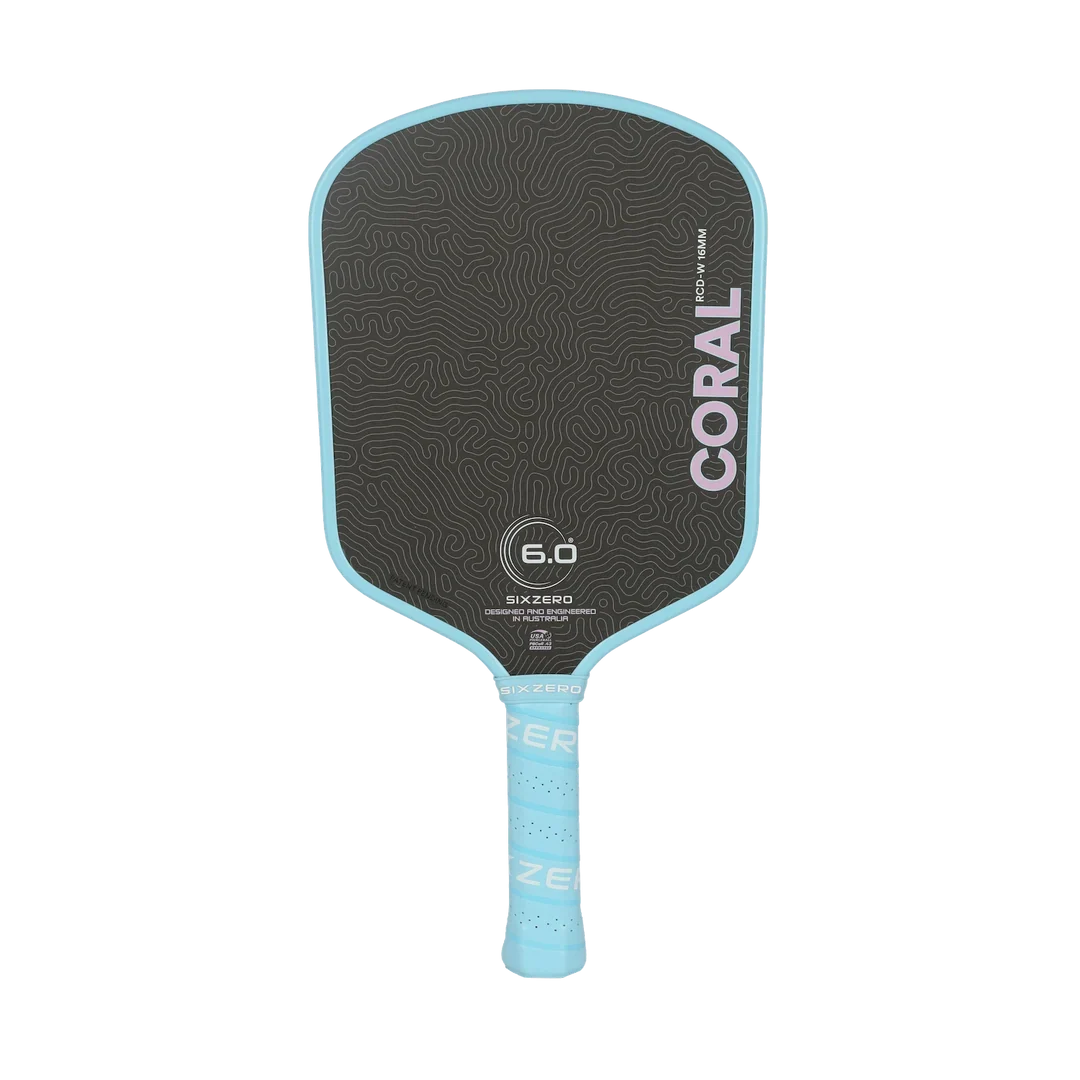
The premium slot on a fit page has to be a real build difference, not a badge, and this one is. The Coral Light Weight takes Six Zero’s full foam-core flagship platform and re-engineers it lighter, and the grip comes down with the rest of the build: 4.0 inches around on a 5.5 inch handle.
What makes it unusual is what it pairs that small grip with. Its twist weight sits around 7.0, the highest stability figure here, so the paddle that fits the smallest hands is the one that twists least on off-center contact. Small grip and big forgiveness are usually a trade. Here they are the same paddle.
The foam core gives contact a plush, suspended feel that the honeycomb picks do not match. Resets absorb pace instead of returning it, drops settle, and the widebody face puts a broad wall behind stretched blocks.
At a 106 swing weight it still moves quickly in exchanges, so the stability never turns into sluggishness. It appeared on this site’s lightweight page for its swing; here the grip is the headline.
The honest limits: no lab has published a spin figure for this variant, so the box leaves spin unpublished, and the raw carbon face bites respectably without matching picks 9 and 10 for measured spin. The box figures belong to the widebody Light Weight variant; the standard Coral and the other Light Weight shapes carry different numbers.
One buying note: this paddle has been hard to pin to a single Amazon listing across several checks, so if the listing you land on is not this widebody Light Weight variant sold by the brand, keep looking.
Buy it if you want the most stable small-grip paddle here and a plush foam feel. Skip it if measured spin leads your shopping.
6ProKennex Pro Flight: Best for Arm Comfort Pickleball Paddle in 2027
AT A GLANCE
ProKennex Pro Flight
WEIGHT
7.3-7.6 oz (brand figures)
SWING WEIGHT
-
TWIST WEIGHT
-
SPIN
-
Shape: Standard, 15.43 x 7.6 in
Grip: 4 7/8 in handle, 4.0 in tapered circumference
Core: Cloud Cell polymer honeycomb (core thickness -)
Face: Toray T700 carbon fiber with Diamond Frost texture
Approval: USAP
Feel: Light and quiet, with the Kinetic handle system

The Pro Flight earns the arm comfort slot on mechanics, and the mechanics start with the grip. Its 4.0 inch circumference is tapered, narrower through the fingers than a straight wrap, so smaller hands close around it without the white-knuckle squeeze a standard grip forces.
That grip sits on a 4 7/8 inch handle, the second shortest on this page, and the whole paddle weighs 7.3 to 7.6 ounces on brand figures, the lightest static band here.
Less mass to hold, less squeeze needed to hold it: ProKennex documents its Kinetic system as vibration-absorbing handle technology, and contact feels light and quiet, with mishits arriving in the hand as a dull note instead of a buzz.
I am describing feel and mechanics deliberately: this paddle will not fix anything, and it should not be bought as if it could. What it does is remove the mechanical irritants a small-handed player can control: a grip that fits, a light swing, and damped feedback on the off-center hits that send the most vibration up a handle.
Players whose arms trouble them session after session should have a professional look at the problem itself; the paddle decision is about comfort within a session, nothing more.
The honest limits are data and shape. No lab has published swing weight, twist weight, or spin for it, and ProKennex does not publish the core thickness, so those fields stay unpublished.
The standard shape gives up the width of picks 2 and 5, so its margin on stretched blocks is smaller. What it wins on is the combination no other pick matches: tapered small grip, short handle, lightest band, quiet contact.
Buy it if comfort across a long session is your first priority. Skip it if you want published lab figures or a widebody face.
7JOOLA Essentials: Best for Beginners Pickleball Paddle in 2027
AT A GLANCE
JOOLA Essentials
WEIGHT
8.2 oz (brand figure)
SWING WEIGHT
-
TWIST WEIGHT
-
SPIN
-
Shape: Standard
Grip: 4.75 in handle, 4.0 in circumference
Core: Response Polymer polypropylene honeycomb, 12mm
Face: Reinforced fiberglass
Approval: USAPA approved
Feel: Soft and forgiving, built for new players

Every other pick on this page assumes you already play. This one assumes you are starting, and its grip pairing is the most beginner-friendly in the 4.0 inch class: 4.0 inches around on a 4.75 inch handle, the shortest handle among the fixed 4.0 inch picks, shorter even than the Pro Flight above.
For a new player with small hands, both axes being small is what makes a paddle feel manageable from the first session. There is less handle to slide around on, the fingers close fully, and the whole thing feels like a tool sized for the hand holding it.
The play is an honest starter profile. The reinforced fiberglass face and the polymer honeycomb core give a soft, forgiving contact that keeps early rallies alive, and the standard shape is easy to aim while footwork is still forming.
It is the entry route into a real brand’s line, approved for league play when a beginner gets there, and on a page about verified grips, a published 4.0 inches from a major brand is itself the qualification.
Now the honesty this pick needs. Its 12mm core plays firmer than the 16mm picks here, so touch shots take a little more care, and its 8.2 ounce brand weight is the joint-heaviest static figure on this page.
It qualifies on the grip pairing and the brand behind it, not on lightness, and I will not call it a lightweight paddle. A beginner who already knows they love the sport and wants a lighter swing should look at pick 8. A beginner with small hands who wants the first paddle to simply fit should start here.
Buy it if you are new and your hands are small. Skip it if you want a light swing or a thick, plush core.
8Diadem Hero V2: Best Lightweight Pickleball Paddle in 2027
AT A GLANCE
Diadem Hero V2
WEIGHT
7.6 oz (brand figure)
SWING WEIGHT
-
TWIST WEIGHT
-
SPIN
-
Shape: Standard, 15.6 x 7.8 in
Grip: 5 in handle, 4.0 in circumference
Core: 8mm polypropylene honeycomb core
Face: HMT glass fiber (fiberglass)
Approval: USAPA approved
Feel: Light and fast in the hand, reinforced edge bumper for durability
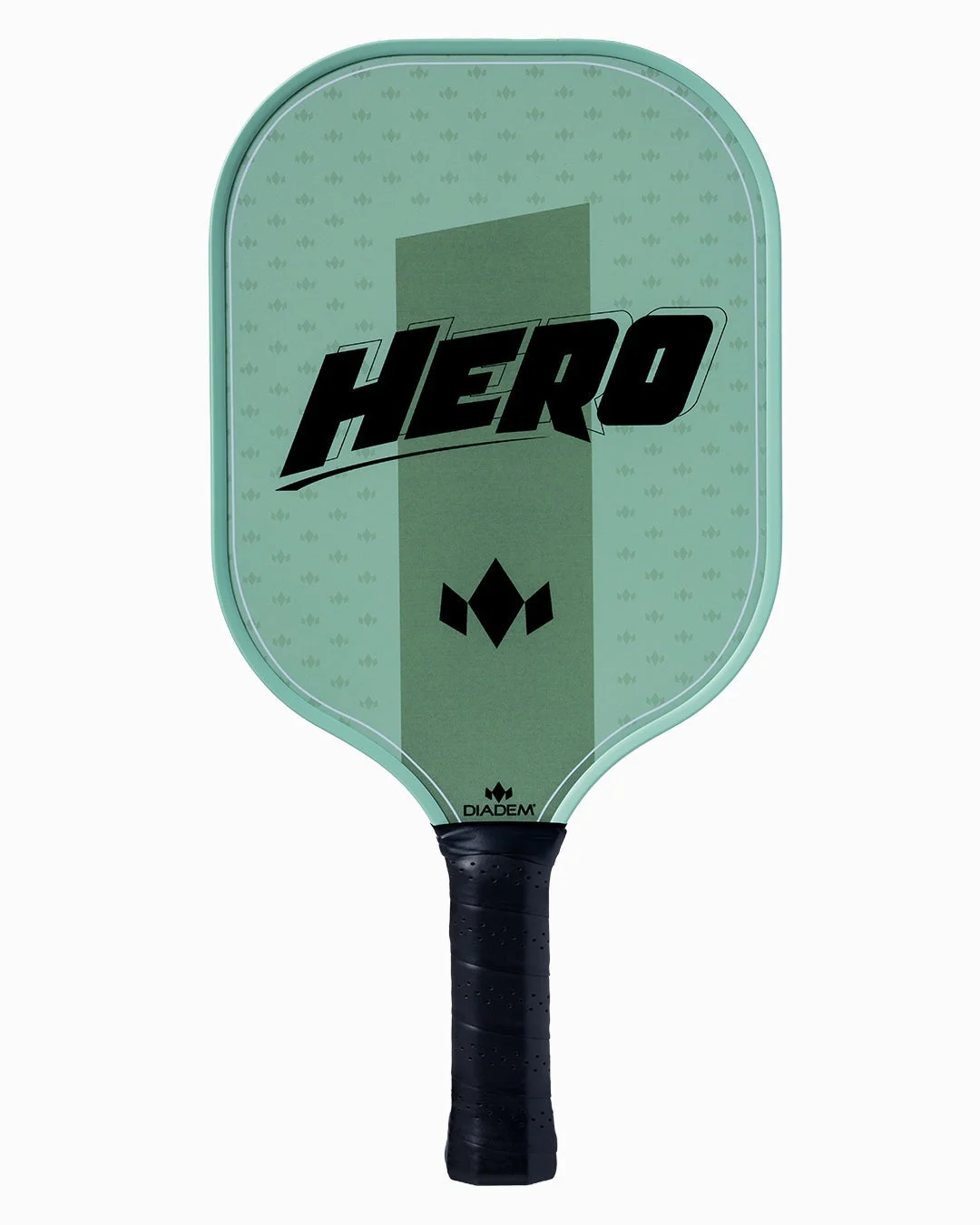
The Hero V2 is the lightweight slot inside the 4.0 inch class: 7.6 ounces on brand figures with a full-size standard shape, 15.6 by 7.8 inches, so the lightness does not come from shrinking the face.
It is the lightest fixed 4.0 inch pick that still gives you a real paddle’s dimensions, and the 5 inch handle keeps a natural amount of room for a developing two-handed backhand. It feels light and fast in the hand, quick to reposition at the kitchen line and easy to keep swinging.
One piece of spec honesty matters on this paddle, because its marketing invites confusion. The core is an 8mm cell polypropylene honeycomb. Diadem also quotes a figure around 14mm for this paddle, and that number is the overall thickness of the whole build, faces and edge included, not the core.
The box on this page prints the 8mm core because that is the core, and anyone comparing spec sheets should hold the two numbers apart. What you feel is a light, lively contact with decent pop for its weight class, and a reinforced edge bumper that shrugs off frame scrapes.
The honest limits: no lab has published swing weight, twist weight, or spin, so those fields stay unpublished, and the fiberglass face bites less than the raw carbon picks, so heavy topspin is not its game.
It is also sold in a 2-paddle starter kit under a similar listing, and the kit is a different purchase; this pick is the single paddle. Buy the single, check the listing says so, and you have the lightest honest route into the 4.0 inch class.
Buy it if you want the lightest full-size paddle with a 4.0 inch grip. Skip it if you want raw carbon spin or published lab data.
9Vatic Pro V-SOL Pro 16mm (Flash): Best All-Court Pickleball Paddle in 2027
AT A GLANCE
Vatic Pro V-SOL Pro 16mm (Flash)
WEIGHT
~7.9 oz (measured)
SWING WEIGHT
108
TWIST WEIGHT
6.43
SPIN
2,060 RPM
Shape: Hybrid (Flash)
Grip: 5.3 in handle, 4.125 in circumference
Core: Full EPP foam with EVA perimeter ring, 16mm (Gen 4)
Face: Raw carbon fiber
Approval: USAP
Feel: Lively all-court

The V-SOL Pro heads the 4.125 inch class on this page for a specific reason: it is the only paddle in that class with a full lab line behind it and a fixed grip figure.
The grip is published as one number, 4.125 inches, not a range, and the measurements behind the rest of the box are complete: a 108 swing weight, a 6.43 twist weight, and 2,060 RPM of measured spin.
For a small-handed player who has outgrown beginner paddles and wants one all-court tool with nothing left to guesswork, this is the most documented option at its grip size.
On court it is the liveliest pick in its class. The full foam core with its EVA perimeter ring gives drives a springy launch, the hybrid Flash shape splits the difference between reach and width, and the raw carbon face holds the measured spin the box promises.
Counters come off hot, and the 6.43 twist weight keeps the face honest when a drive catches you stretched. The 5.3 inch handle leaves working room for a two-handed backhand without turning the paddle into the long-lever builds at pick 3.
It appeared on this site’s beginners page as the grow-into pick, and that framing holds here too, with the grip now the headline.
The honest framing, carried from that page: this face is lively, and brand-new hands are calmer on pick 1 or pick 7. Resets need soft hands because the same spring that powers a counter will float a careless block. It is a family listing, so select the Flash 16mm variant; the other shapes carry different figures.
Buy it if you want a lively all-court paddle with full lab data at this grip size. Skip it if you are brand new and want the calmest possible face.
10Six Zero Black Opal: Best for Spin and Power Pickleball Paddle in 2027
AT A GLANCE
Six Zero Black Opal
WEIGHT
8.2 oz
SWING WEIGHT
114
TWIST WEIGHT
6.4
SPIN
2,307 RPM
Shape: Hybrid
Grip: 5.5 in handle, 4.125 in circumference (manufacturer-listed)
Core: G4 solid foam with Power Gel, 14mm
Face: Diamond Tough raw carbon fiber
Approval: USAP + UPA-A
Feel: Dense spring

The Black Opal closes the list because it removes the last compromise. Its measured spin of 2,307 RPM is the highest figure on this page, its solid foam core with Power Gel produces the dense, springy launch of a flagship power build, and Six Zero lists its grip at 4.125 inches on a 5.5 inch handle.
The small-handed player who wants the highest ceiling here does not have to choose between fit and performance: the flagship and the fit arrive in the same paddle. Most flagship lines print 4.25 inches on everything and leave smaller hands to workarounds; this one does not.
In play it feels dense and connected. Drives dip hard off the raw carbon face, counters carry genuine pace, and the 6.4 twist weight keeps the face from spraying when contact drifts. It shares a brand and a grip size with pick 5 and nothing else: different core, different face build, different brief.
The Coral is the plush stability pick; this is the spin and power closer, and the two should not be blurred. The grip figure is the manufacturer’s listed figure and is labelled that way in the box, not dressed up as a hands-on measurement; it is corroborated by the brand’s own spec tables.
The honest limit is swing weight. At 114 it is the joint-heaviest swing on this page, and in a fast hands battle it will feel a step slower than picks 1, 5, and 9. It rewards the clean striker who creates pace with a full swing and uses the small grip for control of that pace, not for wristy improvisation.
Buy it if you want the highest measured spin here on a grip that fits. Skip it if hand speed matters more than ceiling.
How to Choose the Best Small Grip Pickleball Paddle in 2027
The six sections below are the whole method behind the list above, in the order I would work through them: what the number actually measures, how to measure your own hand, why you build up and never down, why handle length is a different question, what the wrong size does to your shots, and the three buying traps this list was built around.
Read these and you can judge any grip claim on any listing, including the ones that did not make this page.
Grip Circumference Is the Whole Decision
Circumference is the distance around the handle, measured over the factory wrap, and it is the only grip number that decides whether a paddle fits your hand. The industry standard is 4.25 inches.
The genuine small class is 4.125 inches and under, which is why this page prints no 4.25 inch pick: a standard grip marketed as small is still a standard grip. Printed figures also deserve suspicion.
Brands publish optimistic numbers and manufacturing tolerances run to about an eighth of an inch, so where a hands-on lab measurement exists it outranks the printed one.
The worked example is the SLK Halo Control XL: Selkirk prints 4.25 inches for its handle, and a lab’s hands-on measurement put it at 4.35 inches, thicker than standard. A paddle that measures bigger than standard cannot appear on a small grip list, and it does not appear on this one.
Measure Your Hand Before You Measure Paddles
Open your dominant hand flat and measure from the middle crease of your palm up to the tip of your ring finger. That inch figure maps directly onto grip circumference: a measurement of 4 inches points at a 4.0 inch grip.
Some guides measure to the middle finger instead; either method works as long as you use the same one when you compare. Cross-check with the index-finger test.
Grip the paddle normally, then slide the index finger of your other hand into the gap between your fingertips and your palm. It should just fit, snug but not forced. If there is no gap, the grip is too small and you will squeeze to hold on.
If the gap swallows the finger loosely, the grip is too big and the paddle will twist on contact. And one rule governs every borderline case below: if you land between two sizes, always take the smaller one.
Build Up, Never Down
An overgrip is a tuning tool that only turns one way. One standard overgrip adds roughly 1/16 of an inch of circumference, a rule of thumb that grip guides and players converge on, and two layers add about 1/8 of an inch, roughly one full grip size.
So a 4.0 inch grip with one overgrip plays at about 4 1/16 inches, and you can step upward in fine increments until the fit is exact. The reverse does not exist.
No wrap, tape, or technique shrinks a 4.25 inch handle down to 4.0 inches, because the handle underneath the wrap is the floor.
The one partial exception is honest but narrow: strip the factory grip off entirely and wrap a single overgrip directly on the bare handle, and you take roughly 1/8 of an inch off, enough to drop one size, with noticeably less cushioning under your hand.
That asymmetry is the entire reason this list starts from the smallest factory grips and tunes upward.
Handle Length Is a Separate Axis
Circumference is how thick the handle is. Length is how long it is. They solve different problems and this page never trades one for the other.
The list above proves the spread: pick 3 pairs the smallest grips sold with the longest handle here, 5 5/8 inches, which gives reach and room to stack two hands; picks 6 and 7 pair 4.0 inch grips with the shortest handles, 4 7/8 and 4.75 inches, which suits players who rest a finger on the back of the face and live on quick hands at the kitchen line.
Two-handed backhand players should shop handle length first inside the small-grip class, because a thick-enough grip on a short handle still crowds the second hand. Players who choke up and play touch shots shop short.
And name the common listing error plainly: a short handle is not a small grip. The old version of this page listed a paddle on the strength of its 4.75 inch handle while never stating its circumference at all. Length without circumference tells you nothing about fit.
What the Wrong Size Actually Does
Fit failures show up as mechanics first, so learn them before you blame your strokes. A grip that is too big cannot be closed around, so on off-center contact the paddle twists because your fingers never locked it down.
Your forearm works overtime just holding on, and wrist snap locks up because the hand is busy gripping instead of swinging. A grip that is too small causes the mirror problem: the hand squeezes to keep hold of it, tension builds through the wrist and forearm, and touch shots get grabby.
The fit you are aiming for is a grip your fingers close around with about a fingertip’s gap left to your palm, relaxed at address and secure at contact. That target is why the measurement section comes before any product talk on this page.
One boundary, stated plainly: this is about comfort and mechanics inside a session. Anyone whose arm troubles them session after session should have a professional look at the problem itself rather than expecting a handle size to resolve it.
Variants, Ranges, and Approval When You Buy
Three buying traps shaped this list. Carry all three to any listing you read. First, family listings where the grip size is the variant: picks 2 and 3 each come in two factory grip sizes under one product page, so confirm the size on the listing before checkout, because landing on the bigger size quietly changes the pick.
Second, brand grip ranges. Six Zero publishes a 4.125 to 4.25 inch range for the Double Black Diamond Control, a fine paddle and this page’s first reserve.
It stays a reserve because a range is not a promise: a click on an Amazon link cannot guarantee which end of that range arrives, and a page built on verified small grips cannot promise what it cannot verify. If you can select the 4 1/8 inch size at a retailer that sells sizes, it becomes a genuine small grip.
Third, approval in plain terms. Sanctioned tournaments check for USA Pickleball approval; open play does not. Every pick on this page is USAP approved, and picks 1 and 5 also carry UPA-A approval, so nothing here needs an eligibility warning.
Frequently Asked Questions (FAQs)
1. What counts as a small grip on a pickleball paddle?
A small grip is a grip circumference of 4.125 inches or under. The industry standard is 4.25 inches, and anything printed at 4.25 is a standard grip no matter how a listing markets it.
The genuine small class runs from 4.125 inches down through 4.0 inches, with a few factory options below that: 3 7/8 inches on pick 2 of this list, 3 15/16 and 3 5/8 inch options on pick 3, and a 3.9 inch grip on pick 1.
2. What is the standard grip size on most paddles?
The standard grip size on most adult paddles is 4.25 inches in circumference. Most major brands print that figure on nearly every model they sell, which is exactly why small-handed players struggle to find alternatives.
A printed 4.25 is not a small grip, and any list that presents one as small is selling you the standard size under a different label.
3. How do I measure my hand for the right grip size?
Measure from the middle crease of your open palm to the tip of your ring finger, and match that inch figure to a grip circumference.
Then cross-check on a real paddle with the index-finger test: grip the paddle, slide the other hand’s index finger between your fingertips and your palm, and look for a snug fit. No gap means too small; a loose gap means too big.
4. I am between two grip sizes. Which one should I buy?
Buy the smaller one. You can always build a small grip up in fine steps with overgrips, about 1/16 of an inch per layer, until the fit is exact. There is no equivalent way to shrink a grip that arrives too big, because the handle under the wrap sets the floor. Starting small keeps every adjustment open; starting big closes most of them.
5. How much bigger does an overgrip make a grip?
One standard overgrip adds roughly 1/16 of an inch of circumference. Two layers add about 1/8 of an inch, which is roughly one full grip size. That is why a 4.0 inch grip is so flexible in practice: bare, with one overgrip, or with two, it covers the whole small range from 4.0 to about 4 1/8 inches as your preference develops.
6. Can I make my current paddle’s grip smaller?
Only slightly, and with a trade. Stripping the factory grip off and wrapping a single overgrip directly on the bare handle takes roughly 1/8 of an inch off the circumference, enough to drop about one size, and leaves noticeably less cushioning under your hand.
Beyond that, no: the handle itself is the floor, and a paddle built at 4.25 inches cannot be wrapped down to 4.0. If you need a genuinely smaller grip, the answer is a paddle built with one.
7. What is the smallest grip I can buy on a real performance paddle?
The smallest factory grip option sold is 3 5/8 inches, one of the two grip sizes on the Gearbox CX14E at pick 3 of this list.
The next steps up are the 3 7/8 inch variant of the HEAD Gravity Tour Lite at pick 2 and the 3.9 inch grip on the Franklin C45 Aurelius 12.7mm at pick 1. All three are current, approved performance paddles, not junior or novelty models.
8. Is a short handle the same thing as a small grip?
No. Handle length and grip circumference are separate measurements that solve different problems: length is how much handle your hands have to hold, circumference is how thick it is.
A paddle can pair a short handle with a full standard circumference, and it will not fit small hands any better for being short. Judge fit on circumference first, then choose length for your style, longer for two-handed backhands and reach, shorter for finger-on-the-face control.
9. I play a two-handed backhand. Can I still use a small grip?
Yes. Shop handle length inside the small-grip class. Picks 3, 4, and 5 on this list pair grips of 4.0 inches or under with handles of 5.5 inches and up, which leaves genuine room to stack both hands.
A small circumference actually helps a two-handed grip, because the second hand has less handle thickness to wrap. What crowds a two-handed backhand is a short handle, not a thin one.
10. Are the grip sizes brands print actually accurate?
Not always, and the differences matter at these sizes. Printed circumferences run optimistic, manufacturing tolerances reach about an eighth of an inch, and hands-on lab measurements sometimes contradict the spec sheet: one popular control paddle on this site’s other pages is printed at 4.25 inches and measured at 4.35.
Some brands also publish a range rather than a size, which means the unit you receive sits somewhere inside it. Where this page had a hands-on measurement, it used the measurement.
11. Do any professional players use small grips?
Yes. The variant at pick 1 of this list is the 12.7mm ALW build, the paddle specification associated with Anna Leigh Waters, the top-ranked woman in the sport, and it runs a 3.9 inch grip, a full size under standard.
Elite players choose grips by hand fit and swing preference, not by what the standard size happens to be, and a smaller grip at the highest level is a fit decision, not a compromise.
12. Do I need a USA Pickleball approved paddle, and are all of these approved?
You need an approved paddle for sanctioned tournaments and most organised league play; open recreational play does not check.
All ten picks on this page are USA Pickleball approved, and picks 1 and 5 also carry UPA-A approval for events run under that body. Whichever body sanctions your events, nothing on this list will need replacing for eligibility reasons.

Michael Stevenson
Hi, my name is Michael Stevenson and I’m a passionate pickleball player. I’ve been playing the game for many years and I’m pretty highly skilled at it. Pickleball is one of my favorite topics so naturally, I love to write about it.
Whether it’s tips for beginners, guides for experts, reviews of new paddles, or advanced playing techniques – if it relates to pickleball then I have something interesting to write about it. So if you’re looking for entertaining and informative information on the topic of pickleball, look no further than my written works!