

My first paddle came off a sporting goods wall, chosen the way most first paddles are chosen: it looked serious, the grip felt right, and the word composite was printed on it in confident letters. Composite what, exactly, nobody on that wall could have told me.
The word sat on wood paddles, carbon paddles, and paddles made of things I still cannot identify, meaning everything and therefore nothing. I played with it for a season, happily, in total ignorance of what its face was actually made of.
This page exists to fix that word. Here, composite means one specific thing: a fiberglass face, either pure fiberglass or fiberglass blended with carbon fiber in a hybrid that says so on the label.
Graphite paddles and raw carbon fiber paddles are excluded by definition, however good they are, and several of them are excellent. They are simply a different material answering a different question.
Every pick below is labelled for what its face actually is: Pure Fiberglass, Hybrid, or Composite Fiber, with the brand’s own face name in the box where it has one.
The fiberglass segment is also the least lab-measured corner of the paddle market, so where no trustworthy lab publishes a number, the box shows a dash instead of borrowing one. What follows is the honest version of the category I bought into blind.
The 10 Best Composite Pickleball Paddles in 2027
1Franklin Signature Pro 16mm: Best Overall Composite Pickleball Paddle in 2027
AT A GLANCE
Franklin Signature Pro 16mm
Weight: 7.9-8.3 oz | Swing Weight: Not published | Twist Weight: Not published | Spin: Not published
Shape: Elongated, 16.5 x 7.5 in
Core: Polypropylene honeycomb, 16mm
Face: Fiberglass (MaxGrit)
Grip: 5.6 in handle, 4.5 in circumference
Approval: USAP
Feel: Power-leaning all-court

If I had to hand a developing player one composite paddle and walk away, it would be this one. The Signature Pro 16mm is pure fiberglass done properly: a fiberglass surface layer with Franklin’s MaxGrit texture over a 16mm polypropylene honeycomb core, in an elongated 16.5 by 7.5 inch frame.
Nothing in that recipe is exotic, and that is exactly why it works. The fiberglass flexes where carbon stays stiff, so the ball leaves with easy pop on drives and counters without me swinging out of my shoes.
The 16mm core is what keeps that pop honest. Thinner fiberglass paddles can feel lively to the point of wild, but this one pockets the ball long enough for drops and resets to stay calm, and the elongated shape adds leverage on serves and overheads.
The MaxGrit texture gives the face real bite for its class, so topspin drives dip instead of sailing. The 5.6 inch handle also leaves proper room for a two-handed backhand, which elongated paddles do not always manage.
The honest gaps sit in the data, not the play. No lab I trust publishes swing weight, twist weight, or spin for this paddle, so the box leaves all three unpublished rather than borrowing thin numbers. What the court tells me is simpler: this is the most complete fiberglass package here.
Buy it if you want the composite archetype, flex and pop calmed by a thick core. Skip it if lab-verified numbers matter more to you than play.
211SIX24 Jelly Bean 16mm: Best Hybrid Composite Pickleball Paddle in 2027
AT A GLANCE
11SIX24 Jelly Bean 16mm
Weight: 7.9-8.2 oz | Swing Weight: 107 | Twist Weight: 7.21 | Spin: 2,103 RPM
Shape: Pegasus widebody, 15.82 x 8.04 in
Core: Polymer honeycomb, 16mm, foam-injected perimeter
Face: Hybrid CFC: carbon + fiberglass + carbon (Toray T700)
Grip: 5.75 in handle, 4.125 in circumference
Approval: USAP
Feel: Soft and stable
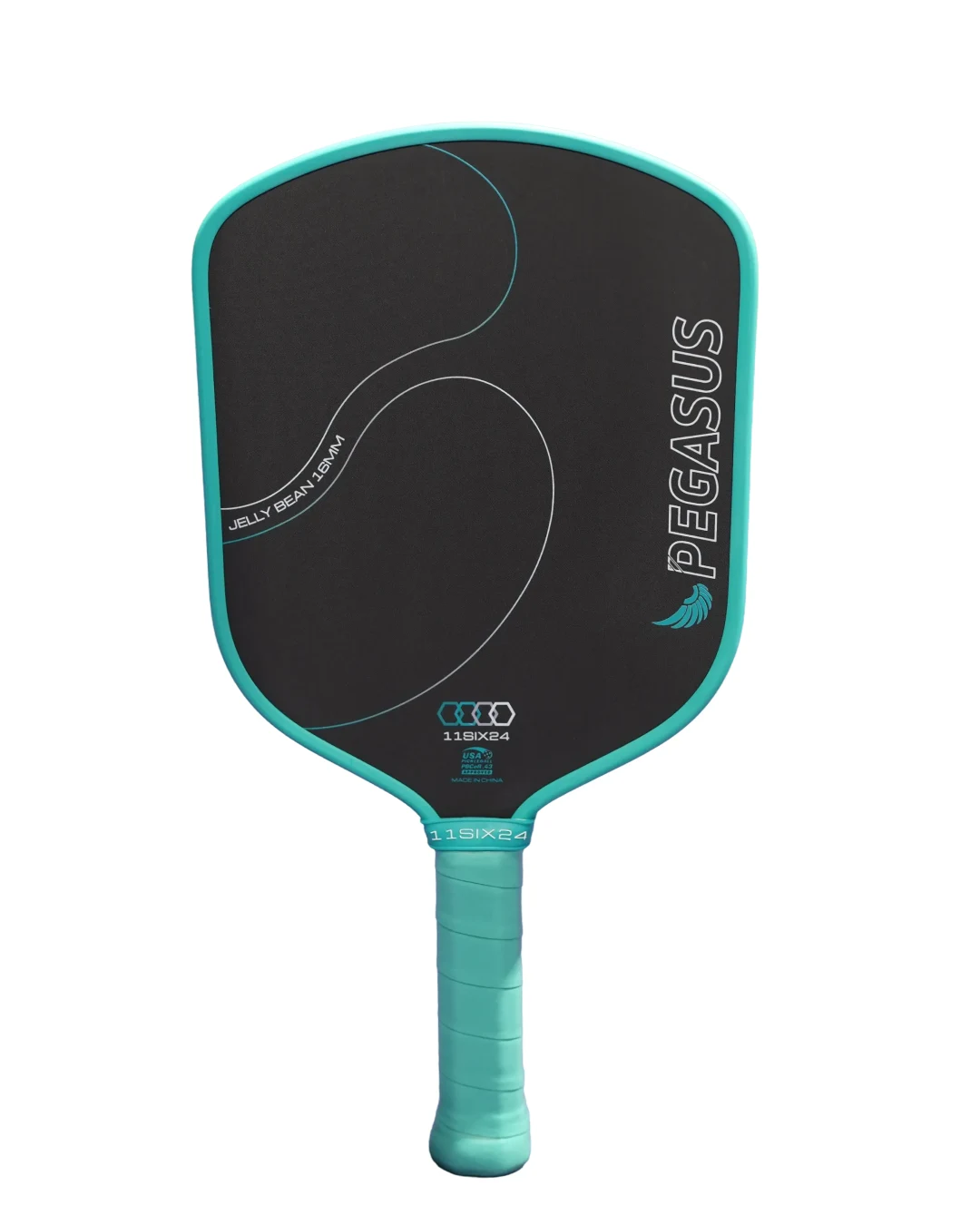
The Jelly Bean is the proof that a hybrid can out-think a pure face. Its CFC construction stacks two layers of Toray T700 carbon fiber around a single fiberglass layer, carbon, fiberglass, carbon, and the sandwich is not decoration.
The carbon supplies grip and structure, the fiberglass middle supplies the flex, and the result is a widebody that plays softer and calmer than its carbon siblings while keeping real bite on the ball.
It is also the one paddle on this page with a full lab sheet I can stand behind: swing weight 107, twist weight 7.21, spin measured at 2,103 RPM. That twist weight is the headline.
At 7.21 it is high for any class, and on this Pegasus widebody frame, off-center blocks and stretched counters stayed square in my sessions instead of twisting away. The 16mm polymer core, foam injected around its perimeter, pockets the ball and pushes stability out toward the edges, which is where widebody contact actually happens.
One warning matters more than any spec. This pick is the original Jelly Bean. A newer Jelly Bean 2 exists with a different core and a different approval picture, and it is not the paddle I tested or the one linked here.
Buy it if you want hybrid feel with numbers behind it. Skip it if you want a pure fiberglass face on principle.
3Selkirk AMPED Pro Air Epic: Best Edgeless Fiberglass Composite Pickleball Paddle in 2027
AT A GLANCE
Selkirk AMPED Pro Air Epic
Weight: 7.8-8.2 oz | Swing Weight: 111 | Twist Weight: 6.57 | Spin: Not published
Shape: Epic, 15.75 x 8 in, edgeless aero
Core: X5+ polypropylene honeycomb, 16mm
Face: Fiberglass (FiberFlex+)
Grip: 5.25 in handle, 4.25 in circumference
Approval: USAP
Feel: Edgeless fiberglass power
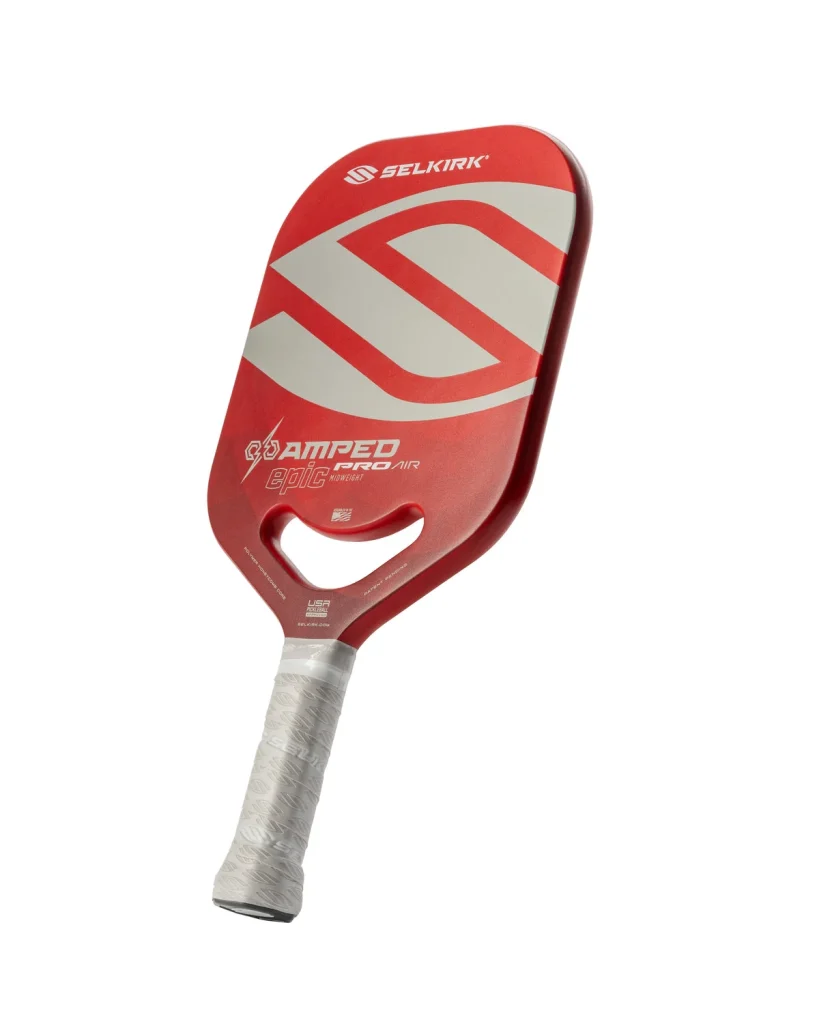
Honesty first, because this paddle asks for it. The AMPED Pro Air is a previous-generation Selkirk line, a design Selkirk has been selling down through its own store as newer models arrive, and I will not dress it up as a 2027 flagship.
What it is, is a proven edgeless fiberglass design that Selkirk still sells itself, and on merit it still earns its place here.
The face is FiberFlex+ fiberglass, pure fiberglass, over a 16mm X5+ polypropylene core, in the edgeless Epic shape with its open aero throat. Without an edge guard the swing comes through cleaner, and the fiberglass flex gives drives and speed-ups a lively, connected pop.
The published numbers support the feel: swing weight 111 and twist weight 6.57 are both solid figures for an edgeless frame. Resets stayed manageable because the thick core does the calming work the lively face does not.
What you give up is a spin figure, which no source I trust publishes, and the newest construction ideas. What you keep is a paddle whose behavior is known rather than promised, from a brand still standing behind the listing.
Buy it if you want edgeless fiberglass feel from an established design. Skip it if you only buy current-generation flagships.
4Selkirk Vanguard Power Air Epic: Best Hybrid Power Composite Pickleball Paddle in 2027
AT A GLANCE
Selkirk Vanguard Power Air Epic
Weight: 7.7-8.1 oz | Swing Weight: Not published | Twist Weight: Not published | Spin: Not published
Shape: Epic, 15.75 x 8 in, edgeless
Core: SuperCore polymer honeycomb, 13mm
Face: Hybrid QuadFlex: fiberglass + carbon fiber
Grip: 5.25 in handle, 4.25 in circumference
Approval: USAP
Feel: Edgeless hybrid power
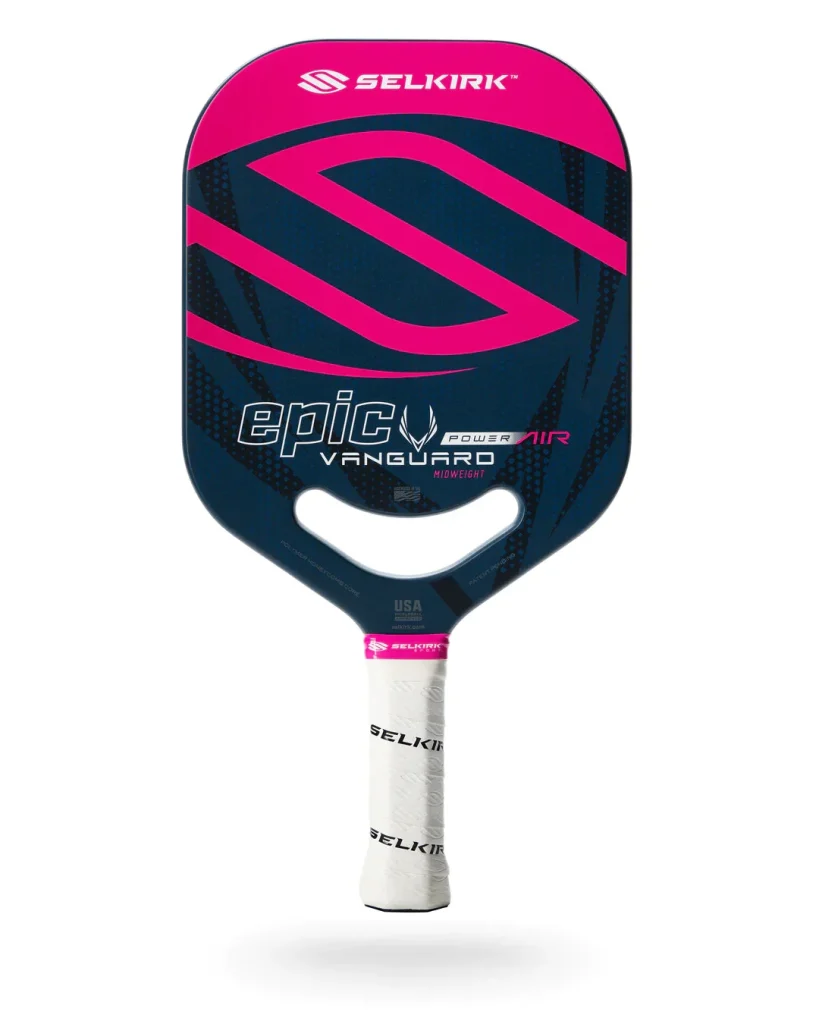
The Vanguard Power Air is the paddle the page this replaces was actually describing, under the wrong spec table.
Correctly specified, it is a true hybrid: Selkirk’s QuadFlex face stacks two FiberFlex fiberglass layers with two Quantum+ carbon layers, four layers in total, over a thin 13mm SuperCore polymer core, in the same edgeless Epic frame as its AMPED sibling.
That recipe is a power recipe, and it plays like one. The thin core answers immediately, the carbon layers add structure and bite, and the fiberglass layers keep the response from turning harsh or dead.
Serves and drives left with real weight behind them, speed-ups jumped without a wind-up, and the edgeless throat kept the whole swing feeling clean through contact. Of the hybrids on this page, this is the one that leans hardest toward offense, and it is not close.
The trade-offs are the usual thin-core ones. A 13mm core forgives less on blocks and resets than the 16mm paddles around it, so the soft game has to come from your hands. No lab publishes swing weight, twist weight, or spin for it either, and the box says so plainly.
Buy it if you attack with an edgeless hybrid and your touch is already reliable. Skip it if your game runs on forgiveness.
5Engage Encore EX 6.0: Best Fiberglass Control Composite Pickleball Paddle in 2027
AT A GLANCE
Engage Encore EX 6.0
Weight: 7.5-8.4 oz | Swing Weight: Not published | Twist Weight: Not published | Spin: Not published
Shape: Standard, 16 x 8 in
Core: ControlPro polymer, 0.6 in
Face: Fiberglass (FiberTEK, chemically treated)
Grip: 5 in handle, 4 3/8 in circumference
Approval: USAPA
Feel: Textured control

Engage builds the Encore EX 6.0 the unfashionable way, and the paddle is better for it. The face is FiberTEK, a chemically treated fiberglass Engage has refined for years, over a ControlPro polymer core a full 0.6 inches thick, in a standard 16 by 8 inch frame.
No thermoforming, no foam story. Just a thick core and a textured fiberglass skin, made in the USA.
On court that recipe is all control with a spin kicker. The chemical texture on the fiberglass bites the ball genuinely, so drops and roll volleys shape with more spin than most fiberglass faces manage, and the thick core keeps blocks and resets low and calm.
Weight runs from 7.5 ounces in the Lite build to 8.4 in the Standard, and the grip comes in two circumferences, a 4 1/8 inch thin option alongside the standard, which is more fitting care than most brands bother with.
Now the honest balance. Engage talks about a generous sweet spot, and in my testing it plays smaller than the claim: contact toward the edges drops off sooner than on the widebodies here, and you feel it on stretched defense. Centered contact is excellent. Off-center contact is merely honest.
Buy it if control and texture-driven spin are your game. Skip it if you need a big, forgiving face.
6Selkirk SLK EVO Hybrid 2.0 Max: Best Composite Pickleball Paddle for Beginners and Improvers in 2027
AT A GLANCE
Selkirk SLK EVO Hybrid 2.0 Max
Weight: 7.6-8.0 oz | Swing Weight: Not published | Twist Weight: Not published | Spin: Not published
Shape: Max widebody, 16 x 7.85 in
Core: Rev-Hybrid Polymer, 13mm
Face: Hybrid fiberglass (C7-Flex)
Grip: 4.85 in handle, 4.25 in circumference
Approval: USAP
Feel: Forgiving all-round

If a beginner asked me which paddle on this page forgives the most while still teaching them the game, this is the one I would hand over. The SLK EVO Hybrid 2.0 Max pairs a C7-Flex hybrid fiberglass face with a 13mm Rev-Hybrid Polymer core in Selkirk’s Max widebody shape, and the whole build is tuned toward balance rather than extremes.
The widebody shape does quiet work here. Contact in real beginner and improver rallies happens all over the face, and the Max frame’s width keeps those off-center hits playable instead of punishing.
The fiberglass in the face flexes enough to add easy pop on drives, so a developing swing gets rewarded, while the 13mm core keeps the paddle lively rather than mushy. At 7.6 to 8.0 ounces it also stays light enough for long learning sessions, and the shorter 4.85 inch handle keeps the balance feeling quick in the hand.
One naming warning, because Selkirk’s own lineup invites the mistake. The EVO 2.0 family has three faces, and only the Hybrid is fiberglass. The Control version is carbon-faced and the Power version uses a different face again, so the word Hybrid on the listing is the whole pick. Check it before you buy.
Buy it if you are learning or improving and want forgiveness with room to grow. Skip it if you have outgrown balanced paddles and want a specialist.
7HEAD Gravity Tour Lite: Best Lightweight Hybrid Composite Pickleball Paddle in 2027
AT A GLANCE
HEAD Gravity Tour Lite
Weight: 7.6 oz | Swing Weight: Not published | Twist Weight: Not published | Spin: Not published
Shape: Widebody, 15.75 x 8.1 in
Core: Polypropylene honeycomb, 14mm
Face: Hybrid: fiberglass + carbon fiber
Grip: 4 1/8 in circumference
Approval: USAP
Feel: Light and balanced
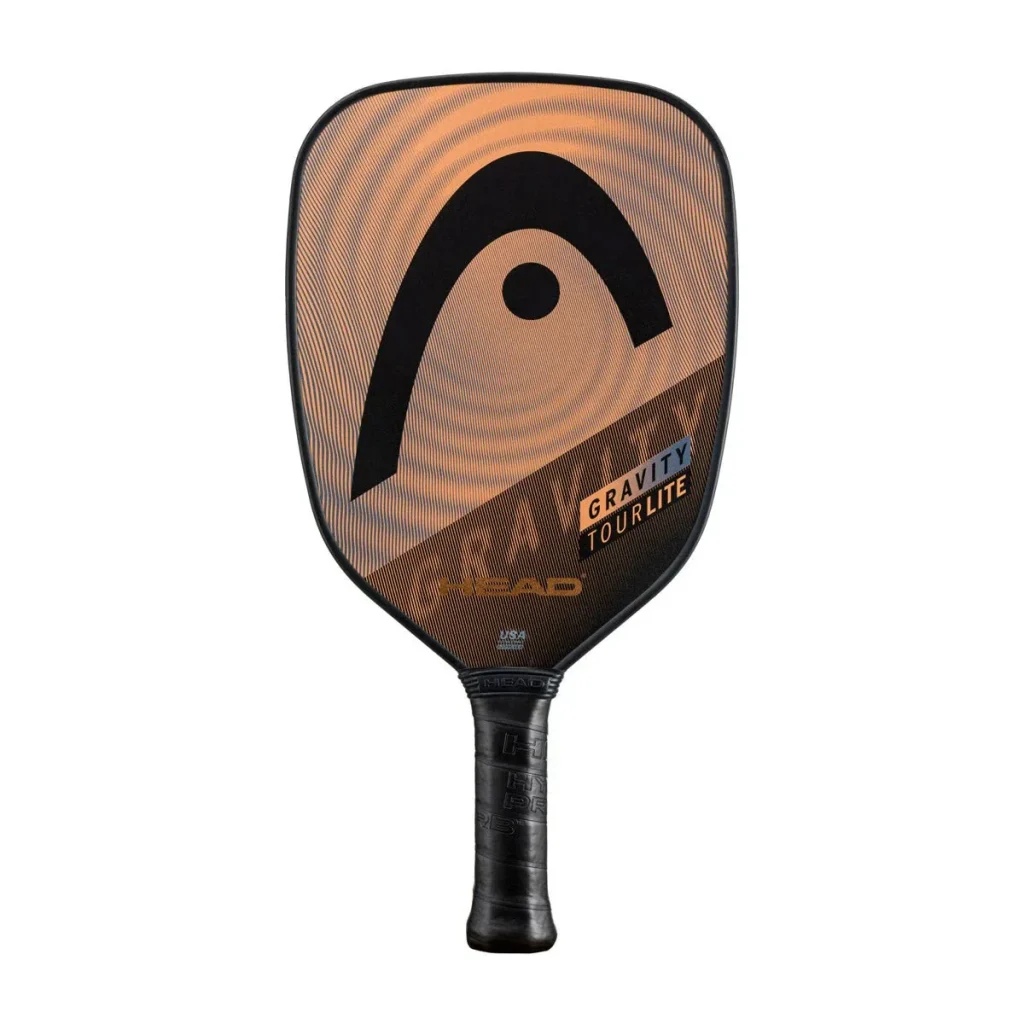
The Gravity Tour Lite is the lightest hybrid on this page at 7.6 ounces, and it earns the slot on a face recipe nobody else here uses in quite this way.
HEAD’s Hybrid Hitting Surface combines fiberglass and carbon fiber over a 14mm polypropylene honeycomb core, in a wide 15.75 by 8.1 inch frame. The carbon stiffens and structures, the fiberglass flexes and pops, and the balance lands exactly where the name suggests: light, quick, and even.
Quick hands are the playing argument. At the kitchen the paddle changes direction without the lag a heavier frame carries, counters and speed-ups come off a short motion, and the wide face gives that speed somewhere forgiving to land.
The 14mm core sits between the calm 16mm builds and the lively 13mm ones, which matched how it played in my sessions: enough dwell to control a reset, enough answer to finish a counter.
Now the warning this paddle cannot be sold without. HEAD’s newer Gravity models, the Gravity Pro EX15, the Gravity Team EX 2025, and the 2025 Gravity Tour, are raw carbon paddles, different faces and different paddles entirely. The hybrid pick is this Gravity Tour Lite generation only, whatever similar names a listing shows you.
Buy it if light and quick in a hybrid face is your brief. Skip it if you want the modern raw carbon Gravity line instead.
8Onix Evoke Premier CT16: Best Composite Widebody Pickleball Paddle in 2027
AT A GLANCE
Onix Evoke Premier CT16
Weight: Not published | Swing Weight: Not published | Twist Weight: Not published | Spin: Not published
Shape: Widebody
Core: Polypropylene honeycomb, 16mm
Face: Composite fiber (DF Composite)
Grip: 4.25 in circumference
Approval: USAP
Feel: Control and power blend

Onix has used the word composite longer and more literally than most brands, and the Evoke Premier CT16 is where that shows.
Its DF Composite face is a composite fiber surface, not fiberglass in the classic weave and not carbon, over a 16mm polypropylene honeycomb core in a widebody frame. That makes it the one true Composite Fiber pick on this page, labelled exactly that in the box above.
The playing character follows the construction. The thick 16mm core does the control work, absorbing pace on blocks and keeping resets low, while the composite fiber face adds enough flex and pop that drives and counters do not feel like work.
The widebody shape suits the intent: a broad, forgiving hitting area for players who defend and counter more than they blast. In my sessions it played as the calmest widebody here after the thick-core Engage, and the most even-tempered paddle on the page.
The data honesty is thinner than the paddle. Onix does not publish a static weight for this model that I could verify, and no lab publishes swing weight, twist weight, or spin for it, so the box leaves all four unpublished rather than borrowing the line’s typical numbers.
Buy it if you want a thick-core widebody with a genuine composite fiber face. Skip it if you buy by lab sheet.
9JOOLA Seneca FDS 14: Best Fiberglass Step-Up Composite Pickleball Paddle in 2027
AT A GLANCE
JOOLA Seneca FDS 14
Weight: 8.0 oz | Swing Weight: Not published | Twist Weight: Not published | Spin: Not published
Shape: Standard, 16 x 7.9 in
Core: Response Polymer honeycomb, 14mm
Face: Fiberglass (Fiberglass Drive Surface)
Grip: 5 in handle, 4.125 in circumference
Approval: USAPA
Feel: Lively pop
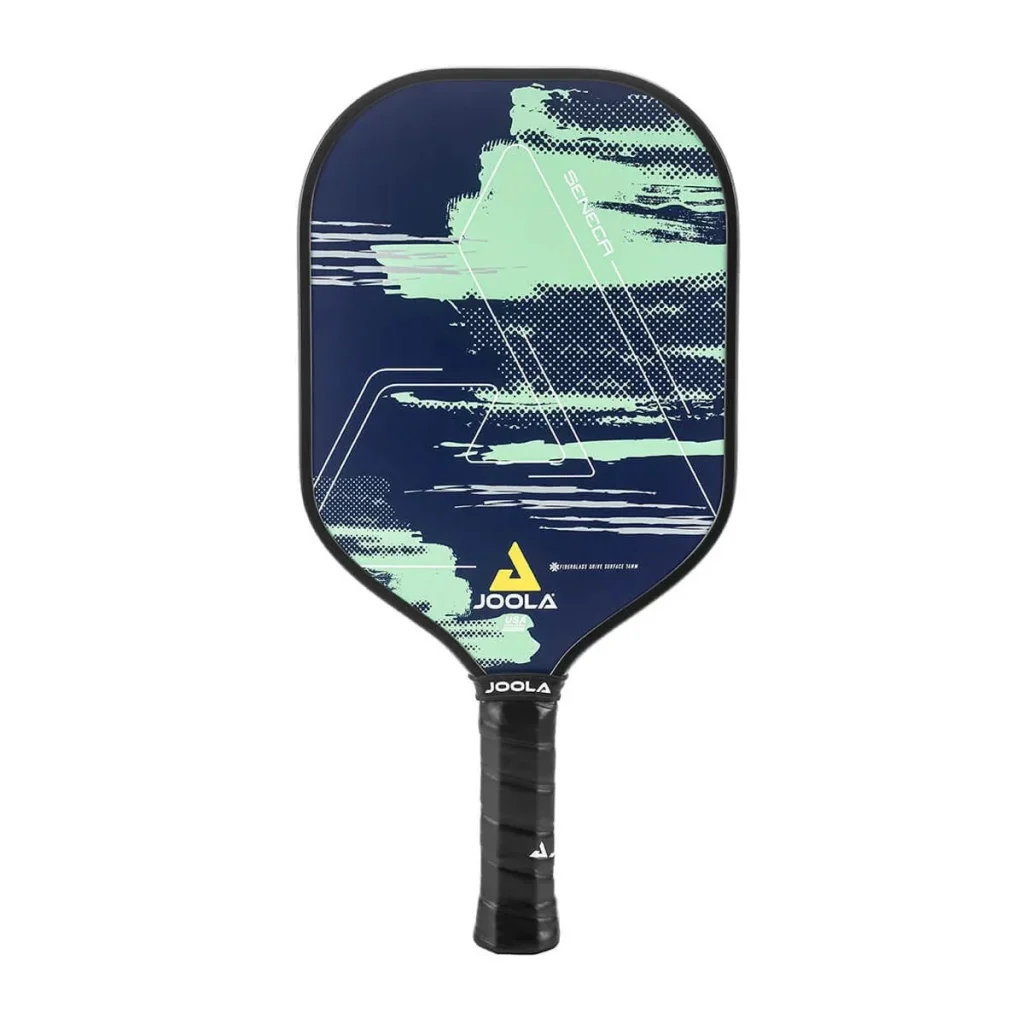
The Seneca FDS 14 is the step-up fiberglass pick, and its name is the whole lesson. FDS stands for Fiberglass Drive Surface, a pure fiberglass face over JOOLA’s Response Polymer honeycomb core at 14mm, in a 16 by 7.9 inch frame at an even 8.0 ounces.
For a player moving up from a starter paddle, that recipe is the classic upgrade: real flex and pop from the face, enough core to keep the ball honest, and nothing exotic to relearn.
On court it plays like a paddle built for improvers who are starting to swing with intent. Drives picked up easy pace from the fiberglass flex, the 14mm core kept the response lively without turning blocks into guesswork, and the standard shape keeps contact where a developing player actually makes it.
It is not a spin monster, and no honest number says otherwise. JOOLA publishes brand scores for this paddle, not lab spin, and I will not convert marketing scores into RPM.
The buying warning matters. Lookalike content and sloppy listings repeatedly describe this paddle as carbon-faced. It is not.
The carbon sibling is the Seneca CDS 16, Carbon Drive Surface, a different paddle this page excludes by definition. If the listing in front of you does not say Fiberglass Drive Surface, you are looking at the wrong Seneca.
Buy it if you are stepping up from a starter set and want genuine fiberglass. Skip it if you want lab-verified spin and stability numbers.
10Niupipo MX-19 Fiberglass Set: Best Budget Starter Set Composite Pickleball Paddle in 2027
AT A GLANCE
Niupipo MX-19 Fiberglass Set
Weight: Not published | Swing Weight: Not published | Twist Weight: Not published | Spin: Not published
Shape: Not published (set of two paddles)
Core: Polypropylene honeycomb
Face: Fiberglass
Grip: 4.72 in handle, 4.25 in circumference
Approval: USAPA (per listing)
Feel: Forgiving starter

Full disclosure in the first line: this pick is a set, not a single paddle.
The Niupipo MX-19 package puts two fiberglass-faced paddles, balls, and a bag in one box, and it is here because it is the most honest way into a genuine fiberglass face for a household starting from zero. Two people can walk onto a court with nothing else to acquire first.
Each paddle pairs its fiberglass surface with a polypropylene honeycomb core and a 4.72 inch grip, and the face material is the point. Starter sets are where vague composite claims go to hide, but this one is fiberglass as listed, which means new players learn on the same flexing, forgiving face material this whole page is about.
The paddles play light and forgiving, which is the correct personality for first rallies: mishits stay playable, easy pop rewards short swings, and nobody’s arm pays for the learning curve.
The limits are equally plain. Niupipo publishes no weight for these paddles, no lab anywhere measures them, and a starter set is not built to the durability or finish standard of the single paddles above it. Treat it as the first step it is.
Buy it if two beginners need real fiberglass faces and everything else in one box. Skip it if you are one player shopping for a performance single.
How to Choose a Composite Pickleball Paddle in 2027
Buying a composite paddle in 2027 starts with a vocabulary problem. The word composite appears on faces, on cores, and on hybrids across the market, and it does not always mean the same thing twice.
This guide pins the word down, compares the three face families honestly, and works through who these paddles suit, how they are built, and how long they last, so the labels in the boxes above become decisions instead of decoration.
What “Composite” Actually Means Today
Start with the definition this page uses, because it is the one the wider market’s explainers have settled on. A composite paddle is a paddle with a fiberglass face: a polymer honeycomb core sandwiched between fiberglass hitting surfaces.
Composite and fiberglass are used interchangeably across the guides that rank for the term, and that is the sense in which every pick above qualified.
The complications live at the edges. Hybrid faces blend fiberglass with carbon fiber in a single hitting surface, and they belong here when the fiberglass is a genuine structural layer rather than a trace ingredient, which is why the Jelly Bean and the two Selkirk Air paddles carry the Hybrid label above.
And some brands use the word composite for the core instead of the face. Paddletek’s Phoenix G6, for example, is sold as a composite paddle while wearing a polycarbonate face over a composite core. It may be a fine paddle. It is not a fiberglass-faced one, and it is not on this list.
So the reading skill is simple. When a spec sheet says composite, ask which part of the paddle the word is describing. If the answer is the face, and that face is fiberglass or a fiberglass blend, you are in this page’s territory.
Fiberglass vs Graphite vs Carbon Fiber Faces
Fiberglass flexes. That single property explains most of the composite playing character: the face bends a little at contact, stores a little energy, and returns it, which produces the pop, easy power, and forgiveness this segment is known for.
Fiberglass paddles also tend to sit toward the heavier end of midweight, and their spin depends on the surface finish, the grit or texture applied to the face, rather than on the fiberglass itself.
Graphite is a thin carbon layer face, and it plays the opposite way: stiffer, lighter in feel, with control, touch, and feedback as its currency.
Raw carbon fiber, the premium default now, takes that stiffness further and adds a textured weave that grips the ball for spin. Both carbon-family faces reward clean contact and punish sloppiness more than fiberglass does.
None of the three is better in the abstract. Fiberglass gives pace to players whose swings do not generate it and forgives contact they get wrong. Carbon faces give precision to players whose contact is already clean. The honest question is which player you are this season.
Who a Composite Paddle Suits
Beginners and improvers come first. Composite faces generally carry larger sweet spots than graphite faces, mishits stay in rallies longer, and the easy pop means a developing swing produces adult pace while technique catches up. Half the paddles on the list above exist for exactly this player.
Second come players who want power without a fast swing. If your drives rely on timing rather than arm speed, fiberglass flex does part of the work for you, and hybrids like the Jelly Bean and the Vanguard Power Air extend that help by wrapping carbon structure around the flex.
Third, arm-sensitive players. A flexing face over a honeycomb core absorbs vibration differently than a stiff carbon plate does, and many players with cranky elbows and shoulders find composite builds easier going across long sessions.
That is a tendency, not a medical promise, and core thickness matters as much as face material, but it is a real pattern in how these paddles play.
Core Thickness and Construction
Face material gets the headline, but the core moves the power and control dial further.
This list runs from 13mm to 16mm, and the pattern is consistent: the 13mm builds, the Vanguard Power Air and the EVO Hybrid, answer fastest and forgive least, while the 16mm builds, the Franklin, the AMPED Pro Air, the Encore EX 6.0, and the Evoke Premier CT16, dwell longer, block calmer, and reset softer.
The 14mm paddles, the Gravity Tour Lite and the Seneca FDS, split the difference.
Construction varies around the same honeycomb heart.
Almost everything here is polypropylene honeycomb, but the frames around it differ: edgeless aero designs on the two Selkirk Air paddles swing cleaner and give up the edge guard’s protection, while the Jelly Bean injects foam into its perimeter to push stability outward on a widebody frame.
Read face and core together. A 16mm fiberglass paddle and a 13mm fiberglass paddle share a face material and almost nothing else about how they play.
Durability, Grit Fade and Delamination
Composite paddles age honestly, and you should know the timetable. Recreational players typically get one to three years from a fiberglass paddle before the face delaminates or the edge guard cracks, and heavy tournament players may replace annually. The paddle rarely dies all at once. It fades.
Grit fade comes first. The texture that lets a fiberglass face spin the ball wears with play, fastest on peel-ply style applied grit, and spin drops noticeably before the paddle feels dead in your hand. After that come the deeper signs: dead spots where the core has crushed, a patch of face that sounds hollow, an edge guard working loose.
None of this makes composite a bad buy. It makes it a consumable with a known lifespan, and it is why a proven previous-generation design at the accessible end of the market can be a rational purchase. You are buying seasons of play, not a permanent object.
The Budget Reality of Composite Paddles
Here is the segment’s open secret: composite is where the honest value in pickleball paddles lives. Premium attention in this sport now belongs to carbon fiber, flagship foam cores, and published lab sheets, and that tier is genuinely better measured. It is also not where most players’ games are decided.
Composite paddles compete on a different axis: forgiveness, easy power, and predictable durability, delivered by the Niupipo set at the starter end, the EVO Hybrid and the Seneca through the improver middle, and the Franklin and Engage builds for committed players.
In the vast majority of recreational games, the limiting factors are contact quality and decision making, and a forgiving fiberglass face addresses the first of those directly.
So judge this list as what it is. Not a flagship ranking with the flagships removed, but the ranking of the segment most players actually belong in, labelled honestly enough to choose from.
Frequently Asked Questions (FAQs)
1. What is a composite pickleball paddle?
A composite pickleball paddle is a paddle with a fiberglass face: a polymer honeycomb core sandwiched between fiberglass hitting surfaces. Composite and fiberglass mean the same thing in paddle marketing. The face flexes more than graphite or carbon fiber, which gives composite paddles their pop, forgiveness, and easy power.
2. What does “composite” actually mean on a paddle spec sheet?
It depends on which part of the paddle the brand is describing, so check before you buy. On most paddles it names the face material, fiberglass. On some, like Paddletek’s Phoenix G6, it names the core while the face is something else entirely. If the face is fiberglass or a fiberglass blend, the paddle belongs in this category.
3. What is the difference between composite and graphite pickleball paddles?
The difference is the face. Composite faces are fiberglass, which flexes at contact and adds pop and forgiveness. Graphite faces are a thin carbon layer, stiffer and usually lighter in feel, giving more control, touch, and feedback. Same honeycomb cores underneath, opposite personalities on top.
4. Is graphite or composite better for pickleball paddles?
Neither is better for everyone. Composite suits players who want forgiveness, easy power, and a larger effective sweet spot. Graphite suits players with clean contact who want precision and feedback. Your contact quality, not the material’s reputation, decides it.
5. Composite vs carbon fiber: what changes?
Raw carbon fiber is stiffer, usually lighter, and, when textured, grips the ball for higher spin ceilings than fiberglass manages.
Composite flexes more, so it adds pop and forgives the off-center contact a stiff carbon face punishes. Carbon dominates the premium tier on measured spin and construction; composite wins on forgiveness and value.
6. Are composite paddles good for beginners?
Yes, they are the natural beginner material. Composite faces generally have larger sweet spots than graphite faces, so mishits stay playable while contact develops. The flex also produces easy pace from a short, developing swing, which keeps new players in rallies longer.
7. Are composite paddles more about power or control?
The face flex leans toward pop and forgiveness, but the core decides the balance. A 16mm fiberglass paddle like the Franklin Signature Pro or the Encore EX 6.0 plays control-first despite its face, while a 13mm composite build plays lively. Read face and thickness together, never the face alone.
8. How long do composite paddles typically last?
Recreational players typically get one to three years before the face delaminates or the edge guard cracks. Tournament players who play daily may replace annually. The face texture fades before the structure fails, so spin is the first thing to go.
9. Do fiberglass faces lose their grit and spin over time?
Yes. The surface texture that generates spin wears with play, and applied grit finishes fade fastest. Your spin drops noticeably before the paddle feels dead, which is why spin is the first thing to re-check on an aging composite paddle.
10. Are composite paddles heavier than graphite or carbon paddles?
Generally yes, toward the top of midweight. The paddles on this list run from about 7.6 to 8.4 ounces, and fiberglass builds typically sit a little heavier than comparable carbon builds. The difference is small, but players chasing the lightest possible frame will notice it.
11. Can you play tournaments with a composite paddle?
Yes. Every pick on this page is USAP or USAPA approved, and approval attaches to the model, not the material. Check your exact model against the approved equipment list for your event, as you would with any paddle.
12. Does composite still matter in 2027, now that carbon fiber dominates?
Yes, for the players most games are actually made of. Composite delivers forgiveness, easy power, and an arm-friendly flex at the accessible end of the market. Carbon fiber wins on lab-measured spin ceilings and premium construction, which is why this page labels its hybrids honestly instead of pretending the two segments are the same.
About The Author

Michael Stevenson
Hi, my name is Michael Stevenson and I’m a passionate pickleball player. I used to think I was good at it until I realized how much there is to learn and improve. So, I started this site to share what I’ve learned about pickleball. I hope you find it helpful and informative as you improve your game.
Whether it’s tips on technique, gear reviews, or strategies for winning matches, I’m here to provide you with valuable insights. My goal is to help you become a better player and enjoy the game to the fullest. So, let’s get started and take your pickleball game to the next level!