
The hands battle is already lost before I understand why. The ball comes at my chest, my paddle starts its short swing, and the face arrives a fraction late, enough for the ball to catch the edge and die into the net.
Nothing about my reflexes failed. The paddle simply would not come around in time, and at the kitchen line, a fraction is the whole point.
So this page starts with a definition, stated plainly because the industry will not state it for you. Brands disagree on the bands: some call anything under 7.3 ounces lightweight, others draw the line at 7.5 or 7.8. My working definition here is under about 7.8 ounces on the scale and/or a swing weight under about 110.
Both numbers matter, because weight on a spec sheet and weight in motion are different things. A head-heavy paddle at 7.6 ounces can swing heavier than a balanced one at 8.0, and your arm only ever feels the second kind. Every pick below tells you which measure makes it light.
The 10 Best Lightweight Pickleball Paddles in 2027
1Franklin C45 Aurelius 12.7mm: Best Lightweight Pickleball Paddle for Pure Hand Speed in 2027
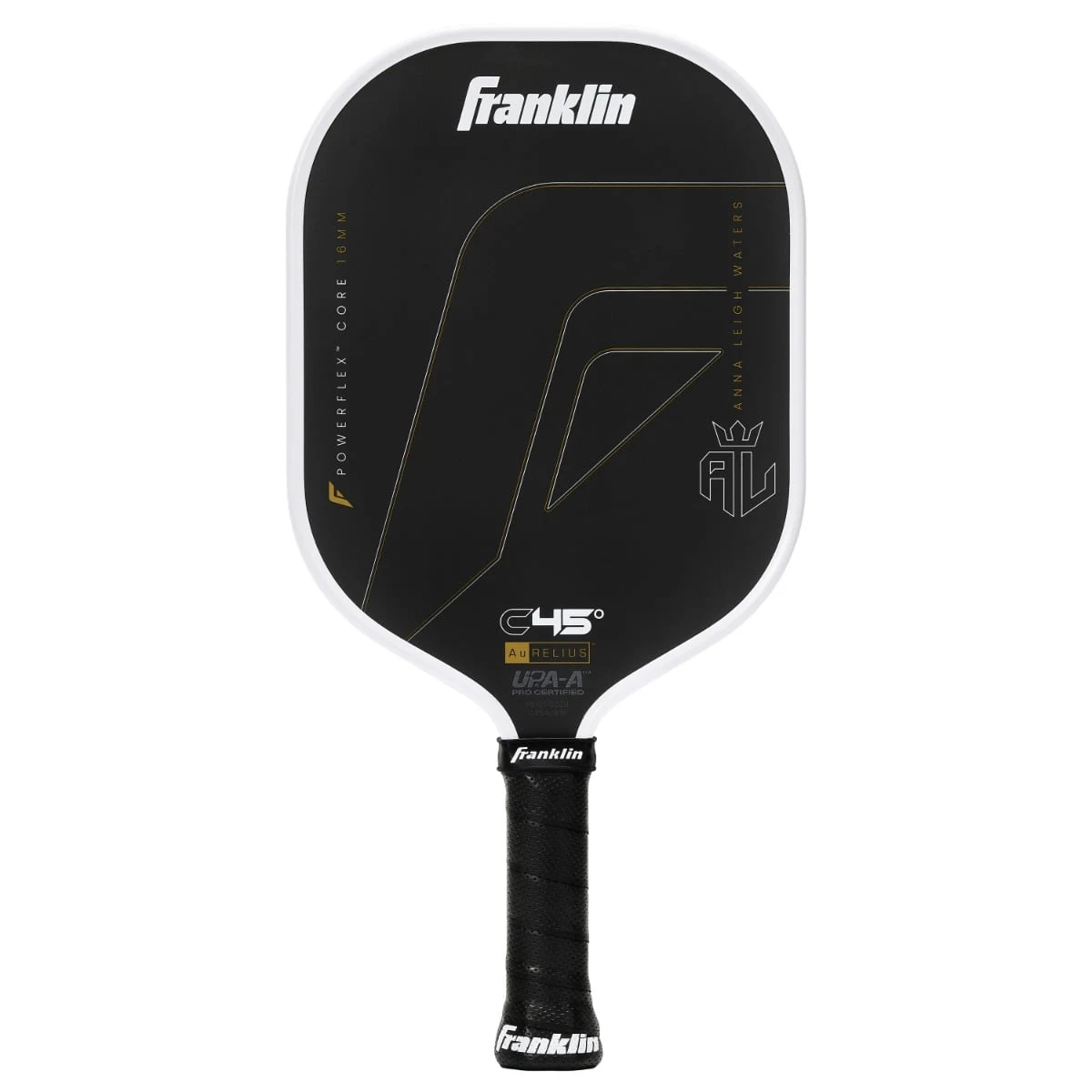
If lightness were only about the scale, this paddle would sit third or fourth on this page. An average of 7.45 ounces is light without being the lightest here. In motion it is something else entirely.
A swing weight of 92.3 is the lowest figure I have seen attached to a full size performance paddle, and it shows up in the first hands battle: the face arrives early, recovers instantly, and asks almost nothing of your wrist when the exchange changes direction.
The build explains the number. The PowerFlex core is only 12.7mm thick, the thinnest on this page, and thin cores swing quick and answer with pop.
The T700 raw carbon face is laid at a 45 degree angle, and contact feels connected and grippy. The grip is small, 3.9 inches around with a 5.1 inch handle, which suits one-handed players and smaller hands and leaves the wrist free to flick.
The honesty matters here. No lab has published a twist weight or a spin figure for this 12.7mm variant, so the box above says Not published instead of borrowing numbers from a thicker sibling.
What the thin core gives back is plow-through: blocks against hard drives need your own firmness behind them, and power comes from the swing speed the light head lets you build, not from mass doing the work.
Buy it if hand speed at the kitchen is your game. Skip it if you lean on your paddle for block stability and free power.
2Six Zero Coral Light Weight 16mm Widebody: Best Lightweight Pickleball Paddle on Both Measures in 2027
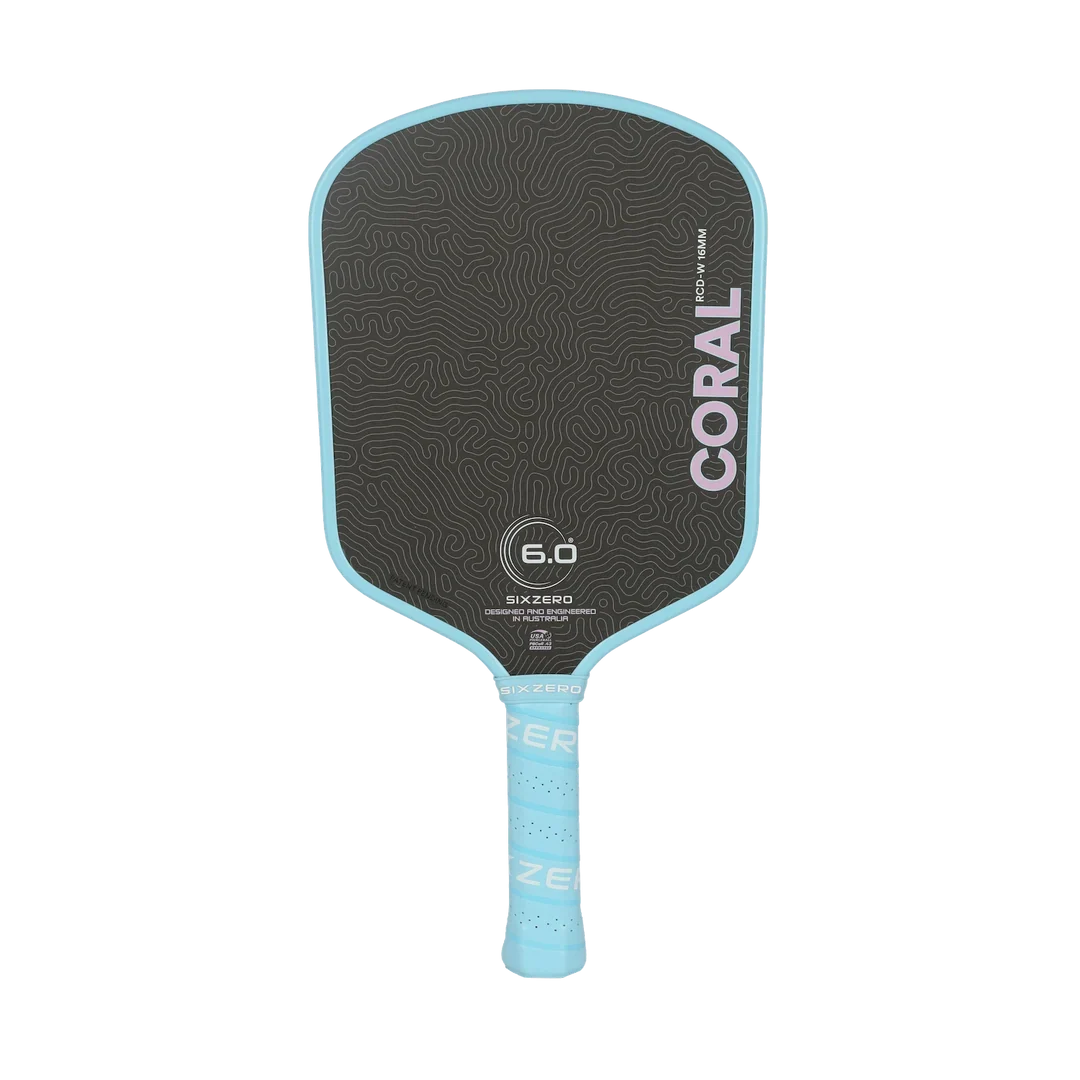
Start with the variant, because it is the whole pick. Six Zero sells a standard Coral, and it is a heavier paddle. This is the dedicated Light Weight version, and it earns its place the honest way: 7.6 to 7.9 ounces on the scale and a swing weight of 106 in motion.
Most paddles on this page qualify on one measure and apologise on the other. This one qualifies on both, and that combination is rarer than it should be.
The surprise is what the lightness does not remove. A twist weight around 7.0 is stability territory most light paddles never reach, so off-center blocks hold their line instead of twisting away, and the widebody frame puts that stability across a broad face.
The 16mm foam core pockets the ball on drops and resets, giving a soft game that thin, quick paddles usually trade away, and the Diamond Tough raw carbon face feels hard-wearing and connected.
The 5.5 inch handle leaves room for a two-handed backhand, which light paddles with short grips often quietly forbid. Spin is the unpublished number: no lab figure was available, so the box says so.
What I can report is a paddle that feels complete rather than compromised, light in the hand, calm at contact, and quick enough for kitchen exchanges without the nervousness that follows most sub-8 ounce frames.
Buy it if you want light on the scale and light in the swing, with stability kept. Skip it if you want the standard Coral’s heavier drive behind the ball.
3ProKennex Pro Flight: Best Lightweight Pickleball Paddle for Arm Comfort in 2027

At 7.3 to 7.6 ounces, the Pro Flight is the lightest mainstream paddle on the scale on this page, and it was designed around a calmer ride rather than a faster one. ProKennex documents its Kinetic system as a vibration-damping design built into the handle, intended to absorb shock before it travels up your arm.
I make no promises beyond that, because a paddle cannot fix an arm. What I can say is that contact through this frame feels noticeably quieter and less buzzy than through most light honeycomb paddles I play.
The rest of the build is conventional in the good sense. The Cloud Cell polymer honeycomb core keeps the weight down, the Toray T700 carbon face carries a Diamond Frost texture for grip on the ball, and the tapered 4 inch grip suits smaller hands and players who like to choke up slightly.
Nothing about it chases records. It simply asks less of you on every swing: less mass to move, less vibration to absorb, less effort to hold ready at the kitchen across a long session.
The gaps are on paper. No lab has published a swing weight, twist weight, or spin figure for it, and ProKennex does not publish the core thickness, so those boxes say Not published rather than guessing.
You choose this paddle on its scale weight and its comfort-first design, and on how fresh your arm feels in the third game. On that evidence, it has no real rival here.
Buy it if your arm thanks you for lighter, calmer equipment. Skip it if you want lab-verified numbers and maximum spin.
4Paddletek Bantam TS-5: Best Featherweight Lightweight Pickleball Paddle in 2027

The TS-5 is the lightest paddle on this page where it is simplest to measure: on the scale. The brand spec runs 7.0 to 7.5 ounces, and the bottom of that range is genuine featherweight territory, a class most modern performance paddles have abandoned in the chase for power.
Pick one up after a session with a standard midweight and the difference is not subtle. Your hand gets to the ball early, your wrist stays loose, and long kitchen rallies stop feeling like arm exercise.
The build is proudly old school. A 12.7mm PolyCore honeycomb, a textured fiberglass epoxy hybrid face, no thermoforming, no foam injection, no propulsion anything. Contact feels lively and undemanding, the ball leaving the face with a friendliness that stiffer modern builds have engineered away.
This is a paddle that has been in the line for years because the formula works for the players it suits: quick hands, soft games, and wrists that appreciate being asked for less.
The honesty is that it wins on grams, not on technology. No lab publishes swing, twist, or spin figures for it, and its face texture belongs to an earlier generation, so players chasing measured spin ceilings should look at the lab-verified picks above and below.
Judged on the one thing this page is about, though, the TS-5 is the answer to a simple question: what is the lightest real paddle I can play? This one.
Buy it if the fewest possible ounces is the brief. Skip it if you want modern spin tech and published lab numbers.
5HEAD Gravity Tour Lite: Best Lightweight Pickleball Paddle with a Hybrid Face in 2027
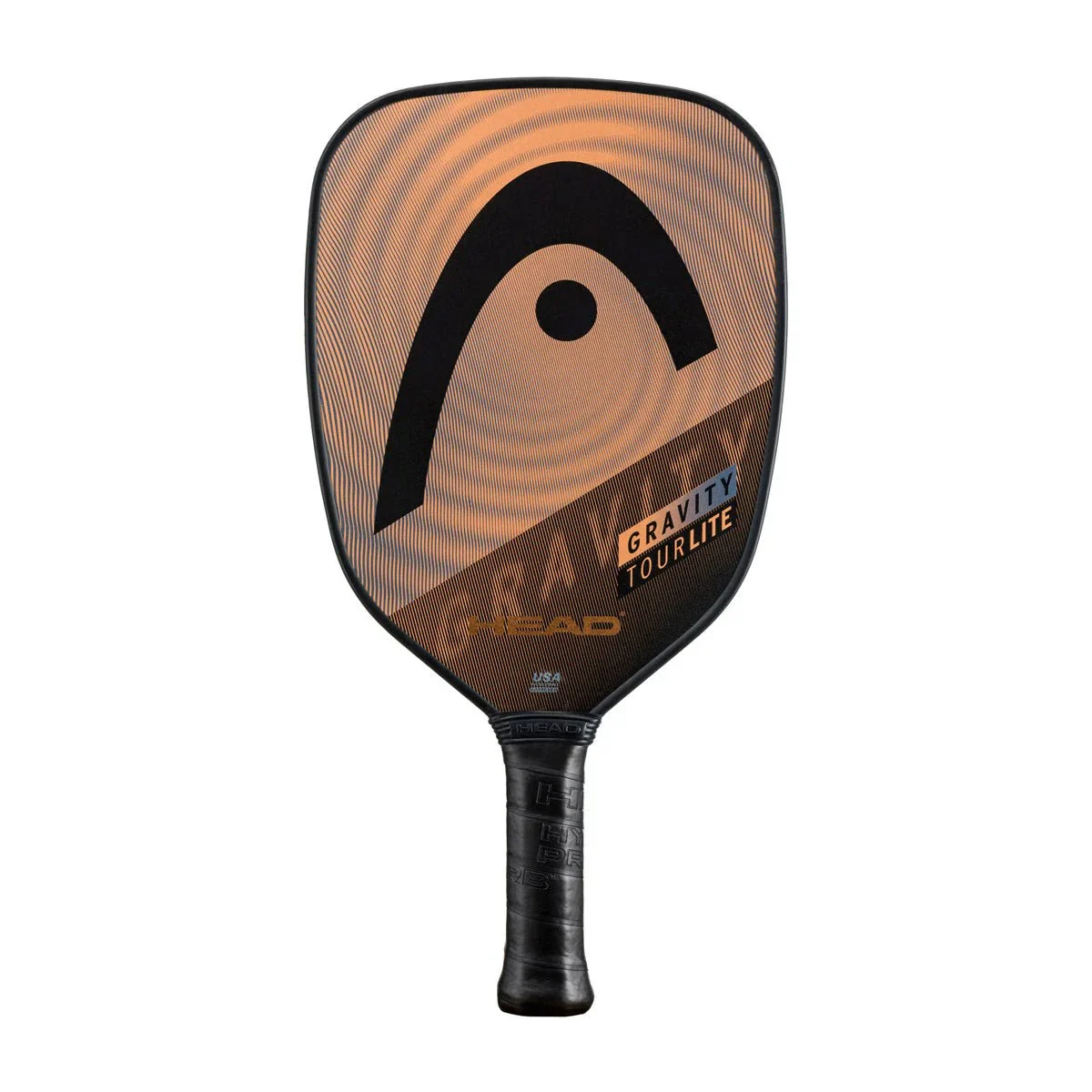
At 7.6 ounces by the brand’s own spec, the Gravity Tour Lite is a true lightweight from a major racquet brand, and it gets there without asking you to accept a bare-bones build.
The face is the interesting part: a hybrid layup that blends glass fiber with carbon fiber over the core, so contact carries some of the flex and forgiveness fiberglass is known for, firmed up by the carbon in the mix. In play it feels softer off the face than the raw carbon paddles around it, without going vague.
The shape backs that up. At 8.1 inches wide it is one of the broadest faces on this page, and width is forgiveness you can use on every slightly late block and stretched defensive get.
The 14mm Sweetspot Power Core sits in the middle of the thickness range, calm enough for the soft game and lively enough that counters do not die on the face. For a control player deliberately moving down in weight, this is the least dramatic way to do it: everything behaves as expected, just lighter.
Paper honesty applies here too. No lab swing weight, twist weight, or spin figure is published for this model, so the boxes say Not published.
One caution on names: the Gravity family also contains heavier raw carbon models that are entirely different paddles, so check the exact name, Tour Lite, before assuming you are looking at this one.
Buy it if you want a genuine brand-spec lightweight with a forgiving hybrid face. Skip it if published lab data guides your buying.
6Selkirk SLK Halo Control XL: Best Lightweight Pickleball Paddle for Control and Two-Handers in 2027
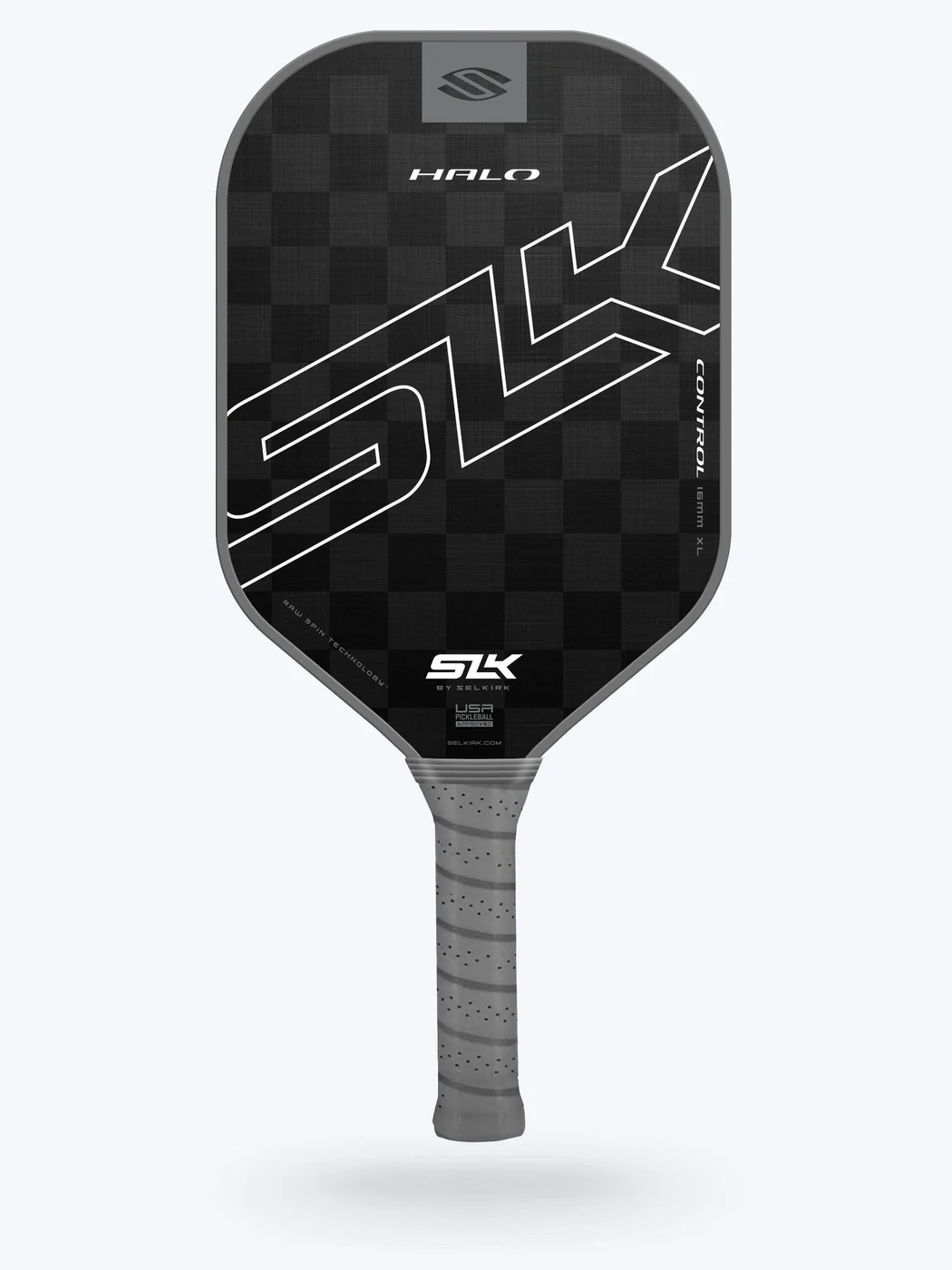
This pick comes with its honesty printed up front. The brand’s weight range, 7.7 to 8.0 ounces, straddles the top of this page’s lightweight band rather than sitting neatly inside it, and no lab publishes a swing weight for the XL version.
I will not borrow the standard Halo’s numbers to fill the box, because they belong to a different paddle. The XL earns its place on how it actually plays: calm, controlled, and quicker through the air than its elongated silhouette suggests, because the weight it carries sits in a control build rather than a power head.
What you are buying is the soft game with reach attached. The 16mm Rev-Core polymer core is a dwell-and-place construction, the T700 raw carbon face gives clean, predictable contact, and the elongated frame adds coverage on wide gets and overheads without the head-heavy penalty that makes most long paddles feel slow.
Blocks sit down. Drops land where they are aimed. The paddle adds nothing you did not ask for, which is the whole control brief.
The 5.75 inch handle is the other reason it is here. It is the longest grip on this page, with honest room for a two-handed backhand, a combination lightweight lists rarely offer because light paddles usually shrink the handle to save grams.
If your game is patience, placement, and a two-hander, and your hands want a lighter day, start here.
Buy it if control and two-handed room matter more than spec sheet purity. Skip it if you need a verified swing weight before you buy.
7Franklin C45 Hybrid 14mm: Best Tuned Lightweight Pickleball Paddle in 2027
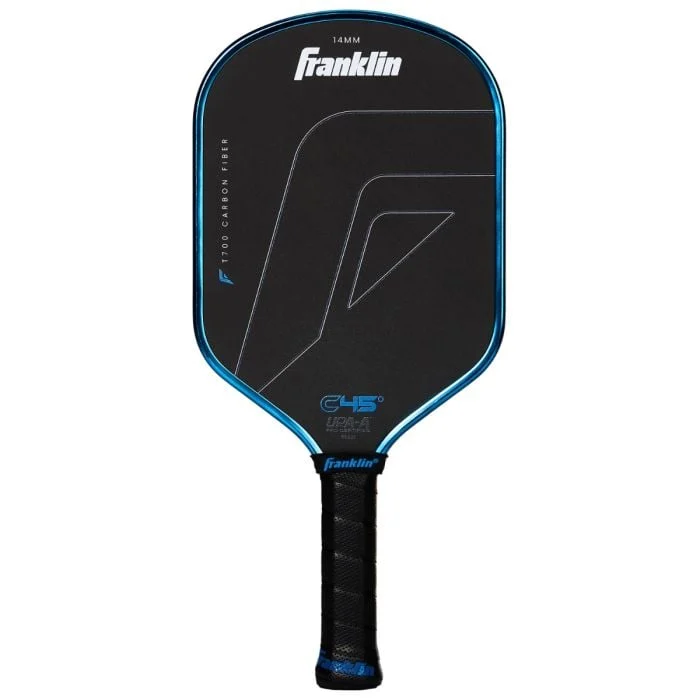
Think of this as the Aurelius 12.7 after a sensible conversation. The swing weight is 104, still deep inside this page’s lightweight territory and quicker than everything below it on this list, but the head carries a steadier presence than its thinner sibling.
The Dynasty hybrid shape widens the hitting zone compared with the standard C45 frame, and the 14mm PowerFlex core answers a fraction calmer than the 12.7, so blocks stop feeling like negotiations with a trampoline.
That makes this the pick for a specific player: the one who tried the thinnest, fastest C45, loved the hand speed, and found counters and resets a touch too nervous when the ball arrived with real pace.
Here, most of the speed survives and the stability arrives. Drives still come off quick, hands battles still tilt your way, and the ball sits down on drops with less of the pop-out that thin cores produce under pressure.
The unpublished numbers are twist weight and spin, and Franklin does not publish the grip dimensions for this one either, so the box shows a dash three times rather than dressing guesses up as data.
What is verified is the combination that matters for this page: a 7.6 to 7.9 ounce static weight, a 104 swing weight, and a hybrid shape that spends those grams on steadiness instead of spectacle.
Buy it if you want C45 hand speed with the edges sanded off. Skip it if the absolute lowest swing weight is the only number you care about.
8Friday Aura Pro Widebody: Best Measured Lightweight Pickleball Paddle in 2027
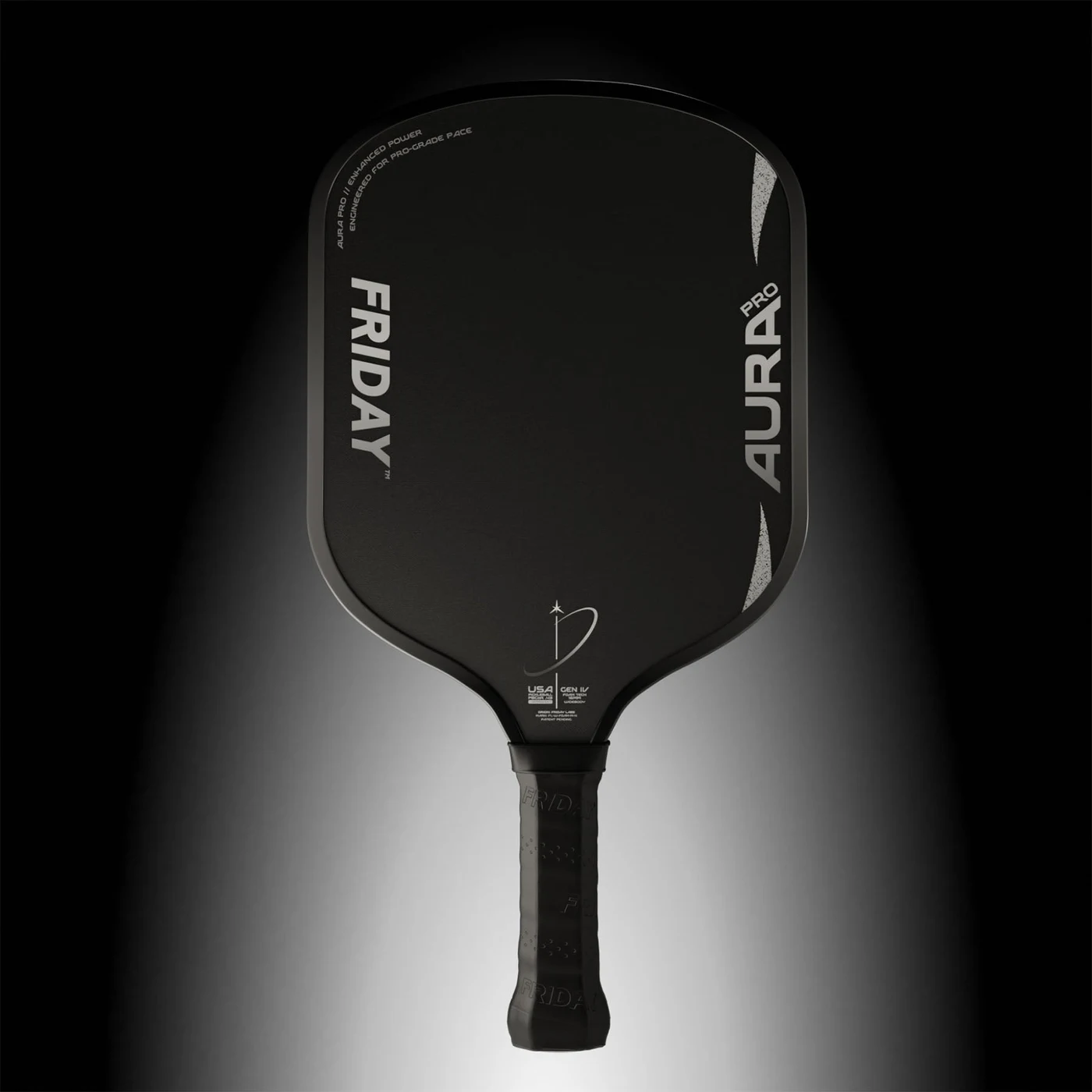
This is the most completely measured paddle on the page, and it starts with a confession: at a measured 7.85 ounces, it is not a scale featherweight, and nobody should sell it as one. It qualifies the other way.
A swing weight of 108 keeps it inside this page’s definition, and the rest of its lab card is the best all-round set of numbers here: a 6.86 twist weight for real stability and a measured 2,097 RPM of spin, the highest verified figure on this list.
On court those numbers cash out as balance. The Gen 4 full foam core pockets the ball and plays plush, the widebody frame keeps stretched blocks square, and the peel-ply carbon face bites hard enough that dipping drives and roll volleys behave like the spin figure promises.
Nothing about it is extreme, and that is the point: it is the light paddle for the player who refuses to choose between quick hands and a complete game.
One caution, carried from my time with it and worth repeating: peel-ply grit fades. The surface that produces that spin number smooths with hours of play, faster than the durable textures on some rivals, so the paddle you measure in month six is gentler than the one in the box.
The foam core and the stability do not fade the same way, which is why it stays on this list, but go in knowing the grit is a consumable.
Buy it if you want lab-verified everything in a light-swinging frame. Skip it if you need your grit to last as long as your core.
911SIX24 Jelly Bean 16mm: Best Lightweight Pickleball Paddle for Beginners in 2027
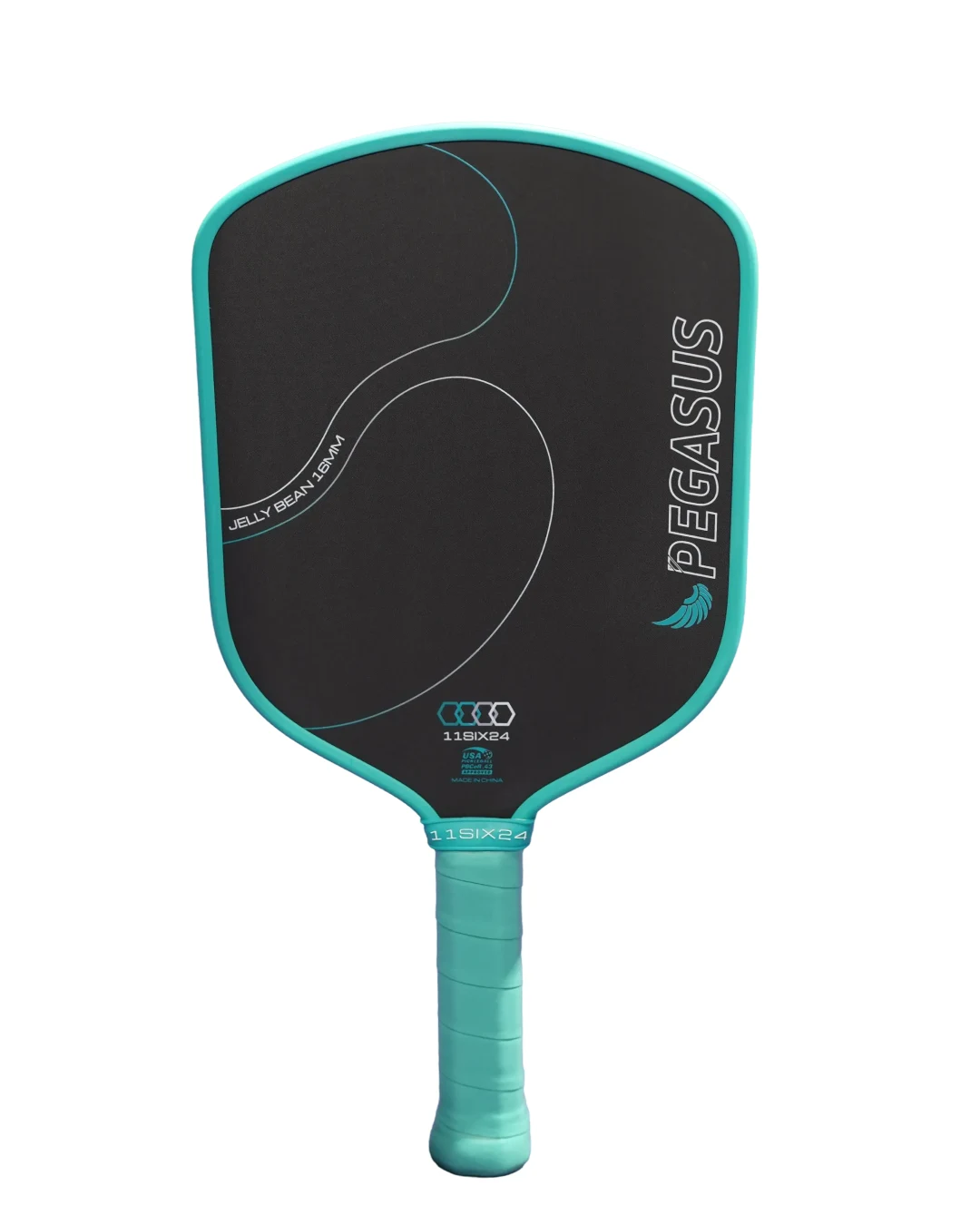
Honesty first, because beginners deserve it most: on the scale, this paddle is a midweight. The brand range runs 7.9 to 8.2 ounces, and this page will not pretend otherwise. It is here because beginners do not experience weight on a scale.
They experience it in the swing, and a swing weight of 107 is genuinely light, just under the Aura Pro above. The Jelly Bean feels quick in the hand while asking almost nothing in return, and that combination is exactly what a developing player needs.
The supporting numbers are lab-verified and unusually kind. A twist weight of 7.21 is the second highest on this page, which means the off-center contact every beginner produces twists less and lands closer to the target.
Measured spin of 2,103 RPM gives new players real margin on drives and serves. The widebody frame, the foam-injected perimeter, and the CFC hybrid face, carbon layered with fiberglass, produce a soft, pocketing contact that forgives timing mistakes instead of amplifying them.
It also leaves room to grow. Because it starts light in the swing, there is honest headroom to add a little tungsten tape later as your game firms up, something a heavier stock paddle cannot offer. As a first serious paddle that plays light, forgives constantly, and keeps up as you improve, it is the easiest recommendation on this page.
Buy it if you are learning and want quick hands without a twitchy featherweight. Skip it if your buying rule is scale weight alone.
10Selkirk SLK Dauntless Widebody: Best Stable Lightweight Pickleball Paddle in 2027
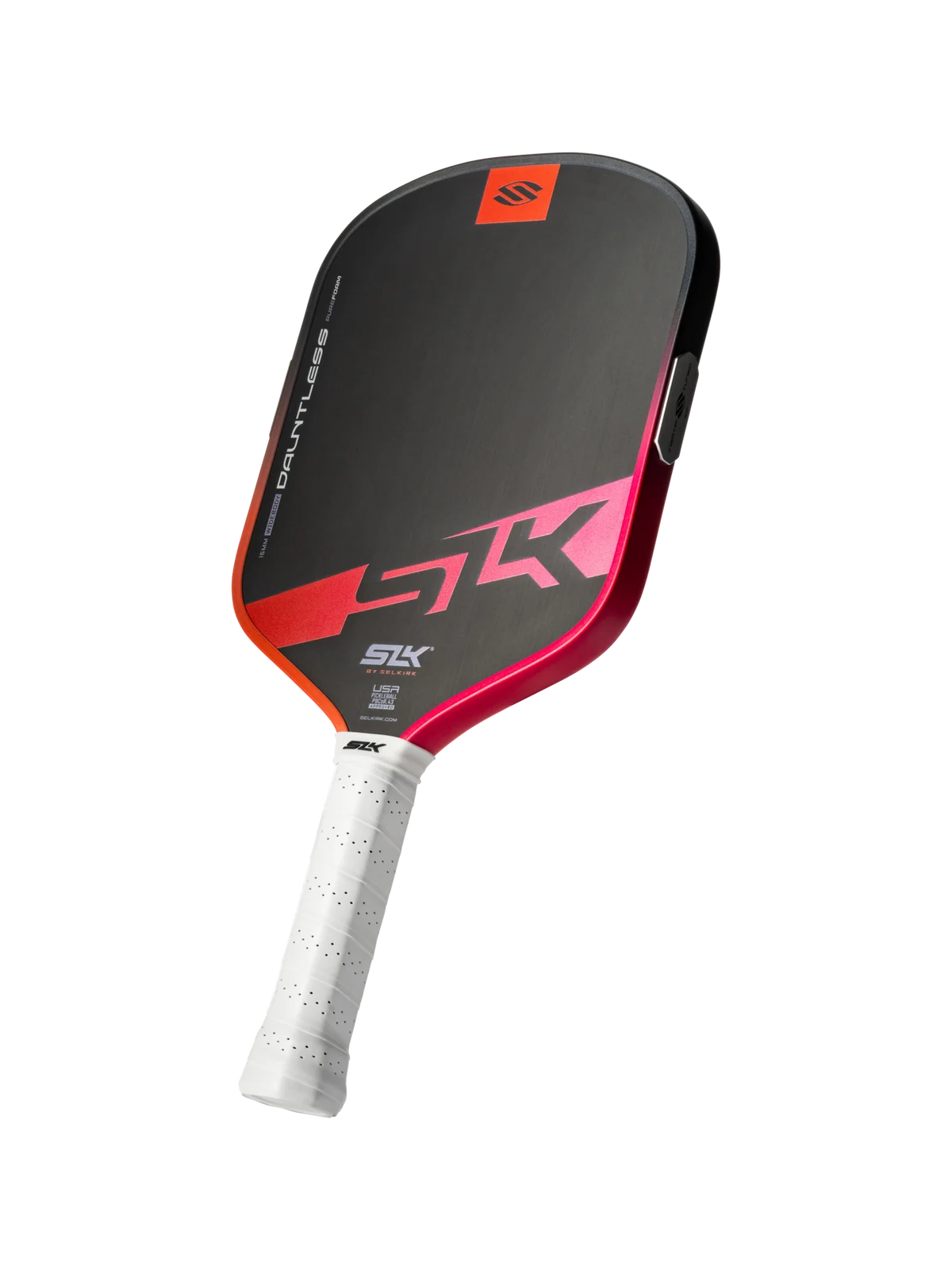
Every list needs an anchor, and this is the deliberate one. The Dauntless sits at the edge of this page’s definition on both measures: a measured 7.86 ounces on the scale and a swing weight of 110, right at the ceiling I set in the introduction.
It is not here despite those numbers. It is here because of what they buy, starting with a twist weight of 7.36, the highest on this page, which is the number that decides whether your worst contact still lands in the court.
The build is a stability build. Selkirk’s SoloCore PureFoam core at 16mm plays calm and consistent, the T700 raw carbon face is verified at around 2,020 RPM of spin, and the widebody frame presents a broad, steady hitting surface.
Blocks against hard drives stay square. Counters leave on the line you chose. Where the lighter picks above ask you to accept some nervousness in exchange for speed, the Dauntless declines the trade and simply asks for a few more grams.
So the framing is exact: this is as light as you can go without giving up stability, the paddle for the player who tried a true featherweight, felt the face twist on every stretched block, and retreated.
If the picks above feel like the floor of what you can control, this is the step back up that keeps most of the quickness and restores the trust.
Buy it if light paddles have felt too nervous in your hand. Skip it if you are chasing the lowest numbers on either measure.
How to Choose a Lightweight Pickleball Paddle in 2027
Choosing light sounds simple until you shop for it, because the industry measures lightness three different ways and labels all of them the same.
The sections below are the order I work through the problem: define the band, read the swing weight before the scale weight, watch the balance point, match the paddle to the player, and only then worry about the power you are trading away and how to buy some of it back.
Weight Bands, Honestly Defined
There is no official lightweight class in pickleball.
USA Pickleball’s rules set no weight limit at all, and the bands you see on charts are retailer conventions that disagree with each other: one source calls 7.3 ounces and under lightweight, another draws the line at 7.5, a third at 7.8, and the same paddle can be a featherweight in one shop and a midweight in the next.
Anyone who quotes you a single universal cutoff is selling you their chart, not a fact.
This page uses a working definition and prints it rather than hiding it: under about 7.8 ounces static, and/or a swing weight under about 110. The and/or is the honest part.
Some paddles below are light on the scale, some are light in motion, two or three manage both, and each section says which claim it is making. Judge any lightweight list, including this one, by whether it tells you which measure each pick qualifies on.
Swing Weight vs Static Weight
Static weight is what a scale reads. Swing weight is what your arm reads, a measure of how heavy the paddle feels when it moves, driven by how far the mass sits from your hand.
It is the number that decides hand speed in a kitchen exchange, how tired your forearm is in game three, and whether a paddle that looked light in the shop plays light on the court.
The two numbers routinely disagree, and the disagreements are where bad purchases live. A balanced paddle at 8.0 ounces can swing at 106 and feel quicker than a head-heavy paddle at 7.6 ounces swinging at 114.
Neither figure on its own is the truth. Read them together: static weight tells you what you are carrying, swing weight tells you what you are fighting, and for most players the second number predicts happiness better than the first.
Balance Point and Head-Heavy Traps
Balance point is the quiet cause behind most swing weight surprises. Slide the mass toward the head, as elongated and power-tuned shapes do, and the swing weight climbs even when the scale weight does not.
A paddle can gain a full class of heaviness in motion without gaining a single gram, which is why the spec sheet phrase “only 7.7 ounces” deserves suspicion until you know where those ounces sit.
The traps have a pattern. Long frames with weight pushed to the top edge. Power paddles with dense heads and light handles. Anything whose marketing leads with plow-through. None of these are bad paddles, but they are not light paddles in the only sense your arm cares about.
When a swing weight is published, trust it over the silhouette. When it is not, a head-heavy shape at a light scale weight should be treated as a midweight until proven otherwise.
Who a Lightweight Paddle Suits
Light paddles suit players whose points are decided by hand speed: doubles specialists who live in kitchen exchanges, counter punchers, and anyone whose defense is built on getting a face in the way quickly and repeatedly.
They suit beginners for a different reason, because a light swing lets developing technique form without the paddle muscling the stroke, provided the paddle is forgiving rather than twitchy.
They also suit players managing how much work their arm does in a session. Less mass, and especially a lower swing weight, means less load to accelerate and stop on every shot, hundreds of times a match.
That is a mechanics statement, not a medical one, but it is a real reason many players move down in weight and never move back. The players light paddles do not suit are those whose game is built on plow-through: baseline drivers who lean on mass to finish points will feel the trade immediately.
Power Trade-Offs and Tape Tuning
The trade is real and should be admitted plainly: mass is power’s raw material, and a light paddle returns less of the ball’s pace for free. Blocks need a firmer hand, drives need more of your swing, and off-center contact produces less.
What you get back is speed, and for most doubles players speed wins more points than the surrendered plow-through loses. Know which side of that exchange your game lives on before you shop.
The saving grace is that light is reversible and heavy is not. Weight tape is legal under USA Pickleball rules, and tungsten tape does the same job without lead.
Start with the lightest paddle that feels stable, then add small amounts and test: tape at the head buys power and raises swing weight fastest, tape along the sides buys stability against twisting, and tape on the handle or under the grip adds mass while barely touching the swing weight at all.
Tune in small steps. You can always add. You cannot subtract a heavy stock paddle.
Shapes That Play Light
Shape decides how a given weight plays. A widebody spreads its mass across a broad, shorter frame, which keeps the swing weight down and pushes the twist weight up: the same ounces feel quicker in the hand and steadier on off-center contact.
That is why so much of this list is widebody. It is the shape that cheats the weight trade in both directions at once.
An elongated paddle spends the same ounces on length, and length is leverage, so it swings heavier and twists more readily, whatever the scale says. Hybrid shapes split the difference. None of this makes one shape better; it means the shape is a weight decision in disguise.
If you want a light feel, start widebody, treat hybrid as the middle bid, and buy elongated only when the reach is worth paying for in swing weight, because you will pay for it on every single shot.
Frequently Asked Questions (FAQs)
1. What weight counts as a lightweight pickleball paddle?
There is no official cutoff, because USA Pickleball sets no weight limit and brands draw their own lines anywhere from 7.3 to 7.8 ounces. This page works with under about 7.8 ounces on the scale and/or a swing weight under about 110. When a list or a shop gives you a band, ask which measure it uses, because the two do not always agree.
2. What is the difference between static weight and swing weight?
Static weight is what a scale reads; swing weight is how heavy the paddle feels in motion, set by how far its mass sits from your hand.
A head-heavy paddle at 7.6 ounces can swing heavier than a balanced one at 8.0 ounces. Your arm only ever experiences the swing weight, which is why this page reports both numbers wherever labs publish them.
3. What is the lightest paddle on this list, on the scale and to swing?
Different paddles win the two titles. On the scale it is the Paddletek Bantam TS-5, spec’d at 7.0 to 7.5 ounces. To swing, it is the Franklin C45 Aurelius 12.7mm, whose swing weight of 92.3 is the lowest figure on this page by a wide margin.
4. Are lightweight paddles less powerful?
Yes, on free power. Less mass means less plow-through, so blocks need a firmer hand and drives need more of your own swing. What you gain is hand speed, and at the kitchen that trade favors most doubles players. If your power comes from a full, fast swing rather than from leaning on the ball, you will miss the weight least.
5. Do lightweight paddles help with arm comfort?
They reduce the load your arm manages, which is a mechanics statement rather than a medical promise. A lower swing weight means less mass to accelerate and stop on every shot, and some light models, like the ProKennex Pro Flight with its brand-documented vibration-damping handle, are designed to feel calmer at contact.
No paddle treats or prevents an injury, though, so if you have persistent arm or elbow pain, get it assessed by a medical professional instead of shopping for a cure.
6. Can I add lead or tungsten tape to a lightweight paddle?
Yes, and it is one of the best reasons to start light. Weight tape is legal under USA Pickleball rules, and tungsten tape works without lead. Add it in small steps: at the head for power, along the sides for stability against twisting, or on the handle to add mass with almost no change to swing weight.
7. Are lightweight paddles good for beginners?
Yes, provided the paddle is forgiving rather than twitchy. A light swing lets new players build technique without fighting the paddle, and a wide, stable light paddle like the Jelly Bean on this list forgives the off-center contact beginners produce. Avoid the extreme featherweights with small sweet spots until your contact is consistent.
8. Do lightweight paddles break or delaminate sooner?
Weight itself is not the cause. Durability follows construction, not grams: thin cores and lively face textures have their own wear patterns, peel-ply grit fades with hours of play, and any paddle can develop dead spots under hard use.
A light paddle built simply, like the TS-5, can outlast a heavier thermoformed one, so judge the build, not the scale.
9. Is a widebody or an elongated paddle better if I want a light feel?
Widebody, almost every time. A widebody spreads the same ounces across a shorter, broader frame, which keeps the swing weight down and the twist weight up, so it feels quicker and steadier at once. An elongated paddle spends its weight on length and leverage, and swings heavier than its scale weight suggests.
10. What swing weight should I look for if I want quick hands at the net?
Look under 110, and the lower you go, the quicker the paddle recovers between shots. Figures in the low 100s feel noticeably fast, and the Aurelius 12.7mm at 92.3 is the extreme end of what a full size paddle currently offers. Pair the number with a decent twist weight so the speed does not rob you of stability on blocks.
11. Can a paddle be too light?
Yes. Go too light and you lose plow-through on drives, stability on off-center contact, and the solid feel that settles a block against a hard hitter.
The symptoms are a face that twists in your hand and balls that die off the face. The fix is usually a few grams of tape, which is exactly why starting light and tuning up beats starting heavy.
12. How do I weigh my current paddle and check its swing weight?
Weigh it on a kitchen scale with the grip and any tape on, because that is the paddle you actually play. Swing weight cannot be read off a scale; it needs a swing weight machine or published lab data for your model.
If neither is available, compare balance: a paddle that balances far from the handle will swing heavier than its scale weight implies.

About The Author
Michael Stevenson
Michael Stevenson, a professional pickleball player, brings over 8 years of experience to the sport. A dominant force in pickleball tournaments and leagues, Michael has won numerous championships and is known for his exceptional skill and strategy on the court.
Beyond his competitive achievements, Michael is passionate about sharing his knowledge of pickleball with others. Through his articles on Picky Paddle, he offers expert insights on equipment, techniques, and strategies to help players of all levels improve their game.