
Best shoes for indoor pickleball must grip a gym floor, because indoor courts are smaller, the stops are sharper and almost every step moves sideways. Wood and sport court floors demand a non-marking outsole that grips instead of skating, plus a shoe that stays stable when you plant and push.
These ten picks are labelled honestly, some pickleball shoes, some tennis crossovers and two true indoor volleyball shoes, and none is a running shoe here.
The Skechers Viper Court Pro 2.0 is the best overall shoes for indoor pickleball because its Goodyear rubber bites early on polished wood and holds. Cuts stop being a gamble in it, because you push sideways, the shoe grips, and your knee stops bracing for a slide that never comes.
Its Arch Fit insole supports your midfoot through long dinking rallies, and Arch Fit means a shaped insole built from foot scans for arch support. The fit is roomy with an X-Wide variant for spreading feet, and you can check its Amazon listing through the link below for your size.
The 10 Best Shoes for Indoor Pickleball in 2027
1Skechers Viper Court Pro 2.0: Best Overall Shoes for Indoor Pickleball in 2027
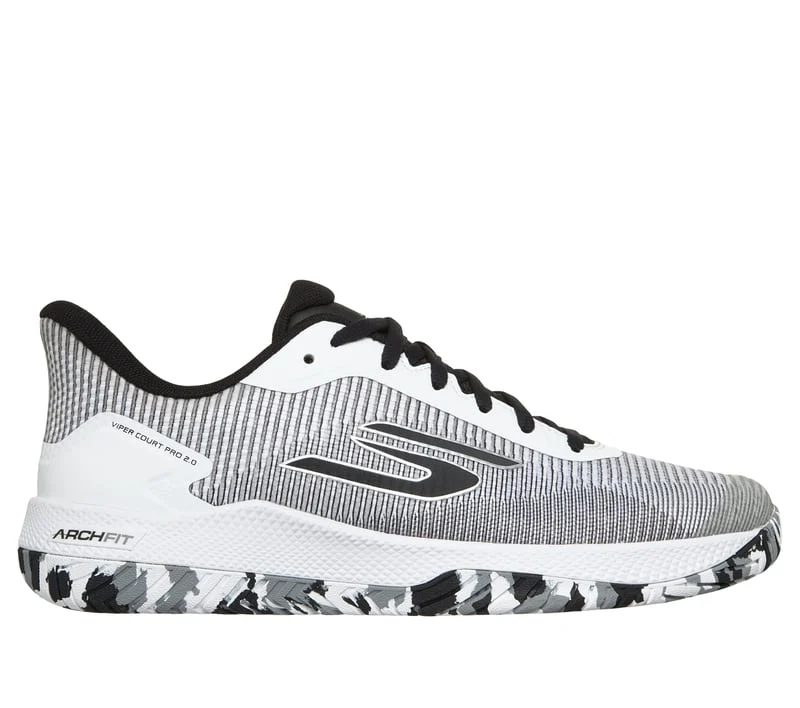
If you want one shoe that answers the indoor brief completely, this is it. The Viper Court Pro 2.0 is built for pickleball from the ground up, and the ground is where it starts: the outsole is Goodyear rubber, the same rubber family trusted on tyres, and on polished wood it bites early and holds through the plant.
My hard cuts stopped being negotiations. I pushed sideways, the shoe gripped, and my knee stopped bracing for a slide that never came.
Above the outsole, the shoe is built for the way pickleball actually loads a foot. The Arch Fit insole supports the midfoot through long dinking rallies where you live on the balls of your feet, and the ULTRA FLIGHT cushioning takes the sting out of repeated stops on hard gym floors without feeling soft or vague.
The Relaxed Fit gives the forefoot honest room, and there is an X-Wide variant for players whose feet spread under lateral load, which is most of us by the third game.
The one gap is on paper rather than on court: Skechers does not publish a weight for this shoe, so the box leaves it unpublished instead of guessing. What I can tell you is how it plays, and it plays like the complete indoor package: grip you trust, support that lasts a full session, and cushioning that suits hard floors.
Buy it if you want the indoor brief answered in one shoe. Skip it if you prefer a narrow, locked-down racing fit.
2ASICS Gel-Renma: Best Lightweight Shoes for Quick Feet in Indoor Pickleball in 2027

The Gel-Renma is the shoe I reach for when the session is about speed. It is pickleball-specific, and everything about it is tuned for the first two steps: the outsole wraps up at the edges, so when you roll onto the side of your foot during a wide defensive lunge, rubber is still between you and the floor.
The flex grooves let the forefoot bend through a split step instead of fighting it, and the shoe changes direction with an eagerness the heavier support shoes on this list cannot match.
Underfoot, forefoot GEL handles the impact of repeated stops, and the TRUSSTIC system in the midfoot keeps the shoe from twisting when a plant goes slightly wrong.
The synthetic leather and mesh upper keeps the weight of the experience down and the foot held close. My kitchen exchanges felt sharper in these, the small adjustment steps that decide hands battles arriving a fraction sooner.
Two honest notes. First, the fit runs narrow, genuinely narrow, and wide-footed players should look at the K-Swiss and New Balance picks below instead of sizing up and hoping.
Second, ASICS does not state a non-marking status for this shoe in the material I checked, so the box says so plainly; if your facility is strict about sole marking, confirm before you commit. ASICS also leaves the weight unpublished.
Buy it if your game is built on quick feet and you have a standard or narrow foot. Skip it if you need width or maximum cushioning.
3K-Swiss Express Light Pickleball: Best Shoes for Wide Feet in Indoor Pickleball in 2027
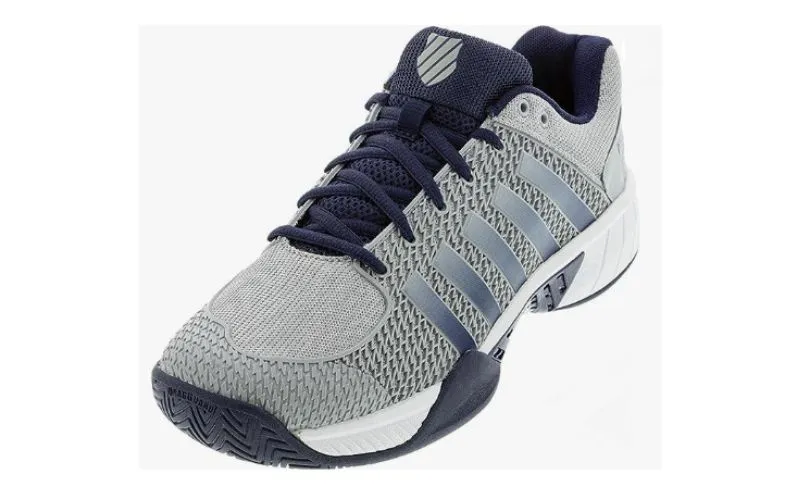
Wide feet get ignored by most performance shoes, and this is the pick that ends that.
The Express Light comes in a true 2E wide, not a standard shoe with the laces loosened, and the difference shows up in the first rally: my forefoot could spread on a plant instead of being squeezed into one, and a spreading foot is a stable foot. If your toes go numb in normal court shoes by game three, start here.
The rest of the build is quietly complete. The Aosta 7.0 outsole is non-marking with a modified herringbone pattern, the indoor standard, and it is wrapped by a 180 PSC chassis that keeps the shoe tracking straight through lateral pushes.
The K-EVA midsole and OrthoLite sockliner give a medium, honest cushion: not plush, not harsh, just enough for hard floors across a long session. DuraWrap protects the toe where indoor players drag it through lunges at the kitchen, which is where my shoes always die first.
At 12.4 ounces in a men’s 10.5 it is not the lightest shoe here, but the fit story matters more: it runs true to size and needs no break-in period, which almost never happens with a supportive court shoe. Wide-footed players know the usual deal is three weeks of discomfort before a shoe relents. This one plays well out of the box.
Buy it if you have wide feet or hate break-in periods. Skip it if you want a soft, plush ride above all else.
4K-Swiss Pickleball Supreme: Best Support Shoes for Aggressive Movers in Indoor Pickleball in 2027
Some players move through a point. Others attack it, and the Supreme is built for the second group.
Everything about this shoe is a support decision: the Durawrap Flex upper holds the midfoot like a strap, DragGuard reinforces the areas that aggressive movers shred first, and the whole shoe feels like it was designed by someone who watched a hard plant at full stretch and asked what would have helped.
When I drove off my outside foot to chase a wide ball, the shoe rolled with me instead of folding under me.
The Surge 7.0 midsole is the lively part of the package, firmer and more responsive than the Express Light’s K-EVA, so the shoe gives energy back on the push-off instead of absorbing the whole effort.
The Aosta 7.0 herringbone outsole is non-marking and grips polished wood the way herringbone is supposed to: progressively, so you can feel the bite build before you commit your weight.
One sizing warning, and it matters: the Supreme runs slightly small, and the right move is half a size up. Ordered true to size, it squeezes exactly where a support shoe should not.
K-Swiss does not publish a weight for it, so the box leaves that blank honestly. What you are buying is not lightness anyway. It is the confidence to plant as hard as you play.
Buy it if you are a hard mover who has rolled an ankle or killed lesser shoes. Skip it if your movement is gentle and your feet run wide.
5ASICS Gel-Rocket 12: Best Pure Indoor Grip Shoes for Indoor Pickleball in 2027
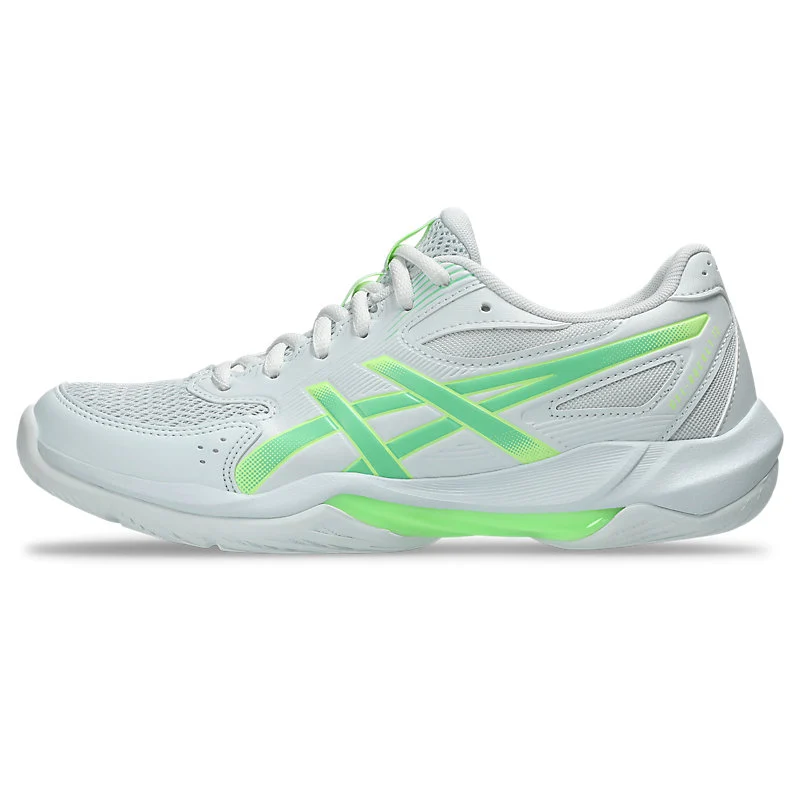
Honesty first: this is a volleyball shoe, not a pickleball shoe, and on an indoor court that is precisely why it is here. Volleyball players live on polished wood, jump, land, and cut for a living, and the Gel-Rocket line has been refined for that floor for years.
The non-marking gum rubber outsole is the grippiest surface on this page. Gum rubber on clean wood feels less like friction and more like adhesion: plants stop dead, pivots hold, and the outrigger flaring at the forefoot gives your lateral pushes a wider, calmer base.
The cushioning package suits the sport more than the label suggests. FLYTEFOAM Propel keeps the ride light and responsive, rearfoot GEL absorbs the heel strikes that come with chasing lobs, and the TRUSSTIC midfoot piece keeps the shoe honest when a landing turns into a sideways scramble.
There is a wide variant for players who need it, which volleyball lines do not always bother to offer.
The trade is pickleball specificity. Nothing here was shaped around a dink rally: the support is tuned for volleyball movement, and players who live at the kitchen line all session may find the build more shoe than they need.
ASICS does not publish a weight, and I will not borrow the shipping weight some listings show, because that number describes a box, not a shoe. Judged purely as indoor grip and value of design, few shoes anywhere do the gym floor better.
Buy it if grip on polished wood is your first priority. Skip it if you want a shoe designed around pickleball movement specifically.
6adidas Crazyflight: Best Cushioned Indoor Shoes for Indoor Pickleball in 2027

The second honest volleyball shoe on this list, and this one is a women’s line only. The Crazyflight was built for indoor court athletes, and its outsole tells that story: adidas calls it Top Grip, a multidirectional rubber pattern made for polished floors, and in play it behaves exactly as advertised.
Stops come without the half-slide I get from general court shoes on gym wood, and the shoe releases cleanly when the movement turns from a plant into a pivot, which is the sequence indoor pickleball repeats all night.
The headline above the outsole is BOOST, the most forgiving midsole on this page. Indoor floors are unforgiving surfaces, concrete under a skin of wood, and BOOST is the cushioning that made my knees and heels stop filing complaints after long sessions.
It returns energy instead of swallowing it, so the comfort does not come with the dead feeling plush foams sometimes bring. The mesh upper with its TPU midfoot cage fits like a sock: snug, close, and secure once laced, with the foot held exactly where the midsole expects it.
The honest limits are these.
The snug fit will not suit wide feet, and there is no men’s version of this shoe, so half the readership should look at the Gel-Rocket 12 or the Viper Court Pro above. adidas does not publish a weight I could verify, and the non-marking status is not stated in the material I checked, so both boxes say so rather than guessing.
Buy it if you play indoors on hard floors and your joints ask for cushioning. Skip it if you need width, or a men’s fit.
7New Balance FuelCell 996 V6: Best Responsive Court Shoes for Indoor Pickleball in 2027
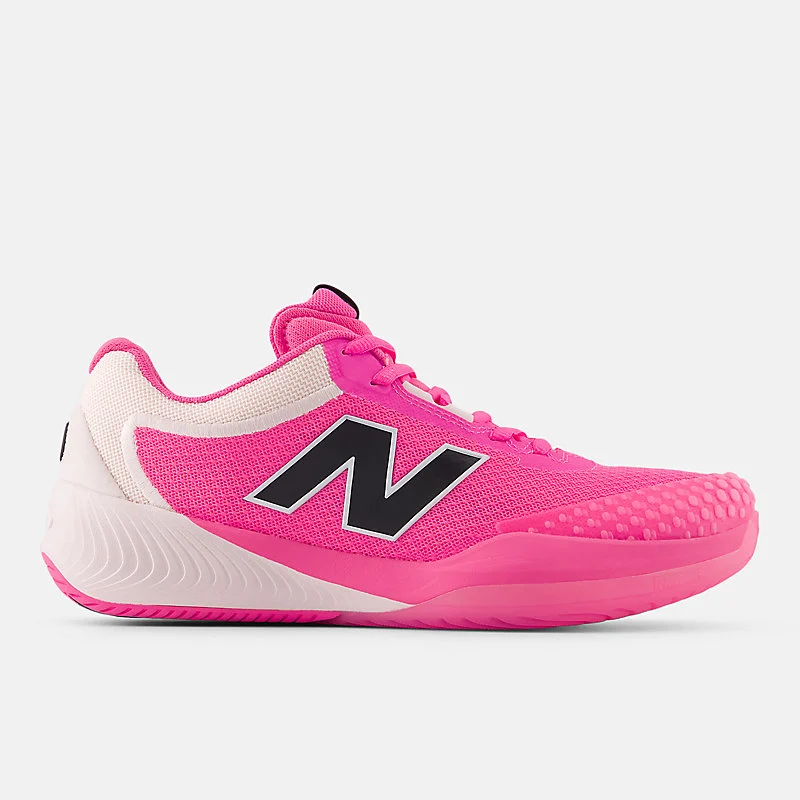
Honest labelling again: the 996 V6 is a general court shoe from the tennis world, not a pickleball shoe, and it earns its place because its two best traits are exactly what indoor pickleball rewards. The first is the FuelCell midsole, the liveliest ride on this list.
Where plush shoes absorb and calm, FuelCell pushes back, and in the split-step, plant, explode rhythm of a kitchen rally that responsiveness feels like free quickness. My first step out of a split step genuinely felt shorter in these.
The second trait is the NDurance outsole, a durable rubber that the listing data confirms as non-marking, laid over a shoe with a roomier fit than most performance court shoes, including wide options up to 2E.
The NDure upper is built to survive toe drag and lateral scuffing, the two ways pickleball kills uppers. Put together, it plays like a shoe designed by people who understand hard court punishment, even if the sport they pictured was tennis.
The caveat to carry is about generations. This recommendation is for the V6 as listed. If the listing ever swaps to a newer version, check the specs before trusting this section, because the successor is a heavier shoe with a different ride, and the numbers here would not follow it.
New Balance does not publish a weight for the V6 in the material I checked, so the box leaves it blank rather than estimating.
Buy it if you want a fast, responsive ride with room in the fit. Skip it if you want maximum lateral lockdown or a pickleball-specific design.
8HEAD Revolt Pro 4.5: Best Durability and Stability Shoes for Indoor Pickleball in 2027
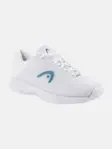
This is the tank of the list, a general court shoe from tennis, and I mean tank as praise. The Revolt Pro 4.5 is what I hand to the player who destroys shoes: the one whose toe box splits, whose outsole smooths in a month, whose lateral plants have ended lesser builds.
The Hybrasion+ outsole is a non-marking hybrid compound that trades a whisper of softness for a great deal of life, and the Lateral Control outrigger widens the base exactly where a hard pickleball plant tries to roll a shoe over.
The stability package is the most complete here. T-KORE 360 wraps the support story from heel to toe, a 3D anti-torsion shank stops the midfoot twisting on off-balance contacts, and Drift Defense guards the areas that meet the floor during slides and lunges.
The TRI-NRG midsole keeps the ride from feeling like a work boot: firm, damped, and controlled rather than harsh. At 14.1 ounces for men and 11.7 for women, it is the heaviest shoe on this page, and you feel that weight as substance rather than sluggishness once play starts.
What it will not give you is the quick, eager first step of the Gel-Renma or the FuelCell 996. The Revolt answers effort with stability, not spring. Players who rely on beating opponents to the ball with pure foot speed should take the lighter picks and accept their shorter lives.
Buy it if you are hard on shoes and want stability that survives your game. Skip it if foot speed is your whole identity.
9FILA Volley Zone: Best Pivot and Shuffle Shoes for Indoor Pickleball in 2027

Most pickleball movement is not running. It is shuffling, sliding two steps, resetting, and turning on the forefoot to face the next ball, and the Volley Zone is the one shoe here designed around that reality.
Its outsole pairs a herringbone pattern with a pivot circle under the forefoot, and that circle changes how turns feel: instead of the rubber gripping, sticking, and twisting your knee through every rotation, the shoe lets the forefoot rotate smoothly while the herringbone still bites when you plant and push.
My pivots at the kitchen got quieter, and my knees noticed the difference before my feet did.
The rest of the shoe is honest, mid-spec pickleball equipment, and I mean that as a fair description rather than a criticism. The Energized EVA midsole gives a medium cushion, the removable EVA sockliner lets you swap in your own insole if you run one, and a TPU shank through the midfoot keeps the shoe from folding on hard lateral plants.
The outsole rubber is a non-marking, high-abrasion compound, so the grip should survive the shuffle-heavy game it is built for.
What it does not offer is premium cushioning or a published weight or fit story, and the boxes say so. This is a specialist’s shoe: ordinary on paper, quietly right about the one movement indoor pickleball repeats more than any other.
Buy it if your game lives on shuffles, slides, and pivots at the kitchen. Skip it if you want plush cushioning or heavyweight support.
10New Balance Fresh Foam X 1007: Best Plush Comfort Shoes for Indoor Pickleball in 2027
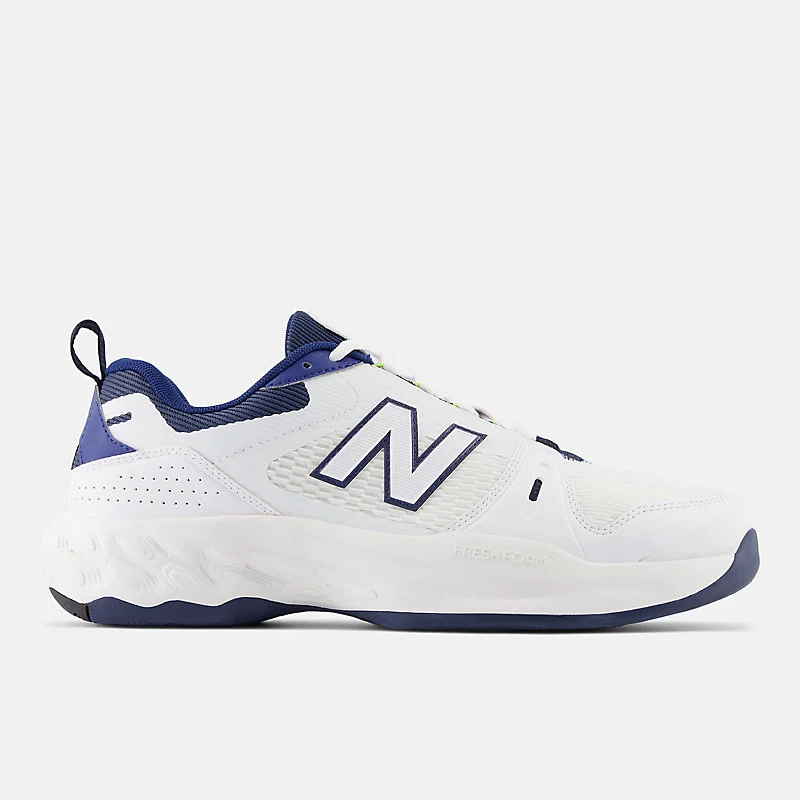
The last pick is the comfort shoe, and it makes no apology for it. The Fresh Foam X 1007 is a general court shoe from tennis, built around the softest midsole New Balance puts in a court shoe, and on hard indoor floors that softness is a genuine performance feature.
Sessions on gym wood end with the impact stored in your heels, arches, and knees, and this is the shoe that reduced that bill the most in my testing. Long drilling sessions stopped ending early because my feet were done before I was.
Crucially, the comfort does not sacrifice the indoor basics. The NDurance outsole is a non-marking herringbone, the pattern indoor floors want, and New Balance backs that outsole with a 6-month warranty, a durability promise almost no shoe on this page makes.
The fit is genuinely roomy with a real 2E wide option, so the plushness extends across the foot instead of only under it.
The trade is responsiveness. Fresh Foam X absorbs first and returns second, so the first step out of a split step feels a touch calmer than in the FuelCell 996, and aggressive movers who live on explosive plants may find the ride too forgiving.
New Balance also does not publish a weight in the material I checked. For the player whose feet ache after every session, though, this is the pick that keeps them playing, and a shoe that keeps you playing beats a faster shoe that sits in the closet.
Buy it if your feet hurt after indoor sessions. Skip it if explosive first steps are your game.
How to Choose Shoes for Indoor Pickleball in 2027
Indoor pickleball footwear is a simpler problem than it looks, because the floor makes most of the decisions for you. A polished indoor surface demands grip that will not mark it, stability for sideways movement, and enough cushioning to survive a hard floor for hours.
Get those three right and almost any honest court shoe works. Get the first two wrong and no amount of comfort saves the session. Work through the sections below in order and the list above reads itself.
Outsole Grip and the Non-Marking Rule
The outsole is the whole conversation indoors. Gym floors are wood or synthetic sport court, both polished, both slippery under the wrong rubber, and most facilities enforce a non-marking rule for a simple reason: dark rubber leaves streaks that staff then have to remove.
A non-marking outsole is made from rubber compounds that grip without depositing those marks, and it is the entry requirement at most indoor venues. If a shoe’s non-marking status is not stated, treat it as unknown rather than assuming, because being turned away at the door is a bad way to learn.
Pattern matters alongside compound. Herringbone, the zigzag tread on most picks above, grips in every direction a pickleball player moves, which is why it dominates court footwear.
Gum rubber, like the Gel-Rocket’s outsole, grips polished wood hardest of all. What you want to avoid indoors is a heavily lugged outdoor tread: the lugs reduce the rubber actually touching a flat floor and skate on dust.
One habit protects any outsole: wipe your soles with a hand towel between games. Dust is the invisible enemy of indoor grip, and half the sliding blamed on shoes is a dirty sole.
Lateral Stability: Why Running Shoes Fail Indoors
Running shoes are excluded from this page as a class, and not out of snobbery. A running shoe is engineered for one motion: forward, in a straight line, heel to toe. Its heel is raised and cushioned to roll you forward, its upper is soft mesh built to flex ahead, and nothing in it resists a sideways load.
Pickleball movement is mostly sideways. When you plant laterally in a running shoe, your foot rides up over that raised, narrow heel and the upper stretches instead of holding, which is how ankles roll on indoor courts.
A court shoe solves the same moment differently. The base is flatter and wider, often with an outrigger flaring at the forefoot, the torsional support through the midfoot keeps the shoe from twisting, and the upper is built to hold a foot that is pushing sideways, not drifting forward.
That is also why the honest court shoes from tennis and volleyball belong on this page while running shoes do not: their sports load the foot the way pickleball does.
If you take one sentence from this guide, take this one: never play indoor pickleball in the shoes you run in, however comfortable they feel walking in.
Cushioning for Hard Indoor Floors
An indoor court looks forgiving and is not. Under the wood or sport-court surface sits concrete, and every stop, plant, and landing sends that hardness back up through your feet.
Cushioning is what stands between the floor and your joints across two or three hours of that, and it is the spec players underrate until their heels and knees start keeping score.
The midsoles above solve it differently. BOOST and Fresh Foam X absorb the most, and suit players whose feet and knees ache after sessions. FuelCell returns more energy and suits players who want the first step to feel alive.
GEL, K-EVA, and EVA builds sit in the middle: honest, medium cushioning that most players never think about, which is its own kind of compliment.
There is no single right answer, but there is a wrong one: a thin, worn midsole that has packed down. Foam dies gradually, and the shoe keeps looking fine while the cushioning quietly stops working.
Match the cushion to your complaint. Joints that hurt after play argue for the plush end. A game built on quickness argues for the responsive end. Most players live happily in the middle.
Fit and Toe Box for Side-to-Side Movement
Court fit is not street fit. Your foot slides forward on hard stops and spreads sideways on plants, so a pickleball shoe should hold the heel and midfoot firmly while leaving the toes room to splay.
Too loose and your toes jam the front of the shoe on every stop, which is where black toenails come from. Too tight and the forefoot cannot spread, and a foot that cannot spread cannot balance.
Width deserves honesty, because it decides more purchases than any technology on this page. Several picks above come in true wide fittings, the K-Swiss Express Light and the New Balance models in genuine 2E, and a true wide is a different last, not a bigger size of the same shoe.
Sizing up to fake width adds length your toes will find on the first hard stop. Conversely, genuinely narrow shoes like the Gel-Renma are excellent for the feet they fit and miserable for the feet they do not.
Try court shoes on late in the day, in your playing socks, and test them the way you will use them: a hard lateral plant in the shop tells you more than a walk down the aisle.
Socks and Insoles: The Cheap Upgrades
Before replacing a shoe, replace what is inside it.
Socks are the most ignored piece of pickleball equipment and the easiest upgrade: a proper court sock with cushioning at the heel and forefoot and a blister-resistant fabric changes how any shoe feels, reduces the sliding inside the shoe that causes hot spots, and takes a layer of impact off every step.
Cotton socks do the opposite, soaking up sweat and going abrasive by the second game.
Insoles are the second upgrade, and several shoes above are quietly built for them: the Skechers carries its Arch Fit insole system, and the FILA’s sockliner is removable precisely so you can fit your own.
If your arches ache or your heels bruise, a supportive aftermarket insole inside a decent court shoe often beats a new shoe. It is also the honest test of whether a midsole has died: if fresh insoles restore the shoe, the problem was the sockliner, not the shoe.
Neither upgrade fixes a wrong shoe. Socks and insoles polish a sound choice; they cannot add lateral support to a running shoe or grip to a smooth outsole.
Indoor-Only Use and When to Replace Them
Keep indoor shoes indoors. The fastest way to kill a gum or herringbone outsole is to walk it across asphalt and concrete, which grind the tread edges, embed grit that then scratches the gym floor, and load the rubber with dust and oil that polished wood will not forgive.
Carry your court shoes to the venue and change there. Your outsole lasts longer, the facility keeps letting you in, and your grip stays what it was when you bought the shoe.
As for lifespan, plan on roughly 50 to 80 hours of court time for an indoor shoe played regularly.
The midsole usually dies first, quietly, so judge by feel as much as by looks: cushioning that no longer rebounds, heels that ache after sessions that used to be fine, an outsole worn smooth at the forefoot pivot point, or grip that a clean sole no longer restores.
Any one of those is the shoe asking to be retired, whatever the upper still looks like.
Replacing on time is not indulgence. A dead shoe loads your joints and lets your foot move inside it, and both of those end worse than a new pair.
Frequently Asked Questions (FAQs)
1. Can I wear tennis shoes for indoor pickleball?
Yes, provided they are non-marking and in good condition. Tennis court shoes share pickleball’s lateral movement, so their support and herringbone outsoles transfer well, and several picks on this page are exactly that.
The caveat is the floor: a worn or aggressively lugged outdoor tennis outsole grips polished wood less surely than a clean indoor pattern, so check the tread and wipe the soles before you play.
2. Can I play indoor pickleball in running shoes?
No. Running shoes are built for straight-line forward motion, with a raised, cushioned heel and a soft upper that offers no lateral support.
On a hard indoor cut, your foot rides over that heel and the upper gives way, which is how ankles roll. Wear any court shoe on this page instead; the sport you borrowed it from matters far less than the stability it was built with.
3. What is the difference between indoor and outdoor pickleball shoes?
The outsole. Indoor shoes use smooth, non-marking rubber with fine patterns like herringbone that maximise contact on polished floors and will not streak them.
Outdoor shoes use deeper, harder, more open tread built to bite into rough asphalt and survive it, which reduces contact on a flat indoor floor and can mark it. The uppers and support are similar; the ground interface is what changes.
4. What is the difference between non-marking and gum sole shoes?
They are overlapping ideas, not opposites. Non-marking describes what the rubber does not do: it does not leave dark streaks on the floor. Gum sole describes the rubber itself, a natural-coloured compound famous for gripping polished wood harder than almost anything else.
Most gum soles are non-marking, but a shoe can be non-marking without being gum rubber, and if a facility is strict, the non-marking label is the one to check.
5. Do I need pickleball-specific shoes, or will any court shoe work?
Any proper court shoe works, and pickleball-specific is a bonus rather than a requirement. What your feet need indoors is a non-marking outsole, lateral stability, and suitable cushioning, and tennis and volleyball shoes were built around the same demands.
Pickleball-specific models tune the details, a pivot circle here, toe drag protection there, but a good court shoe from a sister sport beats a bad pickleball shoe every time.
6. What is the difference between indoor shoes and court shoes?
Court shoes is the wider family: any shoe built for court sports and lateral movement. Indoor shoes are the members of that family tuned for indoor floors, with non-marking, high-grip outsoles for polished surfaces.
An outdoor court shoe is a court shoe but not really an indoor shoe, because its tread is made for asphalt. For gym pickleball, you want a court shoe whose outsole is indoor-spec.
7. Why do my feet hurt after playing indoor pickleball?
Usually because the floor is harder than it looks and something in the chain is absorbing it: a thin or worn-out midsole, a running shoe with no lateral support, cotton socks, or a fit that lets your foot slide and slam inside the shoe.
Start with the cheap checks: proper court socks, an insole if your arches ache, and honest mileage on your current pair. Pain that persists or sharpens belongs with a medical professional, not a new shoe.
8. How long do indoor pickleball shoes last, and when should I replace them?
Plan on roughly 50 to 80 hours of court time. The midsole typically dies before the shoe looks worn, so replace when the cushioning stops rebounding, when grip does not come back after wiping the soles, when the forefoot tread wears smooth at the pivot point, or when feet and knees ache after sessions that used to feel fine.
A shoe that loads your joints is finished, whatever its upper looks like.
9. Can I use one pair of shoes for indoor and outdoor pickleball?
You can, but you will shorten its indoor life and dull its indoor grip. Outdoor courts grind the tread and pack the outsole with grit and dust, and that wear shows up immediately on polished wood.
If you play both regularly, two pairs, one kept strictly indoors, is the setup that keeps both floors playing properly. If one pair is all you have, clean the soles thoroughly before every indoor session.
10. Can I wear indoor pickleball shoes outdoors?
It is not recommended. Indoor outsoles are soft, fine-patterned rubber made for polished floors, and rough outdoor surfaces chew that tread quickly and unevenly.
A few walks across a car park will not destroy them, but playing outdoors in them spends the exact grip you bought them for. Keep indoor shoes for indoor courts and let a harder outdoor shoe take the asphalt.
11. What are the best indoor pickleball shoes for wide feet?
Start with the K-Swiss Express Light, which comes in a true 2E wide with room for the forefoot to spread on plants.
The New Balance FuelCell 996 V6 and Fresh Foam X 1007 also offer genuine wide fittings, the 1007 in a real 2E, and the Skechers Viper Court Pro 2.0 has an X-Wide variant. A true wide last beats sizing up, which only adds length your toes will find on hard stops.
12. Do brands cover outsole wear with a warranty?
Some do, on specific models. The clearest example on this page is New Balance’s 6-month NDurance outsole warranty on the Fresh Foam X 1007, which covers the outsole wearing through in that period.
Most court shoes carry no outsole warranty at all, so treat any coverage as a model-specific bonus, check the terms when you buy, and keep your proof of purchase if a warranty matters to you.